Niger Explained: The Junta, Uranium, Oil and the Break With West Africa

GUIDES · NIGER
Key Facts
- —Capital Niamey, on the Niger River in the far south-west. Niger is the largest country in West Africa by area, a landlocked Sahel state that supplies uranium and now exports oil.
- —Population About 27.9 million in 2025, growing 3.2 percent a year, according to the World Bank. Fewer than one in five people live in towns.
- —Currency The West African CFA franc, pegged at 655.957 to the euro. In late September 2026 it traded at about 577 CFA francs to the US dollar.
- —Language The 2025 transition charter made Hausa the national language, with French and English kept as working languages. Zarma, Tamasheq, Fulfulde and Kanuri are among the other national languages.
- —GDP About US$21.6 billion in 2025, or roughly US$775 per person (World Bank). Growth was around 7 percent in 2025, driven by oil and farming.
- —Government A military government since the coup of 26 July 2023. General Abdourahamane Tiani was sworn in as president on 26 March 2025 for a five-year transition, with no elected parliament.
Niger explained for readers who only know the headlines: who holds power in Niamey and how a poor country earns from uranium and oil. It also covers why Niger quit West Africa’s main bloc, and what that means for outsiders.
Niger sits on some of the world’s richest uranium deposits and a new oil export pipeline, yet most of its people live on farming. Since 2023 its generals have swapped French and American partners for Russian ones, and that choice now shapes every mining deal, border crossing and visa.
What kind of country is this?
Niger covers about 1.27 million square kilometres, almost twice the size of Texas. That makes it the largest country in West Africa. It has no coast, so its trade runs through ports in Benin, Togo and Nigeria.
Most of the territory is desert. The Sahara and the Ténéré cover the north, where the uranium towns of Arlit and Akokan sit. People crowd into a green strip along the southern border with Nigeria and the valley of the Niger River. Only about 18 percent of Nigeriens live in towns, according to World Bank data.
The population is young and growing fast. The World Bank counted about 27.9 million people in 2025, rising 3.2 percent a year. Women have on average almost six children, one of the highest rates anywhere. That pace doubles the population roughly every 22 years.
Niger became independent from France on 3 August 1960. Hausa speakers are the largest group, followed by Zarma and Songhai, then Tuareg, Fulani and Kanuri communities. Nearly everyone is Muslim. The country sits near the bottom of the United Nations Human Development Index.
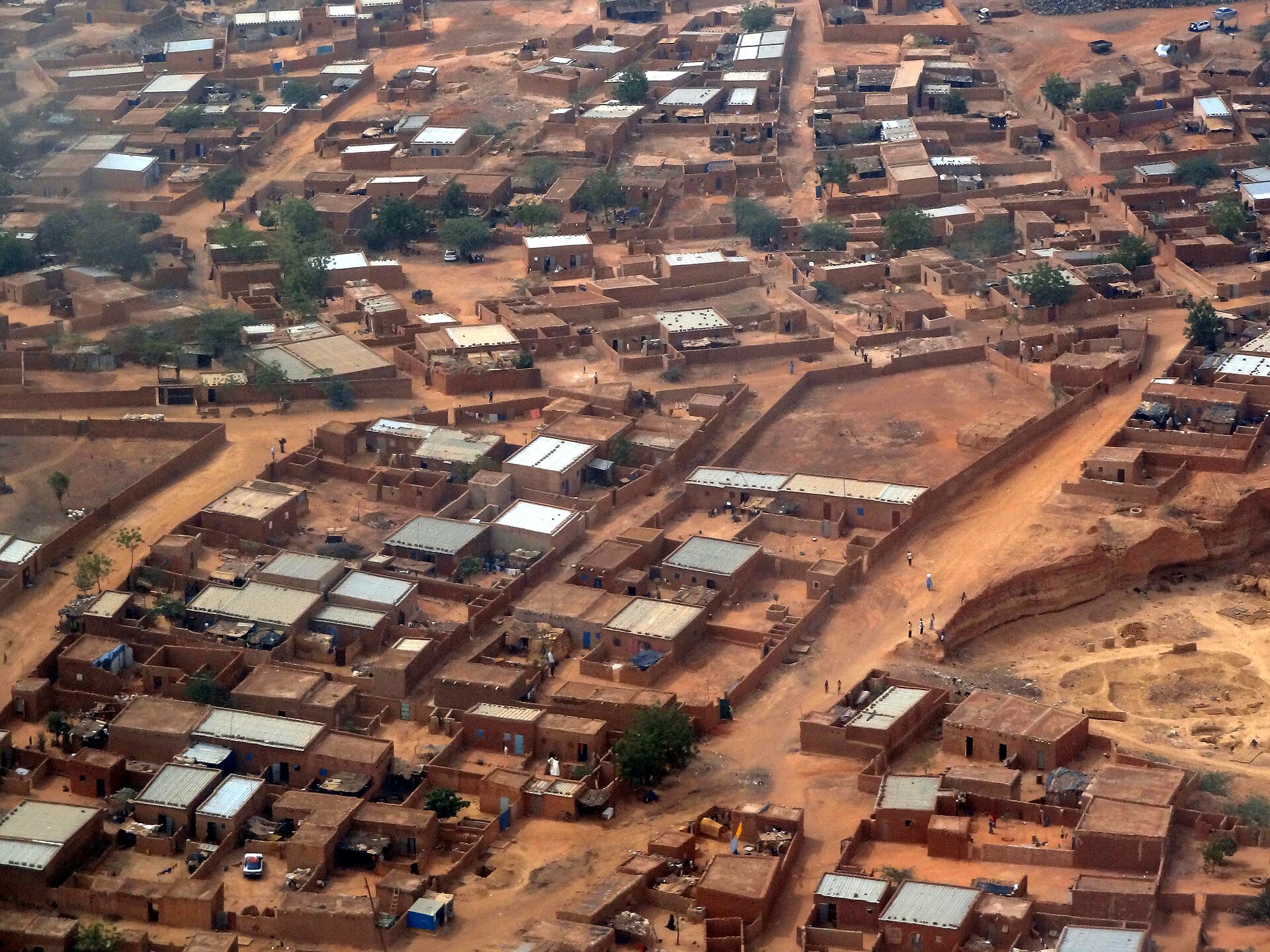
Basic services remain thin. Only 21.3 percent of people had electricity in 2024, according to the World Bank. By the end of 2025, nearly 3 million Nigeriens needed humanitarian help. That included 984,366 people forced from their homes, mostly by violence.
Who runs Niger and how
Power sits with the army. On 26 July 2023, General Abdourahamane Tiani, then head of the presidential guard, had his guards detain the elected president, Mohamed Bazoum. A military council, the National Council for the Safeguard of the Homeland, took over two days later with Tiani at its head.
Bazoum is still held in Niamey with his wife, more than three years on. A United Nations working group called their detention arbitrary in February 2025. The ECOWAS regional court reached a similar conclusion in December 2023. The government rejected fresh calls to free him at a UN human rights review in September 2026.
In March 2025 the junta adopted a new charter that was not put to a public vote. Tiani was sworn in as president on 26 March 2025 for a five-year term and promoted to army general. Multiparty politics has been abolished. There is no elected legislature, so budgets and laws are issued as ordinances by the Council of Ministers.
The prime minister, Ali Mahamane Lamine Zeine, runs day-to-day government. General Salifou Mody, the defence minister, is the other key figure in the security leadership.
Foreign policy turned on its head after the coup. The last French troops left on 22 December 2023. Niger ended its military cooperation deal with Washington in March 2024, and American forces left Air Base 201 in Agadez by August 2024. Russia’s Africa Corps, the state-run successor to the Wagner mercenaries, now helps protect the regime.
Niger also broke with its neighbours. Together with Mali and Burkina Faso, also run by soldiers, it announced on 28 January 2024 that it would leave ECOWAS. That is the Economic Community of West African States. The exit took effect on 29 January 2025. The three had already formed the Alliance of Sahel States (AES), a confederation with a joint force headquartered in Niamey.
How the economy works
Niger’s economy produced about US$21.6 billion in 2025, according to the World Bank, roughly US$775 per person. Farming, herding and fishing make up close to half of output. Millet, sorghum, cowpeas, onions and livestock matter far more to households than any mine.
Foreign currency, though, comes from the ground. Growth was about 7 percent in 2025, and the World Bank projects 6.7 percent for 2026. The IMF forecasts about 7 percent. Both say extractives and agriculture drive the gains.
Oil and the Benin pipeline
Oil comes from the Agadem basin in the far east, developed by China’s state oil company CNPC. A 1,950-kilometre pipeline, about 1,275 kilometres of it inside Niger, carries crude to a terminal at Sèmè in Benin. It began exporting in May 2024 after a row with Benin, then stopped again until August 2024.
The World Bank puts output at 33 million barrels in 2025, and expects 35 million in 2026. In May 2026 Niger and CNPC signed new agreements after a year of tension. Niger took a 45 percent stake in the pipeline company WAPCO, and the transport fee fell from US$27 to US$15 a barrel, according to Ecofin Agency and Dabafinance.
Niamey wants to refine more at home. On 15 August 2026 it signed a concession for a 100,000-barrel-a-day refinery near Dosso worth 1,077 billion CFA francs (about US$1.9 billion). The partner has four months to line up financing, and nothing is funded yet.
Uranium: who controls the mines now?
Niger has mined uranium since 1971 and produced about 158,900 tonnes up to 2024. For decades France’s state-backed Orano dominated the sector. The junta withdrew Orano’s permit for the giant Imouraren deposit in June 2024. In June 2025 it nationalised Somaïr, the Arlit mine in which Orano held 63.4 percent.
That left roughly 1,000 tonnes of uranium concentrate stranded, according to the Atlantic Council. An arbitration tribunal at the World Bank’s ICSID ruled in September 2025 that Niger may not sell it. Russian and Romanian interest has been reported, but no sale has been confirmed. In February 2026 Tiani said Orano’s share of the uranium was ready to be returned, Bloomberg reported.
New deals are now arriving. On 16 September 2026 Canada’s Global Atomic said the US International Development Finance Corporation had conditionally approved up to US$414 million for its Dasa mine. On 23 September Niger signed a new convention for the Madaouela project with Australian-listed Atomic Eagle, doubling the state’s stake to 40 percent.
Budget, gold and the IMF
The state is small. Tax takes only about 9.1 percent of output, and the budget deficit was 2.9 percent of GDP in 2025, the World Bank says. On 21 August 2026 the government raised the 2026 budget by 2 percent to 2,980.54 billion CFA francs (about US$5.2 billion). Extra spending on the security forces was one of seven reasons given.
Niger still works with the IMF. The Fund completed the ninth review of its Extended Credit Facility on Wednesday 29 July 2026, releasing about US$33 million. Its staff named security threats, commodity prices, falling donor support and the closed border with Benin as the main risks.
Money and banking are shared with seven other countries through the West African Economic and Monetary Union. Niger left ECOWAS but not this currency union. Its central bank is the BCEAO in Dakar, which is why the CFA franc remains pegged to the euro.
What is happening right now
As of 27 September 2026, the government has survived its most serious internal challenge yet. Before dawn on Saturday 29 August, mutinous soldiers attacked Air Base 101 at Niamey’s airport, the presidency and the state broadcaster. Loyal forces retook the base the same day.
Russia’s Africa Corps helped put down the revolt, according to Russia’s ambassador. At least three presidential guards were killed. The US-based Critical Threats project counted at least 27 dead and about 100 arrested; no official toll has been published. Algeria flew four Su-30 fighter jets to Niamey on 30 August at Niger’s request.
On 4 September the Council of Ministers blamed France for the mutiny, naming President Emmanuel Macron. It has published no evidence. French Foreign Minister Jean-Noël Barrot called the claim “pure fantasy”. Prime Minister Zeine repeated the charge of foreign interference at the UN General Assembly in September.
Pressure on critics is rising. On Thursday 17 September Tiani signed a decree provisionally stripping five exiles of their nationality, including former prime minister Ouhoumoudou Mahamadou. The accusations are in the decree only and have not been tested in court. In May the media regulator suspended nine French outlets, including AFP and Radio France Internationale.
Jihadist violence continues. Fighters linked to the Islamic State attacked Niamey’s airport on 29 January 2026, and the al-Qaeda affiliate JNIM struck it again on 18 June. Much of the violence hits the Tillabéri region near Mali and Burkina Faso, and the border zone with Benin and Nigeria.
The Sahel alliance is building its own institutions. Its confederal parliament, with appointed rather than elected members, was installed in Niamey on 24 August 2026. With Benin, relations are thawing. The two governments agreed a nine-point plan in June 2026. They also set up a committee on reopening the land border, shut since the coup.
What to watch
Mid-December 2026: the Dosso refinery. The concession signed on 15 August gives the partner four months to raise money and deliver detailed engineering. If that date passes without financing, the project is in trouble.
Uranium financing and sales. The US loan for Dasa is conditional, so watch for financial close. Under the Madaouela deal, Atomic Eagle owes Niger US$5 million within 30 days of the 23 September signing. Any sale of the Somaïr stockpile would defy the ICSID ruling and test Western buyers.
The army after the mutiny. Watch for trials of the arrested soldiers, further purges and any change in Russia’s role. Also watch whether Niamey publishes the evidence it says it holds against France.
Oil volumes and the Benin border. The World Bank expects 35 million barrels in 2026. Reopening the land border with Benin would cut trade costs and ease a risk the IMF has flagged.
The long calendar. The IMF will run further reviews of its programme. The five-year transition started on 26 March 2025, which points to March 2030 as the earliest formal end of military rule.
What this means for foreigners
Travel is hard and risky. The US State Department rates Niger at Level 4, “Do not travel”, citing crime, unrest, terrorism, health and kidnapping in its advisory of 9 July 2026. Foreigners need military escorts outside Niamey, curfews apply, and a state of emergency covers several regions.
A visa is needed before arrival. Americans face an extra hurdle. In December 2025, after Washington added Niger to its travel ban list, Niamey suspended visas for US citizens, local media reported. Anyone planning a trip should confirm the current rules with a Nigerien embassy first.
For companies the lesson is contract risk. Since 2023 the government has taken back uranium permits, nationalised a mine, cancelled gold concessions and refused to extend an oil licence. Yet it keeps signing new deals, usually with a bigger state stake. Investors should expect renegotiation, not a stable rulebook.
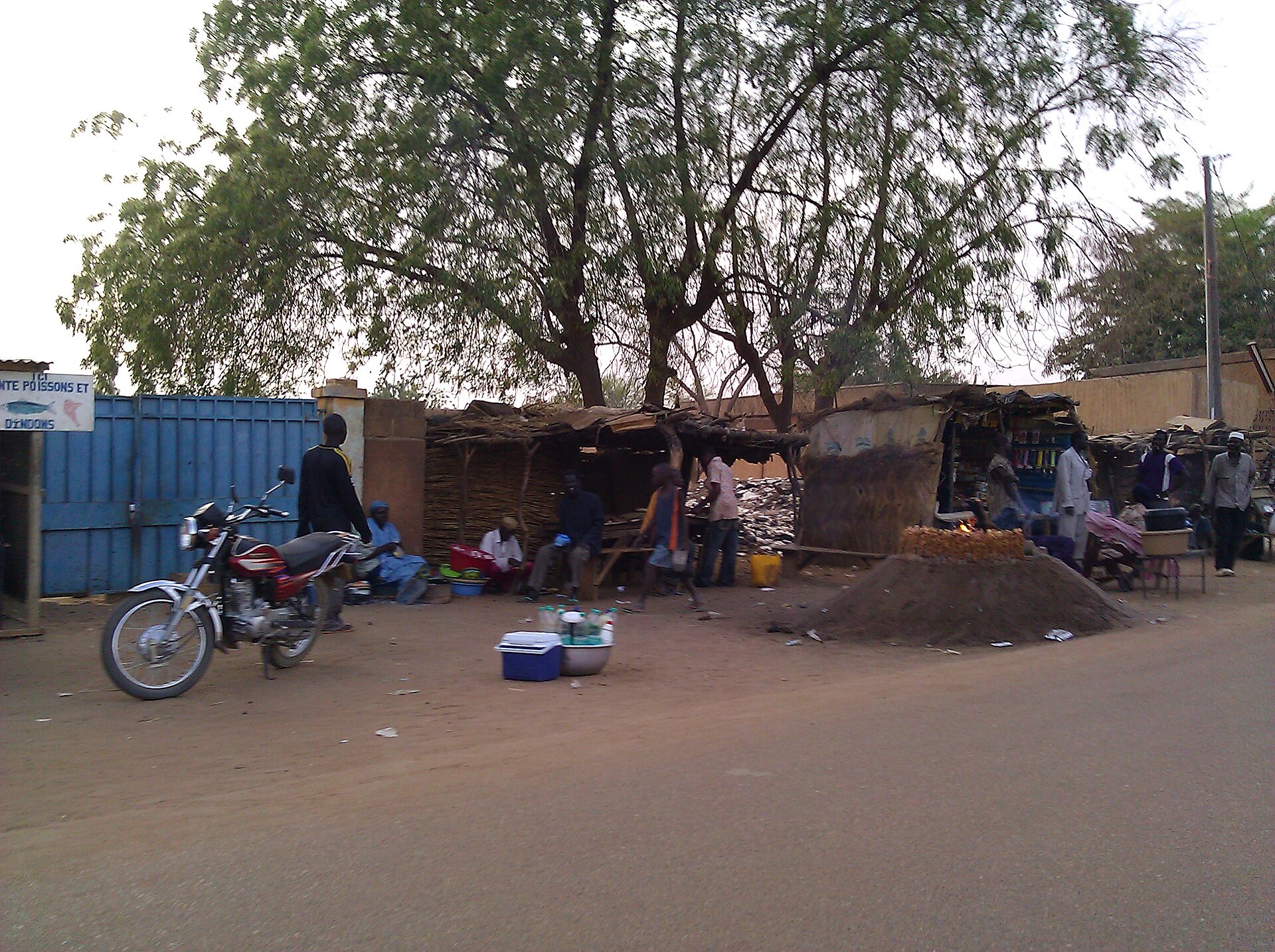
Money is simpler than politics. The CFA franc is fixed to the euro, so a European’s costs are predictable. Daily life runs largely on cash. French remains the working language of business and government, despite Hausa’s new status as the national language.
For Europe, Niger matters for two reasons: uranium for nuclear power, and the desert routes that migrants use to reach the Mediterranean. For the United States it matters as a test of whether Washington can return through business after its troops left. Niger explained in one line: a poor, young, resource-rich country whose rulers have swapped Western partners for Russian ones and are rewriting the terms of every deal.
Connected Coverage
Niger Doubles Its Stake in a Big Uranium Project to 40%, Ending a Lawsuit
Niger Blames France for Failed Mutiny; Paris Denies
Three Sahel Juntas Open Their Own Parliament as the ECOWAS Split Deepens
Niger Signs US$1.9bn Refinery It Cannot Yet Fund
Niger Reopened Its Budget, and the Army Is One of Seven Reasons
Sources: Population, output, electricity and fiscal data from the World Bank; the programme review from the IMF; travel rules from the US State Department; rights findings from Human Rights Watch; mining, oil and security events from company statements, Reuters, Bloomberg, RFI and specialist outlets. All accessed 27 September 2026.
- World Bank Open Data — Niger population, GDP, electricity access and fertility
- World Bank — Niger overview, growth, oil output and humanitarian needs
- IMF — staff-level agreement on the ninth ECF review
- US Department of State — Niger travel advisory
- Human Rights Watch — Niger rejects key rights recommendations at UN review
- Atlantic Council — the Niger uranium stockpile and ICSID ruling
- Reuters via Mining.com — US financing for the Dasa uranium project
- Africanews — Benin and Niger commit to reopening the border
What Is Not Known
How stable the army is. The August mutiny showed divisions inside the ranks, and the true death toll and number of arrests are still unpublished. How far the regime now depends on Russian forces for its survival is also unclear.
Who will buy Niger’s uranium. The stockpile from Somaïr is legally frozen by the ICSID ruling, and no confirmed buyer has emerged. The new Western-backed projects at Dasa and Madaouela are years from full output.
Whether the Dosso refinery will be built. The partners have signed a concession but have not shown financing. An earlier version of the deal, signed in October 2024, was sent back for review.
When military rule will end. The charter sets a five-year transition from March 2025, but no electoral calendar has been published and political parties no longer operate.
Frequently Asked Questions
Who runs Niger in 2026?
General Abdourahamane Tiani, who led the coup of 26 July 2023. He was sworn in as president on 26 March 2025 for a five-year transition. Ali Mahamane Lamine Zeine is prime minister, and there is no elected parliament.
Why did Niger leave ECOWAS?
After the 2023 coup, ECOWAS imposed sanctions and threatened to intervene. Niger, Mali and Burkina Faso announced their exit on 28 January 2024, and it took effect on 29 January 2025. The three now form the Alliance of Sahel States.
What happened to Orano and Niger’s uranium?
The junta withdrew Orano’s Imouraren permit in June 2024 and nationalised the Somaïr mine in June 2025. An ICSID tribunal ruled in September 2025 that Niger may not sell the uranium stockpile. New deals followed in September 2026 for the Dasa and Madaouela projects.
How much oil does Niger produce?
About 33 million barrels in 2025, according to the World Bank, which expects 35 million in 2026. Crude travels through a 1,950-kilometre pipeline to Sèmè in Benin, built and run with China’s CNPC.
Is it safe to travel to Niger?
The US State Department rates Niger at Level 4, Do not travel, citing crime, unrest, terrorism, health and kidnapping. Foreigners need military escorts outside Niamey. A visa is required, and Niger suspended visas for US citizens in December 2025, local media reported.
This article was produced by The Rio Times’ automated newsroom system. How we use AI · Report an error · Editorial responsibility: Matthias Camenzind, Editor-in-Chief