
NIGERIA · MEDIA
Key Facts
- —The basics As of October 2026, Nigeria has around 100 newspapers and several hundred radio and television stations, including private brands such as The Punch and Channels Television alongside the state broadcaster NTA.
- —Why it matters Nigeria votes for president on Saturday, 16 January 2027, and outlets owned by businesspeople and politicians will shape how voters, investors and Washington read the race in Africa’s most populous country.
- —The numbers Nigeria ranks 112th of 180 countries in the 2026 World Press Freedom Index, broadband subscriptions reached 126.2 million in August 2026, and a US$220 million competition fine against Meta was upheld in April 2025.
- —Who is who The National Broadcasting Commission licenses radio and television, the Nigerian Communications Commission regulates telecoms, and the Nigerian Press Council promotes print standards, while John Momoh founded Channels and Nduka Obaigbena chairs the THISDAY/ARISE group.
- —What to watch Watch campaign coverage before the 16 January 2027 vote, the competition inquiry into Meta, Google and X opened on 6 July 2026, and new Cybercrimes Act cases against journalists.
- —Prediction markets Polymarket gives President Bola Tinubu a 73.5% chance of winning the 2027 presidential election and Peter Obi 21% (15 October, 8:36 a.m. ET).
- —What it means for you US readers get the clearest picture by comparing outlets across ownership camps, and investors in Meta and Alphabet should follow a Nigerian probe into whether platforms must pay for local news.
Nigeria media is big, loud and closely tied to politics, from privately owned dailies to channels linked to political leaders. This guide explains who owns what, how free the press is and how nearly 200 million phone lines shape the news.
The Nigeria media landscape combines a crowded private press, a large state broadcasting network and a fast-growing online audience. Reporters Without Borders (RSF) ranks Nigeria 112th of 180 countries in its 2026 World Press Freedom Index, up from 122nd in 2025.
That matters in the United States because Nigerian outlets will frame the presidential election on Saturday, 16 January 2027. It also matters because Meta, Google and X face a Nigerian inquiry into how they use and pay for local news.
Nigeria Media at a Glance
RSF describes the country’s media as rich and diverse, with around 100 publications despite a sharp decline in print. It names The Punch, The Nation, Vanguard, the Nigerian daily The Guardian and Premium Times as the best-known titles.
Most of the 36 states also have a daily newspaper directly controlled by local authorities, RSF says. Several hundred radio stations and television channels compete alongside international broadcasters.
The federal government runs its own network through agencies of the Ministry of Information and National Orientation. They include the Nigerian Television Authority (NTA) and the Federal Radio Corporation of Nigeria, known on air as Radio Nigeria.
The ministry also oversees the Voice of Nigeria, an international radio service, and the News Agency of Nigeria. Mohammed Idris, the minister of information and national orientation, speaks for the government on media policy.
Money is the sector’s weak point, and RSF says very few outlets are in good economic health. Long salary delays leave journalists exposed to corruption and cash for coverage, it adds.
Decades of military rule and civilian party politics shaped this mix of state and private media. The Rio Times guide to Nigeria history covers that background from Nok to the 2027 election.
Newspapers and Their Owners
The Punch, published by Punch Nigeria Limited, first appeared as a daily on Monday, 1 November 1976. The company’s website names Angela Emuwa as chair of its board.
THISDAY, founded on Sunday, 22 January 1995, is published by THISDAY Newspapers Ltd from Apapa in Lagos. Its chairman, Nduka Obaigbena, also heads the group behind the Arise News television channel.
Daily Trust belongs to Media Trust Group, which also publishes Aminiya, a Hausa-language title. The group runs Trust TV and Trust Radio as well, according to its website.
Two outlets stand out for their reported ties to the president, The Nation newspaper and the TVC television network. Peoples Gazette in 2021 and Legit.ng in 2022, two Nigerian news sites, described the pair as owned by Bola Tinubu.
Tinubu was then national leader of the All Progressives Congress (APC), the party that has held the presidency since 2015. He became president on Monday, 29 May 2023, and is seeking a second term.
Shareholder details for TVC and for the publisher of The Nation are not set out in any public filing found. The exact size of any stake held by Tinubu or his family therefore cannot be confirmed.
Nigerian outlets named Orji Uzor Kalu, a former Abia State governor and APC politician, as publisher of The Sun in 2023. That year he approved Femi Adesina, a former spokesman for the late president Muhammadu Buhari, as executive vice chairman.
BusinessDay serves investors and executives, while Vanguard, Nigerian Tribune and Leadership add national and regional reach. Audited circulation figures for Nigerian newspapers are not published in one reliable public source.
Television and Radio Broadcasters
The NTA is the federal state broadcaster, with stations in cities across the country and a national news service. The information ministry lists it among its agencies, alongside Radio Nigeria and the broadcasting regulator.

Channels Television, a 24-hour private news channel, was founded in 1995 by John Momoh. The company says Momoh chairs Channels Media Group and serves as chairman and chief executive of Channels Television.
Arise News, which also airs in Britain and Europe, is owned and operated by Arise Global Media Ltd, its website says. Arise describes Obaigbena as chairman of the THISDAY/ARISE Media Group, linking the channel to THISDAY newspaper.
Africa Independent Television (AIT) belongs to DAAR Communications, founded by the late Raymond Dokpesi. Dokpesi, a founding member of the Peoples Democratic Party (PDP), died on Monday, 29 May 2023.
The PDP governed Nigeria from 1999 to 2015 and is now in opposition. ICIR, an investigative newsroom, reported that Dokpesi was a senior official in Atiku Abubakar’s 2023 presidential campaign.
On Friday, 3 February 2023, the NBC fined TVC and Arise News 2 million naira each (about US$1,500 at today’s rate). For TVC, the regulator cited broadcasts of Tinubu campaign remarks against Peter Obi and Atiku Abubakar, and coverage favouring the APC.
Radio carries programmes in English, Hausa, Yoruba, Igbo, Pidgin and many smaller languages, reaching listeners far from the big cities. Radio Nigeria runs national and zonal stations, while state governments operate their own broadcasters.
DAAR Communications also runs Ray Power FM, one of the country’s first private radio stations. ICIR described Dokpesi as the first Nigerian to own private radio and television stations.
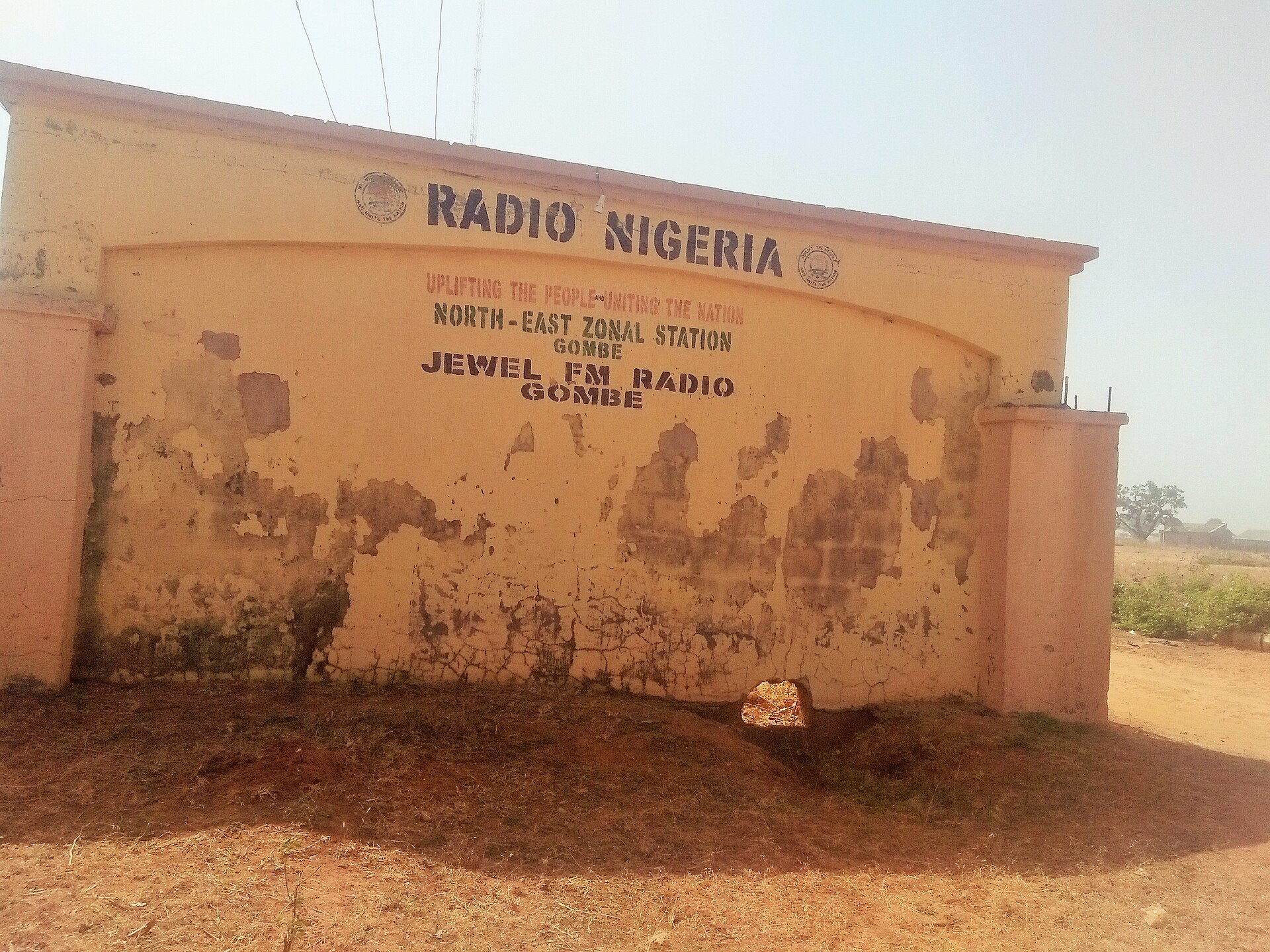
In May 2023, a federal high court suspended an NBC decision to suspend around 50 radio stations over unpaid licence fees. RSF, which recorded the case, also noted the destruction of two private media transmitters in the southeast in September 2023.
Digital Outlets and Investigative Newsrooms
Premium Times, founded in mid-2011, is published by Premium Times Services Limited in Abuja. Its publisher and chief executive is Dapo Olorunyomi, an award-winning reporter and editor, according to the company.
TheCable went live on Tuesday, 29 April 2014, and is run by Cable Media & Publishing, a company set up in 2011. Its founder and chief executive is Simon Kolawole, according to the company’s board listing.
Sahara Reporters is a US-headquartered, Nigeria-focused news site founded by activist Omoyele Sowore, according to the Committee to Protect Journalists (CPJ). Sowore is the candidate of the small African Action Congress (AAC) in the 2027 presidential election.
The Foundation for Investigative Journalism (FIJ), founded by Fisayo Soyombo, and the International Centre for Investigative Reporting (ICIR) focus on corruption. RSF singles out FIJ reporters as frequent targets of threats, detentions and prosecutions.
Large general news sites and blogs compete with these newsrooms for clicks, often through Facebook, X and WhatsApp. RSF warns that social media has diversified the landscape but has also spread disinformation.
Who Regulates the Media
The National Broadcasting Commission (NBC) licenses and regulates radio and television under the NBC Act of 1992. Its director-general, Charles Ebuebu, enforces the Nigeria Broadcasting Code, the rulebook for broadcast content.
In July 2025, Ebuebu proposed a Broadcasting Standards Tribunal to safeguard due process in enforcement, Media Rights Agenda reported. He also called for state broadcasters to become truly independent public service media.
The Nigerian Communications Commission (NCC) regulates telecoms and internet providers under the Nigerian Communications Act of 2003. Aminu Maida, its executive vice chairman, leads the body that publishes the official subscriber statistics.
The Nigerian Press Council, set up under the Nigerian Press Council Act (Cap N128), promotes professional standards in the print press. Like the NBC, it sits among the agencies of the information ministry.
Competition law has become a new tool as well, through the Federal Competition and Consumer Protection Commission (FCCPC). On Monday, 6 July 2026, it opened an inquiry into Meta, Alphabet and X after a presidential directive.
The complaint came from the Nigerian Press Organisation, which groups newspaper owners, broadcasters, online publishers and the journalists’ union. It accuses the platforms of using Nigerian news, including for AI training, without fair payment.
FCCPC chief Tunji Bello promised an independent, transparent and evidence-based investigation that presumes no wrongdoing, Nairametrics reported. The Rio Times covered the order to probe Meta, Alphabet and X in July 2026.
Press Freedom and the Cybercrimes Act
Nigeria rose to 112th of 180 countries in the 2026 RSF index, scoring 48.11, from 122nd and 46.81 in 2025. RSF still calls it one of West Africa’s most dangerous and difficult countries for journalists.
RSF says government interference in the news media is significant and grows stronger during election campaigns. Its weakest score for Nigeria is on security, where the country ranks 149th.
The Committee to Protect Journalists counted 91 journalists arrested, attacked or harassed in the three years after Tinubu took office. Its map, published in May 2026, covers 13 states and the federal capital, Abuja.
The main legal tool is the Cybercrimes Act of 2015, especially Section 24 on false or offensive online messages. CPJ research shows at least 25 journalists faced prosecution under the law before its February 2024 amendment.
The amendment narrowed Section 24 but kept penalties of up to three years in prison, CPJ says. A false-publication charge can also bring a fine of up to 7 million naira (about US$5,300).
In 2022, the court of the West African bloc ECOWAS found the law incompatible with the African human rights charter. RSF says at least eight journalists were prosecuted, arrested or detained under it in the seven months after the 2024 amendment.
Documented cases show the pattern. In May 2024, FIJ reporter Daniel Ojukwu was detained for ten days after investigating alleged embezzlement, RSF reported.
Police arrested Friday James Alefia, publisher of the Naija News Today site, on Tuesday, 23 September 2025. CPJ said he was the sixth journalist prosecuted for cybercrimes since the reforms.
Fejiro Oliver, publisher of Secret Reporters, was held for 61 days in 2025 before release on bail on 18 November. In July 2026, Secret Reporters journalist Stanley Ugagbe was seized in Abuja and later charged with Oliver on six counts.
An Abuja court remanded Ugagbe in Kuje prison on Tuesday, 14 July 2026, over reporting on a central bank executive. RSF’s live barometer listed seven journalists detained in Nigeria as of 15 October 2026.
Security forces have also targeted reporters on the street. In August 2024, around 30 journalists were assaulted, arrested or targeted with tear gas or gunfire while covering protests, according to RSF.
Those risks sit inside a wider security crisis, from the northeast to the Niger Delta. The Rio Times guide to Nigeria security and crime explains the armed groups and hotspots.
Social Media and the Phone Boom
Nigeria had 197.4 million active phone subscriptions in August 2026, a teledensity of 91.07%, according to the NCC. Broadband subscriptions reached 126.2 million, or 58.22% penetration, up from 48.81% a year earlier.
Subscriptions are not the same as people, since one person can hold several lines. DataReportal counted 109 million internet users in October 2025, or 45.5% of the population.
The same Digital 2026 report counted 47.8 million social media user identities, equal to 20.0% of the population. TikTok’s ad tools reached 47.8 million adults, ahead of Facebook at 38.0 million and YouTube at 30.5 million.
Snapchat reached 23.0 million users, LinkedIn listed 13.0 million members and Instagram reached 10.0 million, DataReportal said. X, formerly Twitter, reached 6.95 million users in late 2025.
Platforms have clashed with the state before. The government suspended Twitter on Saturday, 5 June 2021, and lifted the ban from midnight on Thursday, 13 January 2022.
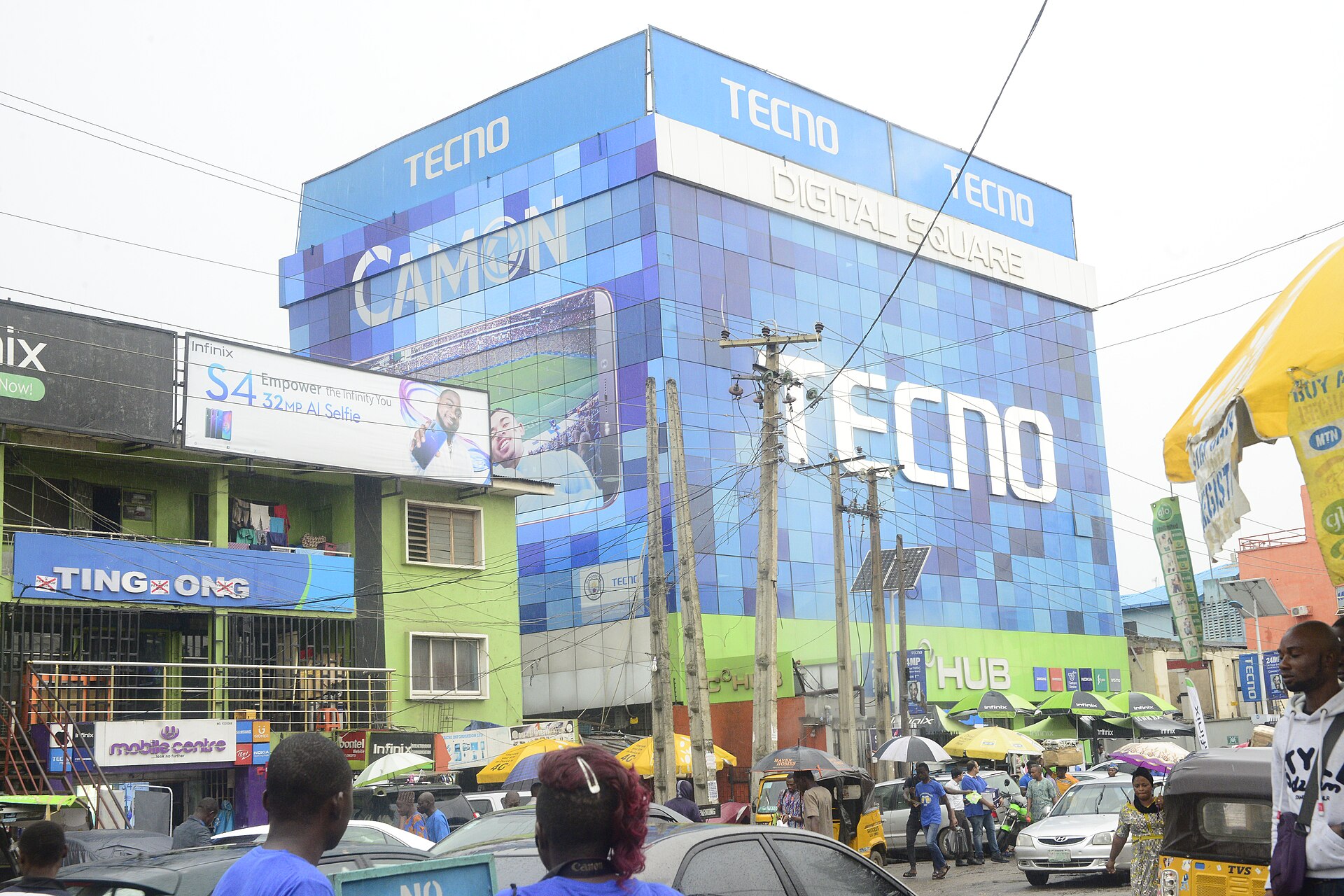
In 2024, the FCCPC fined Meta US$220 million over its treatment of Nigerian consumers and their data. A tribunal upheld the fine in April 2025, Nairametrics reported, and the news-content inquiry now adds pressure.
These platforms give parties and activists a direct line to voters that bypasses newspapers and broadcasters. The Rio Times explainer on Nigeria geopolitics covers the country’s wider weight and foreign ties.
The 2027 Election and the Media
The Independent National Electoral Commission (INEC) has set presidential and National Assembly elections for Saturday, 16 January 2027. Governorship and state assembly polls follow on Saturday, 6 February 2027.
INEC moved the dates forward after the Electoral Act 2026 replaced the 2022 law, Voice of Nigeria reported. Campaigns for the presidential and National Assembly races began on Wednesday, 19 August 2026, under the timetable.
INEC published a final list of 18 presidential candidates in September 2026, including President Tinubu of the governing APC. Challengers include former vice president Atiku Abubakar of the African Democratic Congress (ADC), an opposition party.
Former Anambra State governor Peter Obi runs for the Nigeria Democratic Congress (NDC), after finishing third in 2023 for the Labour Party. Sowore, the Sahara Reporters founder, is also on the ballot.
Ownership ties matter in this race because several outlets are linked to candidates or their allies. TVC and The Nation have been described as Tinubu-owned, AIT’s founder worked for Atiku in 2023, and Sowore founded Sahara Reporters.
RSF says electoral periods bring significant violence against media professionals in Nigeria. The NBC’s 2023 fine on TVC shows the regulator can sanction even an outlet tied to a leading candidate.
For a profile of the incumbent, see the Rio Times explainer Who Is Bola Tinubu. It sets out his reforms, his allies and his path to a second term.
What It Means for US Readers
US investors in Meta and Alphabet should watch the FCCPC inquiry, which could push platforms toward paying Nigerian publishers. Nigeria has already fined a US platform, as the US$220 million penalty on Meta upheld in April 2025 shows.
Travelers and business visitors should follow several outlets across ownership camps, such as Channels, Premium Times, Punch and Daily Trust. Coverage on stations linked to candidates deserves extra caution during the campaign before the 16 January 2027 vote.
Readers in the United States can follow Nigerian outlets online, including Sahara Reporters, which is headquartered in the US. Visitors can find practical advice in the Rio Times Lagos city guide and wider coverage on the Nigeria news hub.
Journalists and NGOs working in Nigeria should note that cybercrime charges can follow critical reports, including after complaints from politicians. Legal advice before publishing allegations against public figures is prudent.
Conversions in this guide use the open.er-api.com rate of 1,331.83 naira per US$1 on 15 October 2026. Amounts from earlier years are converted at that rate for comparison only.
What Prediction Markets Say
On Polymarket, bets give Tinubu a 73.5% chance of winning the 2027 presidential election and Obi a 21% chance. The prices stood at 8:36 a.m. ET on 15 October, with about US$130,000 traded on the market.
Atiku has no listed contract in that market, and Sowore trades below 1%. These are bets on an outcome, not opinion polls.
Why we show this: prediction markets turn real-money bets into a live probability that moves within minutes of the news, which is why investors, campaigns and newsrooms in the United States now follow them closely. We show them next to polls and official results, never instead of them.
What Is Not Known
Audited circulation and audience figures for most Nigerian newspapers, channels and sites are not published in one reliable public source. Market shares by company can therefore only be estimated.
The exact shareholdings behind TVC, the publisher of The Nation and DAAR Communications could not be confirmed from public filings. The outcome and timetable of the FCCPC inquiry into Meta, Alphabet and X are also not known.
It is not known whether Stanley Ugagbe has been freed on bail or when the cases against Oliver and Alefia will end. How strictly the NBC will police campaign coverage before January 2027 also remains to be seen.
Frequently Asked Questions
What are the main newspapers in Nigeria?
The best-known titles include The Punch, The Nation, Vanguard, THISDAY, Daily Trust and the online Premium Times. Most of the 36 states also have a daily controlled by local authorities.
Who owns Channels TV, Arise News and TVC?
Channels was founded by John Momoh, and Arise News belongs to Nduka Obaigbena’s THISDAY/ARISE group. Peoples Gazette and Legit.ng have described TVC as owned by President Bola Tinubu, though exact stakes cannot be confirmed.
How free is the press in Nigeria?
Nigeria ranks 112th of 180 countries in the 2026 World Press Freedom Index, up from 122nd in 2025. Reporters Without Borders still calls it one of West Africa’s most dangerous countries for journalists.
What is the Cybercrimes Act?
The Cybercrimes Act of 2015 punishes online offences, and its Section 24 has often been used against journalists. A 2024 amendment narrowed it, but CPJ and RSF have documented new arrests and prosecutions since.
Which social media platforms are biggest in Nigeria?
TikTok reached 47.8 million adults in late 2025, ahead of Facebook at 38.0 million and YouTube at 30.5 million. X reached 6.95 million users, according to DataReportal.
Who regulates the media in Nigeria?
The National Broadcasting Commission licenses radio and television, while the Nigerian Communications Commission regulates telecoms and internet providers. The Nigerian Press Council promotes standards in the print press.
When is the next presidential election in Nigeria?
The electoral commission has set the presidential and National Assembly elections for Saturday, 16 January 2027. Campaigns for those races opened on 19 August 2026.
Sources: Reporters Without Borders, Nigeria country profile, 2026 index and barometer; RSF, cybercrime law prosecutions (2024); CPJ, Tinubu tenure map (2026); CPJ, Stanley Ugagbe case (2026); CPJ, Fejiro Oliver and Secret Reporters (2026); CPJ, Friday James Alefia case (2025); CPJ, cybercrime detentions despite reform (2025); CPJ, Sahara Reporters (2019); Nigerian Communications Commission, industry statistics; DataReportal, Digital 2026 Nigeria; INEC, election calendar; Voice of Nigeria, revised INEC timetable; Voice of Nigeria, presidential candidates list; THISDAY, Twitter suspension lifted (2022); Federal Ministry of Information and National Orientation, parastatals; National Broadcasting Commission; Media Rights Agenda; Nigerian Press Council; Channels Television, John Momoh; Arise News, about; Arise News, Obaigbena; Punch Nigeria Limited; THISDAY; Media Trust Group; Premium Times; TheCable; ICIR, Raymond Dokpesi; Peoples Gazette (2021); Peoples Gazette (2023); Legit.ng, politicians and media ownership (2022); Media Rights Agenda, NBC fines on TVC and Arise (2023); 21st Century Chronicle, The Sun (2023); Nairametrics, FCCPC inquiry; Polymarket market data (all accessed 15 October 2026).
This article was produced by The Rio Times’ automated newsroom system. How we use AI · Report an error · Editorial responsibility: Matthias Camenzind, Editor-in-Chief
Part of our ongoing coverage
Africa: The New Scramble — the great-power contest over the continent.
Expat Guide to Nigeria
What The Rio Times publishes for foreigners who live in or move to Nigeria.
Start here
- Nigeria Security and Crime Explained 2026
- Davido Lagos Residency Books Three National Theatre Nights in Nigeria
- Nigeria Visa and Residency: US$2,000 Residence Card, US$15 Daily Fine for Overstaying
- Healthcare in Nigeria for expats and what it actually costs
City guides
Coming up in Nigeria
- Dave Lagos Concert Set for 16 and 17 October 17 Oct
- Lagos Church Opens Free Camp Meeting on 21 October 2026 21 Oct
- Lagos Fashion Week Runs 28 October to 1 November 2026 28 Oct
- CANEX WKND 2026 Opens in Lagos on 5 November 5 Nov
Understand Nigeria