DR Congo Explained 2026: The M23 War, the Cobalt Economy, the Politics and What to Watch
GUIDES · COUNTRY
Key Facts
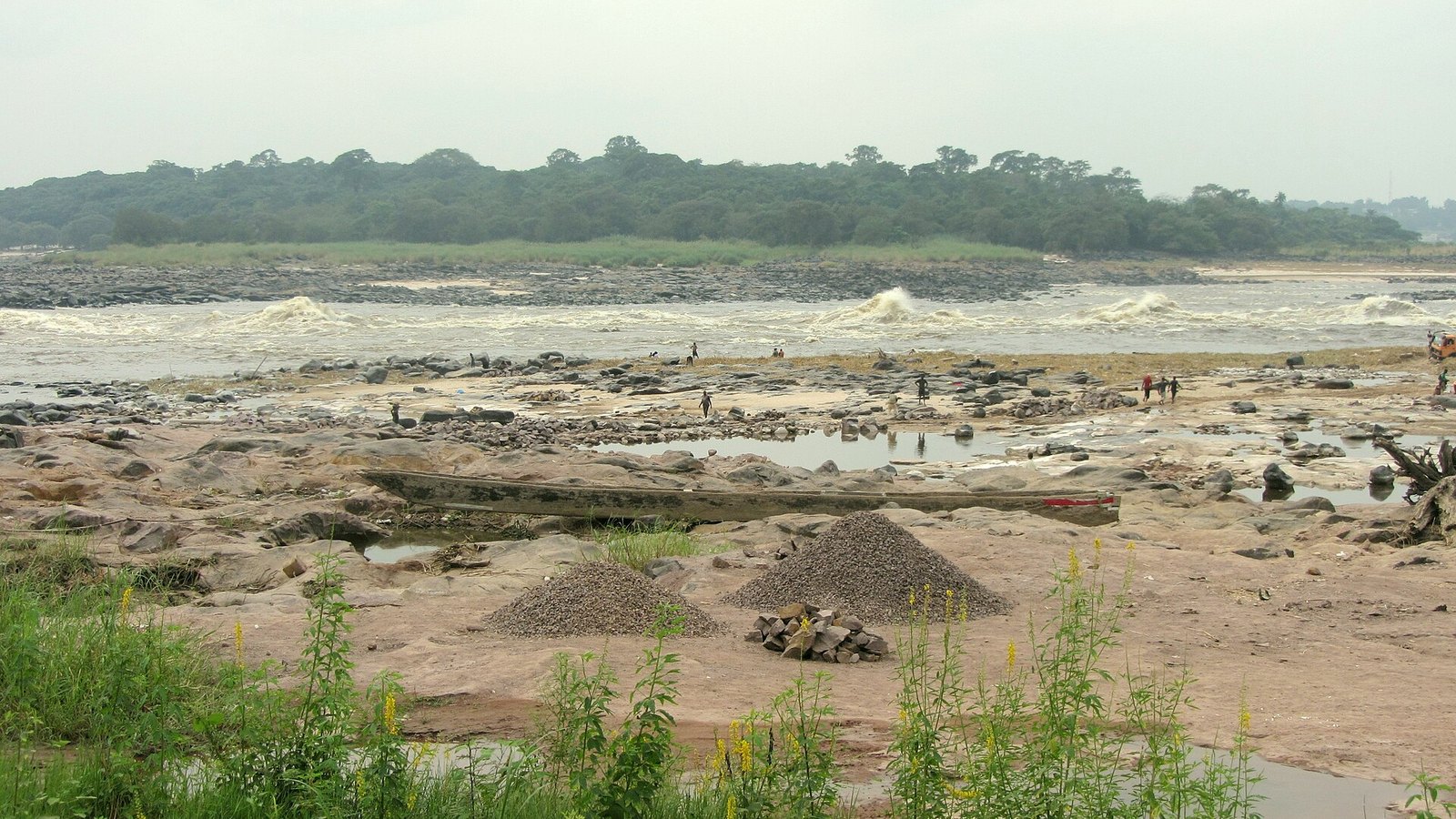
- —Capital Kinshasa, on the south bank of the Congo River. Brazzaville, capital of the separate Republic of the Congo, lies directly across the water.
- —Population About 112.8 million in 2025, on World Bank estimates. It is the most populous country with French as its official language.
- —Currency The Congolese franc (FC). It traded at about FC2,270 to the US dollar on 28 September 2026, market data. Dollars circulate widely.
- —Language French is official. Lingala, Kiswahili, Kikongo and Tshiluba are national languages, each dominant in its own region.
- —Economy Output of about US$91 billion in 2025, or roughly US$810 per person, on World Bank figures. Copper and cobalt earn most export income.
- —Government A republic under the 2006 constitution, with a directly elected president, a prime minister and 26 provinces.
DR Congo explained for newcomers: how Africa’s mineral giant is run, why the east is at war, and what to watch.
DR Congo explained properly starts with a contradiction. The country mines about three-quarters of the world’s cobalt and is the second-largest copper producer. Yet most of its people live in deep poverty. A rebel group has held its two largest eastern cities since early 2025.
What kind of country is this?
The Democratic Republic of the Congo covers about 2.34 million square kilometres. That is more than four times the size of France and second in Africa only to Algeria. It holds most of the Congo Basin rainforest, the largest tropical forest after the Amazon.
The country is not to be confused with its smaller neighbour, the Republic of the Congo, capital Brazzaville. Foreigners usually call the big one DR Congo or DRC. Congolese often say “Congo-Kinshasa” to make the difference clear.
History explains much of today. From 1885 King Leopold II of Belgium ran the territory as a private colony, with notorious brutality. Belgium annexed it in 1908. Independence came on 30 June 1960. Mobutu Sese Seko then ruled from 1965 to 1997 and renamed the country Zaire.
Two wars followed, from 1996 to 1997 and from 1998 to 2003, drawing in the armies of several neighbouring states. The east, bordering Uganda, Rwanda and Burundi, has never been fully at peace since. Dozens of armed groups still operate there.
Poverty is the norm. About 85 percent of Congolese lived below the World Bank’s poverty line of US$3 a day in 2020, the latest survey year. The contrast with the country’s mineral wealth is the central fact of Congolese politics.
Who runs DR Congo and how
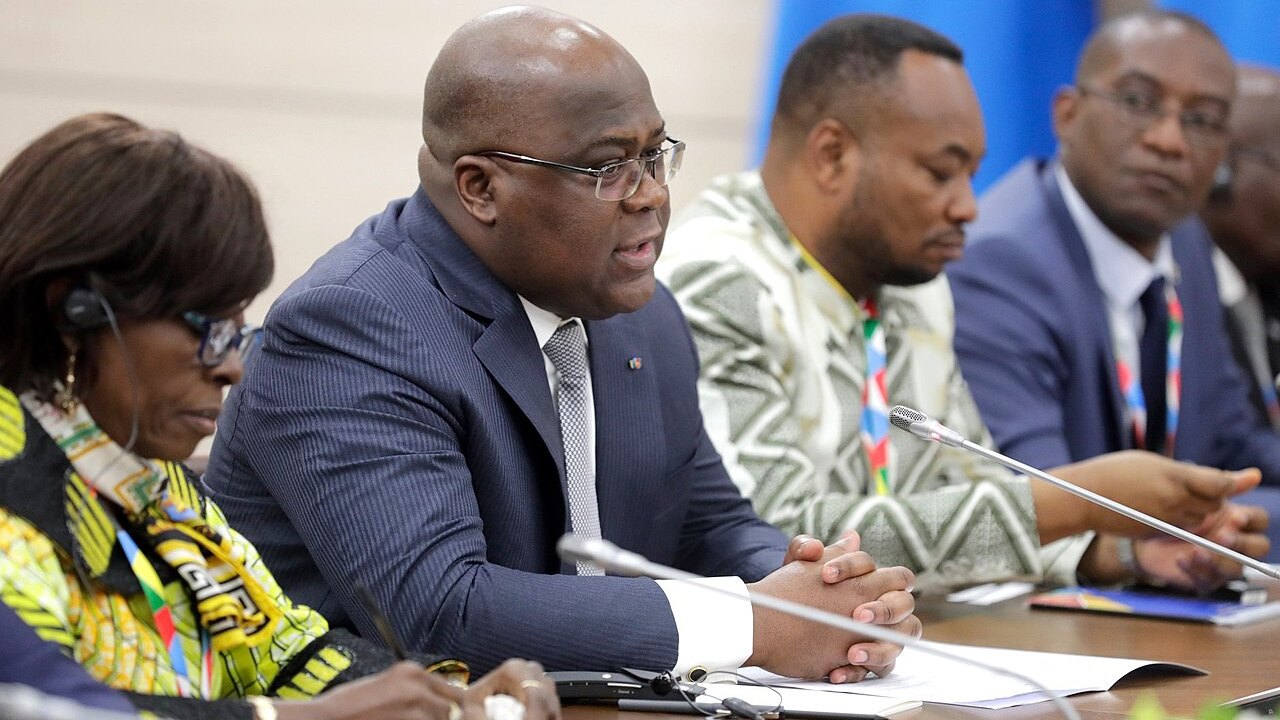
The president is elected directly for five years and may serve two terms. Félix Tshisekedi took office on 24 January 2019. He was re-elected in December 2023 with about 73 percent of the vote, in an election the opposition rejected. His second term runs to 2028.
The president appoints a prime minister from the parliamentary majority. Judith Suminwa Tuluka, the country’s first woman prime minister, has held the post since 2024. The National Assembly has 500 seats, and Tshisekedi’s Sacred Union coalition controls a large majority. Its speaker, since November 2025, is Aimé Boji Sangara.
The big political fight is over term limits. The 2006 constitution caps presidents at two terms and forbids any amendment to that rule. In June 2026 parliament passed a referendum law, which critics see as a route to a new constitution. The Constitutional Court upheld it in late July. No referendum date has been set.
Critics say a new constitution could reset the count and let Tshisekedi run again in 2028. He has not formally declared that he would. An opposition coalition called C64, which includes Martin Fayulu and Moïse Katumbi, called protests on 15 September 2026. Police broke them up with tear gas in Kinshasa and Lubumbashi.
Tshisekedi’s predecessor has become an enemy of the state. Joseph Kabila, president from 2001 to 2019, was sentenced to death in absentia by a military court on 30 September 2025. The court found him guilty of treason and war crimes linked to the M23 rebellion. He rejects the charges.
How the economy works
Almost everything that earns dollars comes out of the ground in the south-east, in the former Katanga region around Lubumbashi and Kolwezi. In 2025 DR Congo mined about 230,000 tonnes of cobalt, out of a world total of 310,000, the US Geological Survey estimates. It also mined 3.2 million tonnes of copper, second only to Chile.
Cobalt goes into the batteries of electric cars and phones, which is why outside powers care. Chinese-owned companies run many of the largest mines. The state miner, Gécamines, holds minority stakes in many of them.
The government now uses its weight in cobalt as a lever. It suspended cobalt exports in February 2025 to lift a collapsed price. Since October 2025 exports have run under quotas of 96,600 tonnes a year for 2026 and 2027. That is less than half of 2024 output. An order banning exports of unprocessed copper and cobalt concentrates became public in August 2026.
Money has become more stable. The franc strengthened sharply in late 2025, from about FC2,850 to the US dollar in September to about FC2,180 in December. Prices rose 4.8 percent in the first half of 2026, the central bank says, a slower pace than in 2023 and 2024. The Central Bank of the Congo has cut its policy rate in steps. It fell from 25 percent in early October 2025 to 12.5 percent in July 2026.
In January 2025 the International Monetary Fund (IMF) approved a 38-month lending programme of about US$1.7 billion. It added a climate facility of about US$1 billion. Its board completed the third review in late June 2026, releasing about US$348 million. The IMF expects growth of more than 5 percent in both 2025 and 2026. The central bank, more cautious, projected 4.8 percent in July. In June 2026 the country sold its first international bond, raising US$1.25 billion.
What is happening right now
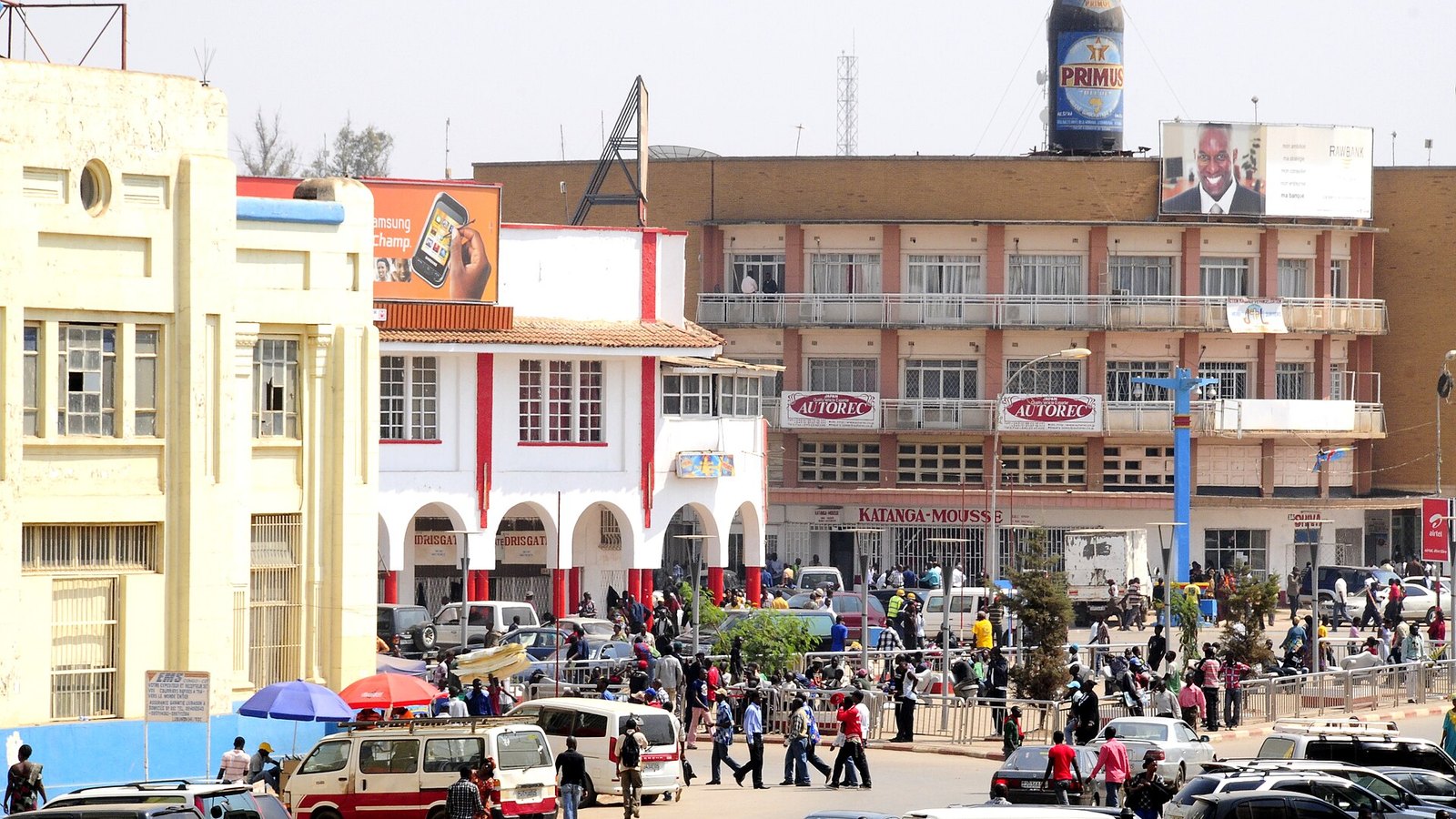
As of September 2026, the war in the east is the defining story. The M23, or March 23 Movement, is a rebel group allied with a political front called the Congo River Alliance, AFC. It took Goma, capital of North Kivu, in January 2025 and Bukavu, capital of South Kivu, in February 2025. It still holds both.
UN experts and the United States say Rwanda backs the M23 with troops and weapons. Rwanda denies it. On 2 March 2026 Washington sanctioned the Rwanda Defence Force and four senior commanders. In the areas it holds, the M23 now runs a parallel administration that collects taxes.
There are two peace tracks, and neither has ended the fighting. Congo and Rwanda signed a peace agreement in Washington on 27 June 2025. Tshisekedi and Rwanda’s president, Paul Kagame, then signed the Washington Accords on 4 December 2025. Separately, Kinshasa and the M23 signed a framework for peace in Doha, Qatar, on 15 November 2025.
The fighting continues regardless. The Congolese army launched airstrikes on M23 positions on the Masisi–Walikale front in September 2026. Displacement is enormous: the UN refugee agency, UNHCR, counted nearly 6 million people displaced across the four eastern provinces in 2024.
An Ebola epidemic adds to the strain. It is caused by the Bundibugyo strain of the virus and was declared in May 2026. By 23 September the country had recorded 7,890 confirmed cases and 3,799 deaths in seven provinces, European health authorities report. Ituri, in the north-east, is the worst hit. The World Health Organization declared an international emergency on 17 May.
What to watch
First, the referendum date. Once the electoral commission sets one, the term-limit fight moves from court to street. The C64 coalition has already shown it will march, and the authorities have shown they will disperse it.
Second, the Ebola curve. Confirmed cases passed 7,000 in mid-September and reached 7,890 by 23 September. A slowdown would ease border closures and flight bans. Further spread to Kinshasa or the mining provinces would hit the economy directly.
Third, the east. Watch whether ceasefire monitors can work in places like Minembwe, and whether Rwanda withdraws what it calls its defensive measures. Watch too whether the M23 pushes further west towards Walikale, a tin-mining district.
Fourth, mining policy. Quota allocations, the concentrate ban and a drive to give subcontracts to Congolese firms all change the cost of doing business. The next IMF review will show whether the fiscal and currency gains of 2026 hold.
What this means for foreigners
Travel advice is at its most severe. The US State Department rates the whole country Level 4, do not travel, citing Ebola, crime, unrest, terrorism and kidnapping. Anyone who has been in DR Congo within 21 days may not board a commercial flight to the United States. Rwanda has also kept an entry ban on travellers from DR Congo.
Most foreigners need a visa before arrival. It must be requested in the country of residence, and the British government warns it takes at least two to three weeks. A yellow fever vaccination certificate is required at entry, and passports need six months’ validity beyond arrival.
Cash rules matter. Visitors may bring in at most FC5 million (about US$2,200), and taking Congolese francs out of the country is illegal. In practice US dollars are widely used for larger payments, especially in Kinshasa and Lubumbashi.
For investors, DR Congo explained in one line: huge geology, high political risk, and a state that increasingly sets the terms. Export quotas, local-content rules and sudden bans are now normal tools. Anyone buying cobalt or copper from Congo should model policy change as a base case, not a surprise.
Connected Coverage
M23 Holds Goma and Bukavu as the DR Congo Conflict Ceasefire Monitors Fly Into Minembwe
M23 Parallel Administration Now Taxes Eastern Congo, Aid Agencies Included
DR Congo Court Backs Referendum on Tshisekedi Third Term
DR Congo Bans Copper and Cobalt Concentrate Exports, Lifting the Copper Price
DR Congo Raises $1.25 Billion in Its First Eurobond
Ebola in Congo Passes 7,000 Cases as Countries Close Borders
Rwanda Explained: Kagame’s Model, the Tech Ambition, the Economy and What to Watch
Uganda Explained: Museveni’s Uganda, the Long Wait for Oil, the Economy and What to Watch
Angola Explained: Oil, Politics, the Economy and What to Watch
Zambia Explained: The Country, Its Copper Economy, Its Politics and What to Watch
Sources: Population, output and poverty from the World Bank; mine output and reserves from the US Geological Survey; the lending programme and growth from the IMF; the policy rate, first-half inflation and the central bank’s growth projection from the Central Bank of the Congo as reported by Radio Okapi and Actualite.cd; Ebola figures from the European Centre for Disease Prevention and Control and WHO; peace agreements and sanctions from the US State Department and wire reports; entry rules from the US State Department and the UK Foreign Office. The exchange rate is from market data. All accessed 28 September 2026.
- World Bank — population, GDP, GDP per head, area and poverty data
- US Geological Survey — Mineral Commodity Summaries 2026, cobalt
- US Geological Survey — Mineral Commodity Summaries 2026, copper
- IMF — approval of the ECF and RSF arrangements, 15 January 2025
- IMF — 2026 Article IV and third ECF review, 30 June 2026
- Radio Okapi — central bank cuts policy rate to 12.5 percent, 17 July 2026
- Actualite.cd — policy rate cut from 25 to 17.5 percent, October 2025
- ECDC — Ebola outbreak in DR Congo, data to 23 September 2026
- World Health Organization — Ebola outbreak, DR Congo 2026
- US State Department — signing of the Washington Accords, December 2025
- Human Rights Watch — US sanctions on the Rwandan army, March 2026
- Al Jazeera — Kabila sentenced to death in absentia, 30 September 2025
- UNHCR — DR Congo emergency and displacement
- US State Department — DR Congo travel advisory, 15 July 2026
- US State Department — DR Congo entry requirements and currency rules
- UK Foreign Office — DR Congo entry requirements
What Is Not Known
Whether a referendum happens, and when. The law exists and the court has approved it, but no date or draft constitution is public. Whether Tshisekedi would stand again in 2028 is also unstated.
Whether the peace deals hold. The Washington and Doha texts set out steps. They include action against the FDLR, a Rwandan Hutu armed group in Congo, and Rwanda lifting its defensive measures. Neither side has declared those steps complete.
How large the Ebola epidemic will grow. Counts differ between sources, and testing is patchy in conflict zones.
How long the cobalt quotas last. They are set for 2026 and 2027. The government has not said what happens after that, or how the concentrate ban will be phased.
Who really controls mineral flows in the east. The M23 taxes trade in the areas it holds, and US sanctions target alleged smuggling networks through Rwanda. Reliable volumes are not available.
Frequently Asked Questions
Who is the president of DR Congo in 2026?
Félix Tshisekedi, in office since 24 January 2019 and re-elected in December 2023. His second and, under the current constitution, final term runs to 2028. The prime minister is Judith Suminwa Tuluka.
What is the difference between DR Congo and the Republic of the Congo?
They are two separate countries on opposite banks of the Congo River. DR Congo, capital Kinshasa, is a former Belgian colony with about 113 million people. The Republic of the Congo, capital Brazzaville, is a former French colony and much smaller.
Who are the M23?
The March 23 Movement is a rebel group in eastern DR Congo, allied with a political front called the Congo River Alliance. It has held Goma and Bukavu since early 2025. UN experts and the United States say Rwanda supports it, which Rwanda denies.
Why does DR Congo matter for cobalt?
It mined about 230,000 of the world’s 310,000 tonnes of cobalt in 2025, US Geological Survey estimates show. Cobalt is used in rechargeable batteries. Since October 2025 the government has capped exports with annual quotas.
Can foreigners travel to DR Congo?
Yes, but the US government advises against all travel, citing Ebola, crime, unrest, terrorism and kidnapping. Visitors need a visa arranged before arrival, a yellow fever certificate and a passport valid for six months.
This article was produced by The Rio Times’ automated newsroom system. How we use AI · Report an error
Part of our ongoing coverage
Africa: The New Scramble — the great-power contest over the continent.
Read More from The Rio Times