Uganda Explained 2026: Museveni’s Uganda, the Long Wait for Oil, the Economy and What to Watch
GUIDES · COUNTRY
Key Facts
- —The country A landlocked East African republic of 45.9 million people at the May 2024 census, with Kampala as its capital. It is roughly the size of the United Kingdom and very young.
- —Who rules Yoweri Museveni, president since January 1986. He won a seventh elected term on 15 January 2026 with 71.65 percent. He was sworn in on 12 May 2026.
- —The oil Not flowing yet. As of September 2026 no commercial crude has been produced. The government’s target is now June 2027, the latest in a long line of dates since 2018.
- —Economy Output of US$69.35 billion in the year to June 2026, growing 6.4 percent, says the finance ministry. The World Bank still classes Uganda as low-income.
- —Currency The Uganda shilling, written USh. It traded at USh3,810.90 to the US dollar on 25 September 2026, according to market data.
- —Why it matters now A pipeline to the Indian Ocean is 92.7 percent built. A new parliament sat in May. Uganda co-hosts the Africa Cup of Nations in mid-2027.
Uganda explained from the ground up: who holds power, where the money comes from, why the oil keeps slipping and which dates matter.
Uganda explained in one sentence: a young, fast-growing country run by one man for four decades. It is still waiting for an oil industry promised since 2018. Almost everything a foreigner meets there, from the currency to the security posture, traces back to those two facts.
What kind of country is this?
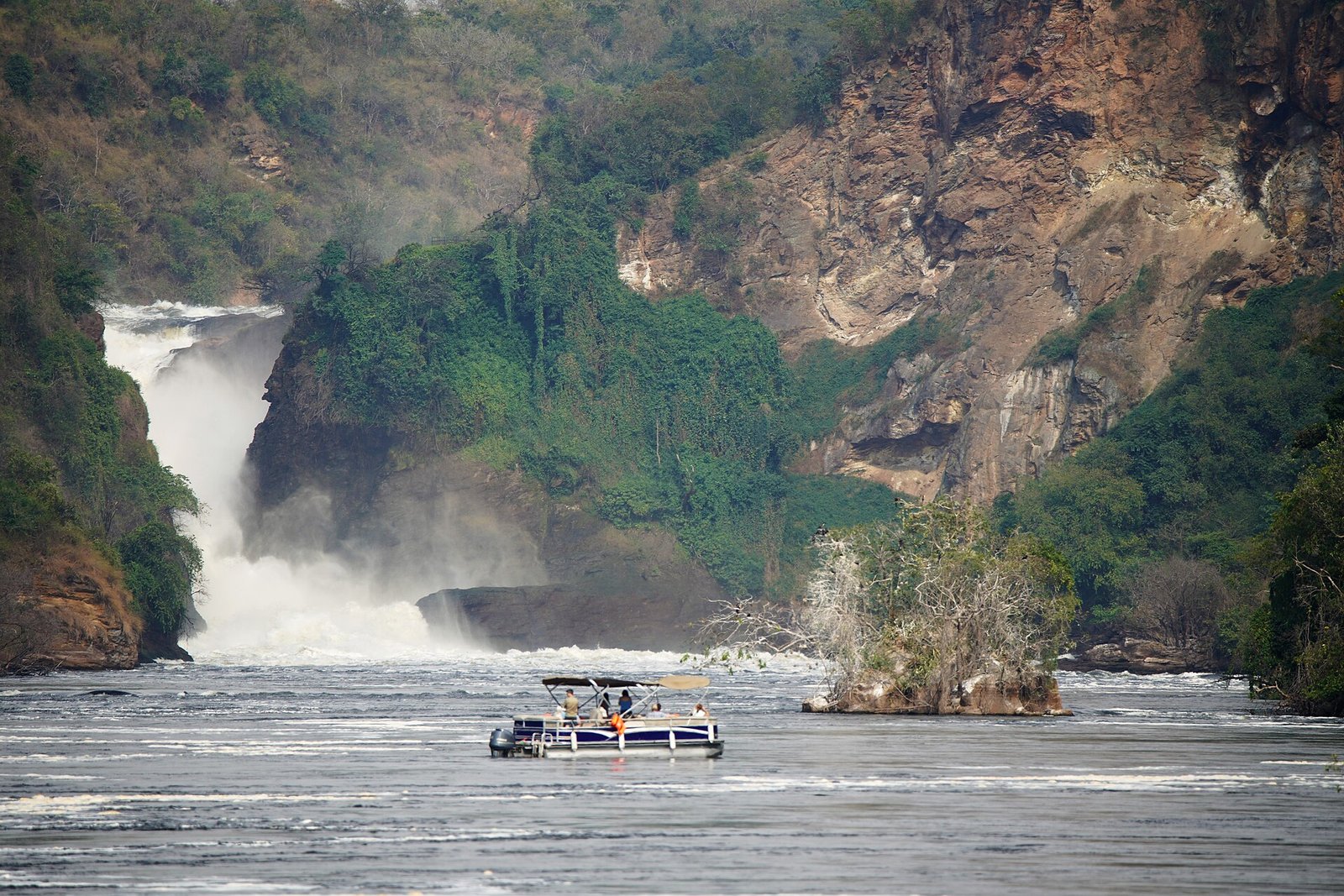
Uganda covers about 241,550 square kilometres, close to the size of the United Kingdom. It has no coast. It borders Kenya, South Sudan, the Democratic Republic of the Congo, Rwanda and Tanzania, and shares Lake Victoria with Kenya and Tanzania. The White Nile leaves the lake at Jinja, east of Kampala.
The 2024 census counted 45,905,417 people. About half of them are under 18. That single number explains the pressure on schools, on jobs and on land. It also explains why the president spends so much time addressing young voters.
Uganda also hosts about 2.0 million refugees and asylum-seekers, according to the UN refugee agency, UNHCR, as of 31 August 2026. That is roughly one person in 23 living in the country. Most come from South Sudan and the Congo. Uganda’s policy lets them work and often gives them plots of land to farm.
Britain ruled Uganda as a protectorate until independence on 9 October 1962. The following two decades were violent, including Idi Amin’s rule from 1971 to 1979. Museveni’s National Resistance Army took Kampala in January 1986. The old kingdoms, such as Buganda, were restored in 1993 as cultural institutions without political power. English and Kiswahili are the official languages; Luganda dominates in Kampala.
Who runs Uganda and how
The president is head of state, head of government and commander of the armed forces. He is directly elected for five years. Presidential term limits were removed in 2005 and the upper age limit of 75 in 2017. Those two changes are why Museveni, now 82, could stand again.
After the vote on 15 January 2026, the Electoral Commission, the body that runs elections, declared him the winner on 17 January with 71.65 percent. Robert Kyagulanyi, the musician known as Bobi Wine, took 24.72 percent. Turnout was about 52.5 percent. Mobile internet was suspended from 13 January, and rights groups documented arrests and violence around opposition rallies. The opposition called the result a sham.
The prime minister, Robinah Nabbanja, is not head of government. She leads government business in parliament and coordinates ministers. Jessica Alupo is vice-president. Both kept their posts in the cabinet named in May 2026.
Parliament has one chamber. The ruling National Resistance Movement, the NRM, holds a large majority. Bobi Wine’s National Unity Platform is the biggest opposition party. On 25 May 2026 members elected Jacob Oboth-Oboth as Speaker with 441 votes, replacing Anita Among.
The army matters as much as the ballot. The Uganda People’s Defence Forces are led by General Muhoozi Kainerugaba, the president’s son. He has been Chief of Defence Forces since March 2024. No successor to Museveni has been named. That does not mean one has not been chosen; it means the question is not discussed in public.
How the economy works
The finance ministry puts output for the year to June 2026 at USh250.4 trillion. It converts that to US$69.35 billion. That is roughly half the size of neighbouring Kenya’s economy. Growth was 6.4 percent, against 6.3 percent a year earlier. The fiscal year runs from 1 July to 30 June.
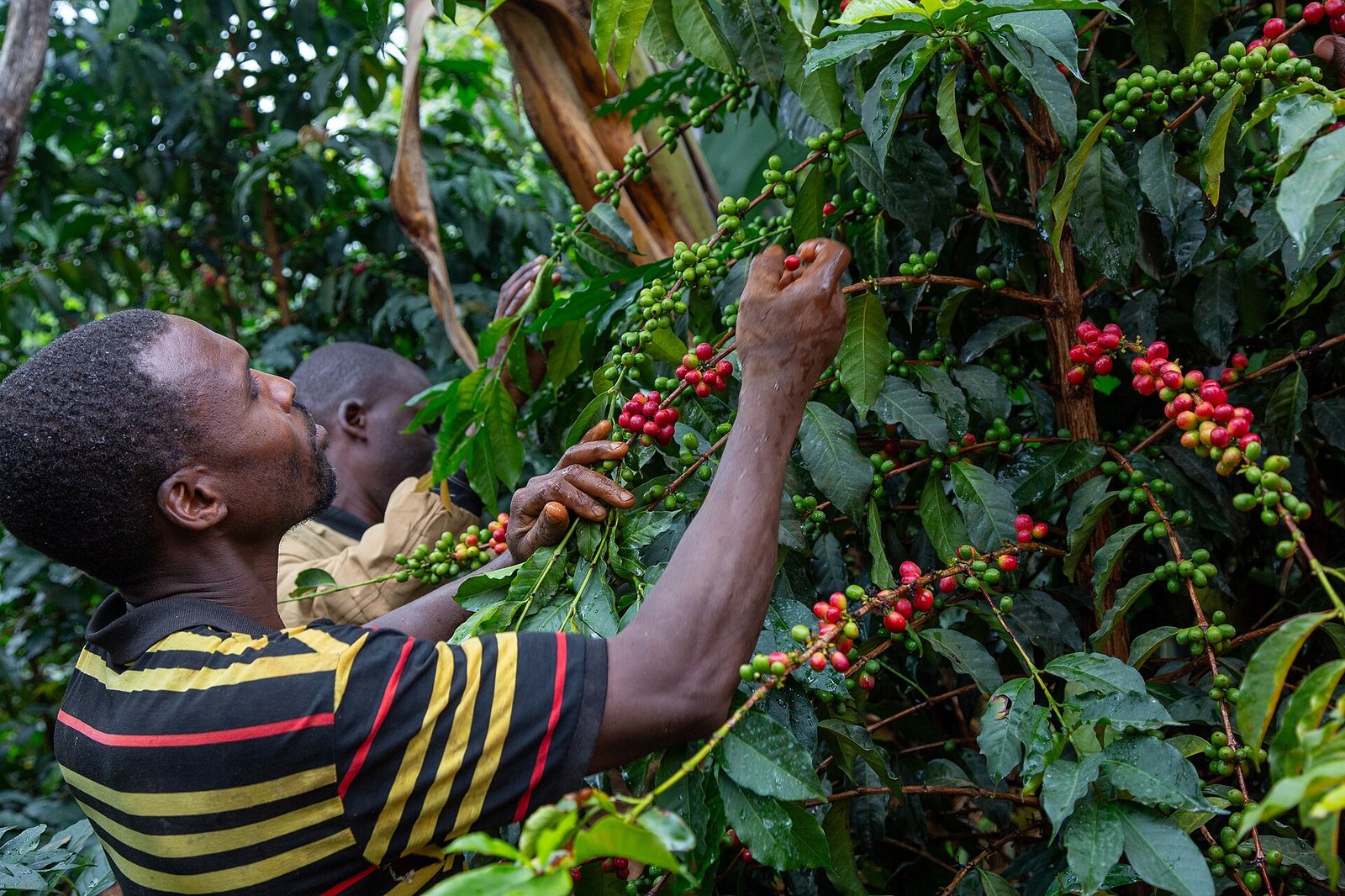
Most Ugandans still live off the land. Coffee is the flagship. In the twelve months to July 2026 Uganda shipped 8.2 million 60-kilogram bags worth US$2.13 billion. The figure comes from the agriculture ministry’s coffee department. Italy was the largest buyer.
Gold earns more, but it tells a different story. Exports reached about US$5.8 billion in 2025, a rise of 75.8 percent, on Bank of Uganda figures. Most of that metal is not mined in Uganda. Kampala refines and re-exports gold from the region, including from eastern Congo. We explain the trade in our piece on Uganda’s gold exports.
The state is short of money. Uganda collects only about 14 percent of output in tax, the president’s address to the September 2026 budget conference said. The goal is above 25 percent. Public debt stood at 54.0 percent of output at the end of June 2026. The government calls that stable; the IMF calls the fiscal position the weak spot.
Uganda has had no IMF lending programme since its 2021–24 credit facility ended. The Fund’s annual health check, concluded on 27 July 2026, praised growth and low inflation. Inflation was 4.1 percent in August 2026, the statistics bureau reported. The Bank of Uganda’s policy rate is 9.75 percent.
Status is contested too. The government says Uganda is now middle-income. The World Bank’s July 2026 list still classes it as low-income, because it measures income differently. Our report on the middle-income dispute sets out both methods.
What is happening right now
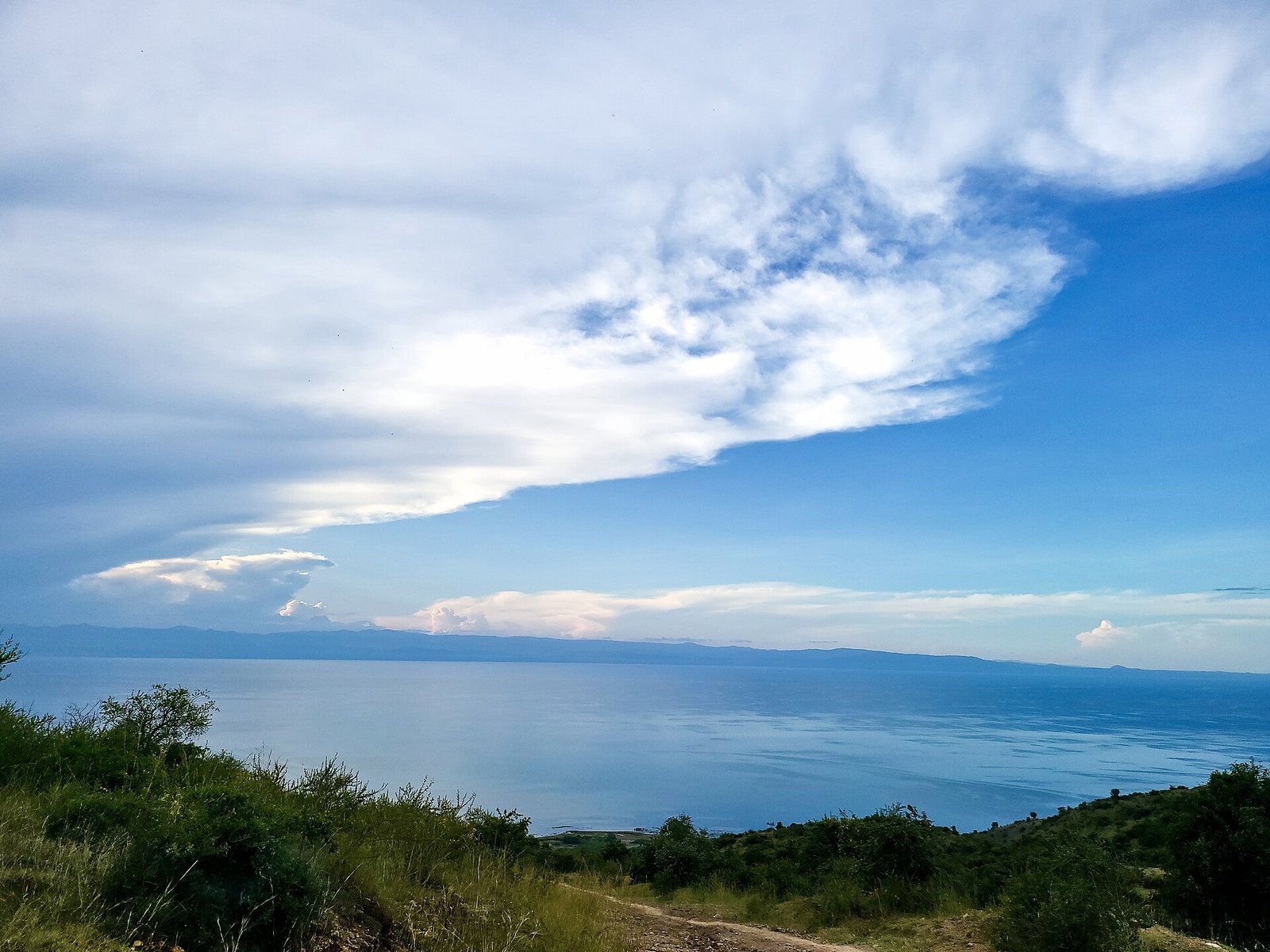
As of September 2026, the oil has not started. This is the most important correction to the usual story. About 6.0 billion barrels of oil lie under the Lake Albert region. Roughly 1.0 billion count as recoverable today, rising to 1.4 billion with better techniques. Those are the figures of the Petroleum Authority of Uganda, the sector regulator.
Two fields will produce it. Tilenga is run by France’s TotalEnergies and Kingfisher by China’s CNOOC. At full output they are planned to deliver about 230,000 barrels a day, 190,000 from Tilenga and 40,000 from Kingfisher. For scale, the pipeline is built to carry up to 246,000 barrels a day.
In September 2026 the finance minister, Henry Musasizi, told parliament’s finance committee that first commercial oil is now expected by the end of June 2027, the close of the financial year. He declined to name a month. The previous target was July 2026. Before that came 2025, 2020 and, originally, 2018. Our report on the latest delay has the full timeline.
The export route is the East African Crude Oil Pipeline, known as EACOP. It runs 1,443 kilometres from Hoima in western Uganda to Tanga on the Tanzanian coast. It is insulated and can be heated, because the crude is waxy. TotalEnergies owns 62 percent; the Ugandan and Tanzanian state oil companies own 15 percent each, and CNOOC 8 percent. EACOP reported the project 92.7 percent complete on 31 August 2026. The regulator told MPs the line should be ready to receive crude by mid-December 2026.
Receiving crude is not the same as selling it. Officials gave both dates at the same hearing: mid-December 2026 for the pipeline accepting crude, and the end of June 2027 for commercial production. The crude now has a name, “Pearl Sweet”, and the national oil company has picked the trader Vitol to market it.
Money is the second story. The shilling weakened sharply from late August, as Middle East tensions and oil-price worries cooled investor appetite. On 15 September the central bank raised its cash reserve requirement from 11 to 13.5 percent, effective 24 September. That is the share of deposits banks must park with it. That makes shillings scarcer without touching the headline rate.
Health is the third. An outbreak of Bundibugyo Ebola, a strain without a licensed vaccine, hit Congo and Uganda in 2026. Uganda recorded 20 confirmed cases and two deaths and declared its outbreak over after 42 days without new cases. The epidemic in Congo is still running, with more than 6,700 confirmed cases by early September.
What to watch
Mid-December 2026 is the first test. If the pipeline really starts taking crude, the June 2027 export date becomes credible. If it slips, expect the finance ministry’s growth forecasts to move with it. The ministry projects 10.2 percent growth for the year to June 2027. That forecast leans partly on oil now due in the year’s final month.
This year’s budget already draws USh1.4 trillion (about US$367 million) from the Petroleum Fund. That fund is where oil money is meant to be kept. Watch whether that spending runs ahead of revenue that has not yet arrived.
The shilling and fuel prices come next. Watch the monthly inflation figure, released at the end of each month, and any further central bank tightening. From 19 June to 17 July 2027, Uganda co-hosts the Africa Cup of Nations with Kenya and Tanzania. That puts stadiums, roads and hotels on a deadline.
Politically, watch the succession. Museveni’s new term runs to 2031, when he would be 86. The role of his son, the army chief, is the single biggest variable. Watch also the London court case brought by Ugandan farmers against the pipeline. We covered it when it was filed in July 2026.
What this means for foreigners
Entry is straightforward on paper. A single-entry tourist visa costs US$50 and is applied for online through the immigration department’s own portal. Copycat visa sites are common, so check the address. The East Africa Tourist Visa, at US$100, covers Uganda, Kenya and Rwanda. Uganda lies in the yellow fever zone; carry your vaccination certificate.
Read the travel warnings before you book. The United States issued a Level 4, “Do not travel”, advisory on 4 June 2026, citing crime, Ebola, terrorism and unrest. That advisory came before Uganda’s outbreak ended, and many insurers take such levels into account. Other governments set their own levels; check yours.
The law is strict on some matters. The Anti-Homosexuality Act of 2023 remains in force after the Constitutional Court upheld most of it in 2024. It criminalises same-sex relations and “promotion” of homosexuality. Foreign residents are not exempt.
For investors, the practical rules are about money and land. Anyone paid in dollars is shielded from the weaker shilling; anyone paid in shillings is not. Land titles need careful checks: reported land-fraud cases rose 67 percent in 2025. Oil, the pipeline and AFCON are the three big spending programmes of the next year.
Uganda explained for a newcomer, in one line: a fertile, fast-growing country where politics is fixed and dates are soft.
Connected Coverage
Museveni Wins Seventh Term to Oversee Uganda’s First Oil and a 52.5% Turnout
Uganda Oil Delayed Again, Now Targeting June 2027
AFCON 2027 Guide: Dates, Hosts, Qualifiers and Tickets for Kenya, Uganda and Tanzania
East Africa Economy Eyes 5.8 Percent Growth as EAC Demands End to Trade Barriers
Kenya Explained: The Country, Its Politics, Its Economy and What to Watch
Tanzania Explained: The Country, Its Politics, Its Economy and What to Watch
Sources: Population from the Uganda Bureau of Statistics, output and debt from the Ministry of Finance, Planning and Economic Development, oil resources from the Petroleum Authority of Uganda, pipeline data from EACOP Ltd, refugee figures from UNHCR, and outbreak data from the World Health Organization.
- Ministry of Finance — FY2025/26 output, growth, debt and the FY2026/27 projection
- Uganda Bureau of Statistics — Consumer Price Index, August 2026
- Petroleum Authority of Uganda — Uganda’s petroleum resources
- EACOP Ltd — project reaches 92.7 percent completion, 31 August 2026
- Parliament of Uganda — Speaker and Deputy Speaker of the 12th Parliament
- IMF — 2026 Article IV consultation with Uganda
- UNHCR — Uganda refugee population data
- World Health Organization — Bundibugyo virus disease outbreak news, 10 September 2026
- Directorate of Citizenship and Immigration Control — tourist visa
- US Department of State — Uganda travel advisory
What Is Not Known
Whether June 2027 holds. The date has moved at least five times. The nearly finished pipeline is the strongest argument yet that this date will stick. But the fields were only about three-quarters built in mid-2026, and no newer figure has been published.
How much the oil will earn. Revenue depends on the oil price, on production ramp-up and on costs that have risen since the investment decision. No official estimate of annual state income at a given oil price has been published for the new timetable.
Who comes after Museveni. There is no named successor and no public process. Whether the army chief is being prepared for the role is speculation, not record. So is whether the ruling party would accept him.
When the US travel advisory changes. It was issued during the Ebola outbreak, which has since ended in Uganda. No review date has been announced.
Frequently Asked Questions
Has Uganda started producing oil?
No. As of September 2026 no commercial crude has been produced. The finance minister told parliament that first commercial oil is expected by the end of June 2027. The regulator says the pipeline should accept crude by mid-December 2026.
Who is the president of Uganda in 2026?
Yoweri Museveni, in power since January 1986. He won the election of 15 January 2026 with 71.65 percent, against 24.72 percent for Bobi Wine. His seventh elected term began on 12 May 2026.
What currency does Uganda use?
The Uganda shilling, written USh or UGX. It traded at about 3,811 shillings to the US dollar on 25 September 2026. Hotels and tour operators often quote in US dollars, but day-to-day spending is in shillings.
Do foreigners need a visa for Uganda?
Most do. A single-entry tourist e-visa costs US$50 and is applied for online through the immigration department’s official portal. The East Africa Tourist Visa, at US$100, also covers Kenya and Rwanda.
Is Uganda safe to visit?
It depends on where and how you travel. The United States rates Uganda Level 4, “Do not travel”, since 4 June 2026, citing crime, Ebola, terrorism and unrest. Uganda’s Ebola outbreak has since been declared over. Check your own government’s advice and your insurer’s terms before booking.
What does Uganda export?
Gold and coffee. Gold exports reached about US$5.8 billion in 2025, although most of the metal is refined and re-exported rather than mined in Uganda. Coffee earned US$2.13 billion in the twelve months to July 2026.
This article was produced by The Rio Times’ automated newsroom system. How we use AI · Report an error
Part of our ongoing coverage
Africa: The New Scramble — the great-power contest over the continent.
Read More from The Rio Times
Rotate for Best Experience
This report is optimized for landscape viewing. Rotate your phone for the full experience.
You've reached your free article limit
Subscribe to The Rio Times for unlimited access to expert analysis, market intelligence, and daily briefings on Latin America.