Republic of Congo in Africa, Its Role, Weight and Alliances
AFRICA · REPUBLIC OF CONGO
Key Facts
- The place The Republic of Congo is an oil-producing country in Central Africa with 6.5 million people in 2025.
- The weight It holds 0.49 percent of sub-Saharan Africa’s people and 0.74 percent of its output.
- The clubs A member of the African Union since 1963, plus the regional blocs ECCAS and CEMAC.
- The chair Its president was chair in office of CEMAC, the six-nation Central African bloc, in August 2026.
- The role The African Union credits its president with mediation on Libya and between Algeria and Mali.
- Prediction markets Polymarket gives a 7.5% chance that President Denis Sassou Nguesso leaves office by 31 December 2026 (31 October, 7:54 a.m. ET).
The Republic of Congo is a small economy on the African continent, yet its president led a bloc this year and mediates for the AU. It is an oil exporter with an OPEC seat and a gateway to the Congo Basin rainforest.

The Republic of Congo and the African Continent in Plain English
The Republic of Congo, also called Congo-Brazzaville after its capital, has about 6.5 million people on the Congo River’s north bank. It is not the Democratic Republic of Congo, the far larger country on the opposite bank.
This guide builds on our Africa section and our country overview. It uses official figures from 2025 and 2026 to show where the Republic of Congo stands on the continent.
- African Union (AU): the 55-member organisation of African states, based in Addis Ababa, Ethiopia.
- ECCAS: the Economic Community of Central African States, an 11-nation club with its seat in Libreville, Gabon.
- CEMAC: the Economic and Monetary Community of Central Africa, a six-nation bloc that shares one currency, the CFA franc.
- AfCFTA: the African Continental Free Trade Area, a continent-wide deal to cut tariffs between African countries.
- OPEC: the Organization of the Petroleum Exporting Countries, a group of oil producers that sets shared output goals.
- Sub-Saharan Africa: the World Bank’s grouping of Africa south of the Sahara, without the north African states.
How Big Is the Republic of Congo Next to the Continent
Sub-Saharan Africa had about 1.32 billion people and an economy of about US$2.21 trillion in 2025, according to World Bank data. The Republic of Congo had 6,484,437 people and a US$16.3 billion economy.
For the Republic of Congo, that is 0.49 percent of the continent’s sub-Saharan people and 0.74 percent of its output. Income per person is a better story, at US$2,515 in 2025, about 1.5 times the sub-Saharan average of US$1,673.
Growth was 3.1 percent in 2025 and consumer prices rose 2.4 percent, according to World Bank data. That is a calm picture next to the 20.2 percent inflation in Angola, its oil-producing neighbour.
Oil explains most of the picture, since fuel made up 85.9 percent of goods exports in 2023, the latest year shown. Exports of goods and services equalled 48 percent of the economy in 2025, according to the World Bank.
How the Republic of Congo Compares With Its Peers
The best peers are its Central African neighbours, and World Bank figures for 2025 show where the country fits. It ranks fourth by income per person and sixth by economy size among the eight countries listed here.
Within the six-nation CEMAC bloc it is third by population, fourth by output and third by income per person. Gabon’s income per person is about 3.3 times higher, while Chad’s is about 41 percent of it.
- Gabon: 2.59 million people, a US$21.4 billion economy, US$8,263 per person. Read our Gabon guide.
- Equatorial Guinea: 1.94 million people, US$12.8 billion, US$6,615 per person; its economy shrank 5.8 percent in 2025. Read our Equatorial Guinea guide.
- Angola: 39.0 million people, US$122.2 billion, US$3,129 per person.
- Republic of Congo: 6.48 million people, US$16.3 billion, US$2,515 per person.
- Cameroon: 29.9 million people, US$58.9 billion, US$1,972 per person.
- Chad: 21.0 million people, US$21.5 billion, US$1,022 per person.
- DR Congo: 112.8 million people, US$91.0 billion, US$807 per person. Read our DR Congo economy guide.
- Central African Republic: 5.5 million people, US$3.1 billion, US$556 per person.
The Republic of Congo in the African Union
The AU lists 25 May 1963 as the country’s joining date, in the days of its predecessor, the Organisation of African Unity. The union now counts 55 member states.
The country’s weight on the continent comes from its president, Denis Sassou Nguesso. He was sworn in on 16 April 2026, after winning 94.9 percent of the vote on 15 March, the government says.
On 16 August 2026 the head of the AU Commission, the union’s executive arm, thanked Sassou Nguesso in Brazzaville for his work. He recalled that the Congolese leader had chaired the AU’s High-Level Committee on Libya.
He also thanked the country for quietly helping to bring Algeria and Mali closer together. That record is why a country with 0.49 percent of sub-Saharan Africa’s people is heard in continental diplomacy.
ECCAS and CEMAC, the Two Central African Clubs
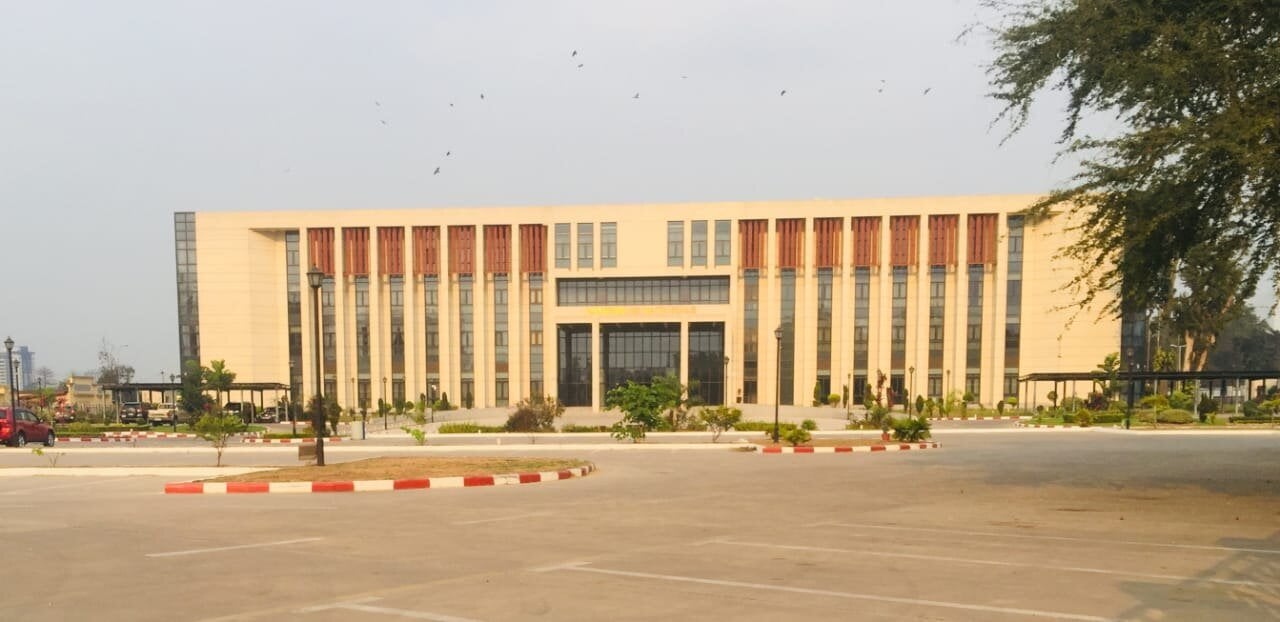
The Republic of Congo belongs to two regional blocs that overlap. ECCAS was founded by a treaty signed in Libreville on 18 October 1983.
It has 11 members: Angola, Burundi, Cameroon, Chad, the Central African Republic, both Congos, Equatorial Guinea, Gabon, Rwanda, and São Tomé. Its officials name insecurity, weak trade, poor infrastructure and funding gaps among the obstacles.
In October 2026 Equatorial Guinea’s president, Teodoro Obiang Nguema Mbasogo, chaired its heads of state, and Ezéchiel Nibigira led its Commission. Gabon, home of the bloc’s seat in Libreville, is led by President Brice Clotaire Oligui Nguema.
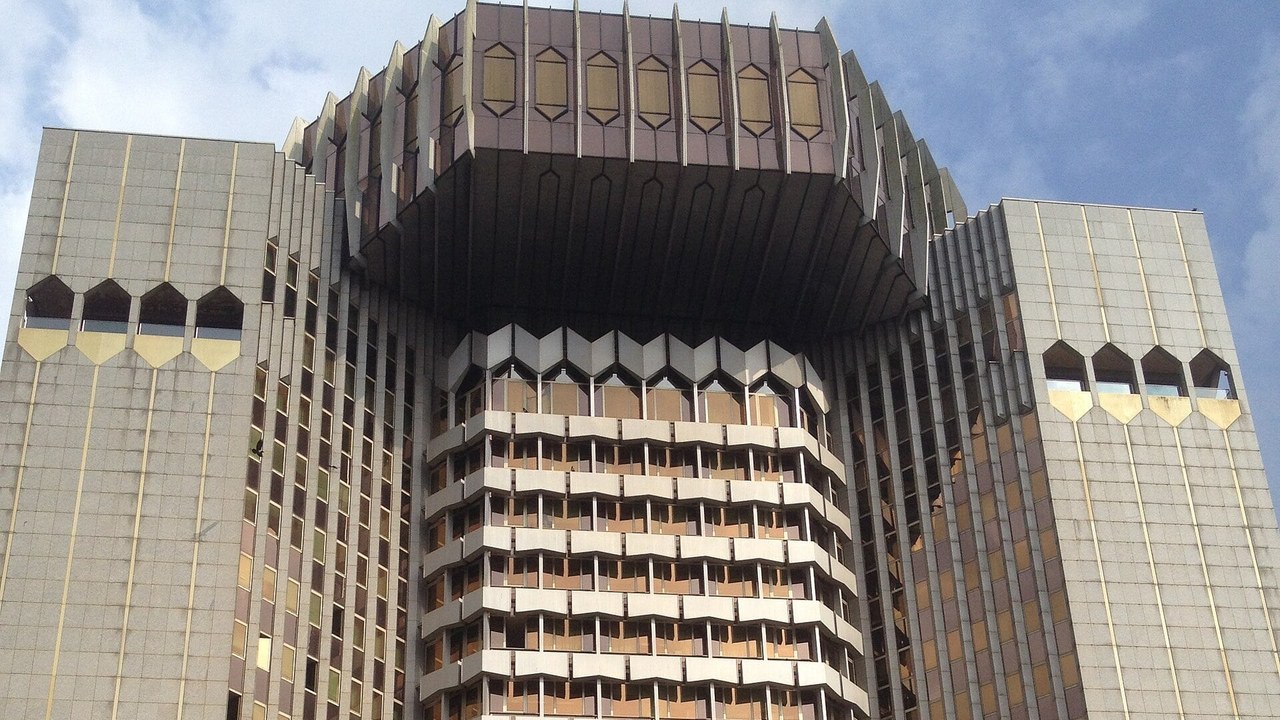
CEMAC is smaller and tighter, with six members that share the CFA franc and a central bank in Yaoundé, Cameroon. The Republic of Congo’s president was its chair in office on 4 August 2026.
On that day the CEMAC Commission presented him with a new agenda on free movement of people and goods. On 18 October 2026 the ECCAS Commission chief said he wanted to revive the plan to rationalise the two blocs.
The aim is to harmonise or merge them, along with a third club for the Great Lakes region, known as CEPGL. That would remove overlaps between the organisations.
The Trade Deal and the Bridge to Kinshasa
The African Union adopted the continental free trade area, AfCFTA, in March 2018. The Republic of Congo signed on 21 March 2018, ratified on 7 February 2019 and deposited its papers on 10 February 2019.
That made it one of the first 13 of 49 countries to deposit, the AU’s list of 22 May 2026 shows. In April 2026 the president voiced support for the AU’s free trade initiatives.
The practical benefit is not yet measured, because the country still sells mainly oil. The most visible project is a road-and-rail bridge between Brazzaville and Kinshasa, which the government calls the closest capitals in the world.
In May 2026 the two governments said works could start before year’s end, after a tax and customs deal. A second link is corridor 13, a road toward the Central African Republic and Chad, where paving began in February 2026.
Alliances, Mediation and Friendly Powers
The Republic of Congo keeps close ties with its giant neighbour and with the powers that court it. The presidents of the two Congos met at Oyo on 24 January 2026 and in Brazzaville on 10 August 2026.
The government says those talks covered cooperation and regional issues. On 7 October 2026 Mozambique’s president, Daniel Chapo, paid an official visit to Brazzaville.
The two sides signed about ten cooperation agreements covering hydrocarbons, forests, fishing, small business, tourism and higher education. In France, President Emmanuel Macron received Sassou Nguesso at the Élysée Palace on 9 September 2026.
They discussed investment, carbon credits, a Blue Fund for the Congo Basin and security in Central Africa. China sent a vice-chairman of its top advisory body to the April 2026 inauguration, and both governments speak of a strategic partnership.
Russia hosted Sassou Nguesso on a state visit from 28 April to 1 May 2026. Energy, defence and infrastructure were on the announced agenda.
Regional security was also on the table in Paris. The government says President Macron praised the Republic of Congo’s role as a mediator in regional crises.
The Congo Basin and the Oil Card
The Republic of Congo became the 15th member of OPEC on 22 June 2018, according to its government. That seat gives a small producer a voice in global oil talks.
The French group Perenco told the president on 29 June 2026 that it plans to reach 100,000 barrels a day. The second card is the forest.
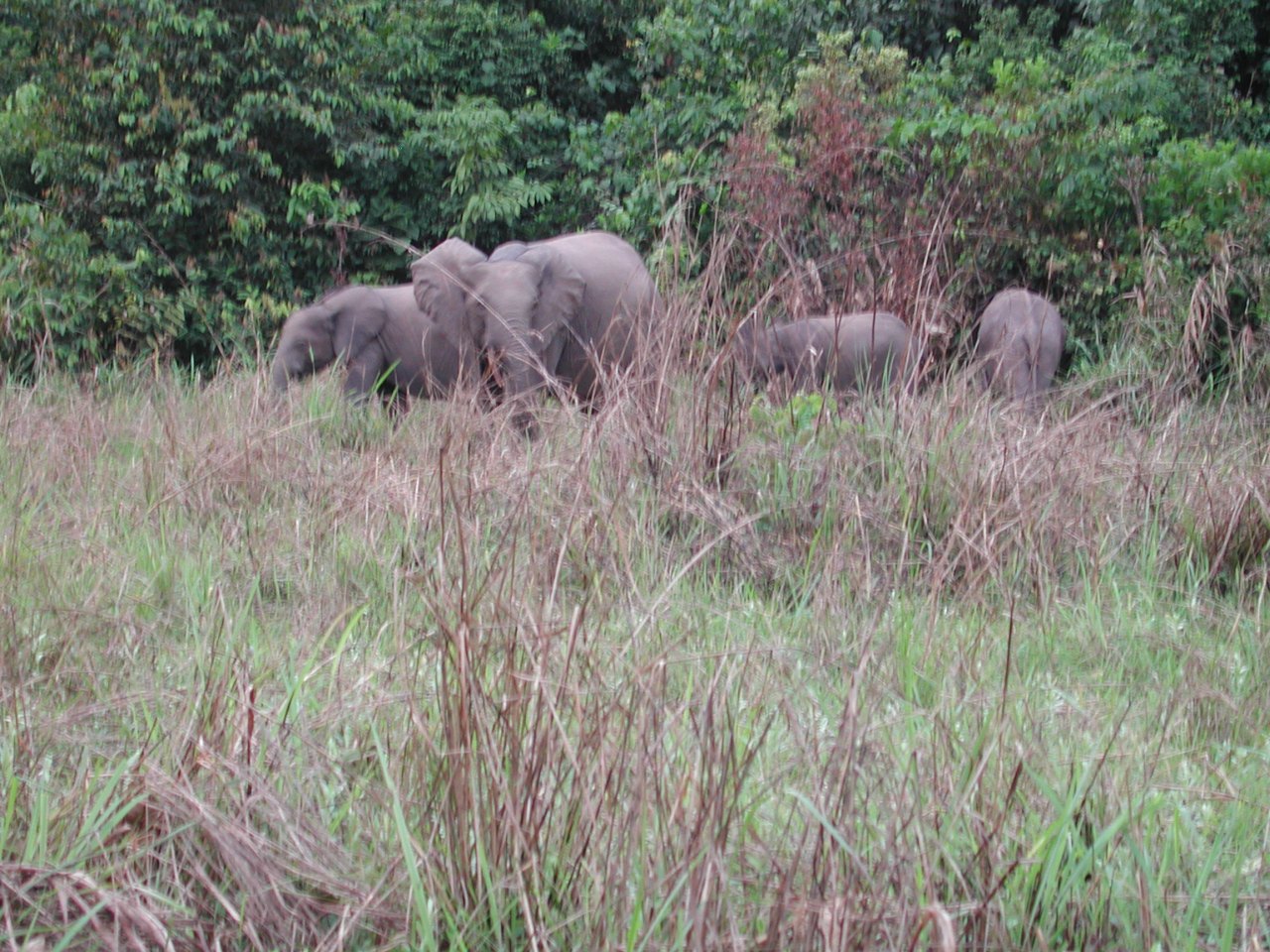
The country holds a large part of the Congo Basin, one of the world’s great tropical rainforests. The government said on 9 September 2026 that it chairs the Congo Basin Climate Commission.
- OPEC seat: the government says the country joined on 22 June 2018, as the seventh African member.
- Forest diplomacy: Sassou Nguesso asked in Paris on 9 September 2026 for guaranteed satellite images to fight illegal logging.
- Development bank: Brazzaville hosted the African Development Bank’s annual meetings from 25 to 29 May 2026.
What It Means for US Readers
Oil is the link that matters most to American investors. Fuel was 85.9 percent of goods exports in 2023, so the state budget moves with crude prices, as our budget report shows.
The regional central bank in Yaoundé fixes the CFA franc at 655.957 per euro, which brings stability but no independent currency policy. With the euro at 0.8956 per US$ on 31 October 2026, the franc stands near 587 per US$.
Our CFA coins report explains a coming change to the old coins used across the bloc. Many US readers confuse the two Congos, so check which country a headline means.
Travellers can start with our travel rules guide. Readers interested in the rainforest can open our Congo Basin report.
What Prediction Markets Say
Polymarket, a prediction market where users bet real money, gave 7.5% on 31 October 2026 at 7:54 a.m. ET. The question was whether President Denis Sassou Nguesso leaves office by 31 December 2026.
The question had drawn US$22,566 in trading in total. Treat it as a thin market and a sign of mild doubt, not a forecast.
Why we show this: prediction markets turn real-money bets into a live probability that moves within minutes of the news, which is why investors, campaigns and newsrooms in the United States now follow them closely. We show them next to polls and official results, never instead of them.
What Is Not Known
Public data does not yet show how much trade moves under the AfCFTA, so the real gain is unmeasured. It is also unclear whether the ECCAS and CEMAC merger plan will move forward.
No start date for the Brazzaville-Kinshasa bridge works has been announced, only a hope to begin before the end of 2026. The terms of Perenco’s planned output rise are also not public.
Frequently Asked Questions
Is the Republic of Congo part of the continent’s main bodies?
Yes. The Republic of Congo is listed as an African Union member since 25 May 1963 and belongs to ECCAS and CEMAC. It also ratified the continental free trade area in February 2019.
How big is the Republic of Congo compared with the rest of the continent?
The Republic of Congo has 0.49 percent of the continent’s sub-Saharan people and 0.74 percent of its output, based on World Bank data for 2025. Income per person is US$2,515.
What is the difference between the two Congos?
The Republic of Congo has its capital in Brazzaville and about 6.5 million people. The Democratic Republic of Congo, with Kinshasa as capital, has about 112.8 million people.
Who leads the Republic of Congo?
President Denis Sassou Nguesso, who was sworn in for a new five-year term on 16 April 2026. He was active in office on 9 October 2026.
Why does the Republic of Congo matter in African diplomacy?
On the African continent, the Republic of Congo is known for mediation. Its president chaired the African Union’s high-level committee on Libya, and the AU Commission head praised him on 16 August 2026.
Is the Republic of Congo a member of OPEC?
Yes. The Republic of Congo became the 15th OPEC member on 22 June 2018, according to its government, and the seventh African one.
Sources: World Bank, World Development Indicators for the Republic of Congo, Gabon, Equatorial Guinea, Angola, Cameroon, Chad, DR Congo, Central African Republic and sub-Saharan Africa (population, GDP, income per person, growth, inflation, exports, 2025), 2026-10-31; African Union, list of member states with dates of joining, 2026-10-31; African Union, list of countries that have signed and ratified the AfCFTA agreement (22 May 2026), 2026-05-22; Government of the Republic of Congo, official portal (presidential investiture 16 April 2026, election result, CEMAC chair, AU Commission audience 16 August 2026, France visit 9 September 2026, Mozambique visit 7 October 2026, OPEC membership), 2026-10-31; Economic Community of Central African States (ECCAS), 43rd anniversary and rationalisation notices, 18 and 19 October 2026, 2026-10-19; Economic and Monetary Community of Central Africa (CEMAC), official site, member states, 2026-10-31; Bank of Central African States (BEAC), official site (headquarters in Yaoundé, fixed CFA franc rate to the euro, 31 October 2026), 2026-10-31.
This article was produced by The Rio Times’ automated newsroom system. How we use AI · Report an error · Editorial responsibility: Matthias Camenzind, Editor-in-Chief
Brazil runoff date: Sunday, October 25, poll closing times and when results start · Brazil runoff polls: Flávio 51%, Lula 49% · Kalshi and Polymarket odds
Rotate for Best Experience
This report is optimized for landscape viewing. Rotate your phone for the full experience.
You've reached your free article limit
Subscribe to The Rio Times for unlimited access to our reporting from across Africa.
Keep reading for free
Your first article was on us. Register with your email address to read 6 free articles every month. You will also receive Africa Intelligence: African markets, politics and business, every weekday morning.