DR Congo Politics Explained, Who Holds Power in 2026
AFRICA · DR CONGO
Key Facts
- The president Félix Tshisekedi chaired the government’s 100th Council of Ministers on 9 October 2026 in Kinshasa, the capital.
- The government Judith Suminwa Tuluka is prime minister, with six deputy prime ministers, on the government’s website as of 1 November 2026.
- Parliament Jean-Michel Sama Lukonde presides over the Senate, the upper house of 109 senators, and spoke at its sitting on 13 October 2026.
- The challenge The Senate’s president says ex-president Joseph Kabila leads the FRN, a movement announced on 12 October 2026.
- The next vote The election commission, led by Denis Kadima, is preparing the 2028 elections, and said on 24 September 2026 that money sits in the 2027 budget bill.
- Prediction markets Polymarket gives a 5.5% chance that Félix Tshisekedi is out as president by 31 December 2026 (1 November 2026, 6:48 a.m. ET).
DR Congo politics runs through one man, President Félix Tshisekedi, who chairs the cabinet meetings that steer the government. Beneath him sit a prime minister, a Senate, an election commission and a war in the east that shapes almost every decision.
This guide names who holds which office as of October 2026 and explains how power is shared.

The President and His Palace
Félix Tshisekedi is head of state of the Democratic Republic of the Congo, or DR Congo, since January 2019. In DR Congo politics the president sets the cabinet agenda.
The government’s record shows him chairing its 99th Council of Ministers on 25 September 2026 and its 100th on 9 October. Both meetings took place at the African Union City in Kinshasa.
On 9 October he warned that any proven misconduct by a minister or a state company manager would bring an exemplary sanction. He also told the prime minister to enforce Ordinance 25/293, the decree that sets out what each ministry may do.
The interior ministry’s report in the same record notes his trip to Brazzaville, where he met the Republic of Congo’s president. That country is a separate state facing DR Congo across the Congo River.
The Prime Minister and the Cabinet
Judith Suminwa Tuluka is the prime minister and head of the government. Her office said on 19 October 2026 that she launched a river cargo service on the Inkisi River at Madimba.
She also led the country’s delegation to the United Nations General Assembly in New York from 22 to 28 September 2026. The government’s website lists six deputy prime ministers, each holding a major portfolio.
Jacquemain Shabani Lukoo is deputy prime minister and interior minister, in charge of the police chain, local government and political parties. Jean-Pierre Bemba Gombo is deputy prime minister for transport and communication routes.
Guy Kabombo Mwadiamvita is deputy prime minister and defence minister, and he was away on a mission on 9 October. Daniel Mukoko Samba, the deputy prime minister for national economy, read the security report in his place.
Adolphe Muzito is deputy prime minister and budget minister, and he met the election commission’s president on 24 September 2026. Doudou Fwamba Likunde is finance minister.
Julie Mbuyi Shiku is minister of the portfolio, which means she oversees the state-owned companies. Patrick Muyaya Katembwe is communications minister and government spokesman, and his name closes the written record of each cabinet meeting.
The cabinet is large. Its website lists deputy prime ministers, ministers of state, ministers, deputy ministers and vice-ministers.
Parliament and the Courts
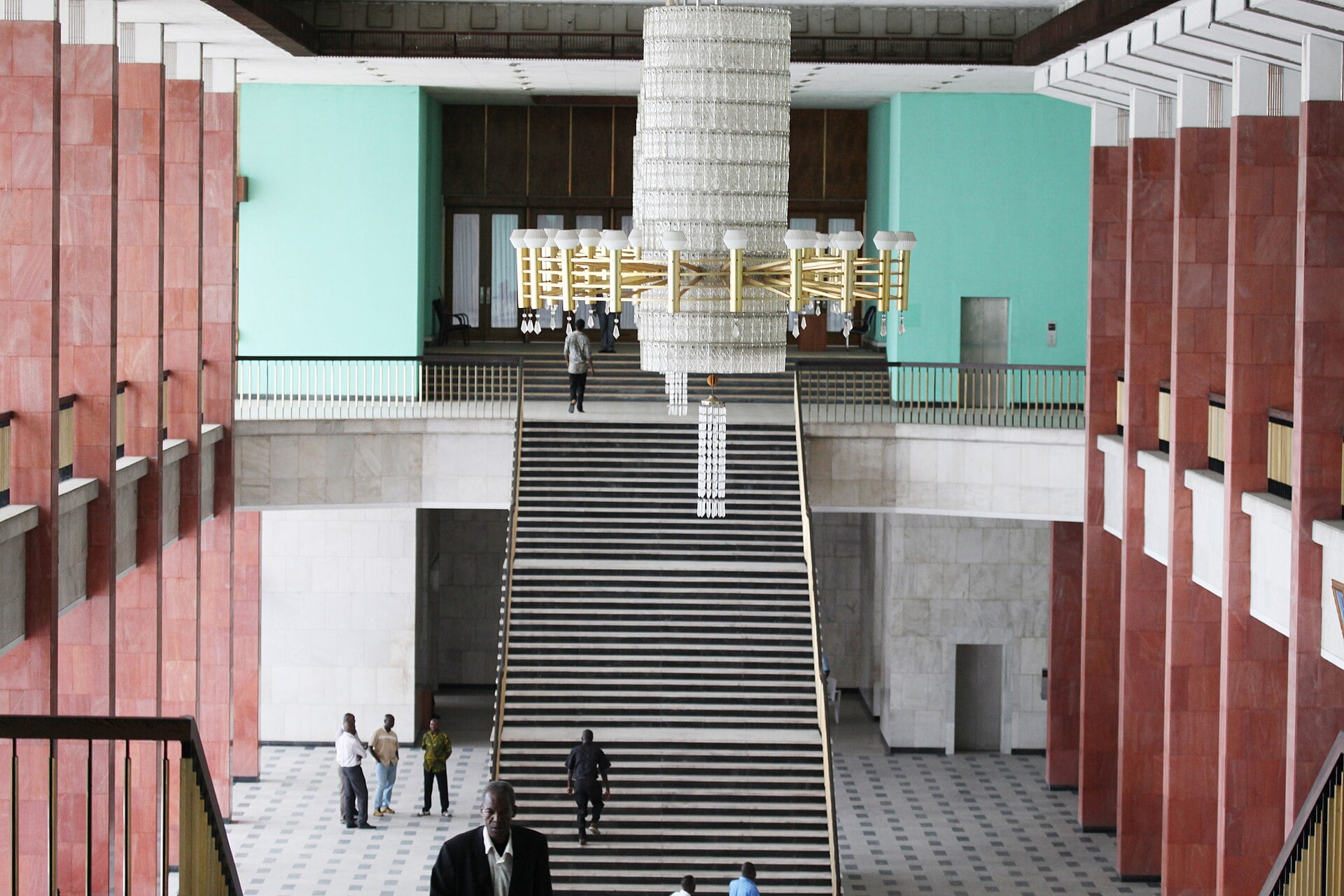
The Senate is the upper house of Parliament, and its website lists 109 senators. Its president, Jean-Michel Sama Lukonde, spoke at the sitting of 13 October 2026.
The Senate posted on 27 October 2026 that he formally received the general report on the 2025 budget law. Its own rules give its president a special role in a crisis.
If the presidency falls vacant by death, resignation or a permanent block declared by the Constitutional Court, he takes over. That puts the Senate chief next in line, even though the prime minister runs the daily business.
The National Assembly is the lower house of the same Parliament, and both chambers meet in Kinshasa. The Constitutional Court is the body that declares a permanent block on the presidency.
The Army, Police and Security Chiefs
The armed forces, known by the French initials FARDC, sit under the defence minister. The government’s security reports of 25 September and 9 October 2026 describe the army defeating attacks by M23 rebels and the Rwandan army.
Those attacks are in North Kivu, the eastern province around Goma. In South Kivu, the government says its forces face a coalition backed by the Rwandan army around Fizi and Uvira.
In Ituri, a north-eastern province, the government says an insurgent coalition now ambushes foreign mining workers to seize gold. It says the same group attacks soldiers and police to take weapons.
On 9 October 2026 the interior minister told the cabinet that two officers in Lualaba province had been suspended. They were the provincial police chief and the commander of a unit of the police’s National Intervention Legion.
The unit had been deployed onto the mining sites of RMC Mining, a company that holds two exploitation permits there. The record names the permits as numbers 15311 and 15312.
In Kinshasa the government runs Operation Ndobo, a campaign against armed crime. On 25 September 2026 the interior minister said a security meeting would soon set a wider strategy.
His 9 October report says 6,900 state and non-state actors in 14 provinces have been trained for local security committees. The training is meant to push security decisions down to local level.
The Rebel and Opposition Challenge
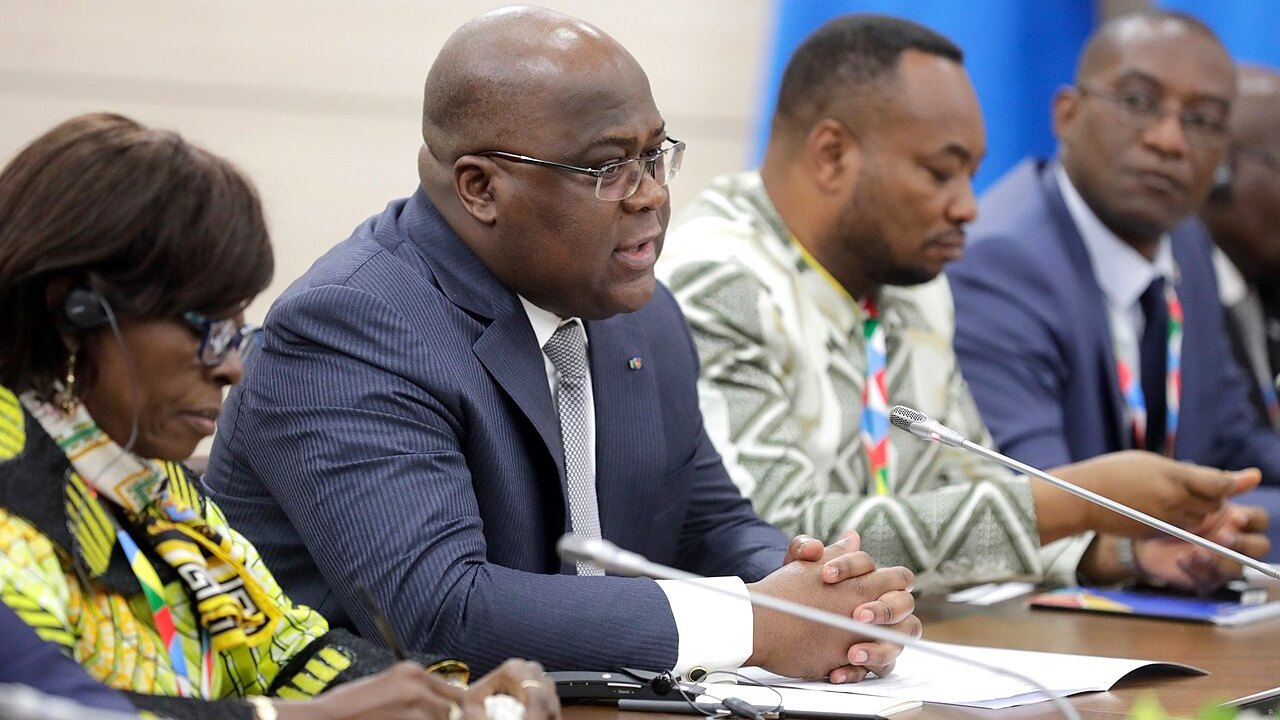
The sharpest challenge to Tshisekedi comes from outside the capital. On 12 October 2026 the Front for the Refoundation of the Nation (FRN) announced itself as successor to the Congo River Alliance.
The US Treasury records that step. The alliance is the political wing of M23, an armed group designated by both the United States and the United Nations.
The Senate’s president says the FRN is led by Joseph Kabila, the former president whom the Senate calls honorary president. Sama Lukonde called the movement an anti-patriotic act at the Senate sitting on 13 October 2026.
Kabila was president from 2001 to 2019. M23 captured Goma and Bukavu, the capitals of North and South Kivu provinces, in early 2025.
The US Treasury says M23 has also taken control of mining areas in the east. The government’s security reports name Rwandan forces alongside M23 as the enemy.
On 28 October 2026 the US Treasury sanctioned Rwanda’s Ministry of Defence and Zigama, a Rwandan credit society, for supporting M23. The Treasury tied the move to the Washington Accords.
The presidents of DR Congo and Rwanda signed that peace and trade deal on 4 December 2025. Washington says Rwanda must halt its support for M23 and withdraw its troops.
Kinshasa’s own records also name the Doha framework agreement, a second peace track. On 9 October 2026 the government said 39 fighters of the rebel coalition had surrendered in the Grand Nord.
- M23: an armed group that captured Goma and Bukavu in early 2025, designated by the United States and the United Nations.
- Congo River Alliance: the political wing of M23, now succeeded by the FRN.
- FRN: the movement the Senate says Kabila leads, announced on 12 October 2026.
Elections, Dialogue and the 2028 Vote
The National Independent Electoral Commission, known by its French initials CENI, runs elections, and its president is Denis Kadima Kazadi. On 24 September 2026 he asked the budget minister to help fund the next vote, starting with voter registration.
He confirmed that money for the next elections is in the 2027 budget bill now before Parliament. The commission calls them the 2028 elections.
The government also says a national dialogue is expected. In its 9 October 2026 report the interior ministry noted that political, religious and civil leaders were consulting each other.
That record gives no date, agenda or list of participants. Until it does, the dialogue remains a promise rather than a process.
Money, Minerals and the US Deal
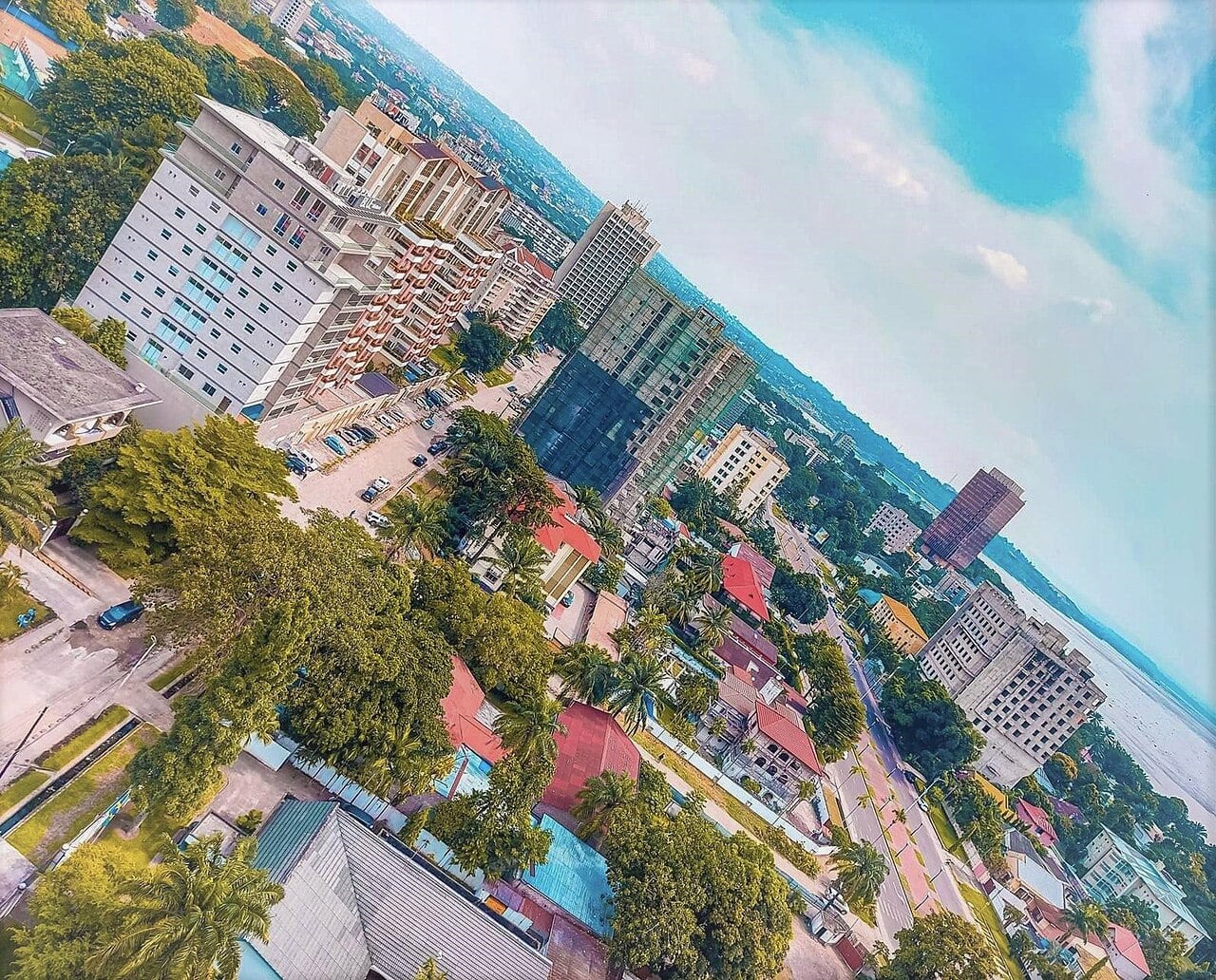
Politics in Kinshasa is now tied to a strategic partnership with the United States. On 9 October 2026 the prime minister said she would chair a joint task force meeting on 12 October to track it.
The agenda covered US technical help, the Lobito corridor and a list of strategic assets offered to Washington. She also said a Paris meeting on the Inga hydropower programme was set for 25 to 27 October 2026.
A deputy assistant secretary of the US Treasury and senior World Bank leaders were due to attend. The prime minister also said DR Congo has committed to set up a single national tax authority within twelve months.
The Central Bank governor told the cabinet on 25 September 2026 that annual inflation was 3.3% in the third week of September. A year earlier it was 7.8%.
The finance minister said the government plans to take up a World Bank disaster-response credit line of up to US$500 million. For the full economic picture, read the Rio Times guide to who runs DR Congo’s economy.
The DR Congo geopolitics guide explains the foreign powers. The DR Congo explainer covers the war, cobalt and politics in one place.
What Prediction Markets Say
On 1 November 2026 at 6:48 a.m. ET, Polymarket traders gave a 5.5% chance that Tshisekedi is out by 31 December. The market had traded about US$21,500 in total, so it is thin and moves on small bets.
Why we show this: prediction markets turn real-money bets into a live probability that moves within minutes of the news, which is why investors, campaigns and newsrooms in the United States now follow them closely. We show them next to polls and official results, never instead of them.
What It Means for US Readers
DR Congo politics matters to Americans because the US Geological Survey estimates it mined 73% of the world’s cobalt in 2025. Cobalt goes into electric-car and phone batteries.
The US Treasury has sanctioned Rwanda’s Ministry of Defence over M23, so US firms active in the east should read that notice. The Rio Times analysis of the eastern war explains the front lines and the foreign backers.
Americans who plan to visit should check the State Department’s travel advisory for DR Congo before booking. For background on the country, see the Rio Times DR Congo hub.
What Is Not Known
The presidents of the National Assembly and the Constitutional Court are not named here. Nor are the main opposition leaders, the army’s chief of general staff or the provincial governors.
The 9 October 2026 government record gives no date or list of participants for the national dialogue. The exact dates of the 2028 elections are not given in the election commission’s 24 September statement.
The government’s reports describe battlefield results, but no neutral count of the territory each side holds is available. Casualty and displacement figures also differ by source, so this guide gives none.
Frequently Asked Questions
Who is the president of DR Congo?
Félix Tshisekedi has been president since January 2019. He chaired the government’s 100th Council of Ministers on 9 October 2026 in Kinshasa.
Who is the prime minister of DR Congo?
Judith Suminwa Tuluka is prime minister and head of the government as of October 2026. Six deputy prime ministers sit in her cabinet.
What does the Senate president do in DR Congo politics?
In DR Congo politics, Jean-Michel Sama Lukonde presides over the 109-member Senate. If the presidency falls vacant, he exercises the functions of the president under the Constitution.
Who is Joseph Kabila and what is the FRN?
Kabila was president from 2001 to 2019. The Senate’s president says he leads the FRN, a movement announced on 12 October 2026.
When is the next election in DR Congo?
The election commission is preparing the 2028 elections. On 24 September 2026 it said voter registration is the first step.
What are the Washington Accords?
They are a peace and trade deal signed by the presidents of DR Congo and Rwanda on 4 December 2025. The US Treasury cited them when it sanctioned Rwanda’s defence ministry on 28 October 2026.
Sources: Government of DR Congo, Primature, record of the 100th ordinary Council of Ministers, 9 October 2026, 2026-10-09; Government of DR Congo, Primature, record of the 99th ordinary Council of Ministers, 25 September 2026, 2026-09-25; Government of DR Congo, Primature, Suminwa II government list and news, viewed 1 November 2026, 2026-11-01; Senate of DR Congo, news (including the Senate president’s statement on the FRN of 13 October 2026) and rules on the bureau and presidential vacancy, 2026-10-27; National Independent Electoral Commission (CENI), meeting with the budget minister on the 2028 elections, 24 September 2026, 2026-09-24; US Department of the Treasury, press release sb0668, sanctions on Rwandan Ministry of Defence and Zigama, 2026-10-28; Ministry of Communication and Media of DR Congo, home page, viewed 1 November 2026, 2026-10-30; Government of DR Congo, Primature, home page (prime minister, 19 October 2026 news), viewed 1 November 2026, 2026-11-01; US Geological Survey, Mineral Commodity Summaries 2026, Cobalt, 2026-01-31.
This article was produced by The Rio Times’ automated newsroom system. How we use AI · Report an error · Editorial responsibility: Matthias Camenzind, Editor-in-Chief
Brazil runoff date: Sunday, October 25, poll closing times and when results start · Brazil runoff polls: Flávio 51%, Lula 49% · Kalshi and Polymarket odds
Rotate for Best Experience
This report is optimized for landscape viewing. Rotate your phone for the full experience.
You've reached your free article limit
Subscribe to The Rio Times for unlimited access to our reporting from across Africa.
Keep reading for free
Your first article was on us. Register with your email address to read 6 free articles every month. You will also receive Africa Intelligence: African markets, politics and business, every weekday morning.