M23 Parallel Administration Now Taxes Eastern Congo, Aid Agencies Included
DR Congo · Analysis
Key Facts
- —Who M23 are A Rwanda-backed armed group that seized Goma in January 2025 and Bukavu three weeks later.
- —What they built A working administration with its own tax office, police, customs, courts and utility control.
- —What it charges Fees on shops, trucks, borders and minerals, plus income tax on aid workers’ salaries.
- —The aid agency price list Fifty US dollars for a seven-day permit, five hundred for six months of access.
- —Where the money comes from Coltan from the Rubaya mine alone is estimated at around US$800,000 a month.
- —Why it reaches your phone That coltan leaves through Rwanda and enters the global electronics supply chain.
The armed group that took the two largest cities of eastern Congo last year did not simply occupy them. It built a state inside them, and that state now sends invoices.
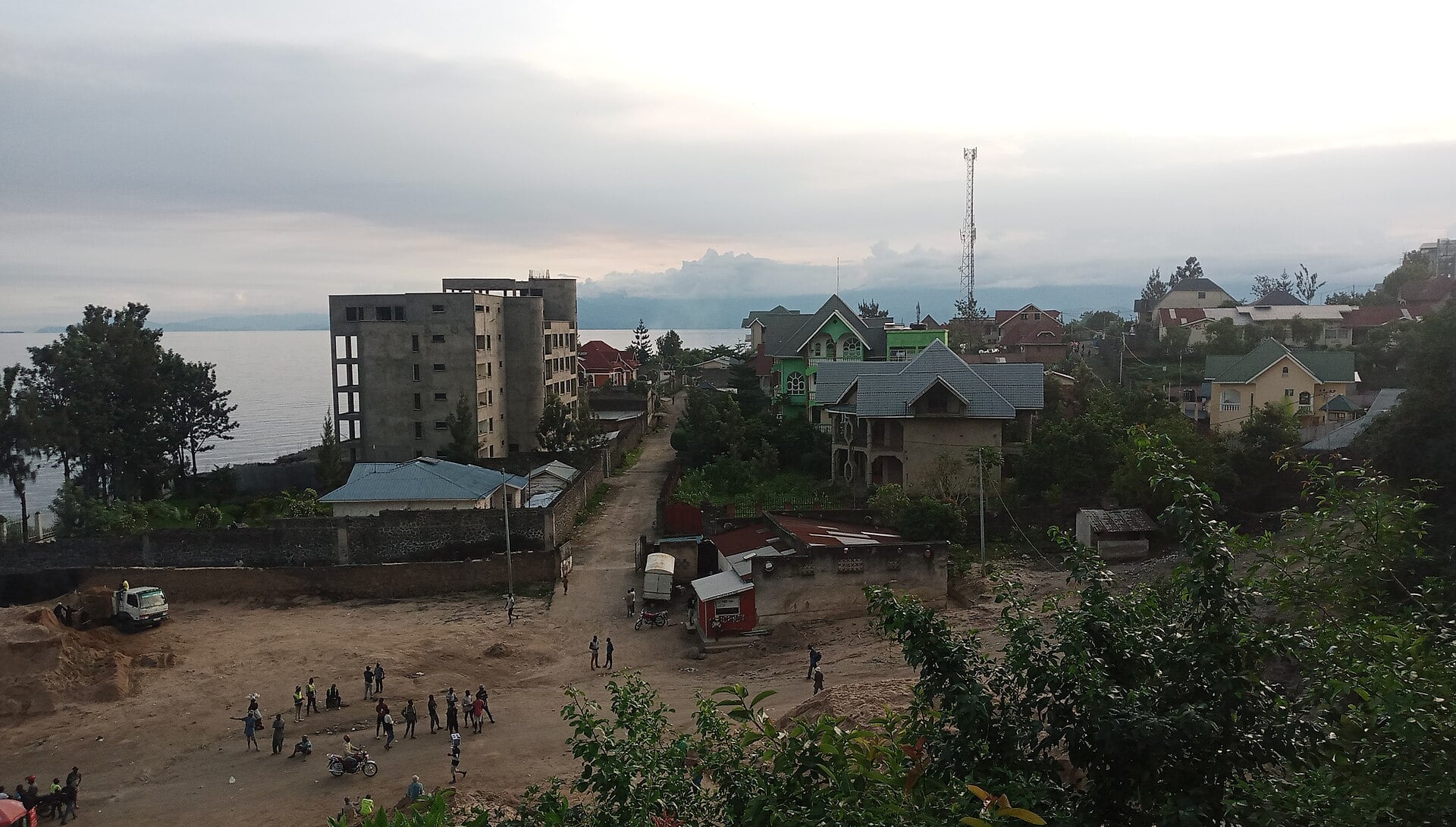
The M23 parallel administration in eastern Congo has a tax office, and it expects to be paid. That is the finding running through a year of reporting and a United Nations investigation into how the group funds itself.
A Government Without a Country
M23 took Goma on 27 January 2025 and Bukavu about three weeks later. Between them the two cities hold several million people.
The M23 parallel administration was not the usual pattern of an occupying force living off looting. The group appointed governors, trained civil servants and took over the machinery that collects money.
Zobel Behalal, of the Global Initiative against Transnational Organized Crime, calls it a de facto and deeply illegal parallel administration. He describes it as methodically consolidated rather than improvised.
United Nations experts reported in June that the group had created tax systems and taken control of revenue services. It also extended authority over the state electricity and water utilities.
The Price List
The clearest evidence of how this works is what humanitarian organisations are charged. M23’s directorate of finances issues visas for its own territory.
A seven-day permit costs fifty US dollars. Six months of multiple entry costs five hundred.
The group also demands income tax on the salaries of aid workers. A further tax applies to rented offices and guesthouses, and one large international organisation has paid.
A senior humanitarian official described the position as a sword hanging overhead. Refuse and lose access, pay and fund the group you are working around.
The reporting rests on nine anonymous sources across aid agencies, donors and embassies. That anonymity is easy to understand and it is still a limitation.
Where the Money Comes From
Mineral revenue is the part of the M23 parallel administration that can be counted. United Nations experts estimate the Rubaya coltan mine alone yields around US$800,000 a month.
The group charges four dollars a kilogram on coltan and two dollars on cassiterite at the point of sale. Loads are weighed at checkpoints west of Goma.
The payment is then made at a bank in Gisenyi, on the Rwandan side of the border. That detail tells you most of what you need to know about the route.
Everything else is taxed too. Trucks and motorbike taxis pay at checkpoints, shops and warehouses pay rates, and residents are asked for cash, labour or goods.
There is no published total across all of it. Anyone quoting one is estimating.
The Coltan Reaches Everyone
Global Witness traced at least 1,400 tonnes of coltan smuggled from Congo into Rwanda within a year of the Rubaya takeover. It identified more than 2,000 tonnes of conflict coltan in total.
Rwanda’s official coltan exports rose two and a half times between 2021 and 2025. Its cassiterite exports rose 58 percent in 2025 with no matching rise in its own production.
Coltan yields tantalum, which sits in the capacitors of almost every phone and laptop. This is the point at which a war in the Kivus becomes a supply-chain question for a company in Europe or Asia.
What Happened to the Banks
Commercial banks in Goma and Bukavu shut when the cities fell and have largely stayed shut. Equity BCDC says its branches closed for security reasons.
M23 filled the gap rather than leaving it. It reopened Cadeco, the state savings bank, and set up a regulator that functions as a central bank of sorts.
Who is to blame is contested. The group’s political leader says Kinshasa ordered the closures.
The Congolese government rejects that. It says no bank may legally operate in territory held by a sanctioned armed group.
Goma airport remains shut to commercial and humanitarian flights. A United Nations helicopter landed there in February, the first aircraft in over a year, and nothing has followed it.
The Talks That Have Not Stopped the Money
Congolese and Rwandan officials meet in Geneva on Tuesday and Wednesday under American, Qatari, Togolese and African Union mediation. The subject is the security commitments both sides made last year.
A separate track in Doha covers the government and M23 directly. Of eight protocols in that framework, two have been signed.
Fighting has continued throughout. M23 pushed west toward Walikale in the second week of September, and both sides used drones extensively in the Minembwe highlands.
Nothing in either negotiation currently addresses the M23 parallel administration itself. An administration that collects revenue is harder to dismantle than a front line.
More: Africa coverage, every day from The Rio Times.
Frequently Asked Questions
What is M23?
The March 23 Movement is a predominantly Congolese Tutsi-led armed group that resurfaced in 2021 and now operates under the Alliance Fleuve Congo, led by Corneille Nangaa, a former head of Congo’s electoral commission. United Nations experts estimate 14,000 to 18,000 Rwandan troops are deployed in eastern Congo alongside it. Rwanda denies backing the group.
Does M23 really tax aid agencies?
According to The New Humanitarian, yes. Its finance directorate charges US$50 for a seven-day visa and US$500 for six months of multiple entry, and demands income tax on aid workers’ salaries and tax on rented premises. At least one large international organisation has accepted the income tax demands.
How much money does the group raise?
No reliable total exists. The best-documented single stream is coltan from the Rubaya mine, which United Nations experts estimate at around US$800,000 a month, based on a levy of four US dollars a kilogram. Checkpoint fees, market rates and utility payments are documented but not quantified.
Is there a peace process?
Two, and neither has ended the fighting. Congo and Rwanda meet in Geneva under a mechanism created in December 2025, while a separate framework agreed in Doha in November 2025 covers the government and M23 directly. Only two of the Doha framework’s eight protocols have been signed.
Sources: The New Humanitarian on how M23 finances its war, The New Humanitarian on the taxes charged to aid groups, United Nations Group of Experts on the Democratic Republic of the Congo, final report of June 2026, Global Witness on smuggled coltan reaching world markets, Al Jazeera on Goma a year after the takeover, Al Jazeera on the Geneva talks between Congo and Rwanda
This article was produced by The Rio Times’ automated newsroom system. How we use AI · Report an error
Read More from The Rio Times