DR Congo Neighbours Explained, Central Africa in 2026

DR CONGO · NEIGHBOURHOOD
Key Facts
- —What it is The Democratic Republic of the Congo shares land or lake borders with nine African countries and belongs to several regional organisations, including ECCAS, SADC, EAC and COMESA.
- —Why it matters The DRC uses regional transport corridors to reach international markets, including the Dar es Salaam, Lobito, North-South and Central corridors.
- —The numbers The DRC became a full member of the EAC on 11 July 2022 and is also a member of ECCAS and SADC, among other regional organisations.
- —The catch The eastern border with Rwanda is a contested frontier, with Kinshasa accusing Kigali of backing the M23 armed movement and Rwanda denying it.
- —Who is who Félix-Antoine Tshisekedi Tshilombo has led the DRC since January 2019 and was sworn in for a second term on 20 January 2024.
- —What it means for you Anyone trading, investing or travelling in Central Africa must understand the DRC’s nine-border geography, because every road, port and pipeline decision runs through a neighbour.
The DR Congo neighbours nine countries and sits inside three African regional blocs, making it the geographic hinge of Central Africa. Its borders are where the continent’s biggest opportunities and sharpest conflicts meet.
The Democratic Republic of the Congo is not just a country; it is a neighbourhood. Stretching from the Atlantic coast to the Great Lakes, it touches more countries than any other state in Central Africa and belongs to more regional clubs than almost any nation on the continent. This guide explains how those borders work, who the key neighbours are, and what the DRC’s position among them means in 2026.
The nine-border geography
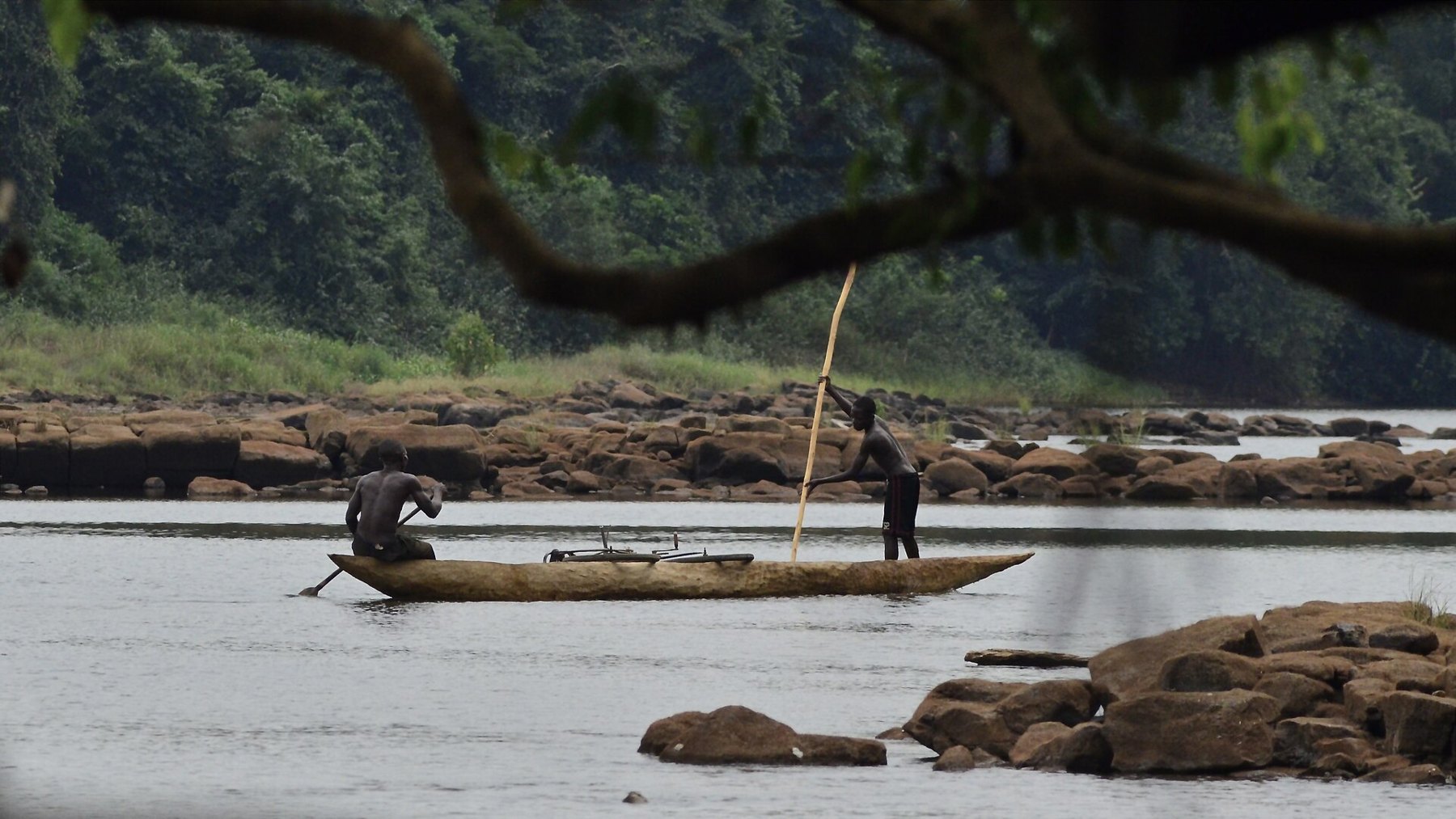
The DRC’s neighbourhood is defined by nine sovereign states. To the west, across the Congo River, sits the Republic of the Congo. To the north lies the Central African Republic. To the northeast is South Sudan. The eastern flank is shared with Uganda, Rwanda and Burundi. To the southeast, across Lake Tanganyika, is Tanzania. Zambia lies to the south and southeast, while Angola occupies the southwest, including the Cabinda exclave along the Atlantic-facing western border.
This geography gives the DRC a short Atlantic coastline and an extraordinary reach into three African sub-regions. The East African Community describes the DRC as a Central African country bordered by the Republic of the Congo, the Central African Republic, South Sudan, Uganda, Rwanda, Burundi, Tanzania, Zambia and Angola. That list alone explains why Kinshasa is courted by so many regional organisations.
The DRC is formally embedded in the Economic Community of Central African States (ECCAS/CEEAC), the Southern African Development Community (SADC), the East African Community (EAC), COMESA, the International Conference on the Great Lakes Region (ICGLR/CIRGL) and the Economic Community of the Great Lakes Countries (CEPGL). It is also a member of the African Union, the African Continental Free Trade Area and the Nile Basin Initiative. No other African country holds such a dense web of simultaneous memberships.
How the DRC joined the East African Community
The DRC’s most consequential recent regional move was joining the East African Community. It acceded to the EAC treaty on 8 April 2022 and became a full member on 11 July 2022. That decision marked a strategic shift from a primarily Central and Southern African orientation toward deeper institutional engagement with East Africa.
The EAC membership matters because it gives Congolese traders and investors a wider institutional market stretching toward Kenya, Tanzania, Uganda and beyond. It also places the DRC inside the same formal bloc as Rwanda and Uganda, two neighbours with whom relations are often tense. The practical gains remain limited by insecurity and weak infrastructure, but the institutional signal was clear: Kinshasa wants to be a player in East Africa, not only in Central and Southern Africa.
The central rivalry with Rwanda
Kinshasa accuses Rwanda of supporting the M23 armed movement and violating Congolese sovereignty. Rwanda denies directing M23 and has cited security threats from armed groups operating from Congolese territory, especially the Democratic Forces for the Liberation of Rwanda (FDLR).
The dispute is therefore both territorial and security-based. The DRC emphasises external aggression and sovereignty, while Rwanda emphasises cross-border armed-group threats. President Tshisekedi described the eastern crisis in 2026 as involving “Rwandan aggression” and said that diplomacy remained preferable to military escalation. In June 2026, the DRC presidency also reported talks between Tshisekedi and Burundi’s president, Évariste Ndayishimiye, on security and cooperation, reflecting the wider regionalisation of the conflict.
The conflict has severely affected Goma and North Kivu, disrupting public administration, commerce and humanitarian access. South Kivu is also affected by insecurity and is strategically important because it borders Rwanda and Burundi. Cross-border trade between Goma and Rubavu is vulnerable to deterioration in relations and insecurity. Mineral supply chains are complicated by conflict and informal taxation. Regional organisations, especially the EAC, SADC and ICGLR, have overlapping peace and security initiatives that often compete rather than coordinate.
The DRC’s position is that regional security cannot be built by treating its territorial integrity as negotiable.
Uganda, Burundi and the eastern corridor
Uganda is both a security partner and a competitor for influence and trade. Uganda and the DRC have conducted joint military operations against the Allied Democratic Forces in eastern DRC. They also share commercial interests in border markets and road construction. At the same time, Congolese officials and civil-society actors have repeatedly criticised Uganda’s role in eastern Congo, including alleged economic exploitation and the security consequences of Uganda’s military presence.
Uganda is particularly important because it provides one of the DRC’s most practical routes toward East African markets. The Kasindi–Beni–Butembo road axis connects eastern Congo to Uganda and onward to Kenya’s Mombasa corridor. The EAC framework potentially gives Congolese traders and investors a wider institutional market, but insecurity and weak infrastructure limit the practical gains.
The health dimension also reinforces interdependence.
Burundi borders South Kivu and Lake Tanganyika. Its political and security interests are tightly connected to the DRC’s eastern provinces. The two countries share population movements across the border, Lake Tanganyika transport and fisheries, security concerns involving armed groups, and commercial links through Uvira, Bukavu and Bujumbura. Burundi’s involvement in eastern DRC security has made it an important, though delicate, partner for Kinshasa.
Tanzania, Zambia and the southern trade routes
Tanzania is the DRC’s principal southeastern maritime and overland partner. Tanzania provides the DRC with access to the port of Dar es Salaam, the Central Corridor and Lake Tanganyika. The DRC’s eastern and southeastern provinces can use Tanzanian routes to reach Dar es Salaam, Kigoma and other Lake Tanganyika ports, Zambia and the wider Southern African market, and Indian Ocean shipping networks.
Tanzania’s importance has increased as the DRC seeks to diversify away from routes dependent on Angola, Zambia or South Africa. Its main challenges are logistical: lake-port capacity, customs procedures, road and rail bottlenecks, border formalities and security in the wider eastern region.
Zambia is an important economic neighbour of the DRC, particularly because of cross-border links between the two countries’ Copperbelt regions. The DRC–Zambia border links the Copperbelt mining regions of the two countries, which are major producers of copper and cobalt. The two countries share copper and cobalt supply chains, electricity and grid interconnection interests, road and rail corridors, cross-border labour and family networks, and dependence on routes to ports in Tanzania, Mozambique and South Africa.
The DRC’s mining economy is concentrated in the southeast, especially Haut-Katanga and Lualaba. Zambia’s copper industry is similarly concentrated near the border. This creates opportunities for regional processing, engineering services, logistics and power trading, but also competition over investment, transport routes and industrial policy. Zambia’s position is commercially pragmatic. It is less directly involved in the Great Lakes security dispute than Rwanda, Uganda or Burundi, but it is crucial to the DRC’s regional economic strategy.
Angola and the Atlantic option
Angola is a western neighbour of the DRC and an important regional diplomatic and transport partner. Its importance rests on three factors: Atlantic and port access, especially through Luanda and the Lobito corridor; political influence in Central and Southern Africa; and mediation efforts between the DRC and Rwanda.
President João Manuel Gonçalves Lourenço has played a prominent role in diplomatic efforts concerning eastern DRC.
For the DRC’s mining sector, the Lobito Corridor is strategically significant because it offers a shorter western route for copper and cobalt exports from the Copperbelt toward the Atlantic. It also offers the possibility of reducing dependence on southern and eastern corridors, although rail capacity, border procedures and security remain limiting factors. Angola’s relationship with the DRC is therefore simultaneously political, commercial and infrastructural. It is one of Kinshasa’s most consequential friendships, even though both countries also compete for regional influence.
The Congo River neighbourhood with Brazzaville
The western border with the Republic of the Congo is unusually urban and humanly dense because the capitals Kinshasa and Brazzaville face each other across the Congo River. This is one of the world’s most distinctive cross-border metropolitan relationships. The two capitals share a highly integrated cultural and media space, family and commercial ties, river transport and informal trade, common exposure to flooding and river pollution, and a strong case for improved bridge, ferry, port and customs infrastructure.
At the same time, the river is a physical barrier. There is no fully operational fixed road-and-rail bridge directly linking Kinshasa and Brazzaville. That absence shapes everything from daily commuting to long-term investment decisions. The relationship between the two Congos is less confrontational than the DRC’s eastern border, but it remains underdeveloped relative to its potential.
What the neighbourhood means for foreigners and investors
For a foreigner, the DRC’s neighbourhood is not an abstraction. It determines which port your goods pass through, which airline connects your flight, which currency your supplier accepts and which security briefing your insurer reads. A mining project in Haut-Katanga may depend on Zambian electricity. A coffee exporter in South Kivu may need Tanzanian lake transport. A trader in Goma may watch Rwandan border policy more closely than Kinshasa’s.
The DRC’s memberships in ECCAS, SADC and the EAC expose it to overlapping regional institutions and distinct economic, political and security frameworks. The west looks toward Brazzaville and Luanda. The south looks toward Lusaka and the Copperbelt. The east looks toward Kampala, Kigali, Bujumbura and Dar es Salaam. Investors who treat the DRC as a single market often miss these regional variations.
The security picture is similarly uneven. The eastern border with Rwanda is the most contested frontier, with active armed conflict and diplomatic rupture.
What to watch in the DRC’s neighbourhood
The most important variable is the DRC–Rwanda relationship. Any escalation or de-escalation between Kinshasa and Kigali will reshape security, trade and diplomacy across the Great Lakes. The Angolan mediation effort led by President Lourenço is one channel to watch. The EAC and SADC peace initiatives are another, though their overlapping mandates often create confusion rather than clarity.
The Lobito Corridor is a major infrastructure initiative intended to connect the DRC’s mineral-producing regions to Angola’s Atlantic port and could materially affect the country’s export geography. If rail capacity, border procedures and security improve, the western route could reduce dependence on southern and eastern corridors. That would shift the balance of influence among Angola, Zambia, Tanzania and South Africa.
The DRC’s EAC membership is still young. Its practical benefits will depend on whether Kinshasa can convert institutional access into functioning trade routes, harmonised customs and improved security. The Kasindi–Beni–Butembo axis toward Uganda is a test case. If it works, it could open eastern Congo to East African markets. If it fails, the EAC membership may remain largely symbolic.
Finally, watch the health and environmental dimensions. The July 2026 Ebola threat affecting the DRC and Uganda showed that public-health risks ignore borders. The Congo River’s flooding and pollution challenges are shared with Brazzaville. These cross-border issues will require coordination that the DRC’s fragmented regional memberships do not yet guarantee.
Related reading: Ivory Coast Explained 2026, a Newcomer Guide; Kenya Continent Role, Weight and Alliances Explained; Namibia Travel Guide 2026 Covers Visas, Safety, Seasons; more from Africa.
Frequently Asked Questions
How many countries border the DR Congo?
The DR Congo borders nine countries: the Republic of the Congo, the Central African Republic, South Sudan, Uganda, Rwanda, Burundi, Tanzania, Zambia and Angola.
Which regional blocs does the DR Congo belong to?
The DRC belongs to ECCAS, SADC, the EAC, COMESA, the ICGLR and the CEPGL. It became a full member of the EAC on 11 July 2022.
Why are DR Congo and Rwanda in conflict?
Kinshasa accuses Rwanda of supporting the M23 armed movement and violating Congolese sovereignty. Rwanda denies directing M23 and cites security threats from armed groups operating from Congolese territory, especially the FDLR.
Who is the president of the DR Congo in 2026?
Félix-Antoine Tshisekedi Tshilombo is president of the DR Congo. He took office in January 2019 and was sworn in for a second term on 20 January 2024.
What is the Lobito Corridor and why does it matter?
The Lobito Corridor is a western rail and port route through Angola that offers a shorter Atlantic export path for copper and cobalt from the DRC’s Copperbelt, reducing dependence on southern and eastern corridors.
Which DR Congo neighbour is most important for trade?
Zambia is an important economic neighbour because the DRC–Zambia border links the Copperbelt mining regions of the two countries, which are major producers of copper and cobalt.
Sources: presidence.cd, presidence.cd, trade.gov, presidence.cd, presidence.cd, presidence.cd. Retrieved 4 October 2026.
This article was produced by The Rio Times’ automated newsroom system. How we use AI · Report an error · Editorial responsibility: Matthias Camenzind, Editor-in-Chief
Part of our ongoing coverage
Africa: The New Scramble — the great-power contest over the continent.