Costa Rica History Explained, From Origins to 2026
Three choices define the country: a late independence, a civil war and a ban on a standing army. Each is covered below, from the colonial militias to the 2026 election.

Costa Rica Explained
Costa Rica history runs from a Spanish colonial province, through independence on 15 September 1821, to a five-week civil war in 1948 and the abolition of its army. The army ban, written into the Constitution of 1949, is why the country is known today as a nation without an army.
For US readers, this past explains why a small Central American democracy is both a major trading partner and a popular travel destination. It also shows how often the United States has mattered to the country’s choices.
Key Facts
- Who. Laura Fernández took office on 8 May 2026; rebel leader José Figueres Ferrer led the 1948 war.
- Turning points. Independence on 15 September 1821; civil war in 1948; Article 12 bans a permanent army from 1949.
- Tourism. The country counted 2,943,991 international arrivals in 2025, up 0.8% on 2024.
- Power Index. Costa Rica ranks 9th of 14 in The Rio Times Latin America Power Index, with 35.5 points (November 2026 edition).
- As of. 19 November 2026, 19:30 GMT.
Three choices define the country: a late independence, a civil war and a ban on a standing army. Each is covered below, from the colonial militias to the 2026 election.
A Remote Province Under Spanish Rule
Indigenous societies knew war long before the Spaniards arrived, and the National Museum of Costa Rica, housed in the former Bellavista barracks, says the conquerors used some of those conflicts to their advantage. The conquest itself was a violent meeting of two societies with very different weapons.
The Spaniards had iron arms, gunpowder and horses. Old World diseases also hit Indigenous people who had no immunity.
Not every region fell to Spain. The museum says the north and Talamanca, in the south-east, became refuges that colonial forces never fully controlled.
Colonial militias had to subdue Indigenous people and repel pirates, privateers and raiders the museum calls zambos miskitos. The main militias sat in Bagaces, Esparza, Cartago and Matina, while the professional military core stayed in the Captaincy of Guatemala, the Spanish unit that governed Central America.
The militias were organised by ethnic origin, and one of the most important was a militia of pardos, people of African descent. Its members earned pay and sometimes tax exemptions for their service, the museum says.
Independence Came on Paper, Statehood Later
Central America’s provinces, including the territory of present-day Costa Rica, declared independence from Spain on 15 September 1821, according to the Office of the Historian, the US State Department’s history unit. In 1823 the five provinces formed the United Provinces of Central America, which the United States recognised on 4 August 1824.
The federation began to dissolve in 1838, and its five states went their own ways. Costa Rica formally declared its own independence only on 30 August 1848, the Office of the Historian records.
The gap between 1821 and 1848 shows how gradually a separate state emerged.
Key Dates at a Glance
- 1821. Central America declares independence from Spain, 15 September.
- 1941. The social security fund CCSS is created, 1 November.
- 1948. Election annulled, five-week civil war, symbolic abolition of the army on 1 December.
- 1949. Constitution takes effect on 8 November and the army ban becomes effective; women win the vote in June.
- 1987. Óscar Arias wins the Nobel Peace Prize.
- 2021. Costa Rica joins the OECD on 25 May.
- 2026. Laura Fernández takes office on 8 May.
1948: Election Dispute, Civil War and No Army
The 1940s widened the state’s social and economic role and sharpened political conflict, the National Museum says. In the presidential election of 1948, opposition candidate Otilio Ulate had been declared the winner over former president Rafael Ángel Calderón Guardia.
Congress then annulled the result, and the annulment set off a civil war led by José Figueres Ferrer. The museum counts five weeks of fighting and more than 500 dead, and the Communist Party stayed outlawed until 1975.
Violence did not stop when the fighting did. Special tribunals were set up against allies of the old government, and six communist leaders were killed at a railway site known as Codo del Diablo.
Figueres headed a governing junta until the new Constitution took effect in November 1949. On 1 December 1948 he struck a battlement of the Bellavista Barracks in San José with a mallet, the symbolic act of abolishing the army, according to the museum.
The abolition became real only in 1949, after the Cardonazo, a failed coup attempt on 2 April 1949 by Edgar Cardona, the junta’s public security minister, in a dispute over appointments in the security forces. The Constitution was signed on 7 November 1949 and took effect the next day, and its Article 12 proscribes the army as a permanent institution.
The same article says police forces keep public order, and that military forces may be organised only under a continental agreement or for national defence. All of them stay subordinate to civilian power, and they may not deliberate or make statements.
The museum gives reasons beyond principle. The junta wanted trust and stability after the war, which it needed to win US support, and it wanted to place its own people in the security forces.
The new police force was the Guardia Civil, the new name of the armed forces with police duties, and a general police law followed only in 1994. The country still faced threats: an invasion from Nicaragua in January 1955, led by Calderón Guardia, was repelled with US help, leaving 26 dead and 82 wounded.
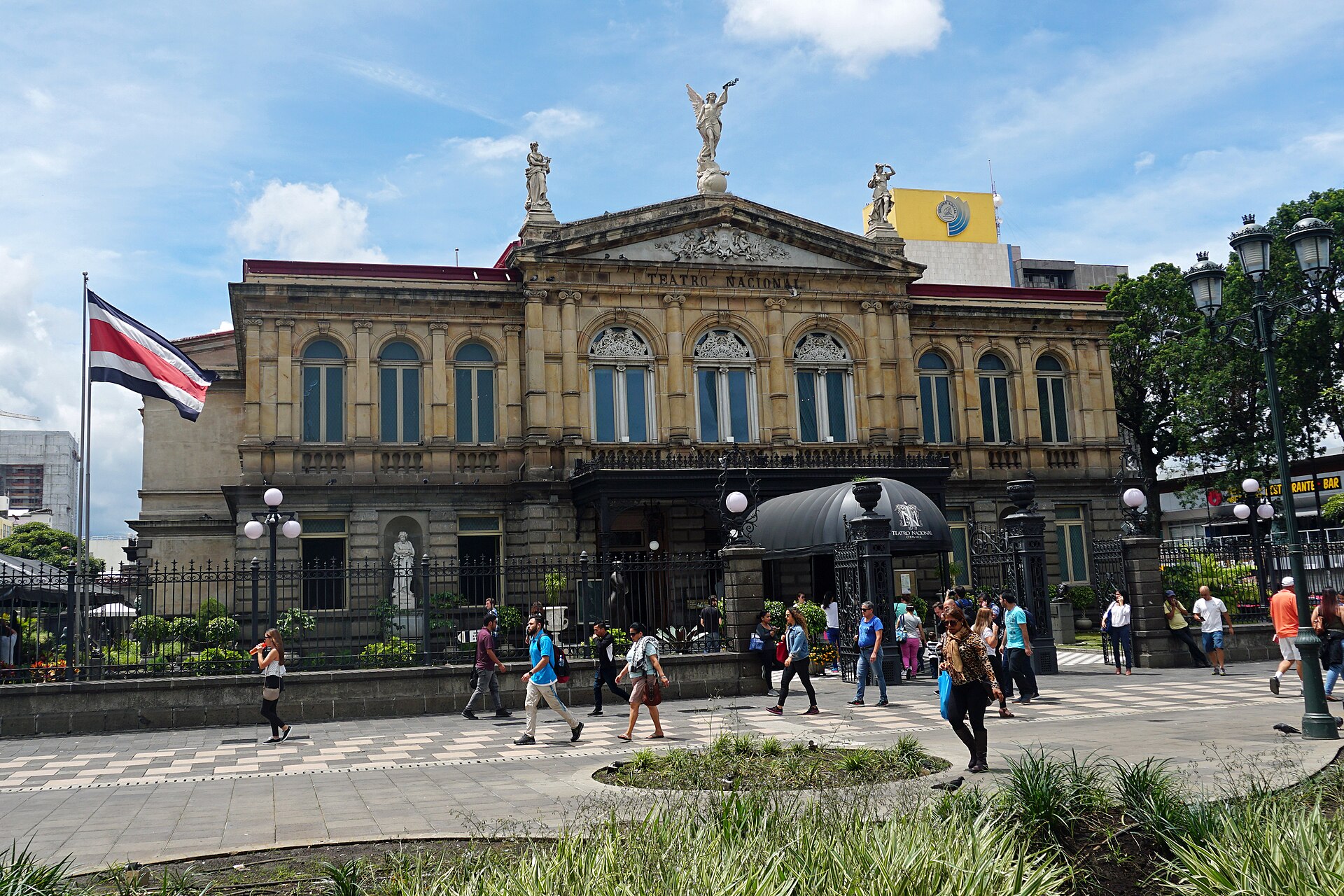
How Costa Rica Built a Welfare State
The welfare state began before the war, not after it. The Costa Rican Social Security Fund (CCSS) was created on 1 November 1941 by Law 17, which set up social insurance, under President Calderón Guardia, and a law of 22 October 1943 gave it autonomy.
In 1943 the Social Guarantees chapter entered the Constitution and the Labour Code was issued under Calderón Guardia. Article 78 of the Constitution as it stands today makes pre-school, basic and diversified education compulsory and, in the public system, free and paid by the nation.
Women gained the vote in the same constitutional moment. The Constituent Assembly approved women’s suffrage on 20 June 1949, and the first presidential election in which women voted was held on Sunday 26 July 1953, when the first three women deputies were also elected.
Presidents serve four-year terms under Article 134 of the Constitution. The same article calls attacks on the alternation of power treason, a crime with no time limit.
Peace Diplomacy, Parks and Tourism
Costa Rica also took part in the peace diplomacy of the 1980s. President Óscar Arias won the 1987 Nobel Peace Prize for his work for peace in Central America, the Nobel Foundation says, after a regional peace plan was signed in Guatemala on 7 August 1987.
Costa Rica joined the OECD, the Organisation for Economic Co-operation and Development, a club of mostly wealthy democracies, on 25 May 2021 as its 38th member. The OECD says it was the first Central American member and the fourth from Latin America and the Caribbean, after Mexico, Chile and Colombia.
Forests are another part of the national story. The World Bank said in November 2022 that rainforests covered close to 60% of the country, in a feature on the country’s payments for forest conservation.
Forestry Law 7575 of 1996 created FONAFIFO, the national forestry financing fund that pays forest owners for services such as protecting water supplies and storing carbon. A World Bank statement of August 2022 puts the share of the country inside national protected areas at 26%.
Tourism is closely tied to that image of forests and peace, and the Costa Rican Tourism Institute (ICT) counted 2,943,991 international arrivals in 2025, of which 2,689,278 came by air. Our guide to ecotourism in Costa Rica explains how the parks and forest payments fit together.
Politics Since 2022
Rodrigo Chaves was president from 2022 to 2026, and the website of the Presidency of Costa Rica now lists him as Minister of the Presidency and Minister of Finance in the new government. Our profile of who holds power in Costa Rica maps the people around him.
Laura Fernández of the ruling Pueblo Soberano (Sovereign People) party won the presidency in the first round on Sunday 1 February 2026, with 1,243,141 votes for her ticket, or 48.53%. The National Liberation Party (PLN), the main opposition force, came second with 861,879 votes, or 33.65%.
The Supreme Electoral Tribunal (TSE) declared her elected on 3 March 2026 after the official count. She took the oath before the Legislative Assembly on 8 May as the 50th president, for a term that runs to 8 May 2030.
Security is a pressing issue for the new government. The Judicial Investigation Agency (OIJ), the country’s criminal police, reported 873 homicides in 2025, a rate of 16.7 per 100,000 people.
Costa Ricans voted in a referendum on the free-trade pact between the United States, Central America and the Dominican Republic (CAFTA-DR) on Sunday 7 October 2007. The TSE counted 805,658 votes for and 756,814 against, and our report on referendums in Costa Rica covers how rarely the tool is used.
What It Means for US Readers
Trade ties are deep. In 2025 the United States exported US$10.19 billion of goods to Costa Rica and imported US$13.90 billion from it, a deficit of US$3.71 billion, according to the US Census Bureau.
Costa Rica’s main rules of power are written into its Constitution: the four-year term, the ban on a permanent army and the alternation of presidents. Our explainer on Costa Rica’s power structure shows how they work in practice.
The next checkpoint is the transfer of power due on 8 May 2030, when the four-year term set by Article 134 ends. For the wider regional setting, see Costa Rica and its neighbours in Central America and the Costa Rica news hub.
Frequently Asked Questions
When did Costa Rica become independent?
Central America declared independence from Spain on 15 September 1821. Costa Rica formally declared its own independence on 30 August 1848.
Does Costa Rica have an army?
No, because Article 12 of the Constitution proscribes a permanent army and leaves public order to police forces. Military forces may be organised only under a continental agreement or for national defence.
What caused the 1948 civil war?
The annulment of the 1948 presidential election, which Otilio Ulate had been declared to win, set it off. José Figueres Ferrer led the fighting, and his junta then governed.
How did Costa Rica build its welfare system?
It began with the social security fund created in 1941 and the Social Guarantees and Labour Code of 1943. The Constitution later made schooling from pre-school to diversified education compulsory and free in public schools.
Who is Costa Rica’s president now?
Laura Fernández of the Pueblo Soberano party. She took office on 8 May 2026 and her term runs to 8 May 2030.
Sources: National Museum of Costa Rica; Constitution of Costa Rica, text in force; US Office of the Historian; Nobel Foundation; OECD; Costa Rican Tourism Institute; US Census Bureau; Supreme Electoral Tribunal; CCSS; World Bank.
This article was produced by The Rio Times’ automated AI newsroom. Editorial responsibility: Matthias Camenzind, Publisher and Editor-in-Chief. The Rio Times also runs Ask Rio Times, which answers from 100,000+ of our own articles, the daily Latin America Power Map, and prediction-market odds on elections and markets.. How we use AI · Report an error
Expat Guide to Costa Rica
What The Rio Times publishes for foreigners who live in or move to Costa Rica.
Start here
- Fer De Lance Snake Facts and Safety Tips
- Best Places to Live in Costa Rica for Expats 2026
- Costa Rica Income Tax Bill Would Charge Residents 15% on Five Kinds of Foreign Investment Income
- Costa Rica Permanent Residency and Citizenship: How the Rules Work
City guides
Coming up in Costa Rica
- US Is Guest Country at 506 Jazz Fest 19 Nov
- Los Fabulosos Cadillacs Costa Rica Concert on 19 November 19 Nov
- Grupo Barak in Costa Rica, 20 November 2026 20 Nov
- Omar Courtz Costa Rica Concert on 21 November 2026 21 Nov
Understand Costa Rica