Costa Rica Ecotourism Explained: Parks, Forest Payments and 2.9 Million Visitors

GUIDES · COSTA RICA
Key Facts
- —The country Costa Rica, a Central American democracy of about 5.1 million hectares. It is the region’s best-known nature destination and its most-cited conservation success.
- —What it is A model with three parts. Protected areas cover about a quarter of the land, landowners are paid to keep forest standing, and nature tourism earns the foreign currency.
- —The numbers 2,943,991 international arrivals and US$5.57 billion in tourism income in 2025. Protected areas drew 2.61 million visits in 2024. Forest covers about 60 percent of the land.
- —Why it matters It is often cited as the first tropical country to reverse deforestation. It then built a tourism industry on the result.
- —The catch Landowners ask for more than twice the area the payment scheme can fund. Visits crowd into a handful of parks, and the visitor base leans on the United States.
- —What to watch Arrivals from the United States, down 13.9 percent in August 2026. Then the December-to-April high season and next year’s forest payment budget.
How a small country pays farmers to keep forest standing and fills its parks with foreign visitors. And where the arrangement is starting to strain.
Costa Rica ecotourism is not only rainforest lodges and sloth photographs. It rests on a public payment scheme, a large park system and a steady flow of foreign travellers. Each part depends on the others.
How the model was built
In the middle of the twentieth century Costa Rica cleared forest fast, mostly for cattle pasture. The low point came in the 1980s. How low is disputed. The forestry fund FONAFIFO cites about 21 percent forest cover; a World Bank account puts the 1987 figure near 40 percent.
Two policies changed the direction. The first was a national system of protected areas, now run by SINAC, the National System of Conservation Areas. According to the World Bank, protected areas cover about 26 percent of the national territory.
The second was the Forestry Law, Law 7575 of 1996. It created a legal basis to pay private owners for the services their forests provide. Those payments are known in Spanish as PSA, Pago por Servicios Ambientales, or payments for environmental services.
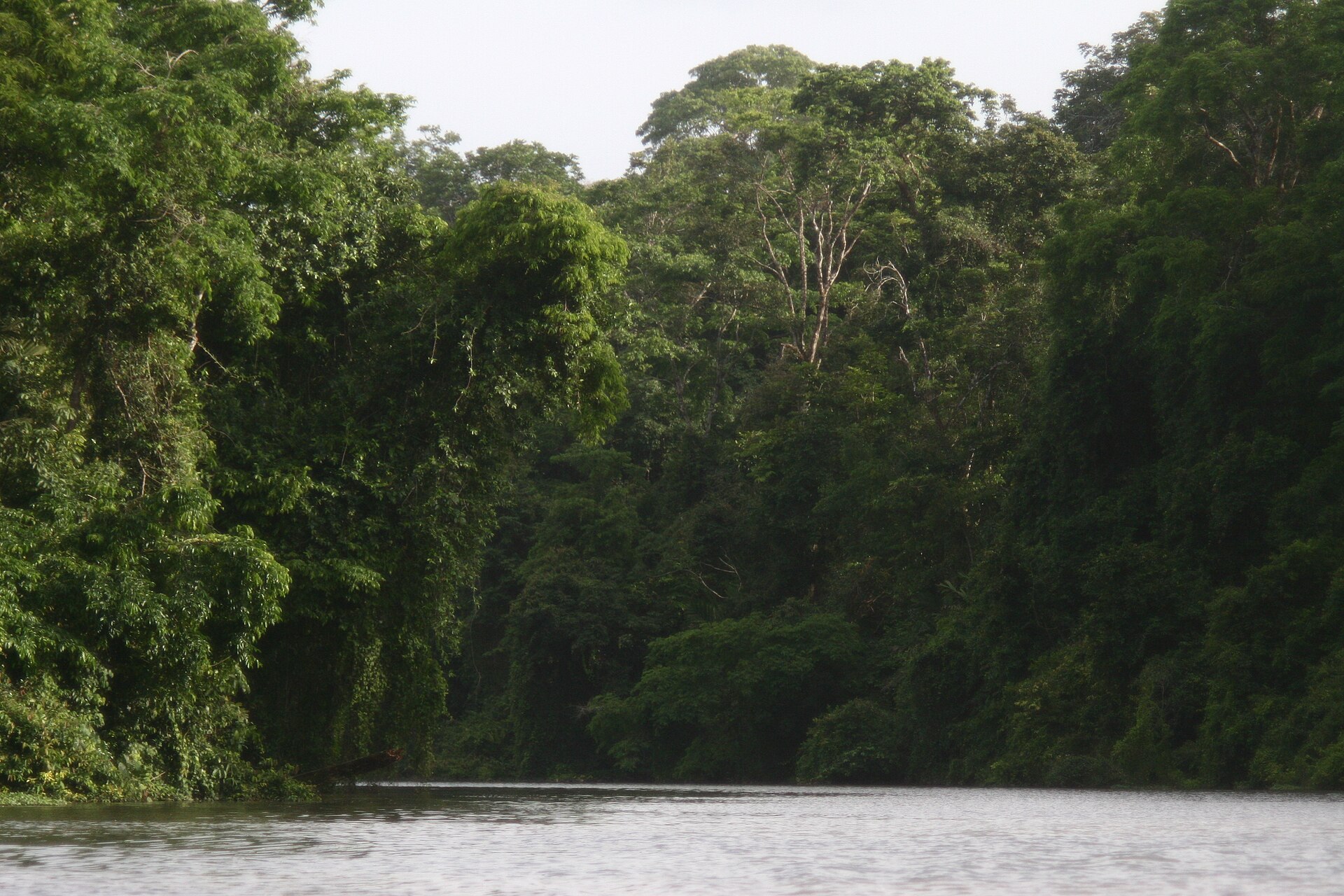
Today forest covers about 60.4 percent of the land, according to World Bank data for 2023. Those data draw on the UN Food and Agriculture Organization. That share has risen every year since 2000 in the same series. Tourism then turned that forest into an export.
How payments for environmental services work
The idea is simple. A standing forest stores carbon, protects water, shelters wildlife and offers scenery. The Forestry Law recognises exactly those four services, including “natural scenic beauty” for tourism.
Because the owner does not get paid for any of them by the market, the state pays instead. FONAFIFO, the National Forestry Financing Fund, signs five-year contracts with landowners. The owner commits to protect the forest, regenerate it or plant trees, and receives an annual payment.
The money comes mainly from fuel. By law, 3.5 percent of the single fuel tax goes to the fund. It also receives 25 percent of water concession fees and 40 percent of the timber tax. Loans and grants come from the World Bank, the Global Environment Facility and Germany’s KfW.
What a landowner receives
Under the current rates, basic forest protection pays 21,000 colones (about US$46) per hectare a year. That comes to 105,000 colones (about US$231) per hectare over the five-year contract. Rates are converted at about 454 colones to the US dollar, the late-September 2026 rate.
Forest that also protects water or rare wildlife earns more. Land that qualifies on both counts receives 53,000 colones (about US$117) per hectare a year. Planting native tree species pays the most, 1,325,366 colones (about US$2,920) per hectare, paid out over the first five years of a 16-year contract.
These are modest sums next to what land can earn from farming or development. Indigenous territories are an important part of the scheme. Between 2015 and 2025, FONAFIFO signed 127 forest protection contracts in Indigenous territories covering 120,029 hectares.
The visitor numbers
The Costa Rican Tourism Institute, ICT, counted 2,943,991 international arrivals in 2025. That was a record, but growth over 2024 was only 0.8 percent. About 91 percent arrived by air.
The United States dominates. It sent 1,627,807 visitors in 2025, about 55 percent of the total. Canada sent 274,081 and Europe 471,642, the European figure down 2.9 percent on 2024.
The first half of 2026 was stronger. Air arrivals rose 7.8 percent to 1,605,360, led by Canada, up 26.5 percent. Then the pace slowed. Air arrivals fell year on year in June and again in August, and the American market weakened sharply.
Where the visitors go
SINAC counted 2,611,643 visits to protected areas in 2024, slightly below the 2023 record of 2,728,582. In 1990 the figure was 511,233. Almost two-thirds of the 2024 visits, 1,649,645, were by non-residents.
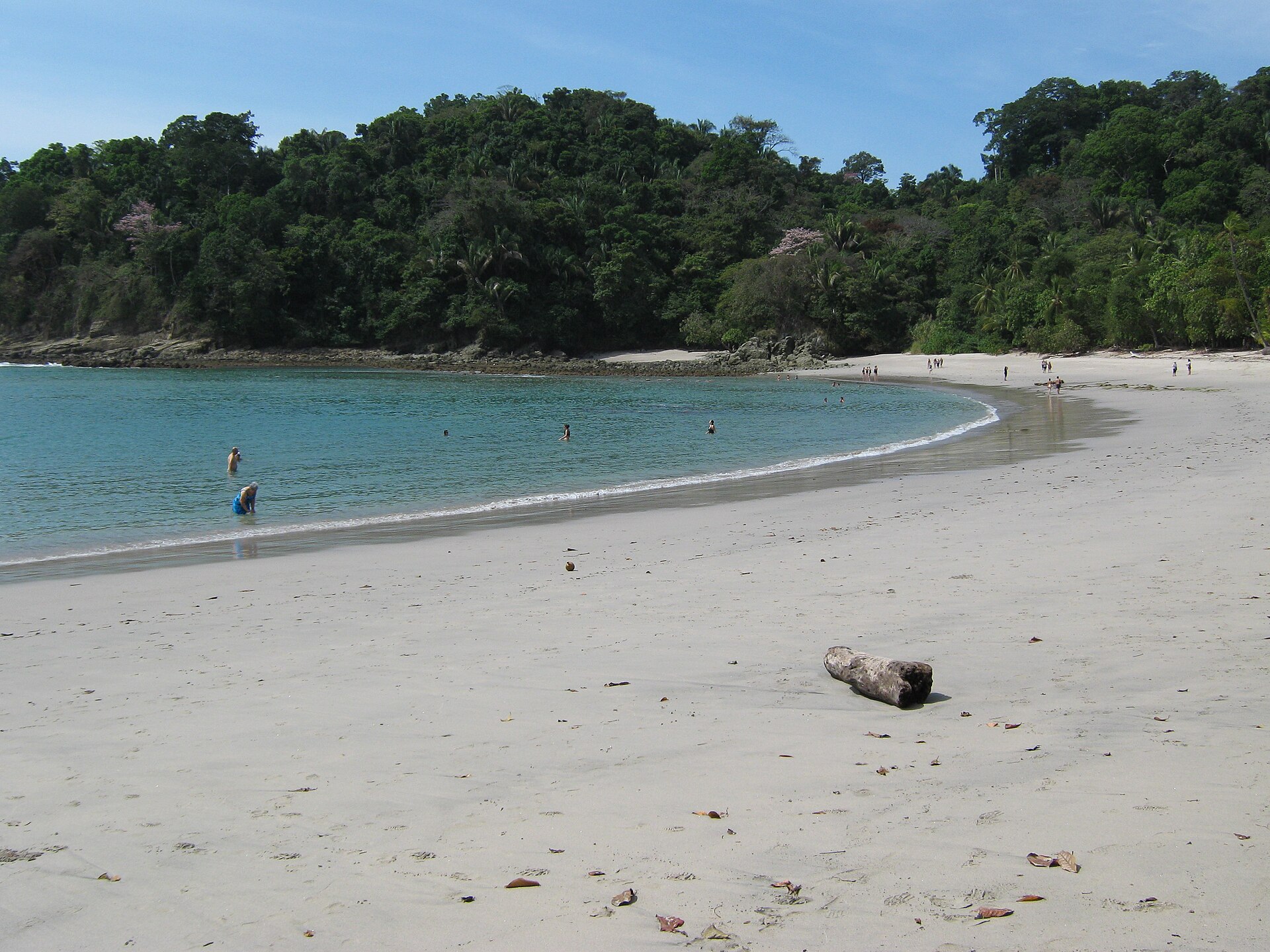
The visits are highly concentrated. Manuel Antonio National Park alone drew 488,629, almost one in five of all protected-area visits. Poás Volcano, Tortuguero, Irazú Volcano, Marino Ballena and Tenorio Volcano each drew more than 200,000.
Together those six parks took about 62 percent of all visits. Many other protected areas saw a few thousand visitors or fewer. For some, such as Guanacaste National Park, no visits were recorded in the official count.
What tourism earns
Tourism brought in US$5,571 million in foreign exchange in 2025, according to Central Bank data reported by the newspaper La Nación. In the first quarter of 2026 the figure passed US$2 billion for the first time in a single quarter, at US$2,034 million.
The best official measure of tourism’s weight is older. The tourism satellite account of the Central Bank and ICT put tourism’s direct contribution at 6.3 percent of output in 2016. Including indirect effects, it reached 8.2 percent.
That same account counted 211,213 tourism jobs, 8.8 percent of national employment. Tourism income has grown strongly since then, so the current share is likely different.
Carbon: the newer income stream
Forest now earns money a second way, through carbon. Costa Rica has an agreement with the World Bank’s Forest Carbon Partnership Facility. It can receive up to US$60 million for verified cuts in forest emissions.
The first payment, US$16.4 million, arrived in August 2022, for 3.28 million tonnes of reductions in 2018 and 2019. A second payment of US$17.5 million followed, according to the World Bank. Part of the money flows to local communities through a benefit-sharing plan.
Costa Rica also sold 100,000 “excess” carbon credits to a member of the LEAF Coalition, a public-private buyers’ group. The World Bank describes it as the first country to sell such credits.
Winners and losers
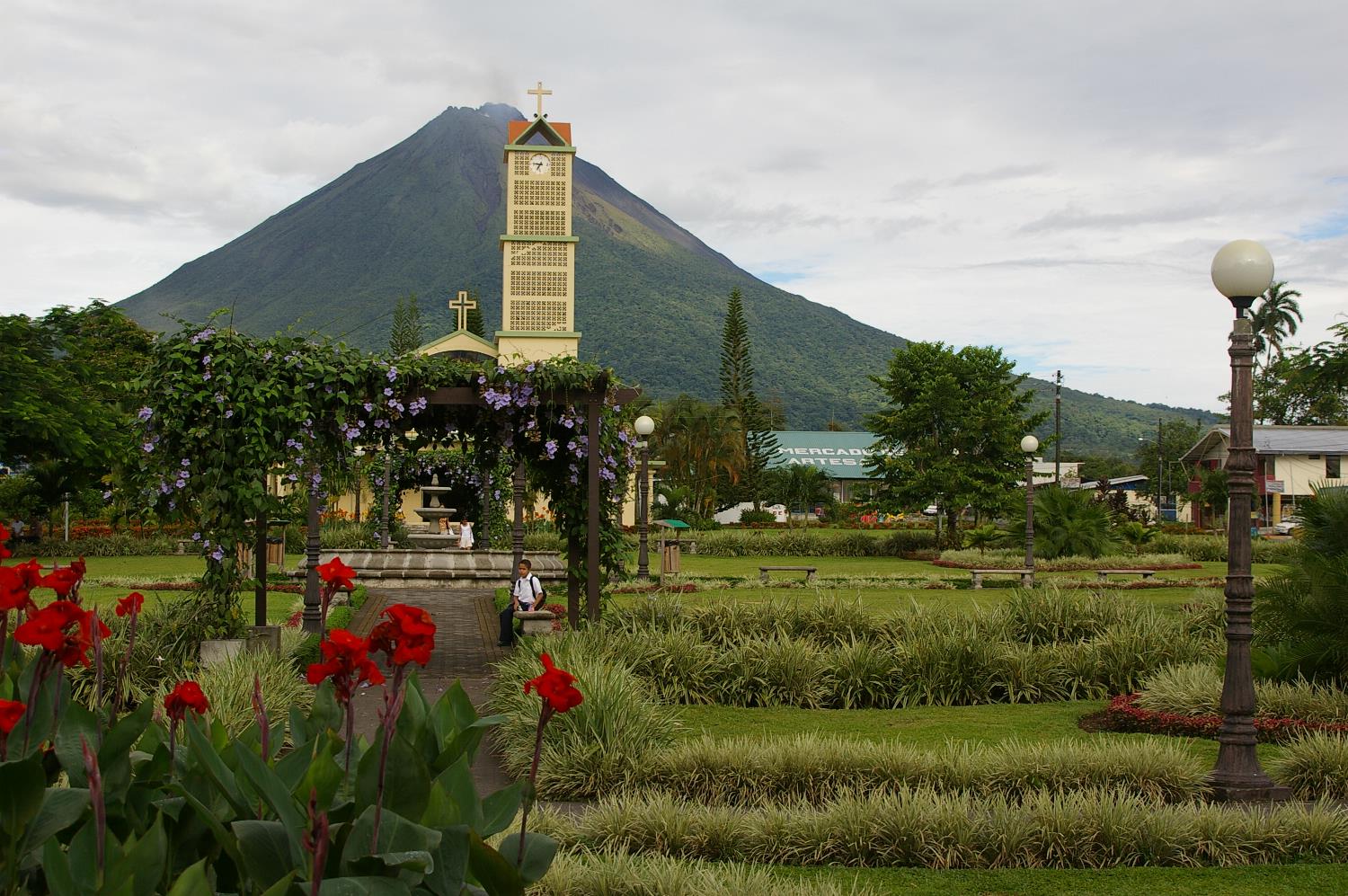
The clearest winners are the gateway towns, such as Quepos beside Manuel Antonio and La Fortuna beside Arenal. In 2025 Guanacaste’s Daniel Oduber airport grew faster than the main airport near San José, handling 904,762 international arrivals.
Landowners in the payment scheme gain a small, predictable income for keeping forest. From 2015 to 2025, PSA contracts in Indigenous territories were worth 33.4 billion colones (about US$73.6 million at today’s rate).
The losers are less visible. Farmers who apply and are turned away get nothing. Communities next to the busiest parks carry the congestion, while quiet parks far from the circuit see few of the visitors.
The limits of the model
The first limit is money. From 2015 to 2025 landowners filed 18,171 applications covering 1,356,726 hectares. The annual budgets covered 601,531 hectares, about 44 percent of what was requested.
Funding also swings from year to year. New contracts covered 118,752 hectares in 2024 but only 28,851 hectares in 2025, according to FONAFIFO data cut on 3 August 2026. In 2021, when protection funding was limited by a ministerial directive, new contracts covered only 5,997 hectares.
The second limit is concentration. A system in which one park takes almost a fifth of all visits is fragile. Nature shows how. Rincón de la Vieja kept erupting through August 2026, and rain closed Turrialba Volcano park and the Guayabo ruins until late August.
The third is dependence on one market. Air arrivals from the United States fell 13.9 percent in August 2026 to 88,198. The ICT listed geopolitical conflict, economic conditions abroad and airline decisions among possible factors, but has not named a single cause.
More: Costa Rica news in English, every day from The Rio Times.
What to watch
As of 21 September 2026, air arrivals for January to August stood at 2,025,032, up 5.8 percent on 2025. August alone was down 5.9 percent, at 171,602. The September figure, expected from the ICT around mid-October, will show whether that dip is a trend.
The high season runs from December to April, the dry season. Sector representatives say they approach the end of the year with optimism. The real test is whether American bookings recover before December.
On the forest side, the number to watch is the hectares FONAFIFO budgets for 2027 contracts. After the 2025 drop, that figure shows whether the payment scheme can keep pace with demand. SINAC’s protected-area visits for 2025, not yet in the ICT’s published series, will show whether park visits returned to their 2023 peak.
Connected Coverage
Costa Rica Explained: The Country, Its Politics, Its Economy and What to Watch
Seven Costa Rica National Parks and What Each One Costs
Costa Rica Tourist Arrivals Rise 7.8% in the First Half of 2026
Laura Fernández Seizes Congress Majority as Costa Rica Tourism Tops $5.5 Billion
Sources: Arrivals from the Instituto Costarricense de Turismo (ICT), protected-area visits from SINAC via the ICT, payment rates and contract data from FONAFIFO, forest and protected-area shares and carbon payments from the World Bank, and tourism income from the Banco Central de Costa Rica. All accessed 21 September 2026.
- ICT / SINAC — visits to protected wild areas, 1990–2024
- FONAFIFO — PSA statistics: hectares, demand, amounts, Indigenous territories (cut-off 3 August 2026)
- FONAFIFO — the payments for environmental services programme
- FONAFIFO — frequently asked questions, funding sources
- World Bank — forest area, percent of land area
- World Bank — Costa Rica’s forest conservation pays off (2022)
- World Bank — second emission reductions payment (2025)
- La Nación — ICT arrivals for 2025
- La Nación — Central Bank tourism foreign exchange, first quarter 2026
- El Observador — ICT air arrivals, August 2026
- Semanario Universidad — BCCR and ICT tourism satellite account, 2016
What Is Not Known
How low the forest actually fell. FONAFIFO cites about 21 percent in the 1980s, and the World Bank about 40 percent in 1987. Yet the FAO-based World Bank series never shows cover below 55 percent after 1990. The figures use different definitions of forest, so the size of the recovery depends on which one is chosen.
How much of the recovery the payments caused. Forest also returned because cattle ranching became less profitable and people moved to towns. Studies disagree on how much PSA added beyond what would have happened anyway.
Why American arrivals fell in August 2026. The ICT has listed possible factors but has not confirmed any, and one month is not a trend. The September figure will say more.
Tourism’s current share of the economy. The widely cited official share, 6.3 percent of output, dates from 2016. Tourism income has grown strongly since, so the true share today is uncertain.
Frequently Asked Questions
How many tourists visit Costa Rica each year?
The ICT counted 2,943,991 international arrivals in 2025, a record but only 0.8 percent above 2024. About 55 percent came from the United States. In the first eight months of 2026 air arrivals were up 5.8 percent.
What is Costa Rica’s payment for environmental services scheme?
It is a state programme, created by the Forestry Law of 1996 and run by FONAFIFO, that pays landowners to protect forest, let it regrow or plant trees. It is funded mainly by 3.5 percent of the fuel tax, plus water fees, the timber tax and international loans and grants.
How much does a landowner get paid to protect forest?
Basic protection pays about US$46 per hectare a year, or about US$231 over a five-year contract. Forest that also protects water and rare wildlife earns about US$117 per hectare a year.
Which is the most visited national park in Costa Rica?
Manuel Antonio, with 488,629 visits in 2024, almost one in five of all protected-area visits. Poás Volcano, Tortuguero, Irazú Volcano, Marino Ballena and Tenorio Volcano each drew more than 200,000.
How much forest does Costa Rica have?
About 60.4 percent of the land in 2023, according to World Bank data. Protected areas cover about 26 percent of the national territory.
This article was produced by The Rio Times’ automated newsroom system. How we use AI · Report an error · Editorial responsibility: Matthias Camenzind, Editor-in-Chief