Fer De Lance Snake Facts and Safety Tips
The fer de lance is common in lowland Costa Rica and adapts to land disturbed by people. Knowing where it lives and what to do after a bite keeps the risk for visitors low.

COSTA RICA · WILDLIFE AND SAFETY
Updated 1 time · Latest: 11 November 2026
The fer de lance is a large, venomous viper, known to scientists as Bothrops asper and in Costa Rica as terciopelo, Spanish for velvet. The Instituto Clodomiro Picado, the University of Costa Rica’s antivenom institute, says it causes more than half of the snakebites in its region.
It lives in lowland forest from Mexico to Venezuela and Ecuador, including wet lowland areas of Costa Rica and Panama. Below are how to recognize it, where it lives and what to do after a bite.
Key Facts
- The species Bothrops asper, a large venomous viper called terciopelo in Costa Rica.
- The range Caribbean side from northeastern Mexico to Venezuela; Pacific side from Costa Rica to Ecuador.
- The risk It causes more than half of the snakebites in its region.
- If bitten Call 911, immobilize the limb and reach a hospital fast.
The fer de lance is common in lowland Costa Rica and adapts to land disturbed by people. Knowing where it lives and what to do after a bite keeps the risk for visitors low.
What the Fer De Lance Snake Is
Bothrops asper is a pit viper, a type of venomous snake in the viper family. English speakers call it fer-de-lance, and in Costa Rica it is called terciopelo.
The Instituto Clodomiro Picado notes that many places call it the X snake, after the X-shaped pattern on its back. The institute counts about 140 snake species in Costa Rica and lists 23 as venomous.

The fer de lance snake matters most because it is common, large and adapts well to land disturbed by people. It is the species this guide covers.
How to Recognize It
Adult males usually measure 140 to 180 centimeters, about 4.6 to 5.9 feet, and females grow longer than males. The Instituto Clodomiro Picado says the species can reach 250 centimeters, about 8.2 feet.
Its back scales are strongly keeled, which means each scale has a raised ridge and the skin feels rough. The Instituto Clodomiro Picado describes the pattern on its back as X-like.
The base colour is dark grey, brown or olive green, according to the institute. A dark band called a postocular band runs behind each eye along the side of the head.
The species gives birth to live young rather than laying eggs, and the institute calls it very fertile. A single female can produce up to 90 offspring.
The US Centers for Disease Control and Prevention (CDC) says never to handle a venomous snake, not even a dead one or its severed head. Treat any large snake you meet in lowland forest the same way.
Where It Lives in Costa Rica
Bothrops asper ranges along the Caribbean side of the isthmus from northeastern Mexico to Venezuela. On the Pacific side it runs from central Costa Rica to the lowlands of Colombia and Ecuador.
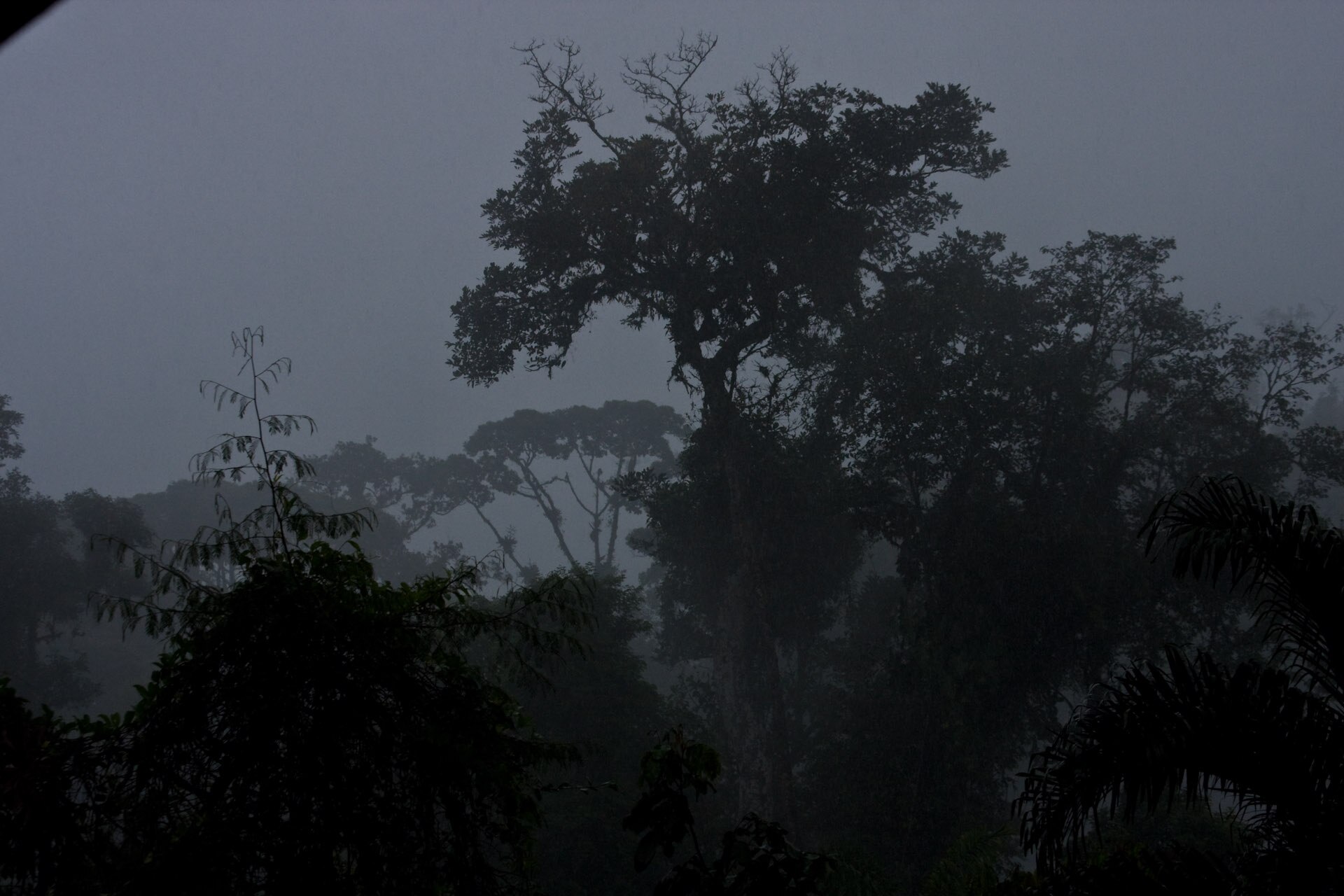
In Costa Rica it lives mainly in low, wet land on both the Pacific and Caribbean slopes. It usually stays in the lowlands but has been found as high as 1,500 meters, about 4,900 feet.
The snake adapts well to disturbed habitats, so it is not confined to deep forest. Cleared land and forest edges near homes and farms can hold it as well as protected parks.
Lowland forest on both the Pacific and Caribbean slopes lies inside this range. Walkers in those areas should follow the safety tips below.
Guidance from the CDC for outdoor workers says snakes are more active at dawn, at dusk and in warm weather. Walks at those hours call for extra care on paths and around leaf litter.
How Dangerous a Bite Is
A 2023 paper in PLOS Neglected Tropical Diseases, a scientific journal, describes bites by Bothrops atrox, a close relative. It lists local tissue damage, clotting failure, bleeding, circulatory changes and acute kidney injury.
Untreated venom poisoning can end in amputation, permanent disability or death. The Instituto Clodomiro Picado therefore urges getting every patient to a hospital quickly, so antivenom, a medicine made from antibodies against snake venom, can be given as soon as possible.
Worldwide, the World Health Organization (WHO) estimates 5.4 million snakebites a year and 1.8 to 2.7 million cases of venom poisoning. Its fact sheet, dated 17 September 2026, puts annual deaths at 81,410 to 137,880.
WHO estimates around three times as many amputations and permanent disabilities as deaths. In June 2017 it listed snakebite envenoming, meaning venom poisoning, as a highest-priority neglected tropical disease.
In Panama, researchers estimate about 2,000 snakebites a year, and 70% are inflicted by Bothrops asper, they wrote in Revista de Biología Tropical, a scientific journal, in January 2021. The figure shows how strongly one species dominates bite statistics in the region.
Costa Rica has cut snakebite deaths sharply since the mid-20th century. A 1997 study in Toxicon, a scientific journal on toxins, found the rate fell from 4.83 deaths per 100,000 people in 1953 to about 0.2 by 1993.
The study covers deaths up to 1993. Current patterns may differ.
Costa Rica’s Antivenom System
The first antivenom batches in Costa Rica were made in 1967, the institute’s history page says. The Instituto Clodomiro Picado was inaugurated in April 1970 and is part of the University of Costa Rica.
Call 911 from any phone in Costa Rica, the number the institute lists for snake emergencies. Visitors who are bitten should get to the nearest hospital or clinic quickly, as the institute advises.
Safety Tips for Hikers
Prevention is mostly about avoiding accidental contact with a snake you have not seen. The tips below follow guidance from the CDC and the Instituto Clodomiro Picado.
- Wear boots and long trousers outdoors, as the CDC advises.
- Keep away from tall grass and leaf piles where you can.
- Do not climb on rocks or wood piles where snakes may hide.
- Never touch or handle a snake, even a dead one or a severed head.
- Take extra care at dawn, at dusk and in warm weather.
- Wear leather gloves if you clear brush or move debris.
Staying on marked, cleared trails makes a snake easier to see before you reach it. On night walks, a flashlight pointed at the path does the same job.
If you see a fer-de-lance, stop and give it room to leave. Keep your distance until it has gone.
Children and teenagers need these rules explained before every walk. Adults should check the path ahead and keep young walkers behind them.
What to Do If Bitten
Treat any fer-de-lance bite as a medical emergency. Call 911, the emergency number the Instituto Clodomiro Picado gives for snake emergencies.
Do these things while help is on the way, following the institute’s and the CDC’s first-aid guidance. The goal is to reach antivenom quickly without causing further harm.
- Keep the person calm and at rest, sitting or lying down.
- Remove rings, watches and tight items before swelling starts.
- Wash the bite with soap and water.
- Keep the bitten limb still, in a comfortable, neutral position.
- Go to the nearest hospital or clinic at once, and do not drive yourself.
Avoid the following, which the CDC, the institute or both warn against. Folk remedies have no proven effect, so seek hospital care instead.
- No tourniquet, and remove any tourniquet someone has already applied.
- No cutting the wound and no sucking out venom by mouth.
- No ice, cold packs or soaking the bite in water.
- No alcohol, and no aspirin, ibuprofen or naproxen.
- No electric shocks, herbal extracts or other folk remedies.
- No handling the snake, even if it appears dead.
Tell the medical team when the bite happened and what the snake looked like. That information helps doctors decide on treatment, including whether antivenom is needed.
What It Means for US Readers
Many US trips to Costa Rica centre on hiking, wildlife watching and night tours in lowland forest. The fer de lance snake is a real but manageable risk for visitors who follow basic precautions.
Check before departure that travel insurance covers emergency medical care and evacuation. Save 911 in your phone and note the nearest hospital to each lodge or park on your route.
Plant and animal remedies have no proven effect, the Instituto Clodomiro Picado says. The CDC also advises against cutting a bite or sucking out venom.
What Is Not Known
Published bite figures are partial or old: the Costa Rican death-rate study ends in 1993, and the World Health Organization gives only global ranges. Estimates of the species’ share of bites also vary, from more than half in the region to 70% in Panama.
The 2023 paper calls for testing antivenoms from other regions against the vipers of French Guiana. How well they work there is not yet established.
Frequently Asked Questions
What is a fer de lance snake?
In Central America it is Bothrops asper, a large venomous viper called terciopelo in Costa Rica. Terciopelo is Spanish for velvet.
How big does a fer de lance get?
Adult males usually measure 1.4 to 1.8 meters, about 4.6 to 5.9 feet, and females grow longer. The Instituto Clodomiro Picado gives a maximum length of about 2.5 meters, or 8.2 feet.
Where do fer de lance snakes live in Costa Rica?
They live mainly in wet lowlands on both the Pacific and Caribbean sides, up to about 1,500 meters. They adapt well to disturbed land, including forest edges and cleared areas.
Is a fer de lance bite deadly?
Its venom can cause bleeding, tissue damage and kidney injury, and untreated bites can kill. Costa Rica’s snakebite death rate fell to about 0.2 per 100,000 people by 1993, a 1997 study found.
What should I do if a fer de lance bites me?
Call 911, keep still, remove rings and watches, immobilize the limb and get to a hospital without driving yourself. Do not use a tourniquet, cut the wound, suck out venom, apply ice or drink alcohol.
Is there antivenom in Costa Rica?
Costa Rica’s first antivenom batches were made in 1967, and the Instituto Clodomiro Picado at the University of Costa Rica was inaugurated in 1970. In an emergency, call 911 and go to a hospital, as the institute advises.
How can hikers avoid snakebites?
Wear boots and long trousers, avoid tall grass and leaf piles, and never touch or handle a snake. Take extra care at dawn, at dusk and in warm weather, when snakes are more active.
Related Reading
- Seven Costa Rica national parks and their costs
- Costa Rica healthcare and the Caja, explained
- Costa Rica travel costs for US visitors
- How the Costa Rica ecotourism model works
- More Costa Rica news and guides
Sources: Instituto Clodomiro Picado, University of Costa Rica: Bothrops asper; Instituto Clodomiro Picado: first aid; Instituto Clodomiro Picado: venomous snakes of Costa Rica; World Health Organization: snakebite envenoming fact sheet; US Centers for Disease Control and Prevention (CDC) and its National Institute for Occupational Safety and Health (NIOSH): venomous snakes at work; Resiere et al. (2023), PLOS Neglected Tropical Diseases; Rojas et al. (1997), Toxicon; Uribe-Arjona et al. (2021), Revista de Biología Tropical (accessed 12 October and 11 November 2026).
This article was produced by The Rio Times’ automated AI newsroom. Editorial responsibility: Matthias Camenzind, Publisher and Editor-in-Chief. The Rio Times also runs Ask Rio Times, which answers from 100,000+ of our own articles, the daily Latin America Power Map, and prediction-market odds on elections and markets.. How we use AI · Report an error
Expat Guide to Costa Rica
What The Rio Times publishes for foreigners who live in or move to Costa Rica.
Start here
- Best Places to Live in Costa Rica for Expats 2026
- Costa Rica Income Tax Bill Would Charge Residents 15% on Five Kinds of Foreign Investment Income
- Costa Rica Permanent Residency and Citizenship: How the Rules Work
- Costa Rica Tax Residency and the 183-Day Rule, Explained
City guides
Coming up in Costa Rica
- Karol G in Costa Rica: 27 November Sold Out at Estadio Nacional, 28 November on Sale 27 Nov
- Martin Garrix in San José, Costa Rica: Parque Viva on November 27, 2026 — Americas Tour 27 Nov
- Quepos Open-Water Swim in Costa Rica on 28 November 28 Nov
- Snoop Dogg Costa Rica Concert Set for 3 December 3 Dec
Understand Costa Rica