Costa Rica Politics Explained, Who Holds Power in 2026

COSTA RICA · POLITICS
Key Facts
- —What is happening Costa Rica, the Central American democracy with no army, has had President Laura Fernández since Friday, 8 May 2026, and her party holds 31 of 57 Assembly seats.
- —Why it matters One party holds the presidency and an Assembly majority, so the main checks now come from the courts, prosecutors and the electoral tribunal.
- —The numbers Fernández won 48.53% on Sunday, 1 February 2026, against 33.65% for Álvaro Ramos of Liberación Nacional, and the country counted 873 homicides in 2025.
- —Who is who Rodrigo Chaves, president until May 2026, is now Minister of the Presidency and Finance, while Gerald Campos runs security and Ana Elena Pinto leads the foreign ministry.
- —What to watch The Supreme Court elects its president on Monday, 26 October 2026, and five constitutional reform bills and a possible referendum on judicial reform remain open.
- —What it means for you US imports from Costa Rica have faced a 12.5% tariff since Friday, 24 July 2026, and security cooperation with Washington is a live political issue.
- —Power Index Costa Rica ranks 9th of 14 in The Rio Times Latin America Power Index, with 36.5 points (October 2026 edition).
One president, one majority party and a former president at the cabinet table. Here is who holds power in Costa Rica in October 2026.
Costa Rica politics in October 2026 turn on one president, one majority party and a former president in the cabinet. Laura Fernández took office on Friday, 8 May 2026, and her party, Pueblo Soberano, holds 31 of the 57 Assembly seats.
This guide names who holds power, what each institution can do and what could change next. More coverage sits on the Rio Times Costa Rica page.
Local-currency amounts use CRC 456.14 per US$1, the open.er-api.com rate of 23 October 2026 (00:02 UTC). Every figure carries its own date.
How Costa Rica Politics Works
Costa Rica is a presidential republic, and Article 134 of the Constitution sets the presidential term at four years. Article 106 fixes the Legislative Assembly at 57 deputies, and Article 107 gives them four-year terms.
Article 132 bars anyone who has held the presidency, for any length of time, from being elected president again. That rule keeps Rodrigo Chaves, who left the presidency in May 2026, from a second presidential term.
Article 12 outlaws a permanent army and leaves public order to civilian police forces. Military forces may be organised only under a continental agreement or for national defence, and always under civilian power.
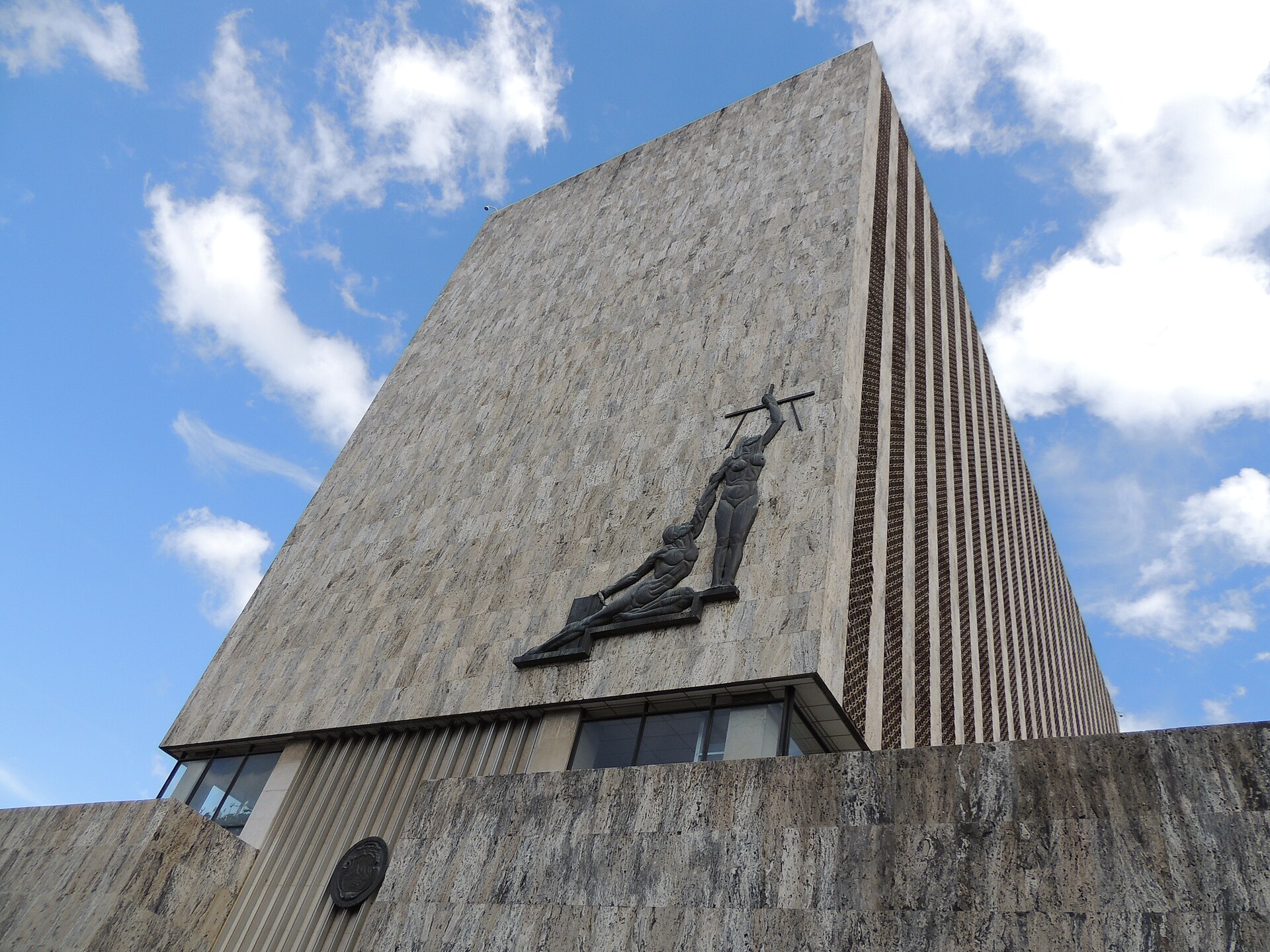
The Supreme Court, the Supreme Electoral Tribunal (TSE) and the prosecutors act as checks on the other powers. The Assembly elects Supreme Court magistrates, and the full court names the TSE magistrates.
Who Holds Power in the Executive
Laura Fernández Delgado took the oath as president on Friday, 8 May 2026, and is the country’s second woman president. The TSE had declared her the winner on Tuesday, 3 March 2026, after the manual count.
Pueblo Soberano, which means Sovereign People, is the party that carried the Chaves agenda into the 2026 vote. Fernández served in the Chaves government before she ran, and Chaves now sits in her cabinet.
The cabinet was announced on Tuesday, 5 May 2026. The key posts below follow the presidency’s website.
- President: Laura Fernández Delgado, in office since 8 May 2026.
- First vice president: Francisco Gamboa Soto.
- Second vice president: Douglas Soto Campos, named ambassador to Washington on 2 September 2026, with his accreditation still pending then.
- Minister of the Presidency and of Finance: Rodrigo Chaves Robles, who holds both posts.
- Foreign Affairs and Worship: Ana Elena Pinto Lizano, a career diplomat, in post from 15 October 2026.
- Public Security: Gerald Campos Valverde, listed under Government, Police and Public Security, who moved from the Justice ministry.
- Justice and Peace: Gabriel Aguilar Vargas, the former chief of staff (jefe de despacho) to Chaves.
- Other posts: Carla Morales Rojas runs planning, Indiana Trejos Gallo foreign trade, José Leonardo Sánchez education and Alexander Sánchez Cabo health.
Chaves leads both the Presidency ministry and Finance. That puts the budget and the president’s agenda in the hands of her predecessor.
Fernández dismissed Foreign Minister Manuel Tovar, announced on Thursday, 24 September 2026, over a “Shield of the Americas” meeting two days earlier. The decree called his conduct negligence because he attended without telling her.
She named career diplomat Ana Elena Pinto on Monday, 5 October 2026, and Pinto took office on 15 October. The episode shows a president who demands discipline from ministers, even on a US-led security initiative.

The Assembly and the Parties
The TSE’s declaration for 2026 to 2030 gives Pueblo Soberano 31 of 57 seats, a simple majority on its own. Liberación Nacional has 17, Frente Amplio 7, and two smaller groups one each.
- Pueblo Soberano (31 seats): the governing party of President Fernández, with security and changes to the judiciary among its priorities.
- Liberación Nacional, PLN (17 seats): a long-established centre-left party and the largest opposition bloc; its presidential candidate was Álvaro Ramos.
- Frente Amplio (7 seats): a left-wing party whose presidential candidate was Ariel Robles.
- Social Christian Unity Party, PUSC (1 seat): a traditional centre-right party whose candidate was Juan Carlos Hidalgo.
- Coalición Agenda Ciudadana (1 seat): the alliance behind presidential candidate Claudia Dobles.
Deputies elected Yara Jiménez of Pueblo Soberano as Assembly president on Friday, 1 May 2026, with Esmeralda Britton as vice president. The party took the whole leadership board, known as the Directorio.
A simple majority lets the governing party pass ordinary laws without opposition votes. Some steps, such as fast-track motions, have needed 38 votes, which Pueblo Soberano does not hold alone.
In the first round on Sunday, 1 February 2026, Fernández won 1,243,141 votes, or 48.53%. Ramos took 861,879 votes, or 33.65%, so no runoff was needed.
Courts, Prosecutors and the Electoral Referee
The Supreme Court has 22 magistrates who sit together as the Corte Plena, or full court. Orlando Aguirre said on 26 August 2026 that he would not seek another term as court president.
The full court votes for a new president on Monday, 26 October 2026, and a candidate needs 12 votes. Teletica and Delfino listed four candidates on 13 October 2026:
- Patricia Solano Castro.
- Patricia Vargas González.
- Gerardo Rubén Alfaro Vargas.
- Damaris Vargas Vásquez.
La Nación and Delfino report that Aguirre’s four-year term as court president ended on 26 September 2026. He stays on as a magistrate, and La Nación says that appointment runs to 2029.
The Corte Plena re-elected Attorney General Carlo Díaz Sánchez on Monday, 19 October 2026, with 21 votes in favour and none against. His second and last four-year term runs to October 2030.
Díaz leads the Public Ministry, the prosecutors who investigate officials, including Chaves. Rio Times covered Solano’s bid for the court presidency.
The TSE runs elections and counts the votes, and Eugenia Zamora was its president in August 2026. The Constitutional Chamber, known as Sala IV, rules on whether laws respect the Constitution.
Rio Times explained the Sala IV consultation on the 4×3 workweek. That review shows how the chamber can slow a government bill.
Security Forces Without an Army
Costa Rica has police instead of an army, and the Public Security ministry under Gerald Campos Valverde commands them. The Judicial Investigation Organisation (OIJ), part of the judiciary, investigates crimes and publishes homicide counts.
The OIJ counted 873 homicides in 2025, or 16.7 per 100,000 people, the third most violent year on record. The count was 876 in 2024 and 905 in 2023.
On Tuesday, 22 September 2026, a “Shield of the Americas” session drew a Costa Rican envoy and a domestic row. US Secretary of State Marco Rubio convened it.
Fernández said on Friday, 25 September that the security agenda with Washington matters. She added that two drug interceptor boats reached Golfito the day after the meeting.
Rio Times has covered Costa Rica’s list of nine narcoterrorist groups. The country’s role in the region is set out in a separate pillar.
The Chaves Factor and the Reform Agenda
As a minister, Chaves has immunity from prosecution while in office. Teletica reported on 8 June 2026 that he refused to waive it in a BCIE case.
BCIE is the Central American Bank for Economic Integration, and prosecutors allege concusión, which his office calls baseless. Teletica said the Assembly lacked the votes to lift his immunity there.
The same outlet said prosecutors had asked to dismiss 77 of the 121 cases opened against him. Those figures come from one outlet and are shown as reported.
A second file, on alleged parallel campaign financing in 2022, was pending before the full court on 8 June 2026, Teletica said. Casa Presidencial said the cases show a pattern of political persecution.
On Friday, 8 May 2026 the presidency put five constitutional reforms on the agenda of the extraordinary sessions of the Assembly. They had all been filed in the 2022 to 2026 term.
- Letting public bodies and municipalities move land without Assembly approval, under Comptroller oversight.
- Limiting Assembly approval of foreign loans to those with a sovereign guarantee, and adding a debt limit.
- Ending indefinite re-election of Supreme Court magistrates, with one more six-year term at most and tougher entry requirements.
- Limiting re-election of TSE members, the electoral authority, to one more six-year term.
- Cutting the Comptroller General’s term from eight to four years, with one re-election.
Teletica’s report of 12 May 2026 mentions no votes on these bills, and the sources checked show no later outcome. A separate proposal, to bar joint candidacies for president and deputy, was withdrawn within three days.
On Monday, 18 May 2026, Fernández said her government could call national referendums on judicial reform if the Assembly stalls. She said she saved about ¢12 billion (about US$26 million) during the campaign, enough for a couple of referendums.
Opponents and Names to Watch
- Álvaro Ramos: runner-up with 33.65% and the face of Liberación Nacional.
- Ariel Robles: the Frente Amplio candidate, leading the left opposition with 7 seats.
- Claudia Dobles: the candidate of Coalición Agenda Ciudadana, which holds one seat.
- Juan Carlos Hidalgo: the PUSC candidate, whose party holds one seat.
- Yara Jiménez: the Assembly president who steers the governing majority’s bills.
- Ana Elena Pinto Lizano: the new foreign minister, who inherits the Washington file.
A CIEP-UCR poll found 59% approve of the Fernández government and 24% view it negatively. CIEP is the University of Costa Rica’s political studies centre, and it phoned 994 adults from 25 August to 1 September 2026.
The poll was published on 10 September 2026. It measures approval four months into her term, not support for any single reform.
What It Means for US Readers
A 12.5% tariff has applied to products of Costa Rica since Friday, 24 July 2026, except goods in Annexes I and II. It replaced a 10% surcharge under Section 122, and the Section 301 notice appeared in the Federal Register on 28 July 2026.
Foreign trade minister Indiana Trejos Gallo’s ministry asked Washington by 6 July 2026 to keep DR-CAFTA duty-free access, La Nación reported. The sources checked show no later request to change the 12.5% rate.
Washington and San José work closely on drug interdiction, as the Shield of the Americas session of 22 September 2026 showed. For travellers and expats, the 873 homicides of 2025 explain why security leads the political agenda.
Investors should note that one party now controls the presidency and the Assembly. See Rio Times on who runs Costa Rica’s economy and on Costa Rica’s geopolitics.
The Rio Times Latin America Power Index tracks how Costa Rica compares with 13 other countries. Its live rank and score appear in the Key Facts box above.
What Is Not Known
Who will preside over the Supreme Court after the vote on Monday, 26 October 2026 is not known. The end of Aguirre’s presidency on 26 September 2026 rests on press reports and was not confirmed on the Poder Judicial site.
Whether the Assembly will pass the five constitutional reforms, or whether Fernández will call a referendum, is not known. No vote on either had been reported in the sources checked.
The final outcome of the cases against Chaves is not known, and neither is how long his immunity will last. The Teletica figures on dismissed cases come from one outlet and were not confirmed with the prosecutors.
Official turnout for 1 February 2026 was not confirmed, because the TSE website could not be read in full. Details inside the tariff annexes of the Federal Register notice were not checked.
No prediction market on Costa Rican politics with real trading was found on 23 October 2026, so none is shown. The Polymarket markets on the 2026 election are closed.
Frequently Asked Questions
Who is the president of Costa Rica in 2026?
Laura Fernández Delgado of Pueblo Soberano took office on Friday, 8 May 2026. Her four-year term runs to 2030.
What is Rodrigo Chaves doing now?
Chaves, president until May 2026, is Minister of the Presidency and of Finance in the Fernández cabinet. As a minister he has immunity from prosecution while in office.
Does Costa Rica have an army?
No, Article 12 of the Constitution outlaws a permanent army. Public order rests on civilian police forces.
Which party controls the Costa Rican Assembly?
Pueblo Soberano holds 31 of the 57 seats, a simple majority. Liberación Nacional has 17 and Frente Amplio 7.
Who is the foreign minister of Costa Rica?
Ana Elena Pinto Lizano, a career diplomat, took office on 15 October 2026. She replaced Manuel Tovar, dismissed on 24 September 2026.
Who is the attorney general of Costa Rica?
Carlo Díaz Sánchez, re-elected on Monday, 19 October 2026 by 21 votes to none. His second term runs to October 2030.
When is the next presidential election in Costa Rica?
The current term runs to 2030, so the next vote falls in early 2030. The sources checked do not give the exact date.
Sources: Presidency of Costa Rica (cabinet list); Federal Register, Section 301 notice 2026-15181 (28 July 2026); Constitution of Costa Rica, Articles 12, 106, 107, 132, 134; El Observador (TSE declaration, 3 March 2026); El Observador (Assembly seats, 23 March 2026); El Observador (Assembly leadership, 1 May 2026); El Observador (TSE president, 11 August 2026); Delfino.cr (cabinet, 5 May 2026); Delfino.cr (attorney general, 19 October 2026); Delfino.cr (OIJ homicides, 5 January 2026); CRHoy (foreign minister, October 2026); La República (Tovar dismissal, 25 September 2026); Teletica (court presidency candidates, 13 October 2026); Teletica (constitutional reforms, 12 May 2026); Teletica (referendum, 18 May 2026); Teletica (Chaves immunity, 8 June 2026); La Nación (Aguirre, 26 August 2026); Delfino.cr (court presidency candidates, 13 October 2026); Delfino.cr (Soto ambassador, 3 September 2026); La Nación (tariff request, 7 July 2026); Delfino.cr (tariff, 23 July 2026); Poder Judicial (Corte Plena, 19 October 2026); Estrategia y Negocios, CIEP-UCR poll (10 September 2026); open.er-api.com (exchange rates, 23 October 2026) (all accessed 22 and 23 October 2026).
This article was produced by The Rio Times’ automated newsroom system. How we use AI · Report an error · Editorial responsibility: Matthias Camenzind, Editor-in-Chief
Expat Guide to Costa Rica
What The Rio Times publishes for foreigners who live in or move to Costa Rica.
Start here
- Fer De Lance Snake Facts and Safety Tips
- Best Places to Live in Costa Rica for Expats 2026
- Costa Rica Income Tax Bill Would Charge Residents 15% on Five Kinds of Foreign Investment Income
- Costa Rica Permanent Residency and Citizenship: How the Rules Work
City guides
Coming up in Costa Rica
- Rosario Flores brings Gira 2026 to San José 24 Oct
- Reggae giants Cultura Profética play Belén 25 Oct 25 Oct
- Def Leppard Costa Rica Concert Set for 27 October 27 Oct
- Ozuna Plays Costa Rica on 31 October 31 Oct
Understand Costa Rica