South Africa Explained 2026: The Country, the Coalition Government and What to Watch
GUIDES · SOUTH AFRICA
Key Facts
- —Capitals Three of them. Pretoria is the executive capital, Cape Town the legislative seat of Parliament and Bloemfontein the judicial capital. The Constitutional Court sits in Johannesburg.
- —Population 63.52 million on the official mid-2026 estimate. Gauteng, the smallest province by area, holds 16.29 million of them, a quarter of the country.
- —Currency The rand, written R. It traded near 16.36 to the US dollar on 23 September 2026, about 5.6 percent weaker over twelve months.
- —Language Twelve official languages. English is the working language of business, courts and national government, though it is a first language for a minority.
- —Economy Mining, finance, manufacturing and agriculture, with Africa’s deepest capital markets. Output fell 0.2 percent in the second quarter of 2026.
- —Government A parliamentary republic. The president is elected by the National Assembly, not directly by voters, and serves a maximum of two five-year terms.
South Africa explained for newcomers: how a country with three capitals and twelve official languages is actually governed, and what the numbers say about living there.
South Africa explained starts with a fact that surprises most arrivals. Voters do not elect the president. They elect a party list, the National Assembly elects the president, and since 2024 no single party has had the seats to do that alone. Everything about the current government follows from that.
What kind of country is this?
South Africa covers about 1.22 million square kilometres at the southern tip of the continent, with more than 3,000 kilometres of coastline running from the Atlantic around the Cape to the Indian Ocean. It borders five countries and completely surrounds a sixth, Lesotho, which is landlocked inside it. That scale is the first thing a South Africa explained guide has to fix in a reader’s head.
The nine provinces are not equal in any sense that matters. Gauteng is the smallest by area and holds 16.29 million people, a quarter of the national total, along with Johannesburg and Pretoria. KwaZulu-Natal follows with 12.28 million and the Western Cape with 7.72 million. A foreigner’s experience of the country depends almost entirely on which of these they land in.
The political inheritance needs no elaborate telling. Apartheid ended with the first non-racial election in 1994, and the constitution that followed is widely regarded as one of the most carefully drafted anywhere. The African National Congress governed alone from 1994 until 2024. The end of that single-party era, rather than any policy, is the defining fact of the current period.
Who runs South Africa and how
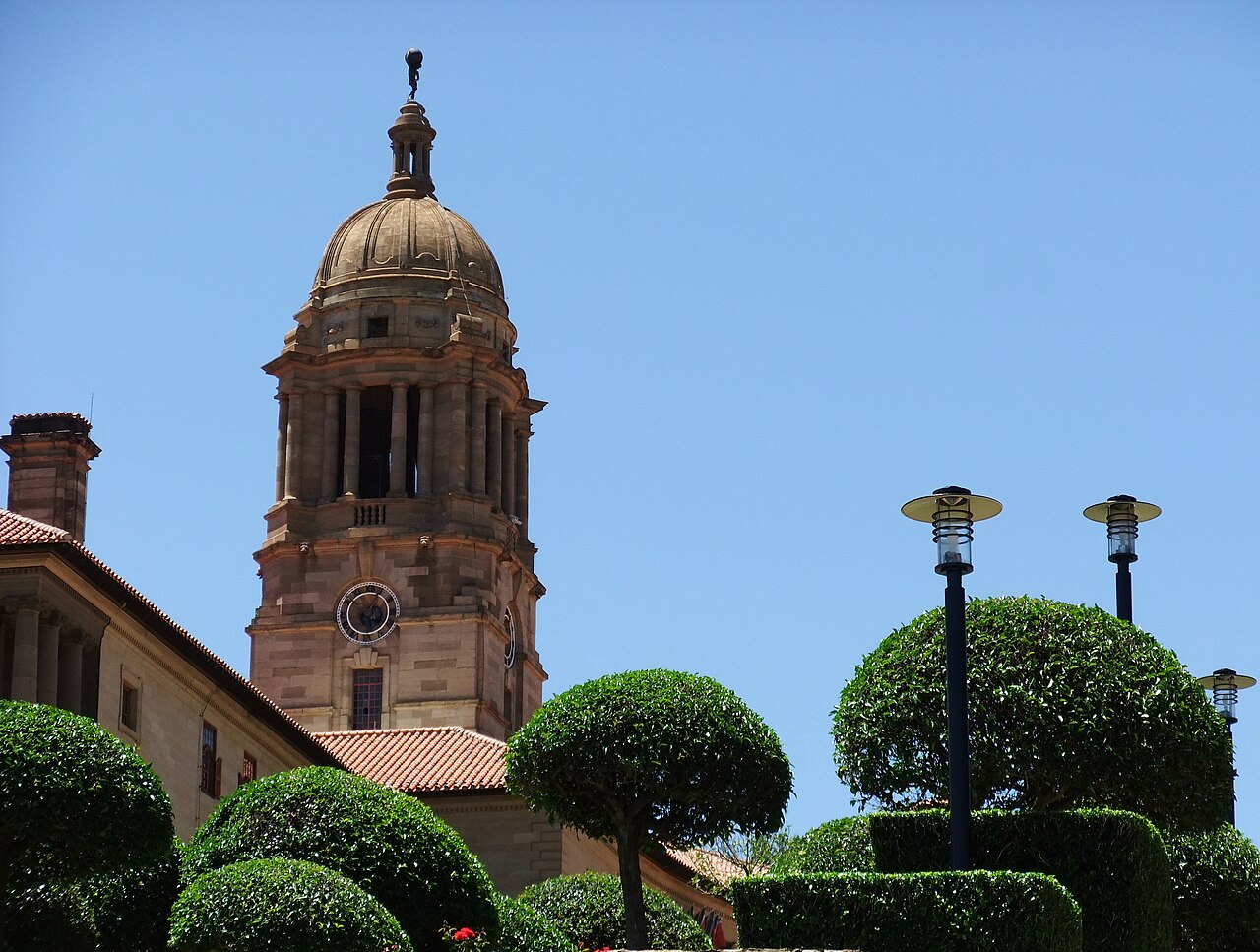
Cyril Ramaphosa has been president since February 2018, when he succeeded Jacob Zuma mid-term, and his current term began with his inauguration on 19 June 2024. The presidency makes him both head of state and head of government, and the office is limited to two five-year terms.
Parliament has 490 seats in two chambers. The National Assembly has 400 members elected by party-list proportional representation, and the National Council of Provinces has 90 delegates, ten from each province. Because the Assembly elects the president, a party needs 201 seats or a coalition that reaches it.
The 2024 election ended single-party rule and produced a government of national unity drawing in several parties. That arrangement has been under continuous strain since, and its exact composition as of late September 2026 could not be established from any official source: neither the government portal nor the presidency publishes a membership page for it. Treat any confident claim about who is in and who is out with care.
The practical consequence is slower, more negotiated policy. Legislation that once passed on a party whip now needs assembling. For anyone assessing a reform announcement, the useful question is not what the minister said but whether the coalition partners have agreed.
How the economy works
South Africa has the most developed financial system on the continent and a mining sector that still sets the tone. The Johannesburg exchange is deep, liquid and open to foreign investors in a way no other African market is, which is why the country appears in emerging market indices that otherwise skip the continent.
The recent numbers are weak. Output contracted 0.2 percent in the second quarter of 2026, after growing 0.4 percent in the first, and was up 0.9 percent on the year. Mining and quarrying was the single largest drag, down 3.0 percent, with platinum group metals, manganese ore, gold and iron ore named as the main contributors. Manufacturing fell 1.8 percent and trade, catering and accommodation 1.9 percent.
Monetary policy has turned restrictive again. The Reserve Bank raised its repurchase rate by 25 basis points to 7.25 percent on 23 September 2026, reportedly unanimously and for the second time in the year. August inflation of 4.4 percent sits at the top of the new target band of 3 percent with a one-point tolerance, which is tighter than the band the bank used previously.
The rand has weakened, trading near 16.36 to the dollar on 23 September 2026, about 5.6 percent softer over twelve months and roughly 2 percent over the preceding month. Falling precious metals prices were cited as part of the reason, which is the mining sector showing up in the currency rather than in the growth figure.
What is happening right now
As of 24 September 2026 the country is six weeks from local government elections, set for 4 November with 136,790 candidates contesting. Applications for special votes opened on 21 September and close at five in the afternoon on 12 October. Voter registration has already closed. Johannesburg and Nelson Mandela Bay are the contests that will be read nationally.
The Reserve Bank’s rate rise on 23 September is the second economic story. Raising into a quarter of contracting output is a deliberate signal about the new, lower inflation target rather than a response to demand.
Relations with the United States are the third. Visa restrictions and travel measures aimed at South Africans have strained the relationship, with Pretoria publicly asking what more it is expected to do and Washington not expected to identify who is affected. The scope and legal basis of those measures could not be established from any American government source, so this guide describes the South African reaction rather than the measure itself.
Running underneath all of it is a judicial commission examining allegations of criminal infiltration of the police and justice system. Its findings, whenever they come, will matter more to the investment case than any single quarter of output.
What to watch
The local elections on 4 November 2026 are the near-term event, and they are a better guide to the next national election than any poll. Municipal coalitions in the large metros have been unstable for a decade, and how they form after this vote will shape service delivery in the cities where most foreign residents live.
The Reserve Bank’s next scheduled monetary policy statement falls on 19 November 2026. That is the only forward date the bank exposed publicly when this guide was written; its full calendar page was unavailable, so do not plan around any other date without checking.
The medium-term budget policy statement is expected in late October or November 2026. The Treasury opened its lock-up registration on 31 August and set an investor close-out period running from 21 September to 20 October, which brackets the likely tabling date, but it has not published the date itself.
What this means for foreigners
The visa system is category-based and there is no shortcut. Visitor visas cover stays of ninety days or less for tourism, family, business, medical treatment, conferences, research and voluntary work. Temporary residence covers general work, critical skills, intra-company transfer, business, study, exchange, retired persons, relatives, medical treatment and corporate visas. Permanent residence is a separate process.
Two thresholds are published. The retired persons’ visa requires a minimum monthly income and a minimum net worth, and the department’s own page currently gives the same figure, 37,000 rand, for both. That looks like a page error rather than the rule, so confirm it directly before relying on it. The relative’s visa requires 8,500 rand a month per person from the sponsor.
There is no remote work or digital nomad visa on the department’s published list. Guides claiming one exists, usually with a figure around one million rand of annual income, could not be traced to any official source. The work visas that do exist all require an employer relationship or a listed critical skill, and the business visa carries a capital requirement plus an obligation that 60 percent of staff be South African.
On tax, the commonly cited physical presence test and the days-abroad cessation rule could not be confirmed against the revenue service’s own pages, which were unavailable when this guide was written. Because South African tax residency brings worldwide income into scope, that is not a detail to take from a blog. Get it from the revenue service or an adviser before you move.
The honest summary is short. South Africa offers professional and medical services that are hard to match anywhere else on the continent, at costs well below Western European levels. Against that sit real security and electricity-supply questions, and both vary by suburb. South Africa explained for a newcomer means choosing the province and the suburb first, and the country second.
Connected Coverage
Sources: Population, output, inflation and labour data from Statistics South Africa, the policy rate from the South African Reserve Bank, election dates from the Electoral Commission, visa categories and thresholds from the Department of Home Affairs, and parliamentary structure from Parliament’s own pages.
- Statistics South Africa — mid-year population estimates 2026
- Statistics South Africa — gross domestic product, second quarter 2026
- Statistics South Africa — consumer price index, August 2026
- South African Reserve Bank — monetary policy
- Electoral Commission of South Africa — the 2026 local government elections
- Department of Home Affairs — types of visas
- Parliament of South Africa — the National Council of Provinces
- South African Government — South Africa at a glance
- The Presidency of the Republic of South Africa
What Is Not Known
The current composition of the coalition government. Verified changes run only to May 2026, and no source reachable when this guide was written states which parties remain in it as of late September. Neither the government portal nor the presidency publishes a membership page, and with local elections on 4 November this is the most consequential gap in the picture.
Whether a South African remote work or digital nomad visa formally exists. It appears on none of the Department of Home Affairs pages, nor on the government portal. The figures widely repeated online, including an annual income threshold around one million rand, could not be traced to an official source, so no threshold, duration or tax treatment should be relied on.
The tax residency rules as officially stated. Every revenue service page on residency was unavailable when this guide was written. The physical presence day counts and the cessation rule that circulate in expat guidance are reported elsewhere as the general rule but are not confirmed here, and South African tax residency brings worldwide income into scope.
The status of South Africa’s preferential trade access to the United States. The United States trade representative’s country page and the standard reference sources directly contradict each other on whether the relevant act has expired. Whether the tariff announced in 2025 is still in force at the announced rate could not be established either.
How much load-shedding has occurred in 2026. The utility’s own September 2026 statement gives an energy availability factor near 68 percent and load reduction affecting a small share of customers, but no consolidated record of national supply interruptions for the year was obtainable. Anyone budgeting for backup power should ask locally rather than rely on a national figure.
Frequently Asked Questions
Does South Africa have three capitals?
Yes. Pretoria is the executive capital and seat of government, Cape Town is the legislative capital where Parliament sits, and Bloemfontein is the judicial capital and seat of the Supreme Court of Appeal. The Constitutional Court sits separately in Johannesburg.
How is the South African president chosen?
By the National Assembly, not directly by voters. South Africans vote for party lists, seats are allocated proportionally, and the 400-member Assembly then elects the president. A president serves five-year terms with a maximum of two.
Is there a digital nomad visa for South Africa?
Not on the Department of Home Affairs’ published list of visa types. Several guides claim one exists, usually quoting an annual income threshold around one million rand, but that could not be traced to any official source. The published work visas all require an employer relationship or a listed critical skill.
What is the minimum income for a South African retirement visa?
The department’s page states a minimum monthly income of 37,000 rand and also a minimum net worth of 37,000 rand. Two different concepts carrying the identical figure looks like an error on the page rather than the rule, so confirm it with the department before relying on it.
How many official languages does South Africa have?
Twelve. English is the working language of business, the courts and national government, although it is a first language for a minority of the population.
What is the South African policy interest rate?
7.25 percent, after the Reserve Bank raised it by 25 basis points on 23 September 2026, the second increase of the year. Inflation of 4.4 percent in August sits at the top of the bank’s target band of 3 percent with a one-point tolerance.
This article was produced by The Rio Times’ automated newsroom system. How we use AI · Report an error
Read More from The Rio Times