
ZAMBIA · GEOPOLITICS
Key Facts
- —What is happening President Hakainde Hichilema won a second term on 13 August 2026 with 60.49% of valid votes, and Zambia signed a US$2.49 billion five-year health pact with the United States on 8 October.
- —Why it matters Zambia is the second-largest copper producer in sub-Saharan Africa, so Washington, Beijing and Abu Dhabi all compete for its mines, rail links and ports.
- —The numbers Zambia mined 890,346 tonnes of copper in 2025, up 8%. China’s TAZARA rail deal is worth US$1.4 billion over 30 years, and Abu Dhabi’s IRH pledged up to US$1.1 billion for Mopani.
- —Who is who Hichilema leads the governing UPND party, Foreign Minister Mulambo Haimbe handles the foreign deals, and opposition candidate Brian Mundubile is in detention on a treason charge, which he denies.
- —What to watch A US minerals agreement is still being negotiated, a High Court hearing on the opposition detentions is set for 26 October to 6 November 2026, and talks on a new IMF programme are due.
- —What it means for you US investors and officials face a contest over copper and the Lobito rail route, while US travellers see a Level 1 advisory despite post-election tension.
Zambia sells the copper the world wants, and every big power is bidding for it. Here is where each one stands in October 2026.
Zambia geopolitics in October 2026 is a contest to buy, move and process the copper of a landlocked nation. President Hakainde Hichilema won a second term on 13 August 2026, and the US, China and the Gulf court him.
Washington signed a US$2.49 billion health pact on 8 October 2026 and is still negotiating a minerals deal. Beijing holds a 30-year rail concession, and Abu Dhabi’s International Resources Holding (IRH) owns 51% of the Mopani copper mine.
Most figures here are in US$ as published. Where a kwacha rate is needed, this guide uses K20.11 per US$1, the open.er-api.com rate of 20 October 2026 (00:02 UTC).
For the wider country picture, read Zambia Explained and Zambia and its neighbours in Southern Africa. The Rio Times keeps all Zambia coverage on the Rio Times Zambia page.
Zambia Geopolitics at a Glance
Zambia is a southern African republic with eight neighbours and no coast, so its copper must leave through other countries. The 2022 census counted 19.6 million people.
Copper is the prize. Mines Minister Paul Kabuswe said on 27 January 2026 that 2025 output reached 890,346 tonnes, up 8%, short of a one-million goal.
The government’s long-term target is 3 million tonnes a year by 2031. Zambia ranks second in sub-Saharan Africa behind DR Congo, so every power that needs the metal courts it.
Hichilema’s government takes investment from every side in 2026. In the health talks it struck out clauses on sharing patient data and disease specimens before it signed.
This guide covers each power in turn. Earlier Rio Times pieces explain the wider picture, including who backs whom in Africa and Africa’s critical minerals.
Who Governs Zambia After the August 2026 Election
Zambians voted on Thursday, 13 August 2026, and the Electoral Commission of Zambia (ECZ) declared Hichilema the winner on Tuesday, 18 August. He took 2,965,326 votes, or 60.49% of valid votes.
Brian Mundubile took 1,856,217 votes (37.87%) and finished second, a gap of 1,109,109 votes. He ran under the NRPUP party label, backed by the Tonse Pamodzi opposition alliance.
Turnout was 57.23%, with 5,028,616 ballots counted among 8,786,300 registered voters. Hichilema leads the United Party for National Development (UPND), which he led to power in 2021.
The count was not smooth. The ECZ paused counting on 14 August over violence and ballot theft, and European Union observers flagged tabulation flaws.
The Southern African Development Community (SADC) mission called the vote generally peaceful and better than in 2021. It named the missing party funding law as the biggest gap, and an African Union and COMESA mission urged strict legal process.
The petition question stayed murky, with two accounts. The Judiciary’s chief administrator wrote that no petition was recorded at the Constitutional Court registry by 18:00 on 24 August.
Lawyer Linda Kasonde says her filing bounced, so she emailed the documents to Chief Justice Mumba Malila. He called this highly irregular and referred them to the court; no ruling had been reported by 3 September.
Hichilema was sworn in on Tuesday, 1 September 2026 at the National Heroes Stadium in Lusaka, with Vice President Mutale Nalumango. The leaders of Kenya, Namibia, Botswana, Zimbabwe and Tanzania attended, as covered in Hichilema’s second-term inauguration.
Mundubile was taken into custody on Thursday, 27 August after more than two weeks in hiding. His lawyer said he and running mate Makebi Zulu were charged with treason on Saturday, 29 August.
Police reportedly found rifles and military equipment at his home; both men deny the allegations. Former minister Mutotwe Kafwaya was killed during the security operation, and the opposition demands an independent inquiry.
Presidential adviser Levy Ngoma said on 12 October that the detention is a criminal matter and not a bar to reconciliation. Opposition figure Davies Mwila of the BM8-ECL Movement says there can be no reconciliation while Mundubile, Zulu and 16 others stay jailed.
A High Court bail hearing began on Monday, 19 October and moved to Wednesday, 21 October. A separate petition on the length of detention is set for 26 October to 6 November.
Hichilema swore in his first four ministers on Monday, 14 September 2026. They are Situmbeko Musokotwane (Finance), Mulambo Haimbe (Foreign Affairs), Roma Chilengi (Health) and Gilbert Siame (Green Economy).

The United States: Health Pact, Minerals Talks and the Lobito Corridor
The United States and Zambia signed a five-year health financing agreement on Thursday, 8 October 2026. The US State Department puts the total at US$2.49 billion, with US$1.52 billion from Washington and US$975 million from Zambia.
Talks had stalled over clauses on sharing patient data and disease specimens, which were removed. Zambian officials had floated a figure of US$3.6 billion earlier that week.
Health Minister Roma Chilengi said the deal contains no minerals clause, even in the original draft. Foreign Minister Haimbe said the health and minerals tracks are now separate, and a minerals agreement is still being negotiated.
He gave no details on which minerals or what access the United States would receive. The United States was represented at the signing by Chargé d’Affaires Mich Coker, who said infectious diseases know no borders.
A second US channel is the Millennium Challenge Corporation (MCC), a US government aid agency. Its US$491 million grant programme for Zambia was widened in June 2026 from farm roads to critical minerals infrastructure.
Priority road segments in the North-Western and Copperbelt provinces now line up with the Lobito Corridor. That route links the copper belts to Angola’s Atlantic port of Lobito, as covered in Zambia’s Lobito Corridor road financing.
The Africa Finance Corporation (AFC), a development lender, is lead developer of the planned Zambia link. It is targeting financial close in the fourth quarter of 2027, so no completion date exists.
For travellers, the US State Department lists Zambia at Level 1, Exercise Normal Precautions. That advisory page was last reissued on 31 July 2023.
China: Railway, Mines and Debt
China’s biggest visible stake is the TAZARA railway, which links the Copperbelt to Dar es Salaam in Tanzania. China, Zambia and Tanzania signed a modernisation deal in Beijing on 29 September 2025.
China Civil Engineering Construction (CCECC), a state-owned unit of China Railway, will invest US$1.4 billion and run the line for 30 years. TAZARA said in December 2025 that the revival was active; see Tanzania geopolitics.
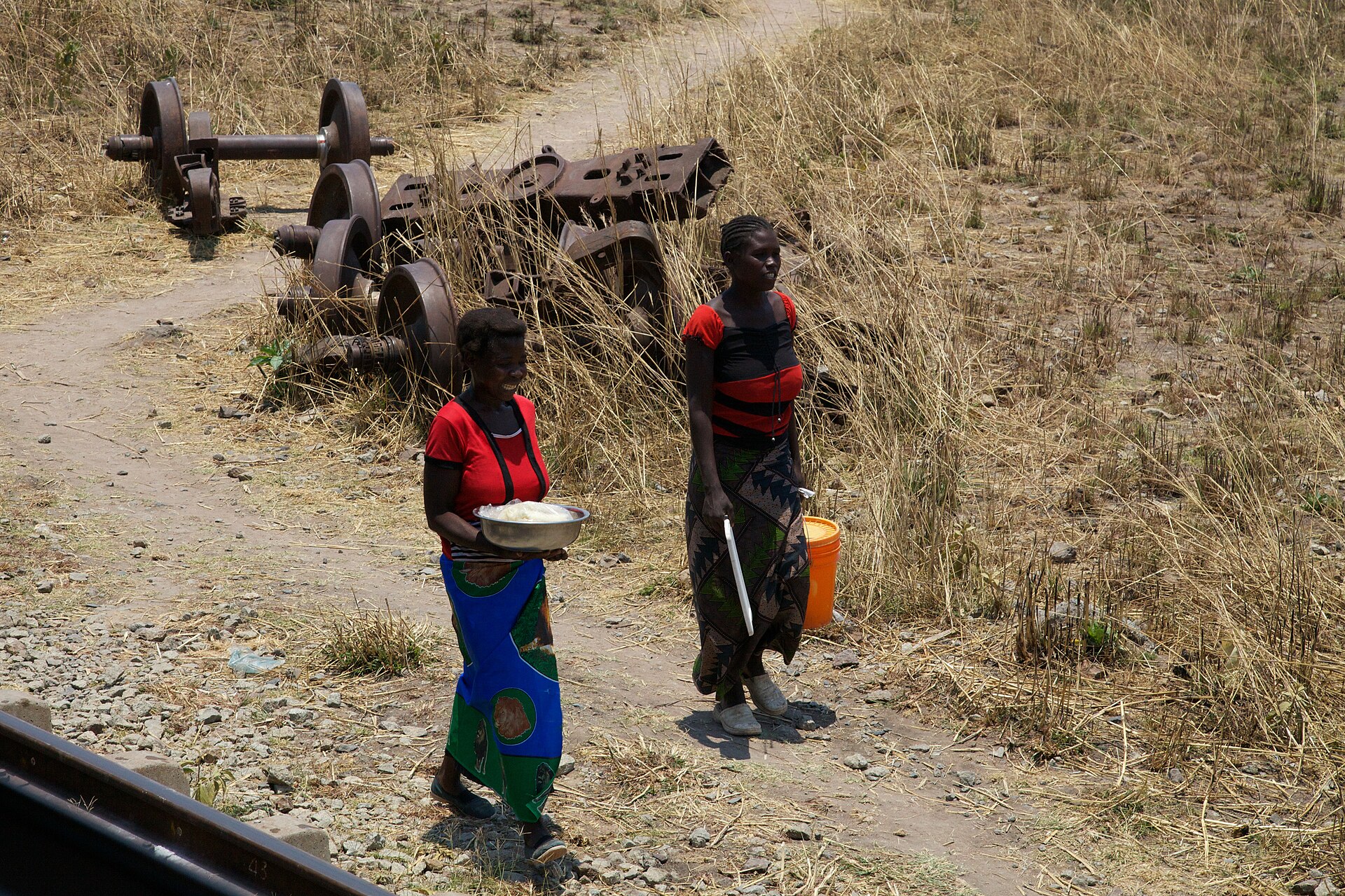
Chinese contractors also work inside Zambian mines. On 17 September 2026 Konkola Copper Mines (KCM) signed a US$498 million contract with China Nerin Engineering for a tailings leach plant.
The plant would treat 70,000 tonnes a year, and KCM has not disclosed a timetable or financing. China Nonferrous Metal Mining Group (CNMC) runs the Chambishi smelter.
Debt is the other Chinese link. The International Monetary Fund (IMF) said in January 2026 that Zambia had signed five agreements with official creditors, without naming them.
By May 2026 the IMF put restructuring agreements at about 94% of the restructuring perimeter. The sources checked do not state China’s exact share, so it is not given here.
The Gulf and India: Mopani and Konkola
Abu Dhabi is the Gulf’s main player in Zambian copper. International Resources Holding (IRH), linked to the UAE, bought 51% of Mopani Copper Mines, as state investor ZCCM-IH announced in March 2024.
IRH committed up to US$1.1 billion, including US$620 million in equity and up to US$380 million in loans. Mopani’s output rose 40% in 2025, the Mines Minister said.
Bloomberg reported on 28 September 2026 that ZCCM-IH wrote to IRH on 18 September alleging breaches. IRH says normal shareholder talks are handling it; see ZCCM-IH’s accusation against IRH over Mopani.
Hichilema visited the UAE on 29 and 30 September 2026. The Lusaka Times reported memoranda worth US$2.14 billion, but these are statements of intent, not binding contracts.
The largest is a US$2 billion medical city for Lusaka. The sources checked do not show who would finance or build it.
India’s footprint is private rather than state-led. KCM belongs to the Indian-founded Vedanta group, which restarted the Nchanga smelter on 21 September 2026 after a 106-day shutdown.
KCM produced 80,215 tonnes of copper in 2025, and Vedanta targets 300,000 tonnes a year by 2030. Fastmarkets analyst Andy Cole said there is a long way to go.
Europe, Russia, Turkey and BRICS
The European Union signed the Lobito Corridor memorandum with the United States, Italy, Angola, DR Congo, Zambia and two African lenders. The Commission lists a Zambia to Angola railway under its Global Gateway plan.
The European Commission’s page gives no euro amount for Zambia. EU election observers also criticised aspects of the August count, which gives Brussels a second reason to watch Lusaka.
No sources checked show a Russian base, a Russian loan or a major Russian mining deal in Zambia. Nor did they show a Turkish loan, a Saudi or Qatari mining stake, or a BRICS membership bid.
That absence is a finding, not proof of nothing. The section below lists what could not be confirmed, including how Zambia votes at the United Nations.
Debt, Power and the IMF: The Pressure Points
The IMF approved Zambia’s 38-month Extended Credit Facility on 31 August 2022 and completed the final review on 27 January 2026. Payouts totalled about US$1.7 billion (SDR 1,271.66 million).
After a staff visit that ended on 13 May 2026, the IMF said successor programme talks would resume with the incoming government. It projected 4.3% growth for 2026 and reserves of US$6.4 billion.
The IMF also cited energy constraints and Middle East war spillovers as drags on growth. A 10% duty waiver on copper concentrate exports was due to end on 30 September 2026, and Fastmarkets saw no extension announced.
Those pressure points shape every foreign deal. A new IMF programme would give lenders a shared framework, while power shortages limit how fast any investor can raise copper output.
What It Means for US Readers
US investors should watch the unsigned minerals agreement, the Lobito Corridor and the Mopani dispute. They decide who controls Zambian copper, and neither the US, China nor Abu Dhabi has locked up the sector.
Washington’s health money comes with political attention, since Zambia just detained its main opposition leader on treason charges. US officials and lawmakers will face questions on how to balance minerals access and democratic standards.
For travellers, the State Department’s Level 1 advisory still stands on the page checked. The kwacha traded at about K20.11 per US$1 on 20 October 2026, and post-election tension is real.
What Is Not Known
It is not confirmed what minerals the United States wants in the pending agreement, or when it might be signed. The Constitutional Court has not publicly ruled on the emailed petition documents, as far as the sources checked show.
The outcome of the bail hearing resumed on 21 October is not known. How long the treason case will take is unclear.
China’s exact share of Zambia’s restructured debt was not found in the sources checked. Whether the Mopani dispute ends in arbitration is not known, and the UAE investment memoranda are not binding.
Zambia’s votes on contested UN resolutions, its dealings with Russia and Turkey, and any BRICS ambitions could not be confirmed. No open prediction market on Zambian foreign policy was found on 20 October 2026.
Frequently Asked Questions
Who is the president of Zambia in October 2026?
Hakainde Hichilema, who won a second term on 13 August 2026 and was sworn in on 1 September. The constitution limits him to two terms, so this is his last.
Is Zambia aligned with the United States or China?
Neither formally. Zambia takes US health and road money, a Chinese rail concession and Gulf mining capital at the same time.
What did the US and Zambia sign on 8 October 2026?
A five-year health financing agreement worth US$2.49 billion, with US$1.52 billion from the United States and US$975 million from Zambia. Clauses on data and specimen sharing were removed.
What is the TAZARA railway?
It is a railway between Zambia’s Copperbelt and Dar es Salaam in Tanzania. A Chinese state firm signed a US$1.4 billion, 30-year deal to modernise and run it in September 2025.
What is the Lobito Corridor?
It is a planned rail and road route linking the Zambian and Congolese copper belts to Angola’s Atlantic port of Lobito. The United States, the European Union and African lenders back it.
Who is Brian Mundubile and why is he detained?
He is the opposition candidate who finished second with 37.87%. His lawyer said he was charged with treason on 29 August 2026, and he denies the allegations.
Is Zambia safe for US travellers?
The State Department lists Zambia at Level 1, Exercise Normal Precautions, on the page checked. Travellers should still check the latest advisory and avoid political gatherings.
Sources: Electoral Commission of Zambia; SARDC, election results and observers; Brussels Times, EU observers on tabulation; Lusaka Times, Judiciary statements (25 August 2026); Lusaka Times, petition account (26 August 2026); Lusaka Times, State House on detention (12 October 2026); Zambia Monitor, bail hearing; Citizen Digital, treason charge; Sunday World, inauguration; Lusaka Times, first four ministers; Health Policy Watch, US-Zambia health pact; News4JAX, health pact amounts; TimesLIVE, MCC grant; European Commission, Lobito Corridor; The Citizen (Tanzania), TAZARA deal; The Citizen (Tanzania), TAZARA revitalisation; ZCCM-IH, Mopani announcement (22 March 2024); Ecofin, 2025 copper output; Fastmarkets, KCM and duty waiver; Lusaka Times, Zambia-UAE memoranda (29 September 2026); Mirage News, IMF press release on the sixth review (27 January 2026); Lusaka Times, IMF staff visit (May 2026); US State Department travel advisory for Zambia; open.er-api.com exchange rates (all accessed 20 October 2026).
This article was produced by The Rio Times’ automated newsroom system. How we use AI · Report an error · Editorial responsibility: Matthias Camenzind, Editor-in-Chief
Part of our ongoing coverage
Africa: The New Scramble — the great-power contest over the continent.
City Guides in Zambia
Events, rents, safety and practical guides, city by city.