Zambia Visa and Residency 2026: Permits, Costs and the Path to Staying
GUIDES · ZAMBIA
Key Facts
- —What it is A standing guide to Zambia’s entry, work and residence rules under the Immigration and Deportation Act of 2010.
- —Who it’s for Tourists, business visitors, workers, investors, retirees and spouses from the US, Canada, the UK and Europe.
- —What it costs Visits are visa-free for most Western passports; an employment permit costs 24,000 kwacha (about US$1,220).
- —The rules Visitors get up to 90 days in 12 months (UK Foreign Office); work, business, study or a longer stay needs a permit.
- —Why it matters Zambia, home to 21.9 million people (World Bank, 2025), now waives visas for 167 nationalities to draw tourists and investors.
- —The catch Employment permits are filed by the employer, not the worker, and a new immigration law awaits commencement.
- —What is still open When the Immigration Control Act 2026 takes effect, and how its rules will be applied, is not yet public.
Zambia is a landlocked copper and safari country in southern Africa, home to the Zambian side of Victoria Falls. For Americans and Europeans it is now one of the easiest African countries to enter. Staying to work or retire still runs through a permit system built in 2010.
The Zambia visa question has a short answer for most Western travellers: no visa is needed for a visit. Working, investing, retiring or settling for good is different. It means fees in kwacha, paperwork filed from abroad and residence clocks measured in years.
Who needs a Zambia visa in 2026
Zambia’s immigration rules are run by the Department of Immigration, part of the Ministry of Home Affairs and Internal Security. The governing law is the Immigration and Deportation Act No. 18 of 2010, amended in 2016.
On 2 November 2022, Home Affairs Minister Jack Mwiimbu announced visa-free entry for the UK, US, Canada, Norway, Australia and New Zealand. The same waiver covered China, Japan, South Korea, the Gulf states and the European Union.
The waiver took legal effect through Statutory Instrument (SI) No. 69 of 2022, a regulation dated 2 November 2022. It removes both the visa application and the visa fee for listed nationals.
A second waiver, under SI No. 78 of 2024, added 53 more countries from 1 January 2025. The department’s visa-free list now also names Switzerland, Iceland, Israel, Turkey, Ukraine, Argentina, Costa Rica and Morocco.
According to the Department of Immigration, 167 nationalities now enter Zambia without a visa. The minister stressed that a waiver does not guarantee entry, because the final decision rests with the immigration officer at the border.
Some travellers still need a visa. Brazil, Mexico, Chile, Colombia, Russia and Thailand are among the countries whose citizens can buy one on arrival or online.
A third group, including India, Nigeria, Pakistan, Egypt, Vietnam and the Philippines, must secure an approval letter before travelling. Those applications go through the department’s online eServices portal.
Entry rules, visa fees and how long you can stay
Every arriving passenger needs a passport valid for at least six months from the date of entry. The Department of Immigration also asks for at least three full blank pages.
Air arrivals need a valid return ticket. Those arriving by land or water must show enough money for their stay and departure.
The US State Department says American passport holders need no visa for tourist visits of up to 90 days. The UK Foreign Office says British tourists may stay up to 90 days in any 12-month period. Business visitors may stay up to 30 days.
Where a visa is needed, the official schedule lists US$50 for a single entry and US$80 for a double or multiple entry. A transit visa costs US$25 and a day-tripper visa US$10.
Card payments add an administrative charge of 1 percent, so a US$50 visa costs US$50.50. The department says anyone, regardless of nationality, can now apply for an e-visa online.
A visitor who wants to stay beyond 90 days must apply for a visiting permit. It runs for three months at a time and cannot exceed nine months in any 12-month period.
Business visitors staying longer than 30 days need a temporary employment permit instead. That permit is capped at six months in any 12-month period.
The KAZA UniVisa for Victoria Falls and Zimbabwe
The KAZA UniVisa is a joint tourist visa for Zambia and Zimbabwe. It takes its name from the Kavango Zambezi Transfrontier Conservation Area, a wildlife zone spanning Angola, Botswana, Namibia, Zambia and Zimbabwe.
A pilot began on 28 November 2014. The permanent roll-out was signed in Livingstone on 21 December 2016. The visa costs US$50 and allows multiple visits to both countries.
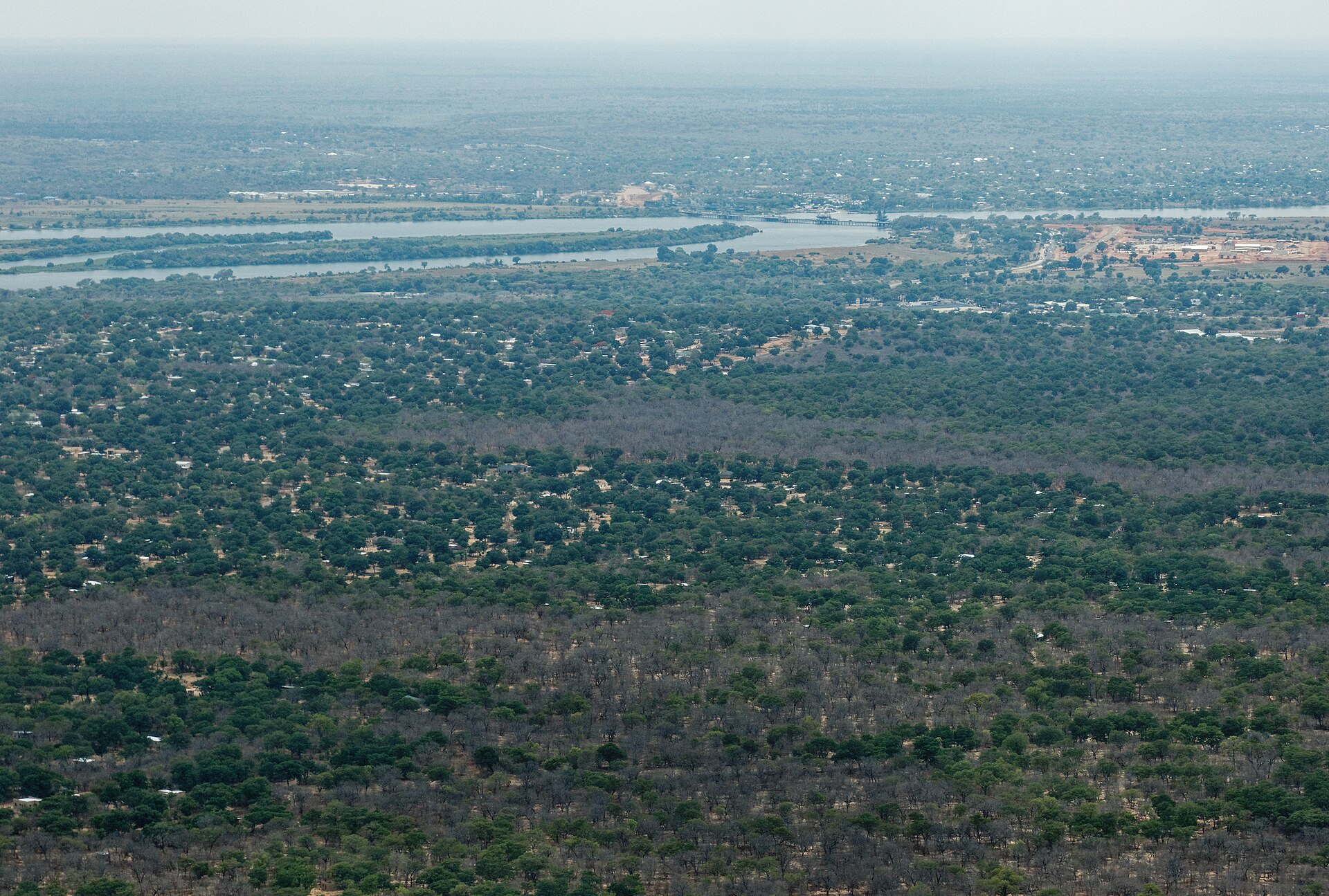
It is valid for up to 30 days in any 12-month period, as long as the holder stays within Zambia and Zimbabwe. It also covers day trips to Botswana through the Kazungula border.
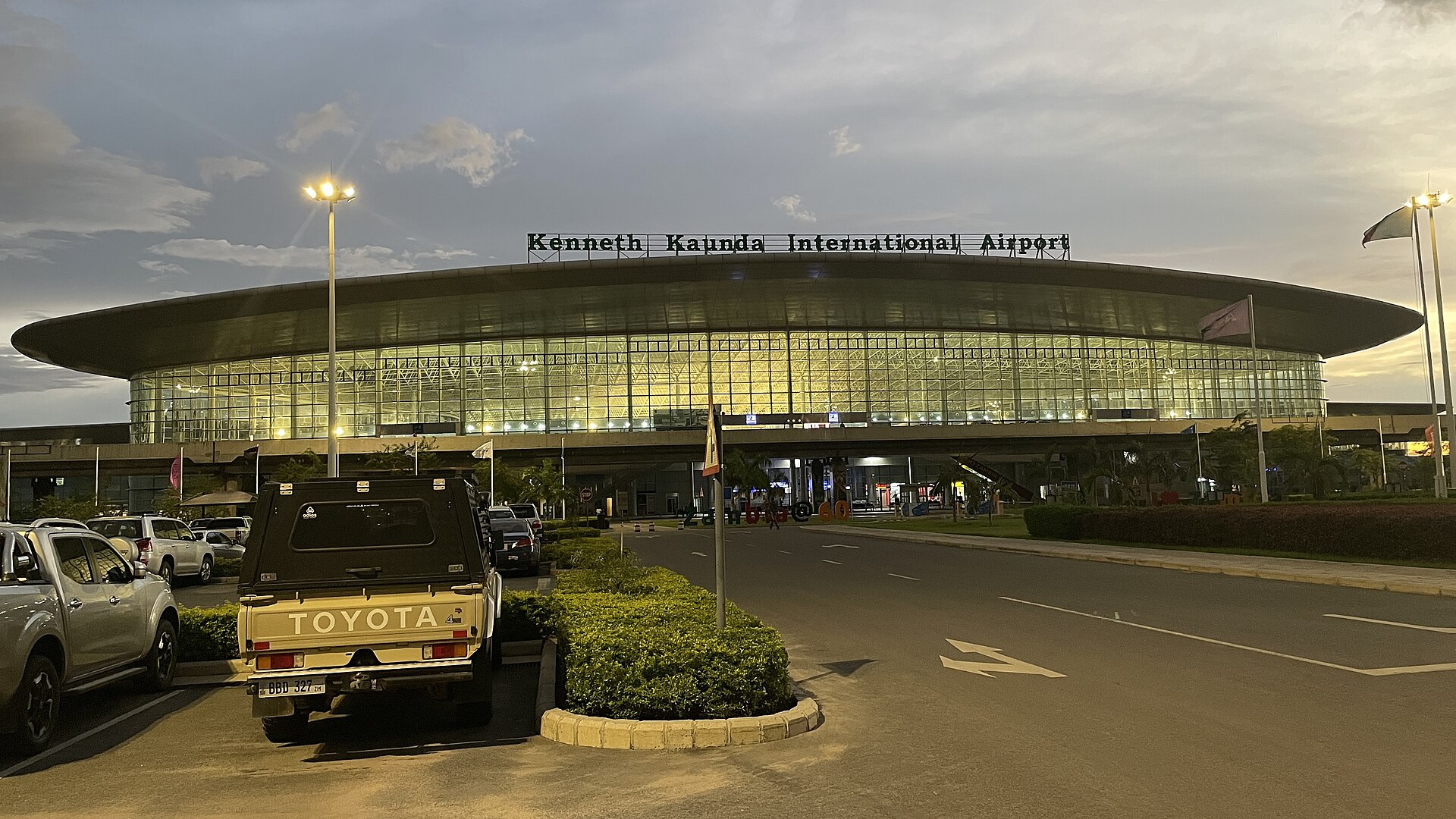
In Zambia it is sold only at four entry points, where it can also be bought online in advance. They are the Victoria Falls and Kazungula borders, plus Kenneth Kaunda International in Lusaka and Harry Mwanga Nkumbula International in Livingstone.
The eligible list includes the United States, the United Kingdom, Canada, Australia and most EU states. Since those nationals already enter Zambia visa-free, the UniVisa’s value for them depends on Zimbabwe’s own entry rules.
Working in Zambia: the employment permit
An employment permit is required for any foreigner taking up a job in Zambia for more than six months. It can be extended up to a maximum of ten years.
Only an employer, a practising lawyer or a registered immigration consultant can apply on the worker’s behalf. The applicant should stay outside Zambia until the permit is approved.
The file is demanding. It includes a police clearance from the country of residence, certified qualifications and newspaper job adverts from two leading Zambian papers.
Employers must also submit a succession plan, with an understudy programme to transfer skills to a Zambian worker. Mining, construction, engineering and ICT projects need a letter describing the project, its value and completion date.
Since 19 August 2024, fees follow SI No. 25 of 2024, which raised the government fee unit from 30 to 40 ngwee. This guide converts at 19.68 kwacha to the US dollar, the open.er-api.com market rate on 26 September 2026.
A private-sector employment permit costs 24,000 kwacha (about US$1,220) to issue and 28,000 kwacha (about US$1,425) to renew. The issue fee alone is close to Zambia’s 2025 GDP per person of about US$1,318, according to the World Bank.
Holders may not buy land or study at a Zambian institution. When a job ends, the employer must surrender the permit within one month. It must also pay for repatriation if the worker fails to leave.
An employer who fails to do so faces a fine of up to 200,000 penalty units. That is 80,000 kwacha (about US$4,065) at the current unit value.
Investors, students, spouses and other permits
The investor’s permit is for foreigners over 18 who start, buy into or join a business in Zambia. Applicants must prove a personal investment of US$250,000 for a new business, or US$150,000 when joining an existing company.
That threshold equals roughly 190 years of average output per Zambian, measured by 2025 GDP per person. Proof can be a bank statement, a money transfer or customs declarations for imported equipment.
The investor’s permit costs 16,000 kwacha (about US$815) to issue and 20,000 kwacha (about US$1,015) to renew. Renewal needs a tax clearance, an audit by a firm registered with the Zambia Institute of Chartered Accountants, and an inspection.
Where available, an investment licence from the Zambia Development Agency, the state investment promotion body, supports the file.
Spouses have their own permit. It is issued to the husband or wife of a Zambian citizen, an established resident or a residence-permit holder. It costs 3,000 kwacha (about US$150) to issue and 6,000 kwacha (about US$305) to renew.
A study permit costs 9,000 kwacha (about US$455) and requires an acceptance letter and a medical report from a Zambian government facility. A visiting permit costs 6,667 kwacha (about US$340).
Paying by card adds 1 percent to every permit fee, and paying by mobile money adds 0.5 percent. Parents of employment or investor permit holders may be issued a temporary permit.
Permanent residence: the residence permit
In Zambia, permanent residence is granted through a document simply called the residence permit. It costs 20,000 kwacha (about US$1,015) to issue.
The Department of Immigration lists several routes. A foreigner qualifies after more than ten continuous years on an employment permit or more than three years on an investor’s permit. At least five years on a spouse permit also qualifies.
Retirees can also qualify by proving sufficient funds through a pension, an irrevocable annuity or a retirement account. No minimum income figure is published on the department’s permit page.
Dependants aged 21 or under of a residence-permit holder can qualify, as can people of any age born to a Zambian citizen. For newcomers without Zambian family, the investor and retiree routes are the shortest, and the retiree route names no minimum period.
The permit can lapse. It ceases if the holder does not enter Zambia within six months of issue. It also ceases after more than six months away without written notice to the Director-General.
Any absence of more than twelve months ends the permit regardless of notice. Long-term residents who travel for work need to plan around that rule.
Citizenship and dual nationality
Citizenship by registration is set by Article 37 of the Constitution, as amended in 2016, and by the Citizenship of Zambia Act No. 33 of 2016. Applications go to the Citizenship Board of Zambia.
An adult foreigner may apply after at least ten continuous years of ordinary residence in Zambia immediately before applying. The period drops to five years for people born in Zambia or with a Zambian ancestor.
The Citizenship Act defines “ordinarily resident” as living in Zambia while holding a residence permit. On that definition, only years spent holding a residence permit appear to count toward the ten-year clock.
A person married to a Zambian citizen for at least five years may also apply. The board must reject applicants who gave false information, were jailed for an offence, are bankrupt or were declared prohibited immigrants.
Approved applicants are registered within 21 days and take an oath of allegiance. The 2016 Constitution also allows dual citizenship, so a Zambian citizen does not lose citizenship by acquiring another.
Whether a new citizen may keep a foreign passport also depends on the other country’s law. That question should be checked with the home country before applying.
How to plan a move to Zambia
Start with the purpose of the stay, because each permit has its own sponsor and paperwork. Visitors need little, workers need an employer, and investors need capital already committed.
Budget in kwacha but plan in dollars. Permit fees are set in fee units and change when the government revalues the unit, as it did in August 2024.
Keep certified copies of every document, including passport pages with the last Zambian entry stamp. Nearly every permit file asks for them.
Finally, check the Department of Immigration website before filing. The Zambia visa and permit rules described here reflect the law and fee schedule in force as of 26 September 2026, before the Immigration Control Act 2026 takes effect.
Connected Coverage
US and EU Pour $6 Billion Into Lobito Corridor as China Revives TAZARA Rail Rival in Zambia
Ghana Exits Eurobond Default as Zambia Leads Africa Debt Crisis Rebound
Hichilema Wins Zambia Election With 60 Percent as Copper Boom Seals Second Term
Sources: Visa, permit, fee and residence rules come from Zambia’s Department of Immigration, SI No. 69 of 2022, the Citizenship of Zambia Act 2016 and the Constitution. Entry guidance comes from the US State Department and UK Foreign Office, with World Bank data and open.er-api.com rates, accessed 26 September 2026.
- zambiaimmigration.gov.zm
- zambiaimmigration.gov.zm
- zambiaimmigration.gov.zm
- zambiaimmigration.gov.zm
- zambiaimmigration.gov.zm
- zambiaimmigration.gov.zm
- zambiaimmigration.gov.zm
- zambiaimmigration.gov.zm
- zambiaimmigration.gov.zm
- zambiaimmigration.gov.zm
- zambiaimmigration.gov.zm
- zambiaimmigration.gov.zm
- zambiaimmigration.gov.zm
- zamimmigration.azurewebsites.net
- constituteproject.org
- travel.state.gov
- gov.uk
- api.worldbank.org
- api.worldbank.org
- open.er-api.com
What Is Not Known
When the new immigration law will take effect is not known. Parliament passed the Immigration Control Act, No. 3 of 2026, gazetted on 8 April 2026 to replace the 2010 Act. The ZambiaLII legal database still lists it as not yet in force, pending a commencement order from the minister.
Processing times for permits are not published. The department lists documents and fees, but it does not state how long an employment, investor or residence permit takes to approve.
The minimum income for the retiree route is not set out in public. The permit page asks for proof of a pension, annuity or retirement account and a bank statement, without naming a figure.
How Zimbabwe treats visa-exempt Western travellers is outside the scope of Zambia’s rules. The KAZA UniVisa’s value for Americans and Europeans depends on that, so it should be checked before travel.
Where the kwacha will trade is not known. Permit fees are fixed in kwacha, so their dollar cost moves with the exchange rate.
Frequently Asked Questions
Do US, UK and EU citizens need a visa for Zambia?
No. A waiver announced on 2 November 2022 under SI No. 69 of 2022 covers the United States, the United Kingdom, Canada, Australia, the European Union and others. The UK Foreign Office says British tourists may stay up to 90 days in any 12-month period. Entry is still at the discretion of the immigration officer.
How much does a Zambia visa cost?
Where a visa is needed, the official fee is US$50 for a single entry, US$80 for a double or multiple entry, US$25 for transit and US$10 for a day trip. Card payments add a 1 percent administrative charge. Anyone can apply for an e-visa online.
What is the KAZA UniVisa?
It is a joint tourist visa for Zambia and Zimbabwe costing US$50. It is valid for up to 30 days in any 12-month period and allows multiple visits between the two countries, plus day trips to Botswana through Kazungula. In Zambia it is issued at Lusaka and Livingstone airports and at the Victoria Falls and Kazungula borders.
How much is a work permit in Zambia?
A private-sector employment permit costs 24,000 kwacha, about US$1,220, to issue and 28,000 kwacha, about US$1,425, to renew. Only an employer, a practising lawyer or a registered immigration consultant can apply. The permit can be extended up to a maximum of ten years.
How can a foreigner get permanent residence in Zambia?
Permanent residence comes through a residence permit costing 20,000 kwacha, about US$1,015. Routes include more than ten years on an employment permit, more than three years on an investor permit, at least five years on a spouse permit, or retirement with proof of sufficient funds. The investor permit requires a personal investment of US$250,000 for a new business.
Can foreigners become Zambian citizens and keep dual citizenship?
An adult may apply after ten continuous years of ordinary residence, which the Citizenship Act ties to holding a residence permit. Spouses of citizens may apply after five years of marriage. The 2016 Constitution allows dual citizenship, so a Zambian citizen does not lose citizenship by acquiring another.
This article was produced by The Rio Times’ automated newsroom system. How we use AI · Report an error
Part of our ongoing coverage
Africa: The New Scramble — the great-power contest over the continent.
Read More from The Rio Times