ZAMBIA · FOREIGN POWERS
Key Facts
- —The prize Zambia mined 890,346 tonnes of copper in 2025, up 8% from 825,513 tonnes in 2024, according to the mines minister.
- —Mine owners Canada’s First Quantum and Barrick, India’s Vedanta, Abu Dhabi’s IRH and US-backed KoBold run the biggest mines and projects.
- —Lenders The IMF programme, which paid out about US$1.7 billion, ended in January 2026, and the IMF said in mid-2026 that Zambia remains committed to a new one.
- —China A Chinese state-run firm is to invest US$1.4 billion in the TAZARA railway under a 30-year deal, and China supplied 25.5% of Zambia’s imports in August 2026.
- —United States A US$2.49 billion health pact was signed on 8 October 2026, and a separate minerals deal is still being negotiated.
- —Gulf Abu Dhabi’s IRH owns 51% of Mopani, and Zambia and the UAE signed investment memoranda worth US$2.14 billion on 29 September 2026.
- —Open dispute Zambia’s state investor ZCCM-IH accused IRH of breaching the Mopani deal in a letter dated 18 September 2026.
Zambia foreign money decides who digs, smelts and ships the copper that US carmakers and grid builders need. Canadian, Indian, Abu Dhabi, Chinese and American players all hold or want a stake in October 2026.
This guide shows who brings what and what each one asks in return.

Who the Zambia Foreign Players Are
Zambia is a landlocked country in southern Africa, and copper pays most of its bills. In 2025 it mined 890,346 tonnes of the metal, according to Ministry of Mines figures announced in January 2026.
Zambia foreign owners run most of the big mines, as the Zambia economy guide explains. The state keeps minority stakes through ZCCM Investments Holdings (ZCCM-IH), which holds the government’s mining assets.
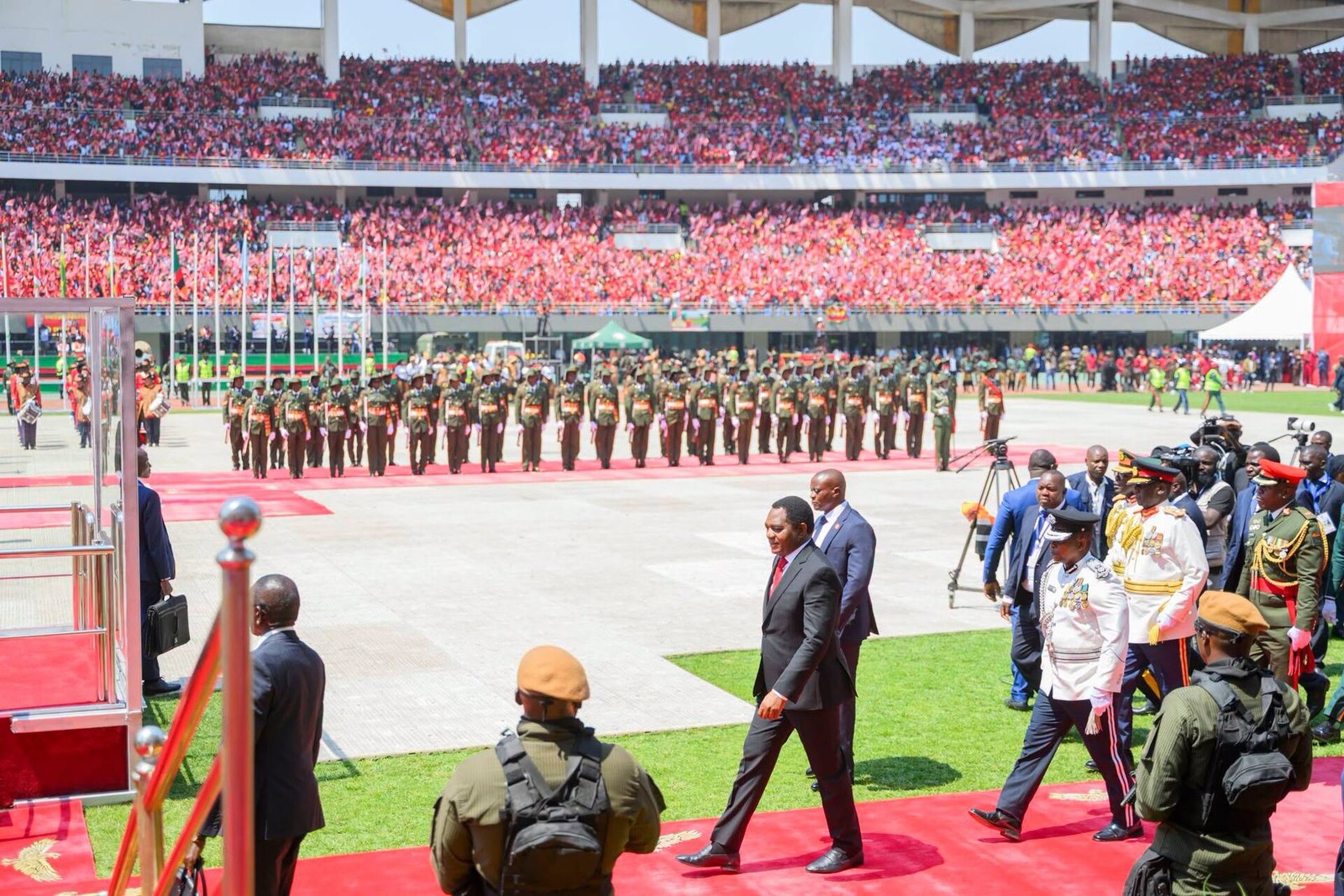
The politics behind the deals look settled for now. President Hakainde Hichilema won the 13 August 2026 election with about 60% of the valid vote and was sworn in on 1 September 2026.
His cabinet shows who handles the foreign deals, and the Zambia politics guide covers the rest. Situmbeko Musokotwane is Finance Minister and Mulambo Haimbe is Foreign Minister, both sworn in again on 14 September 2026.
Hichilema’s line to investors is that Zambia is open for business. He used those words at the April 2026 groundbreaking of a new copper mine, and each power below is testing that welcome.
The Mining Companies That Run the Copper
First Quantum Minerals, a Canadian miner, is the biggest private operator among Zambia foreign investors. Its 2025 annual report shows it holds 80% of the Kansanshi mine and 100% of the Sentinel mine.
Kansanshi produced about 181,000 tonnes of copper in 2025 and Sentinel about 189,000 tonnes. Together that is more than 40% of the national total.
Barrick Mining Corporation, a Canadian gold and copper group, owns the Lumwana mine west of Solwezi. It is spending about US$2 billion on a Super Pit expansion, with first copper expected at the end of the first quarter of 2028.
The expansion would lift the plant’s feed from about 27 million to about 52 million tonnes a year. Barrick says the mine life would run to 2057.
Konkola Copper Mines (KCM) is owned by Vedanta Resources, a group founded in India. Ecofin Agency reported that gains at Mopani, Konkola and Kansanshi drove the 2025 rise.
Mopani, where Abu Dhabi’s IRH holds a majority, is covered in the next section.
KoBold Metals is the newest name, and Bill Gates and Sam Altman back it. The Silicon Valley explorer marked the start of shaft sinking at its Mingomba mine in April 2026.
Mingomba will cost over US$2.3 billion and aims to produce over 300,000 tonnes of copper a year. Zambia’s 2026 budget made no significant change to the mining tax regime, according to First Quantum’s annual report.
Abu Dhabi and the Mopani Dispute
The Gulf’s biggest stake is in Mopani Copper Mines on the Copperbelt. International Resources Holding (IRH), an Abu Dhabi group, bought 51% through its unit Delta Mining in 2024.
ZCCM-IH announced that IRH would invest up to US$1.1 billion, including US$620 million in new equity and up to US$380 million in shareholder loans. ZCCM-IH keeps the balance of the company.
That partnership is now under strain. ZCCM-IH wrote to Delta Mining on 18 September 2026 alleging missed funding and costly debt taken without approval.
The letter says only US$62.3 million of a US$308.1 million development budget was spent by the end of March 2026. IRH says normal shareholder talks are handling it, and ZCCM-IH reserves the right to seek damages or arbitration.
Hichilema was in Abu Dhabi on 29 September 2026, where the Lusaka Times reported memoranda of understanding worth over US$2.14 billion. Such memoranda are statements of intent and not binding contracts.
China, Rail and Trade
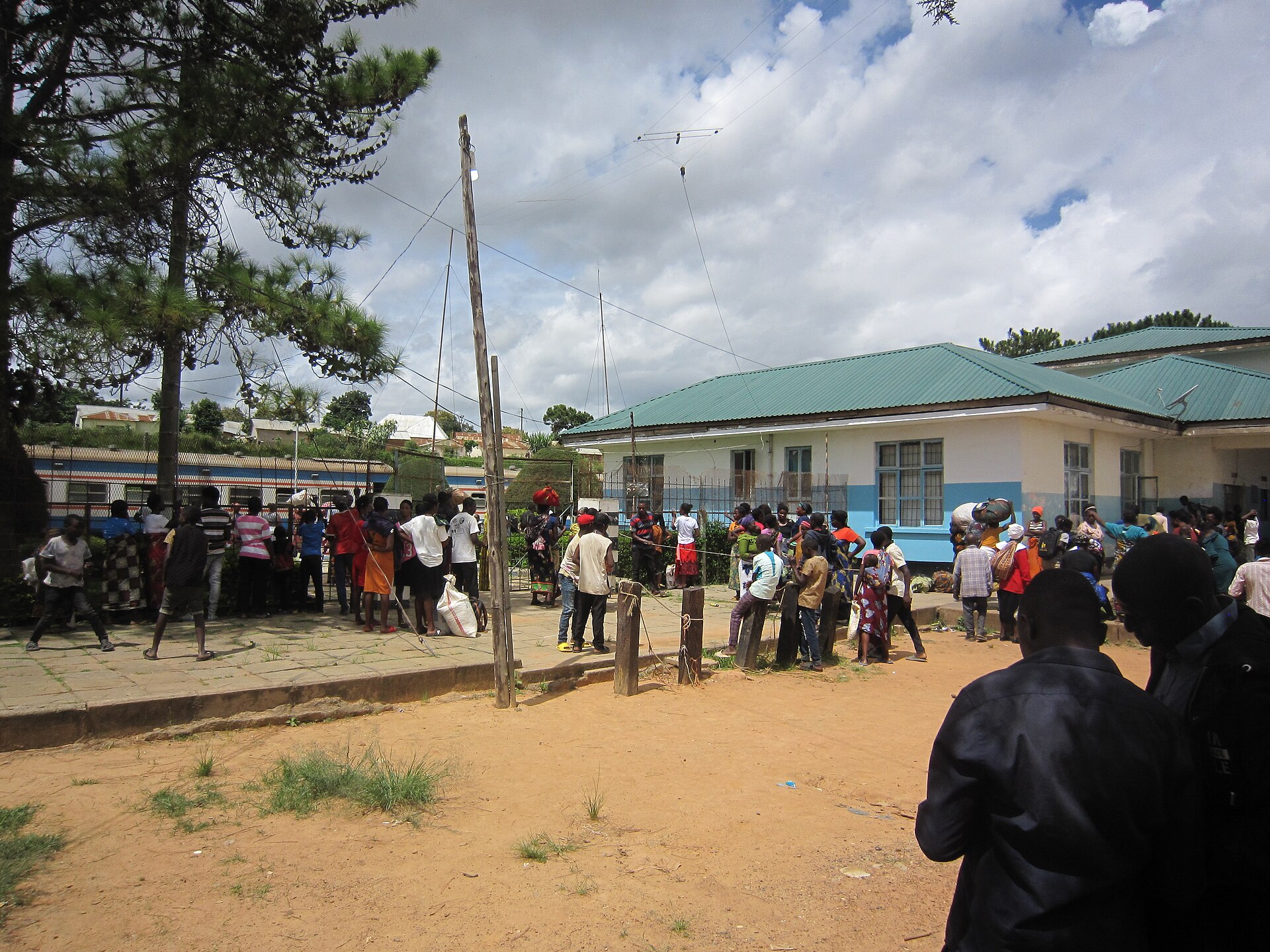
China’s most visible Zambia foreign stake is the TAZARA railway, which links the Copperbelt to the port of Dar es Salaam in Tanzania. China, Zambia and Tanzania signed a modernisation deal in Beijing on 29 September 2025.
China Civil Engineering Construction Corporation (CCECC), a state-run Chinese contractor, will invest US$1.4 billion and run the line for 30 years. The Citizen of Tanzania reported about US$1 billion for track and about US$400 million for 32 locomotives and 762 wagons.
China is also a big trading partner. ZamStats, the national statistics office, shows China supplied US$356.5 million of imports in August 2026, or 25.5%, just ahead of South Africa at 25.3%.
On the export side, China took US$210.6 million of Zambian goods in August 2026, or 12.0%. Canada took 32.0%, the DR Congo 12.2%, Switzerland 11.7% and Singapore 10.6%, so no single buyer dominates.
The Zambia geopolitics guide maps the wider contest. In return China gets a 30-year right to run a rail line that ends at the Indian Ocean.
The United States and Europe, Health Money and the Lobito Route
The United States and Zambia signed a five-year health financing agreement on Thursday, 8 October 2026. The US State Department puts the total at US$2.49 billion, with US$1.52 billion from Washington and US$975 million from Zambia, according to News4JAX.
Health Policy Watch reported that Chargé d’Affaires Mich Coker and Finance Minister Musokotwane signed it after a 10-month delay. The final text dropped a link to minerals access and a duty to share pathogen data for 25 years.
Foreign Minister Haimbe said the health and minerals tracks are now separate. A critical minerals agreement is still being negotiated, and details are not public.
The second US channel is the Millennium Challenge Corporation (MCC), a US government aid agency. Its US$491 million grant, signed in 2024, was widened in June 2026 from farm roads to minerals infrastructure.
The Lobito Corridor is a planned route that would carry Zambian and Congolese copper west to Angola’s Atlantic port of Lobito. The Lobito road financing story has more on the road side of the corridor.
The European Union backs the same route under its Global Gateway plan, together with Italy and the United States. The Africa Finance Corporation, the lead developer, targets financial close for the project in the fourth quarter of 2027.
TimesLIVE describes the route as strategic for Western markets that want to counter China’s dominance in metals for the energy transition. That is the clearest statement of what Washington and Brussels want from this Zambia foreign investment push.
Lenders and Donors, the IMF, the World Bank and the AfDB
The International Monetary Fund (IMF) approved a 38-month Extended Credit Facility for Zambia on 31 August 2022. Its board completed the sixth and final review on 27 January 2026, with total payouts of about US$1.7 billion.
After a staff visit that ended on 13 May 2026, the IMF said Zambia remains committed to a new programme after the elections. It put 2026 growth at 4.3%, reserves at US$6.4 billion and the primary surplus at 1.1% of output, down from 3.8%.
Restructuring agreements now cover about 94% of the debt that Zambia put up for restructuring after its 2020 default. The IMF said in January 2026 that five bilateral agreements with official creditors had been signed.
The World Bank has worked in Zambia since 1955, and by September 2025 its portfolio held US$3.2 billion in commitments across 22 national projects. It reports public debt fell from 133.4% of output in 2023 to an estimated 93.4% in 2025.
Lenders ask for more tax revenue and tighter spending in return. The IMF flagged farm subsidy overruns of about 1.3% of output and risks at the state Food Reserve Agency.
Fuel is a shared worry for miners and lenders. The IMF urged the government to restore a fuel import framework that had cut the import premium by about 50%.
Embassies, Aid Workers and Advocacy Groups
Chargé d’Affaires Mich Coker represented the United States at the 8 October 2026 signing. The embassy’s biggest programme is health aid under PEPFAR, the US emergency AIDS plan.
In 2024 PEPFAR funded 84% of Zambia’s HIV programme, and about 1.3 million Zambians were on antiretroviral treatment, according to Health Policy Watch. Health Policy Watch lists clinic closures and a drastic fall in the HIV care workforce after the US aid changes of January 2025.
Under the new pact Zambia’s civil service will take over frontline health workers that the United States paid for. Zambia will also take over buying medicines and supplies, and its required co-financing fell from US$243 million to US$154 million.
Advocacy groups shaped the final text. Asia Russell of Health GAP, a US campaign group, credited coordinated advocacy for meaningful changes while saying weaknesses remain in the new agreement.
What It Means for US Readers
US companies that buy copper, and funds that hold Canadian and Indian miners, are exposed to Zambian decisions. For any US investor in Zambia foreign miners, tax rules, power supply and rail routes matter as much as the copper price.
The unsigned US minerals agreement and the Lobito Corridor are the two US stakes to watch.
Opposition leader Brian Mundubile is detained on treason charges, and his lawyers are asking a court to review it. That adds a political question to any aid decision.
The kwacha traded at about 20.14 to the US dollar on 24 October 2026.
What Is Not Known
It is not known which minerals the United States wants in the pending agreement, or when it might be signed. The outcome of the Mopani dispute, including any arbitration, is also open.
China’s exact share of Zambia’s external debt is not stated in the IMF and World Bank pages used here. The date and size of a new IMF programme are not announced.
The UAE memoranda are statements of intent, and who would finance each project is not public. Foreign military ties and the money that Zambians abroad send home are not covered by the data used here.
Frequently Asked Questions
Who are the biggest foreign investors in Zambia?
Canada’s First Quantum, Barrick, India’s Vedanta and Abu Dhabi’s IRH run the largest copper operations. KoBold Metals, backed by US investors, is building the new Mingomba mine.
How much does China own in Zambia?
China’s best-known stake is a 30-year, US$1.4 billion deal to run the TAZARA railway, signed on 29 September 2025. It also supplies 25.5% of Zambia’s imports as of August 2026.
What did the United States and Zambia sign on 8 October 2026?
They signed a five-year health financing agreement worth US$2.49 billion, with US$1.52 billion from the United States. A separate minerals agreement is still being negotiated.
Does Zambia still have an IMF programme?
No. The IMF programme, which paid out about US$1.7 billion, ended with the final review on 27 January 2026. After a May 2026 staff visit the IMF said Zambia remains committed to a new programme.
What is the Mopani dispute?
ZCCM-IH, the state investor, wrote on 18 September 2026 that IRH’s unit Delta Mining missed funding duties at Mopani. IRH says normal shareholder talks are handling it.
What is the Lobito Corridor?
It is a planned rail and road route that links the Zambian and Congolese copper belts to Angola’s port of Lobito. The United States, the European Union and African lenders support it.
Sources: IMF, press release on the sixth review of Zambia’s Extended Credit Facility, 27 January 2026; IMF, Zambia country page, 24 October 2026; World Bank, Zambia overview, October 2026; Zambia Statistics Agency, monthly bulletin with August 2026 trade data, September 2026; First Quantum Minerals, 2025 annual report, March 2026; ZCCM-IH, Mopani transaction announcement, 22 March 2024; Ecofin Agency, Zambia’s 2025 copper output, 28 January 2026; Lusaka Times, cabinet swearing-in, 14 September 2026; Lusaka Times, Zambia-UAE memoranda, 29 September 2026; Lusaka Times, IMF staff visit, 30 June 2026; Miningmx, ZCCM-IH letter to IRH, 29 September 2026; Health Policy Watch, US-Zambia health agreement, 8 October 2026; Sunday World, Hichilema sworn in, 2 September 2026; TimesLIVE, MCC grant widened to minerals infrastructure, 19 June 2026; European Commission, Lobito Corridor, October 2026; The Citizen (Tanzania), TAZARA concession, 21 March 2025; China Global South Project, TAZARA signing in Beijing, 1 October 2025; Engineering News, KoBold groundbreaking, 30 April 2026; Mining Weekly, Lumwana Super Pit expansion, 15 May 2026; News4JAX, US-Zambia health pact with State Department figures, 8 October 2026; Lusaka Times, Mundubile detention, 12 October 2026.
This article was produced by The Rio Times’ automated newsroom system. How we use AI · Report an error · Editorial responsibility: Matthias Camenzind, Editor-in-Chief
Expat Guide to Zambia
What The Rio Times publishes for foreigners who live in or move to Zambia.
Start here
Understand Zambia
Rotate for Best Experience
This report is optimized for landscape viewing. Rotate your phone for the full experience.
You've reached your free article limit
Subscribe to The Rio Times for unlimited access to our reporting from across Africa.
Expat Guide to Zambia
What The Rio Times publishes for foreigners who live in or move to Zambia.
Start here
Understand Zambia