ZAMBIA · POPULATION
Key Facts
- The count Zambia’s 2022 census counted 19,693,423 people, up 50.4% from 13,092,666 in 2010, a growth rate of 3.5% a year.
- The projection The national statistics office projects 23.0 million people in mid-2026 and 39.9 million by 2047.
- Largest groups Bemba are 25.4% of residents and Tonga 14.9%, with Chewa, Lozi, Tumbuka and Nsenga next among more than 70 groups.
- Languages English is official, yet only 1.9% use it at home; Bemba (34.0%), Tonga (12.8%) and Nyanja (11.4%) lead.
- Age and place The median age is 18.3 years, and 55.3% of Zambians live in rural areas.
- Faith 98.0% of Zambians are Christian, 0.5% are Muslim and 1.3% have no religious affiliation.
- US entry rules Zambian nationals face a US suspension of immigrant visas and of B, F, M and J visas that has applied since 1 January 2026.

Zambia’s 2022 census counted 19,693,423 people, the national statistics office projects about 23.0 million in mid-2026, and the Bemba are the largest of more than 70 ethnic groups at 25.4% of the population. This explainer sets out how many Zambians there are, where they live, which groups and languages shape the country and what the numbers mean for US readers, with every figure dated as of October 2026.
In Plain English
A census is a full count of a country’s people, and Zambia’s 2022 census counted people where they usually live, whether or not they were at home on census night. An ethnic group in the census is a self-identified tribal group, so people name the group they feel they belong to.
A language of communication is the language a person speaks most often at home, and it can differ from the person’s ethnic group. A projection is the statistics office’s modelled estimate of the population in a later year, built from the census count with adjustments.
How Many People Live in Zambia
The 2022 Census of Population and Housing counted 19,693,423 people in Zambia, of whom 10,036,163 were women and 9,657,260 were men. Enumeration began on 18 August 2022, and the reference moment for the count was midnight at the start of 8 September 2022.
That was 50.4% more than the 13,092,666 counted in 2010, a rise of 3.5% a year that the census report compares with an African average of 2.4%. At that pace the report says the population would double in 20 years.
The Zambia Statistics Agency, known as ZamStats, published national projections for 2023 to 2047 with a foreword dated 25 March 2026, and its medium variant puts the population at 23,003,214 in mid-2026. It projects 25.9 million people by 2030 and 39.9 million by 2047.
The projection starts from the census count but raises it for young children, because ZamStats judged that 20.1% of boys and 18.3% of girls under five and 8.5% of boys and 5.6% of girls aged five to nine had been missed. The gap between the 2022 count and the 2026 projection therefore reflects both four years of growth and that upward adjustment.
The World Bank’s estimate for 2025 is 21,913,874 people, which is about 400,000 below the 22,314,128 that ZamStats projects for mid-2025. The 2022 census remains the latest full count as of October 2026, so every later figure is a model rather than a measurement.
Where Zambians Live
Zambia covers 752,612 square kilometres, borders eight countries and is divided into ten provinces, with 116 districts, 156 constituencies and 1,858 wards in the latest administrative data. Lusaka is the capital and the seat of government.
Lusaka Province was the most populous in 2022 with 3,093,617 people, or 15.7% of the country, followed by Copperbelt with 2,768,192, Eastern with 2,462,682 and Southern with 2,388,091. Muchinga was the smallest province, with 922,213 people.
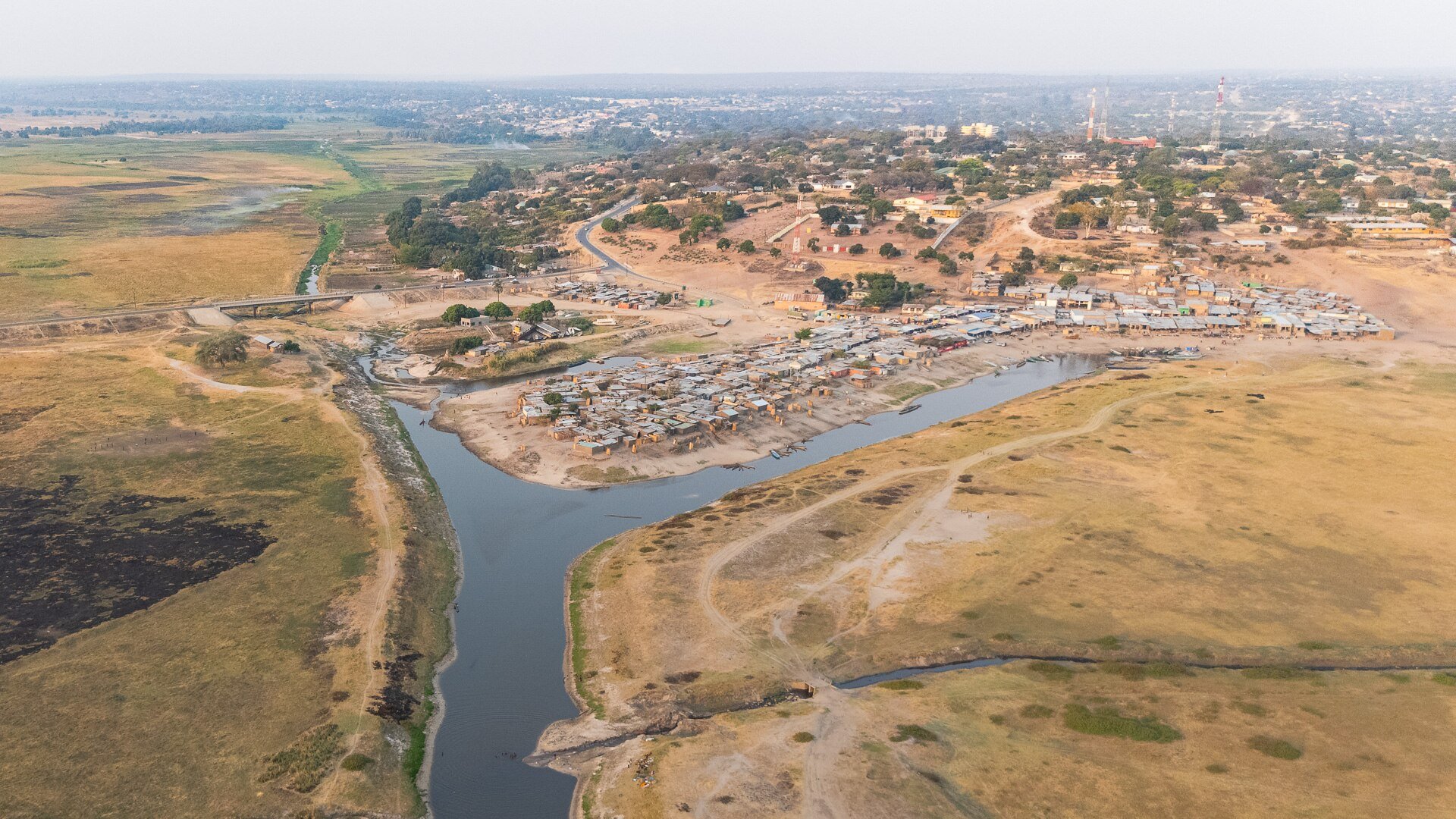
The census found 44.7% of Zambians living in urban areas and 55.3% in rural areas, a shift from 34.7% urban in 2000. Lusaka and Copperbelt together held 5,078,002 of the country’s 8,793,369 urban residents, or 57.7%, and Copperbelt itself was about 83% urban.
Urban areas grew by 4.5% a year between 2010 and 2022 against 2.7% a year in rural areas, and North Western Province grew fastest of all at 4.8% a year. Lusaka had the highest density at 141.3 people per square kilometre and North Western the lowest at 10.2.
Eastern Province had the largest rural population at 2,018,497, while Lusaka had the smallest at 319,579, which makes the capital province about 90% urban. The mid-2026 projection gives Lusaka 3,634,654 people and Copperbelt 3,257,050.
A Young and Growing Country
The census put the median age at 18.3 years, up from 16.9 in 2010, and about 42% of Zambians were under 15. The working-age share, people aged 15 to 64, rose from 52.0% in 2010 to 55.2% in 2022.
Women had 4.6 children on average in 2022, down from 6.7 in 1990, with 3.9 in urban areas and 5.5 in rural areas. Luapula Province had the highest fertility rate at 5.4 and Lusaka the lowest at 3.6.
ZamStats projects that the fertility rate will fall to 3.3 by 2047 and that life expectancy will rise from 66.9 years in 2023 to 73.2 years in 2047. It also projects an urban share of 49.5% in 2047, so Zambia would still be about half rural in two decades.
The census recorded a life expectancy of 67 years, an infant mortality rate of 31 deaths per 1,000 live births and an unemployment rate of 11.3%, with a rate of 19.7% among people aged 15 to 24. Only 39.1% of working-age people were in the labour force.
Ethnic Groups in Zambia
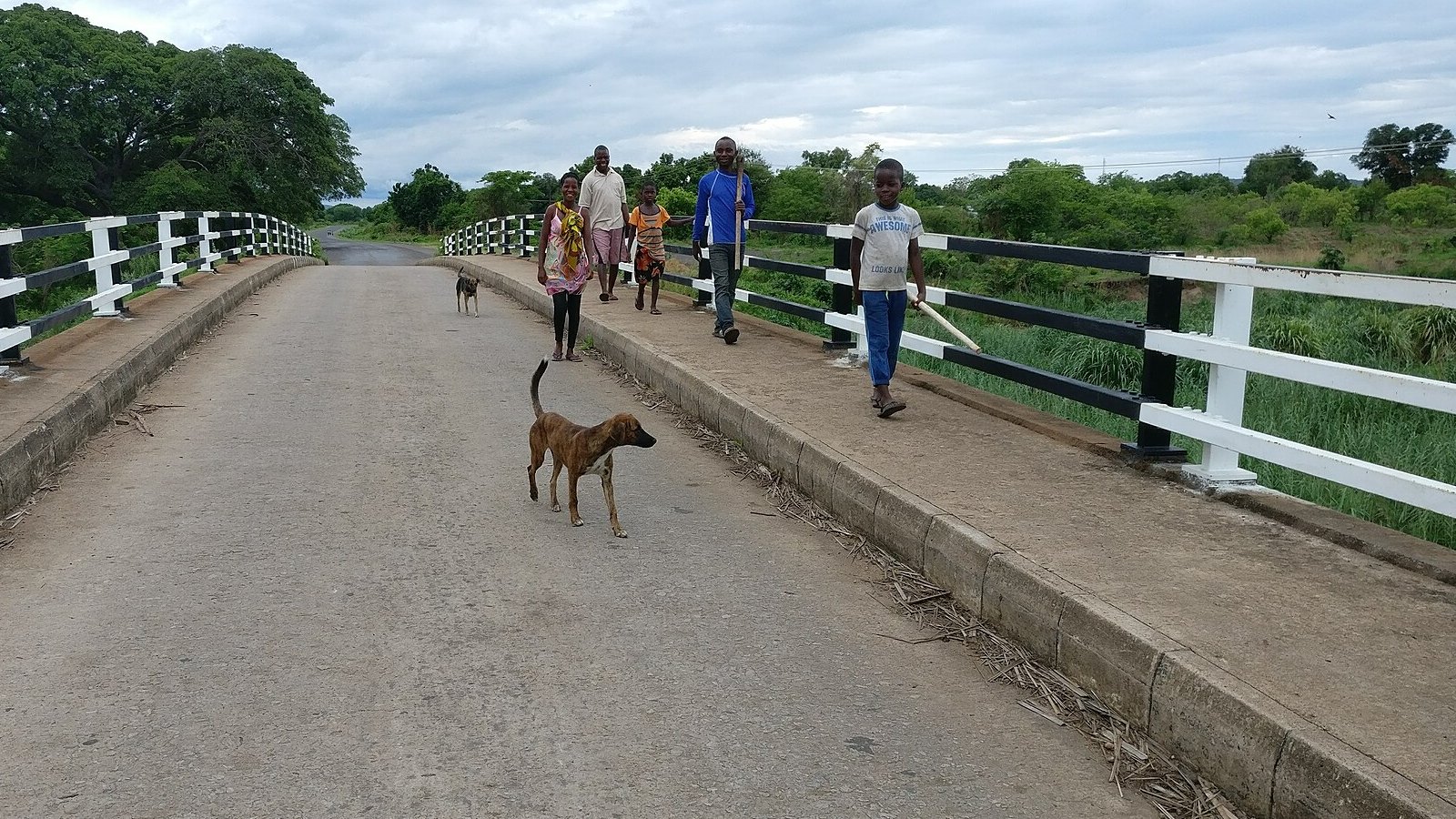
The census report says Zambia is home to more than 70 ethnic groups, and it defines ethnicity as the tribal group a person identifies with. For residents who are not Zambian citizens it recorded ethnicity by country of origin, and they were 1.1% of the population.
The Bemba are the largest group at 25.4% of residents, followed by the Tonga at 14.9%, the Chewa at 8.9% and the Lozi at 6.5%. Together those four made up 55.7% of the population.
Next come the Tumbuka at 4.2%, the Nsenga at 4.0%, the Ngoni at 3.2%, the Kaonde at 3.1% and the Lunda (North-Western) at 2.8%. The Namwanga (2.7%), Lala (2.5%), Luvale (2.3%) and Mambwe (2.3%) follow, and groups each below 1% were pooled into one category worth 9.4%.
The mix differs between town and country, since Bemba are 32.0% of urban residents against 20.2% of rural ones, while Tonga are 18.7% of rural residents against 10.1% of urban ones. The Ngoni, Kaonde and Namwanga are also more common in towns, at 4.1%, 3.8% and 3.6%.
For analysis the census groups related peoples and languages into seven broad families: Bemba, Tonga, Nyanja, North Western, Western, Mambwe and Tumbuka. Related dialects were combined where they are mutually intelligible, so the Mambwe group also takes in the Lungu, Namwanga, Wina and Tambo.
The census found no significant difference between women and men in the share belonging to any major group. Its report says ethnic identity is shaped mainly by lineage, cultural background and community ties.
Languages Zambians Speak
English is the official language of government, education and commerce, and seven regional languages (Bemba, Kaonde, Lozi, Lunda, Luvale, Nyanja and Tonga) are officially recognised for local communication and schooling. The census asked for the language spoken most often at home, which does not have to match a person’s ethnic group.
Bemba was the home language of 34.0% of people, ahead of Tonga at 12.8%, Nyanja at 11.4%, Chewa at 6.7% and Lozi at 5.4%. English was the main home language of only 1.9%, or 4.1% in urban areas and 0.1% in rural areas.
Bemba was the home language of 46.7% of urban residents and 23.8% of rural residents, while Nyanja reached 21.8% in towns against 3.1% in the countryside. The census report describes Nyanja as a lingua franca of urban and cosmopolitan settings, especially Lusaka.
Counting by broad language group, Bemba fell from 41.0% in 2010 to 40.1% in 2022 and Nyanja from 23.3% to 21.9%, while Tonga rose from 14.5% to 15.8% and the North Western group from 6.6% to 7.4%. English rose from 1.7% to 1.9%, and the report says these shifts may reflect migration, urbanisation, intermarriage and schooling.
Faith, Schooling and Digital Access
Christianity was the religion of 98.0% of Zambians in 2022, against 0.5% for Islam, 0.2% for African traditional religion and 1.3% with no religious affiliation. Among Christians, Catholics were 17.9%, Seventh-Day Adventists 17.7% and Pentecostals 17.5%.
Pentecostals were the largest denomination among urban Christians at 24.7%, while Seventh-Day Adventists led in rural areas at 20.3%. Eastern Province had the largest share of people outside Christianity, at 4.1% for other religions and no religion combined.
Of Zambians aged five and older, 62.6% could read and write, with literacy at 78.2% in urban areas and 49.8% in rural areas. Net attendance was 72.4% at primary level, 41.8% at secondary level and 2.1% at tertiary level.
Only 15% of Zambians used the internet in 2022, with 29.2% in urban areas and 5.3% in rural areas, and 40.8% of people aged five and older owned a working digital device. The census summary says the gap disadvantages children, because fewer than 1 in 10 rural children aged five to 18 own any digital device.
Zambians Abroad and Foreigners in Zambia
The United Nations Population Division counted 122,793 Zambia-born people living abroad in mid-2024, with Zimbabwe (32,680), Malawi (30,614) and South Africa (22,946) the largest destinations in its table. In the other direction 249,205 international migrants lived in Zambia, up from 187,955 in 2020, and the largest groups were born in the Democratic Republic of the Congo (67,171), Angola (41,665) and Zimbabwe (22,297).
World Bank data put personal remittances received by Zambia at US$403.5 million in 2025, up 20.7% from US$334.3 million in 2024. The World Bank also puts net migration at 6,562 people in 2025, a small inflow beside a population growing by nearly 600,000 people a year.
What It Means for US Readers
Zambian nationals face US entry limits as of October 2026 under Presidential Proclamation 10998, signed on 16 December 2025, which has suspended their entry as immigrants and on B-1, B-2, B-1/B-2, F, M and J visas since the first minute of 1 January 2026. The proclamation cites Zambian overstay rates of 10.73% for B-1/B-2 visas and 21.02% for F, M and J visas, and it tells consular officers to shorten the validity of other nonimmigrant visas issued to Zambians.
The State Department rates travel to Zambia Level 1, exercise normal precautions, in an advisory dated 31 July 2023 that was still the listed advisory as of October 2026. That rating concerns US citizens visiting Zambia and is separate from the entry limits on Zambian nationals coming to the United States.
The proclamation exempts lawful permanent residents, dual nationals who travel on a passport from a country not on the list, holders of certain diplomatic, international organisation and NATO visas, and athletes travelling to the World Cup, the Olympics or other major sporting events. It applies only to people who were outside the United States and had no valid visa on 1 January 2026, it revoked no visa already issued, and a report on whether to continue it is due every 180 days.
For businesses, the census and the projections describe a young market of about 23 million people in mid-2026, with a gross domestic product of US$1,318 per person in 2025 in World Bank data in current US dollars. Bemba and Nyanja together are the home language of 68.5% of urban residents, so a campaign aimed at city households has to work in those languages and not only in English, which only 4.1% of urban residents use at home.
US data users should know that the Census Bureau’s 2025 one-year survey has no separate line for Zambia-born residents, who fall into a residual line called Other Eastern Africa that counted 85,946 people with a margin of error of 9,432. That line also covers other countries in the region, so it cannot be read as a Zambian headcount.
Readers who want the country in context can start with the explainer on Zambia, its copper economy and its politics, and the explainer on Zambia and its neighbours in Southern Africa covers regional ties. The explainers on Zambian culture and key figures and on who holds power in Zambia add the people behind the numbers, and the Africa section for Zambia carries current coverage.
What Is Not Known
A new census is due about ten years after 2022 under the Statistics Act, so the next full count is expected around 2032, and until then every figure after 2022 is a projection or a model. ZamStats’ own adjustment implies that the 2022 count missed 20.1% of boys and 18.3% of girls under five, so the true size of the youngest age groups is uncertain.
The national analytical report gives ethnic shares only for the whole country and for urban and rural areas, not for provinces or districts, so the regional spread of each group cannot be stated from it. The 9.4% of people in the pooled category of groups each below 1% are also not named.
The tables used here give no count of Zambia-born residents of the United States, because the United Nations migrant table has no line for the United States and the Census Bureau’s 2025 table folds Zambia into Other Eastern Africa. The size of the Zambian community in the United States is therefore not known from these sources.
It is not known whether the US entry restrictions on Zambia will change, because the proclamation requires a report on whether to continue, modify or end each restriction every 180 days and sets no end date. Any plan that depends on a Zambian national entering the United States is therefore subject to the rules in force on the day of application.
Frequently Asked Questions
How many people live in Zambia?
The 2022 census counted 19,693,423 people, and ZamStats projects about 23.0 million for mid-2026. The World Bank’s estimate for 2025 is 21.9 million.
What is the largest ethnic group in Zambia?
The Bemba are the largest group at 25.4% of the population, followed by the Tonga at 14.9% and the Chewa at 8.9%. The census report counts more than 70 ethnic groups in all.
What languages do Zambians speak?
English is the official language, but only 1.9% of people use it at home. Bemba (34.0%), Tonga (12.8%) and Nyanja (11.4%) are the most common home languages.
Is Zambia mostly urban or rural?
In 2022, 55.3% of Zambians lived in rural areas and 44.7% in urban areas. Lusaka Province was the most populous at 3,093,617 people, and Lusaka and Copperbelt held 57.7% of all urban residents.
How fast is the population of Zambia growing?
The population grew 3.5% a year between 2010 and 2022, against an African average of 2.4% cited in the census report. ZamStats projects growth easing to 3.0% in 2026 and 2.9% in 2030.
What religion do most Zambians follow?
Christianity is the religion of 98.0% of Zambians, followed by Islam at 0.5% and African traditional religion at 0.2%. Another 1.3% have no religious affiliation.
Can Zambians enter the United States?
As of October 2026, Presidential Proclamation 10998 suspends the entry of Zambian nationals as immigrants and on B, F, M and J visas. Exemptions include lawful permanent residents and dual nationals travelling on another country’s passport.
Sources: Zambia Statistics Agency, 2022 Census of Population and Housing National Analytical Report, 2026-10-30; Zambia Statistics Agency, 2022 Census Pullout, 2026-10-30; Zambia Statistics Agency, Population and Demographic Projections 2023 to 2047, National Report, 2026-10-30; World Bank, World Development Indicators, total population, Zambia, 2026-10-30; World Bank, personal remittances received, Zambia, 2026-10-30; World Bank, GDP per capita in current US dollars, Zambia, 2026-10-30; World Bank, net migration, Zambia, 2026-10-30; United Nations Population Division, International Migrant Stock 2024, 2026-10-30; US Census Bureau, American Community Survey 2025 1-year, Table B05006 Place of Birth for the Foreign-Born Population, 2026-10-30; Presidential Proclamation 10998, Federal Register, 2025-12-19; State Department, travel advisories feed (Zambia entry), 2026-10-30.
This article was produced by The Rio Times’ automated newsroom system. How we use AI · Report an error · Editorial responsibility: Matthias Camenzind, Editor-in-Chief
Expat Guide to Zambia
What The Rio Times publishes for foreigners who live in or move to Zambia.
Start here
Understand Zambia