Venezuela in Latin America, Its Role, Weight and Alliances
VENEZUELA · LATIN AMERICA
Key Facts
- —The country Venezuela, an oil state of about 28.5 million people on South America’s Caribbean coast, run by acting president Delcy Rodríguez since January 2026.
- —Its weight About 4.3% of Latin America’s population but only 1.3% of its economic output, by World Bank figures for 2025.
- —The oil card OPEC puts its proven crude reserves at about 303 billion barrels (2023 figure), which Caracas calls the world’s largest.
- —What changed US forces seized Nicolás Maduro on 3 January 2026. Caracas has since swapped confrontation with Washington for oil deals and fence-mending.
- —The memberships A founder of CELAC, suspended from Mercosur since 2017, outside the Andean Community, and not taking up its OAS seat.
- —What it means for you The Venezuela role in Latin America now touches US oil supply, migration across the Americas and Washington’s regional standing.
- —Still open No presidential election date, a pending World Court ruling on the Essequibo border, and no decision on a Mercosur return.
The Venezuela role in Latin America has changed sharply since January 2026, when US forces seized President Nicolás Maduro in Caracas. A government that defied Washington for a generation now signs oil deals with it, which matters to US drivers and investors.
Its weight in the region rests less on economic size than on oil, emigrants and a border quarrel with Guyana.

Venezuela’s Weight in Numbers
The Venezuela role in Latin America is easiest to grasp through a few numbers. The country had 28.5 million people in 2025, according to the World Bank.
That makes it the region’s sixth most populous country, after Brazil, Mexico, Colombia, Argentina and Peru. Venezuelans are about 4.3% of the 667 million people in Latin America and the Caribbean.
Its economy is a much thinner slice. The World Bank puts Venezuela’s 2025 output at US$99.7 billion, about 1.3% of the region’s US$7.4 trillion.
Ecuador, the Dominican Republic, Guatemala and Costa Rica each produced more in 2025. Income per person was about US$3,500, roughly a third of the regional average of about US$11,100.
The economy has shrunk dramatically over a decade. In 2014 the World Bank valued it at US$214.8 billion, more than twice its 2025 size.
Dollar figures for Venezuela swing with the exchange rate, so they are best treated as rough guides. The World Bank’s own estimate fell from US$120.6 billion in 2024 to US$99.7 billion in 2025.
Oil explains why a mid-sized economy draws outsized attention.
OPEC, the oil exporters’ group Venezuela helped found in 1960, puts its proven crude reserves at about 303 billion barrels. That is a 2023 figure, and Caracas calls the reserves the world’s largest.
The reserves underpin Venezuela’s pitch to foreign investors. Yet a White House fact sheet of August 2026 said most Venezuelan oil fields were idle or “vastly underproducing”.
How Chávez Turned Oil Into Alliances
Hugo Chávez, president from 1999 until his death in 2013, used oil money to build a bloc of friendly governments. His movement, known as chavismo, still runs the Venezuelan state.
In December 2004 Venezuela and Cuba founded ALBA, a club of left-leaning governments named after the independence hero Simón Bolívar. Its website lists Cuba, Nicaragua and six small Caribbean island states among the members.
Petrocaribe followed in June 2005, selling Venezuelan oil to Caribbean and Central American governments on easy credit terms. When oil topped US$40 a barrel, the founding agreement let buyers repay part of the bill over 25 years at 1% interest.
That generosity gave the Venezuela role in Latin America a reach far beyond its economic size.
The scheme has since faded. In June 2026 a Dominican minister said his government had no PetroCaribe to cushion fuel prices, El Día reported.
Venezuela also hosted the founding summit of CELAC, the Community of Latin American and Caribbean States, in Caracas in December 2011. CELAC gathers the region’s governments without the United States and Canada.
For background on the people who ran that system, see Who Is Nicolás Maduro? and Venezuela Explained.
Where Venezuela Stands in the Regional Clubs
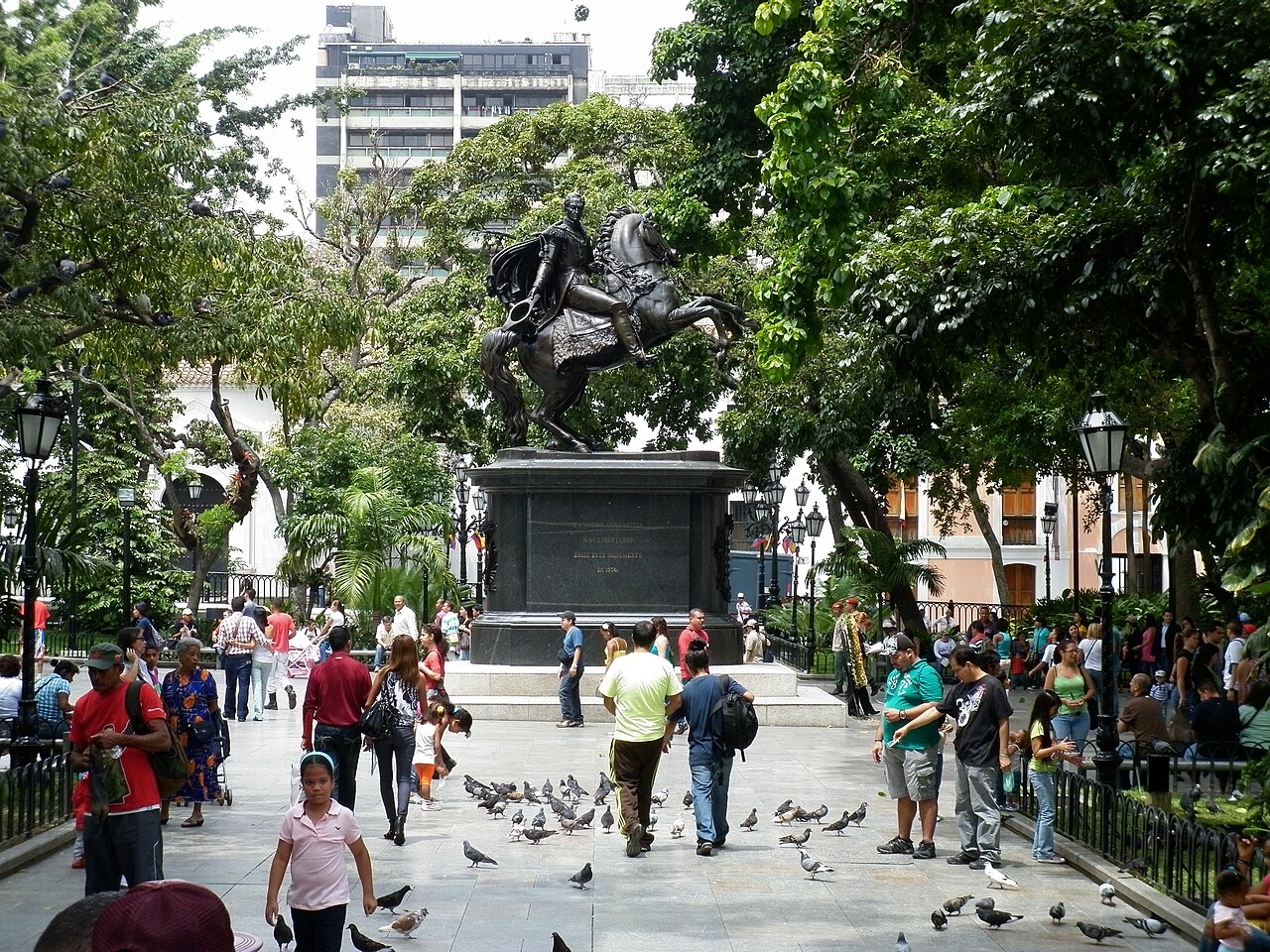
Venezuela belongs to some Latin American bodies, is frozen out of others and has walked away from a few. Here is how the Venezuela role in Latin America looks club by club, as of October 2026.
CELAC: A Forum Split Over Venezuela
CELAC decides by consensus, which Venezuela’s crisis has made hard to reach. On 4 January 2026, a day after Maduro’s capture, an emergency CELAC video call ended without a joint statement.
Colombia’s then-president, Gustavo Petro, had called the meeting as CELAC’s rotating chair. Ten governments led by Argentina refused to condemn the US operation, Infobae reported.
At its summit in Bogotá on 21 March 2026, Colombia handed the chair to Uruguay for 12 months, according to la diaria.
OAS: An Empty Seat in Washington
The Organization of American States (OAS) is the hemisphere-wide political body, headquartered in Washington. Maduro’s government began the two-year process of leaving it in 2017.
The OAS still says all 35 independent states of the Americas are members. Its secretary-general, Albert Ramdin, said on 10 September 2026 that Venezuela remains one.
Caracas, he said, only needs to name a representative to take its seat again, Banca y Negocios reported. He added that this did not appear imminent.
Mercosur: Suspended Since 2017
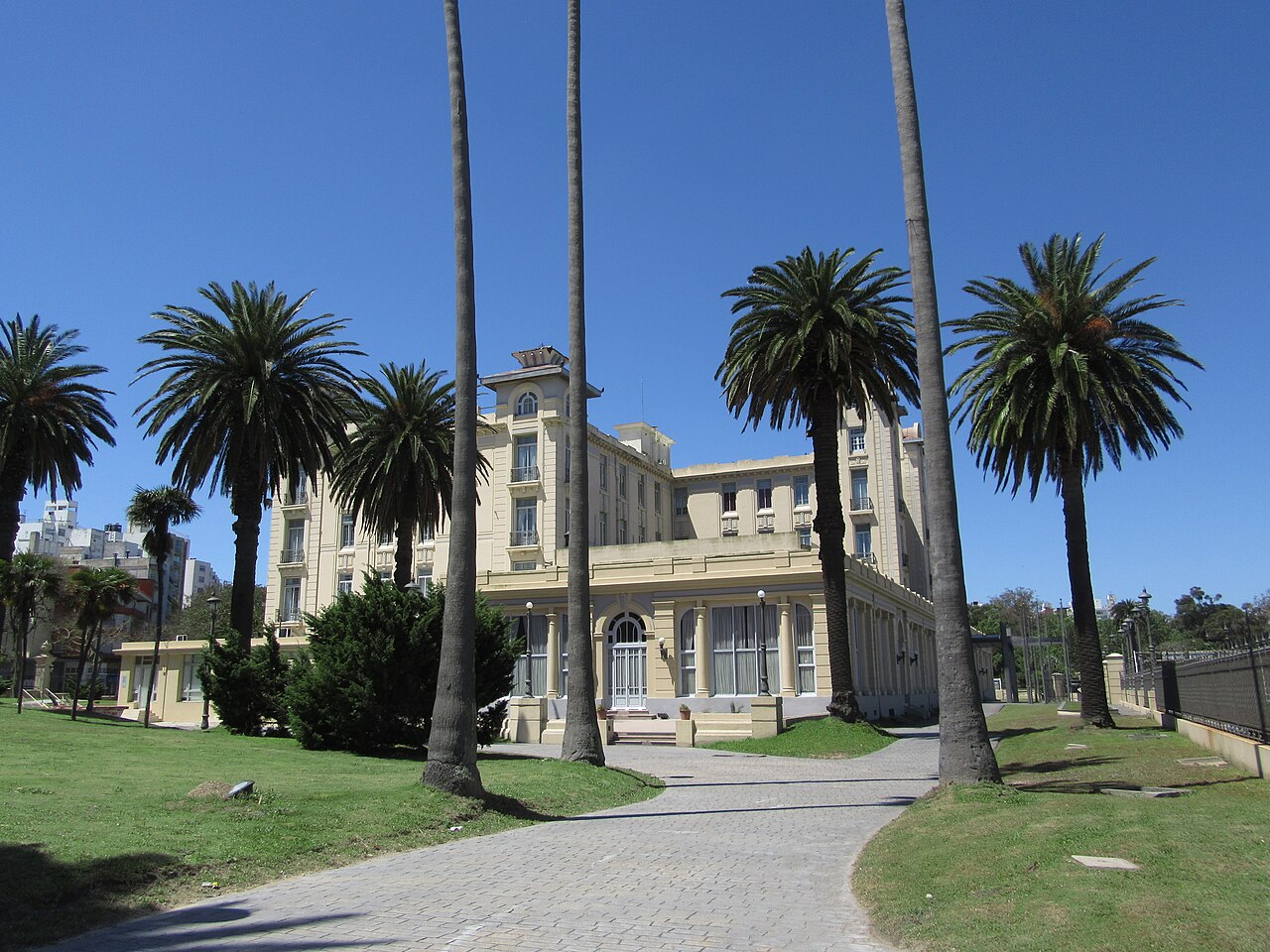
Mercosur, the South American trade bloc run from a secretariat in Montevideo, was founded by Argentina, Brazil, Paraguay and Uruguay. Bolivia has since joined, and Venezuela became a full member in 2012.
On 5 August 2017 the bloc suspended Venezuela under the Ushuaia Protocol, its democratic clause, over a rupture of democratic order. Mercosur leaders meeting in Paraguay in mid-2026 reaffirmed that protocol, ABC Color reported.
Paraguay’s government said in March 2026 that it would propose Venezuela’s full return, El Observador reported. Its president, Santiago Peña, repeated the call at the UN General Assembly in September 2026, Banca y Negocios reported.
No readmission had been agreed by early October 2026.
Andean Community, SICA and CARICOM
Venezuela is a former member of the Andean Community, a trade bloc that now lists only Bolivia, Colombia, Ecuador and Peru. It belongs to neither SICA, the Central American integration system, nor CARICOM, the Caribbean Community.
From Defiance to Deals With Washington
US forces captured Maduro in Caracas on 3 January 2026, in what the White House calls Operation Absolute Resolve. He had been indicted in the United States on charges including narco-terrorism conspiracy, and is presumed innocent until a court rules.
Vice-President Delcy Rodríguez was sworn in as acting president on 5 January 2026. The White House refers to her team as the “Venezuelan interim authorities”.
Washington holds the purse strings. Since January 2026, proceeds from Venezuelan oil sales are meant to settle first in US-controlled accounts, the Energy Department says.
An executive order of 9 January 2026 shields those funds in US Treasury accounts from seizure through court claims.
The US embassy in Caracas is open again, led by a chargé d’affaires, John M. Barrett, according to its website. In late September 2026 Rodríguez met President Donald Trump in New York during the UN General Assembly.
On 31 August 2026 the White House published details of what it called “the biggest oil deal in world history”. Venezuela’s interim authorities granted a privately held firm, North American Blue Energy Partners (NABEP), 100-year concessions over 17 oil fields.
Those fields hold about 65 billion barrels of proven reserves, the White House said. NABEP has given an investment office of the Pentagon, also styled the Department of War, a 35% stake in its parent company.
The fact sheet framed the deal as reasserting the Monroe Doctrine, the 1823 US policy against outside powers in the Americas. It said most of the fields were previously run by Russian or Chinese firms or by cronies of Maduro and Chávez.
At the UN General Assembly on 23 September 2026, Rodríguez thanked Trump for his willingness to restore diplomatic relations, UN News reported. For the oil economy behind these deals, see Venezuela’s Economy Explained.
How Latin America Reacted, and Is Re-Engaging
The region split over the raid. On 4 January 2026 Brazil, Chile, Colombia, Mexico, Uruguay and Spain jointly rejected “military actions executed unilaterally” on Venezuelan territory.
Their statement, published by Uruguay’s presidency, also warned against any foreign grab for Venezuela’s natural resources. Inside CELAC, Argentina, Paraguay, Peru, Ecuador and six others refused to condemn Washington.
Since then Caracas has worked to repair ties that lapsed under Maduro.
Paraguay’s Peña visited Caracas in September 2026. Both sides signed a communiqué opening “a new stage” of relations.
Peru and Venezuela are exchanging consuls general as they restore relations, Venezuela’s foreign ministry said in September 2026. It also held talks with Guatemala on restoring consular ties.
Chile signed the January statement under its previous government. Its conservative president since March 2026, José Antonio Kast, met Rodríguez at the UN in New York on 23 September 2026.
The same day, she and Trinidad and Tobago’s prime minister, Kamla Persad-Bissessar, agreed in a joint declaration to exchange official visits.
The Caribbean has been an early priority. Rodríguez’s first trip abroad as acting president, in April 2026, was to Grenada, Infobae reported.
On 11 September 2026 she visited Suriname, where she and President Jennifer Simons signed ten cooperation agreements, Venezuela’s foreign ministry said.
Regional partners also helped after twin earthquakes struck Venezuela on 24 June 2026. Suriname’s second aid shipment, more than 55 tonnes, reached the port of La Guaira on 1 October 2026.
For the border-by-border picture, see Venezuela’s neighbours explained. Daily coverage sits on the Rio Times Venezuela news page.
The Essequibo Dispute With Guyana
Venezuela‘s main territorial quarrel is with Guyana, an English-speaking neighbour and member of CARICOM. Caracas claims the Essequibo region, the land west of the Essequibo River that Guyana administers.
An arbitration tribunal in Paris drew the border in 1899, when Britain ruled Guyana. Venezuela calls that award void and says only talks under the 1966 Geneva Agreement can settle the matter.
Guyana took the case to the International Court of Justice (ICJ), the UN’s top court, in 2018. The court held hearings on the merits from 4 to 11 May 2026 and has not announced a judgment date.
Foreign minister Félix Plasencia said on 25 September 2026 that Venezuela will not abide by any ruling from the court. On 3 October 2026 the ministry again rejected the 1899 award and offered Guyana direct talks.
A ruling may settle the border in law without ending the dispute in practice. The latest exchange is covered in Venezuela Says Geneva Agreement Is Only Essequibo Path.
Migration, the Exodus That Reshaped the Region
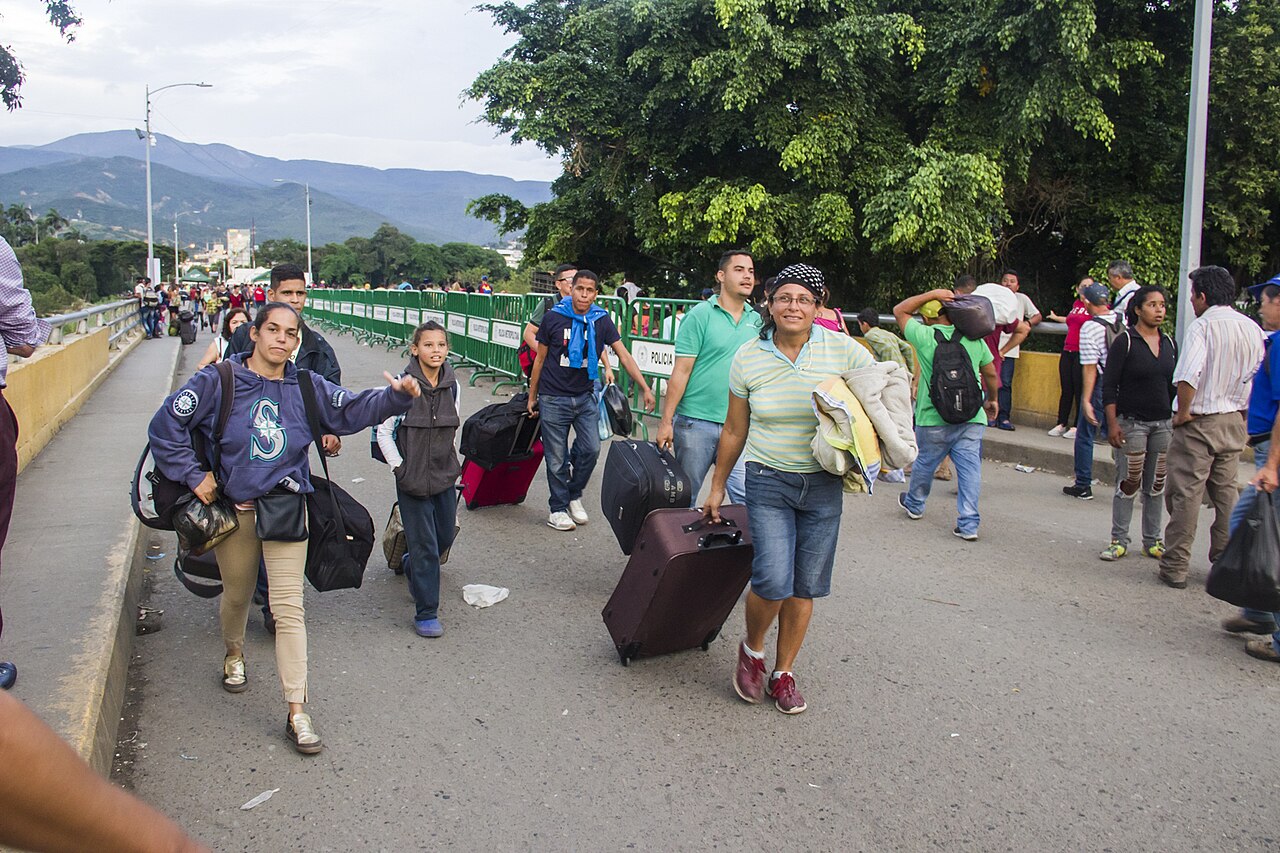
Venezuela’s deepest mark on its neighbours is human. UNHCR, the UN refugee agency, says nearly 7.9 million people have left Venezuela, by figures updated to May 2025.
About 6.7 million of them live elsewhere in Latin America and the Caribbean. That is roughly one Venezuelan abroad in the region for every four still at home.
The scale makes migration a central part of the Venezuela role in Latin America. Host governments from Colombia to Chile have had to absorb newcomers in schools, clinics and labour markets.
UN agencies and partners are seeking US$763 million for 2026 to help 1.2 million refugees and migrants in 17 regional countries. The appeal was launched in December 2025.
UNHCR’s head, Barham Salih, met Rodríguez in Caracas on 2 October 2026. It was the first visit to Venezuela by a UN refugee chief, Infobae reported.
Salih said many Venezuelans want to return home “with safety and dignity”.
What It Means for US Readers
For US drivers and refiners, Venezuelan heavy crude is back on world markets. The US government began marketing it in January 2026, the Energy Department says.
The White House says its August 2026 deal lets Washington buy 20% of NABEP’s output at production cost. That oil could help refill the Strategic Petroleum Reserve, it says.
For investors, the pitch is large but untested; the figures are projections, not results.
NABEP plans to invest up to US$100 billion, the White House says. It also expects US$200 billion in royalties and taxes over 25 years.
For travellers, the State Department rates Venezuela at Level 3, “Reconsider Travel”, in an advisory issued on 27 June 2026. The US embassy in Caracas reopened in March 2026 but offers US citizens only emergency services.
For followers of US policy, the Venezuela role in Latin America is now a test of a more direct American approach. Five Latin American governments and Spain rejected the January raid, while ten others declined to condemn it.
What Is Not Known
No date has been set for a presidential election, and Rodríguez governs as an acting president. At the UN she said the timing would be decided by “the Venezuelan people”.
Opposition supporters marched in late September 2026 for free elections and the safe return of their leader, María Corina Machado, Infobae reported. For the latest, see Venezuela Election Date Must Be Set, Machado Says.
The ICJ has not said when it will rule on Essequibo, and Caracas says it will not comply. Whether Mercosur readmits Venezuela, or Caracas reclaims its OAS seat, is undecided.
How a future elected government would treat 100-year oil concessions granted by interim authorities is unknown. Fresh data are also scarce: UNHCR’s headline migration figures date from May 2025, and dollar GDP estimates swing with the exchange rate.
Frequently Asked Questions
What is Venezuela’s role in Latin America in 2026?
The Venezuela role in Latin America now rests on oil, migration and diplomacy rather than economic size. Since January 2026 its interim government has moved from confronting Washington to signing oil deals and repairing regional ties.
Is Venezuela still in Mercosur?
It remains suspended. The bloc suspended Venezuela on 5 August 2017 under its democratic clause, and Paraguay’s 2026 proposal to readmit it had not been adopted by early October 2026.
Is Venezuela a member of the OAS?
Caracas began leaving in 2017 and does not currently fill its seat. The OAS secretary-general said in September 2026 that Venezuela remains a member and only needs to name a representative.
Who governs Venezuela now?
Delcy Rodríguez, Maduro’s former vice-president, has been acting president since 5 January 2026. No date has been set for a presidential election.
How many Venezuelans have left the country?
UNHCR counts nearly 7.9 million, by figures updated to May 2025. About 6.7 million live in other Latin American and Caribbean countries.
What is the Essequibo dispute?
Venezuela claims the region west of the Essequibo River, which Guyana administers under an 1899 border award. The International Court of Justice heard the case in May 2026, and Venezuela says it will not accept the ruling.
Sources: World Bank, World Development Indicators, updated 13 July 2026; OPEC, Venezuela facts and figures, accessed 5 October 2026; The White House, oil agreement fact sheet, 31 August 2026; The White House, oil revenue fact sheet, 9 January 2026; US Department of Energy, fact sheet, 7 January 2026; UN News, 23 September 2026; International Court of Justice, Guyana v. Venezuela, 11 May 2026; UNHCR, Venezuela situation, May 2025 update; UNHCR and IOM appeal, 3 December 2025; Presidency of Uruguay, joint communiqué, 4 January 2026; Venezuelan foreign ministry, Paraguay communiqué, 20 September 2026; Venezuelan foreign ministry, Trinidad and Tobago declaration, 23 September 2026; Venezuelan foreign ministry, statement on the ICJ, 25 September 2026; Venezuelan foreign ministry, statement on the 1899 award, 3 October 2026; OAS, member states, accessed 5 October 2026; Andean Community, accessed 5 October 2026; ALBA-TCP, accessed 5 October 2026; US Embassy in Caracas, accessed 5 October 2026; ABC Color, 2 July 2026; Banca y Negocios, 10 September 2026; MERCOSUR, in brief, accessed 5 October 2026; US State Department, Venezuela travel advisory, 27 June 2026; Nicaragua National Assembly, Petrocaribe agreement text, agreement of 29 June 2005; SELA, CELAC documents (Declaration of Caracas), 3 December 2011; Venezuelan foreign ministry, UNHCR visit, 2 October 2026.
This article was produced by The Rio Times’ automated newsroom system. How we use AI · Report an error · Editorial responsibility: Matthias Camenzind, Editor-in-Chief