What Is Going On Between Venezuela and the United States?

VENEZUELA · UNITED STATES · EXPLAINER
Live updates: Venezuela-US tensions, every story as it happens →
A guide to Venezuela’s post-Maduro transition, US sanctions relief, the New York criminal case and what it means for American investors and travellers.
Venezuela is under an acting government led by Delcy Rodríguez after US forces captured Nicolás Maduro in January 2026. Washington backs talks between her government and an opposition faction, but no presidential election date has been announced.
This page gathers what is known about the transition, the US role, sanctions, the Maduro prosecution, migration rules and the economy. It is a plain-English guide for US readers who need facts rather than political statements.
Key Facts
- —Who Delcy Rodríguez leads Venezuela as acting president after US forces captured Nicolás Maduro in January 2026.
- —What Washington backs talks between Rodríguez’s government and an opposition faction, but no presidential election date has been announced.
- —Where Protests on 22 October 2026 in Caracas and other cities demanded a 2027 vote and María Corina Machado’s return.
- —When Three rounds of US-backed talks have occurred since August 2026; the latest opened 14 October 2026.
- —Numbers Thousands protested in Caracas on 22 October; Venezuela recorded 1,101 protests in September 2026, averaging 37 a day.
- —Prediction markets Traders on Polymarket put Delcy Rodríguez at 95% to lead Venezuela in practice at the end of 2026, and María Corina Machado entering the country by 31 December at 33% (bets, not polls; 23 October 2026, about 6 pm ET).
In Plain English
- Acting president: A temporary leader who holds the presidency without having won a national election.
- Superseding indictment: A new charging document that replaces an earlier one, often adding offences.
- OFAC general licence: A US Treasury authorisation allowing specific dealings that sanctions would otherwise prohibit.
- Temporary Protected Status: A US immigration shield from deportation with a work permit for designated nationalities.
- Delisting: Removing a person or entity from a US sanctions blacklist.
How We Got Here
Venezuela, an oil-rich South American nation on the Caribbean coast, spent years under US sanctions aimed at Nicolás Maduro’s government. The sanctions followed a 2019 political crisis in which the opposition and much of the international community rejected Maduro’s claim to a second term.
The situation changed abruptly in January 2026, when US forces captured Maduro and his wife, Cilia Flores. Delcy Rodríguez, Maduro’s former deputy, then took power as acting president and now works closely with Washington.
The operation began before dawn on 3 January 2026 with strikes on military sites including Fuerte Tiuna in Caracas, and Maduro and Flores are now held in Brooklyn.
Who Runs Venezuela Now
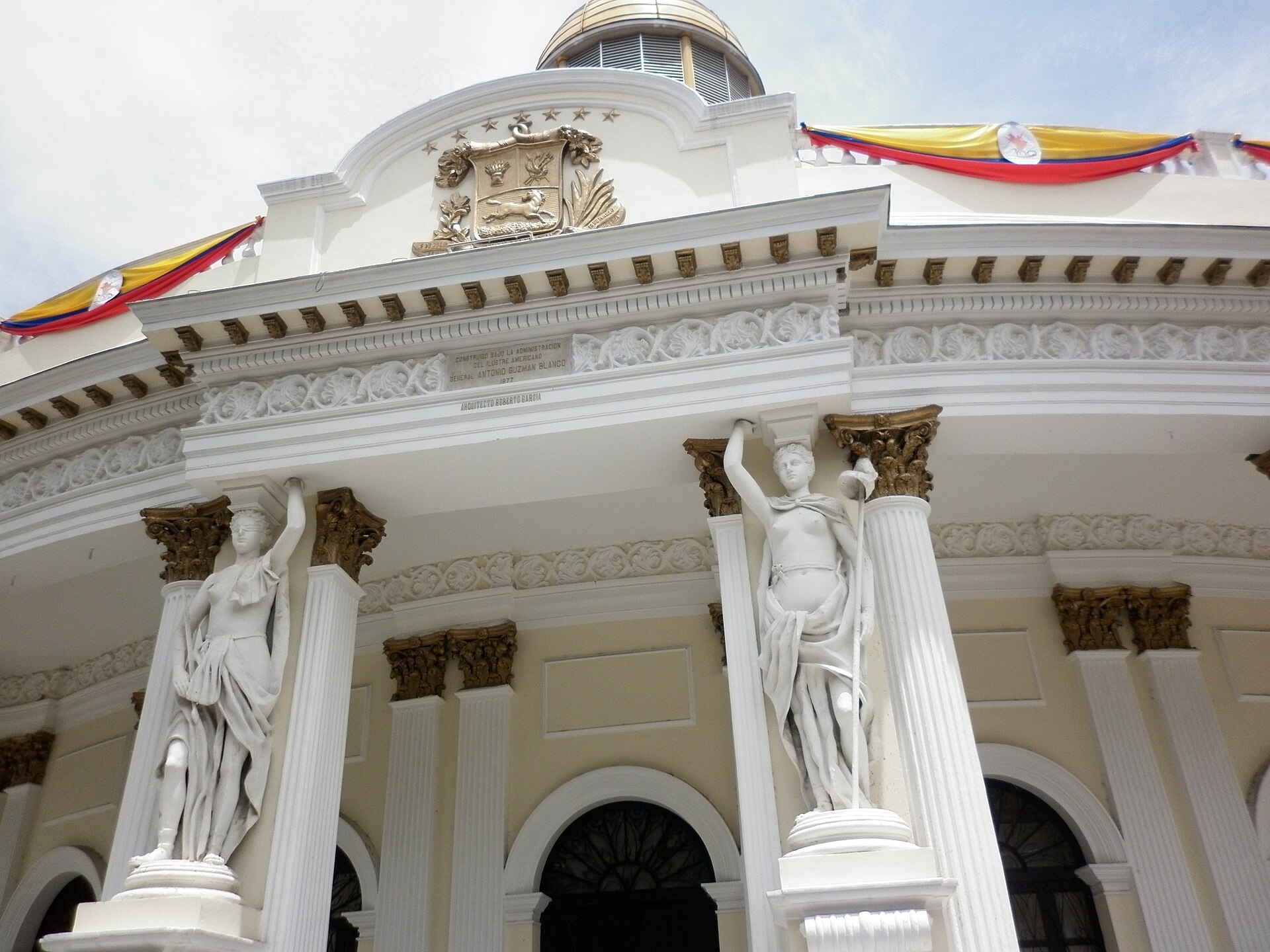
Delcy Rodríguez leads Venezuela as acting or interim president. She belongs to the United Socialist Party of Venezuela, the ruling party founded by Hugo Chávez and later led by Maduro.
Her brother, Jorge Rodríguez, serves as president of the National Assembly and leads the government side in US-backed talks. The US Treasury removed him from its sanctions list on 14 October 2026.
The opposition is split between a faction represented by Dinorah Figuera, president of the 2015 National Assembly, and the movement led by María Corina Machado.
Machado, the 2025 Nobel Peace Prize winner, has been living outside Venezuela, reportedly in Panama, for nearly a year. Her movement says she has made at least seven unsuccessful attempts to return.
The US Role and the Three-Phase Plan
The United States works closely with Rodríguez’s interim government and sponsors negotiations with opposition representatives. Three rounds of talks have taken place since August 2026, with the latest opening on 14 October.
The next round is set for 11-15 November 2026, according to the State Department.
The third round reportedly produced commitments to review repressive laws, increase political freedoms, rebuild an independent Supreme Court, and restore access to more than 70 blocked websites. The talks also addressed reform of the Law Against Hatred.
President Donald Trump and Secretary of State Marco Rubio have said they seek stabilization, economic recovery, and national reconciliation in Venezuela. Reports describe a sequence of changing the court’s makeup, reforming the electoral commission and only then announcing an election date.
The State Department says more than 1,000 political prisoners have been freed since January and demands the release of all those still held.
Sanctions, Oil and Gold
The US Treasury has been unwinding sanctions person by person. It delisted acting president Delcy Rodríguez on 1 April 2026 and her brother Jorge on 14 October 2026.
Diosdado Cabello and Vladimir Padrino López, two senior officials, remain on the US blacklist. Washington has also eased sanctions by licence: in April 2026 the Treasury authorised financial services with the central bank and three state banks.
Acting president Rodríguez said on 8 October that her government is negotiating 44 more oil and gas agreements, adding to 61 already signed. She expects about US$12 billion in public and private financing within two years.
The State Department said the talks produced a commission with equal representation to manage Venezuelan gold held at the Bank of England.
The Case Against Maduro
US prosecutors in New York filed a superseding indictment on 8 October 2026 that adds a charge of conspiracy to commit torture against Nicolás Maduro and Cilia Flores to earlier charges of narcoterrorism, cocaine importation and weapons offences. Prosecutors allege that the couple oversaw the abuse of opponents, including US citizens.
At the arraignment in a Manhattan federal court on 15 October 2026, a not-guilty plea was entered for Maduro, who said he rejected the indictment. His wife, Cilia Flores, said she is completely innocent.
Judge Alvin Hellerstein presides over the case, and trial is set for 14 June 2027. Wire reports say the charges carry a 50-year mandatory minimum for each defendant.
All defendants are presumed innocent unless proven guilty. The allegations remain charges, not established facts.
Elections and the Opposition
No presidential election date has been announced by either Rodríguez or President Trump. Machado has said elections should occur by July 2027, and her party, Vente Venezuela, is calling for a 2027 timetable.
On Thursday, 22 October 2026, opposition supporters held demonstrations in Caracas and other cities. The governing party called its own march in Caracas the same day.
Thousands protested in Caracas, with demonstrations also reported in other states, in what reports called the largest opposition march since Maduro fell. Protesters demanded a presidential election date, Machado’s safe return, and the release of political prisoners.
Vente Venezuela said seven people working on its sound trucks were detained, and police released all seven on 23 October.
Migration and Deportations
Temporary Protected Status, a US shield from deportation with a work permit, covered about 348,000 Venezuelans under the 2023 designation and 268,000 under the 2021 one. Both terminations took effect, in April and November 2025.
The US Supreme Court on 5 October 2026 set aside a Ninth Circuit ruling that had found the cancellation unlawful and sent the case back to the appeals court, without deciding whether the cancellation is lawful.
A US proclamation signed on 16 December 2025 continued partial entry restrictions on Venezuelans from 12:01 a.m. Eastern Time on 1 January 2026, covering B-1/B-2, F, M and J visas among others.
The Economy
The Venezuelan Observatory on Social Conflict recorded 1,101 protests in September 2026, averaging 37 per day. Of those, 531 protested severe power outages and chronic failures in electricity services.
Venezuela’s engineers’ association, Aviem, estimates that rebuilding the national power grid will cost between US$15 billion and US$40 billion over five to ten years. The government says deals with General Electric and Argentina’s Impsa will add about 7,400 megawatts of generating capacity.
The IMF’s October forecast sees growth of 5% in 2026 and 7% in 2027, with average consumer-price inflation of 467.9% in 2026. The official exchange rate stood at 877.90 bolívars to the US dollar on 14 October 2026.
Acting president Rodríguez has ruled out dollarization, saying the bolívar should cover all of the local economy in the medium term.
What Prediction Markets Say
Prediction markets · Venezuela-US tensions
Implied chances from traders’ prices. Prices are bets, not polls.
Who leads Venezuela in practice at the end of 2026
Polymarket: US$418,000 traded.
Who leads Venezuela in practice at the end of 2026
Kalshi (regulated in the US by the CFTC): 37,342 contracts traded.
Opposition leader María Corina Machado enters Venezuela
Polymarket: US$6.7 million traded.
A presidential election date is set by 31 December
Polymarket: US$644,000 traded.
US invasion of Venezuela by 31 December
Polymarket: US$14.2 million traded.
Which companies sign a Venezuelan oil agreement
Kalshi (regulated in the US by the CFTC): 3,953 contracts traded.
As of Friday, 23 October, 6:27 p.m. ET, updated every 20 minutes.
Why we show this: prediction markets turn real-money bets into a live probability that moves within minutes of the news, which is why investors, campaigns and newsrooms in the United States now follow them closely. We show them next to polls and official results, never instead of them.
What It Means for US Readers
US investors, oil companies, and travelers should not read political statements as a green light for Venezuela business. Most dealings with PDVSA and the Venezuelan state still require an OFAC general licence.
The US Treasury on 22 October proposed new outbound investment rules and said Venezuela does not meet the definition of a country of concern. Treasury warns the rule could still reach certain investments in Venezuelan entities.
Venezuelan citizens who plan to travel to the United States should check the current visa restrictions before booking. The rules can change with each presidential proclamation.
What Is Not Known
Whether and when an election date will be set is unknown: Machado and the opposition want 24 July 2027, while reports say Washington’s plan points to 2028.
The value of the Venezuelan gold held at the Bank of England and the way the new commission will release it have not been published.
The full list of political prisoners still held is not public, and the State Department has not said how many remain.
For the full picture, follow our dossier on Venezuela and the United States. Related explainers: Venezuela Geopolitics Explained and Venezuela Politics 2026, Who Holds Power After Maduro.
Frequently Asked Questions
Who is in charge of Venezuela right now?
Delcy Rodríguez leads Venezuela as acting president after US forces captured Nicolás Maduro in January 2026. She belongs to the United Socialist Party of Venezuela and works closely with Washington.
Has Venezuela scheduled a presidential election?
No presidential election date has been announced by either Rodríguez or President Trump. Opposition leader María Corina Machado has said elections should occur by July 2027.
Are US sanctions on Venezuela still in place?
Washington has been unwinding sanctions person by person, delisting Delcy Rodríguez in April 2026 and her brother Jorge in October 2026. Diosdado Cabello and Vladimir Padrino López remain on the US blacklist, and relief has come mostly through licences.
What charges does Nicolás Maduro face in the United States?
US prosecutors in New York unsealed torture charges against Maduro and Cilia Flores on 8 October 2026. Both have pleaded not guilty, and trial is set for June 2027 before Judge Alvin Hellerstein.
Can Venezuelans still get Temporary Protected Status in the US?
Both the 2021 and 2023 TPS designations for Venezuela have already terminated. The US Supreme Court on 5 October 2026 vacated a ruling against the cancellation, sending the case back to a federal appeals court.
What happened at the 22 October 2026 protests in Venezuela?
Thousands protested in Caracas demanding an election date, Machado’s return, and the release of political prisoners. Vente Venezuela said seven people working on its sound trucks were detained, and police released all seven on 23 October.
Sources: US State Department, Venezuela · US Treasury (OFAC), Venezuela sanctions · IMF DataMapper, Venezuela · Infobae (EFE), talks and protests · Semana, Delcy Rodríguez and Dinorah Figuera
This article was produced by The Rio Times’ automated newsroom system. How we use AI · Report an error · Editorial responsibility: Matthias Camenzind, Editor-in-Chief
Expat Guide to Venezuela
What The Rio Times publishes for foreigners who live in or move to Venezuela.
Start here
- Venezuela Security and Crime Explained 2026
- Healthcare in Venezuela for Expats: Clinics, Insurance and the Private Option
- Taxes in Venezuela for Expats: What Foreigners Pay During the Transformation
- Venezuela Visa and Residency 2026, Entry Rules and Steps
Understand Venezuela
Venezuela and the United States
- Venezuela Geopolitics Explained, US Now Runs Its Oil
- Venezuela Politics 2026, Who Holds Power After Maduro
Read More from The Rio Times