Venezuela Cites 1966 Geneva Agreement as Only Path in Essequibo Dispute

VENEZUELA · DIPLOMACY
Key Facts
- —The country Venezuela, an oil-rich South American state led by acting president Delcy Rodríguez, has claimed neighbouring Guyana’s Essequibo region for more than a century.
- —Why it matters Essequibo covers about 160,000 square kilometres, over two-thirds of Guyana, and Venezuela’s sea claim reaches into ExxonMobil’s Stabroek oil block.
- —Why now Saturday 3 October marked 127 years since the 1899 Paris award that drew the border, which Venezuela calls void.
- —What happened Caracas restated that only talks under the 1966 Geneva Agreement can settle the dispute, and offered Guyana direct dialogue.
- —The court The International Court of Justice heard the case in May; Guyana’s prime minister expects a ruling between November 2026 and January 2027.
- —What it means for you Investors in Guyana’s oil boom face a border that a ruling may settle in law, but not in the eyes of Caracas.
- —Still open Whether Guyana responds to the offer of talks. It has said it will abide by the ruling and expects Venezuela to do likewise.
Venezuela marked 127 years since the 1899 Paris border award on Saturday 3 October with a firm message. Only the 1966 Geneva Agreement, it said, can settle its claim to Essequibo, more than two-thirds of neighbouring Guyana.
The statement comes weeks before the International Court of Justice, the UN’s top court, is expected to rule on the border. Caracas repeated that it will not accept that verdict, and invited Guyana to direct talks instead.
What Caracas Said on Saturday
The foreign ministry, led by Félix Plasencia, issued the statement on the anniversary. It called the 1899 award an “artifice” that was “null from its origins”.
Venezuela, it said, reaffirms “the full validity of the Geneva Agreement of 1966 as the valid legal instrument” to resolve the dispute. The goal, it added, is a “practical, satisfactory and mutually acceptable” settlement.
The statement renewed an invitation to Guyana for “direct dialogue”. It framed such talks as a basis for good neighbourly relations, cooperation, shared development and investment, El Diario reported, citing EFE.
Rodríguez added her own message on Telegram. “Any effective solution must emerge from negotiation between both countries,” she wrote.
She also said Venezuela would not endorse an “anachronistic re-run” of the “territorial fraud”, Banca y Negocios reported. That was a reference to Guyana’s case at the court.
A Border Drawn in Paris in 1899
The dispute dates from the colonial era, when Britain ruled what is now Guyana. An arbitration tribunal sitting in Paris fixed the border on 3 October 1899, leaving Essequibo on the British side.
Venezuela declared the award null in 1962, arguing that the process had been irregular. Four years later, in February 1966, Britain, Venezuela and British Guiana signed the Geneva Agreement, three months before Guyana became independent.
In that treaty the parties promised to seek a peaceful solution. Caracas reads it as a duty to negotiate a new settlement, while Georgetown says the 1899 award already settled the matter.
Where the World Court Case Stands
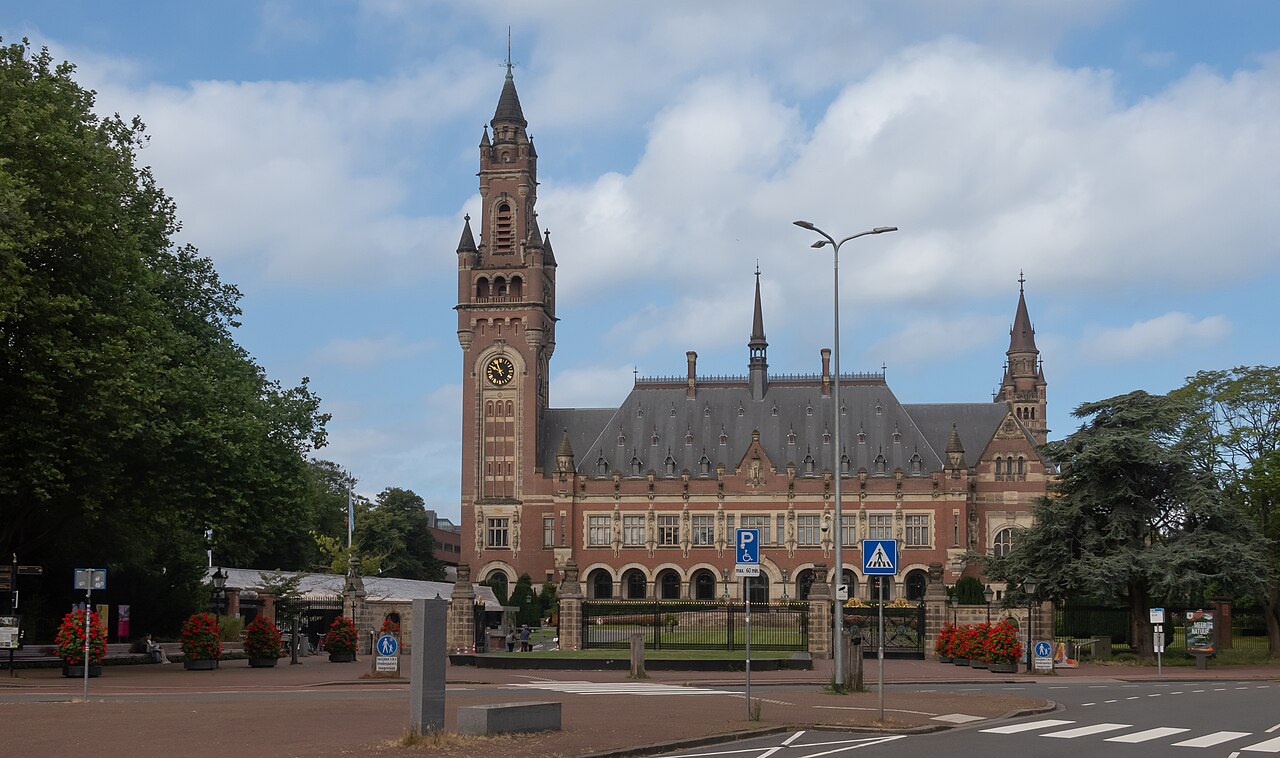
Guyana took the case to the International Court of Justice in The Hague in 2018, after a referral by the UN secretary-general. It asks the judges to confirm that the 1899 award and its border are valid and binding.
The court ruled in 2020 that it had jurisdiction and rejected a further Venezuelan objection in 2023. In 2025 it ordered Venezuela not to hold, or prepare to hold, elections in the disputed territory.
Hearings on the merits ended on 11 May 2026. Rodríguez attended in person to reject the court’s authority, as reported in Venezuela Rejects ICJ Jurisdiction on Essequibo at Hague on 12 May.
The court usually rules six to eight months after hearings close, Guyana’s prime minister, Mark Phillips, told parliament in June. That puts a likely judgment between November 2026 and January 2027, though no date has been announced.
Two Speeches at the UN in September
Saturday’s message follows a public exchange at the UN General Assembly in late September. Rodríguez asked Guyana on 23 September to return to negotiations under the Geneva Agreement.
A day later, Guyana’s President Irfaan Ali urged Venezuela to abide by the coming ruling, “as Guyana will do”. That exchange was covered in Guyana Urges Venezuela to Accept Coming World Court Ruling on Essequibo at UN Assembly on 25 September.
Ali called the 1899 award “the full, perfect, and final settlement” of the border. Guyana says it went to court only after decades of failed bilateral efforts, including the good offices of the UN secretary-general.
Why Investors Watch Essequibo
Guyana, a small English-speaking country, has become one of the world’s newest oil producers since ExxonMobil’s first offshore discovery in 2015. Venezuela’s maritime claim overlaps part of the Stabroek Block, Guyana’s main oil area.
The court will rule only on the land border. The sea boundary would need separate talks, because Venezuela has not signed the UN Convention on the Law of the Sea.
Tensions eased after Ali and then-president Nicolás Maduro met in Argyle, St Vincent, in December 2023 and pledged not to use force. Rodríguez, who took over after Maduro’s removal in January 2026, is also rebuilding ties with Washington.
What Comes Next
The next milestone is the court’s announcement of a judgment date, which it usually gives about two weeks ahead. No response from Georgetown to Saturday’s statement had been reported by Sunday morning.
The anniversary statement does not signal a new escalation. It contained no threat and no new demand, and it repeated an offer of talks first made at the UN.
Nor does it change Venezuela’s core position. Caracas still treats the Geneva Agreement, not the court in The Hague, as the only legitimate route to a settlement.
More: Latin America news in English, every day from The Rio Times.
What is the 1966 Geneva Agreement?
It is a treaty signed by Britain, Venezuela and British Guiana in February 1966. It commits the parties to seek a peaceful settlement of Venezuela’s claim to Essequibo.
What is Essequibo?
It is a region of about 160,000 square kilometres west of the Essequibo River. Guyana has administered it for more than a century, and Venezuela claims it.
When will the World Court rule on Essequibo?
No date has been set. Guyana’s prime minister has said a ruling is likely between November 2026 and January 2027.
Will Venezuela accept the court’s ruling?
Caracas says it will not. It argues that only negotiations under the Geneva Agreement can produce a valid settlement.
Sources: El Nacional, 3 October 2026; El Diario (with EFE), 3 October 2026; Banca y Negocios, 4 October 2026; Guyana Chronicle, 6 June 2026.
This article was produced by The Rio Times’ automated newsroom system. How we use AI · Report an error · Editorial responsibility: Matthias Camenzind, Editor-in-Chief