Venezuela Neighbours Explained, Andes to the Caribbean

VENEZUELA · NEIGHBOURHOOD
Key Facts
- —What it is Venezuela borders Colombia, Brazil and Guyana, and faces the Caribbean Sea and Atlantic Ocean.
- —Why it matters Venezuela neighbours shape its trade, migration, energy diplomacy and the region’s main territorial dispute.
- —The numbers Colombia and Venezuela share a 2,219-kilometre border; Brazil and Venezuela share 2,199 kilometres.
- —The catch The Essequibo claim against Guyana keeps Venezuela at odds with CARICOM and international legal bodies.
- —What it means for you For foreigners and investors, the neighbourhood defines border risk, migration routes and where energy cooperation can actually proceed.
- —Who is who As of October 2026, Delcy Rodríguez is Venezuela’s presidenta encargada and Abelardo de la Espriella is Colombia’s president.
Venezuela neighbours define the country’s practical geography: a long land frontier with Colombia and Brazil, a contested border with Guyana, and a Caribbean maritime space of influence without full institutional membership.
For a foreigner, Venezuela is not an isolated crisis but a country embedded in two overlapping regions: the Andean–Orinoco landmass and the Caribbean basin. This guide explains the borders, rivalries, trade flows, migration corridors and regional bodies that shape daily life and long-term opportunity.
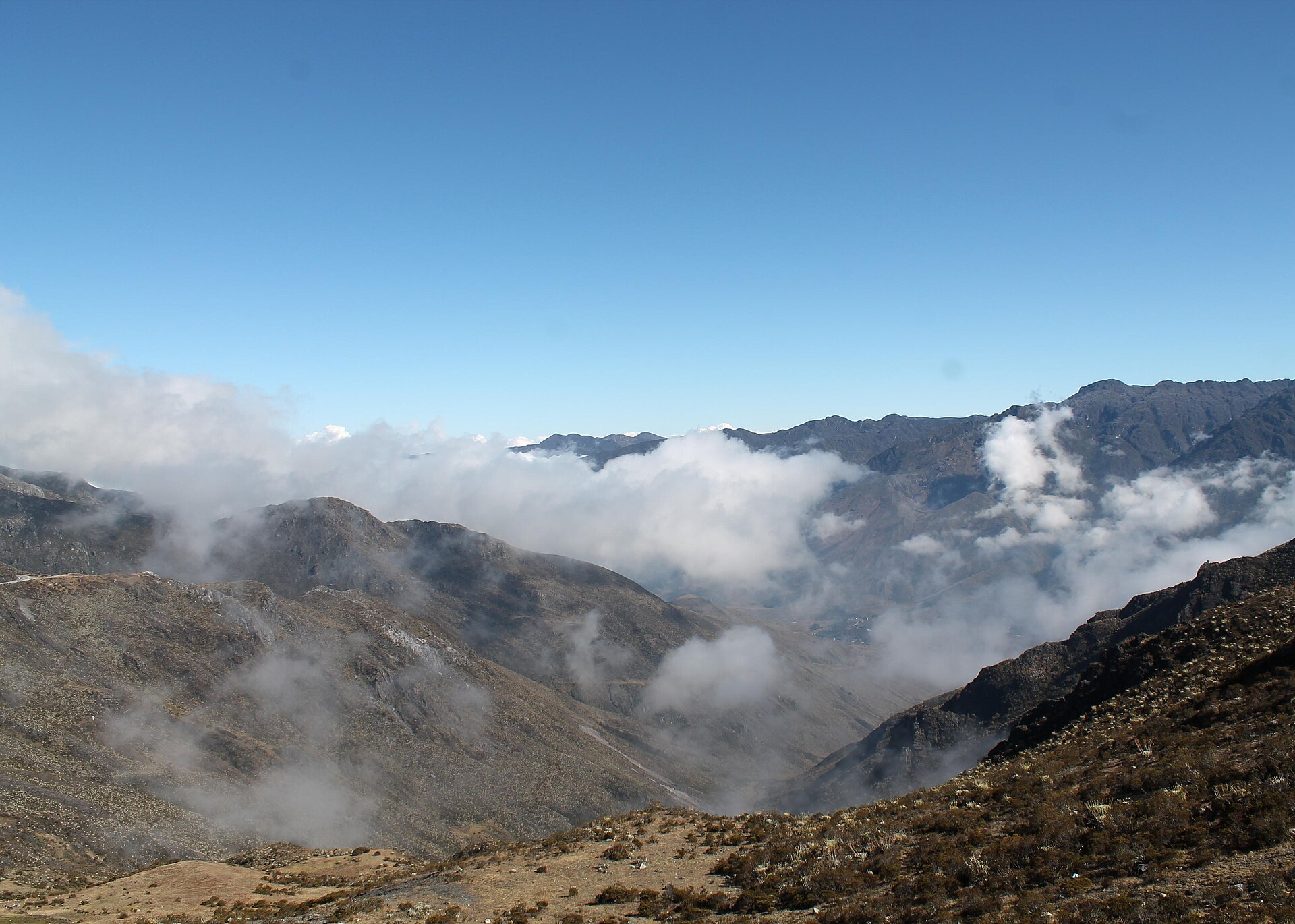
The geographic setting: two overlapping neighbourhoods
Venezuela’s neighbourhood is defined by two overlapping geographies. The first is the Andean–Orinoco land frontier with Colombia, Brazil and Guyana. The second is the Caribbean maritime space linking Venezuela to Trinidad and Tobago, the Dutch Caribbean, the eastern Caribbean and the Caribbean Community, known as CARICOM.
Colombia and Venezuela share a 2,219-kilometre land border, according to Colombia’s Ministry of Foreign Affairs. Brazil’s Foreign Ministry gives the Brazil–Venezuela border as 2,199 kilometres, making it Brazil’s third-longest international land frontier. Guyana lies to the east, where the Essequibo dispute remains the region’s most serious interstate conflict.
The borderlands are not peripheral. They connect major population centres, indigenous territories, river basins, energy systems and informal commercial routes. They also remain affected by irregular armed groups, drug trafficking, fuel smuggling, illegal mining and uneven state presence.
Colombia: the most rapidly normalising relationship
The relationship with Colombia is Venezuela’s most consequential neighbourly relationship because of the border’s scale, social interdependence and the number of Venezuelans living in or transiting through Colombia. As of October 2026, Delcy Eloína Rodríguez Gómez is Venezuela’s presidenta encargada, Félix Plasencia is Venezuela’s minister of foreign relations and foreign trade, Abelardo de la Espriella is president of Colombia, and Omar Bula Escobar is Colombia’s minister of foreign affairs.
The two governments held the Third Meeting of the Colombia–Venezuela Commission for Neighbourhood and Integration in April 2026. More than 90 officials participated, with discussions covering border affairs, migration, trade, tourism, health, education, security and defence. The agenda moved beyond political normalisation toward practical integration.
The bilateral agenda includes restoration of passenger and freight transport, electricity interconnection, gas infrastructure, trade, tourism, health cooperation, and defence and security coordination.
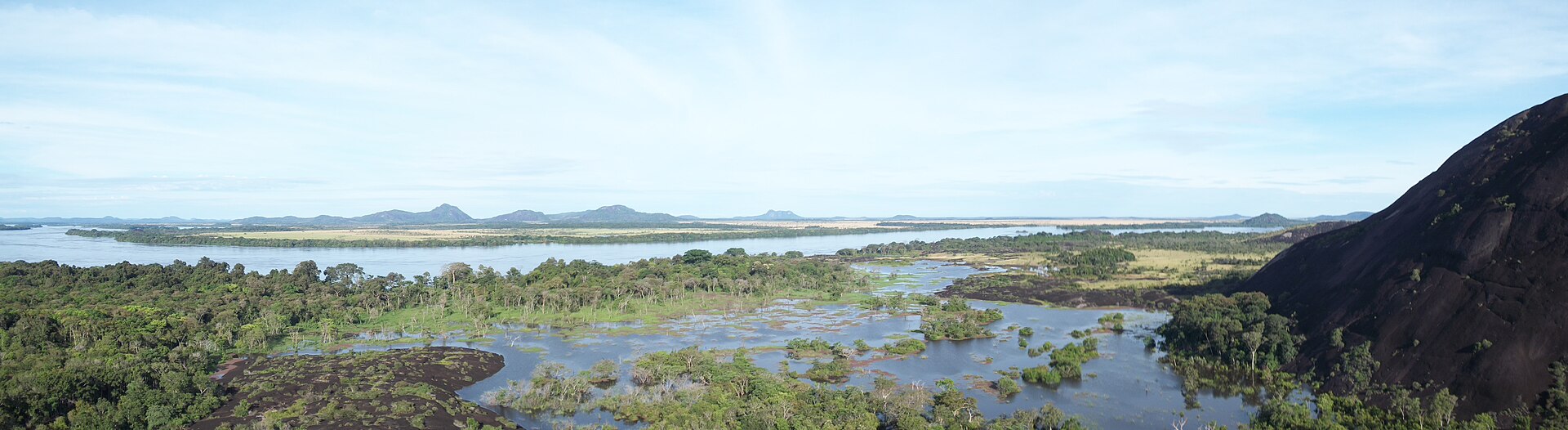
Trade and border mobility
Acting president Delcy Rodríguez said on 24 April 2026 that bilateral trade reached US$1.2 billion in 2025. Colombian trade figures also put it above US$1 billion, but the two countries’ customs series are not directly comparable.
The countries are also considering a binational import-substitution strategy, encouraging purchases of regionally produced goods rather than relying on suppliers from outside the region. The proposal reflects both an economic objective and a geopolitical one: rebuilding regional production chains after years of sanctions, border closures and economic contraction.
The Colombia–Venezuela border functions as a zone of continuous movement rather than a conventional line separating two economies. Colombia’s migration authority described the movement of Venezuelans in early 2026 as stable and driven mainly by work, trade and family reasons.
Brazil: security, trade and migration
Brazil shares a 2,199-kilometre frontier with Venezuela, much of it across the Amazon and adjacent indigenous territories. The frontier is strategically important for Brazil’s northern states, particularly Roraima and Amazonas, while for Venezuela it provides access to Brazil’s larger consumer market and an alternative route for trade and migration.
Brazil’s official bilateral profile identifies the main areas of cooperation as energy, border affairs, trade, economic and financial relations, population movements, and regional integration. The same source estimates approximately 650,000 Venezuelans in Brazil and around 13,000 Brazilians in Venezuela. These are estimates and should be read alongside Brazil’s official migration-residence and humanitarian-registration datasets when assessing the current population.
Brazil–Venezuela trade reached approximately US$1.6 billion in 2024, according to Brazil’s Foreign Ministry. Brazilian exports to Venezuela were US$1.2 billion, while imports from Venezuela were US$422 million. Brazilian authorities identify the principal traded products as sugars and molasses, vegetable fats and oils, and chemical fertilisers.
The relationship is recovering from a severe decline. Bilateral trade reached approximately US$6 billion in 2013, then fell by nearly 92% to US$501 million in 2019, before recovering to the 2024 level. For Brazil, Venezuela is particularly relevant to northern-state supply chains. For Venezuela, Brazil offers proximity, food and industrial inputs, and a large market that is less politically conditional than many Western markets.
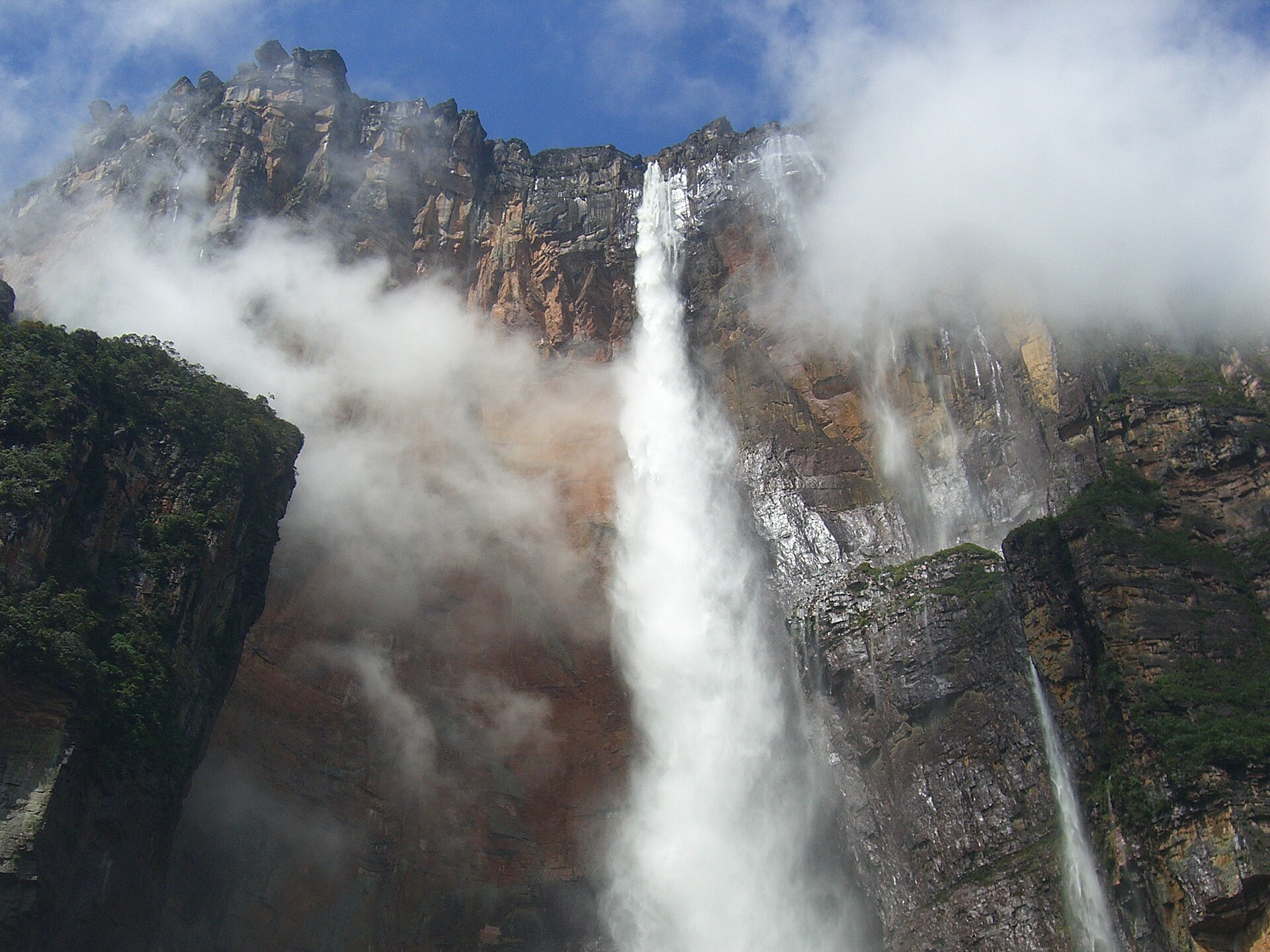
Amazonian infrastructure and rivers
The Brazil–Venezuela frontier is less integrated physically than the Colombia–Venezuela frontier. Geography is the central constraint: long distances, rainforest, limited roads, indigenous territories and weak logistics raise the cost of formal commerce.
The shared border also intersects the Amazon drainage system and watersheds used by indigenous, agricultural, mining and urban communities. Environmental governance is therefore inseparable from border security. Illegal mining, mercury contamination, deforestation and informal transport are regional rather than purely domestic problems.
Guyana: the principal territorial rivalry
Venezuela’s relationship with Guyana is the region’s most serious interstate dispute. Caracas claims the Essequibo, a territory administered by Guyana west of the Essequibo River. Guyana rejects Venezuela’s claim and treats the area as part of its sovereign territory.
The dispute is especially consequential because of Guyana’s offshore oil development, the possibility of additional hydrocarbon discoveries, maritime boundaries, strategic access to the Atlantic, the role of the International Court of Justice, and heightened military and political sensitivity on both sides. Unlike the Colombia and Brazil relationships, the Guyana relationship is not primarily an integration agenda. It is a sovereignty dispute managed through diplomacy, deterrence and international legal processes.
The Essequibo dispute also has a Caribbean dimension. Guyana is a member of CARICOM, whose governments have generally supported Guyana’s territorial position and opposed any alteration of borders by force. Venezuela’s campaign over the territory therefore affects its relations with the wider English-speaking Caribbean. A central asymmetry is that Venezuela possesses greater population, territory and military capacity, while Guyana’s leverage derives from international legal support, regional diplomatic backing and the economic importance of its offshore oil sector.
The Caribbean: influence without full institutional membership
Venezuela is geographically a Caribbean country, but its formal institutional position varies by organisation. Venezuela is not a CARICOM member. The 50th Regular Meeting of the Conference of CARICOM Heads of Government took place in Basseterre, Saint Kitts and Nevis, on 24 to 27 February 2026. It was hosted by Terrance Michael Drew, prime minister of Saint Kitts and Nevis and CARICOM’s chair from January to June 2026.
The agenda included regional security, climate finance, food security and external relations. As a non-member, Venezuela does not have the same institutional role as CARICOM’s governments. Its relations with individual Caribbean states are often more practical and politically important than its formal relationship with the organisation as a whole.
Petrocaribe and energy diplomacy
Venezuela historically exercised regional influence through subsidised oil and fuel arrangements, especially Petrocaribe. These mechanisms linked Venezuelan petroleum exports to financing, long-term payment arrangements and political diplomacy across the Caribbean and Central America. The model’s influence weakened sharply after Venezuela’s oil-production collapse, domestic economic crisis and sanctions.
Nevertheless, energy remains one of Caracas’s strongest potential instruments of regional influence because Venezuela retains the world’s largest proven crude-oil reserves and sits close to Caribbean markets. The practical question in 2026 is not whether Venezuela can recreate the peak Petrocaribe system immediately, but whether it can provide reliable volumes, credit and infrastructure under financial and sanctions constraints.
Trinidad and Tobago and the eastern Caribbean
Trinidad and Tobago is Venezuela’s nearest sovereign Caribbean neighbour and an important energy counterpart. The two countries face one another across the Gulf of Paria and share interests in offshore gas development, maritime boundaries, fishing, migration, smuggling and maritime security, environmental protection, and energy infrastructure.
The relationship is commercially significant because Trinidad and Tobago has an established liquefied-natural-gas industry, while Venezuela possesses major gas reserves but has struggled to develop and monetise them because of underinvestment, sanctions, infrastructure deterioration and political risk. For investors, the key distinction is between resource proximity and bankable execution. The geographical case for Venezuela–Trinidad gas cooperation is strong; the legal, financial, sanctions and infrastructure conditions determine whether projects can actually proceed.
Shared rivers, watersheds and environmental governance
Venezuela’s borders are organised around major river systems and watersheds: the Orinoco basin, central to Venezuela’s economy and geography; the Caroni basin, important for hydroelectric generation; the Cuyuni and Essequibo systems, central to the Guyana dispute; the Arauca, Apure and Meta systems, connected to the Colombia frontier; and Amazonian watersheds linked to Brazil.
The most immediate formal revival concerns Colombia. The April 2026 neighbourhood commission announced the reactivation of a bilateral technical commission for shared watersheds and protected areas. These issues are economically material. Water governance affects hydropower, agriculture, drinking-water supply, flood management, mining pollution, biodiversity, indigenous rights, and border security.
Venezuela’s regional environmental role is therefore both an asset and a vulnerability: it controls major river systems and biodiversity corridors, but weak monitoring and illegal mining can create cross-border costs.
Infrastructure and connectivity
The region’s most important infrastructure priorities are not new megaprojects but the restoration and regularisation of existing links. With Colombia, the bilateral agenda includes restoration of freight and passenger transport, electricity interconnection and gas infrastructure.
Colombia is the clearest case in which infrastructure can quickly translate into increased commerce because roads and bridges already exist.
With Brazil, the physical constraints are greater. The Amazonian frontier lacks the dense road and bridge network of the Colombian border, so trade and migration rely on fewer formal corridors and more informal routes. With Guyana, infrastructure is largely frozen by the sovereignty dispute, and any cross-border project would carry immediate political and legal implications.
What it means for foreigners, investors and expats
For a foreigner, Venezuela neighbours are not an abstract diplomatic map. They determine which borders are open, which routes are safe, where migrants move, and where energy or trade projects can realistically proceed. The Colombia relationship is the most practical for daily mobility and regional supply chains. The Brazil relationship matters for northern Brazil, food trade and the large Venezuelan population in Roraima and Amazonas.
The Guyana dispute is the main geopolitical risk. It keeps Venezuela at odds with CARICOM governments and in a case before the International Court of Justice, where a ruling is pending, and it complicates any regional energy or infrastructure planning that touches the Essequibo or adjacent maritime zones. The Caribbean relationship is softer: Venezuela is not a CARICOM member, and its influence now depends more on reliable energy supply than on the old Petrocaribe subsidy model.
For investors, the key distinction is between resource proximity and bankable execution. Venezuela sits near Caribbean gas markets and shares long borders with two large South American economies. But sanctions, infrastructure decay, legal uncertainty and uneven state capacity mean that geography alone does not close a deal. The most realistic near-term opportunities are in restoring existing cross-border links with Colombia, not in launching new megaprojects.
What to watch
The most important indicator is the Colombia–Venezuela neighbourhood commission. If electricity interconnection and gas projects move from announcements to implementation, formal trade and daily mobility will improve. The next practical test is whether the US$1.2 billion trade figure cited by Venezuela’s government is confirmed by customs data and whether the binational import-substitution strategy produces concrete procurement rules.
On the Guyana front, watch the International Court of Justice process and any Venezuelan statements about the Essequibo. Escalation there would immediately strain Venezuela’s relations with CARICOM and could disrupt regional energy planning. On the Brazil front, watch migration data and northern-state logistics, because the 2,199-kilometre Amazonian border remains more porous and less institutionalised than the Colombian frontier.
In the Caribbean, watch whether Venezuela can offer reliable gas volumes to Trinidad and Tobago under sanctions constraints. That would signal whether energy diplomacy can recover even without the old Petrocaribe framework. The broader question is whether Venezuela leads or follows in its neighbourhood: in 2026 it follows on trade and migration, leads on territorial assertiveness, and remains a potential but constrained energy partner.
Related reading: more coverage in our Venezuela section: Colombia Maps 93 ELN Clandestine Runways in Venezuela; Venezuela Power Deficit Near 3,000 MW Amid Protests; Venezuela Oil Deal: US Senate Democrats Challenge Pentagon’s Planned 35% Stake; Venezuela Coffee Growers Plan Protests Over Prices.
Frequently Asked Questions
Which countries border Venezuela?
Venezuela borders Colombia to the west and southwest, Brazil to the south, and Guyana to the east. It faces the Caribbean Sea to the north and the Atlantic Ocean to the northeast.
How long is the Venezuela–Colombia border?
Colombia and Venezuela share a 2,219-kilometre land border, according to Colombia’s Ministry of Foreign Affairs.
How long is the Brazil–Venezuela border?
Brazil’s Foreign Ministry gives the Brazil–Venezuela border as 2,199 kilometres, making it Brazil’s third-longest international land frontier.
What is the Essequibo dispute?
Venezuela claims the Essequibo, a territory administered by Guyana west of the Essequibo River. Guyana rejects the claim and treats the area as part of its sovereign territory.
Is Venezuela a member of CARICOM?
Venezuela is not a member of CARICOM. The bloc’s 50th Regular Meeting of Heads of Government took place in Basseterre, Saint Kitts and Nevis, in February 2026.
How much trade does Brazil do with Venezuela?
Brazil–Venezuela trade reached approximately US$1.6 billion in 2024, according to Brazil’s Foreign Ministry. Brazilian exports to Venezuela were US$1.2 billion, while imports from Venezuela were US$422 million.
How many Venezuelans live in Brazil?
Brazil’s official bilateral profile estimates approximately 650,000 Venezuelans in Brazil and around 13,000 Brazilians in Venezuela. These are estimates and should be read alongside Brazil’s official migration-residence and humanitarian-registration datasets.
Sources: mppre.gob.ve, mppre.gob.ve, prensapresidencialvenezuela.gob.ve, cancilleria.gov.co, prensapresidencialvenezuela.gob.ve, mppre.gob.ve. gov.br/mre, caricom.org, icj-cij.org. Retrieved 2 October 2026.
This article was produced by The Rio Times’ automated newsroom system. How we use AI · Report an error · Editorial responsibility: Matthias Camenzind, Editor-in-Chief
Read More from The Rio Times