Ecuador Explained 2026: The Country, the Security Crisis, the Economy and What to Watch
GUIDES · ECUADOR
Key Facts
- —Capital Quito, in the Andean highlands, with about 2.8 million people in its metropolitan district (2022 estimate). The Pacific port of Guayaquil, at about 2.9 million, is the largest city.
- —Population Roughly 18 million, about the size of the Netherlands. The statistics institute estimates 17.7 million for 2022 and projects 18.8 million by 2030.
- —Currency The US dollar, the official money since 2000. Ecuador has no national currency to devalue; its own small coins, first issued in 2000, circulate beside American ones.
- —Language Spanish is the official language. The 2008 constitution also makes Spanish, Kichwa and Shuar official languages of “intercultural relations”.
- —GDP About US$130 billion in 2025, roughly US$7,200 per person. Output grew 3.7 percent that year after a contraction in 2024, according to the central bank.
- —Government A presidential republic with a single-chamber, 151-seat National Assembly. President Daniel Noboa began a four-year term on 24 May 2025.
Ecuador explained for newcomers: a dollarised Andean country where killings rose almost eightfold in six years. Here is how it is run, how it earns its dollars and what to watch.
Ecuador explained in one line: a small, dollarised exporter of shrimp, oil and cocoa that has spent this decade fighting drug gangs. That fight now shapes almost everything else — the budget, elections, relations with Washington and Bogotá, and daily life on the coast.
What kind of country is this?
Ecuador sits on the equator, which gives it its name, on the Pacific coast between Colombia and Peru. It is roughly the size of Colorado. It has four distinct regions: the hot coast, the Andes, the Amazon basin and the Galápagos Islands far out in the Pacific.
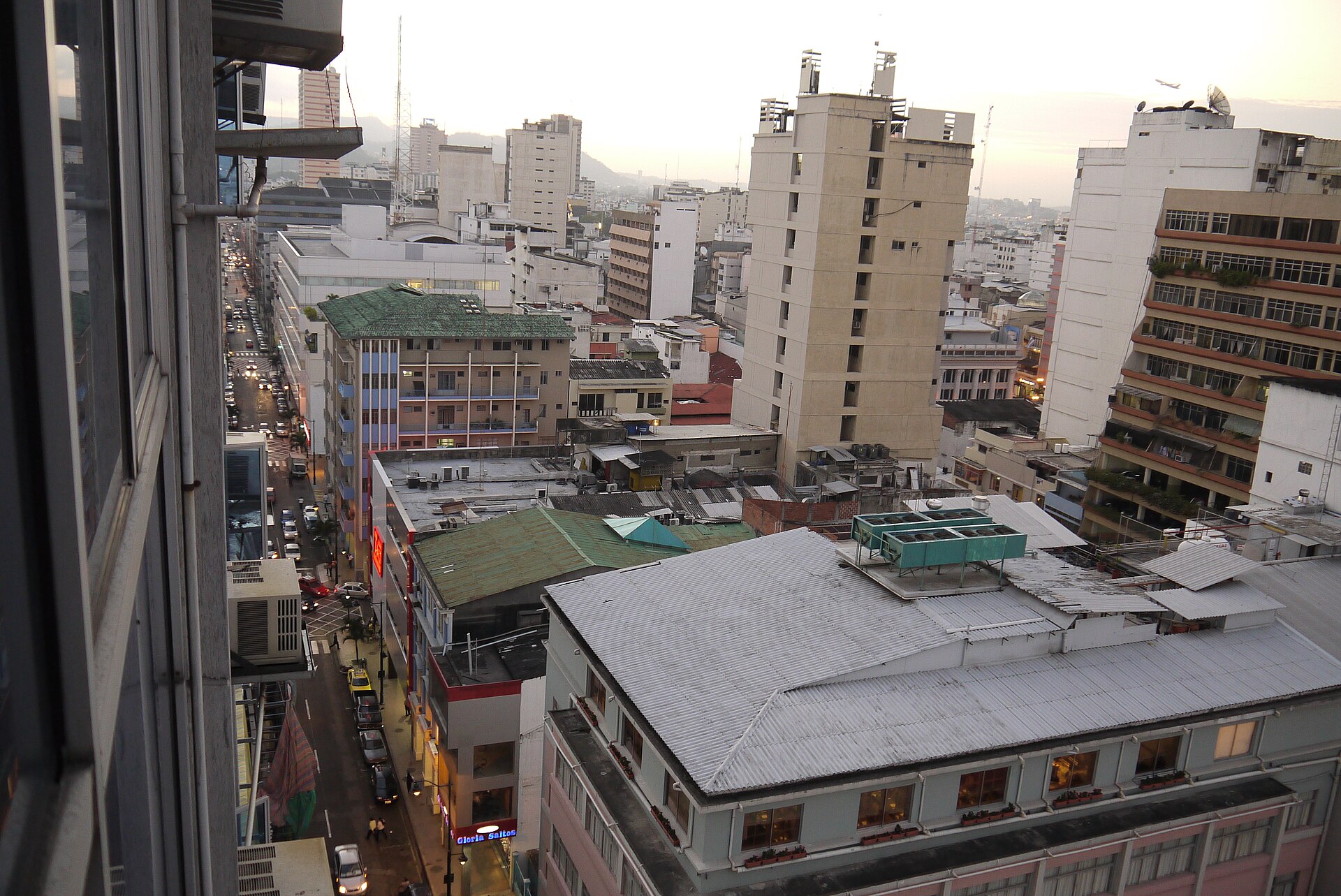
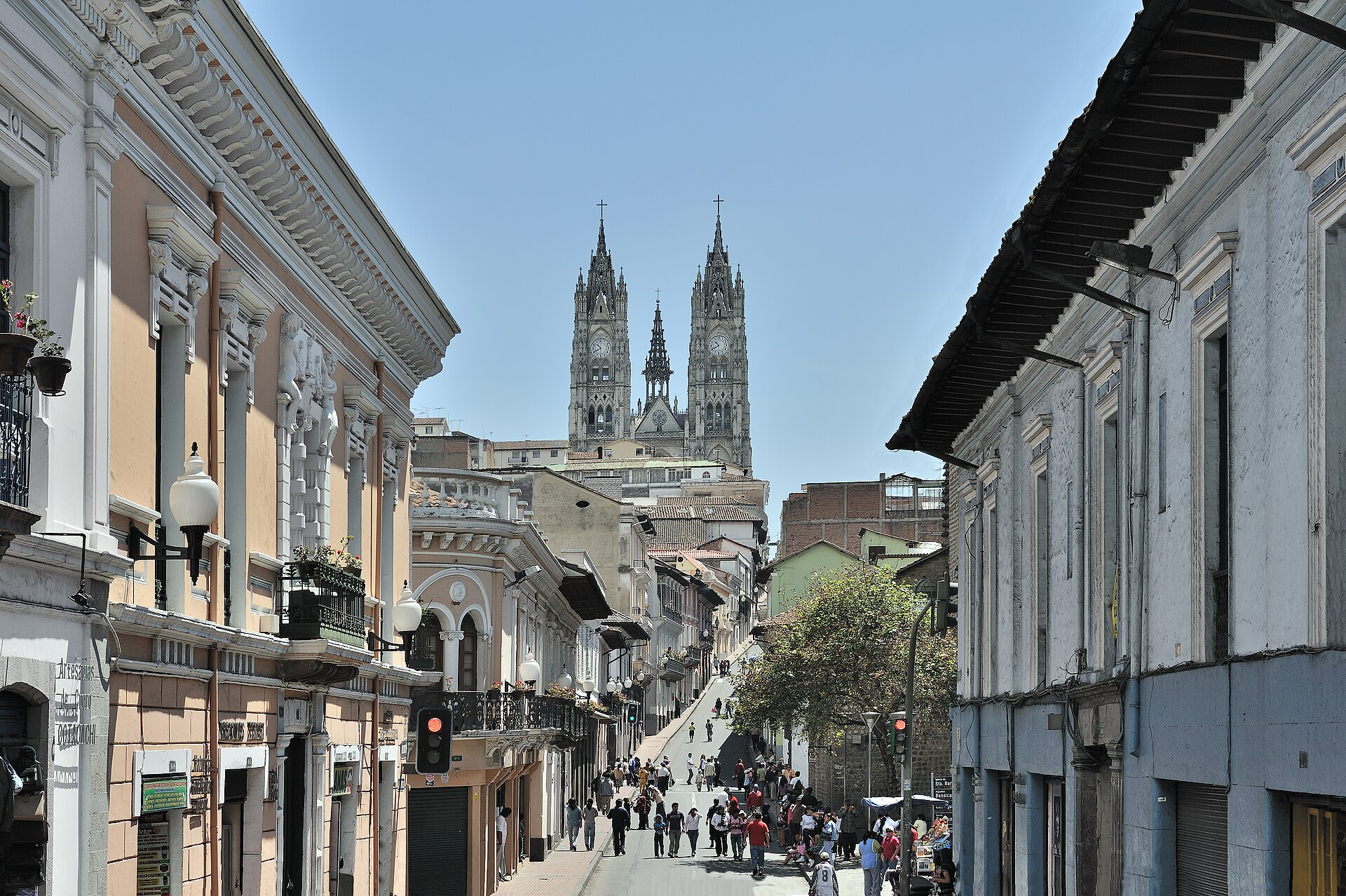
Two cities define it. Quito, the capital, sits high in the Andes and holds the government. Guayaquil, on the Guayas river, is the main port and the commercial centre. The national statistics institute, INEC, estimates 2.9 million people for Guayaquil and 2.8 million for Quito’s metropolitan district in 2022.
Any honest account of Ecuador explained for outsiders now starts with violence. The country recorded 1,189 homicides in 2019. By 2023 the figure was 8,237. After a dip to 6,964 in 2024, the year 2025 set a record of 9,216, about 25 killings a day.
That is a rate of roughly 51 homicides per 100,000 people, according to official figures compiled by the Ecuadorian press. The main driver is cocaine. Ecuador lies between Colombia and Peru, the main producing countries. Its Pacific ports became export routes run by local gangs such as Los Choneros and Los Lobos.
The gangs fight each other over ports, prisons and extortion rackets. Interior Ministry data classify 8,794 of the 9,216 killings of 2025, about 95 percent, as criminal violence. Most victims are young men, and most killings happen on the coast, in Guayas, Manabí, El Oro and Los Ríos provinces.
Who runs Ecuador and how
The president is head of state and head of government. The term is four years, and there is no prime minister. Laws pass through a single chamber, the 151-seat National Assembly, and a Constitutional Court reviews emergency decrees and disputed laws.
The 2008 constitution, drafted under the left-wing president Rafael Correa, has an unusual safety valve. A president can dissolve the Assembly, but must then face a new election too. Guillermo Lasso used it in 2023, and the snap vote brought Daniel Noboa to office on 23 November 2023 to finish Lasso’s term.
Noboa won a full term in a runoff on 13 April 2025. He beat Luisa González of Revolución Ciudadana, the party led by Correa, by 55.63 percent to 44.37 percent. He took office for 2025 to 2029 on 24 May 2025, with María José Pinto as vice-president. His National Democratic Action (ADN) and its allies took control of the Assembly that month.
Security has defined his presidency. In January 2024 the Los Choneros leader known as “Fito” escaped prison and gunmen stormed a television studio on air. On Tuesday 9 January, Noboa signed Decree 111, declaring an “internal armed conflict”. It labelled the gangs terrorist groups and ordered the armed forces to act against them.
A referendum in April 2024 then allowed the extradition of Ecuadorian nationals. Fito was recaptured in Manta on 25 June 2025 and handed to the United States on 20 July 2025. United States prosecutors called it Ecuador’s first extradition of a national under the new rule.
Noboa has also met clear limits. On 16 November 2025 voters rejected all four questions in his referendum. About 61 percent said no to foreign military bases and to a constituent assembly. The Constitutional Court has repeatedly curbed his states of exception. A New York University report of 22 September 2026 accuses his government of retaliating against the court.
How the economy works
Start with the money. In 1999 a banking collapse sent the old currency, the sucre, into free fall; the price of a dollar roughly tripled that year. On Sunday 9 January 2000, President Jamil Mahuad announced dollarisation, and the rate was fixed at 25,000 sucres to the US dollar.
Mahuad was overthrown weeks later, but his successor pushed the law through Congress, and it took effect in March 2000. Since then the central bank cannot print money or devalue. Inflation stays low: 1.12 percent in the twelve months to August 2026, according to INEC.
The catch is that every dollar in circulation must be earned or borrowed. Exports, remittances, foreign investment and loans are the main sources. That makes the trade balance and access to credit far more important than in a country that issues its own currency.
Exports reached a record US$37.15 billion in 2025, the central bank says. Shrimp was the largest single item at US$8.40 billion, 22.6 percent of the total and more than all oil products combined. Cocoa and its products earned US$4.67 billion, and bananas and plantains US$4.26 billion.
Oil still matters for public finances, but output is falling. Production averaged 440,640 barrels a day in 2025, down 7.5 percent, and oil exports fell 19 percent to US$7.75 billion. River erosion on the Coca shut both main pipelines, known as SOTE and OCP, for almost three weeks in July 2025.
In August 2023, 59 percent of voters chose to end drilling in Block 43-ITT, inside Yasuní National Park in the Amazon. The state oil company, Petroecuador, is closing it over five years and five months. It had sealed 59 wells by December 2025. The block still supplied about 9 percent of national output in the first half of 2026.
Because it cannot print dollars, Ecuador leans on lenders. The International Monetary Fund (IMF) approved a 48-month Extended Fund Facility in May 2024, enlarged in July 2025 to about US$5 billion. By April 2026 about US$3.7 billion had been paid out. In January 2026 Ecuador also sold bonds abroad for the first time since 2019.
The programme requires fiscal tightening. On 12 September 2025 Noboa ended the diesel subsidy, lifting a gallon from US$1.80 to US$2.80. CONAIE, the main Indigenous confederation, led a national strike that ended on 22 October 2025 without winning its demands. CONAIE said three people died.
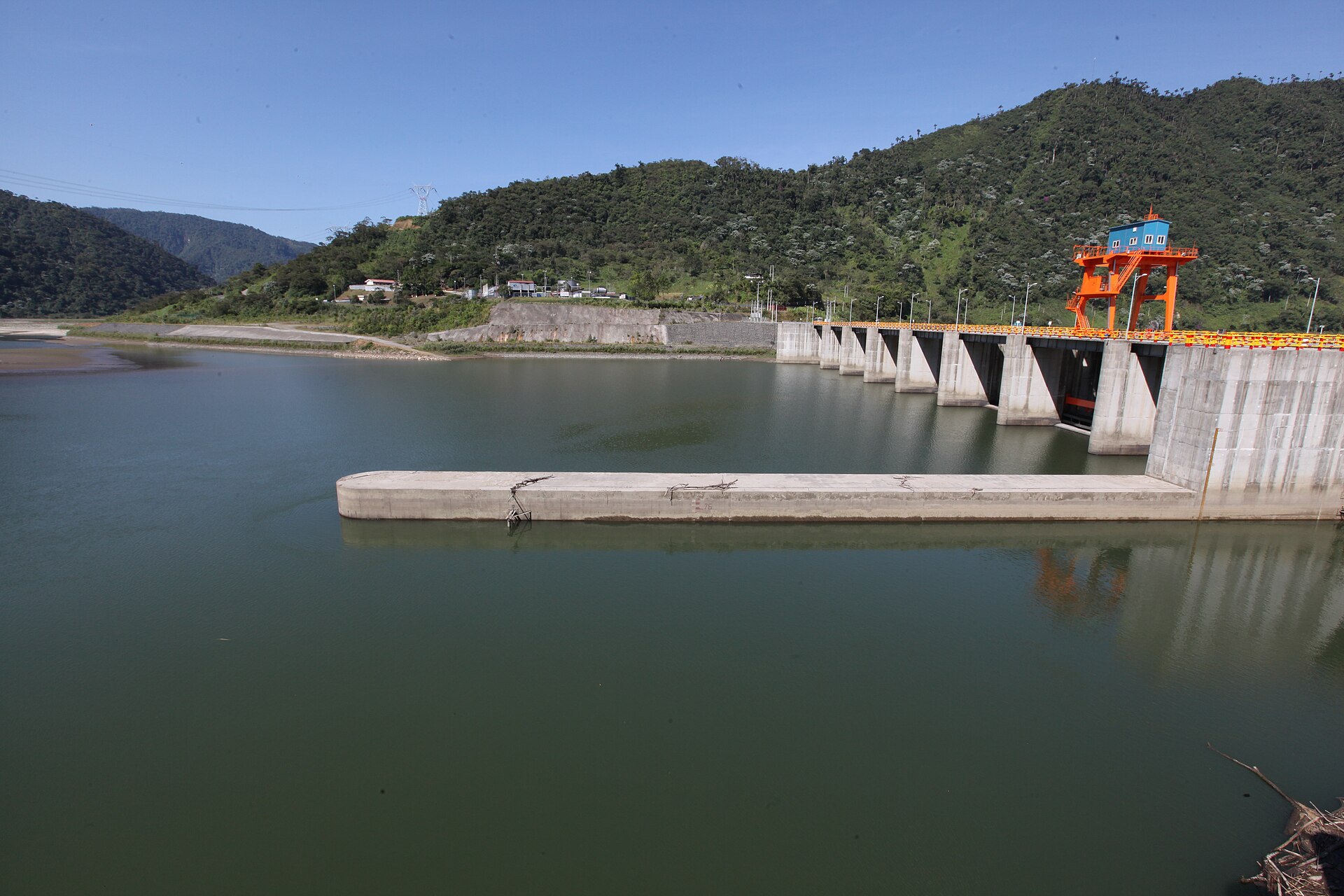
Electricity is the other weak point. Hydropower supplies more than 70 percent of the country’s power. The largest plant, Coca Codo Sinclair, provides about 29 percent and has no storage reservoir, the IMF notes.
A severe drought therefore means blackouts, as in late 2023 and, much worse, in 2024. Daily cuts began in September 2024 and reached up to 14 hours a day. Industry groups put business losses at about US$7.5 billion.
Home rationing ended on 20 December 2024; the central bank credits steadier power for part of the 3.7 percent rebound in 2025.
What is happening right now
As of 25 September 2026, killings are below 2025’s record. They remain above every earlier year. Ecuador recorded 5,676 homicides from January to August, against 6,067 in the same months of 2025, a fall of 6.4 percent. On that pace 2026 is still the second most violent year on record.
The fall is concentrated in two places. Guayaquil’s homicides dropped 18 percent and neighbouring Durán’s 41.8 percent, together more than the whole national decline. Elsewhere killings rose. El Oro province, on the Peruvian border, went from 358 to 634 in January to July. Nationally, June and July were both worse than a year earlier.
On Tuesday 15 September 2026 Noboa signed Decree 498, a 60-day state of exception in eight provinces and three smaller districts. The provinces are El Oro, Esmeraldas, Guayas, Los Ríos, Manabí, Pichincha, Santa Elena and Santo Domingo de los Tsáchilas. It lets police and soldiers search homes without a court warrant when they suspect crime. It also adds a midnight-to-5am curfew in four coastal provinces from 17 to 30 September.
Noboa has tied his security policy closely to Washington. The two governments announced joint operations against designated terrorist groups in March 2026. On 22 September Noboa met Kristi Noem, the United States envoy for a new regional security bloc. On 24 September, raids in Guayas, Los Ríos and El Oro involved United States personnel, according to local media.
Relations with Colombia went the other way. In January 2026 Ecuador announced a 30 percent “security charge” on Colombian goods, later raised to 50 percent. Colombia retaliated and halted electricity sales on 22 January. Colombian power sales resumed on 5 August, two days before Abelardo de la Espriella took office as Colombia’s president.
The political calendar has moved forward. The National Electoral Council (CNE) has called local elections for Sunday 29 November 2026, brought forward from February 2027. About 13.8 million voters will choose 23 provincial prefects, 222 mayors and 1,366 councillors. They also elect seven members of the Council of Citizen Participation and Social Control, which selects oversight officials.
Opponents are also testing the courts. A citizens’ platform wants a recall vote against Noboa. After the CNE and the electoral court rejected it, the group asked the Constitutional Court on 22 September to revive the bid.
On the economy, output grew 2.1 percent in the first quarter of 2026. An IMF review worth about US$394 million was due around mid-September.
What to watch
The curfew in El Oro, Guayas, Los Ríos and Manabí ends on Wednesday 30 September unless extended. The state of exception itself runs 60 days from 15 September, into mid-November. The constitution allows one renewal of up to 30 days, which would carry it past election day.
The dry season is expected to start in October. Blackouts struck in the same part of the year in 2023 and 2024. Watch reservoir levels and Colombian imports. The link to Colombia can carry up to 450 megawatts, about a tenth of average demand, according to the trade publication Ecuador Brief.
The IMF board must still approve the sixth review of the programme, worth about US$394 million, with June 2026 targets. Later reviews fall in March and September 2027 and March 2028. At the fifth review in April, Ecuador needed waivers for four missed fiscal targets.
Then Sunday 29 November, the local elections. They are the first national test of Noboa since the referendum defeat. Winners take office on 14 May 2027, a date the CNE kept when it moved the vote. Throughout, the monthly homicide count from the Interior Ministry is the single best gauge of whether the security strategy is working. The benchmark is 2025’s 9,216.
What this means for foreigners
Prices, rents and salaries are in US dollars, so Americans face no exchange-rate risk. For Europeans, one euro bought about US$1.14 and one pound about US$1.32 on 25 September 2026, according to open.er-api.com. INEC’s basic family basket, a benchmark of household spending, cost US$828.06 in August 2026.
Safety depends heavily on where you are. The United States State Department updated its advice on 18 August 2026 and keeps Ecuador overall at Level 2, “exercise increased caution”. It says do not travel to Guayaquil south of Portete de Tarqui Avenue or its Nueva Prosperina and Pascuales districts. The same warning covers Durán, Huaquillas, Arenillas, Quevedo and two nearby towns, and Esmeraldas city and the area north of it.
Level 3, “reconsider travel”, covers the rest of Guayaquil, El Oro, Los Ríos and Esmeraldas, plus Manabí, Santa Elena, Santo Domingo and Sucumbíos. Quito, Cuenca and most of the highlands carry the national Level 2. Our Ecuador safety guide has more detail.
Curfews and emergency decrees apply to foreigners too. During a March 2026 curfew, travellers with a valid boarding pass to or from the airport were exempt, but each decree sets its own terms. The United States embassy advises carrying identification, because security forces may add checkpoints.
Plan for the practical gaps. Anyone living or working in Ecuador through the dry season should consider backup power. Public hospitals have struggled with medicine shortages. The health minister put supply at 55 percent at the end of August 2026; our healthcare guide covers costs and steps.
The honest summary: Ecuador explained for a newcomer is a dollar-based, low-inflation country with a serious but geographically concentrated security problem. Where you live matters more than almost any other decision you make.
Connected Coverage
Noboa Extends Ecuador Security Crackdown as 2026 Homicides Strain Investment
Noboa Faces Ecuador Referendum 2026 Reset After Voters Reject Foreign Bases
Noboa’s Ecuador Locks In Dollarization as Foreign Investors Face a 460-Point Risk Spread
Is Ecuador Safe? A Guide for Expats
Moving to Ecuador: A Step-by-Step Guide for Expats
Ecuador Residency Visas: Guide for Expats
Retire in Ecuador: Visa, Costs & Discounts
Ecuador Living Costs for Expats
Cost of Living Cuenca, Ecuador — Rent, Bills and Doctors, Priced in Dollars
Ecuador vs Peru for Expats in 2026: Cheaper to Live, Harder to Enter
Healthcare in Ecuador for Foreigners: Costs & Steps
Ecuador Taxes for Expats: Key Facts
Open Bank Account Ecuador Foreigner 2026 — Cédula, Cooperativas, Fees and the 5% ISD
Sources: Output, trade, oil and dollarisation history from the Banco Central del Ecuador; population and prices from INEC; election data from the National Electoral Council; the emergency decree from the Presidency; programme data from the IMF; travel advice from the United States State Department. All accessed 25 September 2026.
- Banco Central del Ecuador — 2025 national accounts, growth of 3.7 percent
- Banco Central del Ecuador — the economy in 2025 and outlook for 2026, nominal GDP
- Banco Central del Ecuador — trade balance by product, 2025
- Banco Central del Ecuador — oil sector bulletin, fourth quarter 2025
- Banco Central del Ecuador — dollarisation in Ecuador, one year on
- INEC — population estimates and projections, 2024 revision
- Consejo Nacional Electoral — call for the local elections of 29 November 2026
- Consejo Nacional Electoral — final results of the 13 April 2025 runoff
- Presidencia de la República — Executive Decree 498 of 15 September 2026
- Constitution of the Republic of Ecuador, 2008
- IMF — Executive Board concludes fifth review of Ecuador’s arrangement
- IMF — securing electricity sufficiency and reliability in Ecuador
- United States State Department — Ecuador travel advisory
- DEA — extradition of José Adolfo Macías Villamar
- Primicias — Interior Ministry homicide data, January to August 2026
- Reuters — Colombia halts electricity sales to Ecuador, 22 January 2026
What Is Not Known
Whether the fall in killings is real or merely relocated. The national total is down, but Guayaquil and Durán alone account for more than the whole decline. From January to July, dozens of other districts and nine provinces saw more homicides. June and July 2026 were worse than a year earlier. Nobody can yet say which trend will dominate the rest of the year.
Whether the lights stay on. The dry season is expected from October, and Colombian imports would cover only part of a severe shortfall. Much depends on rainfall that cannot be predicted months ahead.
What the United States presence amounts to. Voters rejected foreign bases in November 2025, yet United States personnel now join operations on Ecuadorian soil. How far that cooperation will go is unclear. After the 22 September meeting, Washington’s envoy mentioned minerals and oil, while Quito spoke only of security, and no mining or energy deal has been made public.
How the IMF programme holds up. Ecuador missed four fiscal targets at the fifth review and was granted waivers. As of 25 September 2026, no IMF assessment of the June 2026 targets had been published. Nor had a date for the board vote on the sixth review.
How voters will judge Noboa on 29 November. The referendum defeat showed limits to his support. But local elections turn on local candidates, so any national message will be hard to read.
Frequently Asked Questions
What currency does Ecuador use?
The US dollar. Ecuador adopted it in 2000 after a banking collapse, at a fixed 25,000 sucres to the dollar. The central bank cannot print money; Ecuador’s own small coins circulate beside American ones.
Who is the president of Ecuador in 2026?
Daniel Noboa of National Democratic Action (ADN). He first took office on 23 November 2023 to finish Guillermo Lasso’s term, then won a runoff on 13 April 2025 with 55.63 percent and began a full term to 2029 on 24 May 2025.
What is Ecuador’s “internal armed conflict”?
It is a legal status declared by Decree 111 on 9 January 2024, after a wave of gang violence. It labels criminal gangs terrorist groups and lets the armed forces act against them. Separate, time-limited states of exception, such as Decree 498 of 15 September 2026, add curfews and warrantless searches in specific provinces.
How many homicides does Ecuador have?
A record 9,216 in 2025, about 25 a day, up from 1,189 in 2019. From January to August 2026 there were 5,676, down 6.4 percent on the same months of 2025, with the decline concentrated in Guayaquil and Durán.
Why does Ecuador have power cuts?
Hydropower supplies more than 70 percent of its electricity, so droughts cut supply. In late 2024 households lost power for up to 14 hours a day. Imports from Colombia help, but they were suspended from January to August 2026, and the next dry season is expected from October.
When are Ecuador’s next elections?
Local elections are set for Sunday 29 November 2026. About 13.8 million voters will choose 23 provincial prefects, 222 mayors, councillors and seven members of the Council of Citizen Participation and Social Control. The next presidential term begins in 2029.
This article was produced by The Rio Times’ automated newsroom system. How we use AI · Report an error
Read More from The Rio Times