ECUADOR · POPULATION
Key Facts
- The country Ecuador, a South American nation on the Pacific coast, counted 16,938,986 people in its 2022 census.
- The trend About 2.5 million more people than in 2010, and an estimated 18.3 million by 2025.
- The age Median age rose from 24 to 29 years between 2010 and 2022.
- The mix About 77 percent mestizo, 7.7 percent Indigenous and montubio, 4.9 percent Afro-Ecuadorian.
- The diaspora About 830,000 people of Ecuadorian origin lived in the United States in 2021.
- Power Index Ecuador ranks 8th of 14 in The Rio Times Latin America Power Index, with 38.2 points (October 2026 edition).
The Ecuador population was 16,938,986 in the 2022 census, and the World Bank puts it near 18.3 million in 2025. About 77 percent call themselves mestizo, meaning of mixed Indigenous and European roots.
This guide shows who Ecuadorians are, where they live and why 830,000 people of Ecuadorian origin live in the United States.

Ecuador Population in Plain English
Ecuador has about 18 million people and lies between Colombia and Peru, with a Pacific coast, the Andes and an Amazon rainforest. This guide uses official counts and surveys from 2022 to 2025 and builds on our Ecuador country page.
Two kinds of numbers appear below, and they answer different questions. A census counts everyone once in about ten years, while an estimate projects that count forward.
- INEC: Instituto Nacional de Estadística y Censos, Ecuador’s national statistics office, which ran the 2022 census.
- Mestizo: a person of mixed Indigenous and European ancestry, and the largest group in Ecuador.
- Montubio: one of the peoples Ecuador’s Constitution names, with collective rights of its own.
- Afro-Ecuadorian: a person of African descent, a people the Constitution names beside the Indigenous nationalities.
- Kichwa: an Indigenous language that the Constitution names an official language for intercultural relations.
- Sierra, Costa, Oriente: the Andean highlands, the Pacific coast and the Amazon rainforest, the three mainland regions.
How Many People Live in Ecuador
INEC counted 16,938,986 people in the 2022 census, about 2.5 million more than in 2010. Women numbered 8,686,463 (51.3 percent) and men 8,252,523 (48.7 percent).
The World Bank, an international development lender, estimates the Ecuador population at 18,289,896 in 2025, growing 0.85 percent a year. That is about 1.35 million above the census count, and the gap is explained at the end of this guide.
Households are shrinking, with 3.2 people in the average home in 2022, down from 3.8 in 2010 and 4.2 in 2001. One-person homes grew from 12.1 percent to 16.7 percent of all households over those twelve years.
The census also records 96,236 households in which at least one member had left the country and not returned. That figure counts only households still in Ecuador, so it understates emigration.
Age, Cities and Countryside
Ecuador is ageing, with a median age that rose from 24 in 2010 to 29 in 2022. Children numbered 4.3 million, or 25.5 percent of all residents.
The World Bank puts people aged 65 and older at 8.6 percent in 2025, up from 8.1 percent in 2023. Women have 1.8 children on average (2024 estimate), below the 2.1 needed to keep a population steady.
The Amazon provinces are the youngest, with a median age of 21 in Morona Santiago and 23 in Orellana. Pichincha, Galápagos and Tungurahua are the oldest at 31.
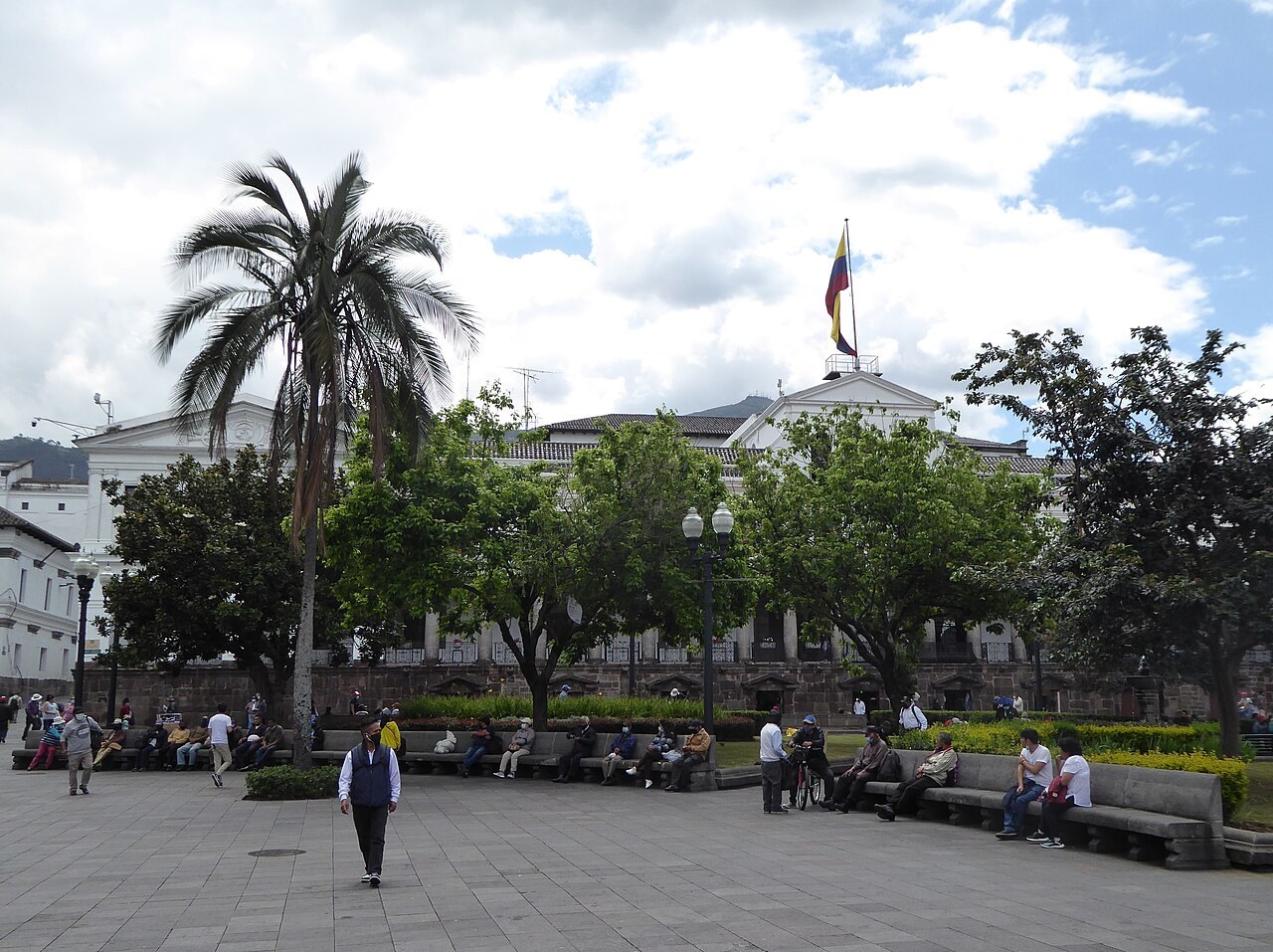
About 63 percent of Ecuadorians lived in cities and towns in 2022, and 37 percent in rural areas. Three provinces hold 53.5 percent of all people.
Guayas (25.9 percent) is the most populous province, and Pichincha (18.2 percent) holds the capital, Quito. Manabí, a coastal province, holds another 9.4 percent.
Who Ecuadorians Say They Are
The census recorded how people identify themselves, not what their ancestry is. The national statistics office reports that most Ecuadorians identify as mestizo.
About 77 percent of Ecuadorians, roughly 13 million people, called themselves mestizo in 2022. The exact share is 77.4 percent.
The statistics office lists Indigenous and montubio Ecuadorians at 7.7 percent. Afro-Ecuadorians come to 4.9 percent of the population.
Because these are self-descriptions, the shares can move when people change how they describe themselves. A family with Indigenous or African roots may still answer mestizo.
Indigenous Peoples, Montubios and Afro-Ecuadorians
Ecuador’s Constitution lists the groups by name. Article 56 says Indigenous peoples and nationalities, the Afro-Ecuadorian people, the montubio people and the communes are part of one indivisible state.
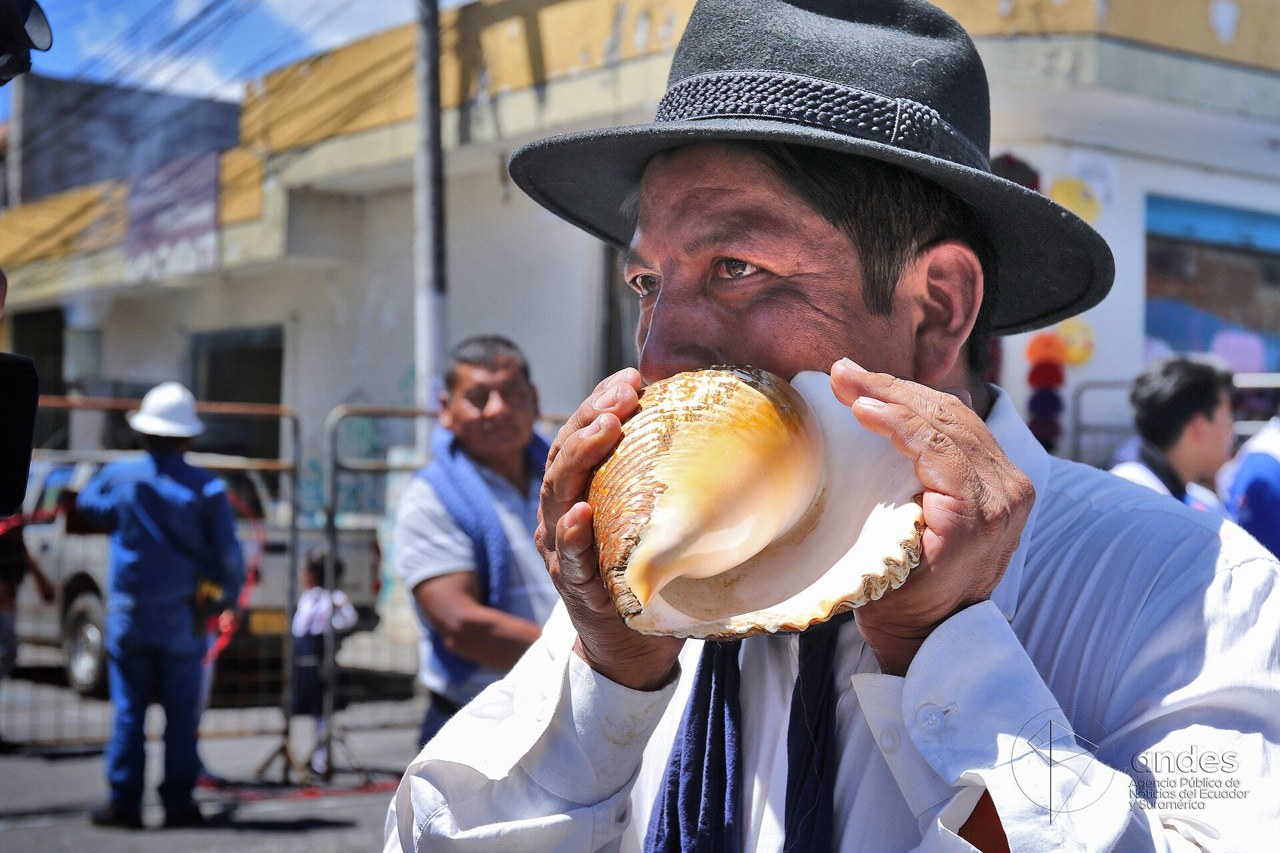
Indigenous Ecuadorians belong to many nationalities. The Constitution names Kichwa and Shuar as official languages for intercultural relations, next to Spanish.
Article 59 recognises the collective rights of the montubio peoples. It promises respect for their culture, identity and view of the world, in line with the law.
Article 60 lets ancestral, Indigenous, Afro-Ecuadorian and montubio peoples form their own territorial districts to protect their culture. The law sets how those districts are created.
Languages and Religion
Spanish is Ecuador’s official language, and Spanish, Kichwa and Shuar are official languages for intercultural relations. Other ancestral languages are in official use among Indigenous peoples in the areas where they live.
In a 2013-14 survey by the Pew Research Center, a US research group, 79 percent of Ecuadorian adults were Catholic. Another 13 percent were Protestant, 5 percent unaffiliated and 3 percent other.
Some 91 percent of those adults said they were raised Catholic, so the Catholic share shows a net drop of 12 points. Article 1 of the Constitution calls the state secular, so the state has no official church.
Migration and the Diaspora
Ecuador sends and receives migrants at the same time. The World Bank estimates that about 17,200 more people left than arrived in 2025, down from about 28,500 in 2021.
Pew counted about 830,000 Hispanics of Ecuadorian origin in the United States in 2021, up from 270,000 in 2000. About 450,000 of them were born in Ecuador and 380,000 in the United States.
Money flows home too, as personal remittances to Ecuador reached about US$7.73 billion in 2025, up from US$4.75 billion in 2022.Ecuador also hosts large groups from other countries.R4V, the UN-backed platform for Venezuelan migrants, counted 444,778 Venezuelan refugees and migrants in Ecuador on 31 December 2024.For two decades Ecuador has hosted one of Latin America’s largest recognised refugee populations, mostly Colombians, says UNHCR, the UN refugee agency.Ecuador’s foreign ministry counted 78,629 recognised refugees up to December 2024, and UNHCR listed 67,400 as active in April 2025.
How the Groups Live Together
Article 1 of the Constitution describes Ecuador as an intercultural, plurinational and secular state. That wording recognises many peoples inside one country and separates church from state.
Article 6 says Ecuadorian nationality does not end a person’s belonging to any of the Indigenous nationalities that coexist in plurinational Ecuador. An Indigenous Ecuadorian is therefore a full citizen and a member of a nationality at the same time.
Over half of Ecuadorians live in just three provinces, Guayas, Pichincha and Manabí. Our guides to Ecuador’s politics and Ecuador’s culture show how these groups are represented in public life.
Age also differs by province. The Amazon provinces of Morona Santiago and Orellana are the youngest, while Pichincha, Galápagos and Tungurahua are the oldest.
What It Means for US Readers
About 830,000 people of Ecuadorian origin lived in the United States in 2021, and 54 percent of them were born abroad. Of the foreign-born, 48 percent had lived in the country for more than 20 years.
Remittances of US$7.73 billion in 2025 show how much money relatives abroad send home. Half of the foreign-born Ecuadorians in the United States were US citizens in 2021, Pew found.
Americans thinking of moving to Ecuador can read our Cuenca city guide and Ecuador tax guide for expats. They cover daily life and money rules.
What Is Not Known
The census counted 16.94 million people in 2022, while the World Bank estimated 17.98 million for 2023. The true total is therefore unsettled.
In March 2024 INEC told lawmakers that its own estimate for 2022 was 17.7 million, against the 16.9 million counted. It put the census omission at 4.6 percent and defended the count.
Ethnic shares and regional counts rest on the census, so they carry the same doubt. The newest religion figures in this guide date from 2013 and 2014.
How many people have left since 2022 is also unclear. A census cannot count households that have already gone.
Frequently Asked Questions
How many people live in Ecuador?
The Ecuador population was 16,938,986 in the 2022 census. The World Bank estimates 18,289,896 for 2025.
What are the main ethnic groups in Ecuador?
About 77 percent call themselves mestizo, meaning of mixed Indigenous and European roots. The national statistics office lists Indigenous and montubio Ecuadorians at 7.7 percent and Afro-Ecuadorians at 4.9 percent.
What languages do people speak in Ecuador?
Spanish is the official language. Kichwa and Shuar are official languages for intercultural relations, and other Indigenous languages are used where those peoples live.
What is the main religion in Ecuador?
Catholicism, at 79 percent of adults in a 2013-14 Pew Research Center survey. Protestants were 13 percent and the unaffiliated 5 percent.
How many Ecuadorians live in the United States?
About 830,000 people of Ecuadorian origin lived in the United States in 2021, according to Pew. Roughly 450,000 of them were born in Ecuador.
Is the Ecuador population growing?
Yes, but slowly, at 0.85 percent in 2025 by World Bank estimates. Women have 1.8 children on average, and median age rose from 24 to 29 between 2010 and 2022.
Sources: INEC, Censo de Población y Vivienda 2022 results (press release), 2023-09-21; INEC, statement ratifying the validity of the 2022 census, 2024-03-20; Constitución de la República del Ecuador (2008, text updated January 2021), Articles 1, 2, 6, 56, 59 and 60, 2021-01-01; World Bank, population, fertility, life expectancy, migration and remittance indicators for Ecuador, 2026-10-29; Pew Research Center, Facts on Hispanics of Ecuadorian origin in the United States, 2021, 2023-08-16; Pew Research Center, Religion in Latin America, 2014-11-13; UNHCR, Ecuador operational data portal (R4V and refugee figures), 2025-04-08.
This article was produced by The Rio Times’ automated newsroom system. How we use AI · Report an error · Editorial responsibility: Matthias Camenzind, Editor-in-Chief
Expat Guide to Ecuador
What The Rio Times publishes for foreigners who live in or move to Ecuador.
Start here
- Best Places to Live in Ecuador for Expats 2026
- How to Get Residency in Ecuador in 2026: Visas From US$1,446 a Month
- Cost of Living Cuenca, Ecuador — Rent, Bills and Doctors, Priced in Dollars
- Healthcare in Ecuador for Foreigners: Costs & Steps
City guides
Coming up in Ecuador
- Def Leppard in Quito, Ecuador: Rock Legends at the Estadio Olímpico Atahualpa on October 30, with Extreme 30 Oct
- Carlos Rivera and Reik in Ecuador: Joint Tour Plays Quito on 5 November and Guayaquil on 7 November 5 Nov
- Shakira in Quito, Ecuador: Three Stadium Nights at Estadio Olímpico Atahualpa on November 8, 9 and 11 8 Nov
- Soy Luna Ecuador: Guayaquil on 12 November, Quito on 14 November 12 Nov
Understand Ecuador
Brazil runoff date: Sunday, October 25, poll closing times and when results start · Brazil runoff polls: Flávio 51%, Lula 49% · Kalshi and Polymarket odds
Rotate for Best Experience
This report is optimized for landscape viewing. Rotate your phone for the full experience.
You've reached your free article limit
Subscribe to The Rio Times for unlimited access to our news, expat and nomad guides and market intelligence on Latin America and Africa.
Keep reading for free
Your first article was on us. Register with your email address to read 6 free articles every month. You will also receive The LatAm Brief: what moved in Latin American markets, politics and expat life, every weekday morning.
Expat Guide to Ecuador
What The Rio Times publishes for foreigners who live in or move to Ecuador.
Start here
- Best Places to Live in Ecuador for Expats 2026
- How to Get Residency in Ecuador in 2026: Visas From US$1,446 a Month
- Cost of Living Cuenca, Ecuador — Rent, Bills and Doctors, Priced in Dollars
- Healthcare in Ecuador for Foreigners: Costs & Steps
City guides
Coming up in Ecuador
- Def Leppard in Quito, Ecuador: Rock Legends at the Estadio Olímpico Atahualpa on October 30, with Extreme 30 Oct
- Carlos Rivera and Reik in Ecuador: Joint Tour Plays Quito on 5 November and Guayaquil on 7 November 5 Nov
- Shakira in Quito, Ecuador: Three Stadium Nights at Estadio Olímpico Atahualpa on November 8, 9 and 11 8 Nov
- Soy Luna Ecuador: Guayaquil on 12 November, Quito on 14 November 12 Nov
Understand Ecuador