Open Bank Account Ecuador Foreigner 2026 — Cédula, Cooperativas, Fees and the 5% ISD
GUIDES · ECUADOR
Key Facts
- —What it is A US-dollar account at an Ecuadorian bank or cooperativa, usually opened in person at a branch.
- —Who it’s for Residents, retirees and remote workers who pay rent, bills and visa costs inside Ecuador.
- —What it costs Some basic accounts need no opening deposit; fees vary by institution and appear on each tariff sheet.
- —Why it matters Local payments become simple, while money leaving Ecuador generally pays a 5% outflow tax.
- —The catch Most banks want a visa or cédula first; easier cooperativas may carry lower deposit insurance.
How to open bank account Ecuador foreigner style in 2026: a dollar system, a residency gate at most banks, a cooperativa route with thinner insurance, and a 5% tax on money leaving.
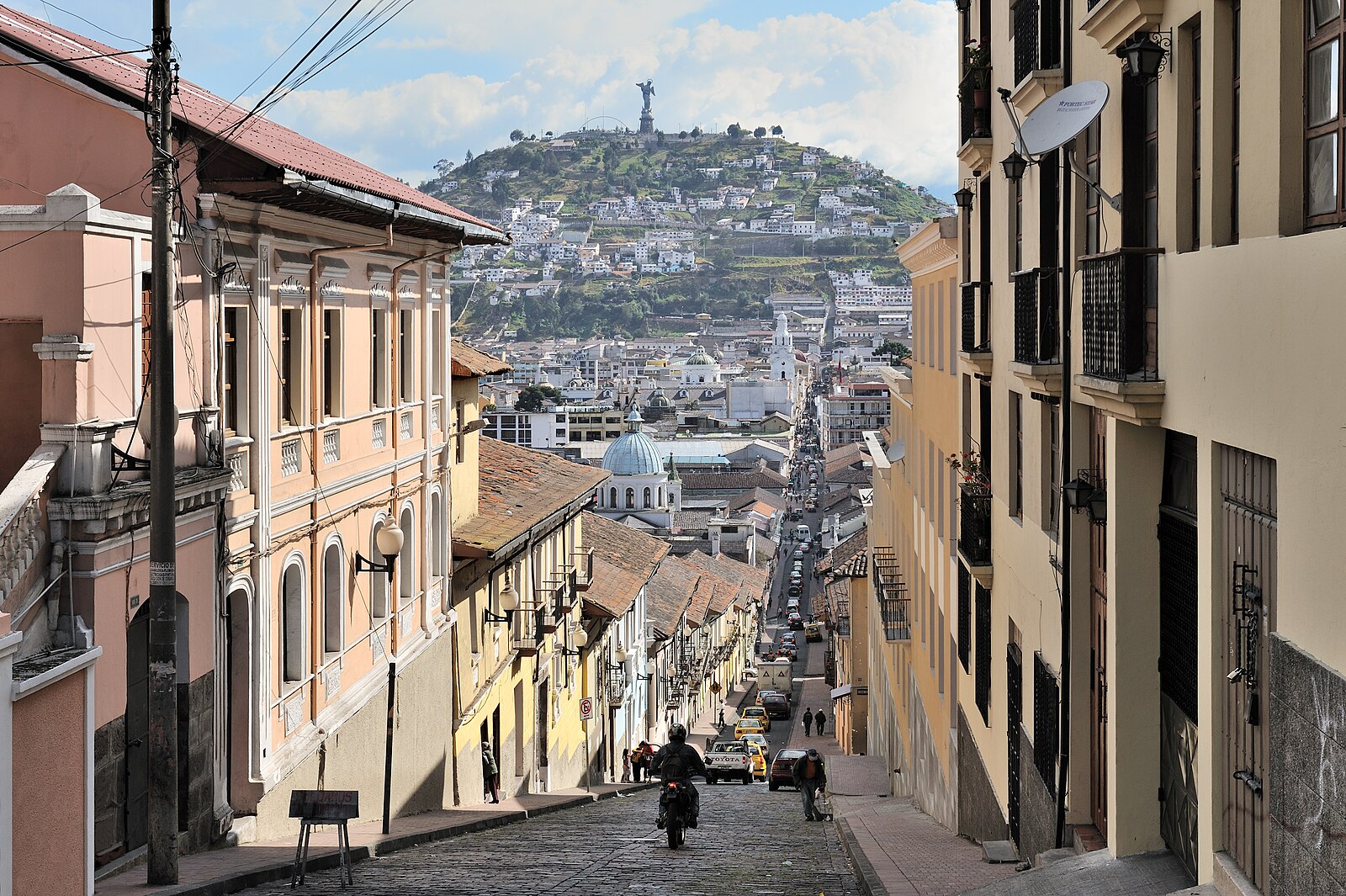
To open bank account Ecuador foreigner rules in 2026 begin with the US dollar, Ecuador’s only currency, which removes exchange risk. The real gates are your residency papers, a local address and Ecuador’s 5% tax on money sent abroad.
The dollar advantage and why it matters
Ecuador has used the US dollar as its official and only currency since 2000. Deposits, balances, loans and ATM withdrawals are all in dollars.
For someone paid in dollars, that removes a whole layer of risk. A pension or salary keeps its value inside the account, with no local exchange rate to watch.
This is the clearest difference from Ecuador’s neighbours. In Colombia and Peru, accounts run in pesos and soles, and every transfer in or out carries an exchange spread.
The trade-off is that Ecuador cannot print money or set its own monetary policy. Credit conditions follow global dollar rates and the government’s fiscal health.
For a household budget, that means stable prices in your own currency but less cushion when the economy slows. The long view is steady rather than spectacular.
The residency gate: what the cédula does
The cédula is Ecuador’s national identity card, which foreign residents obtain from the Civil Registry after their residence visa is granted. For most banks, it is the practical key to full service.
For a foreigner, large private banks in Ecuador commonly require a cédula to open a full-featured bank account. Without one, options narrow but do not disappear.
Banco Pichincha, for example, publishes a route for foreigners based on a valid passport and a valid visa rather than a cédula. A tourist entry stamp alone is not enough anywhere.
The state-owned BanEcuador lists a cédula, passport or refugee card as accepted identification for savings accounts. Its official procedure page names foreigners of legal age as eligible.
Cooperativas often accept a passport plus proof of address, but each one sets its own rules. Treat any passport-only opening as an exception to confirm, not a rule to expect.
How to open bank account Ecuador foreigner style at the main banks
Banco Pichincha, Banco Guayaquil, Produbanco and Banco del Pacífico are the names foreigners hear most often. None publishes a single rule for how a foreigner can open a bank account in Ecuador.
Banco Pichincha’s own guide asks for a passport, a valid visa, and an employment certificate or RUC (tax number). It also wants a personal reference from an Ecuadorian and spouse details where relevant.
The same guide says permanent-visa holders can complete the process online. Temporary-visa holders must visit a branch, and refugee visas are not accepted for this route.
Banco Guayaquil, Produbanco and Banco del Pacífico follow the same general pattern: identification, a migratory document, and supporting paperwork. Details differ by product and branch.
BanEcuador, the public development bank, is the clearest official route for people without a cédula. It states that the account-opening procedure itself is free of charge.
The cooperativa alternative and the insurance difference
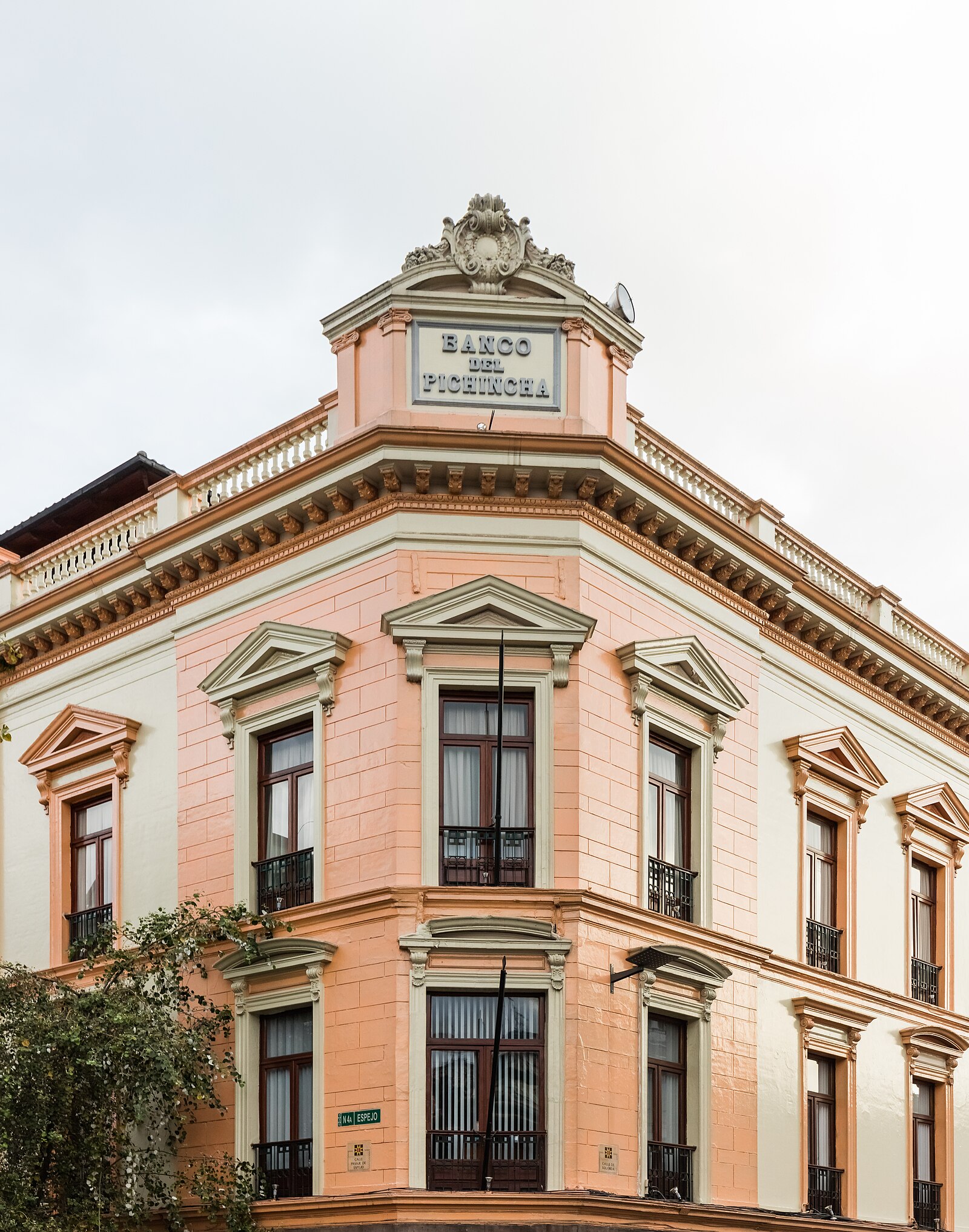
Savings and credit cooperativas are member-owned institutions supervised separately from banks. Many foreigners who cannot yet open a bank account in Ecuador use them instead.
Some accept a passport and a rental contract, and some ask for a reference from an existing member. Opening can be faster, sometimes on the same day.
The important difference is deposit insurance, run by the state agency COSEDE. It covers up to US$32,000 per depositor at public and private banks and mutualistas.
For cooperativas, coverage depends on the size segment of the institution. It ranges from US$32,000 at the largest to US$1,000 at the smallest.
In April 2026 a new rule gave fully insured depositors priority when a failing institution’s clients are moved to a healthy one. That speeds access, but it does not raise the ceiling.
Before you keep serious savings in a cooperativa, check its segment on COSEDE’s coverage tool. An easier door does not always mean the same safety net.
Documents, branch visits and timeline
To open a bank account in Ecuador, a foreigner typically needs a passport, a cédula or visa, address proof and income proof. Bring originals and photocopies.
Proof of address usually means a utility bill or lease contract in your name, sometimes notarized. This is the document that most often causes delays.
Proof of income can be foreign bank statements, a pension or Social Security letter, an employment contract or a local work certificate. Self-employed residents often show their RUC.
Some branches ask for a reference letter from your home bank, translated into Spanish and sometimes apostilled. Expect questions about the purpose of the account and the source of your funds.
For most foreigners, the process to open a bank account in Ecuador starts in person. Fully online opening for non-residents remains the exception, with Pichincha’s permanent-visa route a notable case.
Cooperativas may open an account the same day, while larger banks can take several business days for compliance checks. Card delivery can add more time.
Once the account is live, mobile and web banking are widely used and work well for bills, transfers and top-ups. Digital access is usually set up after the branch visit.
Plan for one visit and treat a second as normal. Confirm the expected timeline with the branch before you arrive.
Fees and minimums: the structure, not a single number
When a foreigner opens a bank account in Ecuador, no national standard sets deposits or monthly fees. Each bank and cooperativa publishes its own tariff sheet.
Some accounts need nothing to start. Banco Pichincha’s Cuenta Transaccional has no opening deposit and a one-off debit-card charge of US$5.15.
Other products require an opening deposit, and cooperativas often set small ones for basic savings accounts. No official average monthly maintenance fee is published.
Ask for the tariff sheet at the branch before signing. It lists card fees, transfer costs and any maintenance charges in writing, and forum figures date quickly.
FATCA and US persons
FATCA is a US law that requires foreign financial institutions to report accounts held by US citizens and US tax residents. It follows American clients to every country.
Ecuador does not ban banking for Americans. But each institution sets its own appetite for the extra reporting, and some decline US persons or limit their products.
If you are a US person, expect to sign a W-9 form and answer extra questions. Ask each branch directly whether it accepts US clients before you gather paperwork.
The answer can differ between a large bank, a smaller bank and a cooperativa. Asking at two or three institutions saves wasted trips.
Getting money in, and the 5% ISD on the way out
Money arrives by international wire or through transfer services. Wires suit large sums, while transfer services are often cheaper for regular, smaller amounts.
Money leaving is different. Ecuador’s tax authority, the SRI, applies the Impuesto a la Salida de Divisas (ISD), a currency outflow tax, at 5%.
The rate rose from 3.5% to 5% on 1 April 2024. Banks withhold it automatically, so a US$1,000 transfer abroad costs US$50 in tax plus bank fees.
Each adult leaving the country may carry up to three basic salaries in cash without ISD, which is US$1,446 in 2026. The excess is taxed at 5%.
Card spending and cash withdrawals abroad with Ecuadorian cards are exempt up to US$5,188.26 a year for 2025–2027. Above that, the ISD applies.
For a foreigner who sends money home often, this tax is the main cost of the system. Keeping foreign income abroad and bringing in only what you spend is a common pattern.
Cash, ATMs and life outside the big cities
Cards work well in Quito, Guayaquil and Cuenca, and digital payments keep spreading. Markets, buses and small shops still run largely on cash.
ATMs are common in cities but thinner in rural areas and small towns. Plan withdrawals before travelling rather than assuming a machine will be nearby.
Keep small bills, because large notes can be hard to break outside the cities. A local debit card plus a modest cash reserve covers both worlds.
Common pitfalls and a practical checklist
The address-proof loop catches many newcomers. You need an address to open the account, but you need the account to set up many local bills.
Documentation refreshes are a second friction. Banks may ask you to update your address, income or visa papers after the account is open, especially when a visa renews.
Anyone entering or leaving Ecuador with US$10,000 or more in cash or equivalents must declare it to customs. The declaration form, called the FRA, can be filled in online.
Arriving on a tourist stamp, without a reference or without address proof are the most common reasons for a refusal. Each is fixable, and a foreigner who returns prepared can usually open a bank account in Ecuador.
The checklist: confirm the branch accepts your visa type, gather the document set, ask about US-person rules, and request the tariff sheet. Then check the cooperativa’s insurance segment if you use one.
How Ecuador compares with Panama and Peru
For a foreigner, Ecuador is generally the most residency-dependent of the three places to open a bank account. The visa and cédula act as the practical gate to full service.
Panama also uses the US dollar and is more internationally oriented for banking. It is also known for strict source-of-funds checks and bank references for foreigners.
Peru usually opens accounts once a foreigner holds a carné de extranjería (resident card). Its accounts run in soles or dollars, with the sol at about 3.36 to the dollar at 19 September 2026 exchange rates.
What sets Ecuador apart is the pairing of a dollar system with a 5% tax on outflows. It rewards people who live and spend locally more than people who move money often.
What is not known is how bank-by-bank rules will change as compliance tightens. The direction for years has been more paperwork, not less, so a steady file serves you best.
Connected Coverage
Moving to Ecuador: A Step-by-Step Guide for Expats
Ecuador vs Peru for Expats in 2026: Cheaper to Live, Harder to Enter
Sources: Figures were checked against Ecuador’s Internal Revenue Service (SRI), BanEcuador’s official procedure page, the National Customs Service, Banco Pichincha’s published requirements, and reporting by Primicias and El Universo.
This article was produced by The Rio Times’ automated newsroom system. How we use AI · Report an error · Editorial responsibility: Matthias Camenzind, Editor-in-Chief
Expat Guide to Ecuador
What The Rio Times publishes for foreigners who live in or move to Ecuador.
Start here
- Best Places to Live in Ecuador for Expats 2026
- How to Get Residency in Ecuador in 2026: Visas From US$1,446 a Month
- Cost of Living Cuenca, Ecuador — Rent, Bills and Doctors, Priced in Dollars
- Healthcare in Ecuador for Foreigners: Costs & Steps
City guides
Coming up in Ecuador
- Def Leppard in Quito, Ecuador: Rock Legends at the Estadio Olímpico Atahualpa on October 30, with Extreme 30 Oct
- Carlos Rivera and Reik in Ecuador: Joint Tour Plays Quito on 5 November and Guayaquil on 7 November 5 Nov
- Shakira in Quito, Ecuador: Three Stadium Nights at Estadio Olímpico Atahualpa on November 8, 9 and 11 8 Nov
- Soy Luna Ecuador: Guayaquil on 12 November, Quito on 14 November 12 Nov
Understand Ecuador