Noboa’s Ecuador Locks In Dollarization as Foreign Investors Face a 460-Point Risk Spread
Guides · Ecuador
—The stakes. Ecuador’s constitutional dollarization removes devaluation risk but exposes investors to U.S. interest-rate cycles and fiscal shocks.
—The mechanism. All domestic transactions run in U.S. dollars, so there is no local currency risk on bank deposits or listed securities.
—The access point. Foreigners buy Ecuadorian securities through Superintendencia-authorized brokerage houses called casas de valores.
—The risk filter. Sovereign spreads tightened from roughly 2,016 basis points in early 2024 to about 460–800 points by late 2025.
—The structural limit. Ecuador cannot devalue when neighbours weaken against the dollar, making export competitiveness a persistent pressure point.
Ecuador has made the U.S. dollar its constitutional bedrock, removing the currency risk that haunts much of Latin America but leaving investors tied to Washington’s policy cycle. For foreign capital, the trade-off is clear: monetary stability without a lender-of-last-resort safety valve.

Dollarization as a Legal Anchor
Ecuador adopted the U.S. dollar as sole legal tender in January 2000 after abandoning the sucre during a banking crisis.
The arrangement was constitutionally enshrined and reaffirmed by Decree 565, signed by President Daniel Noboa in Cuenca on March 18, 2025.
That decree ratifies the dollar as the official currency and sole means of payment, locking dollarization into domestic law.
For investors, this means every rent payment, salary, bank account and stock-market price is denominated in U.S. dollars.
There is no local currency to devalue, no parallel exchange rate to arbitrage and no sovereign monetary policy to set domestic interest rates.
Inflation, Spreads and the IMF Anchor
Dollarization crushed the hyperinflationary legacy of the sucre era, with 2026 inflation forecasts clustering around 1.5 percent to 2.8 percent.
One trade-credit analysis describes dollarization as a structural inflation anchor for Ecuador.
Sovereign risk spreads compressed sharply, falling from roughly 2,016 basis points in January 2024 to a 460–800 point band by late 2025.
Ecuador’s country risk index, known locally as riesgo país, has fallen to around 413–464 points in 2026 reporting.
An active IMF Extended Fund Facility through at least April 2026 provides a fiscal anchor that supports the government’s return to international capital markets.
What Dollarization Means for Bank Deposits
After the sucre was eliminated, bank deposits recovered immediately, rising from 9.4 percent of GDP to 18.7 percent within the first year.
Deposits kept climbing to 45 percent of GDP by June 2025, reflecting restored confidence in the banking system.
Average lending rates fell from about 62 percent in 1999 to roughly 8 percent in 2025, helped by the collapse of inflation and the removal of exchange-rate risk.
International reserves act as Ecuador’s dollar stockpile and serve as the safety net for bank deposits in the dollarized system.
The Central Bank of Ecuador reported record-high international reserves as of March 13, 2026, reinforcing the deposit safety cushion.
The Structural Trade-Off for Investors
Dollarization eliminates exchange-rate risk on U.S. dollar-denominated positions and avoids currency mismatch on dollar debt.
But it strips the government of exchange-rate tools and seigniorage income, leaving fiscal discipline as the main adjustment mechanism.
Ecuador is more exposed to commodity price shocks and U.S. interest-rate cycles than neighbours with floating currencies.
A clear structural risk emerged in April 2026 when regional currencies fell five to eight percent against the dollar after U.S. tariff announcements.
Because Ecuador cannot devalue, its exporters lost relative competitiveness while import-competing sectors gained no relief.
The Quito and Guayaquil Stock Exchanges
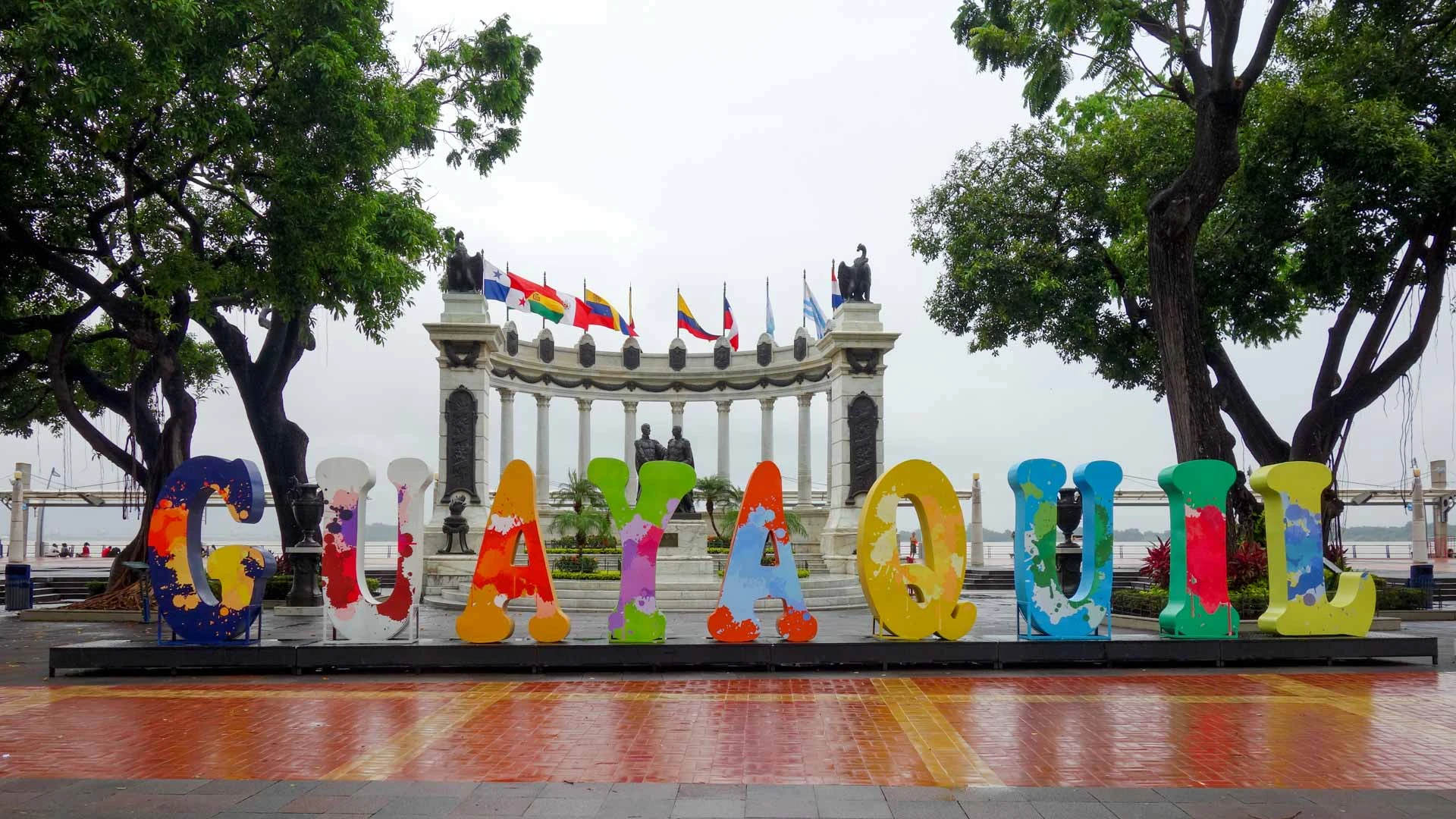
Ecuador has two principal stock exchanges: the Bolsa de Valores de Quito in the capital and the Bolsa de Valores de Guayaquil on the coast.
Because the economy is dollarized, every price quoted on the Quito exchange is settled in U.S. dollars.
There is no exchange-rate conversion between the market and an investor’s dollar holdings, simplifying cross-border accounting.
The exchanges operate under national securities regulations, with Guyanaquil’s access mechanisms broadly similar to Quito’s.
The market remains small by regional standards, but dollar settlement makes it unusually transparent for foreign participants.
How Foreigners Access the Market
Ecuador’s Constitution establishes equal treatment in rights for national and foreign investors, promoting private investment and guaranteeing freedom of business.
There are no initial legal barriers to investment, and any individual or entity can access securities subject to standard regulatory requirements.
The Superintendencia de Compañías, Valores y Seguros authorizes brokerage houses, known as casas de valores, as the only intermediaries permitted to execute trades.
Foreign investors must open accounts through a licensed casa de valores to buy equity or debt instruments on either exchange.
The brokerage house handles registration, tax documentation and settlement in U.S. dollars under national market rules.
Government Bonds and Sovereign Risk
Ecuador’s government bonds trade with a risk premium that reflects fiscal stress, oil dependence and dollarization constraints.
The compressed sovereign spread in late 2025 signals improved investor confidence, but the country remains below investment grade.
An IMF program acts as a fiscal anchor, yet the government’s ability to service debt hinges on oil revenue and tax collection.
Bond investors should track the riesgo país indicator and reserve levels, as both move with commodity prices and U.S. monetary policy.
There is no sovereign lender of last resort in a dollarized system, making bondholder recovery dependent on external financing and fiscal discipline.
Currency Exit Tax and Repatriation Rules
Ecuador imposes a currency exit tax, known as the Impuesto a la Salida de Divisas or ISD, on money leaving the country.
The ISD is a tax on cross-border transfers and cash withdrawals abroad, applying even in a dollarized economy.
Foreign investors must factor the ISD into the cost of repatriating profits, dividends or investment principal.
Capital repatriation is generally permitted under equal-treatment rules, but the ISD creates a friction on outflows.
The tax rate has varied over time, so investors should confirm the current percentage before structuring exit transactions.
Real Estate in Quito, Cuenca and the Coast
Real estate is priced in U.S. dollars, giving foreign buyers price certainty in their home currency.
Quito, the highland capital, attracts investors focused on administrative, commercial and residential property near government and corporate hubs.
Cuenca is a colonial city popular with expatriates, offering a slower market with strong demand for restored historic homes.
Coastal areas draw buyers seeking tourism-linked and beach property, with liquidity varying by specific town and season.
Because all property transactions are dollar-denominated, buyers avoid the currency depreciation risk common in other Latin American real estate markets.
Bank Deposits and Cooperative Risks
Bank deposits in Ecuador are held in U.S. dollars and protected by the dollar stockpile of international reserves.
Average lending rates around 8 percent in 2025 reflect a stable banking environment compared with the 62 percent rates of 1999.
Cooperatives offer higher nominal returns but operate under a different regulatory layer than commercial banks.
Cooperative savers face elevated risk of liquidity problems because those institutions lack the same access to reserve buffers.
Foreign depositors should distinguish between Superintendency-regulated banks and cooperatives that may fall outside full deposit-insurance scope.
Incentive Sectors and the Security Drag
Ecuador promotes investment incentives in tourism, agriculture and energy, sectors where dollar stability lowers financing risk.
Energy investment is tied to oil and renewables, with fiscal terms shaped by IMF program commitments and commodity prices.
Agriculture benefits from dollarization because producers can borrow in the same currency they use for sales.
Tourism faces a structural cost disadvantage when the dollar strengthens against neighbours’ currencies, making Ecuador relatively expensive.
The security situation raises operating costs for physical assets, logistics and personnel, offsetting some of the monetary stability advantage.
More: Ecuador news in English, every day from The Rio Times.
Reading the 2026 Investor Map
Foreign investors in Ecuador gain dollar certainty but surrender exchange-rate flexibility and a domestic monetary backstop.
The stock exchanges offer direct access in dollars, yet liquidity is thinner than in Brazil or Mexico.
Government bonds carry a lower spread today than in early 2024, but fiscal shocks and oil swings can reverse that quickly.
Real estate and bank deposits are dollar-anchored, while cooperatives and security costs introduce local risk layers.
Successful investing in Ecuador requires treating dollarization as a fiscal contract, not a reason to ignore political and security realities.
Connected Coverage
Los Tiguerones Designated Terrorists as Ecuador Escalates Security Buildup
Fuse Failure Shuts 161 Ecuador Oil Wells at Referendum-Hit ITT Block
The Big Picture
This article was produced by The Rio Times’ automated newsroom system. How we use AI · Report an error · Editorial responsibility: Matthias Camenzind, Editor-in-Chief
LatAm Markets: Live Signals → — real-time movers, turnover leaders and FX across Latin America.
Expat Guide to Ecuador
What The Rio Times publishes for foreigners who live in or move to Ecuador.
Start here
- Best Places to Live in Ecuador for Expats 2026
- How to Get Residency in Ecuador in 2026: Visas From US$1,446 a Month
- Cost of Living Cuenca, Ecuador — Rent, Bills and Doctors, Priced in Dollars
- Healthcare in Ecuador for Foreigners: Costs & Steps
City guides
Coming up in Ecuador
- Def Leppard in Quito, Ecuador: Rock Legends at the Estadio Olímpico Atahualpa on October 30, with Extreme 30 Oct
- Carlos Rivera and Reik in Ecuador: Joint Tour Plays Quito on 5 November and Guayaquil on 7 November 5 Nov
- Shakira in Quito, Ecuador: Three Stadium Nights at Estadio Olímpico Atahualpa on November 8, 9 and 11 8 Nov
- Soy Luna Ecuador: Guayaquil on 12 November, Quito on 14 November 12 Nov
Understand Ecuador