
ECUADOR · ELECTIONS
Ecuador votes on Sunday, 29 November 2026 to choose its mayors, provincial prefects (the elected heads of provincial government), councillors and village boards, and voting is compulsory for most adults. Polls close at 5 p.m. Eastern Time, which is also Ecuador’s clock that day, so US readers can follow the count live.
The vote comes just over a year after Ecuadorians answered No to all four questions in the referendum of 16 November 2025. Winners take office on Friday, 14 May 2027.
Key Facts
- —What Ecuadorians elect 23 prefects, 222 mayors, councillors, rural parish boards and a seven-member citizen oversight council.
- —When Sunday, 29 November 2026; polls close 5 p.m. ET; winners take office Friday, 14 May 2027.
- —Who 13,827,643 registered voters; voting is compulsory from 18 to 65, with a US$48.20 fine.
- —Stakes Test for President Daniel Noboa’s party; ex-president Correa’s party, Revolución Ciudadana, is suspended by the electoral court.
- —Power Index Ecuador ranks 8th of 14 in The Rio Times Latin America Power Index, with 37.2 points (November 2026 edition).
What Ecuador Votes for on 29 November
Voters fill three layers of local government. They choose 23 prefects with their deputies (the heads of provincial governments), 222 mayors, and the councillors who sit beside each mayor, as set out in our Ecuador local elections guide.
The ballot also covers 909 urban councillors, 457 rural councillors and 4,131 members of rural parish boards, the smallest unit of local government. The National Electoral Council (CNE), the body that runs Ecuador’s elections, counts 5,749 principal posts in all, including seven citizen-council seats.
Ballots come in eight types, one per office, in different colours. They cover prefects, mayors, urban councillors, rural councillors, parish boards, and three for the citizen council, which has separate lists for men, for women and for Indigenous peoples and nationalities.
That citizen council is the Council for Citizen Participation and Social Control (CPCCS), a state body with seven elected members. Under the constitution it promotes public participation and names the heads of several state oversight bodies.
In Plain English
- —CNE Consejo Nacional Electoral, the body that runs elections and announces results.
- —TCE Tribunal Contencioso Electoral, the electoral court. Its rulings are the last appeal.
- —Prefect The elected head of a province, in charge of provincial roads and irrigation.
- —Mayor The elected head of a canton (a county-style district), in charge of water, waste, local roads and traffic.
- —Parish board The elected board of a rural parish, the smallest local unit.
- —ADN Acción Democrática Nacional, the movement of President Daniel Noboa.
Who Must Vote and Who May
Voting is compulsory for Ecuadorians from 18 to 65. It is optional for 16- and 17-year-olds, people over 65, citizens living abroad, soldiers, police officers and people with disabilities, under Article 62 of the constitution.
A voter who skips the election without a valid excuse pays a fine of 10% of the monthly basic wage, which is US$48.20 on a wage of US$482. An unpaid fine can be sent for collection after a year, and the CNE lists the valid excuses, including illness backed by a medical certificate.
Ecuadorians abroad can vote too, but only for the seven citizen-council seats, and for them voting is optional. The CNE roll lists 496,308 of them, out of 13,827,643 registered voters in total.
Ecuador will open no voting tables in Cuba or Venezuela, where it has no diplomatic or consular staff. Voting will go ahead in Mexico, where Switzerland provides diplomatic assistance.
Foreigners are not shut out on paper. Article 63 of the constitution gives the right to vote to foreign residents who have lived legally in Ecuador for at least five years, though we could not confirm how many are on the roll for this vote.
How Seats Are Won
Mayor and prefect are single-seat races, with one winner per district. Council and parish-board seats are different, because Article 116 of the constitution requires proportional rules for races with several winners.
Proportional means seats are shared among party lists in line with their votes, and the formula matters. Ecuador used Webster’s method, a seat formula that is kinder to smaller lists, in its 2021, 2023 and 2025 votes.
In June 2025 the National Assembly voted 125 to 5 to switch to the D’Hondt method, a formula that critics say favours the biggest parties. The Social Christian Party (PSC), a long-standing conservative party on the coast, argued that small groups would be squeezed out, while ADN legislator Rosa Torres said ballots with 16 candidates, most of them under 1% of the vote, were unworkable.
One press report says D’Hondt will also be used in local elections for the first time, but we found no CNE statement saying which formula will count the council seats on 29 November. We therefore do not state one.
How Results Are Announced
The CNE has said counting starts on election night, as soon as the tables close at 5 p.m. We found no announced schedule yet for election-night results. Official results take far longer.
Provincial electoral boards review the tallies in a permanent session from Monday, 30 November to Wednesday, 9 December, and a national hearing on the citizen-council count runs from 2 to 9 December.
The Calendar After the Vote
- —29 Nov Voting and the first count, tables close at 5 p.m.
- —30 Nov to 9 Dec Provincial boards review the tallies.
- —2 Jan to 13 Feb 2027 Window for proclaiming final results, once appeals are settled, under the CNE calendar.
- —14 May 2027 Winners take office.
Parties can challenge the numbers before the CNE and the electoral court, including how council seats were assigned. That is why the window for final proclamation runs into February, even though most winners will be clear within days.
The Role of the Electoral Court
The constitution splits electoral power between two bodies, both based in Quito. The CNE organises the vote, calls elections and announces results, while the Electoral Disputes Tribunal (TCE) hears appeals against CNE decisions and punishes breaches of campaign and funding rules.
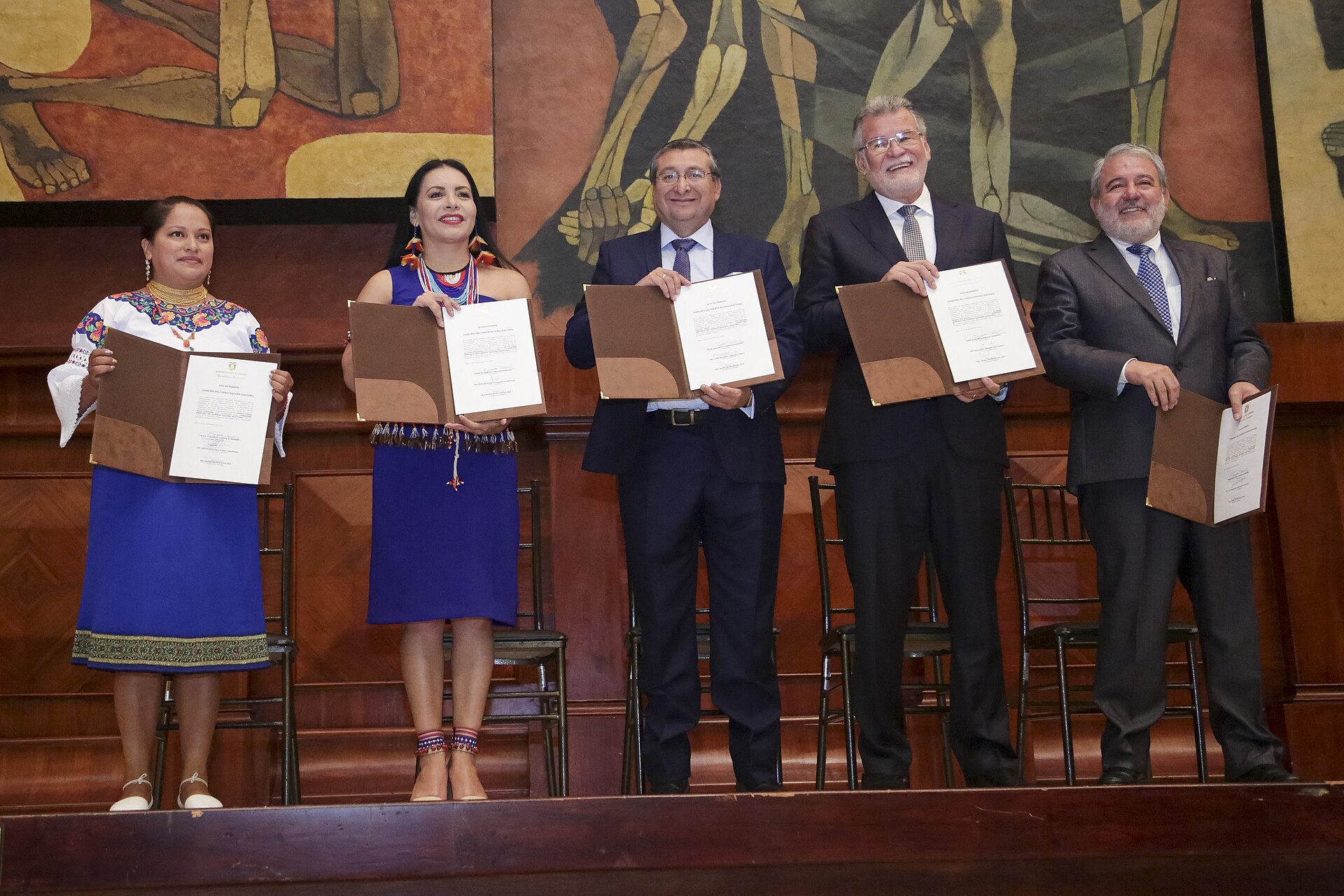
TCE rulings are the last appeal and must be obeyed at once. The tribunal has already shaped this race, because it rejected challenges to the November date after the CNE moved the vote forward from 14 February 2027 on 27 March, citing the risk of El Niño, a weather pattern that brings heavy rain and floods.
In March a tribunal judge also suspended Revolución Ciudadana for nine months, at the request of prosecutors who are investigating alleged money laundering by the movement, and the full tribunal upheld the suspension in April. The party calls the case political persecution.
In July the tribunal suspended the Amigo movement, a registered political group that had agreed to sponsor Revolución Ciudadana’s candidates. The CNE has said a suspended party cannot form alliances, while the party says it registered alliances with other groups and that its candidates will run.
The Main Parties and Movements
Two forces dominate national politics. Noboa’s ADN won 66 seats in the 2025 National Assembly and Revolución Ciudadana, the movement of former president Rafael Correa, won 67, in a chamber with 151 members.
The Assembly passed the 2025 electoral reform with votes from both blocs, an unusual alliance of rivals. Press analysis says ADN lacks a strong base in local governments, so this vote is its first real test of local strength.
The PSC and Pachakutik, a movement rooted in Indigenous politics, are smaller national players. Both matter locally, and the PSC challenged the date change at the tribunal.
Which label Revolución Ciudadana candidates will carry on the ballot is still unclear. Our guide to who holds power in Ecuador tracks the main players, and our report on candidacies in doubt follows the unresolved cases.
Security and Logistics Risks
The first risk is electricity. On 1 October the CNE’s president, José Cabrera, said the council plans to rent generators and buy backup power units for its provincial offices, where the count will take place, while the country is in a dry season with low river flows.
The government has cut power to the largest industrial users for days at a time during the drought. In April 2024 a referendum was held during long blackouts, and President Noboa ordered no power cuts on that day.
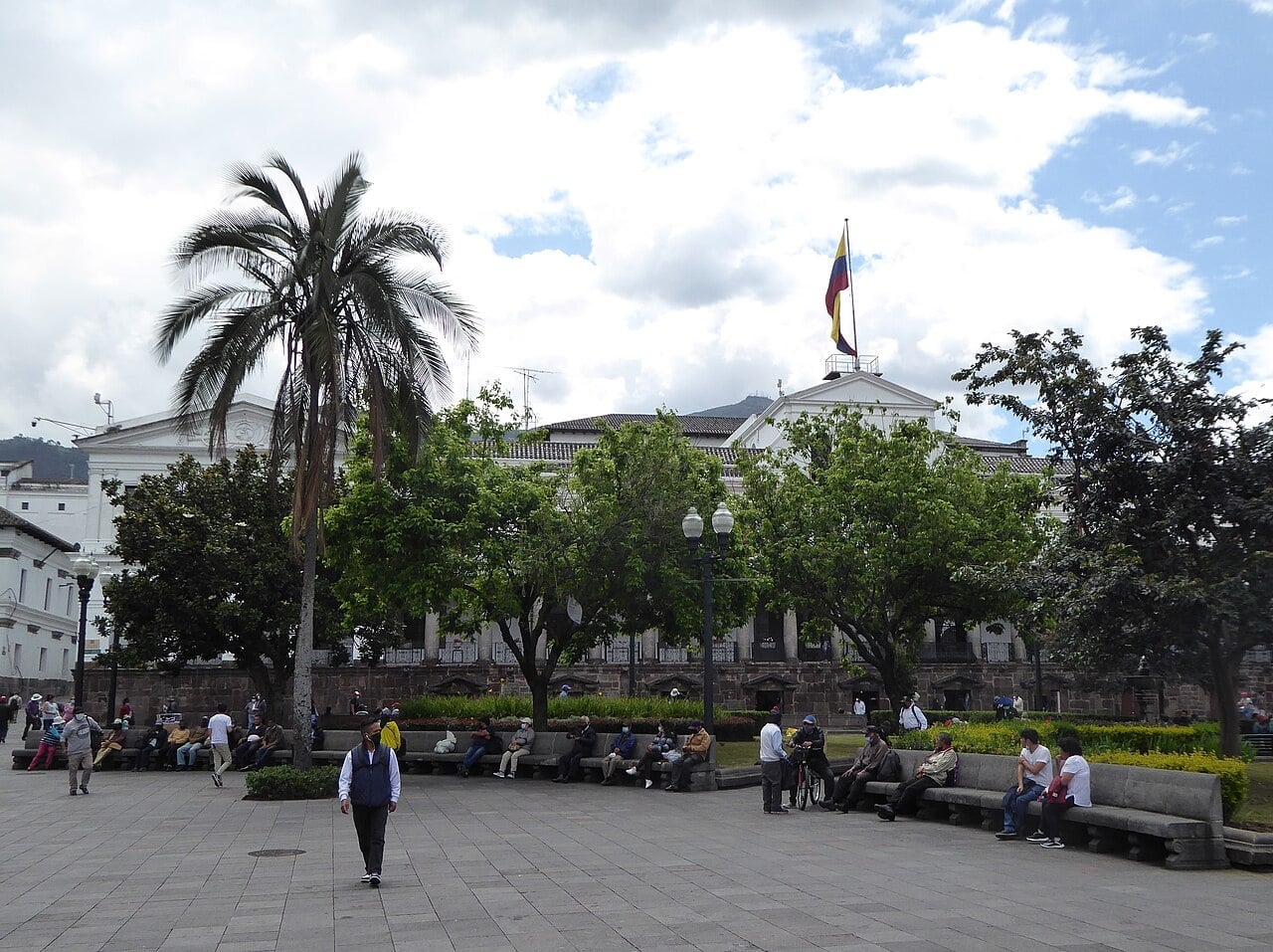
The second risk is weather. As of 15 September the CNE counted 368 polling places at risk from El Niño, 257 of them from floods and 111 from landslides, out of 4,399 planned, and it has arranged alternative sites.
The third risk is the candidate list, where the CNE received 53,534 registration requests and 51,370 were final on 14 October. About 2,150 stayed open, as our candidacy tracker shows, and the CNE is due to publish the definitive list on Monday, 9 November.
Security is run from a table the CNE set up on 15 September with police, armed forces, prosecutors and the national risk-management secretariat. The emergency service ECU 911 plans about 6,000 cameras and 3,000 staff, and the police say they are gathering intelligence on possible incidents; see our guide to safety for expats.
What the Vote Changes for President Noboa
Noboa is not on the ballot. He won a full term in April 2025, and the constitution sets presidential terms at four years.
What changes is who controls the ground beneath him, because mayors run urban roads, water, waste, traffic and local taxes while prefects run provincial roads and irrigation. The president needs their cooperation to deliver projects, and our profile of Daniel Noboa covers his record.
Voters rejected all four referendum questions in November 2025, including a proposal for a new constituent assembly, where 61.8% voted No. A strong ADN result would show that Noboa can turn national office into local power, while a weak one would show the limits of his reach. The seven citizen-council members matter too, because they help pick the heads of state oversight bodies.
In a closely divided political system, those appointments can affect any government.
What It Means for US Readers
Ecuador uses the US dollar, so local budgets and permit fees are in dollars, and the vote does not threaten the currency. Mayors and prefects decide permits, port-city services and roads that affect US companies and the many US expats who live in Cuenca, Quito and on the coast.
US citizens living abroad cannot vote in this election, but foreign residents, including Americans, who have lived legally in Ecuador for five years can in principle. Travellers should expect little direct effect from the vote itself.
What Is Not Known
The definitive candidate list is not yet published, and it is unclear how many of the about 2,150 open candidacies will be restored. We also do not know which formula will allocate council seats, or what label the suspended party’s candidates will use.
No election-night results schedule has been announced, and the effect of power cuts or El Niño on 29 November cannot be forecast. We found no active prediction market on this vote on Polymarket or Kalshi as of 10:57 a.m. ET on 8 November.
Frequently Asked Questions
When are the Ecuador elections and what is on the ballot?
Ecuador votes on Sunday, 29 November 2026. Voters choose 23 prefects, 222 mayors, urban and rural councillors, parish boards and seven citizen-council members.
Is voting compulsory in Ecuador?
Yes, from age 18 to 65, while it is optional for younger and older voters. Skipping the vote without a valid excuse costs US$48.20.
Can foreigners or Ecuadorians abroad vote?
Ecuadorians abroad vote voluntarily, but only for the citizen council. The constitution lets foreigners with five years of legal residence vote.
When will the final results be known?
Counting starts on election night. Final proclamation is due between 2 January and 13 February 2027, after appeals.
What does Ecuador’s electoral court do?
The Electoral Disputes Tribunal hears appeals against the electoral council and punishes breaches of campaign rules. Its rulings are final.
Sources: Consejo Nacional Electoral (CNE) electoral calendar and statements of 2026; Constitution of Ecuador, Articles 62, 63, 116, 144, 207, 208, 217, 219, 221, 263 and 264; Tribunal Contencioso Electoral (TCE) rulings of 2026; Asamblea Nacional vote of 20 June 2025; CNE referendum results of 16 November 2025.
This article was produced by The Rio Times’ automated AI newsroom. Editorial responsibility: Matthias Camenzind, Publisher and Editor-in-Chief. How we use AI · Report an error
Expat Guide to Ecuador
What The Rio Times publishes for foreigners who live in or move to Ecuador.
Start here
- Best Places to Live in Ecuador for Expats 2026
- How to Get Residency in Ecuador in 2026: Visas From US$1,446 a Month
- Cost of Living Cuenca, Ecuador — Rent, Bills and Doctors, Priced in Dollars
- Healthcare in Ecuador for Foreigners: Costs & Steps
City guides
Coming up in Ecuador
- Shakira in Quito, Ecuador: Three Stadium Nights at Estadio Olímpico Atahualpa on November 8, 9 and 11 8 Nov
- Soy Luna Ecuador: Guayaquil on 12 November, Quito on 14 November 12 Nov
- Anuel AA Guayaquil 2026: Puerto Rican Artist Plays Estadio Alberto Spencer, Ecuador, on 14 November 14 Nov
- Cypress Hill in Quito, Ecuador: Hip-Hop Legends at the Coliseo Rumiñahui on November 15, 2026 15 Nov
Understand Ecuador