PILLAR · ECUADOR
Ecuador is a small country with a big job on the map: it runs on the US dollar, feeds the world’s breakfast tables and sits on the front line of the cocaine trade. For a reader in the United States, it matters as a supplier of shrimp and bananas, a source of migrants and remittances, and a test case for how to fight organised crime.
This guide explains how Ecuador fits into Latin America in plain English, from its money to its gangs to its friends and rivals. It is current as of Sunday, 8 November 2026.
Key Facts
- The country Ecuador is a Pacific nation of about 18 million people that uses the US dollar, led by President Daniel Noboa.
- The money Shrimp passed oil as the top export in 2025, and migrants sent home US$7.7 billion.
- The danger 2025 was Ecuador’s deadliest year on record, though killings fell about 8% in the first nine months of 2026.
- The partners The US signed a trade deal on 13 March 2026, and a tariff fight with Colombia began in January.
- What is next Ecuador votes for more than 220 mayors and 23 provincial governors on 29 November 2026.
- Power Index Ecuador ranks 8th of 14 in The Rio Times Latin America Power Index, with 37.2 points (November 2026 edition).
In Plain English
Dollarised means Ecuador uses the US dollar as its money and cannot print its own. Prefect is the elected head of a province, the level between the national government and the mayors.
Remittances are the money migrants send home to their families. Organised crime here means drug-trafficking gangs that fight over ports, prisons and smuggling routes.
A Dollar Economy on the Pacific Coast
Ecuador has used the US dollar since 2000, after a banking crisis wiped out the old currency, the sucre. The government cannot print money or devalue to escape a bad year, so it must cover its bills with taxes, loans and exports.
The economy contracted in 2024 and grew about 3.7% in 2025, according to the Central Bank of Ecuador, the national monetary authority. It grew 2.1% in the first quarter of 2026 compared with a year earlier, and the Central Bank has lifted its forecast for the full year to 2.7%.
Money from abroad is a second pillar, and remittances reached about US$7.73 billion in 2025, up about 18% on 2024 and roughly 6% of national output, the Central Bank says. That flow ties Ecuador’s household budgets to the job markets of the countries where its migrants work.
Oil, Shrimp and Bananas
For decades, oil was Ecuador’s biggest export, and it still funds a large part of the state budget. Pipelines carry the crude from the Amazon to the Pacific coast.
In 2025, shrimp sales rose by roughly a fifth to a record and overtook oil as the country’s largest export. Shrimp farms line the Pacific coast, and most of the harvest is sold abroad.
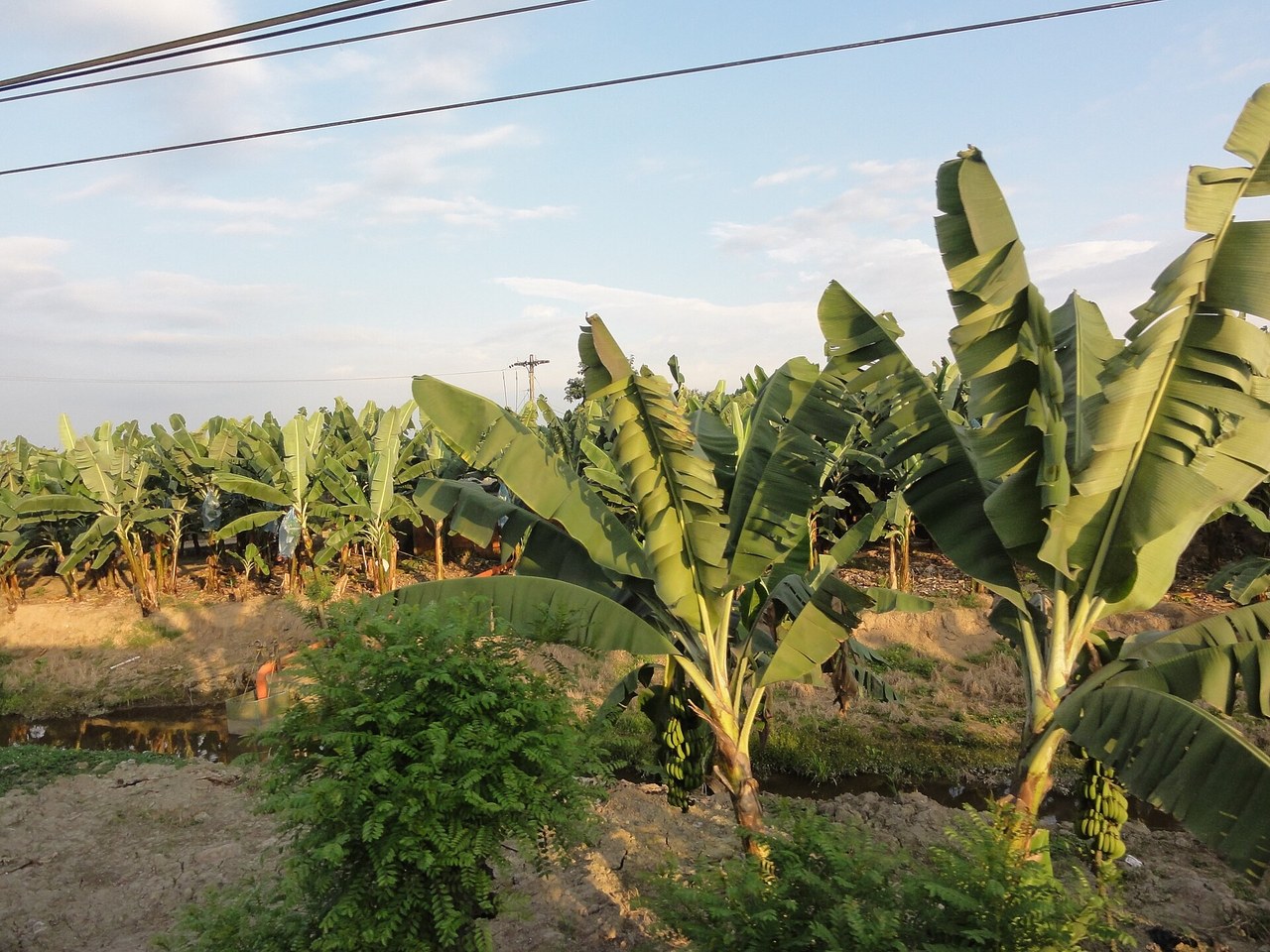
Bananas remain the classic crop, and Ecuador is among the world’s largest banana exporters. Cacao, flowers and fish add to the mix, and non-oil exports hit a record in 2025.
The Security Crisis and Organised Crime
Ecuador sits between Colombia and Peru, the two largest cocaine producers, and its Pacific ports are a key exit route. Gangs now fight for control of prisons and ports, and the government declared an internal armed conflict against them in January 2024.
The result was the bloodiest year on record. Reports for 2025 put the toll at roughly 9,000 homicides, and the rate at about 50 per 100,000 people.
Violence has eased somewhat in 2026, with about 6,285 killings from January to September, as reported in the national press from data of the Interior Ministry, which oversees the police. That is roughly 8% fewer than a year earlier, though some provinces such as El Oro, on the southern coast, remain very dangerous.
For travellers and expats, the picture is uneven, with curfews on parts of the coast and calmer conditions in many highland cities. Our guide Is Ecuador Safe for Expats explains where the risks sit.
The Noboa Government and Its Limits
Daniel Noboa, a young businessman, won a full term in 2025 and governs a country that is still deeply divided over his methods. He leans on military deployments, states of emergency and close ties with Washington.
Voters showed the limits of that approach on 16 November 2025, when they rejected all four questions in a referendum. One of them would have lifted the constitutional ban on foreign military bases and about 61% voted no in the final count.
The vote blocked any foreign base, including a possible American return to the former US air base at Manta on the Pacific coast, though security cooperation with the United States continues in other forms. Read who Daniel Noboa is and who holds power in Ecuador for the full cast.
Relations With the US and Neighbours
The United States is Ecuador’s closest security partner and a major buyer of its goods, and the two signed a Reciprocal Trade Agreement, a tariff-cutting deal, in Washington on 13 March 2026. President Noboa says it covers roughly half of Ecuador’s non-oil exports to the US.
Noboa said in March that the text would be renegotiated in August. We could not confirm any outcome.
Relations with Colombia turned sour in January 2026, when Ecuador announced a 30% “security tariff” on Colombian imports. Colombia answered with its own tariff and suspended electricity sales to Ecuador, and Ecuador raised the fee for Colombian crude moving through its pipelines.
The tariffs were raised in the following months. We could not confirm the current level of the tariffs, so readers who trade with either country should check the latest customs notices.
Pacific Trade and the Wider World
Ecuador looks west across the Pacific as well as north to the US, and a free-trade agreement with China has been in force since 1 May 2024, according to China’s Ministry of Commerce. Ecuador had signed it in May 2023.
Canada and Ecuador signed their own free-trade agreement in Ottawa on 24 July 2026, but it enters into force only after both sides finish ratification, Canada’s foreign and trade ministry, Global Affairs Canada, says. Together with older deals, these pacts give Ecuador a growing list of markets for shrimp, bananas and flowers.
Migration and the Ecuadorian Diaspora
Large numbers of Ecuadorians live abroad, and the money they send home keeps many households afloat. The remittances of 2025 show how much the country depends on them.
That dependence has a political edge in Washington, where migration rules decide whether families can keep earning and sending money. A change in US policy would be felt first in Ecuadorian living rooms, long before it reached official statistics.
What It Means for You
If you buy shrimp or bananas, there is a good chance they started in Ecuador, so shipping costs and tariffs show up in your grocery bill. If you invest, Ecuador’s dollar economy and oil output matter more than its small size suggests.
If you plan to travel or move, safety varies sharply by region and changes quickly, so check current advisories before you go. The next big test is the 29 November vote, covered in our guide on Ecuador’s mayoral election.
What Is Not Known
The current level of the Colombia tariffs and the state of electricity sales are not confirmed, and the exact 2025 homicide count differs between tallies. The final shape of the US trade agreement is also open, because we could not confirm a result of the planned August renegotiation.
For deeper background, see Ecuador’s geopolitics. Our guide to Ecuador and its neighbours in the Andes adds the regional picture.
Frequently Asked Questions
What is Ecuador’s role in Latin America?
Ecuador is a dollarised exporter of shrimp, bananas and oil, and a frontline state against drug trafficking. It also sends large flows of remittances from migrants abroad.
Does Ecuador use the US dollar?
Yes, Ecuador has used the US dollar as its currency since 2000. That means it has no central bank money printing or devaluation to cushion a downturn.
What does Ecuador export?
Its main exports are shrimp, oil, bananas, cacao and flowers. Shrimp overtook oil as the largest export in 2025.
Is Ecuador dangerous?
2025 was the deadliest year on record, though killings fell about 8% in early 2026. Risk varies by province, so check current advisories.
When is Ecuador’s next election?
Ecuador elects mayors and provincial governors, called prefects, on 29 November 2026. Our election guide covers the candidates and the rules.
Sources: Central Bank of Ecuador (the national monetary authority), Interior Ministry of Ecuador, the national electoral authority, Government of Canada (Global Affairs Canada), China Ministry of Commerce, and Ecuador’s trade and energy ministries. Read in November 2026.
This article was produced by The Rio Times’ automated AI newsroom. Editorial responsibility: Matthias Camenzind, Publisher and Editor-in-Chief. How we use AI · Report an error
Expat Guide to Ecuador
What The Rio Times publishes for foreigners who live in or move to Ecuador.
Start here
- Best Places to Live in Ecuador for Expats 2026
- How to Get Residency in Ecuador in 2026: Visas From US$1,446 a Month
- Cost of Living Cuenca, Ecuador — Rent, Bills and Doctors, Priced in Dollars
- Healthcare in Ecuador for Foreigners: Costs & Steps
City guides
Coming up in Ecuador
- Shakira in Quito, Ecuador: Three Stadium Nights at Estadio Olímpico Atahualpa on November 8, 9 and 11 8 Nov
- Soy Luna Ecuador: Guayaquil on 12 November, Quito on 14 November 12 Nov
- Anuel AA Guayaquil 2026: Puerto Rican Artist Plays Estadio Alberto Spencer, Ecuador, on 14 November 14 Nov
- Cypress Hill in Quito, Ecuador: Hip-Hop Legends at the Coliseo Rumiñahui on November 15, 2026 15 Nov
Understand Ecuador