Cost of Living Cuenca, Ecuador — Rent, Bills and Doctors, Priced in Dollars
ECUADOR · COST OF LIVING
Rent, utilities, transport, doctors: the cost of living Cuenca asks of a foreign resident, in the currency the pension already arrives in.
Key facts
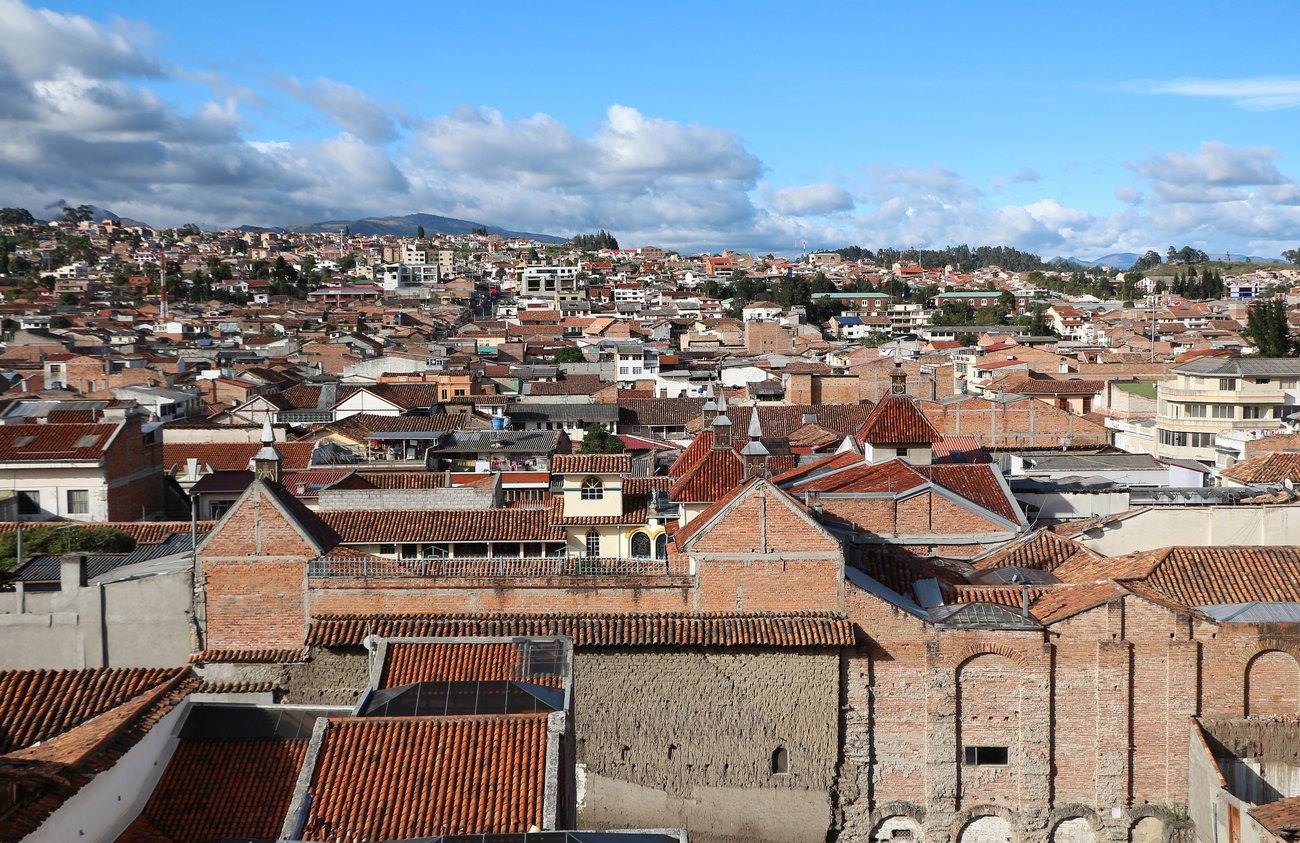
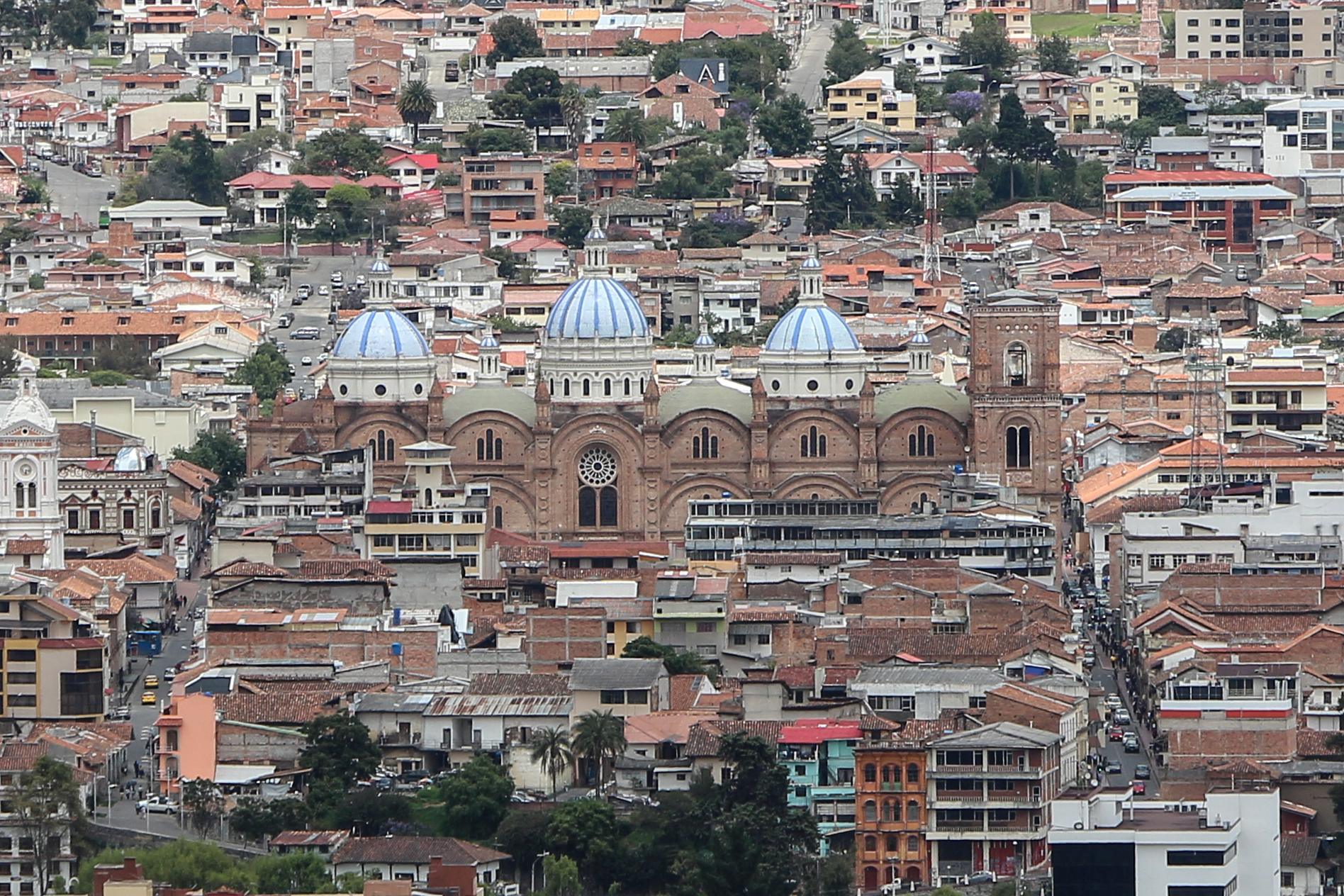
What it is — Cuenca is Ecuador’s third-largest city, high in the Andes, with a large foreign-resident community.
Why the money is simple — Ecuador uses the US dollar as its national currency, so a dollar pension needs no conversion.
What a home costs — A one-bedroom flat in the centre averaged about US$469 a month on Numbeo’s page in September 2026.
What the city charges — A bus ride costs 30 US cents, with the municipality paying operators an extra ten cents.
The catch — No survey publishes rents for the districts foreigners prefer, and affordable housing is tight.
What comes next — Ecuador’s pensioner visa asks for US$1,446 a month in 2026, a figure tied to the minimum wage.
Ecuador stopped printing its own money in the year 2000. Cuenca has quoted rent, bus fares and doctors’ bills in US dollars ever since.
The price comes already in dollars
President Jamil Mahuad announced dollarisation in January 2000. The sucre was converted at 25,000 to one US dollar, and the dollar has been legal tender since.
For a foreign resident that removes a whole layer of arithmetic. A pension paid in dollars arrives in Cuenca as the same number it left as.
It removes a cushion too. Ecuador cannot devalue its way out of a bad year, so prices here adjust slowly rather than in one jump.
The inflation record shows that rhythm. Ecuador’s statistics institute, INEC, measured annual consumer inflation at 1.12 percent in August 2026, down from 1.39 percent in July.
Prices moved 0.04 percent on the month. Nothing in that pattern promises permanence.
A budget written this year still reads correctly next year, which is rare in the region.
What a roof costs at 2,540 metres
The UNESCO nomination file for Cuenca’s historic centre records the main square at 2,541.5 metres above sea level. The highest street in the old town reaches 2,560.
Numbeo collects prices from residents. Its Cuenca page, read on 16 September 2026, puts a one-bedroom flat in the centre at about US$469 a month.
Outside the centre the same flat averages about US$357. Its January 2025 set had shown US$393.75 and US$317.86, so the readings have moved up over twenty months.
Three-bedroom flats ran US$685.71 in the centre and US$525.00 beyond it on that 2025 set. Cuenca High Life priced a modern unfurnished two-bedroom at US$500 to US$750 in December 2025.
International Living reached a similar figure in June 2026. It priced a modern two-bedroom with a terrace and mountain views at about US$750.
Neighbourhood names carry no published price. No dated survey sets an average for Challuabamba or Puertas del Sol, so landlords and word of mouth still set them.
The bills the altitude never sends
Cuenca sits almost on the equator and high above it. Daytime highs hold near 22 to 23 degrees Celsius all year, with nights around 11.
Nothing in that range calls for air conditioning. The cooling bill a retiree from Florida or Texas budgets for simply never appears on the statement.
The cold arrives indoors instead. Long-term residents describe the same fix: a portable heater in one room and a second blanket on the bed.
Electricity itself is inexpensive. Ecuador’s residential tariff has sat near ten US cents per kilowatt hour, with a subsidised four-cent rate for low-consumption households.
Water and rubbish now arrive on one page. From January 2026 the municipal rubbish charge is billed with the ETAPA water bill, the city daily El Mercurio reported.
ETAPA lets any customer check an amount online. It publishes no typical monthly household total, so the first bill through the door is the first real number.
Thirty cents across the city
A bus ride in Cuenca costs 30 US cents. The cantonal council voted in December 2025 to lift the fare to 40 cents.
Passengers never felt it. The municipality pays the extra ten cents, a subsidy El Mercurio valued at about US$9 million a year.
A study by Universidad de Cuenca EP had put the break-even fare at 40 cents. The distance between the two figures is the city’s transport policy in one line.
Diario Expreso confirmed the arrangement again in July 2026. Riders were still paying 30 cents, more than half a year after the increase was approved.
The council resolution runs for one year. If the city does not renew it, the fare a passenger pays moves to the 40 cents the study calculated.
The tram runs on the same arithmetic. A card trip costs 35 cents, frequent riders pay 30, and a paper ticket from the machine costs one dollar.
The basket the state counts every month
INEC prices a standard family basket each month and publishes the total. The old series stood at US$821.80 in January 2026 and US$824.85 in June.
In between it barely moved. February came in at US$824.17 and March at US$829.38, the highest of the four.
In June INEC replaced that series with a revised basket, the Canasta Familiar Basica de Consumo. The new measure read US$825.17 in July 2026 and US$828.06 in August.
That basket assumes an Ecuadorian household of four, not a foreign couple. It remains the cleanest national marker of what food and household goods cost.
Value added tax sits on most of it. Ecuador’s IVA has been 15 percent since April 2024, raised from 12 percent.
That basket is built from goods sold in Ecuador, most of them grown or made there. Anything imported carries the same 15 percent tax plus the cost of hauling it up the Andes.
The wage floor anchors the rest of the system. The labour ministry fixed the 2026 unified basic salary at US$482 a month, effective 1 January.
Doctors priced in cash
Cuenca’s foreign residents name three private hospitals: Hospital del Río, Clínica Monte Sinaí and Hospital Santa Inés.
Cuenca High Life put a general consultation at US$20 to US$40 in November 2025. A specialist visit ran US$40 to US$80.
Relomap, a relocation guide, surveyed the same clinics on 24 May 2026 and found a wider band. It listed US$55 at Monte Sinaí and US$35 at Santa Inés.
Public cover runs alongside the cash market. Ecuador’s social security institute, the IESS, sells voluntary affiliation at 17.6 percent of declared monthly income.
At the basic salary that comes to just under US$85 a month. The contribution tracks whatever income the member declares, not the member’s age.
Private policies stagger their cover rather than starting whole. General and emergency care begins at once, hospital cover after three to six months, maternity after a year.
What the law hands back at 65
Ecuador writes a discount for older people into statute. The Organic Law for Older Adults halves the electricity bill on consumption up to 138 kilowatt hours a month.
Water carries the same rebate up to 34 cubic metres. The basic tariff of one fixed home telephone line is halved as well.
No national rule extends the same cut to mobile or internet plans.
There is a refund of value added tax on everyday spending. Diario Expreso put the 2026 monthly ceiling at US$144.60, with fuel, transport and telecoms left out.
The law sets its own boundary. Exemption from national and municipal taxes applies where monthly income stays below five basic salaries.
The text defines the beneficiary by age and by income. It does not define the beneficiary by nationality.
The income the visa asks for
Residency carries a price of entry. Ecuador’s pensioner visa requires a foreign pension worth at least three unified basic salaries.
In 2026 that means US$1,446 a month. Ecuador’s human mobility regulation, published in the Registro Oficial on 10 February 2022, adds US$250 a month for each dependent.
The foreign ministry sets the base rule as a multiple, not as a figure. Its procedure page asks for three basic salaries and leaves the dollar amount to the year.
Temporary residency runs for two years. After 21 months in the category a holder may apply to make it permanent.
So the threshold moves with the minimum wage, not with Cuenca rents. A wage decision taken in Quito quietly lifts the bar for a pensioner in the south.
Who else is arriving
Cuenca stopped being a discovery some years ago. Cuenca High Life, citing an immigration researcher on 2 January 2026, estimated 15,000 to 20,000 Venezuelans in the city.
It put Colombians at about 5,000 and North Americans at a smaller share. ExpatEcuador, reading INEC data on 2 February 2026, placed the registered foreign population near 28,000.
That was about 15 percent above the year before. Nobody publishes an audited municipal count, and the estimates are ranges.
Newcomers meet that arithmetic at the first viewing. The published averages describe the whole city, not the few districts where most foreigners look.
Demand of that size lands on a fixed housing stock. Cuenca High Life reported in December 2025 that growth had run ahead of the supply of affordable homes.
Where the number goes next
The direction of travel is upward for rent and flat for almost everything else. A dollar economy cannot inflate a budget away quickly.
An annual rate near one percent leaves next year’s figures recognisable. That is the quiet advantage dollarisation bought, and the reason it survives politically.
The rest of the country sits on other rungs. A national comparison of Ecuador living costs for expats places Quito and Guayaquil beside Cuenca.
The honest answer here is a range, not a single monthly figure. A couple outside the centre who ride the bus and shop at the market land far below a couple on a terrace.
Cuenca will keep posting its prices in the currency the pension already arrives in. What moves is the size of the flat that number still rents.
More: Ecuador news in English
Sources: Numbeo, Cuenca High Life, Relomap, ExpatEcuador, El Mercurio (Cuenca), Diario Expreso, INEC Ecuador, Ecuador Ministry of Labour, UNESCO World Heritage Centre, Ecuador Ministry of Foreign Affairs, Registro Oficial (Reglamento a la Ley Organica de Movilidad Humana). https://www.numbeo.com/cost-of-living/in/Cuenca and https://cuencahighlife.com/what-does-it-really-cost-to-live-in-cuenca-a-detailed-2025-monthly-budget/ and https://relomap.app/blog/cuenca-ecuador-healthcare-guide and https://elmercurio.com.ec/cuenca/2025/12/30/pasaje-bus-urbano-cuenca-3/ and https://www.ecuadorencifras.gob.ec/documentos/web-inec/Inflacion/2026/enero/BOLETIN_TECNICO_IPC_2026_01.pdf and https://www.trabajo.gob.ec/wp-content/uploads/downloads/2026/01/ACUERDO-MINISTERIAL-MDT-2025-195.pdf and https://www.expreso.ec/tramites-y-servicios/cinco-beneficios-adulto-mayor-ecuatorianos-no-conocen-288770.html and https://www.gob.ec/mremh/tramites/concesion-visa-residencia-temporal-jubilado
This article was produced by The Rio Times’ automated newsroom system. How we use AI · Report an error
Read More from The Rio Times