
BRAZIL · ENERGY
Key Facts
- What is happening Brazil pumped a record 6.12 million barrels of oil equivalent a day in September 2026, and most of its power is renewable.
- Why it matters Petrobras, the state-controlled oil company, trades in New York, so output and fuel subsidies reach US portfolios.
- The numbers Renewables made 86.8% of electricity in 2025, and homes paid about US$0.14 per kilowatt-hour in May 2026.
- Who is who Petrobras leads oil and gas, and Alexandre Silveira is Brazil’s Minister of Mines and Energy.
- What to watch Battery auctions are set for 2 and 4 December 2026, and two new Petrobras platforms start in 2027.
- What it means for you Bills carry no extra power surcharge in November 2026, because the tariff flag is green.
- Power Index Brazil ranks 1st of 14 in The Rio Times Latin America Power Index, with 75.0 points (October 2026 edition).
- Prediction markets Polymarket gives 48.9% to Brazil’s 2026 inflation ending at 5.00% to 5.49% (4 November, 9:52 a.m. ET).
Brazil makes most of its power from water, wind and sun and pumps over 6 million barrels of oil equivalent a day. This guide shows who owns the system, what households pay and what investors should watch.
Brazil energy rests on two engines: a mostly renewable power grid and a record offshore oil industry. In September 2026 Brazil produced 6.12 million barrels of oil equivalent a day, a record.
The oil regulator ANP, the National Petroleum Agency, published that figure on 3 November 2026. For US readers the stakes are practical, because Petrobras, the state-controlled oil company, files results with the US Securities and Exchange Commission.
Related guides cover Brazil’s natural resources, Petrobras and economy. The Brazil page carries daily coverage, and the guide to utilities explains household bills.
In Plain English
- ONS: the National Electric System Operator, which runs the national grid minute by minute.
- ANEEL: the electricity regulator, which sets tariffs and announces the monthly tariff flag.
- ANP: the National Petroleum Agency, which regulates oil, gas and fuels.
- EPE: the state energy research company that writes the ten-year energy plan.
- Pre-salt: oil under a thick salt layer far offshore, now the source of most Brazilian output.
- Curtailment: orders to switch off wind and solar plants when the grid cannot use or move their power.
- Tariff flag: a monthly colour, green, yellow or red, that adds a surcharge to bills when power costs more.
- TWh and MW: one terawatt-hour (TWh) is one billion kilowatt-hours; a megawatt (MW) measures plant size.
- CDE: the Energy Development Account, a fund that pays for power subsidies and is charged to bills.
Where Brazil’s Electricity Comes From
Brazil generated 775.9 terawatt-hours (TWh) of electricity in 2025, up 3.3%, according to EPE’s national energy balance. Renewable sources supplied 86.8% of the electricity available to the country.
Hydropower made 401.4 TWh, down 4.8% on 2024, and still gives about half of all generation. Wind added 116.5 TWh and solar 88.1 TWh.

Solar capacity jumped 33.7% to 64,793 megawatts in 2025, and wind capacity rose 17.5% to 34,707 megawatts. Together they gave 26.4% of all generation, and small rooftop and local plants alone gave 7.0%.
Thermal plants burning gas, coal, oil and biomass made 169.9 TWh, up 12.3%, as water output fell. Gas-fired generation alone rose 22.7% to 58.6 TWh.
Installed capacity reached 260,979 megawatts in 2025, up 10.4%, including 110,237 megawatts of hydro and 49,252 megawatts of thermal plants. Nuclear capacity was 1,990 megawatts.
The power sector emitted 64.8 kilograms of carbon dioxide equivalent per megawatt-hour in 2025, EPE says. Across all energy uses, renewables were 49.4% of supply, because oil still provides 33.7%.
Oil and Gas, the Pre-Salt Engine
Brazil’s oil and gas output hit a record 6.12 million barrels of oil equivalent a day in September 2026, ANP says. August was the first month ever above 6 million.
Oil alone was 4.71 million barrels a day, up 20.3% on September 2025. Natural gas reached 223.98 million cubic metres a day, up 17.5%.
The pre-salt layer gave 5.10 million barrels of oil equivalent a day, or 83.3% of the national total. The Buzios field in the Santos Basin alone produced 1.19 million barrels of oil a day.
Petrobras produced 3.512 million barrels of oil equivalent a day in the third quarter of 2026, up 11.7% in a year. Fields it operates, alone or with partners, gave 87.02% of national output in September.
Two new floating production ships, P-80 and P-82, left a Singapore yard on 30 September and 18 October 2026. Each can handle 225,000 barrels a day, and both are due to start at Buzios in 2027.
Petrobras refineries ran at 99% of capacity in the third quarter of 2026. The ten-year plan lifts capacity from 2.3 to 2.5 million barrels a day by 2036, with diesel still imported.
ANP says 98.2% of September’s gas was put to use, and 66.37 million cubic metres a day reached the market. Flaring was 4.14 million cubic metres a day.
On 22 October 2026 PPSA, the state seller of pre-salt output, auctioned 1.1 million cubic metres of gas a day. It sold out for 377 million reais (about US$69 million), at about US$5.83 per million British thermal units against US$12 now.
The Companies and Agencies That Run the System
Petrobras, the state-controlled oil company, dominates oil and gas output, with shares in São Paulo and New York. Its plan for 2026 to 2030 sets investment of US$109 billion.
Axia Energia is the new name of Eletrobras, the giant power group privatised in 2022. The Supreme Federal Court approved an agreement with the federal government on its role in the company’s governance in December 2025.
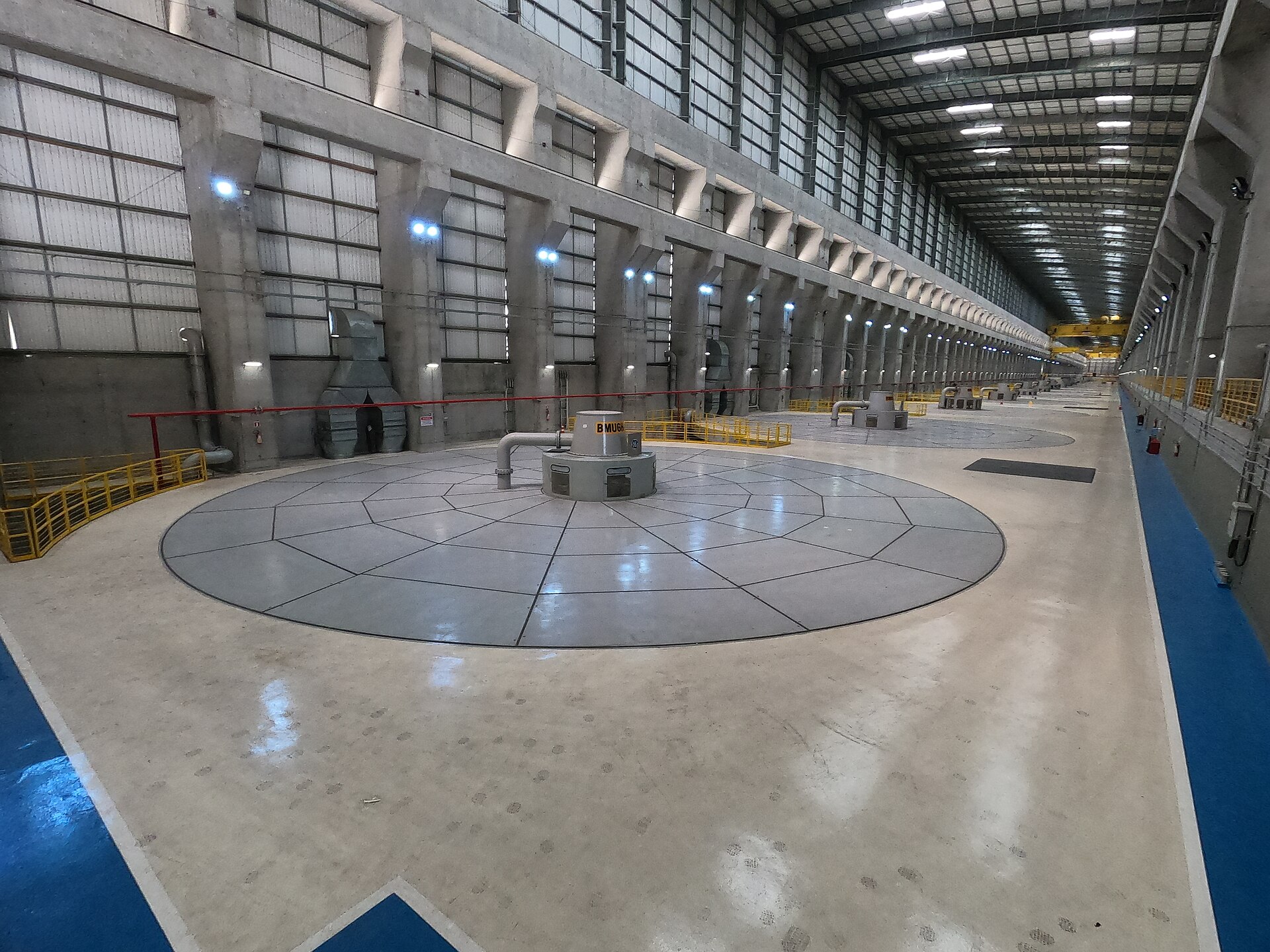
Itaipu Binacional, owned jointly by Brazil and Paraguay under a 1973 treaty, has 20 units of 700 megawatts each, or 14,000 megawatts. It supplies about 90% of the electricity used in Paraguay and 10% in Brazil.
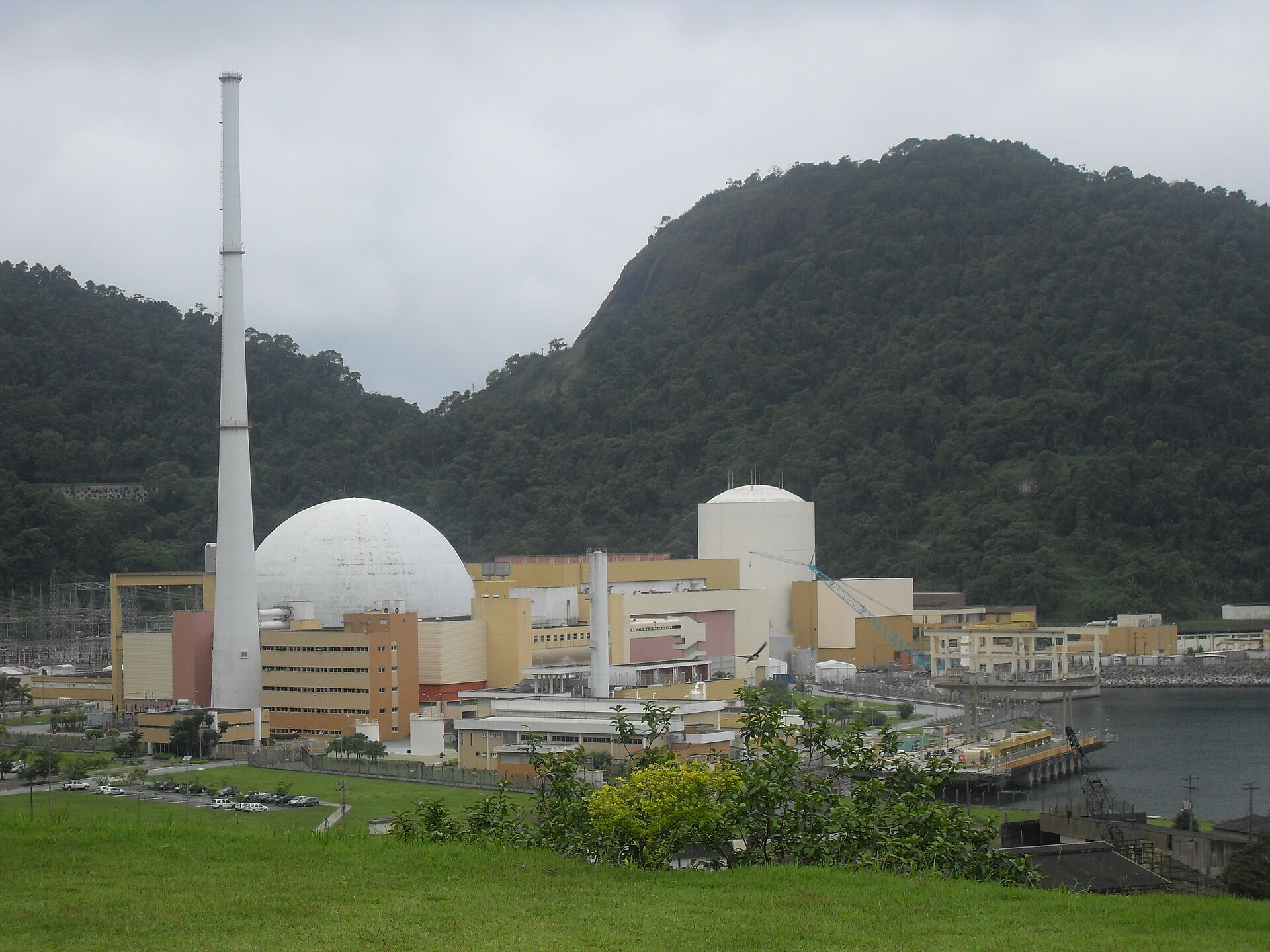
Eletronuclear, the state nuclear operator, runs the two plants at Angra dos Reis. In June 2026 the ministry said it is separating nuclear regulation from promotion, after a visit by the International Atomic Energy Agency.
- ONS runs the grid; ANEEL regulates power and sets tariffs; CCEE is the power trading chamber.
- ANP regulates oil, gas and fuels; EPE plans; PPSA sells the state’s pre-salt share.
- Ministry of Mines and Energy, led by Alexandre Silveira, sets policy and holds the auctions.
Prices, Tariff Flags and Subsidies
Every reais amount here is converted at 5.49 reais per US dollar. That is the Central Bank of Brazil’s official PTAX rate of 3 November 2026.
ANEEL set the tariff flag for November 2026 at green, which means no extra charge on bills. It announced the decision on Friday, 30 October 2026.
The flag system, created in 2015, adds a surcharge in yellow or red months when power costs more to make. Green has applied since October 2026.
The average residential tariff was 762.48 reais per megawatt-hour in May 2026, about US$0.14 per kilowatt-hour, the ministry reports. The average for all customer classes was 786.01 reais per megawatt-hour (about US$143 per megawatt-hour).
Distributors needed 155.9 billion reais (about US$28.4 billion) of revenue in the first half of 2026. Distribution took 34.25%, energy purchases 32.95%, the CDE subsidy fund 15.52% and transmission 11.24%.
The 2026 CDE budget is 52.7 billion reais (about US$9.6 billion), up about 7% on 2025. Consumers pay 47.8 billion reais (about US$8.7 billion) of it through their bills, up about 15.5%.
A provisional measure of 12 March 2026 set a diesel subsidy of 0.32 reais a litre (about US$0.06). ANP publishes rates period by period, for example 0.85 reais a kilogram (about US$0.15) for cooking gas in July 2026.
Petrol now carries 30% ethanol and diesel 15% biodiesel, EPE says. The ten-year plan expects ethanol supply to grow from 41.6 to 53.1 billion litres by 2036.
Outages, Curtailment and Grid Problems
Brazil’s grid ended the 2026 dry season within safety limits, with reservoirs fuller than a year earlier despite El Niño. The monitoring committee CMSE said so on Wednesday, 7 October 2026.
A bigger daily problem is curtailment, the cutting of wind and solar output when the grid cannot move or use the power. Law 15.269 of November 2025 lets plants claim compensation for eligible cuts made between 1 September 2023 and 25 November 2025.
On 5 October 2026 the trading chamber CCEE published the list of wind and solar plants eligible to join the compensation scheme. The ministry says 19 of 27 planned actions against cuts were finished by September 2026.
The transmission auction of 30 October 2026 offered eight lots worth more than 8.9 billion reais (about US$1.6 billion) in seven states. It closed with an average discount of 50.1% on the maximum revenue and will build 1,866 kilometres of lines.
The ministry says transmission auctions mobilised 69.64 billion reais (about US$12.7 billion) from 2023 to 2026. Two battery auctions are set for 2 and 4 December 2026.
Plans, Auctions and Deals
EPE and the ministry expect electricity use to grow 3.4% a year to 979 TWh in 2036. Data centres, electric transport and hydrogen plants should use about 47 TWh by then, more than ten times the 2026 level.
Electricity use rose 4.0% in September 2026 from a year earlier, the sixth straight yearly rise, EPE says. The free market, where large buyers pick their supplier, took 45.5% of consumption.
Under a 2026 decree, small commercial and industrial customers can join the free market in November 2027, all others in November 2028. Households are included, and the ministry published a guide to the migration on 17 August 2026.
The ten-year plan sees oil output near 4.9 million barrels a day in 2036, with more than half exported. Biofuels would draw 142 billion reais (about US$26 billion) of investment from 2027 to 2036.
What It Means for US Readers
Americans can own Petrobras through New York-listed shares, so record output and the government’s pricing choices matter to US portfolios. The company filed its third-quarter figures with the US Securities and Exchange Commission on 28 October 2026.
Power costs matter for US companies operating in Brazil. Residential tariffs averaged about US$0.14 per kilowatt-hour in May 2026, and the green flag adds no surcharge in November 2026.
Industrial gas buyers gain if auctions like the one of 22 October 2026 spread. The ministry puts the estimated price at US$5.83 per million British thermal units against about US$12 now paid.
More than half of the oil output planned for 2036 is meant for export, which adds supply to world markets. Investors should still watch fuel subsidies, because they depend on federal decisions.
What Prediction Markets Say
Polymarket, a US prediction market, gave 48.9% to Brazil’s 2026 inflation ending between 5.00% and 5.49% on 4 November, 9:52 a.m. ET. It gave 19.4% to 5.50% to 5.99% and 13.3% to 4.50% to 4.99%.
About US$200,722 has traded across the whole inflation market. Power tariffs and fuel prices feed into the inflation index.
Why we show this: prediction markets turn real-money bets into a live probability that moves within minutes of the news, which is why investors, campaigns and newsrooms in the United States now follow them closely. We show them next to polls and official results, never instead of them.
What Is Not Known
- Subsidy reasons: the regulator’s pages give the rates and legal acts for the diesel and cooking-gas subsidies but not why they began, and no end date was found.
- Curtailment totals: monthly figures for wind and solar cuts in 2026 could not be checked at the grid operator, so no total is given.
- Axia Energia: the exact government stake and board seats were not confirmed from company filings.
- Oil path: the ten-year plan names about 4.9 million barrels a day for 2036, yet output was already 4.71 million in September 2026.
- Batteries: the volume in megawatts that the December 2026 auctions will buy was not confirmed.
- December flag: ANEEL has not yet announced the tariff flag for December 2026.
- Nuclear: no decision to finish the unbuilt Angra 3 plant was found.
Frequently Asked Questions
Where does Brazil get its electricity?
Hydropower made 401.4 of the 775.9 TWh generated in 2025, and wind and solar gave 26.4%. Renewables supplied 86.8% of electricity, EPE says.
How much oil does Brazil produce?
Brazil produced 4.71 million barrels of oil a day in September 2026, up 20.3% in a year, ANP says. With gas, output was a record 6.12 million barrels of oil equivalent.
Who runs the Brazilian energy sector?
Petrobras leads oil and gas, and Axia Energia, the former Eletrobras, is a major power group. ANEEL regulates electricity, ANP regulates oil and the ministry led by Alexandre Silveira sets policy.
Why are Brazilian power bills so high?
Bills carry distribution, energy, transmission and subsidy costs, and the CDE fund alone took 15.52% of required revenue in early 2026. Residential tariffs averaged about US$0.14 per kilowatt-hour in May 2026.
What is the tariff flag in November 2026?
ANEEL set the flag at green, so bills carry no extra charge in November 2026. It announced the choice on 30 October 2026.
Can Americans invest in Brazilian energy?
Many investors buy Petrobras, whose shares trade in New York, or Brazilian utilities listed in Sao Paulo. Check the filings of each company, because tariffs and government decisions affect returns.
Sources: EPE, Balanco Energetico Nacional 2026 summary, 3 June 2026; EPE, BEN 2026 summary report (English); ANP, September 2026 oil and gas production, 3 November 2026; Petrobras Form 6-K, third quarter 2026 production, 28 October 2026; ANEEL, tariff flag for November 2026, 30 October 2026; Ministry of Mines and Energy, tariff report first half 2026; ANP, diesel, cooking gas and ethanol subsidy 2026; MME and EPE, PDE 2036 demand notebook, 26 October 2026; MME and EPE, PDE 2036 refining notebook, 3 November 2026; MME and EPE, PDE 2036 biofuels notebook, 29 October 2026; MME, first federal natural gas auction, 29 October 2026; MME, transmission auction 4/2026, 30 October 2026; MME, CMSE end of dry season, 7 October 2026; MME, compensation for generation cuts, 5 October 2026; MME, battery auction guidelines, 3 June 2026; MME, market opening explainer, 17 August 2026; MME, nuclear governance and IAEA, 18 June 2026; EPE, monthly electricity consumption review, 30 October 2026; Itaipu Binacional, the powerplant; Central Bank of Brazil, PTAX dollar rate, 3 November 2026, 5.49 reais per US dollar.
This article was produced by The Rio Times’ automated newsroom system. How we use AI · Report an error · Editorial responsibility: Matthias Camenzind, Editor-in-Chief
Expat Guide to Brazil
What The Rio Times publishes for foreigners who live in or move to Brazil.
Start here
- Florianópolis Rents by Neighborhood in 2026
- São Paulo Rents by Neighborhood in 2026
- Rio de Janeiro Rents by Neighborhood in 2026
- Brazil Taxes Nomads After 184 Days
City guides
Rio de Janeiro, São Paulo, Florianópolis, Salvador, Belo Horizonte, Fortaleza, Curitiba, Porto Alegre, Brasília
Coming up in Brazil
- Brazil Events Calendar: Carnival, Réveillon and Festivals 6 Nov
- Opeth Plays Espaço Unimed in São Paulo on 6 November 6 Nov
- São Paulo Grand Prix 2026: Interlagos Dates, Schedule, Tickets and Travel Guide 6 Nov
- Ana Carolina Plays Belo Horizonte on 7 November, Bringing 25 Anas Tour Home to Minas Gerais 7 Nov
Understand Brazil
Brazil runoff, Sunday, October 25: Brazil runoff start time and results schedule. Latest: Brazil runoff polls, Flávio 51%, Lula 49%.