
BRAZIL · ECONOMY
Key Facts
- What it is The total of goods and services produced in Brazil, which the IMF puts at US$2.65 trillion in nominal terms for 2026, the 10th largest in the world.
- Growth GDP rose 0.5% in the second quarter of 2026 over the first, according to IBGE, and the IMF forecasts 2.2% growth for 2026.
- The numbers Inflation was 4.58% over 12 months to September 2026, the Selic rate is 13.75% a year, and unemployment was 5.3% in the quarter to August 2026.
- The catch Gross public debt reached 82.9% of GDP in September 2026, according to the central bank, and the interest bill is large.
- What it means for you Expect high interest rates, a currency that can move sharply in a day, and a strong jobs market.
The Brazil economy is ranked 10th in the world in 2026 by the IMF, with nominal output of US$2.65 trillion. It grows modestly, borrows at high interest rates and is closely watched by investors after the October 2026 election.
Brazil is a South American country whose economy draws attention for its farm exports, its stock exchange and its high interest rates. This guide explains growth, jobs, prices, debt, trade and politics, with every figure dated.

What the Brazil economy is and how it works
The Brazil economy is everything produced in the country, measured as gross domestic product, or GDP. IBGE, the national statistics institute, publishes the figure every quarter.
In 2025 GDP grew 2.3% to R$12.7 trillion, according to IBGE. At an exchange rate of about R$5.40 per US dollar in late October 2026, that is about US$2.35 trillion.
Growth in 2025 was uneven across sectors. IBGE reported agriculture up 11.7%, services up 1.8% and industry up 1.4%.
Per-capita GDP reached R$59,687.49 in 2025, up 1.9%, according to IBGE. The investment rate, the share of output spent on machinery, buildings and infrastructure, was 16.8% of GDP that year.
Who sets the rules on prices and interest
The central bank, known as the BCB, steers inflation through one main tool, the Selic rate. Its president, Gabriel Galípolo, has led it since 1 January 2025, when he succeeded Roberto Campos Neto.
Brazil’s inflation target is 3%, with a tolerance band from 1.5% to 4.5%. Since January 2025 the target has been judged on a continuous basis, according to the investment site Renova Invest.
The Brazil economy in numbers
The table gathers the figures most readers look for, each with its owner and period. The IMF figures come from its World Economic Outlook of October 2026.
| Indicator | Figure | Owner and period |
|---|---|---|
| GDP growth | 2.3% | IBGE, 2025 |
| GDP growth on the previous quarter | 0.5% | IBGE, second quarter of 2026 |
| Growth forecast | 2.2% for 2026, 1.9% for 2027 | IMF, October 2026 |
| Nominal GDP | US$2.65 trillion (10th) in 2026; US$2.80 trillion (8th) in 2027 | IMF forecast, October 2026 |
| Unemployment | 5.3% | IBGE, quarter to August 2026 |
| Inflation (IPCA), 12 months | 4.58% | IBGE, September 2026 |
| Selic rate | 13.75% a year | Copom, decision of 16 September 2026 |
| Gross government debt | 82.9% of GDP | Central bank, September 2026 |
| Trade surplus | US$7.741 billion | MDIC, September 2026 |
Read together, the numbers show a economy that is growing slowly, creating jobs and paying a high price to borrow. The IMF cut its 2026 growth forecast from 2.4% in July to 2.2% in October.
One caution applies to all of them. They were gathered from Brazilian press reports of official releases by IBGE, the central bank, the Treasury and MDIC, the trade ministry, so readers should check the primary pages before relying on a decimal.
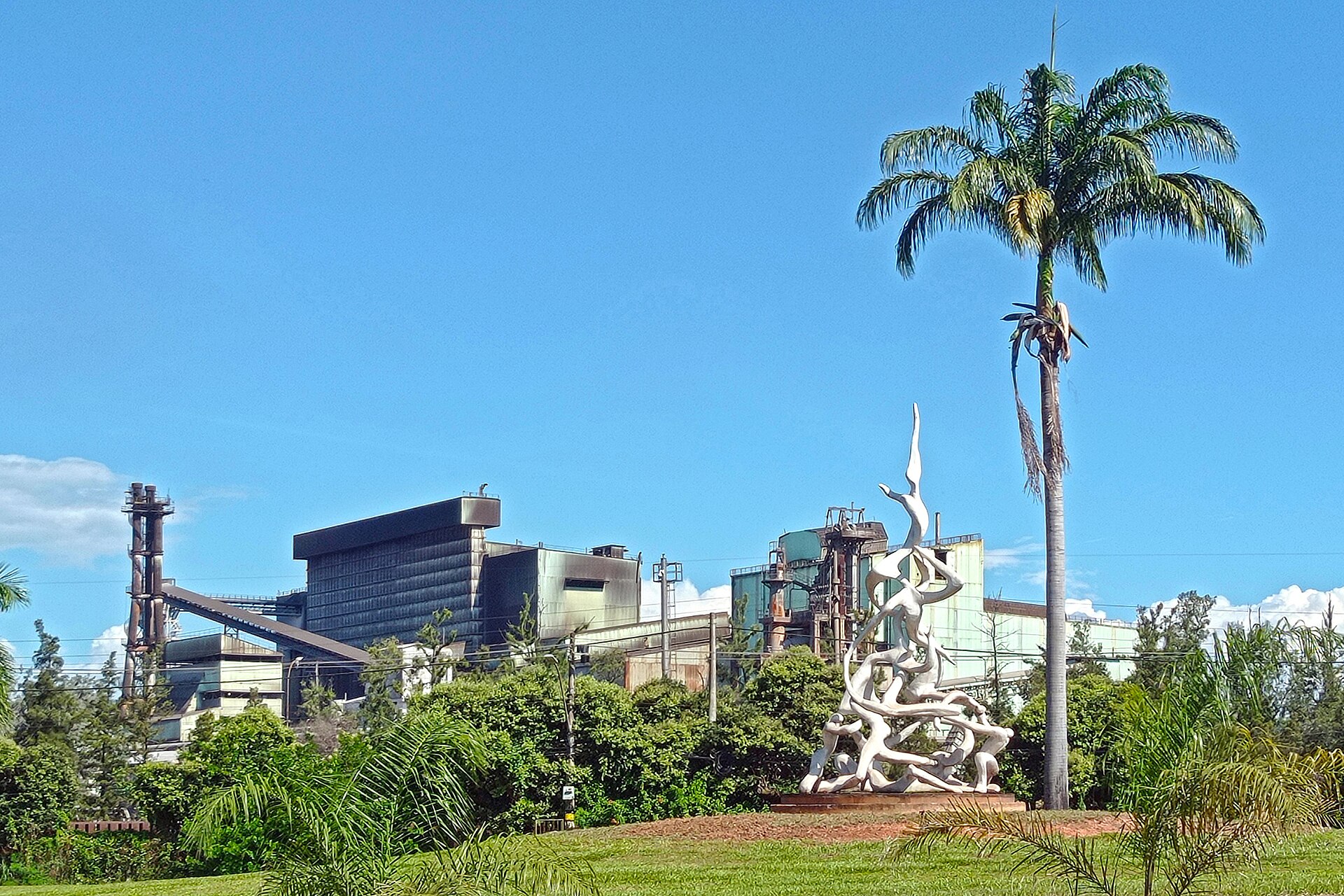
Growth and jobs in 2026
IBGE reported on 1 September 2026 that GDP rose 0.5% in the second quarter, against a market forecast of 0.4%. That was 2.0% above the second quarter of 2025 and 1.9% above the previous 12 months, in a quarter worth R$3.4 trillion.
The mix behind the headline was mixed. Agriculture grew 2.8%, services 0.2% and industry 0.1%, while manufacturing fell 0.4%.
Household consumption fell 0.4% after rising 0.8% in the first quarter, according to IBGE. Fixed investment rose 1.2%, exports fell 0.8% and imports rose 1.8%.
The jobs market is the brighter side. Unemployment was 5.3% in the quarter to August 2026, the lowest for a quarter ending in August since the series began in 2012, according to IBGE.
A year earlier the rate was 5.6%, and employed people reached a record 103.5 million. The figures for the third quarter of 2026 GDP have not been released yet.
Inflation and interest rates
Prices rose 0.82% in September 2026 on the official IPCA index, above the market forecast of 0.76%, according to IBGE. It was the highest September reading since 2021, after a fall of 0.32% in August.
Over 12 months inflation reached 4.58%, up from 4.22% and above the 4.5% ceiling of the target band. Brazilian press reports linked the rise to the end of the Itaipu electricity subsidy and to food prices, which rose 0.83%.
The central bank’s monetary policy committee, Copom, met for the 281st time on 16 September 2026. It cut the Selic rate, the benchmark interest rate, from 14.00% to 13.75% a year, by unanimous vote.
The committee’s statement cited risks to inflation from unanchored expectations, oil shocks, climate and energy disruptions, and a weaker currency. A high Selic makes loans expensive and rewards savers, which slows spending but helps hold prices down.
The risk is that rates stay high for longer if inflation keeps drifting above the ceiling.
Public finances and trade
Debt and the interest bill
Gross general-government debt stood at 82.9% of GDP in September 2026, or R$11.1 trillion (about US$2.05 trillion), according to the central bank. That is more than 11 percentage points of GDP above the level at the end of 2022.
Net debt was 70% of GDP, or R$9.4 trillion (about US$1.74 trillion), the highest in the series since December 2001. Interest payments reached R$1.205 trillion (about US$223 billion) over 12 months, or 8.99% of GDP.
The primary result, which leaves interest out, was a deficit of R$70.1 billion (about US$13.0 billion) over 12 months, or 0.52% of GDP, for the whole public sector. The central government alone posted a primary surplus of R$4.839 billion in September 2026, according to the Treasury.
Trade and the currency
Brazil recorded a trade surplus of US$7.741 billion in September 2026, according to MDIC. Through the fourth week of October the year-to-date surplus was US$69.845 billion, up 36.4% on 2025.
MDIC projects a full-year 2026 surplus of US$84.4 billion, up 24.0% on 2025. It had earlier forecast US$90 billion.
The currency has been volatile. The commercial dollar closed at about R$5.174 on 30 September 2026 and at R$5.403 on 26 October, after an 8.21% jump that day.
The people and the October 2026 election
President Luiz Inácio Lula da Silva of the Workers’ Party (PT) was re-elected on 25 October 2026 and begins a new term in January 2027. Brazilian press reports citing the electoral court (TSE) give 51.79% of valid votes to Lula and 48.21% to Flávio Bolsonaro of the Liberal Party (PL).
Geraldo Alckmin remains vice-president. Dario Durigan became Finance Minister in March 2026, replacing Fernando Haddad, who left to run for office in São Paulo.
Bruno Moretti took over the Planning and Budget ministry from Simone Tebet, who left to run for the Senate. Galípolo said in October 2026 that he was not being considered for Finance Minister and that his central bank term runs to 2028, according to Jornal do Comércio.
The market reaction
On 26 October the Ibovespa, the main index of the São Paulo stock exchange, fell 13.88% to 176,608.23 points. Times Brasil reported that a circuit breaker halted trading after a 10% drop, the first since March 2020.
The dollar rose 8.21% to R$5.403, according to the same press reports. Brazilian outlets attributed the move to markets having bet on a winner who would be tighter on public spending.
The other side of the argument is that voters chose continuity, and the government has not yet published a new fiscal plan in the sources reviewed. What has happened to prices since 26 October was not established at the time of writing.
What it means for foreigners and investors
For residents and expats, prices matter first. Inflation of 4.58% over 12 months to September 2026 means the cost of food and electricity can rise faster than many newcomers expect.
For investors, the Selic at 13.75% against inflation of 4.58% shows that savers in Brazilian fixed income earn a large gap over inflation. The same gap shows how much the state pays to borrow, which feeds the debt problem described above.
Currency and stock moves can be sharp, as the single day of 26 October showed. Anyone sending money in or out should expect the real to swing against the dollar.
The jobs market and the trade surplus point the other way. This guide is information, not investment advice, and tax or visa rules were outside its research.
What to watch next
Copom meets on 3 and 4 November 2026, with the decision on 4 November, and there was no October meeting. The Selic may differ from the 13.75% in this guide once that decision is out.
IBGE is expected to publish third-quarter 2026 GDP in early December 2026. The dates of the next IPCA and unemployment releases were not confirmed in the research.
The new presidential term starts in January 2027, and the team that will run the Finance Ministry has not been confirmed. The IMF expects Brazil to rise to 8th place in 2027 at US$2.80 trillion, passing Italy and Russia, while forecasting growth of 1.9%.
Related reading: Brazil Culture, the Key Figures to Know in 2026; Brazil Election 2026: Lula vs Flávio Runoff on 25 October; Who Holds Power in Brazil? Lula, Congress and the Runoff; more from Brazil.
Background: Brazil Audit Court Proposes 11.3% Sales Tax.
Frequently Asked Questions
How big is the Brazil economy?
The IMF puts Brazil’s nominal GDP at US$2.65 trillion in 2026, the 10th largest in the world. It forecasts US$2.80 trillion in 2027, which would be 8th.
How fast is the Brazil economy growing?
GDP grew 0.5% in the second quarter of 2026 over the first and 2.0% over the second quarter of 2025, according to IBGE. The IMF forecasts growth of 2.2% for 2026 and 1.9% for 2027.
What is Brazil’s interest rate?
The Selic rate was cut from 14.00% to 13.75% a year on 16 September 2026, by unanimous vote of the central bank’s Copom. The next decision is due on 4 November 2026.
What is the inflation rate in Brazil?
Inflation over 12 months to September 2026 was 4.58% on the IPCA index, according to IBGE. That is above the 4.5% ceiling of the target band, which is centred on 3%.
How high is Brazil’s public debt?
Gross general-government debt was 82.9% of GDP, or R$11.1 trillion, in September 2026, according to the central bank. Net debt was 70% of GDP.
Is unemployment low in Brazil?
Unemployment was 5.3% in the quarter to August 2026, the lowest for that quarter since the series began in 2012, according to IBGE. A record 103.5 million people were employed.
Who runs the Brazil economy?
President Luiz Inácio Lula da Silva was re-elected on 25 October 2026. Dario Durigan has been Finance Minister since March 2026, and Gabriel Galípolo has led the central bank since 1 January 2025.
Sources: tribunadejundiai.com.br, dgabc.com.br, band.com.br, moneytimes.com.br, jornaldocomercio.com, suno.com.br. Retrieved 2 November 2026.
This article was produced by The Rio Times’ automated newsroom system. How we use AI · Report an error · Editorial responsibility: Matthias Camenzind, Editor-in-Chief
Expat Guide to Brazil
What The Rio Times publishes for foreigners who live in or move to Brazil.
Start here
- Brazil Taxes Nomads After 184 Days
- Do US Citizens Need a Visa for Brazil? Yes, US$80.90 E-Visa
- Brazil Education and Healthcare Explained
- Brazil Security and Crime Explained 2026
City guides
Rio de Janeiro, São Paulo, Florianópolis, Salvador, Belo Horizonte, Curitiba, Porto Alegre, Brasília
Coming up in Brazil
- Maro Plays Circo Voador in Rio de Janeiro on 3 November 3 Nov
- Brazil Events Calendar: Carnival, Réveillon and Festivals 6 Nov
- Opeth Plays Espaço Unimed in São Paulo on 6 November 6 Nov
- São Paulo Grand Prix 2026: Interlagos Dates, Schedule, Tickets and Travel Guide 6 Nov
Understand Brazil
Brazil runoff, Sunday, October 25: Brazil runoff: date, poll closing times and when results start. Latest: Brazil runoff polls, Flávio 51%, Lula 49%.