Who Is Nayib Bukele? El Salvador’s President Explained — the Security Model, the Critics and What to Watch
GUIDES · EL SALVADOR
Key Facts
- —The person Nayib Armando Bukele Ortez, born on 24 July 1981 in San Salvador. A former advertising executive and two-time mayor, he was 37 when first elected president.
- —The office President since 1 June 2019, re-elected on 4 February 2024 with 84.65 percent. The constitution then barred immediate re-election. A 2025 reform ends his current term early, on 1 June 2027.
- —Why he matters His war on gangs cut the official murder rate from 106.3 per 100,000 people in 2015 to 1.3 in 2025. Politicians across the Americas now copy it. Rights groups say it rests on mass arbitrary detention.
- —The party Nuevas Ideas (New Ideas), which he founded after the left-wing FMLN expelled him in 2017. It holds 54 of the 60 seats in the Legislative Assembly, the single-chamber parliament.
- —Popularity Very high by any yardstick. CID Gallup measured 94 percent approval in March 2026, and LPG Datos 85.5 percent in May 2026.
- —What comes next A general election on 28 February 2027. He is Nuevas Ideas’ candidate for a six-year term, the first under rules that allow indefinite re-election.
Who Nayib Bukele is, how he rose, what his security model does and what his critics say. The man behind El Salvador’s transformation, explained for readers abroad.
Nayib Bukele turned one of the world’s most violent countries into one of the Americas’ safest, by official figures. Along the way he removed the limits on his own power. This profile is about the man. For the country, its dollar economy and its rules for foreigners, read our companion guide, El Salvador Explained 2026: Bukele’s Model, the Economy and What to Watch.
Early life and path to power
Bukele was born in San Salvador on 24 July 1981, during the civil war of 1980 to 1992. His father, Armando Bukele Kattán, was a prosperous businessman of Palestinian descent. The family was wealthy and largely shielded from the fighting.
In 1999 he enrolled to study law at the Central American University (UCA), a Jesuit university in the capital. He dropped out within months to work in the family’s advertising firm. One of its clients was the FMLN, the former guerrilla movement that became a political party after the war.
That link opened his political door. In 2012 he was elected mayor of Nuevo Cuscatlán, a small town on the edge of the capital, as the FMLN candidate. In 2015 he won the mayoralty of San Salvador itself, again for the FMLN, and served until 2018.
The break came on 10 October 2017. The FMLN expelled him after a clash with a party councillor at city hall. He founded his own movement, Nuevas Ideas, but it was not registered in time for the 2019 election. He ran instead on the ticket of GANA, a small centre-right party.
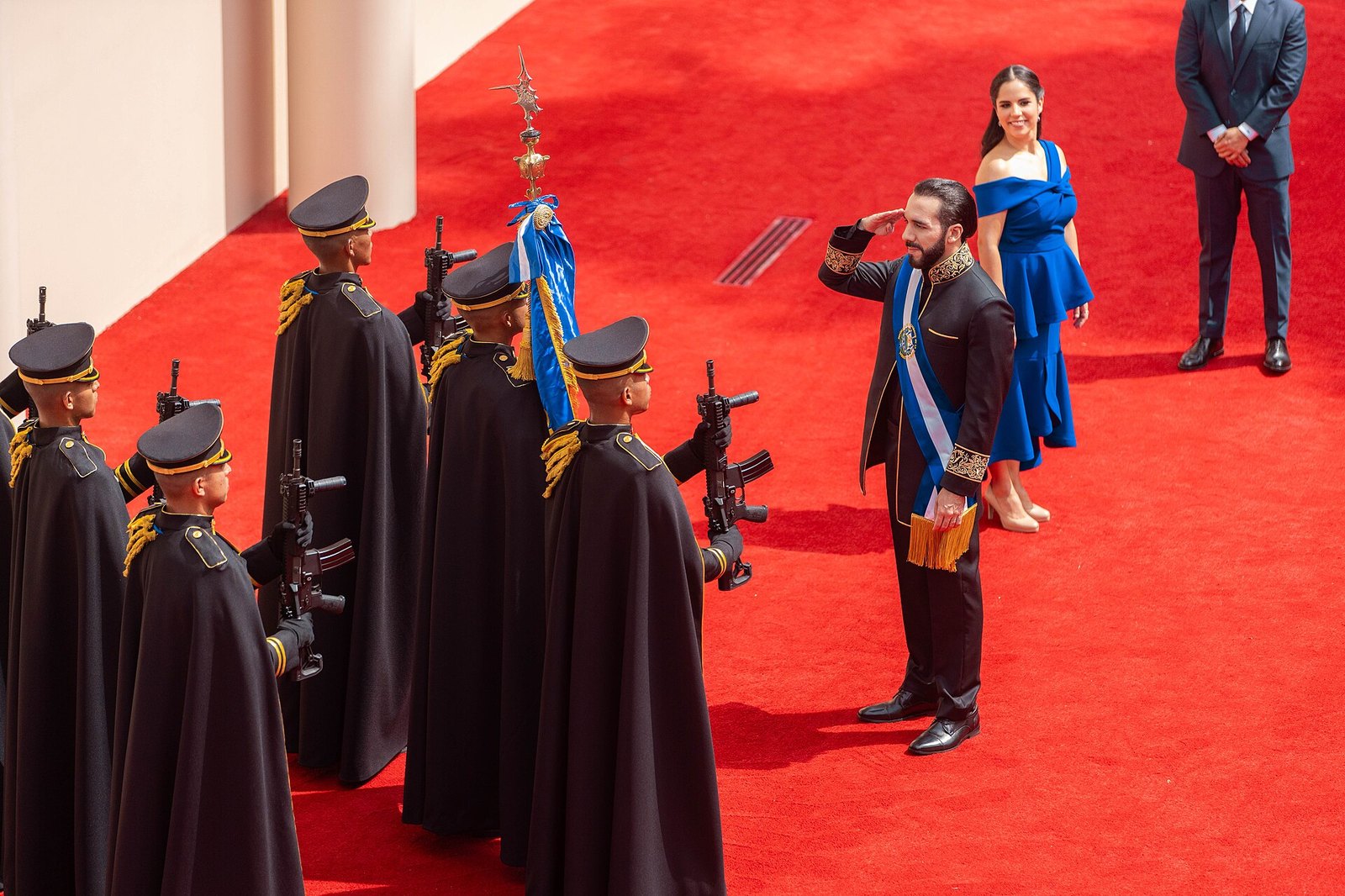
On 3 February 2019 he won in the first round with 53.10 percent. That ended 30 years in which the right-wing ARENA and the FMLN had taken turns in power. He took office on 1 June 2019, aged 37.
His style was new too. He governs largely through social media and favours YouTubers and podcasters over newspapers. In 2021 he changed his Twitter biography to “the coolest dictator in the world”. His brother Karim is widely described as one of his closest advisers.
The current office and the re-election question
The office Bukele won in 2019 came with a limit. The constitution barred a president from standing again straight away. How that limit fell is the core of the case his critics make against him.
The first warning came on 9 February 2020. Lawmakers had refused to approve a US$109 million security loan, and Bukele entered the Legislative Assembly with soldiers and police. It was widely condemned as intimidation of parliament.
In the February 2021 legislative election Nuevas Ideas and its allies won a two-thirds majority. On 1 May 2021, its first day in session, the new Assembly acted. It removed all five judges of the Supreme Court’s Constitutional Chamber and the attorney general.
On 3 September 2021 the new chamber ruled that a sitting president could run again. On 1 December 2023 Bukele took six months’ leave to campaign. His private secretary, Claudia Rodríguez de Guevara, was designated to run the presidency. On 4 February 2024 he won with 84.65 percent.
The rules then changed for good. On 31 July 2025 the Assembly approved reforms allowing indefinite re-election, six-year terms and no runoff round. A transitional clause ends his current term on 1 June 2027. The detail is in El Salvador Explained.
Félix Ulloa has been vice-president since 2019 and is his running mate again. Nuevas Ideas confirmed the ticket after primaries on 12 July 2026. The opposition holds three of the 60 seats in the Assembly.
The political model: security first
Bukele’s model is security before everything else. In June 2019 he launched the Territorial Control Plan, which put police and soldiers into gang-held neighbourhoods. The official murder rate fell sharply in his first years.
Then came a turning point. After a surge of gang killings, the Assembly declared a state of exception on 27 March 2022. It suspends three constitutional guarantees. They cover access to a lawyer and the reason for arrest, the time limit before seeing a judge, and private communications.
It has been renewed every month since. The 55th extension, approved on 23 September 2026, runs to 27 October 2026. The government reports 93,162 arrests since 2022.
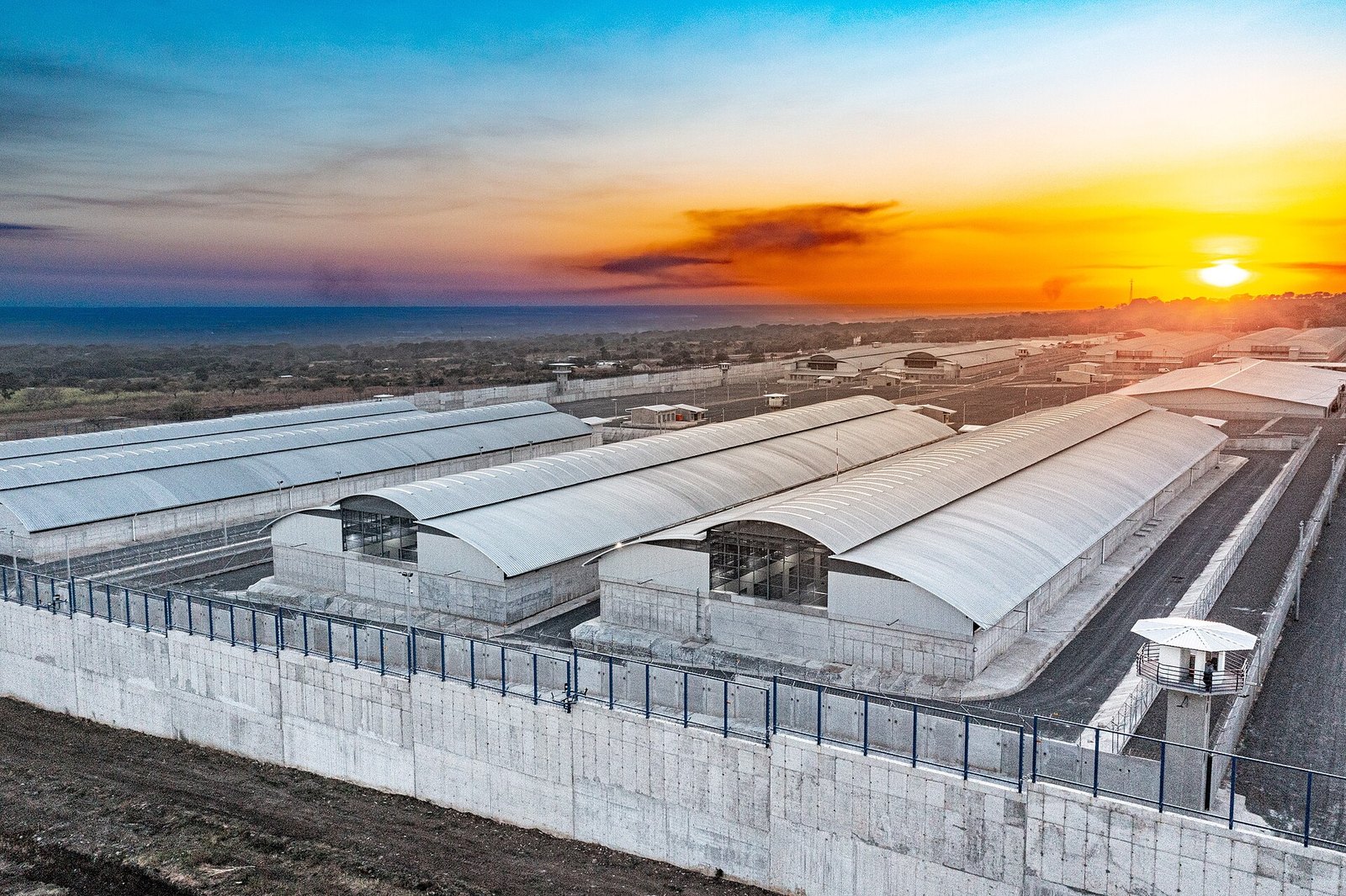
The emblem is CECOT, the Terrorism Confinement Centre, which opened in early 2023 in Tecoluca, east of the capital. The government gives its capacity as 40,000 inmates, less than half the number of people it says it has arrested.
The official result is the murder rate. Security ministry figures put it at 1.3 per 100,000 people in 2025, against 106.3 in 2015. Independent researchers cannot fully check how deaths are counted. Even so, the fall is why his model is studied from Peru to Brazil.
Bitcoin was his second signature. A law of June 2021 made it legal tender from 7 September 2021, alongside the dollar. The state Chivo wallet paid a US$30 bonus to anyone who signed up. In November 2021 he announced a “Bitcoin City” and US$1 billion of “volcano bonds”, which were never issued in that form.
From November 2022 he promised to buy one bitcoin a day. The law was amended on 29 January 2025, ahead of a loan from the International Monetary Fund (IMF). Acceptance became voluntary. The government’s Bitcoin Office reported about 7,762 bitcoin in early September 2026, worth about US$655 million at the market price of about US$84,400 per coin on 26 September.
Washington as the partner. Relations with the Biden administration were cold. In 2021 it placed 19 Salvadorans, including his cabinet chief and legal adviser, on the “Engel List” of people accused of corruption or of undermining democracy. In December 2021 the US Treasury sanctioned two officials for allegedly negotiating a secret truce with gangs, which the government denied.
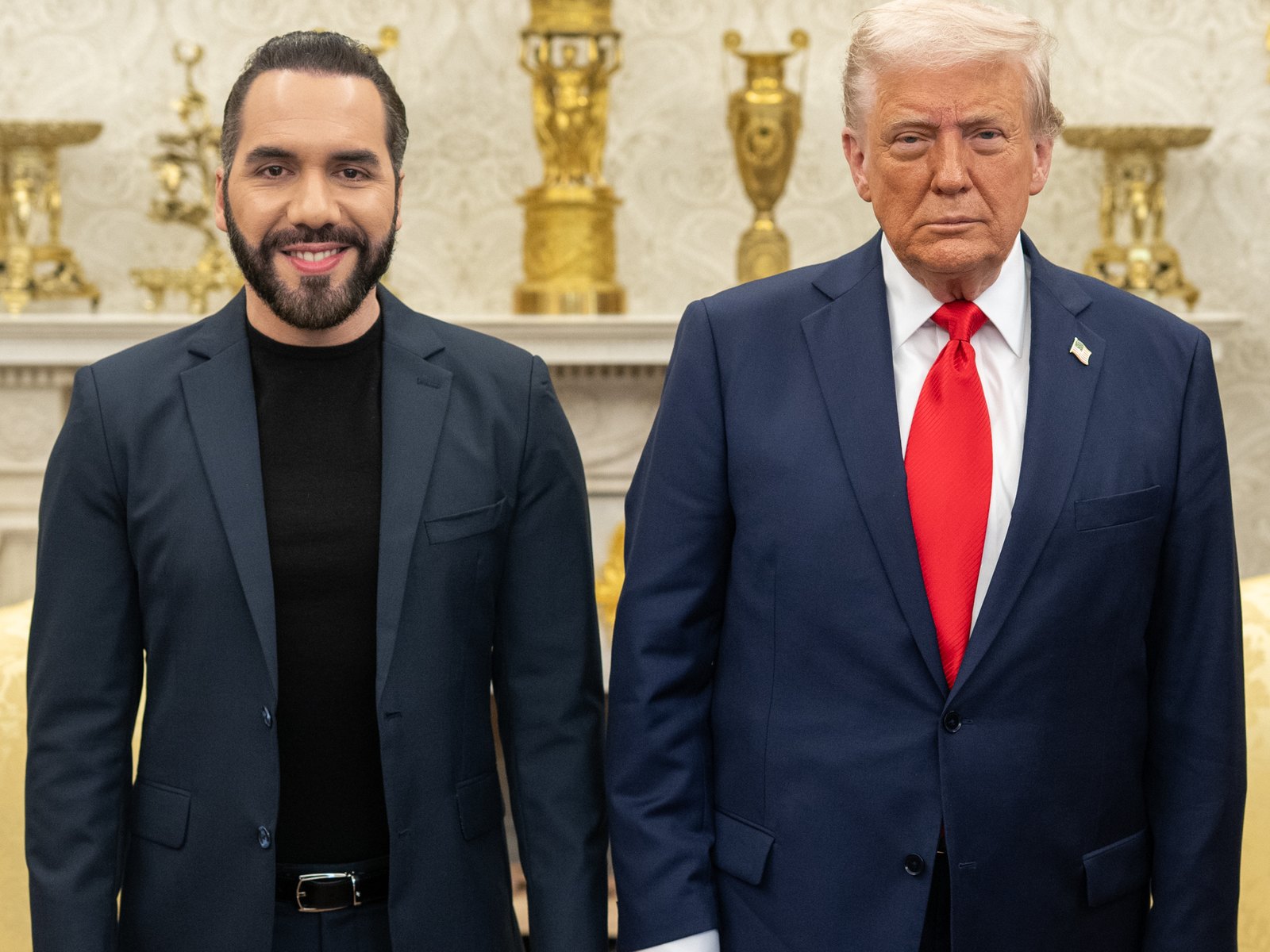
Donald Trump’s return changed everything. On 3 February 2025 he met Secretary of State Marco Rubio. Bukele offered to take US deportees of any nationality and even jailed US citizens. In March 2025 the United States sent more than 200 Venezuelans to CECOT, paying El Salvador about US$6 million.
At the White House on 14 April 2025 Bukele refused to return Kilmar Abrego Garcia, a Salvadoran wrongly deported from Maryland. “How can I smuggle a terrorist into the United States?” he asked. In July 2025 more than 250 Venezuelans were flown from CECOT to Caracas in exchange for 10 Americans.
Trade followed. On 29 January 2026 the two governments signed an Agreement on Reciprocal Trade. It caps the extra US tariff on most Salvadoran goods at 10 percent.
Controversies and critics
Human-rights groups do not dispute that murders fell. They dispute the price. Amnesty International published a report on 15 July 2026. It said more than 90,000 people had been detained and at least 470 had died in state custody.
Amnesty concluded that the abuses could amount to crimes against humanity, meaning widespread, systematic attacks on civilians. The government has itself admitted a “margin of error” in arrests. Thousands of families are still seeking answers about where relatives are held and why.
The second charge is against civil society. On 20 May 2025 the Assembly passed a Foreign Agents Law. It forces groups funded from abroad to register and taxes their foreign funding at 30 percent. Human Rights Watch says it gives the government broad power to shut organisations down.
Two days earlier, on 18 May 2025, police arrested Ruth López, the anti-corruption lawyer of the rights group Cristosal. She is accused of embezzlement and illicit enrichment, which she denies. As of 22 September 2026 she was still detained, awaiting a second hearing. The state had refused to review her detention despite a request from the Inter-American Commission on Human Rights.
In July 2025 Cristosal closed its offices in El Salvador, citing “escalating repression”. Between May and September 2025 at least 140 rights defenders and journalists left the country, according to Human Rights Watch. They included staff of the investigative outlet El Faro.
What this does not mean: criticism abroad has not dented his standing at home. Most Salvadorans tell pollsters they feel safer and approve of him. The argument is not about whether the model is popular, but about what happens to those it gets wrong.
What to watch
From 1 October to 19 November 2026 parties register their candidates with the Supreme Electoral Tribunal (TSE). It is the first candidate filing under the 2025 rules. If anyone contests his eligibility, this is where the objection would be lodged.
The emergency regime he built his record on is renewed month by month, and the present extension lapses on 27 October 2026. Watch whether lawmakers keep all three guarantees suspended. Loosening even one would signal that the model is changing.
US courts are testing the deportation deal. On 25 September 2026 a federal judge in Maryland held the Department of Homeland Security in contempt over a removal to El Salvador. The two sides must report back by 2 October 2026.
The IMF board still has to approve the staff agreement of 3 September 2026 on the loan’s combined second and third reviews. The Fund accepted that recent bitcoin additions came from private donations. The donors have not been named.
Then comes the vote. The general election is on Sunday 28 February 2027, with online voting for Salvadorans abroad from 30 January. The left-wing FMLN has picked the physician Rafael Aguirre. There is no runoff any more, and the new six-year term starts on 1 June 2027.
What this means for foreigners and investors
For visitors, the security gains are the most tangible part of his legacy. Surf towns and the historic centre of San Salvador, once no-go areas, are now busy with tourists and foreign residents. Our safety guide explains what the US Level 1 travel rating does and does not cover.
The state of exception applies to everyone on Salvadoran soil, foreigners included. In principle a foreigner can also be held longer before seeing a judge. Carry identification and take any police stop seriously.
For investors the country is dollarised, so there is no currency risk, and nobody has to accept bitcoin. The risks are political concentration and a personal model. Contracts ultimately depend on courts whose independence critics question. Our investing guide sets out the practical rules.
What this does not mean: high approval is not the same as institutional protection. Much of the system depends on one man, and nobody yet knows what El Salvador looks like after him.
Connected Coverage
El Salvador Explained 2026: Bukele’s Model, the Economy and What to Watch
Investing in El Salvador as a Foreigner: Property, Bitcoin Rules and the New Security Premium
Is El Salvador Safe for Expats in 2026: What the Level 1 Rating Leaves Out
El Salvador Residency Visa 2026 — Income, Papers, Timelines
El Salvador Ties Residence Permits to Its Minimum Wage and the US Dollar
El Salvador Sets a US$1,226 Monthly Pension Bar for Retiree Residence
Buying Property in El Salvador as a Foreigner 2026 — Rules, Costs and Real Risks
Taxes in El Salvador for Expats 2026 — What You Owe and What Stays Untaxed
El Salvador Bank Accounts for Foreigners: Required Papers and Deposits From US$0 to US$30
El Salvador Living Costs: US$265 Urban Food Basket, About US$899 for a Central One-Bedroom
Healthcare in El Salvador for Expats 2026 — Cover and Costs
Bukele Holds 6494 Bitcoin as IMF Deal Ends Compulsory Acceptance
Sources: Election results from the Supreme Electoral Tribunal as reported; security and arrest figures from the Salvadoran government; human-rights findings from Amnesty International and Human Rights Watch; US measures from the Treasury and State Department; the loan from the IMF; poll figures from CID Gallup and LPG Datos.
- Al Jazeera — profile of Nayib Bukele, 2 May 2026
- CNN en Español — Bukele’s career, studies and family
- Human Rights Watch — World Report 2022: court purge, re-election ruling, Engel List
- Human Rights Watch — World Report 2026: Cristosal, exiles, arrests
- Human Rights Watch — the Foreign Agents Law, 23 May 2025
- Amnesty International — the state of exception could amount to crimes against humanity, 15 July 2026
- US Treasury — sanctions over covert negotiations with gangs, 8 December 2021
- NPR — Rubio on Bukele’s offer to take deportees, 4 February 2025
- NPR — Bukele at the White House, 14 April 2025
- The Guardian — Venezuelans freed from CECOT in exchange for 10 Americans, 18 July 2025
- EFE via Infobae — Ruth López still detained, 22 September 2026
- IMF — staff-level agreement on the second and third reviews, 3 September 2026
- Legislative Assembly — leave of absence granted to President Bukele
- Centroamérica 360 — CID Gallup poll, March 2026
- La Noticia SV — LPG Datos poll, May 2026
What Is Not Known
Whether anyone challenges his candidacy. The 2025 reforms were passed by 57 votes to three, and the courts were reshaped in 2021. Whether the TSE, a court or international observers object during registration is unknown.
How many of those detained are gang members. The government has admitted mistakes, but no independent count exists. Figures for deaths in custody also differ between organisations because they use different methods and cut-off dates.
What really lay behind the fall in murders before 2022. The US Treasury alleged secret negotiations with gang leaders in 2020, and the government denies it. No Salvadoran court has examined the claim in public.
Who gave the bitcoin, and what comes after Bukele. The IMF accepted that recent additions were private donations, but the donors are unnamed. Nuevas Ideas has no obvious successor, and the model has never been tested without him.
Frequently Asked Questions
Who is Nayib Bukele?
The president of El Salvador since 1 June 2019. Born in San Salvador on 24 July 1981, he is a former advertising executive and mayor of San Salvador who founded the Nuevas Ideas party and is best known for his crackdown on gangs.
How was Bukele allowed to run for re-election?
The constitution barred immediate re-election. In May 2021 his supermajority replaced the judges of the Constitutional Chamber, which ruled in September 2021 that he could run again. He won in February 2024, and 2025 reforms now allow indefinite re-election.
Why is Bukele so popular in El Salvador?
Because murders collapsed. Official figures put the homicide rate at 1.3 per 100,000 people in 2025, against 106.3 in 2015. CID Gallup measured his approval at 94 percent in March 2026.
What do human-rights groups say about Bukele?
That the security gains rest on mass arbitrary detention. Amnesty International reported in July 2026 that more than 90,000 people had been detained and at least 470 had died in custody, and critics point to the 2025 Foreign Agents Law and the arrest of lawyer Ruth López.
What happened to Bukele’s bitcoin experiment?
He made bitcoin legal tender in September 2021 and began buying one coin a day in November 2022. A January 2025 amendment tied to an IMF loan made acceptance voluntary. The government still reported holding about 7,762 bitcoin in early September 2026.
What is Bukele’s relationship with Donald Trump?
Very close. In 2025 El Salvador held Venezuelans deported by the United States in its CECOT prison, for which Washington paid about US$6 million, and Bukele visited the White House in April 2025. A reciprocal trade agreement followed in January 2026.
This article was produced by The Rio Times’ automated newsroom system. How we use AI · Report an error
Read More from The Rio Times