Who Runs El Salvador’s Economy, the Key Players in 2026
EL SALVADOR · ECONOMY
Key Facts
- —The country El Salvador is a Central American country that has used the US dollar since 2001, and its economy runs on remittances, textile and plastics factories, construction and tourism.
- —Growth Output grew 5.1% in the second quarter of 2026 from a year earlier, to US$10.06 billion in the quarter, after growth of 3.9% in 2025.
- —Remittances Family remittances were US$7.62 billion in January to September 2026, about 1.5 times the value of goods exports.
- —Trade Goods exports were US$5.09 billion and imports US$14.49 billion in January to September 2026, a gap of US$9.39 billion.
- —Banks Bank loans reached US$21.80 billion in June 2026 and deposits US$24.47 billion in April 2026, with bad loans at 1.6%.
- —The IMF The IMF Board released about US$138 million on 1 October 2026 under a 40-month, US$1.4 billion program, with 2026 growth seen at 4.5%.
- —Prediction markets Polymarket bettors gave the PCN party 34.5% and Vamos 12.0% to finish second in the 28 February 2027 Assembly election, on a thin US$14,185 of trading (26 October 2026, 9:27 a.m. ET).

The El Salvador economy runs on the US dollar and grew 5.1% in the second quarter of 2026, leaning on family remittances, textile and plastics factories, construction and record tourism. The officials, state companies, banks and business groups that run it as of 26 October 2026 are named below, with what each means for US readers.
How the El Salvador Economy Works
El Salvador has used the US dollar since 2001, so figures below are in dollars unless a source’s own conversion is shown. The Banco Central de Reserva (BCR), the central bank, put 2025 output at US$36.71 billion, up 3.9% on 2024.
Growth quickened in 2026: output rose 5.1% from a year earlier in the second quarter, to US$10.06 billion in that quarter, the BCR reported on 30 September 2026. Construction led with 11.2%, ahead of health at 8.7%, electricity at 8.1% and hotels and restaurants at 6.3%.
Only farming, down 0.9%, and personal services, down 0.5%, shrank in that quarter, and together they account for 6.4% of output. The BCR forecast on 3 April 2026 that 2026 growth would fall between 3.0% and 3.5%, while the IMF projects 4.5% for the year in its release of 1 October 2026.
The Ministry of Economy, led by minister María Luisa Hayem, says the World Bank projects 4.5% growth for El Salvador in 2026 in its October 2026 regional outlook, the highest in Central America. The Salvadoran newspaper Diario El Mundo reported on 22 October 2026 that the UN regional commission ECLAC also raised its 2026 projection to 4.5%, with 4.1% expected for 2027.
Inflation was 3.19% in August 2026 and the one-year loan rate was 7.48% in September 2026, according to the BCR statistics portal. The political and security backdrop is covered in El Salvador Explained 2026, a guide to Bukele’s model and what to watch.
The Officials Who Steer Policy
President Nayib Bukele sets the direction, and in its 27 March 2026 release the BCR credited his government’s measures, from a 12% minimum-wage rise in June 2025 to a January electricity-bill subsidy, for the pace of activity in 2025. Douglas Rodríguez, president of the BCR, presented the bank’s 2025 annual report to the Legislative Assembly, the bank said on 29 April 2026.
Jerson Posada is finance minister, and he delivered the 2027 budget bill of US$12.42 billion to the Legislative Assembly on 30 September 2026 with no new taxes. Education gets US$3.42 billion, equal to 8.1% of output, and health US$1.49 billion, while subsidies on propane, electricity and public transport continue.
The 2027 bill reorients US$40 million from the security and defense branches to education, the finance ministry said on 30 September 2026. Diario El Mundo reports US$128.6 million proposed for prison administration in 2027, which it calculates as 16.7% below the US$154.4 million for 2026 once a US$30 million reinforcement is counted.
The Superintendencia del Sistema Financiero (SSF), led by superintendent Evelyn Marisol Gracias, supervises banks, insurers, pension funds and the securities market. Its governing board includes directors named by the finance and economy ministries and by two professional bodies, according to the SSF authorities page read on 26 October 2026.
Exports, Foreign Investors and Business Groups
Goods exports reached US$5.09 billion in January to September 2026, up 3.7%, while imports rose 10.0% to US$14.49 billion, the BCR statistics portal shows. Family remittances of US$7.62 billion over the same nine months were about 1.5 times the value of those exports, calculated from the two BCR totals.
By industry, manufacturing sold US$4.14 billion abroad in those nine months, about 81% of the total, and agriculture US$222 million, according to the BCR monthly series by industrial class. Diario El Mundo, reading the BCR customs data, lists knit T-shirts at US$342.9 million, sweaters at US$309.5 million, plastic articles at US$259.3 million, cane sugar at US$201.7 million and electrical condensers at US$184.1 million.
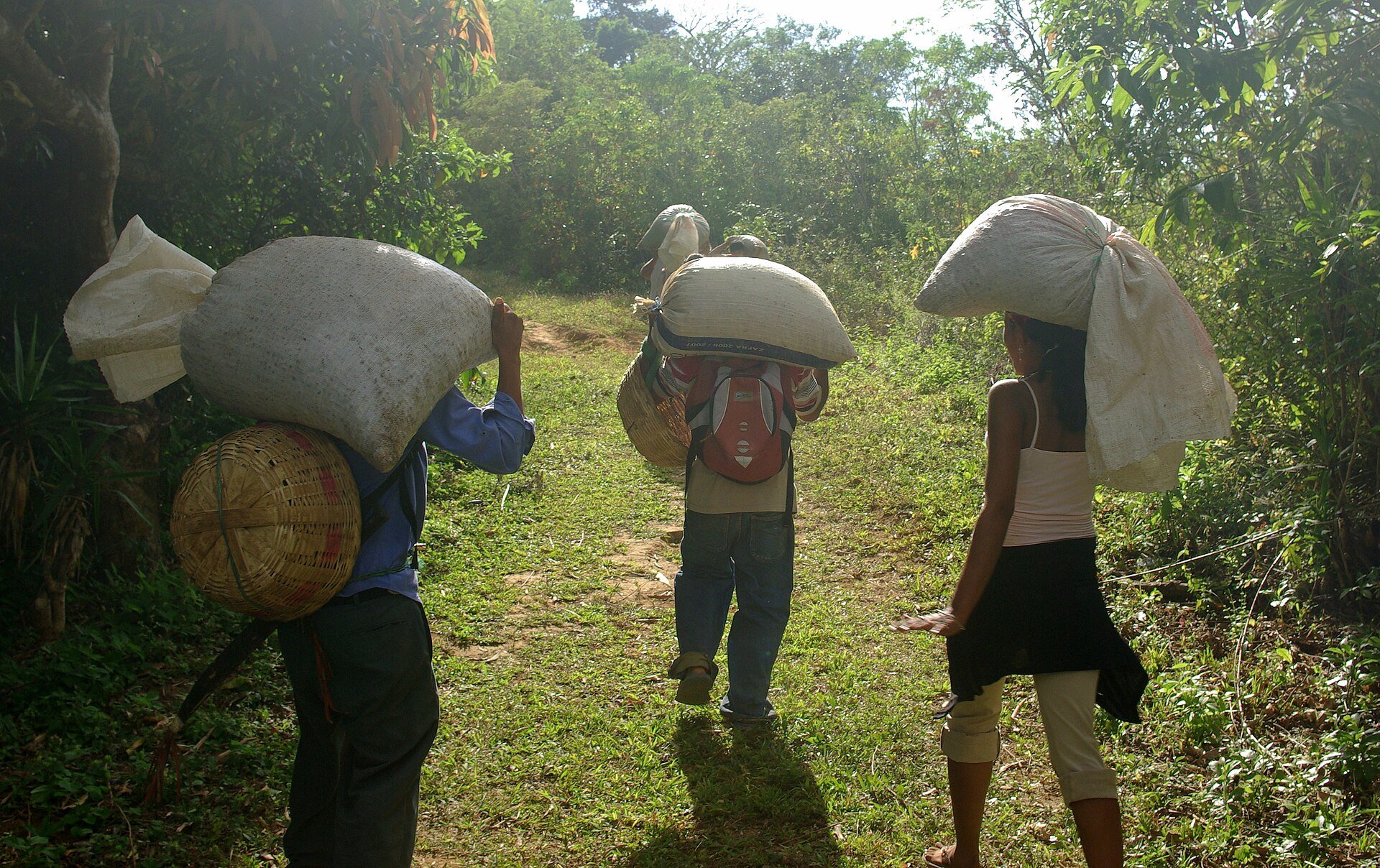
Coffee ranks sixth at US$181.4 million, up 15.3%, with more than 553,300 quintals shipped, the same newspaper report says. The United States took US$1.66 billion, or 32.6% of exports, ahead of Guatemala at US$1.01 billion and Honduras at US$798.3 million.
Foreign direct investment brought a net US$474.8 million in 2025, the BCR reported on 3 April 2026, and foreign-owned firms earned a record US$1.64 billion in profit, up 16.8%. Dividends sent to foreign parents reached US$981.1 million, and ten large companies paid out US$6.84 billion in dividends and loan repayments, or 67% of all outflows.
The BCR names the United States, Panama, Honduras, Mexico and Colombia among the main investor countries, and Panama’s net flow rose US$101.2 million in 2025. Commerce earned the highest profit at US$385.3 million, followed by finance at US$382 million and manufacturing at US$370.1 million.
Among private groups, Súper Selectos, a supermarket chain, is part of Grupo Calleja, and its website, read on 26 October 2026, lists more than 110 stores, a presence in all 14 departments and more than 7,500 employees. The company says its story began about eight decades ago, when Daniel Calleja, a Spanish immigrant, started running what it calls the country’s first supermarket, owned by Agustín Alfaro.
Grupo Q, a vehicle distributor present in six countries including El Salvador, says on its website, read on 26 October 2026, that it has more than 100 branches, and it runs a vehicle-finance arm, CrediQ. The stock exchange’s issuer directory also lists the electricity distributors CAESS, AES CLESA, EEO and Distribuidora de Electricidad Del Sur, the telecoms firm Compañía de Telecomunicaciones de El Salvador and the sugar company Compañía Azucarera Salvadoreña.
Remittances and the Households Behind Them
BCR monthly data show US$7.62 billion of family remittances arrived in January to September 2026, up 3.5% on the same period of 2025 and well above goods exports. That is a much slower pace than in 2025, when the Spanish news agency EFE, citing the BCR, reported a record US$9.99 billion, up 17.7% from US$8.48 billion in 2024.
The ratio to output depends on the measure used: dividing the BCR’s 2025 remittances by its 2025 output of US$36.71 billion gives about 27%, while the EFE report put it at 24%. The BCR said on 3 April 2026 that 26% of Salvadoran households receive remittances.
A BCR study of households, reported by Diario El Mundo on 26 October 2026, found that homes receiving remittances own on average 6.2 of 15 listed durable assets, against 4.3 in other homes. School attendance among people aged 3 to 24 was 69.9% in those homes against 62.8% elsewhere, using the 2024 census and household survey with a matching method.
The same study found labor-force participation of 49.4% in remittance homes against 51.7% in others, a gap of 2.3 percentage points. The BCR report says its findings suggest that remittances help families buy long-term assets, and it notes that economic participation falls in receiving homes.
The BCR’s own Transfer365 platform processed more than 55 million instant transfers worth over US$42 billion in 2025, a market share of 91.12%, the bank said on 29 April 2026. Fewer people receive the money even as totals grow: EFE, citing the 2024 household survey, reports that recipients fell 3.1% from 2023 to 1,575,815 people.
Banks, the Central Bank and the Stock Exchange
The SSF lists ten private banks as of 26 October 2026: Banco Agrícola, Banco Cuscatlán de El Salvador, Banco Davivienda Salvadoreño, Banco Promérica, BAC Credomatic, Banco Atlántida El Salvador, ABANK, Banco Industrial El Salvador, Banco Azul and Banco Apoyo Integral. It lists four state institutions as well: the agricultural development bank, Banco Hipotecario, the development bank BANDESAL and the BCR itself.
Several large banks sit under holding companies: the SSF group charts show that Banagrícola, a company based in Panama, owns 99.7% of the holding Inversiones Financieras Banco Agrícola, which owns 94.3% of Banco Agrícola as of 31 March 2026. Grupo Cibest, whose site lists Bancolombia and Bancoagrícola among its banking brands, also appears in the copyright line of Banco Agrícola’s website.
The same charts show Inversiones Financieras Davivienda owning 98.2% of Banco Davivienda Salvadoreño, whose executive president is Gerardo José Simán Siri, and Inversiones Financieras Grupo Cuscatlán owning 93.0% of Banco Cuscatlán. Banco Agrícola’s chairman is Mauricio Botero Wolff and its executive president Rafael Barraza Domínguez, the SSF lists.
Bank loans stood at US$21.80 billion in June 2026, up 8.5% in a year, with bad loans at 1.6% of the portfolio and reserves covering about 141% of them, the BCR reported on 29 July 2026. Deposits were US$24.47 billion in April 2026, up 13.7%, and the solvency ratio was 15.2% against a 12% legal minimum, the BCR said on 28 May 2026.
The BCR said on 1 September 2026 that the loan-to-deposit ratio stood at 88% in July 2026 and that short-term loan rates fell from 7.80% in July 2025 to 7.60% in July 2026. Construction was the fastest-growing loan book, up 27.6% in the year to June 2026, the BCR said on 29 July 2026, while its 30 September release cites 30.9% for construction credit.
The stock exchange, the Bolsa de Valores de El Salvador (BVES), traded US$4.48 billion in January to August 2026, up 38.6%, with repurchase agreements accounting for US$1.96 billion or 43.6%, according to the SSF monthly bulletin as reported by Diario El Salvador. The broker Hencorp handled 29.3% of purchases and 40.8% of sales, and Hencorp Gestora’s closed Renta Fija I fund, the largest of 19 registered funds, held US$687.5 million.
Share trading was only US$136 million in those eight months and came entirely from foreign instruments, the news item reports. The exchange link with Panama recorded 774 operations worth US$165.3 million in January to August 2026, and US$1.05 billion has traded on it since 2017.
State Companies in Energy, Water, Ports and Airports
The Comisión Ejecutiva Hidroeléctrica del Río Lempa (CEL), the state power and hydroelectric commission, is led by president and executive director Daniel Alejandro Alvarez Campos, its website says. CEL said on 12 May 2026 that an International Atomic Energy Agency mission had started a first review of the country’s nuclear-power infrastructure, and Alvarez said the mission does not mean a plant will be built immediately.
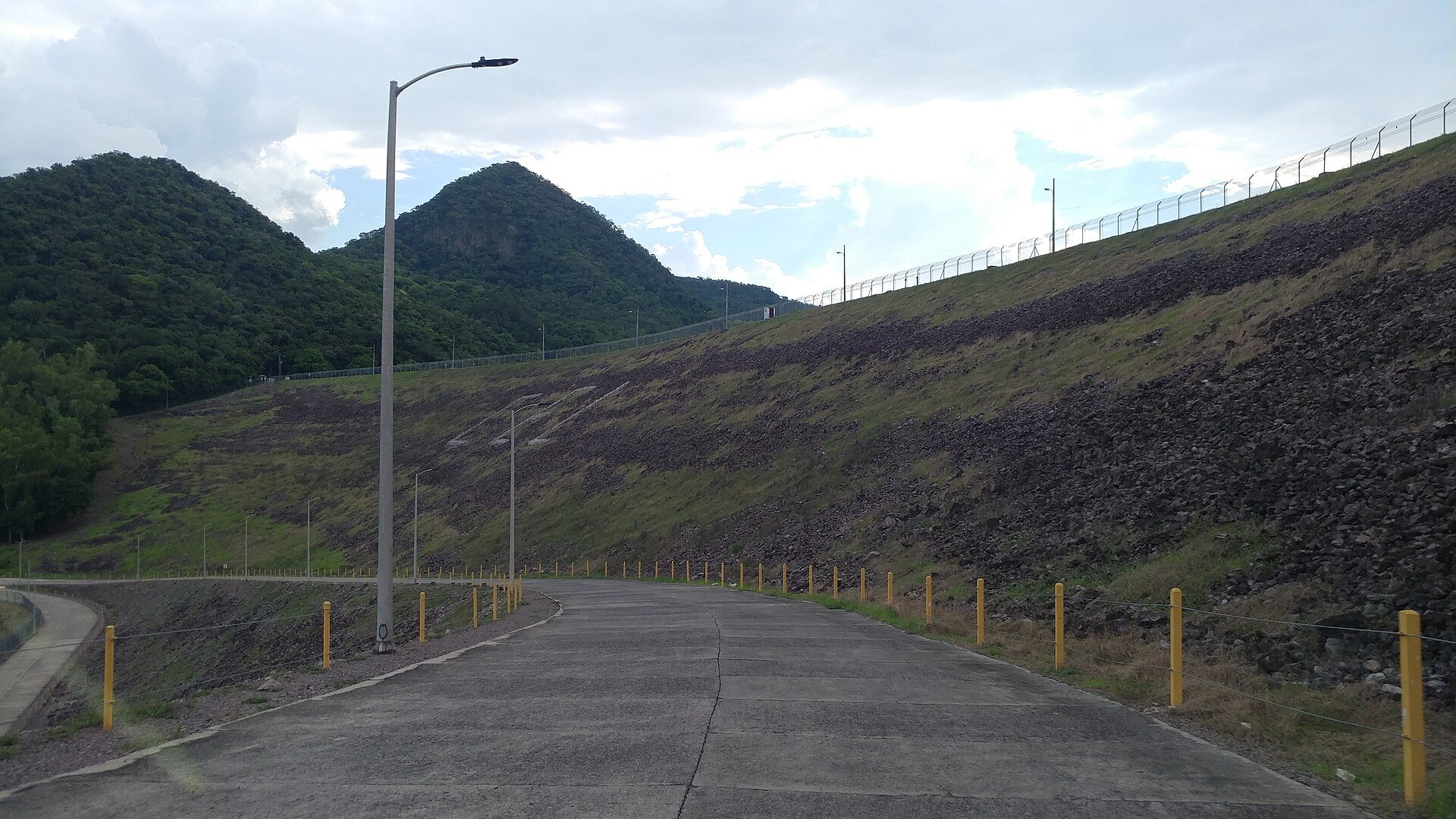
Electricity use hit a record 715.8 gigawatt-hours in May 2026, up 7.2% on the year, and rose 9.7% in June, the BCR said on 30 September 2026. The finance ministry announced at the end of August 2026 a loan from the Kuwait Fund for Arab Economic Development of about US$9.7 million (3 million Kuwaiti dinars, as the ministry converts it) for a solar plant at San Matías, La Libertad.
ANDA, the autonomous water utility, describes itself as the provider of water to all of El Salvador, and its news page reports the inauguration of a new water-quality laboratory for the eastern zone on 23 October 2026. It also reports works on six water systems in western La Libertad meant to benefit more than 93,000 people, dated 29 September 2026.
The Comisión Ejecutiva Portuaria Autónoma (CEPA), led by president Federico Anliker, runs the country’s ports and airports. CEPA said on 21 October 2026 that 13 commercial airlines will fly to more than 34 cities in 13 countries by December 2026, and that Air Europa starts a Spain route on 18 December.
CEPA is also building the Pacific International Airport at Conchagua, La Unión: the first phase costs US$386.4 million and has a 2,400-meter runway, and the terminal was 30% complete on 8 October 2026. That phase is sized for 365,000 passengers a year, with plans for up to 5 million in a third phase.
CEPA’s page on the Acajutla port expansion, dated 11 March 2021, says the project belongs to the government’s Plan Cuscatlán and that a feasibility study started on 6 April 2020 after a first mission from Korea’s EximBank in October 2019. The current stage of the expansion is not stated on that page.
Tourism and Security as Growth Drivers
A record 4.1 million tourists visited in 2025, the BCR said on 27 March 2026, and international visitors numbered 1.3 million in the first quarter of 2026, up 34% on a year earlier. The BCR forecast on 3 April 2026 about 4.2 million tourists for 2026.

The Ministry of Tourism runs a Surf City brand and a tourism policy with an emphasis on surf, and on 2 October 2025 it said El Salvador had received the host role for World Tourism Day 2026, a designation then due for ratification at the UN Tourism General Assembly. Frontier Airlines announced five direct routes from San Salvador to US cities starting between 18 and 21 December 2025, and the ministry says the country is consolidating as a regional air hub.
Hotel and restaurant output grew 6.3% in the second quarter of 2026, and foreign investors put US$267.9 million into services such as real estate, administrative services and hotels in 2025, the BCR reported, or 56% of net foreign direct investment. Real estate bought by non-residents accounted for US$208.6 million of foreign equity investment that year.
The World Bank’s El Salvador overview, updated on 6 October 2025, says a concerted security effort since 2022 sharply reduced crime and boosted investor confidence, and the BCR’s April 2026 forecast calls security conditions the main axis of growth. The US State Department advisory in force on 26 October 2026, issued on 8 April 2025, rates El Salvador Level 1 and says gang activity has decreased, but notes that US and other foreign citizens detained under the state of exception remain in prison without trial.
The IMF Program, Debt and Bitcoin
The IMF Executive Board completed the second and third reviews of El Salvador’s 40-month Extended Fund Facility on 1 October 2026, allowing an immediate disbursement of SDR 101.96 million, about US$138 million. Total access under the arrangement, approved on 26 February 2025, is SDR 1,033.92 million, about US$1.4 billion.
The IMF table shows growth of 3.9% in 2025 and projects 4.5% in 2026 and 4.0% in 2027, with gross reserves of US$4.81 billion in 2025 rising to US$5.35 billion in 2026. Gross public debt, including the CIP-A pension certificates, is 87.6% of output in 2025 and 85.0% in 2026, and it is projected to rise to 89.2% in 2027.
The IMF’s 2027 debt figure includes the recognition of about US$2.3 billion of accrued interest owed to private pension funds, and its table shows an overall deficit of 7.7% of output in 2027 against 2.3% in 2026. The ratings agency Moody’s expects debt above 90% of output in 2027, and elsalvador.com reported on 24 October 2026 that the pension arrangement reduces the risk of a cash shortfall that year.
The IMF release says the transfer of majority ownership and control of the Chivo e-wallet to a private operator has been completed, and that no further Bitcoin accumulation is envisaged beyond documented donations. It also records waivers for certain unmet Bitcoin performance criteria and lists greater disclosure of public-sector crypto holdings among priority actions, and a guide to El Salvador, Bitcoin and the IMF follows the holdings.
The BCR said on 29 January 2026 that it bought 9,298 troy ounces of gold worth US$50 million, lifting holdings from 58,105 to 67,403 ounces, an estimated US$360.0 million, although the same release also gives 23,297 ounces as the total bought since September 2025, a figure that does not match that rise. The BCR called this its second gold operation since 1990, and the IMF lists modernizing the central bank’s organic law among the ongoing needs.
What Prediction Markets Say
Polymarket, a prediction market where users bet real money on outcomes, lists a market titled “El Salvador Legislative Election: 2nd Place”. It asks which party wins the second-largest number of the 60 seats in the Legislative Assembly in the election set for 28 February 2027, with ties broken by valid votes, and it resolves to Other if no result is definitive by 29 February 2028.
As of 26 October 2026, 9:27 a.m. ET, the PCN (Partido de Concertación Nacional) priced at 34.5% to finish second, Vamos, an opposition party, at 12.0% and ARENA (Alianza Republicana Nacionalista) at 7.5%. PAIS (Partido Independiente Salvadoreño) priced at 5.0% and Nuevas Ideas (NI), whose legal representative in the electoral register is Xavier Eduardo Zablah Bukele, at 0.20%.
An earlier reading at 5:37 a.m. ET on 26 October 2026 had PCN at 40.0% and Vamos at 12.5%, so PCN is down 5.5 points and Vamos is down 0.5 points since then. The market is thin, with US$14,185 traded in total, US$40 of it in the past 24 hours and US$4,154 on the PCN contract.
On that small volume the PCN price moved 6.5 points in a day and ARENA’s moved 4.0 points, so prices can swing on a few trades. The best bid and best ask on the PCN contract were 34 cents and 35 cents, a gap that is itself part of the uncertainty.
These are bets, not polls: they price only which party finishes second in Assembly seats, and say nothing about vote shares, the presidency or the economy. Parties can register candidates with the electoral court, the TSE, until 19 November 2026, and ARENA ratified Mayteé Iraheta as its presidential candidate on 25 October 2026.
Why we show this: prediction markets turn real-money bets into a live probability that moves within minutes of the news, which is why investors, campaigns and newsrooms in the United States now follow them closely. We show them next to polls and official results, never instead of them.
What It Means for US Readers
The US State Department rates El Salvador Level 1, Exercise Normal Precautions, in an advisory issued on 8 April 2025 that was still published on 26 October 2026, and a safety guide for expats explains the detail. Air links are widening, with Frontier Airlines announcing direct routes from San Salvador to Washington Dulles, Miami, Houston, Orlando and Dallas-Fort Worth starting in December 2025.
The United States is the largest export market, taking US$1.66 billion or 32.6% of goods exports in January to September 2026, and the BCR lists it among the main foreign investor countries for 2025. Practical rules are covered in guides to investing in El Salvador as a foreigner and to opening a bank account.
Remittances, which EFE says come especially from the diaspora in the United States, are the economy’s largest source of foreign currency, at US$7.62 billion in January to September 2026, so US labor-market and immigration changes matter to household incomes. The BCR notes that its figures for cash remittances, those carried by hand, are calculated from surveys conducted in the United States.
For US bond holders, the IMF projects gross debt at 89.2% of output in 2027 while Moody’s expects more than 90%, and elsalvador.com reports that the pension grace period ends in April 2027. The IMF Board stressed timely pension and civil service reforms in its release of 1 October 2026.
Connected Coverage
What Is Not Known
The central bank and the SSF report institution-level data rather than the owners behind private groups, so no official ranking of Salvadoran business groups or family fortunes is available from them. The SSF charts stop at each bank’s local holding company, so the final owners of the Davivienda and Cuscatlán groups are not shown there.
The size of the state’s bitcoin holdings after the IMF review is not stated in the release, which calls for greater disclosure of public-sector crypto holdings. The elsalvador.com report on Moody’s describes the pension mechanism but not the rate or maturity of the new certificates that would replace most of the roughly US$2.3 billion owed.
Forecasts differ: the BCR’s April 2026 range of 3.0% to 3.5% for 2026 growth is below the IMF’s 4.5%, the World Bank’s 4.5% and the 5.1% recorded for the second quarter. The oil import bill rose 36.3% to US$2.38 billion in January to September 2026, Diario El Mundo reports from BCR data, and how long prices stay high is open.
A legislative committee backed a reform, La Prensa Gráfica reported on 7 April 2026, that would end the 3% income-tax withholding on securities gains of non-resident investors. Passage by the full Assembly is not confirmed.
Frequently Asked Questions
Who runs the El Salvador economy?
President Nayib Bukele’s government sets policy, with Finance Minister Jerson Posada, Economy Minister María Luisa Hayem and central bank president Douglas Rodríguez in key posts. State bodies such as CEL and CEPA, plus the private banks, are the other main players.
How big is the El Salvador economy?
Output was US$36.71 billion in 2025, up 3.9%, the central bank says. It grew 5.1% in the second quarter of 2026, to US$10.06 billion for that quarter.
Does El Salvador use the US dollar?
Yes, El Salvador has used the US dollar since 2001, when its Monetary Integration Law took effect, and the central bank reports its accounts in dollars. The IMF release of 1 October 2026 says no further Bitcoin accumulation is envisaged beyond documented donations.
How important are remittances to El Salvador?
Remittances reached US$7.62 billion in January to September 2026, about 1.5 times the value of goods exports. The central bank says 26% of Salvadoran households receive them.
What is the IMF deal with El Salvador?
It is a 40-month program worth about US$1.4 billion, approved on 26 February 2025. The IMF Board completed two more reviews on 1 October 2026 and released about US$138 million.
Who owns the main banks in El Salvador?
Holding companies own 94.3% of Banco Agrícola, 98.2% of Banco Davivienda Salvadoreño and 93.0% of Banco Cuscatlán as of 31 March 2026, the SSF charts show. Banagrícola, based in Panama, sits above the Banco Agrícola holding.
Who will finish second in the 2027 Assembly election, according to bettors?
On Polymarket, bettors gave the PCN party 34.5% and Vamos 12.0% for second place as of 26 October 2026, 9:27 a.m. ET. The market is thin, with US$14,185 traded, and these are bets, not polls.
Sources: IMF, Executive Board completes second and third reviews for El Salvador, 1 October 2026; Banco Central de Reserva, economy grew 5.1% in the second quarter of 2026, 30 September 2026; BCR, economy grew 3.9% in 2025, 27 March 2026; BCR, 2026 growth forecast of 3.0% to 3.5%, 3 April 2026; BCR, net foreign direct investment in 2025, 3 April 2026; BCR, financial system first half of 2026, 29 July 2026; BCR, financial system at April 2026, 28 May 2026; BCR, financial system in July 2026, 1 September 2026; BCR, 2025 annual report to the Legislative Assembly, 29 April 2026; BCR, second gold purchase, 29 January 2026; BCR, history and the Monetary Integration Law in force from 1 January 2001, read 26 October 2026; BCR statistics portal, Vistazo a la Economía, data to September 2026, read 26 October 2026; BCR, monthly family remittances, data to September 2026, read 26 October 2026; BCR, exports by industrial classification, data to September 2026, read 26 October 2026; Ministerio de Hacienda, 2027 budget bill, 30 September 2026; Ministerio de Hacienda, Kuwait fund loan for San Matías solar plant, end of August 2026; Ministerio de Economía, World Bank projects 4.5% growth, 6 October 2026; Superintendencia del Sistema Financiero, financial groups, shareholdings at 31 March 2026; SSF, private banks, read 26 October 2026; SSF, state banks, read 26 October 2026; SSF, authorities, read 26 October 2026; Bolsa de Valores de El Salvador, market grew 38.6% to August 2026 (Diario El Salvador, 3 October 2026), 5 October 2026; Bolsa de Valores de El Salvador, regional integration (La Prensa Gráfica, 20 April 2026), 5 May 2026; Bolsa de Valores de El Salvador, withholding-tax reform (La Prensa Gráfica, 7 April 2026), 23 April 2026; Bolsa de Valores de El Salvador, issuer directory, read 26 October 2026; CEPA, airport modernization and airlines, 21 October 2026; CEPA, Pacific International Airport, 8 October 2026; CEPA, Acajutla port, 11 March 2021; CEL, nuclear infrastructure review, 12 May 2026; CEL, president, read 26 October 2026; ANDA, news page, read 26 October 2026; Ministerio de Turismo, Frontier Airlines routes, 19 December 2025; Ministerio de Turismo, World Tourism Day 2026, 2 October 2025; Tribunal Supremo Electoral, registered parties, read 26 October 2026; World Bank, El Salvador overview, updated 6 October 2025; US State Department, El Salvador travel advisory, 8 April 2025; Grupo Cibest, brands, read 26 October 2026; Súper Selectos, about the company, read 26 October 2026; Grupo Q, about the group, read 26 October 2026; Diario El Mundo, exports grow 3.7%, 24 October 2026; Diario El Mundo, BCR study of remittance households, 26 October 2026; Diario El Mundo, oil import bill, 26 October 2026; Diario El Mundo, ECLAC raises projection to 4.5%, 22 October 2026; Diario El Mundo, prison budget, 26 October 2026; Diario El Mundo, candidate registration, 26 October 2026; Diario El Mundo, ARENA ticket, 25 October 2026; elsalvador.com (EFE), remittances in 2025, 28 January 2026; elsalvador.com, Moody’s on the pension deal, 24 October 2026; Polymarket, market “El Salvador Legislative Election: 2nd Place”, prices, volume and rules pulled 26 October 2026, 9:27 a.m. ET.
This article was produced by The Rio Times’ automated newsroom system. How we use AI · Report an error · Editorial responsibility: Matthias Camenzind, Editor-in-Chief
Expat Guide to El Salvador
What The Rio Times publishes for foreigners who live in or move to El Salvador.
Start here
- Cost of Living in El Salvador 2026: Rent Near US$899 a Month
- El Salvador Bank Accounts for Foreigners: Required Papers and Deposits From US$0 to US$30
- Taxes in El Salvador for Expats 2026 — What You Owe and What Stays Untaxed
- El Salvador Residency Visa 2026, Income Rules and Steps
Understand El Salvador