Taxes in El Salvador for Expats 2026 — What You Owe and What Stays Untaxed
GUIDES · EL SALVADOR
Key Facts
- —What it is A territorial tax system that taxes Salvadoran-source income and leaves income earned abroad outside the net.
- —Who it’s for Retirees, remote workers and investors whose money comes from abroad, and anyone taking local work.
- —What it costs Nothing on foreign income, 13% IVA on daily spending, and up to 30% on local income.
- —Why it matters The country uses the US dollar, so tax bills carry no exchange-rate risk at all.
- —The catch Source is decided by facts, so local clients or a local employer can pull income in.
Taxes in El Salvador for expats reward money earned abroad, yet still reach local pay, property and every day of ordinary spending.
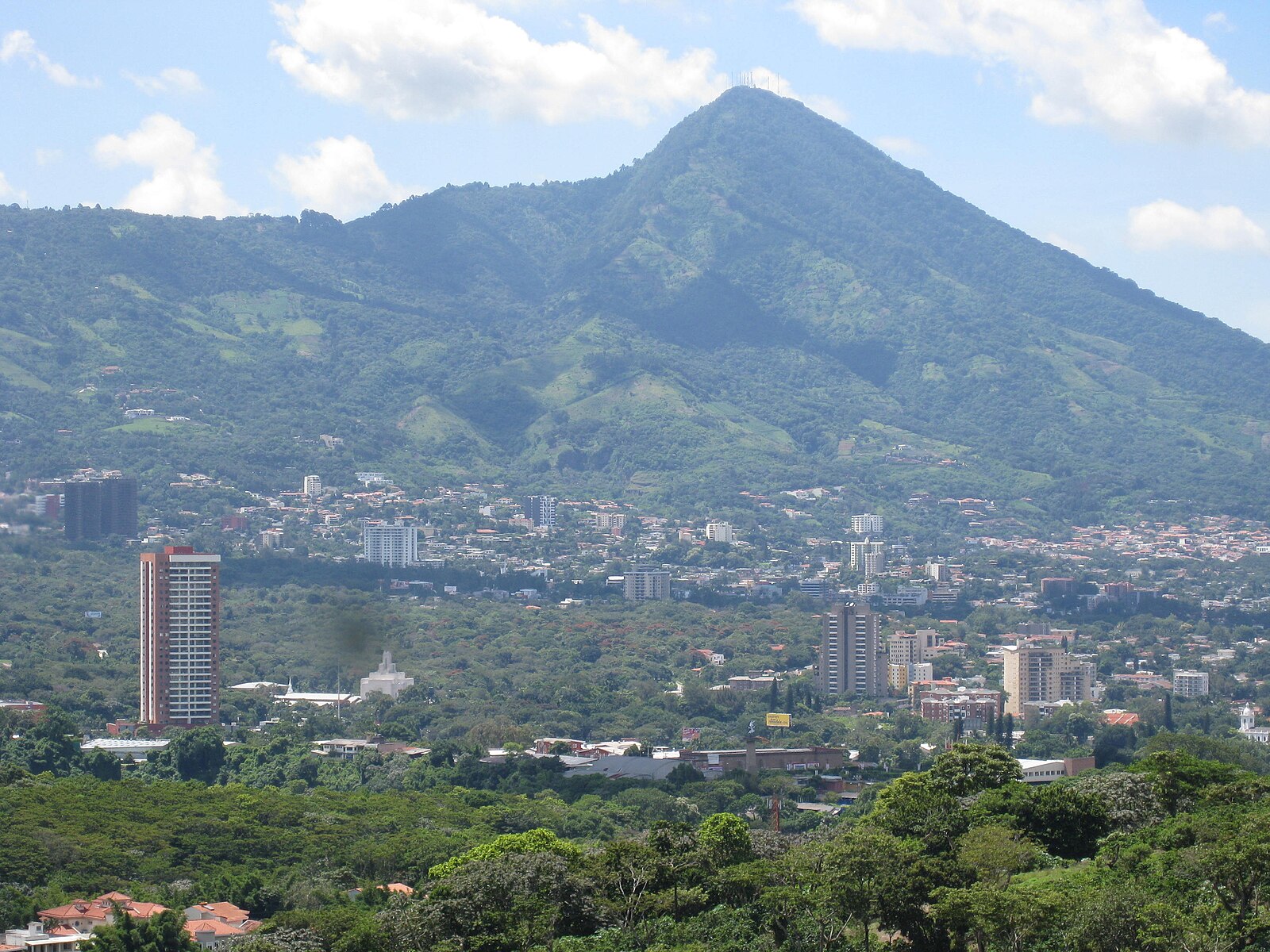
Taxes in El Salvador for expats follow a territorial rule: the country taxes Salvadoran-source income and leaves foreign income alone. A reform approved in March 2024 put money received from abroad outside the tax base, for residents and non-residents alike.
Taxes in El Salvador for expats: the territorial rule and the dollar
El Salvador taxes income earned inside the country. Income earned abroad sits outside the base, so a foreign pension is usually untaxed here.
The March 2024 reform added a new clause to Article 3 of the income tax law. It covers values received from abroad in any form, in money or in kind.
The same reform repealed older rules that had taxed foreign dividends, foreign securities and interest on foreign deposits. Those categories are now simply out of scope.
The country also uses the US dollar. Tax bills, payroll and property charges are all set in dollars, so no conversion risk sits between assessment and payment.
That is the spectrum here: light at the foreign end, ordinary at the local end. Taxes in El Salvador for expats are low, not absent.
Who counts as a tax resident: the 200-day test
A person becomes domiciled for tax after more than 200 consecutive days in the country during a calendar year. The days must run consecutively, not be added up.
Domicile also arises when El Salvador is the main source of a person’s income. Presence is one route into the system; the money is another.
Taxes in El Salvador for expats depend less on residence status than most newcomers expect. Because the base is territorial, a resident with only foreign income still owes little here.
Immigration residency and tax domicile are separate questions. A residence permit does not by itself create a tax bill, and it does not remove one either.
The test counts presence inside one calendar year, so a stay split across two years may not cross it. That timing detail matters most in a first partial year.
Foreign pensions and remote work: where the source line falls
A pension paid by a foreign state or a foreign fund is foreign-source. It sits outside the Salvadoran base under the rule in force.
Remote work is where the line gets fine. Work performed in El Salvador for a foreign payer is read differently from work billed to a Salvadoran client.
Salvadoran law taxes pay for services rendered in the country. Anyone invoicing local customers from a desk in San Salvador should assume local-source treatment until an adviser says otherwise.
What is not settled in public guidance is the exact position of a remote worker who lives here and bills abroad. Salvadoran advisers read those facts case by case.
Taxes in El Salvador for expats therefore turn on where the work happens and who pays for it. The passport and the visa label matter far less.
Income tax on Salvadoran-source income in 2026

Taxes in El Salvador for expats begin to bite once income has a Salvadoran source. For domiciled individuals the annual scale is progressive.
Income up to US$6,600 a year is exempt. The brackets then run to US$9,142.86 at 10%, to US$22,857.14 at 20%, and 30% above that.
A reform on 30 April 2025 raised the exempt band from US$4,064 to US$6,600 a year. In monthly terms, pay up to US$550 now escapes withholding.
Non-domiciled individuals are taxed at a flat 30% on Salvadoran-source income. The progressive scale does not apply to them.
Capital gains are taxed at a flat 10%. An asset sold within twelve months of purchase is taxed as ordinary income instead.
IVA at 13%: the tax you pay every day
The value-added tax, known locally as IVA, is charged at 13%. It is the tax most foreign residents actually feel.
A retiree living on a foreign pension may owe no Salvadoran income tax at all. That same retiree still pays 13% on groceries, restaurant meals and repairs.
Some supplies are exempt or zero-rated, chiefly exports. Most ordinary household spending carries the full rate.
IVA is normally built into the displayed price rather than added at the counter. Receipts set it out separately, so the 13% is easy to check.
This is the honest answer to the zero-tax question. Taxes in El Salvador for expats arrive mainly through the till, not through the annual return.
Payroll: ISSS and AFP deductions on a local salary
An employee pays 3% to the health system, ISSS, on salary up to US$1,000 a month. The deduction therefore stops at US$30.
The employer adds 7.50% on the same capped base, which stops at US$75. Health cover is comparatively cheap for higher earners and their employers.
Pension contributions are larger and uncapped in practice for most salaries. The employee pays 7.25% and the employer 8.75%, a combined 16% into the private pension system, AFP.
Payroll is where taxes in El Salvador for expats look most like anywhere else. Gross pay in an offer letter is not the figure that reaches the bank.
Property: transfer tax, rent and municipal charges
Buying property triggers a real estate transfer tax. The law exempts the first 250,000 colones of value, about US$28,571, and charges 3% on the excess.
The threshold is still written in colones, the currency El Salvador retired in 2001. Converted at the legal rate of 8.75 to the dollar, it is US$28,571.43.
There is no annual national property tax and no wealth tax. Municipalities levy their own charges, and these vary from place to place.
El Salvador replaced 262 municipalities with 44 on 1 May 2024, and the old units became districts. Local rates are still settling, so confirm charges with the municipality itself.
Rent from a Salvadoran property is Salvadoran-source income. It is taxable here whoever owns the building and wherever that owner lives.
Bitcoin and crypto after the 2025 reform
Reforms to the Bitcoin Law took effect on 1 May 2025. Accepting bitcoin became voluntary for private businesses, and the state stopped taking it.
Taxes and other obligations to the state can no longer be paid in bitcoin. Government dues are settled in US dollars only.
The law still says that exchanges in bitcoin are not subject to capital gains tax. The explicit income tax wording was dropped in the same reform.
Commentators disagree on whether bitcoin is still legal tender in any practical sense. Anyone with meaningful crypto income should treat the position as unsettled and take advice.
A thin treaty network and your duties back home
El Salvador has one double taxation treaty in force, with Spain. For everyone else there is no treaty to fall back on.
Tax paid abroad does not generate a credit in El Salvador. The territorial base makes that gap less painful than it first sounds.
With one treaty, relief usually has to come from the home country’s own rules. Foreign tax credits granted abroad, not Salvadoran ones, do the work.
US citizens keep filing at home whatever they do here. US tax follows citizenship, so worldwide income and foreign account reports still apply.
A US retiree can therefore owe nothing in El Salvador and still file a full US return. The two systems run side by side, neither cancelling the other.
Rules differ sharply by country for everyone else. A mover should confirm the home position before assuming El Salvador is the only claimant.
Filing with the tax authority, and the mistakes that cost money
The Dirección General de Impuestos Internos, inside the Ministry of Finance, administers income tax. Its 2026 calendar puts the annual return and payment at 30 April.
The tax year runs from 1 January to 31 December. The return falls due within the four months that follow.
Filing can be required even when no tax is owed. Keep records of foreign-source money, because an exemption is only as good as its paper trail.
Three mistakes recur: assuming a zero-tax country, ignoring municipal charges, and misreading the source of remote income. The third is the expensive one.
An April 2026 reform removed a 3% withholding on stock exchange gains for non-domiciled investors. Local brokers must now report foreign investors to the tax authority instead.
How El Salvador compares with Guatemala and Panama
Panama is territorial too and exempts the first US$11,000 of local income. Above that it charges 15%, then 25% over US$50,000.
Guatemala taxes employment income at 5% up to 300,000 quetzales, about US$39,200, and 7% above that. Conversions here use exchange rates on 21 September 2026.
Taxes in El Salvador for expats compare well on rates and poorly on treaties. The dollar and the breadth of the foreign-income exclusion are the real advantages.
For a retiree on a foreign pension, the three countries land close together. For someone earning locally, the brackets and the payroll rules decide it.
All three tax local salaries and local business income. Territorial is a rule about source, never a promise of a zero bill.
The direction of travel has been toward lighter treatment of money from abroad, in 2024 and again in 2026. Whether that continues is not something anyone can promise.
Connected Coverage
Healthcare in El Salvador for Expats 2026 — Cover and Costs
El Salvador Residency Visa 2026 — Income, Papers, Timelines
Is El Salvador Safe for Expats in 2026: What the Level 1 Rating Leaves Out
Frequently Asked Questions
Frequently Asked Questions
Do I pay Salvadoran tax on a foreign pension?
Generally no. Since the March 2024 reform, money received from abroad sits outside the Salvadoran income tax base. The pension must be genuinely foreign-source, so confirm your own arrangement with a Salvadoran tax adviser.
How many days make me a tax resident in El Salvador?
More than 200 consecutive days in a calendar year make a person domiciled for tax. Domicile also arises if El Salvador is your main source of income. Immigration residency is a separate question with its own rules.
Is El Salvador a tax-free country for expats?
No. Salvadoran-source income is taxed at up to 30%, IVA adds 13% to most spending, and local salaries carry health and pension deductions. Foreign-source income being exempt is not the same thing as no tax.
Can I still pay my taxes in bitcoin?
No. Reforms to the Bitcoin Law that took effect on 1 May 2025 removed bitcoin as a way to pay taxes and other state obligations. Private businesses may still accept bitcoin, but they no longer have to.
Do US citizens still file a US return after moving?
Yes. US tax follows citizenship rather than residence, so worldwide income and foreign account reporting continue. A US citizen can owe nothing in El Salvador and still file a full US return.
What does buying property cost in tax?
A transfer tax applies at closing. The first 250,000 colones of value, about US$28,571, is exempt and 3% applies above that. There is no annual national property tax and no wealth tax, but municipalities charge their own fees.
Sources: Rules and figures were checked against the Ministry of Finance, the Legislative Assembly, the text of the real estate transfer tax law, PwC’s country summaries and Salvadoran legal and specialist reporting.
- mh.gob.sv
- asamblea.gob.sv
- elsalvador.eregulations.org
- taxsummaries.pwc.com
- taxsummaries.pwc.com
- taxsummaries.pwc.com
- consortiumlegal.com
- criptonoticias.com
This article was produced by The Rio Times’ automated newsroom system. How we use AI · Report an error
Read More from The Rio Times