El Salvador and Its Neighbours in Central America

GUIDES · EL SALVADOR
Key Facts
- —In context El Salvador is Central America’s smallest mainland country by area, with 6,365,503 people and a US$36.7 billion economy in 2025. Its everyday money is the US dollar.
- —Borders Guatemala lies to the west and Honduras to the north and east, with the Pacific Ocean to the south. There is no land border with Nicaragua, which it meets across the Gulf of Fonseca.
- —Trade El Salvador sold US$6.43 billion of goods abroad in 2025. Guatemala, Honduras, Nicaragua and Costa Rica together took about US$3.2 billion of that, roughly half.
- —Money Family remittances reached US$9.99 billion in 2025, up about 18% on 2024 and the highest since the series began in 1991.
- —Courts and treaties The International Court of Justice ruled on the El Salvador and Honduras frontier on 11 September 1992. A 1997 treaty ties El Salvador, Guatemala and Honduras together in the Trifinio region.
- —Regional bodies In August 2026 Lina Eugenia Ajoy began a 2026 to 2030 term as secretary general of the Central American Integration System. Belize holds its rotating presidency.
El Salvador is small, dollarised and surrounded by larger and more crowded neighbours. This guide maps its borders, trade, rivers, migrants and regional ties as of October 2026.
El Salvador sits on the Pacific side of Central America with only two land neighbours, Guatemala and Honduras. For US readers it matters because the same borders carry the trade, remittances and security policy that touch US prices and politics.
The El Salvador neighbourhood is small, crowded and tied together by trade, rivers and migration. This guide, dated October 2026, explains how the country deals with Guatemala, Honduras and Nicaragua.
El Salvador in the Middle of Central America
El Salvador covers 21,040 square kilometres, the smallest area of any mainland country in Central America, World Bank data show. Belize, the next smallest, covers 22,966 square kilometres.
It had 6,365,503 people in 2025, against 18,687,881 in Guatemala, 11,005,850 in Honduras and 7,007,502 in Nicaragua. Its economy was worth US$36.7 billion that year, behind Guatemala at US$123.3 billion and Honduras at US$39.6 billion.
Income per person was US$5,767 in 2025, against US$6,598 in Guatemala, US$3,598 in Honduras and US$3,173 in Nicaragua. Only Guatemala was richer on that measure among the four.
El Salvador has used the US dollar as legal tender since 1 January 2001, the central bank says. Every figure in this guide is in US dollars, so no exchange rate applies.
The International Monetary Fund projects growth of 4.5% for El Salvador in 2026, against 4.0% for Guatemala and 3.3% for Honduras. Its average consumer-price inflation forecast for 2026 is 2.5% for El Salvador, 2.6% for Guatemala and 4.4% for Honduras.
Guatemala, the Western Neighbour
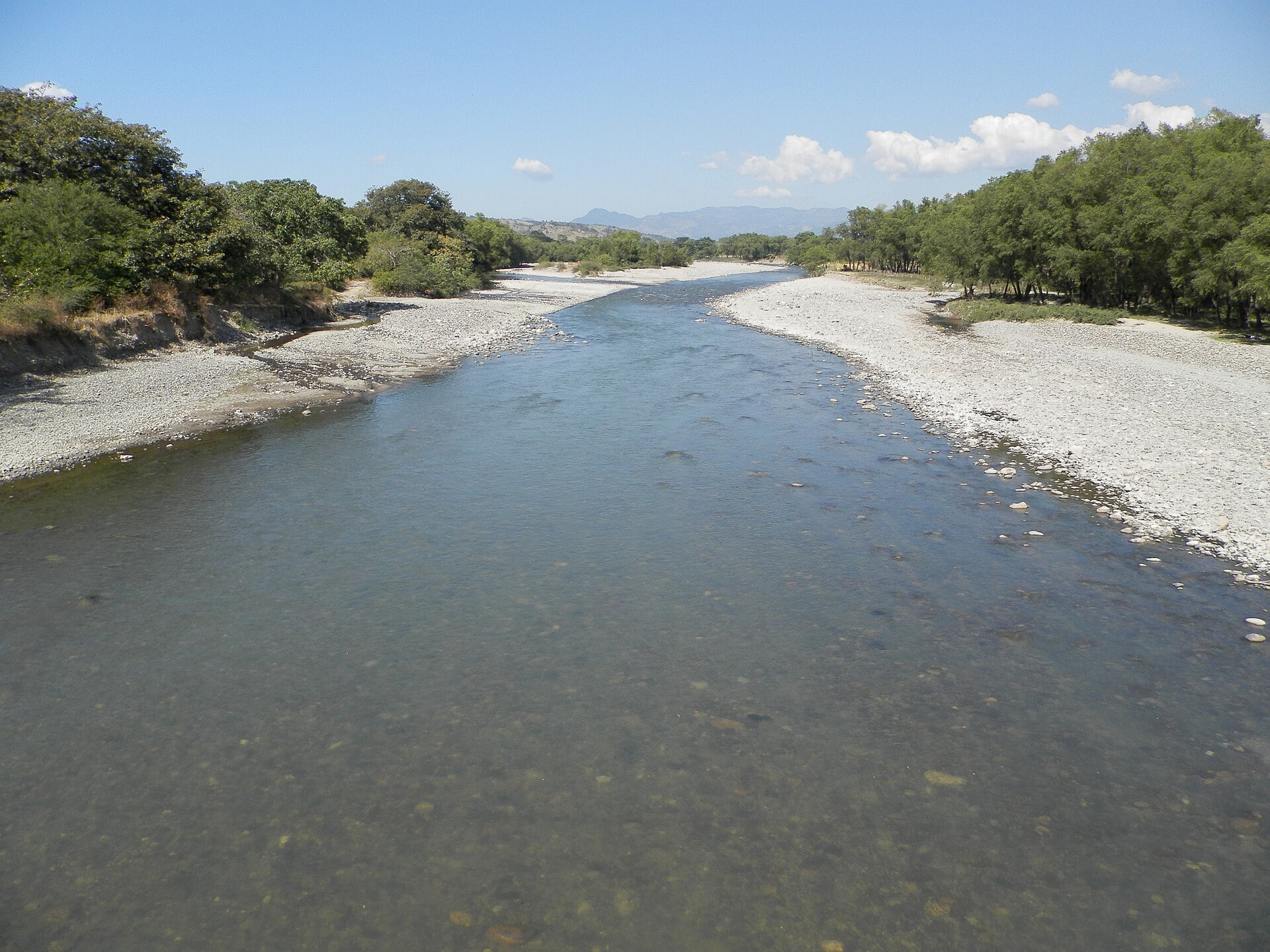
Guatemala is the largest of the four countries compared here by people and by output, and El Salvador’s biggest neighbour. The two meet on the Pacific side at La Hachadura, where the Paz River separates them.
On Wednesday 14 October 2026 President Nayib Bukele inaugurated the General Manuel José Arce bridge over the Paz River at La Hachadura, in Ahuachapán department. It links the Salvadoran border post with Pedro de Alvarado in Guatemala, and traffic was due to start on Thursday 15 October.
The bridge is 420 metres long and cost US$32.6 million, Diario El Salvador reported. The old crossing closed whenever the river flooded in the rainy season.
Bukele said the two governments agreed in 2010 to build a new crossing, and that years passed before it was done. He also said Guatemala is the source of the most tourists to El Salvador.
Guatemala was El Salvador’s second-largest export market in 2025, at US$1.26 billion, up 2.5% on 2024. Only the United States bought more.
Honduras, the Eastern Neighbour
Honduras and El Salvador have a history of open dispute. They fought a short war from 14 July to 18 July 1969, about 100 hours, after tensions over migration and land and a series of World Cup qualifying matches.
The two countries then took their frontier to the International Court of Justice, in The Hague, in 1986. On 11 September 1992 a chamber of the court gave the islands of Meanguera and Meanguerita to El Salvador and El Tigre to Honduras.
El Salvador asked the court to revise that judgment on 10 September 2002. A special chamber rejected the request on 18 December 2003, finding that the facts El Salvador cited were not decisive factors.
In 2025 the border was mostly about trade and visitors. Honduras bought US$1.08 billion of Salvadoran goods, up 5.6%, making it the third-largest buyer.
Hondurans are also arriving in growing numbers. From January to September 2026, 699,002 Hondurans visited El Salvador, up 26.6% on the 552,325 of the same months of 2025, according to the migration directorate and tourism ministry.
For Morazán Week, from 3 to 11 October 2026, the presidency forecast 58,522 Honduran visitors, 20% more than the 48,768 of 2025. The tourism ministry said El Amatillo took 53.2% of Honduran visitors and El Poy 38.9%, in figures running to August 2026.
On 14 October 2026 Honduran Congress president Tomás Zambrano said lawmakers were arranging a visit to El Salvador to study its security model. The visit may include the CECOT mega-prison, with the date still pending.
Nicaragua and the Gulf of Fonseca
El Salvador has no land border with Nicaragua, but the two countries share a sea. The Gulf of Fonseca opens onto the Pacific and is ringed by El Salvador, Honduras and Nicaragua.
The 1992 judgment found the gulf to be historic waters, apart from a three-mile coastal belt, under the joint sovereignty of the three coastal states. The chamber said it had no jurisdiction to draw maritime lines inside or outside the gulf.
Outside the gulf, each state is entitled to a territorial sea, a continental shelf and an exclusive economic zone, which they must divide by agreement. Nicaragua was allowed only a limited intervention in the case, and the judgment is not binding on it.
Nicaragua had 7,007,502 people and a US$22.2 billion economy in 2025, the smallest of the four countries compared here. Its income per person of US$3,173 was also the lowest.
For El Salvador it is a modest customer. Nicaragua took US$586.1 million of Salvadoran goods in 2025, up 3.9%, behind Guatemala and Honduras.
Trade and Money Across the Borders
El Salvador exported US$6.43 billion of goods in 2025, up 1.9% on 2024, based on central bank figures published by Diario El Salvador. The United States was the largest buyer at US$2.09 billion.
Four Central American markets came next. Guatemala took US$1.26 billion, Honduras US$1.08 billion, Nicaragua US$586.1 million and Costa Rica US$286.3 million.
Together those four took about US$3.2 billion, roughly half of all exports, by a simple sum of the central bank figures. Mexico bought US$251.9 million and Panama US$123.5 million.
El Salvador and the United States are parties to the Central America free-trade agreement known as CAFTA-DR, signed on 5 August 2004. The other members are Costa Rica, Guatemala, Honduras, Nicaragua and the Dominican Republic.
Money flows the other way as well. El Salvador received US$9.99 billion in family remittances in 2025, up US$1.51 billion on 2024, and more than 1.16 million Salvadorans received them.
The World Bank counts personal remittances on a wider basis and puts the 2025 totals at US$25.7 billion for Guatemala, US$11.9 billion for Honduras and US$10.1 billion for El Salvador. Guatemala is the largest recipient of the three.
Rivers, Bridges and Shared Infrastructure
The Paz River marks the border with Guatemala at La Hachadura, which is why one flood could close the Pacific road. The new bridge has no piles in the riverbed, Bukele said, and is built to withstand earthquakes.
Three governments also manage a shared region together. Plan Trifinio, set up by a trinational treaty in 1997, covers 8 Salvadoran districts, 15 Guatemalan municipalities and 22 Honduran municipalities.
The region spans Santa Ana and Chalatenango in El Salvador, Jutiapa and Chiquimula in Guatemala, and Ocotepeque and Copán in Honduras. Its commission is led by the vice presidents of El Salvador and Guatemala and a presidential designate of Honduras.
Water is a current project. On 17 and 18 September 2026 the commission held workshops for communities in Honduras and El Salvador on monitoring the Ocotepeque-Citalá aquifer, which the two countries share.
The work is funded by the Global Environment Facility, implemented by the United Nations Environment Programme and executed by the Organization of American States. Local monitoring groups in each country are meant to keep collecting data.
People on the Move
Migration shapes the neighbourhood more than any border post. The State Department says more than 2 million Salvadorans call the United States home.
Their money is the visible result, at nearly US$10 billion in 2025, the highest total the central bank has recorded since 1991. A Diario El Mundo analysis of the data linked the rise to migrants’ fears of deportation from the United States.
Within the region the flow is mostly visitors and traders. Total visitors to El Salvador reached 3,551,185 from January to September 2026, up 21%, and Hondurans made up 699,002 of them.
The State Department put El Salvador at Level 1, exercise normal precautions, on 25 June 2026. Guatemala was at Level 3, reconsider travel, in its advisory of 12 March 2026.
The El Salvador advisory notes that gang activity, violent crime and murders have dropped sharply since 2022. It also notes the state of exception in force since March 2022, under which several US citizens have been detained without trial.
Regional Bodies and Where El Salvador Leads
The Central American Integration System, known as SICA, is the region’s main political forum. In August 2026 Vice President Félix Ulloa attended the start of Lina Eugenia Ajoy’s term as secretary general, with Belize holding the pro tempore presidency.
Trade policy runs through the Secretariat for Central American Economic Integration, SIECA, based in Guatemala City. Its website lists a deep-integration process among its work areas, and the regional parliament, Parlacen, also has its seat in Guatemala City.
On security, El Salvador sets the example that its neighbours study. The Honduran Congress is weighing tougher gang laws, including an end to parole and pre-release for prisoners, and a possible visit to CECOT, the large Salvadoran prison.
Costa Rica opened a 5,100-place high-security prison, the CACCO, in Alajuela on Wednesday 14 October 2026. Radio Monumental reported that President Laura Fernández planned to visit CECOT on Friday 16 October.
On roads and borders the pace is slower. The Hachadura bridge was agreed in 2010 and inaugurated in 2026, sixteen years later.
What It Means for US Readers
Investors should read El Salvador as a dollar economy tied to US demand and US remittances. The United States bought US$2.09 billion of its goods in 2025, and nearly US$10 billion in family money arrived from abroad.
Shippers and travellers should find the Pacific road to Guatemala more reliable once the new bridge carries traffic. El Salvador, Guatemala, Honduras and Nicaragua all trade with the United States under CAFTA-DR.
For expats and visitors, El Salvador carries a lower State Department advisory level than Guatemala as of June 2026. Honduras and Costa Rica are both looking at Salvadoran-style prisons.
- El Salvador: Level 1, exercise normal precautions, issued 25 June 2026.
- Guatemala: Level 3, reconsider travel, issued 12 March 2026.
Connected Coverage
- El Salvador Opens 420-Metre Guatemala Bridge
- El Salvador Expects 58,000 Hondurans for Morazán Week
- IMF Projects El Salvador Economy to Grow 4.5% This Year
- Honduras and Its Neighbours in Central America
- Nicaragua and Its Neighbours in Central America
- Panama and Its Neighbours in Central America
- Costa Rica Opens Gang Prison for 5,100
- More El Salvador coverage from The Rio Times
What Is Not Known
The sources opened do not say whether the Honduran Congress visit to CECOT will happen or when. They also do not say whether Honduran lawmakers voted on the gang reforms on 19 October 2026, or whether the planned Costa Rican visit to CECOT took place.
Trade and border-crossing figures come from press accounts of central bank and ministry data. A cross-check of the 2025 export total by destination was not possible because the central bank statistics site could not be read.
Coverage opened for this guide did not give a Guatemalan government response to the new bridge or a timetable for Guatemalan customs and migration facilities. The sources also do not say whether the maritime lines outside the Gulf of Fonseca have been agreed.
Frequently Asked Questions
Which countries border El Salvador?
El Salvador has land borders with Guatemala to the west and Honduras to the north and east. It has no land border with Nicaragua, which it meets across the Gulf of Fonseca.
Who are El Salvador’s biggest trading partners in Central America?
In 2025 Guatemala bought US$1.26 billion of Salvadoran goods and Honduras US$1.08 billion, based on central bank figures. Nicaragua took US$586.1 million and Costa Rica US$286.3 million.
What did the International Court of Justice decide about El Salvador and Honduras?
On 11 September 1992 a chamber of the court gave the islands of Meanguera and Meanguerita to El Salvador and El Tigre to Honduras. It also ruled that the Gulf of Fonseca’s waters are under the joint sovereignty of the three coastal states.
What is the new bridge between El Salvador and Guatemala?
The General Manuel José Arce bridge over the Paz River at La Hachadura was inaugurated on Wednesday 14 October 2026. It is 420 metres long and cost US$32.6 million.
How much money do Salvadorans send home?
Family remittances reached US$9.99 billion in 2025, up about 18% on 2024, according to the central bank. That is the highest total since its series began in 1991.
Is El Salvador a safe country for US travellers?
The State Department rated El Salvador at Level 1, exercise normal precautions, on 25 June 2026. It noted the state of exception in force since March 2022, under which several US citizens have been detained without trial.
Sources: World Bank, El Salvador and neighbours, population, GDP, area and remittances; IMF, World Economic Outlook data, real GDP growth and inflation; International Court of Justice, El Salvador/Honduras frontier case; International Court of Justice, application for revision; Comisión Trinacional del Plan Trifinio; Plan Trifinio, aquifer workshops, 18 September 2026; Presidencia de El Salvador, SICA secretary general, 11 August 2026; SIECA; Parlacen; USTR, CAFTA-DR; US State Department, El Salvador travel advisory; US State Department, Guatemala travel advisory; Diario El Salvador, exports 2025 (central bank data); Diario El Mundo, remittances 2025 (central bank data); El Diario de Hoy, remittances 2025; Diario El Salvador, Hachadura bridge; El Diario de Hoy, Hachadura bridge; Infobae El Salvador, Honduran visitors; El Diario de Hoy, border crossings; Proceso Digital, Honduran Congress, 14 October 2026; Radio Monumental, CACCO opening, 14 October 2026; Encyclopædia Britannica, the 1969 war. All accessed 19 October 2026.
Editorial responsibility: Matthias Camenzind, Editor-in-Chief · Editorial standards · Report an error
Expat Guide to El Salvador
What The Rio Times publishes for foreigners who live in or move to El Salvador.
Start here
- Cost of Living in El Salvador 2026: Rent Near US$899 a Month
- El Salvador Bank Accounts for Foreigners: Required Papers and Deposits From US$0 to US$30
- Taxes in El Salvador for Expats 2026 — What You Owe and What Stays Untaxed
- El Salvador Residency Visa 2026, Income Rules and Steps
Understand El Salvador