El Salvador Politics Explained, Who Holds Power in 2026
EL SALVADOR · POLITICS
Key Facts
- Head of state President Nayib Bukele, a former mayor of San Salvador, who won the presidency on 3 February 2019 and a second term in 2024.
- Vice president Félix Ulloa, a lawyer born in 1951, elected alongside Bukele for 2024 to 2027.
- Assembly A single chamber of 60 deputies. Bukele’s party, Nuevas Ideas, won 54 seats in February 2024.
- Electoral court The Supreme Electoral Tribunal, led by Roxana Soriano, set the general election for Sunday, 28 February 2027.
- Voters 6,534,389 people can vote, including 982,682 registered abroad, as of 15 September 2026.
- Prediction markets Polymarket, a US prediction-market exchange, gives PCN, a party with two Assembly seats, a 37.0% chance of finishing second in the 2027 Assembly vote (29 October, 9:05 a.m. ET).
El Salvador politics in October 2026 revolves around one president, one dominant party and a legislature that party controls. The next general election falls on Sunday, 28 February 2027, and voters abroad can take part online.

El Salvador Politics at a Glance, One Man at the Centre
El Salvador is a presidential republic in Central America, and its politics now runs through President Nayib Bukele. He won the presidency on 3 February 2019 and was re-elected in 2024.
His party, Nuevas Ideas, which means New Ideas, holds 54 of the 60 seats in the Legislative Assembly. The opposition is small, and the open question for 2027 is how large the next majority will be.
The Assembly passed a constitutional reform on 31 July 2025 that changed the rules of the game. The presidential term grew from five to six years, immediate re-election has no limit, and the runoff round is gone.
The same reform puts the presidential, legislative and municipal votes on a single day in 2027. A transitional rule shortened the current presidential term so that all the calendars line up.
The President and the Vice President
Nayib Bukele is head of state and head of government in one office. Before the presidency he served as mayor of Nuevo Cuscatlán and then of San Salvador, the capital.
He governs through Nuevas Ideas, the party that dominates the Assembly. Under the Constitution the president is also commander in chief of the armed forces.
The Vice President
Félix Ulloa is the vice president, elected for the terms 2019 to 2024 and 2024 to 2027. He is a lawyer born in 1951 who studied law at the Complutense University of Madrid.
On 11 August 2026 Ulloa attended the start of a new secretary-general’s term at the Central American Integration System, a regional forum. The ceremony took place during Belize’s rotating presidency of the group.
The Cabinet
The president appoints the ministers who run departments such as security, defence, foreign affairs and finance. Ministers are not elected, and the Assembly does not choose them.
Readers who want the personal story can start with our Bukele profile. The rest of this guide is about the institutions around him.
The Legislative Assembly and Its 54-Seat Majority
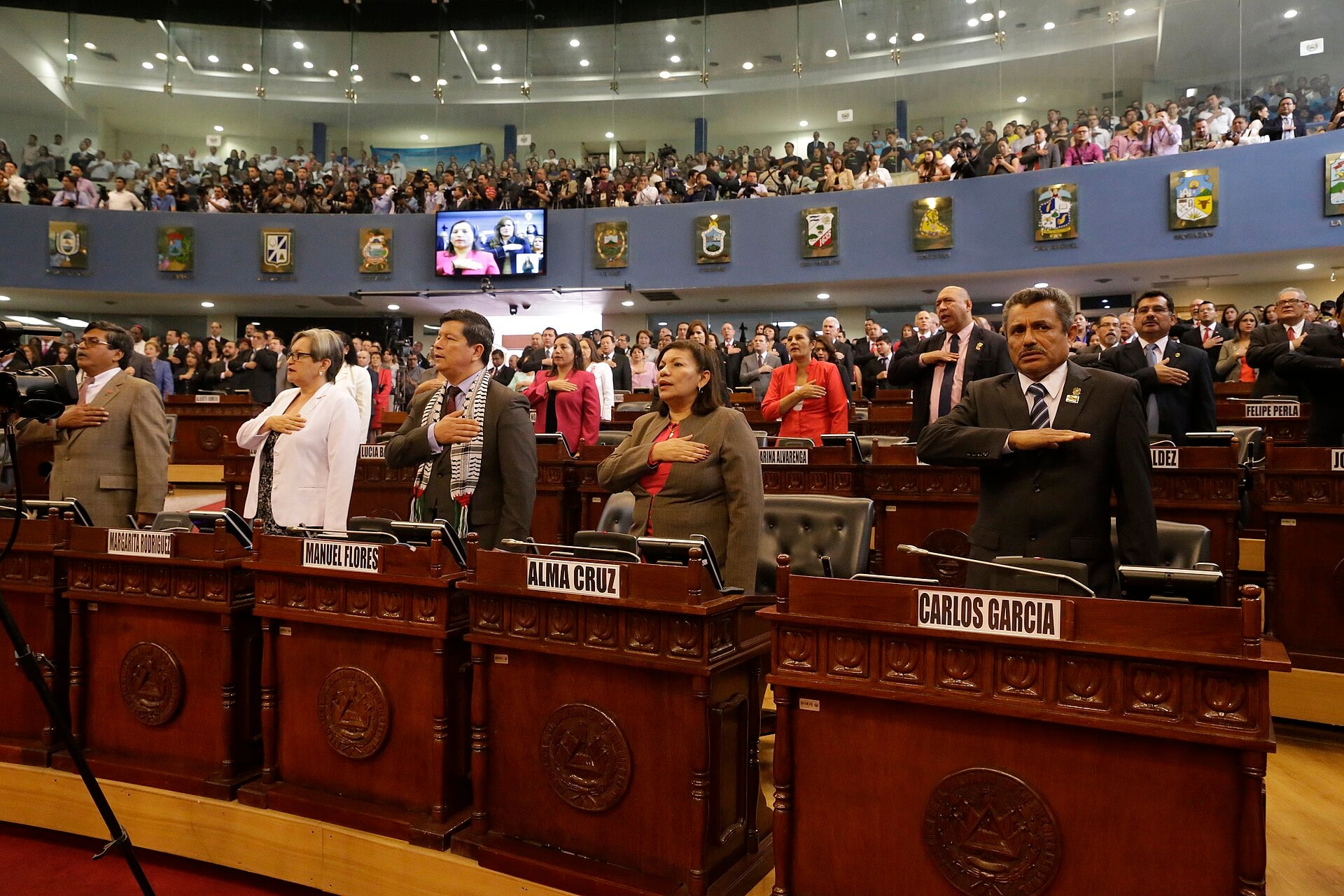
The Legislative Assembly has 60 deputies in a single chamber, and the current group serves for the period 2024 to 2027. It was elected on 4 February 2024.
Nuevas Ideas won 54 seats, the Supreme Electoral Tribunal announced at the time. Four other parties share the remaining six.
With that majority the ruling party can pass ordinary laws on its own. The opposition has too few deputies to block a bill.
The Smaller Parties
ARENA, the Nationalist Republican Alliance, and PCN, the National Concertation Party, hold two seats each. PDC, the Christian Democratic Party, and Vamos hold one seat each.
The FMLN, a former guerrilla movement, won no seats in 2024. GANA, the Grand Alliance for National Unity, is also a registered party.
The Electoral Court and the 2027 Calendar
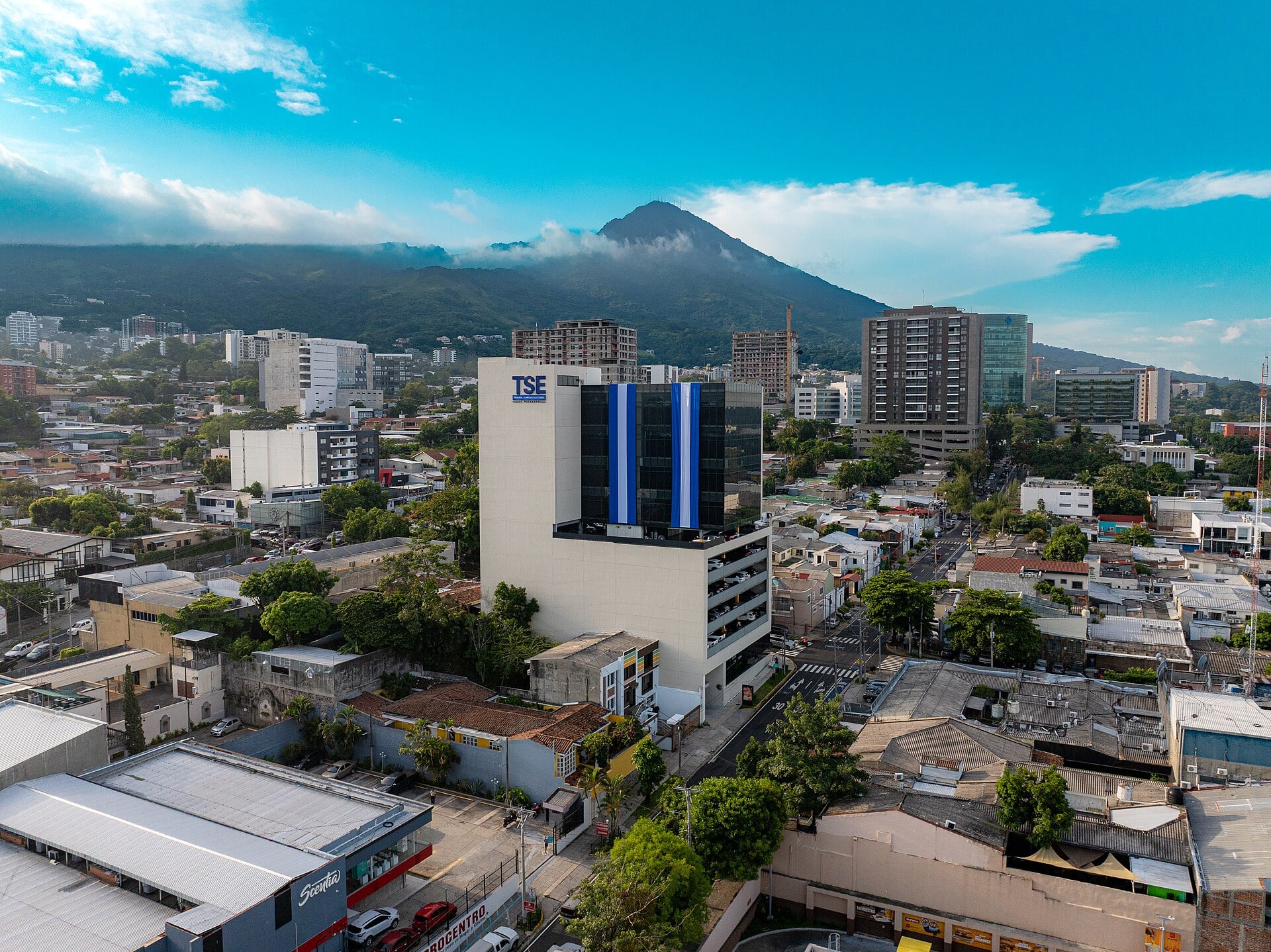
The Supreme Electoral Tribunal, known by its Spanish initials TSE, organises elections and rules on electoral disputes. Its president is Magistrate Roxana Soriano.
On 30 September 2026 the court formally called the general election for Sunday, 28 February 2027. Voters will fill 582 posts, from the presidency down to local councils.
Besides the president and vice president, voters elect 60 deputies and 60 alternates. They also choose 44 mayors and 372 councillors, regular and alternate.
The Registration Window
Parties may register candidates for president, vice president and the Assembly from 1 October to 19 November 2026. Candidates for municipal councils register from 9 to 19 November.
The court publishes the full electoral calendar on its website, with every later step. Registration is the stage the country is in now.
Who Can Vote
As of 15 September 2026 the court counted 6,534,389 eligible voters. Of them, 5,551,707 live in El Salvador and 982,682 live abroad.
Salvadorans abroad who qualify can vote online from 30 January to 28 February 2027. Voters inside the country cast their ballots on Sunday, 28 February.
The Electoral Boards
On 20 October 2026 the court assigned seats on 14 departmental and 44 municipal electoral boards. Four seats on each board go to the parties with the most votes in the last legislative election.
Those four are Nuevas Ideas, ARENA, the FMLN and PCN. A draw among the other parties decides the fifth seat.
The Opposition Parties and Their Weight
The two parties that governed El Salvador for decades are now small, which is the heart of El Salvador politics in 2026. ARENA held the presidency from 1989 to 2009, then the FMLN from 2009 to 2019.
ARENA is a conservative party. The FMLN, the Farabundo Martí National Liberation Front, began as a guerrilla movement and became a left-wing party.
In February 2024 ARENA won two Assembly seats and the FMLN none. Both parties remain registered with the court.
Which party takes second place in the Assembly is now the live question for traders. The market below puts numbers on it.
- Nuevas Ideas, Bukele’s party, 54 seats.
- ARENA, 2 seats.
- PCN, 2 seats.
- PDC, 1 seat.
- Vamos, 1 seat.
- FMLN, no seats.
The Security Ministry and the Armed Forces
The Ministry of Public Security and Justice is the government department for policing and justice. Its website shows steady activity in October 2026, including an event on 13 October that presented new National Civil Police dog teams.
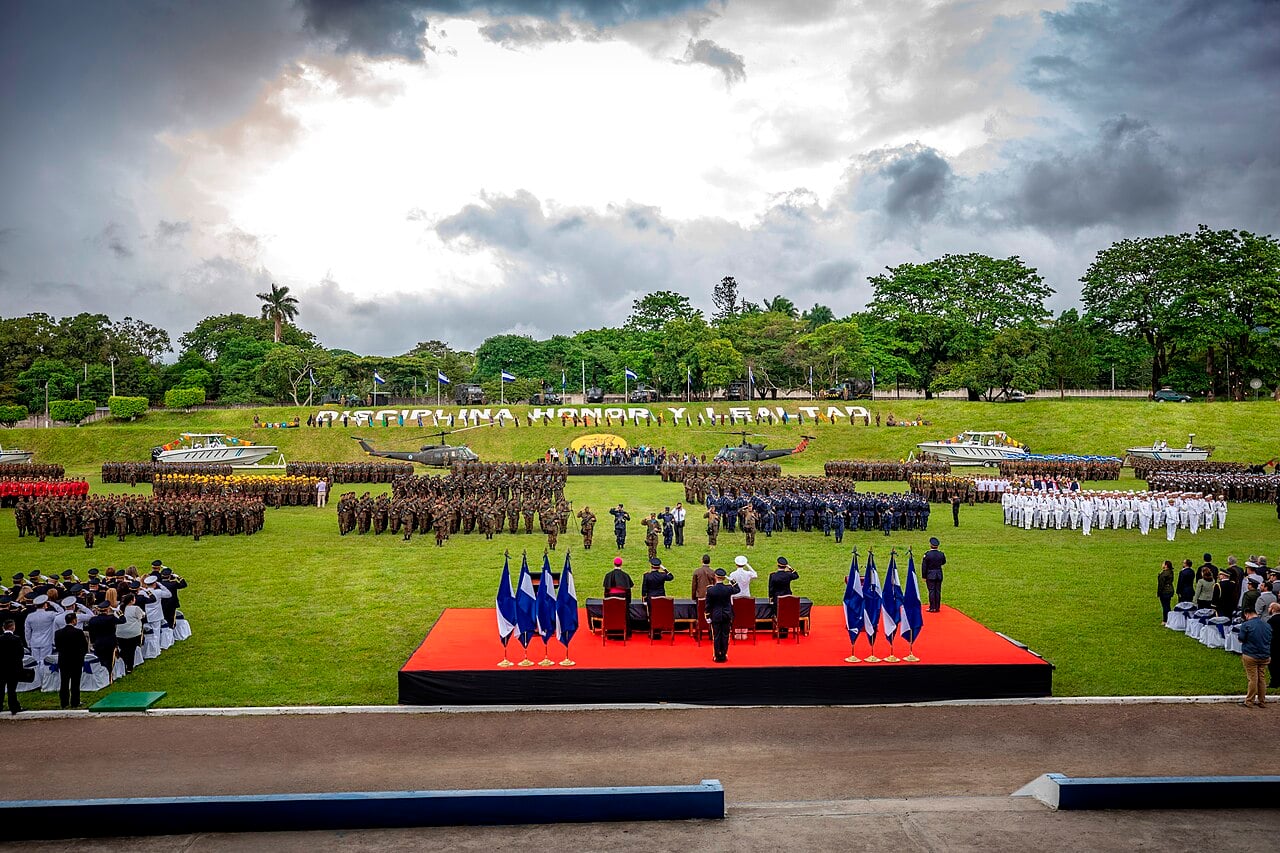
The armed forces answer to the president as commander in chief. Defence and security therefore sit close to the presidency.
Mayors and Local Power
El Salvador has 14 departments and 44 municipalities, each with its own council. On 28 February 2027 voters elect 44 mayors, 196 regular councillors and 176 alternates.
Council candidates register from 9 November, later than the presidential and Assembly candidates. Both windows close on 19 November 2026.
Each council is led by a mayor and works with elected councillors. The court’s electoral boards for the 44 municipalities were set up on 20 October 2026.
The same court assigns each municipality its own electoral board, and 44 of them exist. Four seats on each board are reserved for the parties that polled best in 2024.
What Prediction Markets Say
Polymarket, a US prediction-market exchange, lists a market called El Salvador Legislative Election: 2nd Place. On 29 October 2026, at 9:05 a.m. ET, traders gave PCN 37.0%, Vamos 25.5% and ARENA 11.5%.
The market has traded about US$14,465 in total, which is thin, so a few bets can move the prices. The election itself is real and dated, with the vote on Sunday, 28 February 2027.
Why we show this: prediction markets turn real-money bets into a live probability that moves within minutes of the news, which is why investors, campaigns and newsrooms in the United States now follow them closely. We show them next to polls and official results, never instead of them.
What It Means for US Readers
El Salvador politics reaches Americans through voters abroad and through a government that faces little resistance at home. The next big date is Sunday, 28 February 2027.
Salvadorans registered abroad can vote online from 30 January to 28 February 2027. Voters who live in the United States and are registered can use that window.
With one party holding 54 of 60 seats, the Assembly is unlikely to block the government’s plans. Policy after the vote will depend mostly on the president.
Our geopolitics guide shows how outside powers see the country. Our campaign report follows the race.
Our report on the electoral court’s call sets out the legal steps. The El Salvador hub tracks each new development.
What Is Not Known
It is not confirmed which candidates will appear on the presidential ballot, because registration runs until 19 November 2026. The final list of parties and tickets is not known.
It is not known how many seats the opposition will win in the new Assembly. Turnout among Salvadorans abroad is not known either.
Frequently Asked Questions
Who is the president of El Salvador in 2026?
Nayib Bukele is the president. He won the presidency in 2019 and was re-elected in 2024, and a July 2025 reform allows immediate re-election without limit.
Who is the vice president of El Salvador?
Félix Ulloa is the vice president, elected for 2019 to 2024 and again for 2024 to 2027. He is a lawyer born in 1951.
When is the next election in El Salvador?
The general election is on Sunday, 28 February 2027. Voters choose a president and vice president, 60 deputies and councils in 44 municipalities.
Which party controls the Assembly?
Nuevas Ideas, Bukele’s party, won 54 of the 60 Assembly seats in February 2024. Four other parties share the remaining six.
Who runs the electoral court?
Roxana Soriano is the president of the Supreme Electoral Tribunal. On 30 September 2026 the court formally called the 2027 election.
Who are the main opposition parties?
ARENA and the FMLN governed the country before 2019 and are now small. ARENA won two seats in 2024 and the FMLN none.
Sources: Presidencia de la República de El Salvador, official site (president, vice president, news of 11 August 2026), 2026-10-29; Tribunal Supremo Electoral, official site: press releases of 30 September and 20 October 2026, 25 August 2025 and 20 February 2024, and the list of registered parties, 2026-10-29; Ministerio de Seguridad Pública y Justicia, official site, 2026-10-29; Polymarket, El Salvador Legislative Election: 2nd Place market data, 2026-10-29.
This article was produced by The Rio Times’ automated newsroom system. How we use AI · Report an error · Editorial responsibility: Matthias Camenzind, Editor-in-Chief
Expat Guide to El Salvador
What The Rio Times publishes for foreigners who live in or move to El Salvador.
Start here
- Cost of Living in El Salvador 2026: Rent Near US$899 a Month
- El Salvador Bank Accounts for Foreigners: Required Papers and Deposits From US$0 to US$30
- Taxes in El Salvador for Expats 2026 — What You Owe and What Stays Untaxed
- El Salvador Residency Visa 2026, Income Rules and Steps
Understand El Salvador
Brazil runoff date: Sunday, October 25, poll closing times and when results start · Brazil runoff polls: Flávio 51%, Lula 49% · Kalshi and Polymarket odds
Rotate for Best Experience
This report is optimized for landscape viewing. Rotate your phone for the full experience.
You've reached your free article limit
Subscribe to The Rio Times for unlimited access to our news, expat and nomad guides and market intelligence on Latin America and Africa.
Keep reading for free
Your first article was on us. Register with your email address to read 6 free articles every month. You will also receive The LatAm Brief: what moved in Latin American markets, politics and expat life, every weekday morning.
Expat Guide to El Salvador
What The Rio Times publishes for foreigners who live in or move to El Salvador.
Start here
- Cost of Living in El Salvador 2026: Rent Near US$899 a Month
- El Salvador Bank Accounts for Foreigners: Required Papers and Deposits From US$0 to US$30
- Taxes in El Salvador for Expats 2026 — What You Owe and What Stays Untaxed
- El Salvador Residency Visa 2026, Income Rules and Steps
Understand El Salvador