El Salvador Explained 2026: Bukele’s Model, the Economy and What to Watch
GUIDES · EL SALVADOR
Key Facts
- —Capital San Salvador, the seat of government and the centre of the country’s largest urban area. The country has 14 departments and, since May 2024, just 44 municipalities.
- —Population About 6.37 million in 2025, according to the World Bank, slightly more than Denmark. They live on 21,040 square kilometres, a little less than New Jersey.
- —Currency The US dollar, legal tender since 2001. Bitcoin keeps a legal status on paper, but since January 2025 nobody is obliged to accept it.
- —Language Spanish. English is heard in tourist areas and some businesses, much less so elsewhere.
- —GDP US$36.7 billion in 2025 (World Bank and central bank data), about US$5,770 per person. Remittances from abroad brought in almost US$10 billion that year.
- —Government A presidential republic with a single 60-seat Legislative Assembly. President Nayib Bukele has governed since 2019, and his party holds 54 of the 60 seats.
El Salvador explained for readers abroad: a small, dollarised Central American republic. Its war on gangs and its bitcoin experiment made its president a global name. This guide sets out how it is run, how it earns its money and which dates matter next.
El Salvador is the smallest country on the Central American mainland, and one of the most watched in the Americas. It spends US dollars, lives on money sent home from the United States and has traded some civil liberties for fewer murders. For Americans and Europeans, it is an easy place to spend money and a live test of how far voters will go for security.
What kind of country is this?
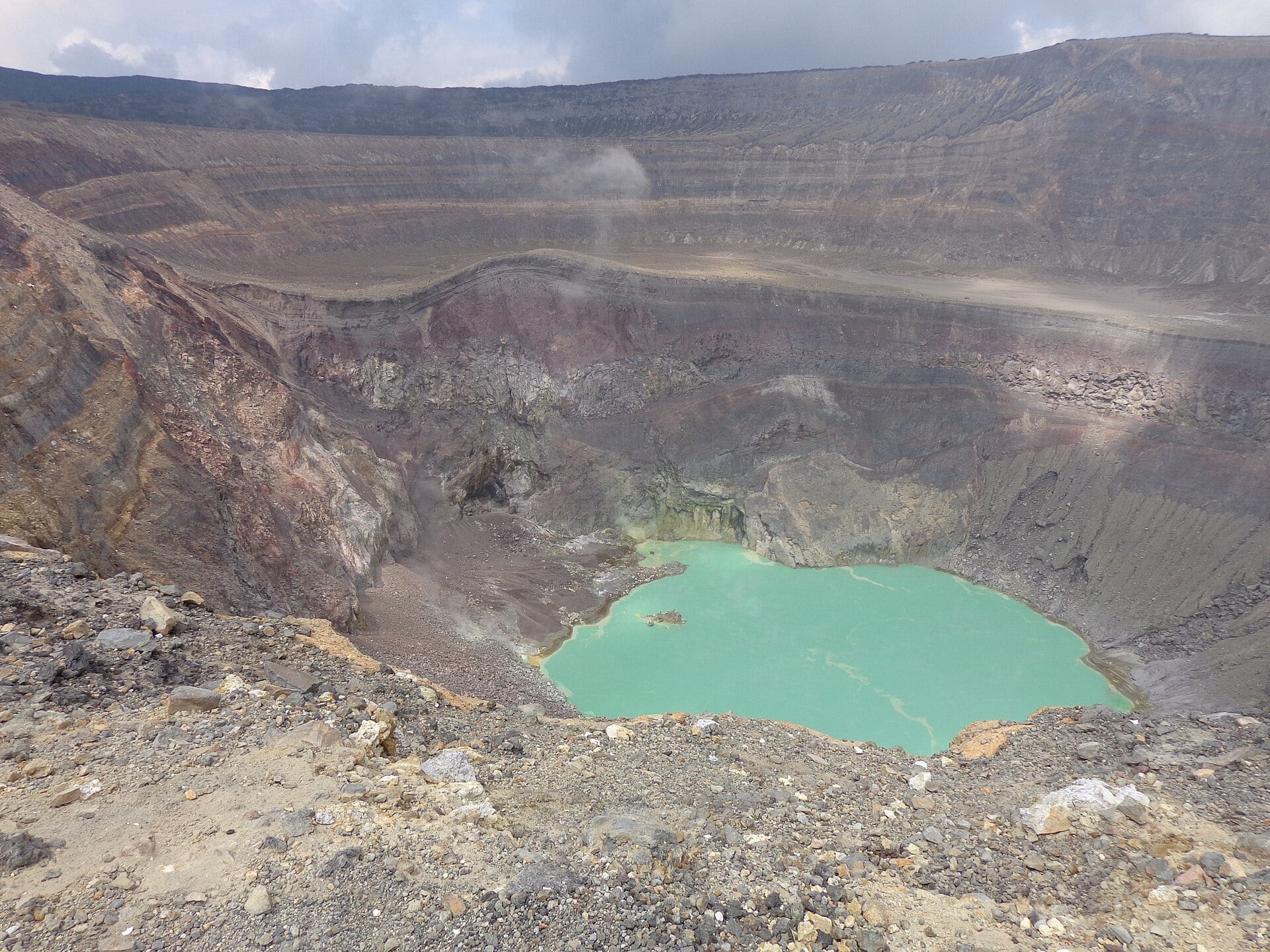
El Salvador covers 21,040 square kilometres, a little less than New Jersey and slightly larger than Slovenia. It is the only Central American country with no Caribbean coast. Its whole shoreline faces the Pacific, below a chain of volcanoes and coffee-growing highlands.
About 6.37 million people lived there in 2025, according to the World Bank, which is roughly the population of Denmark. That works out at around 300 people per square kilometre, so the country is crowded and physically compact.
Modern El Salvador was shaped by a civil war from 1980 to 1992 between a military-backed government and leftist guerrillas. Peace accords signed in January 1992 turned the guerrillas into a political party, the FMLN. Two parties then alternated in power: the right-wing ARENA from 1989 to 2009 and the FMLN from 2009 to 2019.
Peace did not bring safety. Street gangs, chiefly MS-13 and Barrio 18, grew into a nationwide extortion system.
In 2015 the official murder rate reached 106.3 per 100,000 people. That number is the backdrop to everything that followed.
Who runs El Salvador and how
The president is head of state and head of government. Nayib Bukele, a former mayor of San Salvador, won in 2019 as an outsider and took office on 1 June that year.
He was re-elected on 4 February 2024 with 84.65 percent of the vote. The count came from the Supreme Electoral Tribunal (TSE), the national electoral authority.
That second term was itself contested. The constitution then barred immediate re-election, but in 2021 a Supreme Court chamber appointed by Bukele’s allies ruled he could run. Félix Ulloa has been vice-president since 2019.
Parliament is a single chamber, the Legislative Assembly. In June 2023 it cut its own size from 84 seats to 60.
It also merged 262 municipalities into 44. In February 2024 Bukele’s party, Nuevas Ideas (New Ideas), won 54 seats, and allies won three more.
With that supermajority the Assembly approved sweeping constitutional reforms on 31 July 2025, by 57 votes to three. They allow indefinite presidential re-election, extend the term from five to six years and abolish the runoff round.
A transitional clause ends Bukele’s current term early, on 1 June 2027. Presidential, legislative and municipal elections will then fall on the same day.
In practice, power runs through the presidency. The Assembly passes the executive’s bills quickly, sometimes on the day they arrive, and the opposition holds three seats.
Critics say it entrenches one-party rule. Supporters answer that voters chose it, repeatedly and by large margins.
Live Market IntelligenceCrypto — Live Market Board
Rio Times · Live Market Intelligence
Crypto — Live Market Board
-0.26%
| Instrument | Last | Change | YoY | Prev. | High | Low | Volume |
|---|---|---|---|---|---|---|---|
| BTC | 63,384 | -0.26% | -47.24% | 63,552 | 64,346 | 63,305 | 22,774,743,040 |
| ETH | 1,886 | +0.26% | -58.90% | 1,881 | 1,920 | 1,879 | 7,916,475,392 |
| SOL | 75.89 | -0.40% | -60.44% | 76.20 | 76.99 | 75.39 | 1,473,821,056 |
| XRP | 1.01 | -1.15% | -69.07% | 1.02 | 1.02 | 1.01 | 1,144,044,416 |
| BNB | 609.60 | -1.12% | -26.81% | 616.50 | 619.30 | 609.23 | 1,266,706,432 |
| ADA | 0.18 | -1.98% | -78.22% | 0.19 | 0.19 | 0.18 | 238,085,632 |
| DOGE | 0.07 | -1.56% | -70.00% | 0.07 | 0.07 | 0.07 | 553,256,192 |
| AVAX | 6.38 | +1.04% | -74.11% | 6.32 | 6.42 | 6.21 | 248,470,560 |
| LINK | 8.77 | -0.06% | -62.73% | 8.77 | 8.87 | 8.68 | 317,054,880 |
| DOT | 0.78 | -0.75% | -81.11% | 0.79 | 0.80 | 0.78 | 43,490,492 |
| LTC | 45.08 | -0.85% | -65.45% | 45.47 | 45.59 | 44.98 | 143,727,712 |
| BCH | 213.85 | +0.10% | -65.44% | 213.64 | 215.69 | 212.54 | 137,956,688 |
| TRX | 0.34 | +0.28% | -4.73% | 0.33 | 0.34 | 0.33 | 436,576,064 |
| XLM | 0.16 | -1.33% | -64.46% | 0.16 | 0.16 | 0.16 | 89,559,864 |
| HBAR | 0.07 | -0.53% | -74.67% | 0.07 | 0.07 | 0.07 | 22,546,186 |
| NEAR | 1.65 | +2.42% | -40.55% | 1.62 | 1.68 | 1.61 | 187,591,264 |
| ATOM | 1.40 | -2.36% | -70.15% | 1.44 | 1.44 | 1.40 | 18,626,964 |
| AAVE | 89.06 | +0.93% | -72.33% | 88.24 | 90.20 | 88.19 | 129,099,704 |
How the economy works
El Salvador has used the US dollar as its currency since 2001, when it replaced the colón. The central bank, the Banco Central de Reserva (BCR), cannot print money or set its own interest rates.
Credit conditions therefore follow the US Federal Reserve. The government must fund itself in dollars it collects in taxes or borrows.
The biggest dollar earner is its people abroad. Remittances, money sent home by migrants, reached a record US$9.99 billion in 2025, up 17.8 percent on 2024, according to BCR figures.
Some 92.4 percent came from the United States. The World Bank puts personal remittances at 27.5 percent of GDP, the total value of goods and services the economy produces.
Output reached US$36.7 billion in 2025 and grew 3.9 percent in real terms. That is about US$5,770 per person, less than a tenth of the US level. The BCR credits investment, which jumped 22.6 percent on public works, construction and machinery.
Tourism and services have grown as fear of crime has fallen. Inflation is low. It was 0.91 percent at the end of 2025 and 2.8 percent in June 2026, according to ECLAC, the UN’s regional commission.
Public debt is the weak point. Public-sector debt including pension obligations stood at US$33.1 billion at the end of 2025, ECLAC reports. That is 90.2 percent of GDP.
The main rating agencies keep it in the single-B band, deep in speculative territory. Interest payments alone took 4.8 percent of GDP in 2025.
That is why the International Monetary Fund (IMF) matters. Its board approved a 40-month Extended Fund Facility, a loan of about US$1.4 billion, on 26 February 2025. In return, the government committed to run primary surpluses (a budget surplus before interest) and to shrink its bitcoin exposure.
Bitcoin became legal tender in September 2021, and businesses were in principle obliged to accept it. On 29 January 2025 the Assembly amended the law by 55 votes, as the IMF deal required. Acceptance became voluntary and limited to private parties.
Taxes can no longer be paid in bitcoin. The state must pay its debts in the currency they were contracted in.
The amended law still describes bitcoin as having legal-tender status, defined by its unlimited power to settle debts. Because no one is obliged to take it, BBC Mundo and others reported that bitcoin had ceased to be official currency. In everyday life the dollar is the money that counts.
What is happening right now
As of 26 September 2026, the state of exception is in its fifth year. The Assembly approved its 55th monthly extension on Wednesday 23 September by 57 of 60 votes.
It runs from 28 September to 27 October 2026. It has been renewed monthly since 27 March 2022, when it followed a surge of gang killings.
Three constitutional guarantees are suspended. They cover the right to know the reason for arrest and to have a lawyer, the time limit on detention before a judge, and private communications.
The government reports 93,162 arrests since 2022. Rights organisations cited by the Spanish news agency EFE have logged over 6,400 complaints of abuse and 570 deaths in state custody.
The government’s case rests on the homicide numbers. The official rate fell to 1.3 per 100,000 people in 2025, from 106.3 in 2015.
Those are security ministry figures. Officials also count 1,212 days without a single recorded homicide since the measure began.
The election cycle has started. Nuevas Ideas confirmed Bukele as its candidate after primaries on 12 July 2026, again with Félix Ulloa as running mate. The right-wing ARENA picked former deputy Mayteé Iraheta Escalante, and the FMLN chose physician Rafael Aguirre.
The IMF relationship is back on track. On 3 September 2026 IMF staff reached agreement on the programme’s combined second and third reviews.
About US$140 million would follow once the IMF board approves. Staff expect 4.5 percent growth in 2026, and said a private operator now controls the state bitcoin wallet, Chivo.
On bitcoin, the IMF accepted documentation that coins added to government wallets since the programme’s first review came from private donations, not public money. The donors have not been named. Government-reported holdings stood at roughly 7,760 bitcoin in early September 2026, according to the government’s own bitcoin tracker as cited by crypto trade media.
What to watch
Between 1 October and 19 November 2026 parties must formally register candidates with the TSE. Bukele’s registration is the first under the 2025 reforms, and it will show whether any legal challenge gets traction. Under the TSE’s electoral calendar, Salvadorans have until 29 November 2026 to update their voter registration.
The current extension of the state of exception expires on 27 October 2026. A 56th renewal vote would normally come in the days before.
Any change in the suspended guarantees would be the first signal of a wind-down. So far every renewal has passed.
The IMF Executive Board vote on the September staff agreement has no public date yet. The programme expects a pension reform to be enacted in 2027.
It targets a primary surplus of 2.9 percent of GDP in 2026 and 3.7 percent in 2027. The monthly remittance figures, which the BCR publishes near the end of each month, are the best quick read on household demand.
The general election falls on Sunday 28 February 2027. Voters choose the president and vice-president, all 60 deputies and all 44 municipal councils. Salvadorans abroad can vote online from 30 January 2027.
There is no runoff any more, so the winner is whoever gets the most votes. The new six-year presidential term begins on 1 June 2027.
What this means for foreigners
For Americans there is no currency risk: prices, salaries and bank balances are in US dollars. Europeans carry the usual euro exposure.
On 26 September 2026 the rate was about 0.88 euros per US dollar, according to open.er-api.com. Cards and cash in dollars work everywhere, and nobody has to accept bitcoin, so it is not a substitute for either.
Security has changed the visitor experience. Beaches and city centres that were once no-go areas now draw surfers, remote workers and retirees.
Our safety guide explains what the US Level 1 travel rating does and does not cover. The suspended guarantees apply across the whole territory, which means foreigners too can in principle be held longer before seeing a judge.
Residence routes are linked to income thresholds set in dollars, and foreigners can buy property under rules our property guide sets out. Our residency, retirement, property, banking and tax guides set out the paperwork and costs. For investors the headline risks are political concentration and public debt, not the currency.
Trade with the United States runs under the CAFTA-DR free-trade agreement, which also covers Central America and the Dominican Republic. On 29 January 2026 the two governments signed an Agreement on Reciprocal Trade.
The US Trade Representative called it the first of its kind in the Western Hemisphere. It caps the extra US tariff on most remaining Salvadoran goods at 10 percent.

Connected Coverage
Investing in El Salvador as a Foreigner: Property, Bitcoin Rules and the New Security Premium
El Salvador Living Costs: US$265 Urban Food Basket, About US$899 for a Central One-Bedroom
El Salvador Bank Accounts for Foreigners: Required Papers and Deposits From US$0 to US$30
El Salvador Ties Residence Permits to Its Minimum Wage and the US Dollar
El Salvador Sets a US$1,226 Monthly Pension Bar for Retiree Residence
Buying Property in El Salvador as a Foreigner 2026 — Rules, Costs and Real Risks
Taxes in El Salvador for Expats 2026 — What You Owe and What Stays Untaxed
El Salvador Residency Visa 2026 — Income, Papers, Timelines
Is El Salvador Safe for Expats in 2026: What the Level 1 Rating Leaves Out
Healthcare in El Salvador for Expats 2026 — Cover and Costs
Bukele Holds 6494 Bitcoin as IMF Deal Ends Compulsory Acceptance
Sources: Output, growth and remittances from the Banco Central de Reserva and the World Bank, fiscal data from ECLAC and the IMF, election rules from the Supreme Electoral Tribunal and the Legislative Assembly, and trade terms from the US Trade Representative. All accessed 26 September 2026.
- IMF — Press Release 26/285, staff-level agreement on the second and third EFF reviews, 3 September 2026
- Banco Central de Reserva — the economy grew 3.9 percent in 2025
- Banco Central de Reserva — 2026 growth outlook
- World Bank — World Development Indicators: population, GDP, GDP per person, remittances, land area
- ECLAC (CEPAL) — El Salvador: economic performance in 2025 and outlook for 2026
- EFE via El Diario de Hoy — BCR remittance data for 2025
- Diario El Salvador — remittances by country of origin, 2025
- Legislative Assembly — Constitutional Reform Agreement No. 4, citing the 31 July 2025 reform of Article 154
- BBC — El Salvador scraps presidential term limits, 1 August 2025
- Diario El Mundo — TSE keeps 28 February 2027 as election date
- El Diario de Hoy — presidential tickets and TSE registration window for 2027
- Associated Press — 2024 presidential and legislative results
- Reuters — bitcoin law amended after the IMF deal, 29 January 2025
- El Diario de Hoy — article-by-article changes to the Bitcoin Law
- EFE via SWI swissinfo.ch — 55th extension of the state of exception, 23 September 2026
- El Diario de Hoy — suspended guarantees under the 55th extension
- Dinero.com.sv — official homicide rate for 2025
- Office of the US Trade Representative — US–El Salvador Agreement on Reciprocal Trade, 29 January 2026
- Tech Times — IMF clearance of bitcoin donations and the Bitcoin Office purchase posts, 4 September 2026
- Crypto Briefing — government bitcoin holdings, September 2026
- open.er-api.com — US dollar reference rates, 26 September 2026
What Is Not Known
When the state of exception ends. No end date or exit criteria have been published, and every one of the 55 extensions has passed.
Nobody has independently established how many of the 93,162 people detained are gang members. The government itself has acknowledged a “margin of error” in arrests.
Who gave the bitcoin. The IMF accepted documentation that additions since the programme’s first review were private donations.
Neither the fund nor the government has named the donors or the amounts. According to Tech Times, the government’s own bitcoin office publicly described recent additions as purchases, and the two accounts have not been reconciled in public.
How the debt comes down. The target is public debt of 80 percent of GDP by 2030, from about 90 percent now.
It depends partly on a pension reform expected in 2027. The board date for the next IMF disbursement is also unknown.
How competitive the 2027 election will be. Bukele remains highly popular in published polls, and the opposition is fragmented. Whether the TSE, the courts or international observers raise objections to his candidacy under the 2025 reforms is not yet known.
Frequently Asked Questions
Does El Salvador use the US dollar?
Yes. The US dollar has been legal tender since 2001, when it replaced the colón, and prices, wages and bank accounts are in dollars. The central bank cannot print money or set its own interest rates.
Is bitcoin still legal tender in El Salvador?
Only on paper. A reform approved on 29 January 2025 under the IMF deal made acceptance voluntary and limited to private parties, and taxes can no longer be paid in bitcoin. The law still describes bitcoin as legal tender, but nobody is obliged to take it.
Who is the president of El Salvador in 2026?
Nayib Bukele of Nuevas Ideas, in office since 1 June 2019 and re-elected on 4 February 2024 with 84.65 percent of the vote. A 2025 constitutional reform ends his current term early, on 1 June 2027.
When is the next election in El Salvador?
On Sunday 28 February 2027. Voters choose the president and vice-president, all 60 deputies and all 44 municipal councils, with no runoff. Bukele is Nuevas Ideas’ candidate for a six-year term starting on 1 June 2027.
What is the state of exception?
An emergency regime in force since 27 March 2022 that suspends three constitutional guarantees linked to arrest, detention and private communications. The Assembly approved its 55th monthly extension on 23 September 2026, running to 27 October 2026. The government reports 93,162 arrests.
How important are remittances to El Salvador?
Very. Families received a record US$9.99 billion in 2025, up 17.8 percent, and 92.4 percent came from the United States. The World Bank puts personal remittances at 27.5 percent of GDP.
This article was produced by The Rio Times’ automated newsroom system. How we use AI · Report an error
Read More from The Rio Times