Peru’s Role in Latin America, Weight and Alliances in 2026

PERU · CONTINENTAL ROLE
Key Facts
- —What it is Peru is South America’s fourth-most-populous country and a mid-sized economy with outsized influence in mining, Pacific trade and Andean integration.
- —Why it matters Peru holds the pro tempore presidency of the Community of Andean Nations for 2026-2027, shaping regional security, disaster and integration agendas.
- —The numbers Peru’s 2025 census put the total population at 34,157,732, of which 32,706,028 were counted directly and 1,451,704 were estimated as omitted.
- —The catch Peru’s regional weight is institutional and commercial rather than demographic or military; its influence depends on implementation, not declarations.
- —Who is who Keiko Fujimori has been Peru’s president since 28 July 2026.
- —What it means for you For foreigners, investors and expats, Peru offers a stable macroeconomic base, Pacific trade access and a dense network of regional agreements that reduce friction in cross-border business.
Peru continent role is that of a mid-sized South American power with a Pacific vocation, a population above 34 million and a diversified export economy. It leads the Andean Community in 2026-2027 and uses multiple blocs to amplify its voice.
Peru sits on South America’s Pacific coast, bordered by Ecuador, Colombia, Brazil, Bolivia and Chile. This guide explains how Peru fits into Latin America: its demographic and economic weight, its institutional memberships, its alliances and disputes, and what that means for anyone doing business or living in the region.
Peru’s Demographic and Economic Weight
Peru is not a giant like Brazil or Mexico, but it is far from small. Peru’s 2025 census put the total population at 34,157,732, of which 32,706,028 were counted directly and 1,451,704 were estimated as omitted. That makes Peru the fourth-most-populous country in South America, after Brazil, Colombia and Argentina, and more populous than Chile, Ecuador and Bolivia.
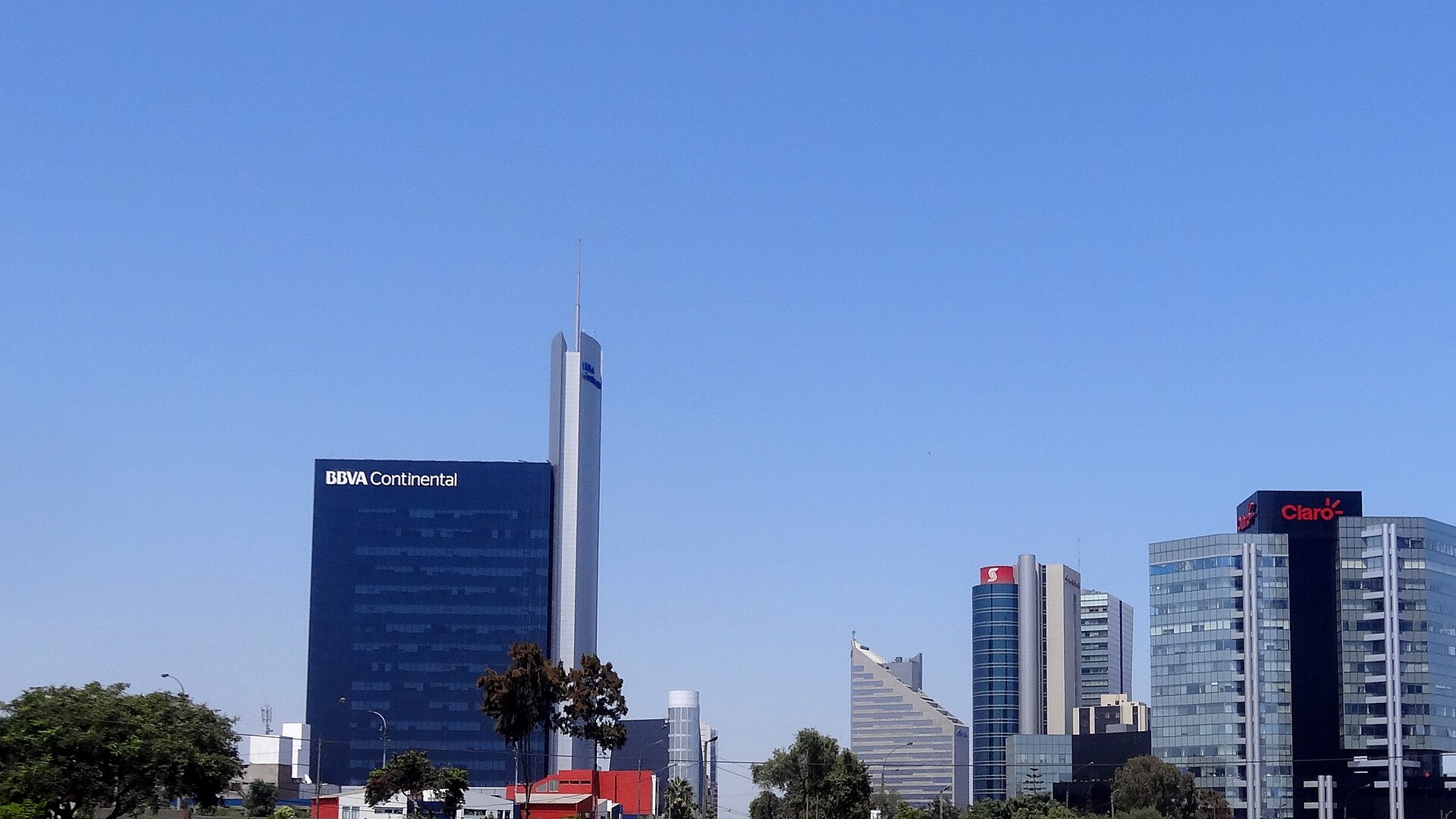
The census counted 32,706,028 people directly, while a post-enumeration survey estimated 1,451,704 omitted residents, equivalent to 4.25 percent of the total population. Lima Metropolitana accounted for 10,129,708 inhabitants, approximately 29.7 percent of the country’s 34,157,732 residents. This concentration matters for investors: the capital is Peru’s dominant political, financial, consumer and logistics hub, while mining, agriculture and energy activity are spread across the interior.
Economically, Peru is a mid-sized player with a strong record of stability. The Central Reserve Bank of Peru reported that real economic activity grew 3.4 percent in 2025, up from 3.3 percent in 2024.
A Spanish government country profile, citing Peruvian official data, gives Peru’s 2025 GDP at approximately US$334.85 billion in current US dollars.
Peru’s regional importance therefore comes less from absolute size than from the combination of a population above 34 million, a diversified export base, large copper and gold resources, the port of Callao, strong agricultural and fisheries exports, and a history of macroeconomic stability. The Central Reserve Bank has described Peru’s inflation performance since the beginning of the century as among the region’s strongest, comparable in some periods with developed economies.
Peru’s Institutional Anchors in Latin America
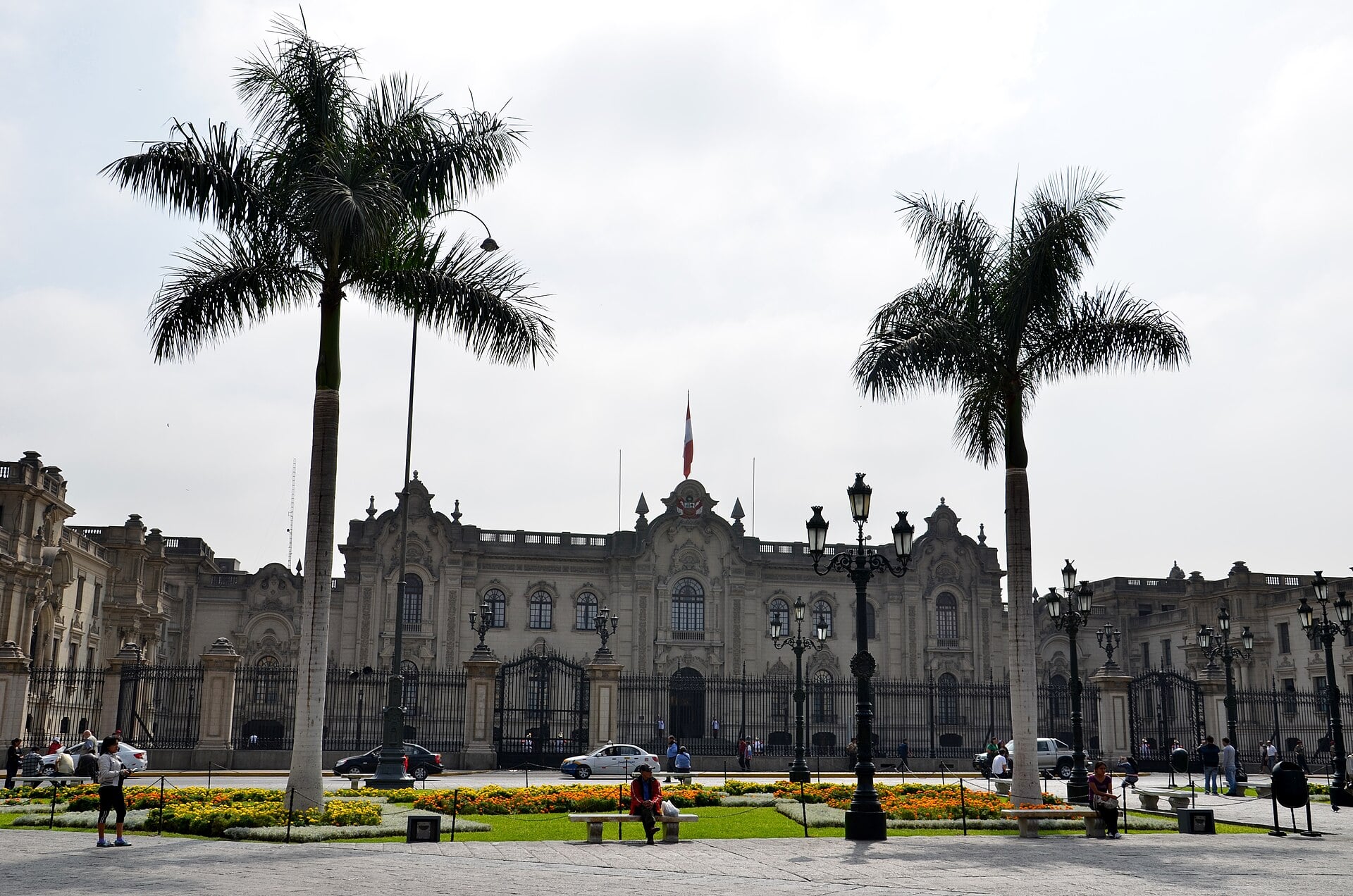
Peru belongs to several overlapping regional bodies, each serving a different purpose. The most directly relevant is the Community of Andean Nations, known by its Spanish acronym CAN. Its members are Bolivia, Colombia, Ecuador and Peru. Peru assumed the organization’s pro tempore presidency for 2026-2027 at a meeting in Quito on September 30, 2026.
Foreign Minister Carlos Espá identified three priorities for Peru’s chairmanship: regional security and the fight against transnational threats, disaster-risk management and environmental sustainability, and Andean citizenship and border integration. The agenda also includes digital transformation, stronger international relations for the CAN, cross-border transport, trade facilitation, a possible Andean single airspace, an Andean intra-community cabotage regime and prison cooperation.
Peru has proposed three broader strategic goals for its CAN presidency: convergence between the CAN and Mercosur, closer relations with Chile, Panama and Venezuela, and progress toward a common Andean foreign policy on issues such as artificial-intelligence governance and transnational organized crime. The challenge is implementation. The four members have different economic models and political priorities, and the CAN has historically struggled to translate institutional decisions into deeper political coordination.
Mercosur: Associated, Not Full Member
Peru is not a full Mercosur member. It participates as an Associated State, a status that gives it a structured relationship with the bloc without placing it inside the common-market decision-making system. Peru participated in the 68th Summit of Mercosur Heads of State and Associated States in Asunción on June 30, 2026, under Paraguay’s pro tempore presidency.
Peru was represented by Jorge Félix Rubio, director general for Economic Affairs at the Ministry of Foreign Affairs. Lima used the meeting to reiterate its support for regional integration, economic competitiveness, trade facilitation, coordination between Mercosur and the CAN, and a more connected South American economic space. Peru’s position toward Mercosur is pragmatic rather than transformational. Its main commercial orientation remains Pacific-facing, but it has an interest in improving overland and maritime links with Brazil, Bolivia, Paraguay, Uruguay and Argentina.
Pacific Alliance and CELAC
Peru is an active member of the Pacific Alliance, together with Chile, Colombia and Mexico. The group is commercially oriented and emphasizes integration, investment, services, mobility and connections with the Asia-Pacific region. For Peru, the Pacific Alliance complements rather than replaces the CAN: the CAN provides the closest Andean framework, while the Pacific Alliance links Peru to Mexico and the Pacific economies of Chile and Colombia.
Peru also participates in the Community of Latin American and Caribbean States, known as CELAC, the region-wide political forum that excludes the United States and Canada. CELAC is principally a mechanism for political consultation and collective dialogue rather than a customs union or supranational body. Peru’s role in CELAC reflects its preference for maintaining multiple diplomatic channels: it can engage South American neighbors through the CAN, work with Mexico, Chile and Colombia through the Pacific Alliance, participate in region-wide political discussions through CELAC, and retain a hemispheric, rules-based channel through the OAS.
Organization of American States
Peru is a member of the Organization of American States, or OAS, and maintains a permanent mission representing Peruvian state interests in the organization. Peru’s stated priorities in the OAS include democratic governance, anti-corruption policy, human rights, hemispheric peace and security, counterterrorism, and combating transnational organized crime and drug trafficking.
Peru has particular diplomatic credibility in the OAS because the Inter-American Democratic Charter was signed in Lima in 2001. That is especially relevant because Peru’s recent political instability has made electoral oversight and democratic legitimacy central issues in its international relations. On October 2, 2026, Foreign Minister Carlos Espá attended the 31st Meeting of Consultation of Ministers of Foreign Affairs at OAS headquarters in Washington, dealing with Nicaragua, among other regional concerns.

Alliances and Bilateral Relationships
Peru’s most consequential bilateral partners in Latin America are its neighbors, particularly Ecuador and Chile. Ecuador shares a border, trade, migration and security agenda with Peru. The two countries have used a presidential meeting and binational cabinet format to coordinate policy.
Under Peru’s CAN presidency, coordination with Ecuador is especially important because Ecuador transferred the organization’s rotating leadership to Peru. Ecuador’s current president is Daniel Noboa, according to official and local reporting cited in the search results. The bilateral agenda is increasingly shaped by border security, illegal mining and organized crime, migration, infrastructure, disaster management, and trade and transport corridors.
Chile is a central partner in Peru’s Pacific orientation and in the Pacific Alliance. The relationship is commercially significant but historically sensitive because of the maritime and territorial disputes inherited from the War of the Pacific. The maritime boundary dispute was submitted to the International Court of Justice, which issued its judgment in 2014. Current bilateral relations are more institutionalized than in earlier decades, but nationalism and political rhetoric can still affect the relationship.
How Peru Compares With Its Peers
Peru is not among Latin America’s largest economies in absolute terms. Brazil and Mexico are in a different scale category, while Argentina and Colombia also have larger or comparable economic mass depending on the year and exchange-rate measure.
What distinguishes Peru from many peers is its combination of macroeconomic stability, Pacific access and institutional density. The Central Reserve Bank has described Peru’s inflation performance since the beginning of the century as among the region’s strongest, comparable in some periods with developed economies.
The table below summarises Peru’s position among South American peers, based on the 2025 census and official economic data cited in this article.
| Indicator | Peru | Regional context |
|---|---|---|
| Population, 2025 census | 34,157,732 | Fourth in South America, after Brazil, Colombia and Argentina |
| Real GDP growth, 2025 | 3.4% | Above Peru’s 3.3% in 2024; among the steadier performers in the region |
| External assets, December 2025 | US$202.58 billion | Equivalent to 59.4% of GDP, according to the Central Reserve Bank |
| Lima Metropolitan Area share of population | 29.7% | 10,129,708 people; one of the highest capital concentrations in South America |
Peru’s regional influence is therefore selective. It is not a military or diplomatic heavyweight in the way Brazil is, nor does it have Mexico’s demographic and economic scale. But in mining, Pacific trade, food exports, Andean integration and hemispheric diplomacy, Peru’s voice carries weight beyond its population share.
The Current State in 2026 and Open Questions
As of October 2026, Peru is led by President Keiko Fujimori, who took office on 28 July 2026. Rogers Valencia is Peru’s minister of Foreign Trade and Tourism.
The central open question is whether Peru can convert its institutional positions into concrete results. The CAN presidency gives Lima a platform, but the organization has historically struggled to move from declarations to implementation. The proposed CAN-Mercosur convergence is ambitious, but differences over tariffs, standards, industrial policy and political priorities remain substantial.
Another open question concerns political stability. Peru’s recent political instability has made electoral oversight and democratic legitimacy central issues in its international relations. For foreign investors, that matters: political predictability is as important as macroeconomic stability.
What Peru’s Continental Role Means for Foreigners and Investors
For a foreigner, expat or investor, Peru’s continental position offers several practical advantages. The country’s membership in the CAN, Pacific Alliance, CELAC and OAS means that a business based in Peru can access multiple regional frameworks without choosing one over another. The Pacific Alliance, in particular, links Peru to Mexico, Chile and Colombia in a commercially oriented bloc that emphasises investment, services and mobility.
Peru’s macroeconomic record is another draw. The Central Reserve Bank reported real growth of 3.4 percent in 2025. Inflation has been among the region’s strongest since the beginning of the century. These are not headline-grabbing numbers, but they are the kind of figures that reduce risk for long-term investors.
The risks are also clear. Lima’s concentration of 29.7 percent of the population creates logistical and political bottlenecks. The CAN’s implementation gap means that regional agreements may not translate into faster border crossings or harmonised regulations. And political instability, while less acute than in some periods, remains a factor that foreign businesses must monitor.
What to Watch
Several dates and processes will shape Peru’s continental role in the coming months. The CAN pro tempore presidency runs through 2027, with Peru’s stated priorities of regional security, disaster-risk management and Andean citizenship. The proposed CAN-Mercosur convergence will be tested in technical meetings and summits.
The OAS consultation on Nicaragua, which Foreign Minister Espá attended on October 2, 2026, will continue to occupy hemispheric diplomacy. Peru’s memorandum with Guatemala on consular and migration matters, signed on 2 October 2026, may bring follow-up meetings.
For anyone watching Peru continent role, the key is to look beyond declarations. Peru’s influence in Latin America is real but conditional: it depends on implementation, on political stability, and on the willingness of larger neighbours to treat Lima as a partner rather than a junior player. The institutional architecture is in place. The question is whether Peru can use it.
Related reading: Peru news and analysis; Peru neighbours explained; Peru political instability explained; Peru Explained.
Frequently Asked Questions
Is Peru a member of Mercosur?
No. Peru is not a full Mercosur member. It participates as an Associated State, which gives it a structured relationship with the bloc without placing it inside the common-market decision-making system. Peru attended the 68th Summit of Mercosur Heads of State and Associated States in Asunción on June 30, 2026.
What is Peru’s population as of the 2025 census?
Peru’s 2025 national census put the population at 34,157,732 people, making it the fourth-most-populous country in South America after Brazil, Colombia and Argentina. Lima Metropolitana accounted for 10,129,708 inhabitants, approximately 29.7 percent of the country’s 34,157,732 residents.
What is Peru’s role in the Andean Community?
Peru assumed the pro tempore presidency of the Community of Andean Nations for 2026-2027 at a meeting in Quito on September 30, 2026. Foreign Minister Carlos Espá identified three priorities: regional security, disaster-risk management, and Andean citizenship and border integration.
How large is Peru’s economy compared with its neighbours?
Who is Peru’s president in 2026?
Peru’s president as of October 2026 is Keiko Fujimori, who took office on 28 July 2026. Rogers Valencia is Peru’s minister of Foreign Trade and Tourism.
What is the Pacific Alliance and why does it matter for Peru?
The Pacific Alliance is a commercially oriented bloc whose members are Peru, Chile, Colombia and Mexico. It emphasises integration, investment, services, mobility and connections with the Asia-Pacific region. For Peru, it complements the Andean Community by linking Lima to Mexico and the Pacific economies of Chile and Colombia.
What are Peru’s main bilateral relationships in Latin America?
Peru’s most consequential bilateral partners are Ecuador and Chile. With Chile, Peru shares membership in the Pacific Alliance.
Sources: exteriores.gob.es, andina.pe, bcrp.gob.pe, bcrp.gob.pe, andina.pe, gob.pe. Retrieved 3 October 2026.
This article was produced by The Rio Times’ automated newsroom system. How we use AI · Report an error · Editorial responsibility: Matthias Camenzind, Editor-in-Chief