PERU · GEOPOLITICS
Key Facts
- —The country Peru is an Andean republic on the Pacific and was the world’s third-largest copper miner in 2025, by US Geological Survey estimates.
- —Who governs Keiko Fujimori, a conservative, took office on 28 July 2026; her foreign minister calls the US an ally and China Peru’s main trading partner.
- —The US tie Washington named Peru a major non-NATO ally in January 2026, and Lima said in September it would join the US-led Shield of the Americas.
- —The China tie China bought about 38% of Peru’s goods exports from January to July 2026, and a COSCO unit controls the new Chancay port.
- —The friction Since 24 July 2026, a 12.5% US tariff has applied to Peruvian goods outside an exemption list, although the US runs a trade surplus with Peru.
- —Still open Peru’s Shield entry is a political commitment, not a treaty, and its practical scope was still undefined in September 2026.
Peru geopolitics in 2026 rests on a simple split: the United States is the security partner, while China is the biggest customer. For American readers, that split decides who shapes a major copper supplier and a Pacific gateway to Asia.
President Keiko Fujimori has moved closer to Washington on security since July 2026 without breaking with Beijing on trade.

Who Sets Peru’s Foreign Policy in 2026
Keiko Fujimori of Fuerza Popular, a conservative party, won the 2026 presidential runoff with 50.135% of valid votes. She beat leftist Roberto Sánchez of Juntos por el Perú by 49,641 votes, according to ONPE, the electoral office.
Congress swore her in on 28 July 2026 for the 2026–2031 term. Background on the vote is in how Fujimori won the 2026 runoff, and the wider country profile is in Peru explained.
Her foreign minister, Carlos Espá, set out the line on 31 July 2026. He called the US “a partner, ally and strategic friend” and China “our main trading partner and an important source of investment”.
Espá named APEC, the Asia-Pacific Economic Cooperation forum, as Peru’s main trade platform towards Asia. He called Peru’s bid to join the OECD, a club of mostly wealthy democracies, a tool to raise standards.
That is the frame for Peru geopolitics under the new government: closer security ties with Washington and steady trade with Beijing. Peru’s place among its neighbours is covered in Peru’s role in Latin America and on the Rio Times Peru page.
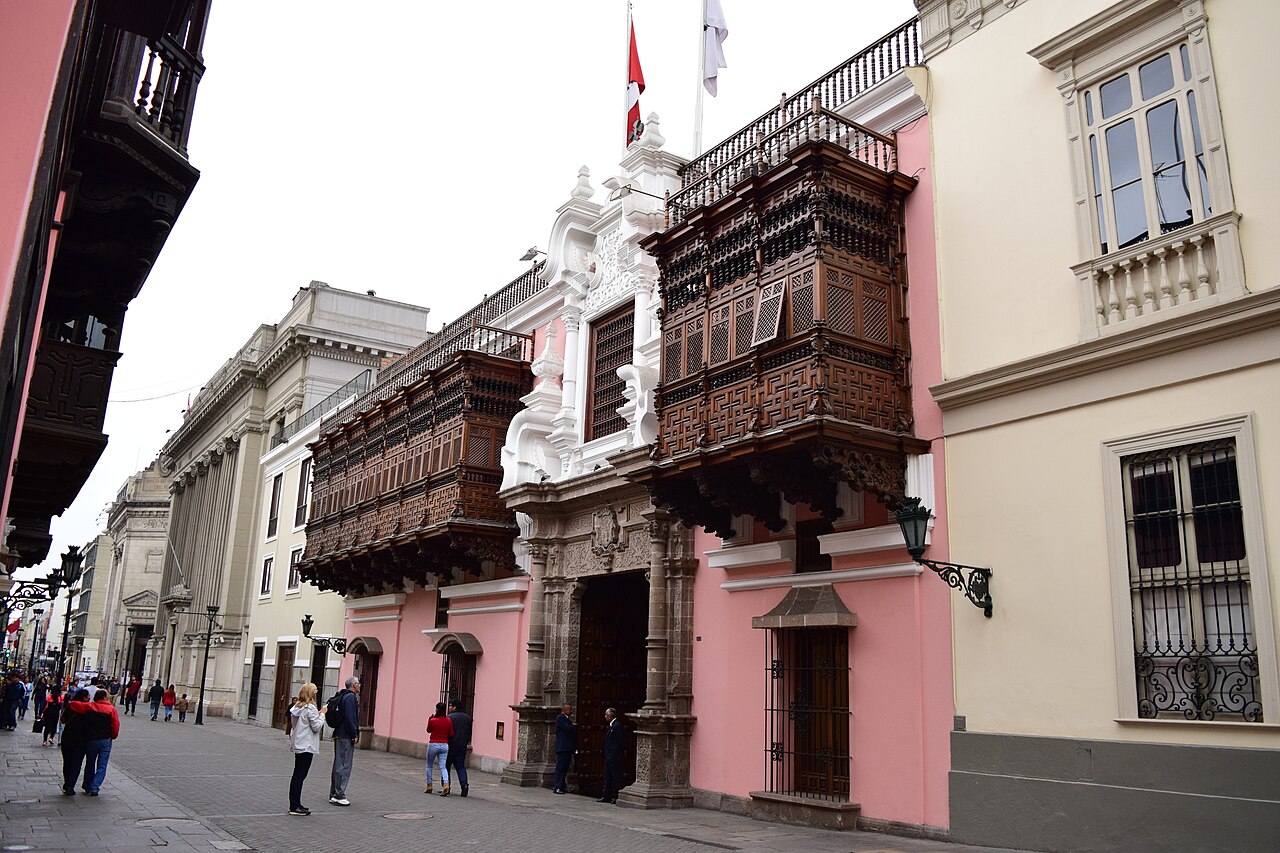
The United States: Security Partner and Ally
On 14 January 2026, President Donald Trump designated Peru a major non-NATO ally. The status is reserved for close US defence partners outside NATO.
On 10 September 2026, with Marco Rubio beside her in Lima, Fujimori said Peru would join the Shield of the Americas. The US-led coalition, launched in March 2026, targets cartels and other transnational criminal groups.
Rubio, the US secretary of state, spoke of “a new era in US-Peru relations, a golden era in many ways”. Details are in Peru’s Shield announcement and Rubio’s visit to Lima.
The entry rests on a political commitment rather than a treaty. On 16 September 2026, Espá told the Senate it was not formalised by treaty and, for now, created no binding obligations.
He added that the scope of actions, the agencies involved and the legal instruments were still to be set. On 22 September 2026, Fujimori joined Trump and other regional leaders at a Shield meeting in New York.
Fujimori has said any entry of foreign troops still needs special authorisation from Peru’s Congress, as the constitution requires. She also credited the FBI with information that led to the capture of a Los Pulpos gang member in Bolivia.
Defence purchases follow the same direction. A US arms-sale notice sent to Congress in September 2025 values a package of 12 F-16 Block 70 jets at US$3.42 billion.
In April 2026 Lockheed Martin confirmed Peru’s plan to buy an initial batch of 12. The jets are due to be built at the company’s plant in Greenville, South Carolina.
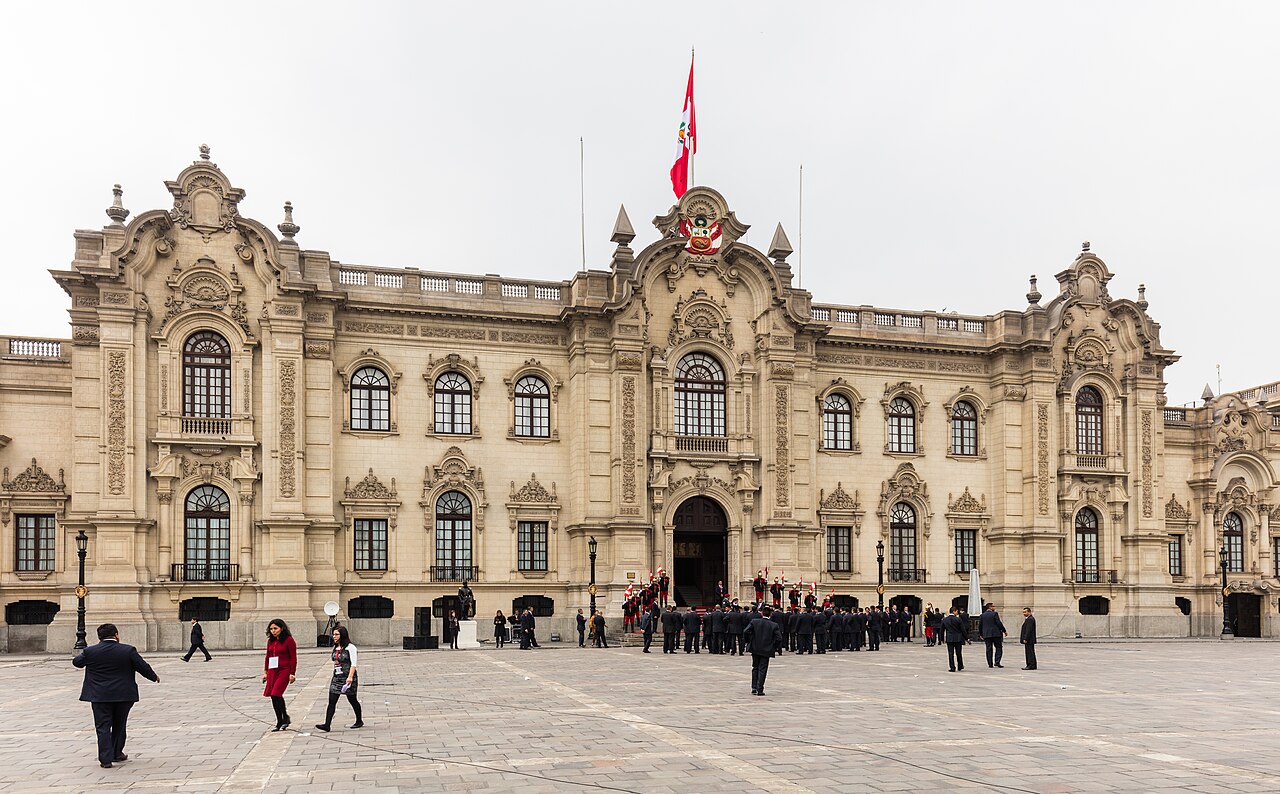
Trade With Washington: A Free-Trade Deal and a New Tariff
Peru and the United States have had a trade promotion agreement, in effect a free-trade deal, since 1 February 2009. Mincetur, Peru’s trade ministry, ranks the US as its second-largest trading partner in 2026.
The US is also the top buyer of Peru’s non-traditional exports, such as fresh fruit, vegetables and clothing rather than minerals. US Census Bureau data show US goods exports to Peru of US$12.1 billion in 2025, against imports of US$10.7 billion.
That left Washington with a goods surplus of US$1.4 billion in 2025, and US$1.9 billion from January to July 2026. Peru was hit by a new tariff all the same.
From 24 July 2026, the Office of the US Trade Representative (USTR) applied a 12.5% duty to products of Peru, with exemptions. The legal basis is Section 301 of the 1974 Trade Act, applied to 60 economies accused of failing to ban forced-labour imports.
Mincetur says more than 2,000 products, worth 45% of US imports from Peru, are exempt. The duty replaced a temporary 10% US surcharge that expired the same day.
Avocados, coffee, cocoa and mangoes are exempt, while grapes, blueberries, asparagus and mandarins pay, Peruvian broadcaster RPP reported. Trade Minister Rogers Valencia met US Trade Representative Jamieson Greer in Washington in September 2026 to discuss the measures.
Mincetur says a first round of reciprocal-trade talks with the US took place in 2025. The tariff is now the sharpest irritant in Peru geopolitics with Washington.
Copper also ties the two economies. Peru supplied 7% of US refined copper imports in 2021–2024, the US Geological Survey says.
China: Peru’s Biggest Customer
China is Peru’s largest export market by a wide margin. From January to July 2026, Peru shipped US$24.34 billion of goods to China, out of total exports of US$63.52 billion.
That is about 38% of the total, against US$5.97 billion, or about 9%, for the United States, according to Mincetur. Copper, gold, lead and fishmeal drove the growth of sales to China in early 2026, the ministry said.
A free-trade agreement with China has been in force since 1 March 2010. Peru ratified an upgrade by decree on 25 July 2026.
The upgrade adds rules on digital trade and customs cooperation, plus a framework to attract more Chinese investment.
For Peru geopolitics, this trade weight explains why Lima refuses to pick a side. Peru’s big copper mines and their buyers are covered in Peru copper mining explained.
The Chancay Port and the Asia Corridor
The clearest symbol of China’s presence is Chancay, a port on the coast north of Lima. Chinese leader Xi Jinping and then-president Dina Boluarte opened it by video link on 14 November 2024.
Xi said Chancay would consolidate Peru’s position as a gateway connecting “Asia and Latin America”. He said China was ready to build a new land-sea corridor to Latin America with Peru, starting at the port.
COSCO Shipping Ports, the Hong Kong-listed port arm of China’s COSCO Shipping group, owns 60% of the terminal company. A minority partner holds 40% and may sell that stake to COSCO within five years of commercial start-up.
Chancay received its operating licence in June 2025 and handled about 336,000 twenty-foot container units that year. COSCO booked a US$10.8 million loss on the terminal in 2025, while throughput rose 51.6% in the first eight months of 2026.
From January to July 2026, Chancay was Peru’s second-busiest container port after Callao, Gestión, a Lima business daily, reported. It handled 246,452 units in that period, according to Universidad del Pacífico data.
That puts a Chinese-run gateway on the Pacific coast of a country Washington calls an ally.
Chinese Money in Mines and Electricity
Chinese firms also hold large stakes in mining and power. Las Bambas, an open-pit copper mine in the Andean region of Apurímac, belongs to a consortium led by Hong Kong-listed MMG.
MMG holds 62.5%, with Chinese partners Guoxin International at 22.5% and CITIC Metal at 15%. Commercial production began in 2016.
In electricity, China Southern Power Grid International took 83.15% of Enel Distribución Perú in a deal struck in April 2023. The company, now Pluz Energía Perú, serves about 1.6 million customers in Lima and Callao.
Indecopi, Peru’s competition authority, cleared the purchase in June 2024 after a close review, according to the International Energy Agency. The agency puts the deal’s value at US$2.92 billion.
According to El Comercio, a Lima daily, Espá told senators that joining the Shield was no decision against China. “Strengthening cooperation with a partner on security does not mean automatically taking positions towards third countries,” he said.
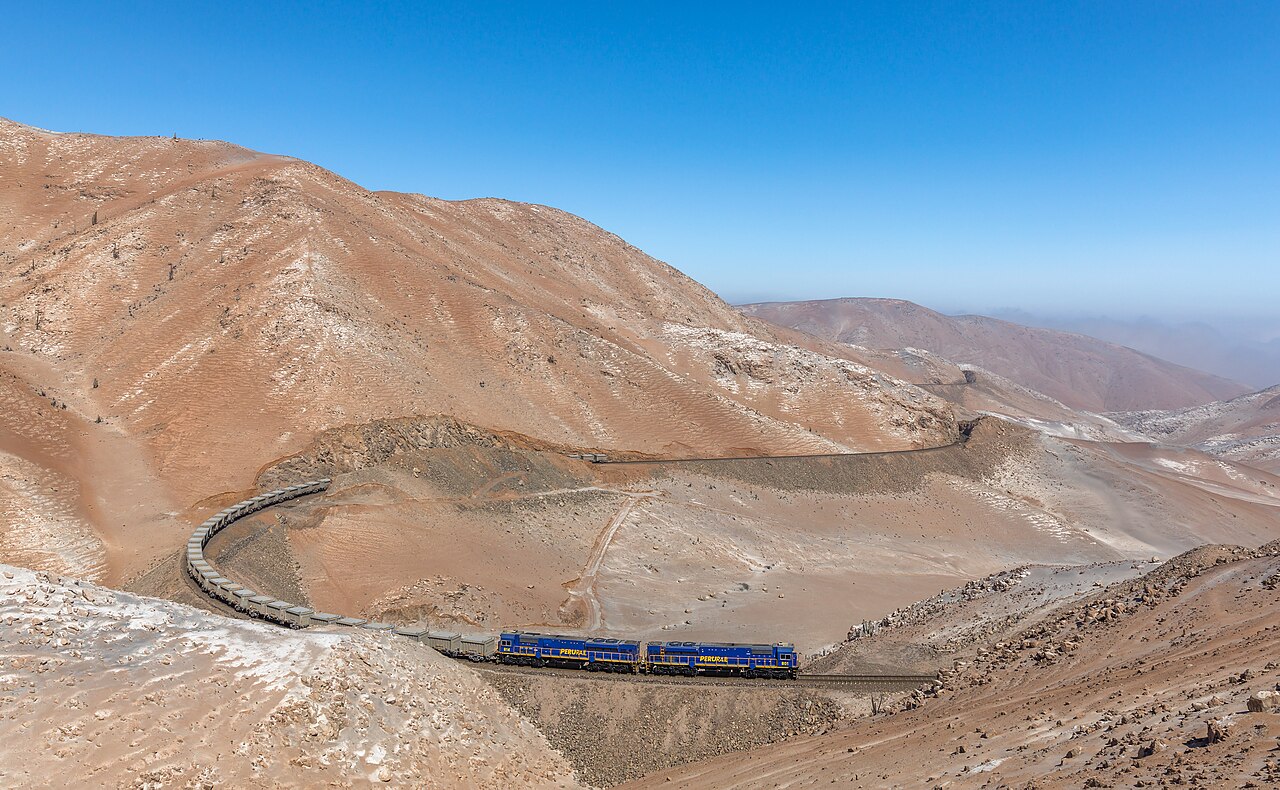
Europe, the Gulf and India
Beyond Washington and Beijing, Peru courts three other groups of partners. Europe matters to Peru geopolitics as a market and port operator rather than a security actor.
Europe: A Trade Deal and Port Operators
The European Union is a steadier, quieter partner. Its trade agreement with Peru has applied provisionally since 1 March 2013, according to the European Commission.
Peru sold US$5.62 billion of goods to the EU in January–July 2026, up 6.5% on a year earlier. That puts the EU close to the US as a market, Mincetur data show.
European and Gulf operators run Peru’s main port. At Callao, next to Lima, the container terminals are run by APM Terminals, part of Denmark’s Maersk group, and Dubai’s DP World.
The two handled 1.9 million twenty-foot container units from January to July 2026, Gestión reported from port authority data.
Europe also lost a contest for Peru’s new fighter jets. Sweden’s Gripen and France’s Rafale were in the running before the F-16 won, according to The Aviationist, a military aviation site.
The Gulf and India: Gold Buyers and New Talks
Peru has no trade agreement with any Middle Eastern country, Mincetur says. It is negotiating one with the United Arab Emirates and finished a fourth round of talks on 17 September 2026.
Peru’s exports to the UAE reached US$2.89 billion in 2025, and gold made up 98.8% of them. Valencia met the UAE’s foreign trade minister, Thani Al Zeyoudi, in September 2026 to push the deal.
India has become a large buyer as well. Peru’s exports to India jumped 151.7% to US$6.18 billion in January–July 2026, slightly more than its sales to the United States.
A trade deal with India has been under negotiation since formal rounds began in 2017, Gestión reported in June 2026. Elsewhere in Asia, Peru ratified a partnership agreement with Indonesia in September 2026.
That Indonesia deal takes effect once Jakarta completes its own ratification, Mincetur said. In Peru geopolitics, these Asian links are a hedge against depending on China alone.
Russia and BRICS: Small Weight, Loud Debate
Russia carries little economic weight in Peru. It does not appear among the main export markets that Mincetur listed for January to July 2026.
Its legacy is mostly military. Peru’s air force flies Soviet-designed MiG-29s and French Mirage 2000s, which the F-16s are meant to replace, The Aviationist reports.
BRICS, the emerging-economy bloc named after Brazil, Russia, India, China and South Africa, came up in the 2026 campaign. Roberto Sánchez backed joining it and keeping ties with Russia open, in an interview with Russia’s Sputnik agency.
Sánchez lost the runoff, and Peru is not a BRICS member. The bloc held its 2026 summit in New Delhi on 12–13 September, under India’s chairmanship.
In Peru geopolitics, Russia and BRICS are a debating point rather than a policy. Peru’s dealings with nearby powers are set out in Peru and its Andean neighbours.
What It Means for US Readers
For US importers, the direct cost is the 12.5% duty on Peruvian goods outside the exemption list, such as grapes and blueberries. Lima is lobbying Washington to lower it.
For US investors, a pro-US security policy sits beside Chinese control of a port, a copper mine and Lima’s largest power distributor. Contracts, supply chains and political risk all sit on that fault line.
Copper is the strategic link. Peru was the world’s third-largest copper miner in 2025 and a steady supplier of refined copper to the US market.
On security, Peru is now inside the Shield, but joint action on its soil depends on Peruvian law and, for troops, Congress. Peru geopolitics is therefore a test of whether a US ally can keep China as its top customer.
What Is Not Known
What the Shield commits Peru to in practice remains open. Espá said the scope of actions, the agencies involved and the legal instruments are still to be set.
Whether Lima wins tariff relief is unclear; talks with USTR were continuing in late September 2026. In August 2026 Mincetur said the upgraded China deal would take effect soon, without giving a date.
Defence reports say Peru wants a second batch of F-16s, but only the first 12 are confirmed. How Washington will answer Chinese control of Chancay is also unknown.
Frequently Asked Questions
Is Peru closer to the United States or to China?
On security, Peru sits closer to the United States, which named it a major non-NATO ally in January 2026. On trade, China leads, buying about 38% of Peru’s goods exports in January–July 2026. In Peru geopolitics, the government says it will deepen ties with both.
Is Peru a member of the Shield of the Americas?
Peru announced it would join on 10 September 2026, during Marco Rubio’s visit to Lima. The foreign minister told the Senate on 16 September 2026 that the entry is not a treaty and, for now, carries no binding obligations. Its practical scope is still being defined.
Who owns the Chancay port?
COSCO Shipping Ports, part of China’s COSCO Shipping group, owns 60% of the terminal company and a minority partner holds 40%. The port opened on 14 November 2024 and began commercial operations in 2025.
Does the United States charge tariffs on Peruvian goods?
Yes. Since 24 July 2026, a 12.5% Section 301 duty has applied to Peruvian products outside an exemption list, despite a trade agreement in force since 2009. Peru is negotiating for relief.
Is Peru part of BRICS?
No. A leftist candidate proposed joining during the 2026 campaign but lost the runoff to Keiko Fujimori. Peru trades with BRICS members bilaterally, above all with China and India.
Why does Peru geopolitics matter to American investors?
Peru was the world’s third-largest copper miner in 2025, by USGS estimates, and Chancay gives it a direct port link to Asia. Who controls its ports, mines and power distribution affects metal supply chains that reach the US.
Sources: Peru Foreign Ministry, Nota de Prensa 149-26, 31 July 2026; US Department of State, Rubio and Fujimori joint press availability, 10 September 2026; Congress of Peru, Foreign Minister before the Senate, 16 September 2026; Federal Register, Presidential Determination on Peru as a Major Non-NATO Ally, 23 January 2026; Federal Register, Arms Sales Notification (Transmittal 25-96), 27 January 2026; Federal Register, USTR Section 301 forced labour actions, 28 July 2026; US Census Bureau, Trade in Goods with Peru, accessed 5 October 2026; Mincetur, exports January–July 2026, 9 September 2026; El Peruano, Mincetur on the additional US tariff, 24 July 2026; Mincetur, Peru-UAE CEPA fourth round, 23 September 2026; COSCO Shipping Ports, Annual Report 2025, 2026; MMG, Las Bambas, accessed 5 October 2026; International Energy Agency, Southern Power Grid’s acquisition of Enel Peru distribution assets, 2025; European Commission, EU trade relations with the Andean Community, accessed 5 October 2026; US Geological Survey, Mineral Commodity Summaries 2026: Copper, January 2026; Prime Minister of India, BRICS New Delhi Declaration, 12 September 2026.
This article was produced by The Rio Times’ automated newsroom system. How we use AI · Report an error · Editorial responsibility: Matthias Camenzind, Editor-in-Chief