
PERU · REGIONS
Key Facts
- Territory Peru has 24 departments plus Callao, the port province beside Lima, and all 25 units elect their own governor.
- People 34.2 million people live in Peru, and 58.7% of them live on the Coast.
- Economy Lima, together with Callao, produced 42.4% of national output (GDP) in 2024.
- Lima Lima city has a mayor, not a governor, under a special legal regime.
- Next vote Governor runoffs are set for Sunday 6 December 2026 where no candidate pair won 30%.
- Power Index Peru ranks 5th of 14 in The Rio Times Latin America Power Index, with 53.9 points (November 2026 edition).
Peru’s map has 24 departments, one constitutional province and a capital that runs without a governor, and this is how it all fits together.
A traveller who lands in Lima, drives north along the desert coast and then flies to Cusco crosses three very different Perus in a single week. For US readers the contrast is practical, because the official in charge of a road or a clinic changes from one region to the next.
Peru is divided into 24 departments and one constitutional province, and each of those 25 units elects its own regional government. This guide explains how they fit together with the provinces, districts and natural zones around them, and it builds on our Peru history explained primer.
How Peru Is Divided Into Departments, Provinces and Districts
The country is split into 24 departments plus the Constitutional Province of Callao, which is treated as a region in its own right. Each department is divided into provinces, and each province into districts.
Each province has its own mayor. INEI, Peru’s national statistics institute, published 2025 census results for the provinces and for 1,892 districts on 10 July 2026.
For regional politics, the department is the unit voters know best, because it elects a governor. A district is the smallest layer, closer to a town hall than to a state capital.
In Plain English
- —Region The regional government that runs a department, so the two words are often used for the same place.
- —Department One of 24 large territorial units, each with its own elected regional government.
- —Province The middle layer inside a department, run by a provincial municipality under a mayor.
- —District The smallest layer, a town or city area with its own local authority.
- —Governor The elected head of a regional government, the post the law calls regional head.
- —Canon A share of state revenue from natural resources that is passed on to regions and towns.
Why Lima Has a Mayor and No Governor
Lima city is a province, and it is run under a special regime that gives it no governor. Under the Organic Law of Regional Governments, known as Ley 27867, Article 66, its Metropolitan Council, the elected council of the city, holds the powers of a regional council.
The Metropolitan Mayor holds the powers of the regional executive. In practice, the mayor of Lima therefore does the work that a governor does elsewhere.
The rest of Lima department is called Lima Provincias, and it is a regional government with its own governor. Callao, by contrast, is both a province and a region, with one authority.
Lima Metropolitana, the province of Lima, is home to 9.6 million people, more than a quarter of all Peruvians. Only three other provinces exceed 1 million people.
Lima has a mayor where every other region has a governor.
The Coast: Ports, Farms and the Capital
The Coast is the desert strip between the Pacific and the Andes, and INEI counts 58.7% of Peru’s people on the Coast. Its departments are Lima, Callao, Piura, Lambayeque, La Libertad, Ancash, Ica, Arequipa, Moquegua, Tacna and Tumbes.
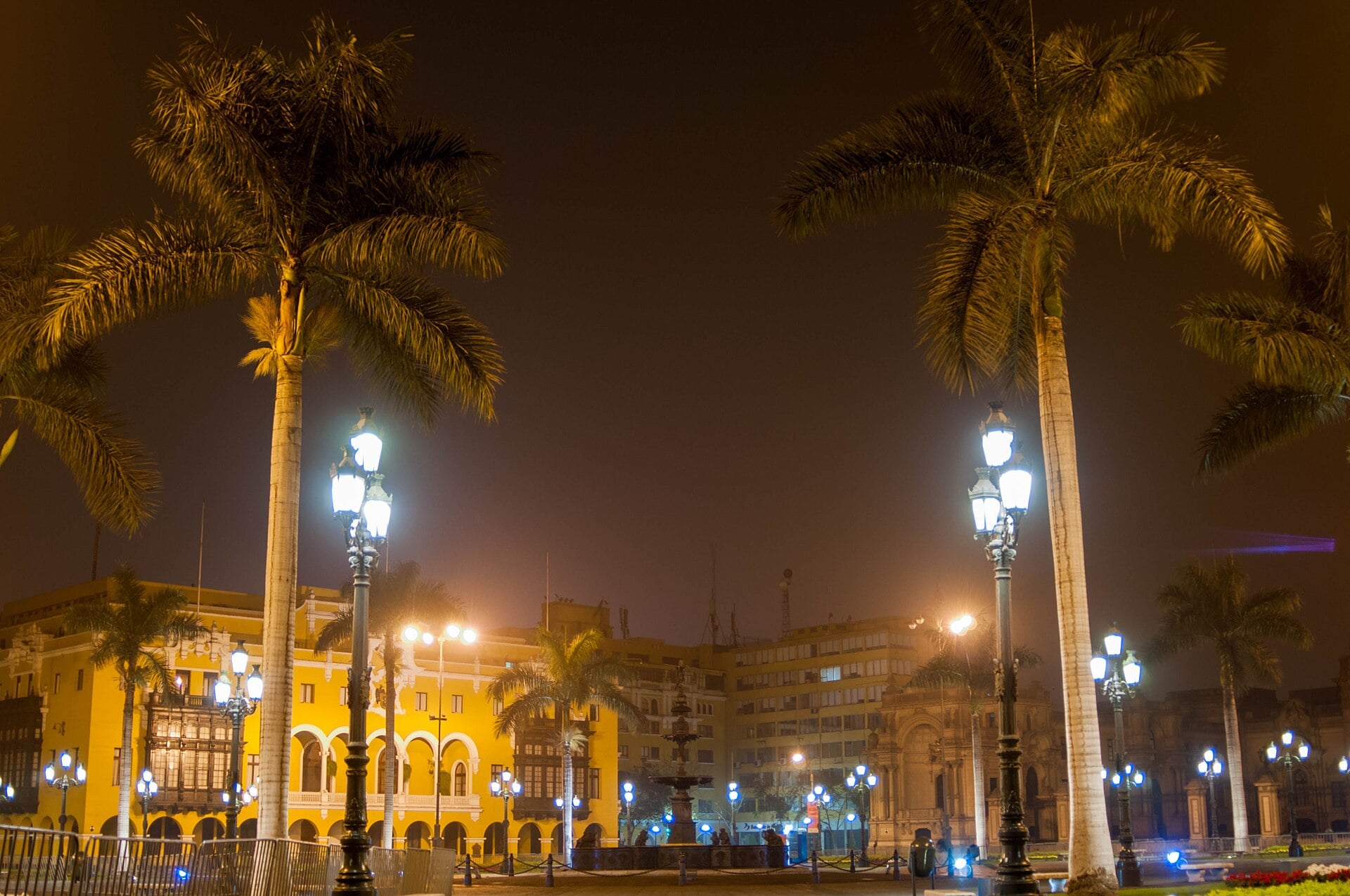
The zone’s economy includes ports, agro-export, fishing, industry and services. Lima, together with Callao, produced 42.4% of national GDP in 2024, according to INEI.
Outside the capital, Arequipa produces 5.4% of GDP, La Libertad 4.6%, Piura 4.4% and Ica 4.3%. Arequipa is also one of only four provinces with more than 1 million people, alongside Trujillo, Callao and Lima Metropolitana.
Moquegua, in the south, has the highest output per head in Peru, about 3.5 times the national average. Mining and related extraction make up 47.5% of its economy, and 46.3% of neighbouring Tacna’s.
Growth is uneven even inside this one zone. Cerro Colorado, a district in Arequipa, grew 3.6% a year between 2017 and 2025, while the districts of Trujillo, in La Libertad, and Chiclayo, in Lambayeque, shrank by 0.7% and 0.2% a year.
The Andes: Mines, Farms and Machu Picchu
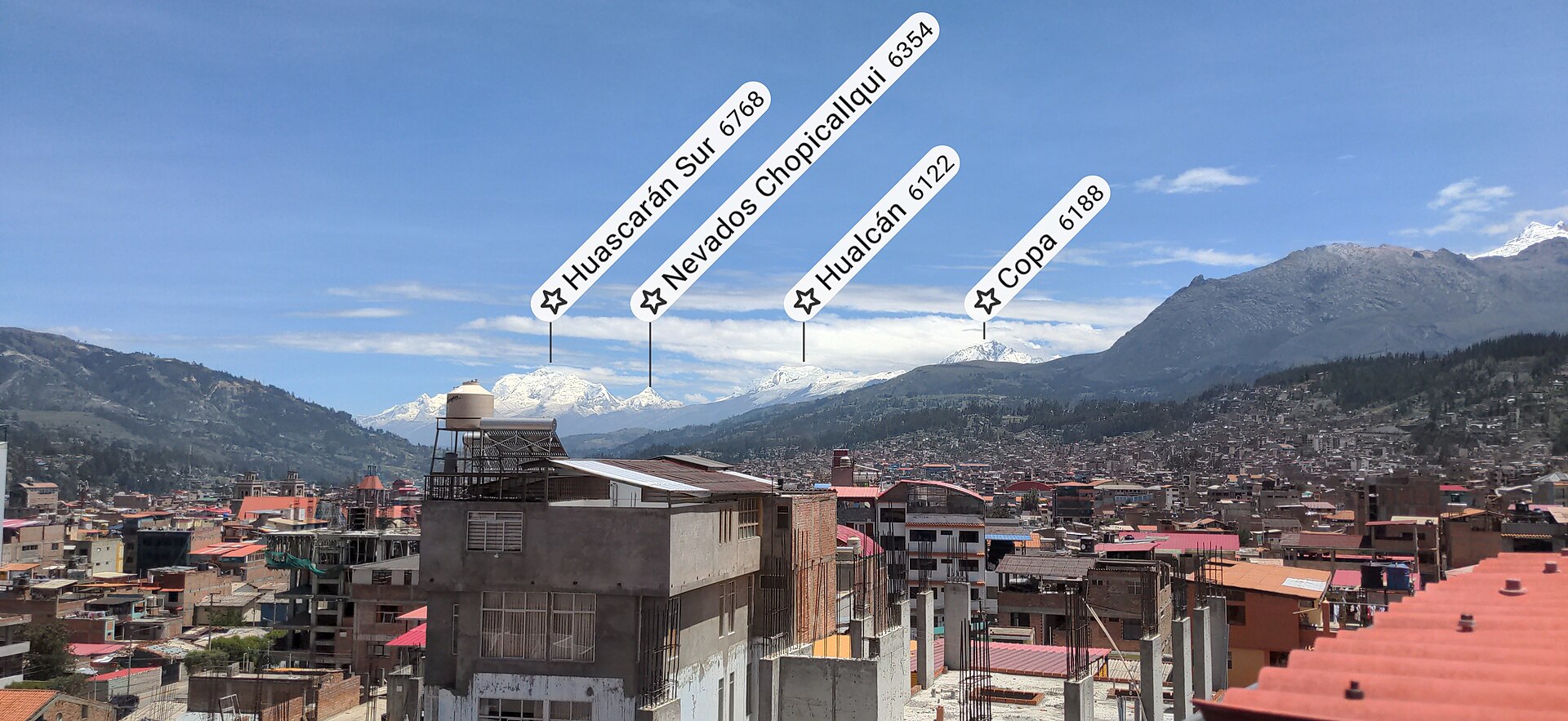
The Andes zone, known in Peru as the Sierra, rises from the coastal desert into high mountain ranges, and INEI counts 26.7% of the population in the Sierra. Its departments are Cusco, Puno, Junin, Cajamarca, Apurimac, Ayacucho, Huancavelica, Huanuco and Pasco.
The economy mixes mining and farming, with tourism around Cusco and Machu Picchu. These department lists are approximate, and Ancash, listed with the Coast, also reaches into the high Andes around Huaraz.
Mining and Related Extraction, Share of Regional GDP, 2024
- —Apurimac 59.9% of the department’s economy comes from mining and related extraction.
- —Pasco 53.4% of the department’s economy comes from mining and related extraction.
- —Moquegua 47.5% of the department’s economy comes from mining and related extraction.
- —Tacna 46.3% of the department’s economy comes from mining and related extraction.
- —Ancash 41.6% of the department’s economy comes from mining and related extraction.
Cajamarca, Amazonas and Huancavelica are the most rural departments in the country. Cajamarca ranks fifth lowest in Peru for output per head in INEI’s 2024 data.
Huancavelica produces 0.7% of national GDP and Pasco 0.9%, which places both among the smallest economies. The district of Juliaca, in Puno, shrank by 1.1% a year between 2017 and 2025.
The Amazon: Rivers, Timber and Gold
The Selva, or Amazon zone, covers the eastern lowlands, and INEI counts 14.3% of Peruvians in the Selva. Its departments are Loreto, Ucayali, San Martin, Amazonas and Madre de Dios.
The economy includes river transport, timber, oil, gold and agriculture. Iquitos is the capital of Loreto.
Madre de Dios, at 0.4% of national GDP, is the smallest of INEI’s 24 departmental economies. Ucayali accounts for 0.8% and Amazonas for 0.6%.
Ucayali, San Martín, Loreto and Amazonas have the lowest output per head in Peru, and Loreto and Amazonas sit at roughly half the national average. INEI’s figures do not explain the gap.
What a Regional Government Actually Does
The Regional Council is the law-making and oversight body, made up of between 7 and 25 councillors who serve alongside the governor and vice governor. Councillors are elected for four years.
A Regional Coordination Council also exists, made up of provincial mayors and civil-society members in a 60/40 split. It only gives advisory opinions.
Regional Powers Under the Law
- —Land and sea Agriculture and fisheries.
- —Resources Energy, mining and the environment.
- —Services Education and health.
- —Movement Roads and tourism.
Under the same law, regions are competent in all of these fields, each according to law. In everyday terms, that means regional governments carry education and health functions and handle regional roads and tourism promotion.
Voters choose a governor and a vice governor on one ticket, and the officials chosen govern for four years. The 4 October 2026 elections filled 25 governor posts and 25 vice governor posts.
Where the Money Comes From, the Mining Canon
The canon minero is a revenue-sharing rule that ties mining areas to the metal markets. It equals 50% of the income tax paid by mining companies, under the canon law, Ley 27506.
The Ministry of Economy and Finance, known as the MEF, approves the sharing formulas each year. They use population and unmet basic needs to decide who receives what.
By formula set in law, the money is shared among regional governments, local governments and public bodies such as universities. Local governments receive the largest combined share.
For regions, this links public budgets to metal prices. When prices rise, mining areas can see larger transfers in later years, and when they fall, budgets can tighten.
Who Lives Where in Peru
INEI counted 34,157,732 people in its 2025 census, or about 34.2 million. Some 80.6% live in urban areas, and Lima Metropolitana and Callao are fully urban.
Peru by the Numbers
- —Coast 58.7% of the population.
- —Sierra 26.7% of the population.
- —Selva 14.3% of the population.
- —Urban 80.6% of the population.
Only four provinces exceed 1 million people: Lima Metropolitana, Arequipa, Trujillo and Callao. In all, 27 provinces exceed 200,000 people.
San Juan de Lurigancho, in Lima, is the most populous district, with 1.125 million residents. The districts of Carabayllo, in Lima, and Veintiséis de Octubre, in Piura, grew 2.9% and 2.7% a year between 2017 and 2025.
The 4 October Elections and the 6 December Runoffs
On 4 October 2026 Peruvians voted for 25 governors and 25 vice governors. Where no governor pair reaches at least 30% of valid votes, a second round follows.
On 7 October the plenary of the JNE, the National Jury of Elections and the country’s electoral court, set Sunday 6 December 2026 for the second round of the regional elections. It covers governor and vice governor only, so there is no runoff for mayors, including Lima’s mayor.
The date moved from 29 November. At least 15 regions could go to the runoff, and the list can still change.
Peru’s presidency still has to formally convene the vote. Our regional runoffs explained guide covers the rules, and the full list of runoffs shows which regions are involved.
Regional politics is one layer of power in the country. For the continental picture, see The Rio Times Latin America Power Index.
Social Conflict and the Regions
Peru’s state ombudsman, the Defensoría del Pueblo, counted 191 social conflicts in its Report 269 for July 2026. Of these, 94 (49.2%) were socio-environmental, meaning disputes over the environmental effects of economic activity.
A social conflict is a dispute between communities, companies and the state. Report 269 is the ombudsman’s running tally of such disputes across the country.
What It Means for You
For Visitors
Lima is a province with its own mayor, while regional governments run regional roads, health posts and tourism promotion elsewhere. Check local advisories for each region before you travel, because transport disruptions, strikes and blockades are announced region by region.
With 191 conflicts counted in July 2026, travellers should check local advisories before any overland trip. Build some slack into any itinerary that crosses the highlands.
Those planning a longer stay will find the practical details in our cost of living in Peru and moving to Peru guides. Both are written for newcomers who want to compare places before they choose one.
For Investors
Regional governments run roads, health and education services, which shape the climate for any local operation. The 4 October elections and 6 December runoffs choose the officials who will run them for the next four years.
Canon revenue ties regional budgets to metal prices, which makes mining regions sensitive to commodity cycles. Peru’s currency is the sol, so US investors should translate any local figure into US$ before comparing regions.
The regional map decides who signs the permit, who keeps the roads open and who hears the community.
What Is Not Known
The final list of runoff regions and their pairings is not known, because the count can still change. The exact swearing-in date of the new governors is not confirmed here.
How much mining canon each region will receive in 2027 is unknown, since the MEF sets the formulas each year. Regional budget execution rates for 2026 are not confirmed.
Looking Ahead for Peru’s Regions
The map of Peru’s regions will look slightly different after 6 December, when some governors are chosen in a second round. The most useful habit for any reader is to follow the officials who control roads, health posts and permits in the place that matters to them.
Frequently Asked Questions
How many regions does Peru have?
Peru has 24 departments plus the Constitutional Province of Callao, and each of the 25 units elects its own regional government. Lima Metropolitana is the exception, with a special regime and no governor.
Does Lima have a governor?
Not for the city itself. Its Metropolitan Mayor holds regional powers, while the rest of the department, Lima Provincias, elects its own governor.
What is the canon minero?
It is 50% of the income tax paid by mining companies, passed to regional and local governments by formula. The MEF approves the sharing formulas each year using population and unmet basic needs.
When is the regional runoff?
It is set for Sunday 6 December 2026 in every region where no governor pair reached 30% of valid votes. It covers governor and vice governor only, and the presidency still has to formally convene it.
Which region has the biggest economy?
Lima, together with Callao, produced 42.4% of national GDP in 2024, according to INEI. Arequipa follows with 5.4%.
Sources: INEI (2025 Census results, 10 July 2026; GDP by department 2024, published 30 December 2025); JNE (plenary of 7 October 2026); Ley 27867, Organic Law of Regional Governments; Ley 27506 (canon minero) and the Ministry of Economy and Finance; Defensoría del Pueblo, Report 269 (July 2026).
This article was produced by The Rio Times’ automated AI newsroom. Editorial responsibility: Matthias Camenzind, Publisher and Editor-in-Chief. How we use AI · Report an error
Expat Guide to Peru
What The Rio Times publishes for foreigners who live in or move to Peru.
Start here
- Arequipa City Guide, Government, Projects and Safety
- Lima Rent for Foreigners in 2026 Averages US$979 a Month
- Peru Education and Healthcare Explained
- Peru’s New Crime Command and What It Means for Visitors
City guides
Coming up in Peru
- Camilo Plays Arequipa, Peru, on 8 November 2026 8 Nov
- Teatro Colón Opera Soloists Make Their Lima Debut on November 10, 2026 10 Nov
- Hardwell Lima Bans Everyone Under 16 13 Nov
- Cypress Hill Plays Lima, Peru, on 13 November 2026 13 Nov
Understand Peru