
PERU · SECURITY AND CRIME
Key Facts
- —The country Peru, a US free-trade partner and Andean coca-growing nation.
- —Homicide rate Estimated 10.7 per 100,000 people in 2025, up from 8.6 (2021).
- —What happened A 1,350-member military-police crime command was announced on 7 October 2026.
- —In Congress The Senate is weighing 90 days of decree powers on crime.
- —US travel advice Level 2; do not travel to the VRAEM or Colombian border.
- —Still open Whether senators restore armed forces and intelligence powers.
Peru security now turns on extortion gangs, cocaine routes and illegal gold mining, which have made crime the dominant political issue. A new government is testing how far the army should go.
Peru security has deteriorated since 2021, driven by extortion gangs, drug trafficking and illegal gold mining. Homicides rose from 8.6 per 100,000 people in 2021 to an estimated 10.7 in 2025, says INEI, the national statistics institute.
This guide explains the crime trends, the armed groups, the police and army, and the hotspots, as of October 2026. It ends with what the situation means for people who live in, invest in or visit Peru.
Peru Security in Numbers
The clearest measure is the homicide rate, which counts killings per 100,000 residents in a year. INEI put it at 8.6 in 2021, 10.1 in 2024 and an estimated 10.7 in 2025.
The 2025 figure is a preliminary estimate with a statistical range of 10.2 to 11.2, INEI said in January 2026. A rate of 10.7 means about one killing a year for every 9,300 residents.
Extortion is the crime that dominates the national debate. INEI counted about 5,400 extortion complaints in the last quarter of 2025, down from about 6,800 a year earlier.
Police counted fewer homicides and extortion complaints in early January 2026 than a year before, the state news agency Andina reported. Complaint counts, however, capture only the cases that victims choose to report.
In March 2026 the previous government set a goal of cutting the homicide rate to 8.5 by 2028. El Peruano, the state newspaper that publishes Peru’s laws, reported the target.

Extortion, the Crime That Shapes Daily Life
Extortion in Peru usually means a gang demanding a regular payment from a shop, a building site or a bus line. Those who refuse can face threats, shootings or attacks with small bombs.
Bus and minibus companies, small traders and builders are frequent targets in Lima and in northern cities such as Trujillo. Bus drivers are especially exposed, because fixed routes and timetables make them easy to find.
Many threats arrive by phone or messaging app, often from inside prisons or from abroad. That is why the government wants powers to locate phones used in crimes and to cut off inmates’ communications.
Prosecutors are pursuing leaders as well as foot soldiers, as the case against a jailed gang boss known as El Monstruo shows. Such cases take years, while new gangs fill the gaps.
The Gangs and Armed Groups Behind the Violence
Peru has no single dominant cartel. Violence comes from several kinds of groups, each tied to a different illegal business.
- Local extortion gangs: neighbourhood crews in Lima and the north that sell protection and carry out contract killings, called sicariato.
- Tren de Aragua: a Venezuelan gang the US State Department designated a foreign terrorist organisation in February 2025; Peruvian police have arrested members of its factions.
- Shining Path remnants: survivors of the Maoist insurgency of the 1980s and 1990s, still active in the VRAEM, the State Department says.
- Cocaine traffickers: Peru is one of three Andean countries that grow coca, the raw material for cocaine, alongside Colombia and Bolivia.
- Illegal gold miners: armed groups fighting over gold seams in districts such as Pataz, in the northern La Libertad region.
- Border smugglers: drug and crime groups along the Putumayo River on the Colombian border, in the Amazon region of Loreto.
The VRAEM is the valley of the Apurímac, Ene and Mantaro rivers, a remote coca-growing zone in central Peru. It spans parts of the Ayacucho, Cusco, Huancavelica and Junín regions.
Pataz shows how mining and crime overlap. The gold district has been under repeated states of emergency; the latest 60-day extension began on 3 October 2026.
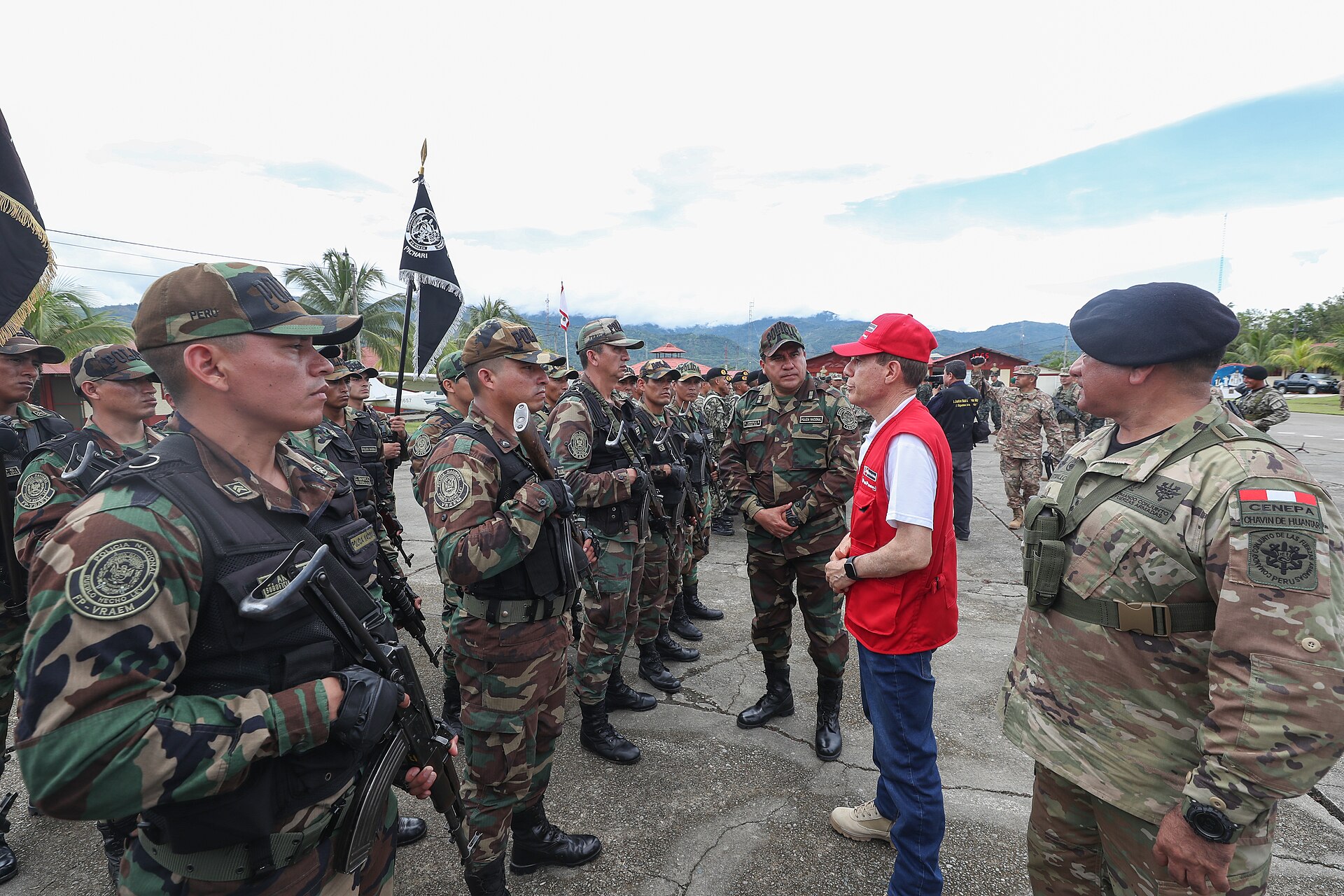
The Police, the Army and Emergency Rule
The National Police of Peru (PNP) fights crime nationwide and reports to the Interior Ministry. As of October 2026 the interior minister is César Astudillo, and the defence minister is Rafael Belaunde.
The police have had frequent changes at the top: General Fredy López Mendoza became commander in September 2026, El Peruano reported. He replaced Óscar Arriola, who stepped down amid a wave of killings.
Article 137 of Peru’s Constitution lets the president declare a state of emergency for up to 60 days, renewable by new decree. Some rights can then be suspended, including freedom of movement, freedom of assembly and the inviolability of the home.
Under such an emergency the police normally stay in charge of internal order, with the armed forces in support. The Constitution allows the armed forces to take control if the president so decides.
Governments have used this tool repeatedly against crime in Lima and Callao, the port city next to the capital. In April 2026 the emergency there was extended by 60 days under Supreme Decree 062-2026-PCM.
Each emergency decree is published in El Peruano, which lists the areas covered and the rights restricted. Visitors in an emergency zone should carry identification, because police checks become more frequent.
Fujimori’s New Military-Police Crime Command
Keiko Fujimori, leader of the conservative Fuerza Popular party, became president on 28 July 2026 after campaigning on security. On Wednesday, 7 October, she announced a unified command of the armed forces and the police.
The force, called the Combined Forces for the Fight Against Organised Crime, has 1,350 members, according to the cabinet office. It will be directed from a control and operations centre at Army headquarters in San Borja, a Lima district.
Fujimori said the state would retake control of prisons and cut off inmates who direct crimes from their cells. She also promised to expel foreigners who break the law “in record time,” Andina reported.
The financial intelligence unit, the national intelligence directorate, the telecoms regulator Osiptel and phone companies are to feed information to the effort. An elite group of police and soldiers will run special operations.
The details of the launch are in the report on Peru’s new military-police crime command. The command came together with a request to Congress for decree powers.
The Senate Fight Over Crime Powers
Since the 2026 elections, Peru’s Congress has two chambers, a Chamber of Deputies and a Senate. The government first asked for 120 days of powers to legislate by decree on crime, prisons, migration and other matters.
On Tuesday, 6 October, deputies approved 90 days of powers by 66 votes to 34, with 24 abstentions. The text covers 20 points on citizen security and on El Niño, a periodic Pacific warming that floods Peru’s coast.
The approved security points include migration records, tracking of mobile phones, prisons, firearms and a court system against extortion. Deputies left out intelligence operations and direct support from the armed forces.
Luis Galarreta, the cabinet chief, said each cut left out actions “that Peruvians are waiting for.” He said the government would keep using every tool the Constitution allows.
The Senate’s Constitution Commission, chaired by Fuerza Popular senator Carlos Mesía, declared itself in permanent session on 6 October. Seven ministers were summoned to defend the request on Friday, 9 October, the Lima daily El Comercio reported.
Senators can approve, reject or amend the text, as covered in the Senate’s summons of seven ministers. The result will set how far soldiers may join day-to-day policing.
Hotspots and Safer Areas for Visitors
The US State Department rates Peru at Level 2, Exercise Increased Caution. Its advisory was last updated on 16 May 2025 and was still current in October 2026.
- Do not travel: the VRAEM, in parts of Ayacucho, Cusco, Huancavelica and Junín, because of crime and terrorism.
- Do not travel: the Colombian border area of Loreto, where drug trafficking and poor infrastructure limit policing.
- Not affected: the city of Cusco, the Sacred Valley, the Inca Trail and Machu Picchu, according to the advisory.
The advisory warns that petty theft, carjackings, muggings and assaults happen even in daylight, and that the risk rises at night. Outside Lima, criminal groups sometimes set up roadblocks to rob travellers.
US government staff may not drive at night, except within cities and on the roads from Lima to Huacho and to Paracas. The US government cannot provide emergency services in the VRAEM or the Loreto border area.
Extortion gangs mainly target local businesses and transport operators, not short-term visitors. Visitors are more likely to meet phone snatching, pickpocketing and robberies in unlicensed taxis.
Sensible habits help: book taxis through an app or hotel, carry little cash and keep phones out of sight. Dial 105 for the national police.
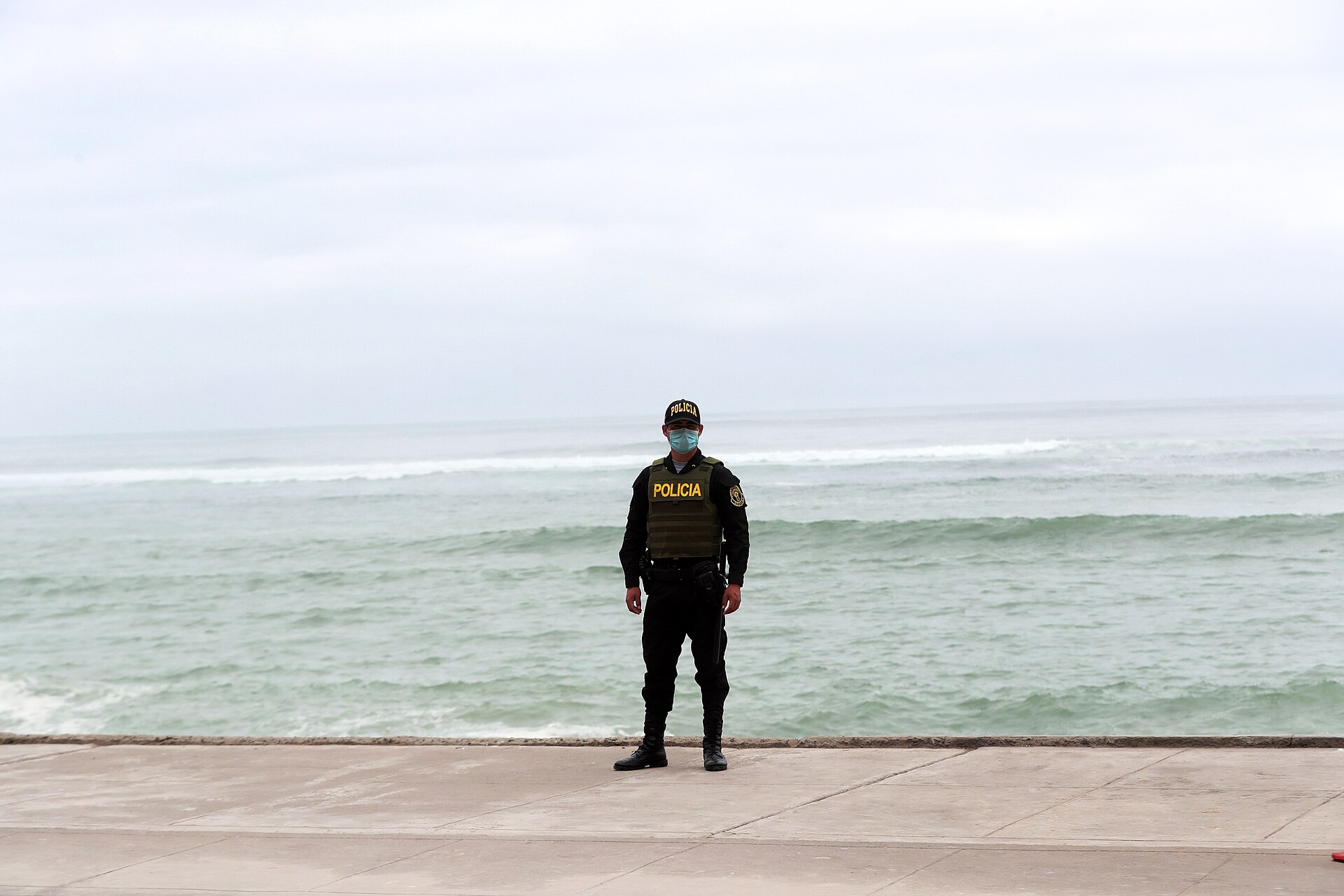
What It Means for US Readers
For travellers, Peru remains open, and Cusco and Machu Picchu lie outside the State Department’s no-go zones. Register with the State Department’s Smart Traveler Enrollment Program and check local news before long road trips.
For investors, extortion and illegal mining are a cost for companies in mining, farming and transport. NYSE-listed Southern Copper and Freeport-McMoRan run large copper mines in southern Peru.
Peru and the United States have had a free trade agreement in force since 2009. As a coca-growing country, Peru also matters to US drug enforcement.
If the Senate grants a broader military role, more soldiers could appear on city streets and highways. Patrols and checkpoints on their own are not a sign that the risk to visitors has risen.
What Is Not Known
No start date or budget has been published for the new combined command. It is also unclear how it will share command with existing police units, and for how long.
The Senate’s final text and the date of its vote were not known on 9 October 2026. It is not confirmed whether INEI has replaced its preliminary 2025 homicide estimate with a final figure.
It is not confirmed whether the Lima and Callao state of emergency is in force in October 2026. Because many victims do not report extortion, its true scale is unknown.
Frequently Asked Questions
Is Peru safe for American tourists?
The State Department rates Peru Level 2, Exercise Increased Caution, as of October 2026. Cusco, the Sacred Valley and Machu Picchu are outside its Do Not Travel zones.
Which parts of Peru should visitors avoid?
The State Department says do not travel to the VRAEM valley in central Peru or to the Colombian border area of Loreto. Both areas suffer from drug trafficking and crime.
What is the homicide rate in Peru?
The statistics institute INEI estimated 10.7 killings per 100,000 people in 2025, up from 8.6 in 2021. The 2025 figure is preliminary.
What is Peru’s new crime command?
It is a combined force of 1,350 soldiers and police officers, announced by President Keiko Fujimori on 7 October 2026. It is directed from Army headquarters in Lima.
Why is extortion such a problem in Peru?
Gangs demand regular payments from businesses and bus lines and punish those who refuse. Many threats come by phone, often from inside prisons.
What number do I call for the police in Peru?
Dial 105 for the National Police of Peru. US citizens in trouble can also contact the US Embassy in Lima.
Sources: INEI and PNP crime figures, via Andina (22 January 2026); Andina, unified command (7 October 2026); El Peruano, deputies’ vote; El Peruano, Galarreta; El Peruano, cabinet and 120-day request; El Peruano, police command; El Peruano, 2028 homicide target; Congress of Peru, Senate Constitution Commission; US State Department, Peru travel advisory; US State Department, cartel designations; Andina, Tren de Aragua arrests; El Peruano, Supreme Decree 137-2026-PCM (Pataz); Expreso, Supreme Decree 062-2026-PCM (all accessed 9 October 2026).
This article was produced by The Rio Times’ automated newsroom system. How we use AI · Report an error · Editorial responsibility: Matthias Camenzind, Editor-in-Chief