11 BRICS Members in 2026 and 10 Partner Countries
Updated 5 times · Latest: 16 October 2026
Global · BRICS — Key Facts
- 11 full members: Brazil, Russia, India, China, South Africa, Egypt, Ethiopia, Iran, Saudi Arabia, the United Arab Emirates and Indonesia, although Saudi Arabia’s own status is disputed (see below).
- 10 partner countries: Belarus, Bolivia, Cuba, Kazakhstan, Malaysia, Nigeria, Thailand, Uganda, Uzbekistan and Vietnam, with no change since 1 January 2026.
- 2026 summit: The 18th BRICS summit took place on 12 and 13 September 2026 at the Bharat Mandapam in New Delhi, under India’s chairship. Leaders adopted the 140-paragraph New Delhi Declaration by consensus, and no new member or partner was announced.
- Next summit: China chairs BRICS in 2027 and hosts the 19th summit, with the city and date not yet announced.
- Dollar: The declaration announced no common currency and only acknowledged task-force talks on trade settlement in local currencies.
- Prediction markets: Polymarket traders gave about 13% to BRICS adding a new member in 2026 and about 9% to a country leaving, and Kalshi, regulated in the US by the CFTC, gave about 10% to a new invitation before 2027 (16 October 2026, 10:00 ET). These are bets, not polls.
BRICS has 11 full members in 2026: Brazil, Russia, India, China, South Africa, Egypt, Ethiopia, Iran, Saudi Arabia, the United Arab Emirates and Indonesia. Ten more countries take part as partners, a lower tier created at the 2024 Kazan summit.
India holds the chair in 2026 and hosted the 18th summit in New Delhi on 12 and 13 September. China takes over the chair in 2027, and no country has been added to the bloc since Indonesia in January 2025.
This page answers the questions we hear most: who is in BRICS, who is a partner, who wants to join and what the summit decided. We update it whenever the member list or the chairship changes.
Updated 16 October 2026 · Next summit: China, 2027
In Short
- Members: Eleven full members: Brazil, Russia, India, China, South Africa, Egypt, Ethiopia, Iran, Saudi Arabia, the UAE and Indonesia.
- Partners: Ten partner countries joined during 2025: Belarus, Bolivia, Cuba, Kazakhstan, Malaysia, Nigeria, Thailand, Uganda, Uzbekistan and Vietnam.
- Summit: The 18th summit was held in New Delhi on 12 and 13 September 2026, and the 19th will be in China in 2027.
- Joining: Nobody was admitted in New Delhi, and Ghana says it will apply as a partner (October 2026).
- Money: There is no BRICS currency, and the 2026 declaration only notes talks on using local currencies in trade.
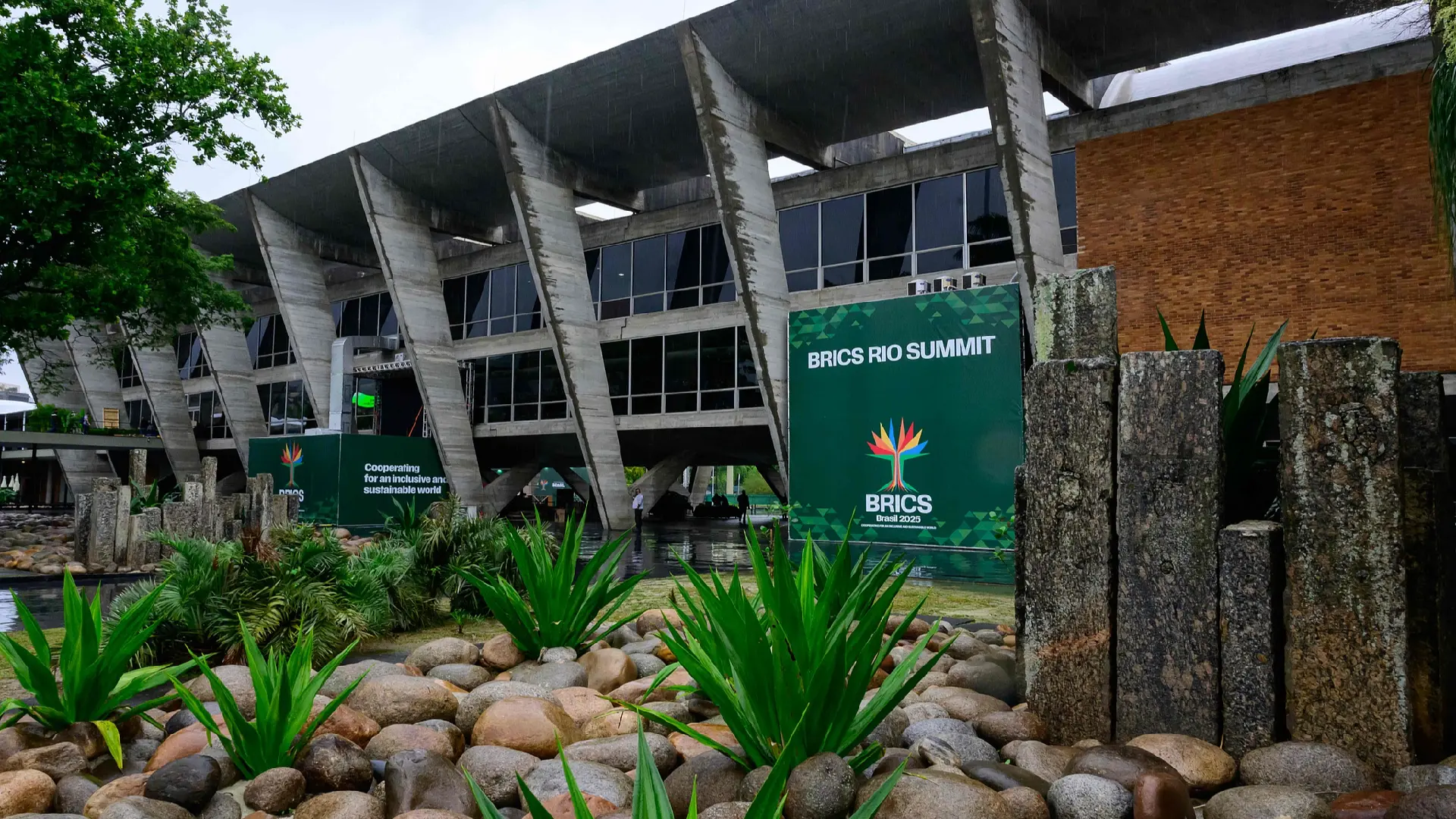
BRICS Countries Member List 2026
BRIC began in 2006 as a political forum of Brazil, Russia, India and China. South Africa was invited in December 2010 and attended its first summit as a member in April 2011, which added the S.
Who Is a Full Member of BRICS
India’s government, the 2026 chair, says BRICS comprises 11 countries and lists Saudi Arabia among them. Egypt, Ethiopia, Iran and the United Arab Emirates became members on 1 January 2024, and Indonesia followed in January 2025.
Argentina was invited in August 2023 but never joined. It declined before the 1 January 2024 start date, under President Javier Milei.
Saudi Arabia and BRICS: Member or Not
India counts Saudi Arabia as a member, but Riyadh has not said so itself. The Saudi Press Agency reported on 12 September 2026 that Foreign Minister Prince Faisal bin Farhan went to New Delhi to take part “as an invited country”.
The Kremlin’s list of delegation heads at the 12 September leaders’ meeting does not include Saudi Arabia. We therefore describe its status as disputed until Riyadh confirms it.
BRICS Partner Countries
The partner category was created at the Kazan summit in October 2024. Partners join selected meetings and projects, but they are not full members.
Brazil’s foreign ministry announced the Nigeria and Vietnam admissions on the dates above. No country has been added or has left the partner list since 1 January 2026.
Which Countries Want to Join BRICS
Ghana’s foreign minister, Samuel Okudzeto Ablakwa, said in October 2026 that Ghana is not seeking full membership but intends to apply as a partner country. Azerbaijan applied for membership in August 2024, according to Türkiye’s Hürriyet Daily News.
New members need a consensus of the full members, and the New Delhi Declaration announced no expansion. We found no official BRICS text that declares a pause, so we do not report one.
BRICS Summit 2026 in New Delhi: What Happened
The 18th summit met at the Bharat Mandapam in New Delhi on 12 and 13 September under the theme “Building for Resilience, Innovation, Cooperation and Sustainability”. The leaders met on 12 September, and a wider session with partners and invited states followed on 13 September.
The Kremlin’s record lists Vladimir Putin of Russia, Xi Jinping of China and Narendra Modi of India among the heads of delegation on 12 September. It also lists Cyril Ramaphosa of South Africa, Abdel Fattah el-Sisi of Egypt and Masoud Pezeshkian of Iran.
Prabowo Subianto of Indonesia and Abiy Ahmed of Ethiopia were also listed, and Sheikh Khaled bin Mohamed bin Zayed, the crown prince of Abu Dhabi, attended for the UAE. Brazil sent Foreign Minister Mauro Vieira, and President Luiz Inácio Lula da Silva did not attend.
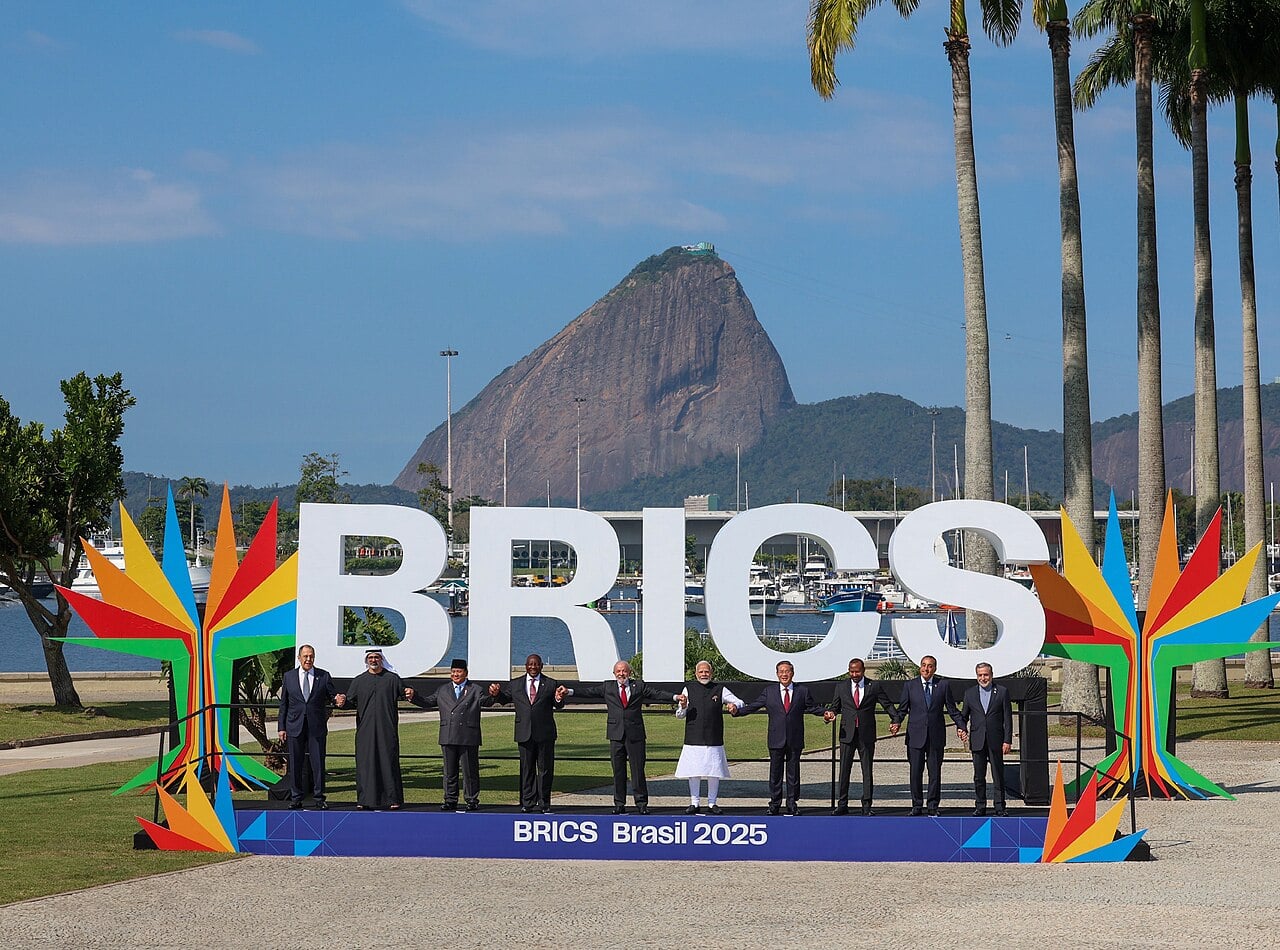
The New Delhi Declaration has 140 paragraphs, and leaders adopted it by consensus on 12 September. The main positions are listed below.
What the BRICS Summit Decides
BRICS works by consensus, so a declaration needs every full member to agree. Declarations are political statements, and they do not bind members like a treaty.
The New Delhi Declaration announced no new member and no new partner. Expansion needs a consensus of the full members.
The New Development Bank had approved 139 projects worth US$42.9 billion by 31 December 2025, according to the bank. Its members are the five founders plus Bangladesh, the UAE, Egypt, Algeria and Uzbekistan, and several other countries are admitted but not yet full members.
BRICS and the Dollar: What Is Real
There is no BRICS currency, and the 2026 declaration does not announce one. Paragraph 90 only acknowledges task-force talks on trade settlement in national currencies, and it adds that there is no one-size-fits-all approach.
At the 13 September session, President Putin invited partners to use Russian initiatives for payments, clearing and reinsurance. These are proposals from Moscow, and the declaration does not announce them as BRICS programmes.
BRICS by the Numbers
India’s government says the 11 members hold 49.5% of the world’s population, 40% of global GDP and 26% of global trade. It does not state the year or whether it measures GDP at market prices or purchasing power.
With partners, the group’s share is larger, but we found no official figure, so we do not give one. For the economic weight of the largest member in the Americas, see our guide to the Brazilian economy in 2026.
What Prediction Markets Say
Prediction markets let traders buy contracts that pay US$1 if an outcome happens, so a price of 13 cents reads as a 13% chance. On Polymarket, a new BRICS member in 2026 (US$38,431 traded) was priced at about 13%, and a member leaving (US$77,597 traded) at about 9%.
Kalshi, a US exchange regulated by the CFTC (the Commodity Futures Trading Commission), gave about 10% to BRICS inviting a new member before 2027 (8,509 contracts traded). Prices were read on 16 October 2026 at 10:00 Eastern time, and they are bets, not forecasts.
Why we show this: prediction markets turn real-money bets into a live probability that moves within minutes of the news, which is why investors, campaigns and newsrooms in the United States now follow them closely. We show them next to polls and official results, never instead of them.
What BRICS Means for Americans and Investors
For US readers, BRICS matters less as a currency threat than as a forum where large economies coordinate on trade rules, sanctions and development lending. Its 2026 statements on tariffs and sanctions show where the bloc agrees, and its silence on a currency shows where it does not.
For investors in Brazil, Egypt or Indonesia, the practical signals are payment links and New Development Bank lending rather than the summit language. Our Brazil inflation forecast shows how one member economy is moving.
Dates to Watch
What Is Not Known
It is not known whether Saudi Arabia will confirm full membership, because Riyadh has not said so since the summit. Nor has China announced the city or date of the 2027 summit.
We also cannot say whether the bloc will admit new partners before the next summit. A formal pause on expansion has not been announced.
Frequently Asked Questions
How many BRICS countries are there in 2026?
BRICS has 11 full members: Brazil, Russia, India, China, South Africa, Egypt, Ethiopia, Iran, Saudi Arabia, the UAE and Indonesia. Ten more countries are partners, and Saudi Arabia’s own status is disputed.
Did Saudi Arabia join BRICS?
India counts Saudi Arabia as a member, but the Saudi Press Agency said its foreign minister attended the 2026 summit as an invited country. Riyadh has not confirmed full membership.
When and where was the BRICS summit in 2026?
The 18th BRICS summit took place on 12 and 13 September 2026 at the Bharat Mandapam in New Delhi. China hosts the 19th summit in 2027, and the city and date are not yet announced.
Which countries are BRICS partner countries?
The ten partners are Belarus, Bolivia, Cuba, Kazakhstan, Malaysia, Nigeria, Thailand, Uganda, Uzbekistan and Vietnam. They joined during 2025 and are not full members.
Does BRICS have a common currency?
No, BRICS has no common currency. The 2026 declaration only acknowledges task-force talks on trade settlement in local currencies, and it announces no common currency.
Which countries want to join BRICS?
Ghana said in October 2026 that it will apply as a partner country, and Azerbaijan applied for membership in August 2024. New members need a consensus of the full members, and none was added in New Delhi.
Our reporting on the summit continues in Putin confirmed for the BRICS summit. A second report covers the countries waiting for a seat.
Sources: Government of India, Press Information Bureau, BRICS backgrounder, 10 September 2026; Prime Minister’s Office of India, New Delhi Declaration, 12 September 2026; Kremlin, BRICS summit record, 12 and 13 September 2026; Saudi Press Agency, 12 September 2026; Ministry of Foreign Affairs of China, 13 September 2026; South African government, President Ramaphosa at the 18th BRICS summit; Itamaraty, Nigeria joins BRICS as a partner country; Itamaraty, Vietnam joins BRICS as a partner country; New Development Bank, members and results; MyJoyOnline, Ghana applying as a BRICS partner country, 10 October 2026; Polymarket, Will BRICS add a new member in 2026; Kalshi, BRICS new member before 2027.
Earlier updates
30 May 2026. Our analysis of the coming summit argued that local-currency settlement is growing but nowhere near displacing the dollar. The 2026 declaration points the same way, with payments handled as incremental plumbing.
3 September 2026. Before the summit, BRICS counted 11 full members under India’s chairship. Its focus was payment infrastructure for local-currency settlement.
This article was produced by The Rio Times’ automated newsroom system. How we use AI · Report an error · Editorial responsibility: Matthias Camenzind, Editor-in-Chief
Expat Guide to Brazil
What The Rio Times publishes for foreigners who live in or move to Brazil.
Start here
- Do US Citizens Need a Visa for Brazil? Yes, US$80.90 E-Visa
- Brazil Education and Healthcare Explained
- Brazil Security and Crime Explained 2026
- Brazil Rent and Power Bills After 4.58% Inflation
City guides
Rio de Janeiro, São Paulo, Florianópolis, Salvador, Belo Horizonte, Curitiba, Porto Alegre, Brasília
Coming up in Brazil
- Florianópolis Events 12 to 31 October 2026 18 Oct
- Whindersson Nunes Plays Rio's Qualistage on 18 October, Tickets From US$13.50 18 Oct
- Amorphis Plays Curitiba, Belo Horizonte and São Paulo on Brazil Tour, 15 to 18 October 18 Oct
- Copa Sudamericana Semi-Final Return Legs: Times and US TV 20 Oct
Understand Brazil
Fresh reporting on this topic, refreshed automatically as new stories are published.
- Oct 18Best Places to Live in Kenya for Expats 2026
- Oct 18Key Market Events for the Week of October 19–23, 2026
- Oct 18ECOWAS AES Talks Open in Dakar on 17 October
- Oct 18Benin Growth at 7% Among Fastest in Africa
- Oct 18Kenya GDP Growth Is 5.1% Despite Oil Shock
- Oct 18Ghana BRICS Bid Draws 5 Demands From APC
- Oct 18Nigeria Growth Target Is 7%, Above IMF 4.3%
- Oct 18Latin America Sports Daily for Sunday, October 18, 2026