PERU · CITY GUIDE
Key Facts
- The city Peru’s capital, with about 10.4 million residents in 43 districts as of October 2026, the latest official projection.
- The economy About 40 percent of Peru’s gross value added in 2024, led by manufacturing and commerce.
- Who runs it Mayor Renzo Reggiardo as of October 2026; the winner of the 4 October 2026 election is not yet proclaimed.
- Security 26.0 percent of adults in Lima and Callao were crime victims in the past year, and a 60 day emergency runs from 28 October 2026.
- Getting around Metro Line 1 has 26 stations and an adult ride costs S/1.50 (US$0.44); the new airport serves 68 destinations.
- For visitors US citizens need no visa for stays under 90 days and a passport valid for six months; the US travel advisory is Level 2.
- Prediction markets As of 9:14 a.m. ET on 30 October 2026, Polymarket priced Rafael López Aliaga at 86 percent to win the Lima mayoral race and Kalshi at 80 percent; neither market has resolved.

Lima, the capital of Peru, is home to about 10.4 million people in 43 districts and produced roughly 40 percent of the country’s economic output in 2024, according to the national statistics institute INEI. The city is also, as of October 2026, waiting for its next mayor to be proclaimed, living under a crime emergency and served by a new international airport in the neighboring port province of Callao.
Why Lima Matters
Lima lies in the valley of the Rímac River on Peru’s Pacific coast, and the Spanish conqueror Francisco Pizarro founded it in January 1535 as the City of Kings, according to UNESCO, the United Nations cultural agency. Until the 18th century it was the main political, administrative, religious and economic center of Spanish South America.
INEI projects 10,432,133 residents for Lima Metropolitana, the 43 districts of Lima Province that make up the city, on 30 June 2025, the latest official figure as of October 2026. That is up from 8,574,974 at the 2017 census and 7,605,742 at the 2007 census, and INEI notes that the city holds more than 30 percent of Peru’s population.
Next door, Callao is a separate constitutional province and the country’s main port, and INEI tracks it together with Lima because of their shared demographic, political and economic weight. Jorge Chávez International Airport, the capital’s international airport, is in Callao and is run by the company Lima Airport.
The national government sits in the capital, and President Keiko Fujimori signs her decrees at the Government Palace in Lima. Readers who follow the country can find more in the Peru coverage.
How Lima Is Governed
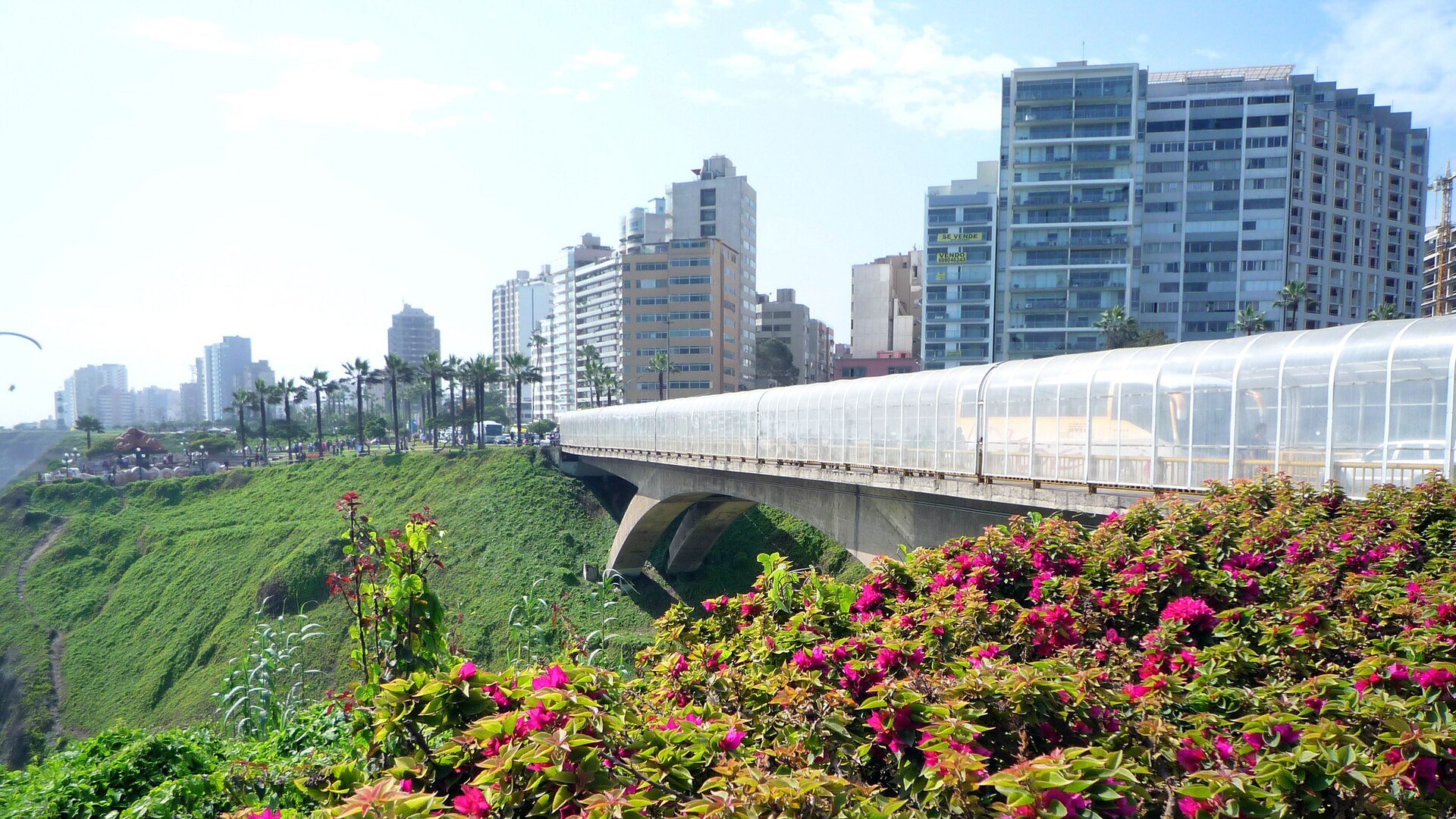
Two layers of local government run the capital. The Metropolitan Municipality of Lima, led by a mayor and a council, covers the whole province, and each of its 43 districts has its own district mayor.
Renzo Reggiardo is the mayor of Lima as of October 2026, and the presidency has described him as the mayor of Lima Metropolitana in its own news release of 14 August 2026. Peru held regional and municipal elections on 4 October 2026, and the winner of the metropolitan race will take over the municipality from him.
Voters used 89,935 polling stations nationwide, and the national electoral office ONPE finished processing the tally sheets from all of them on 10 October. Sheets with errors or challenges went to special electoral juries, and ONPE said on 9 October that 1,886 such sheets from Lima Metropolitana still awaited a ruling.
The National Jury of Elections, known as JNE, is the final court on election disputes, and it announced that the special juries began proclaiming results on 28 October 2026. As of October 2026 the JNE had not announced the proclamation of the next Lima mayor, so the winner is not yet official.
Above the city stands the national government of President Keiko Fujimori, whose cabinet is led by Prime Minister Luis Galarreta, and Congress now has two chambers, a Senate and a Chamber of Deputies. Policing is run by the national government through the Interior Ministry and the National Police, not by the city, and a separate explainer shows who holds power in Peru.
The Economy of Lima
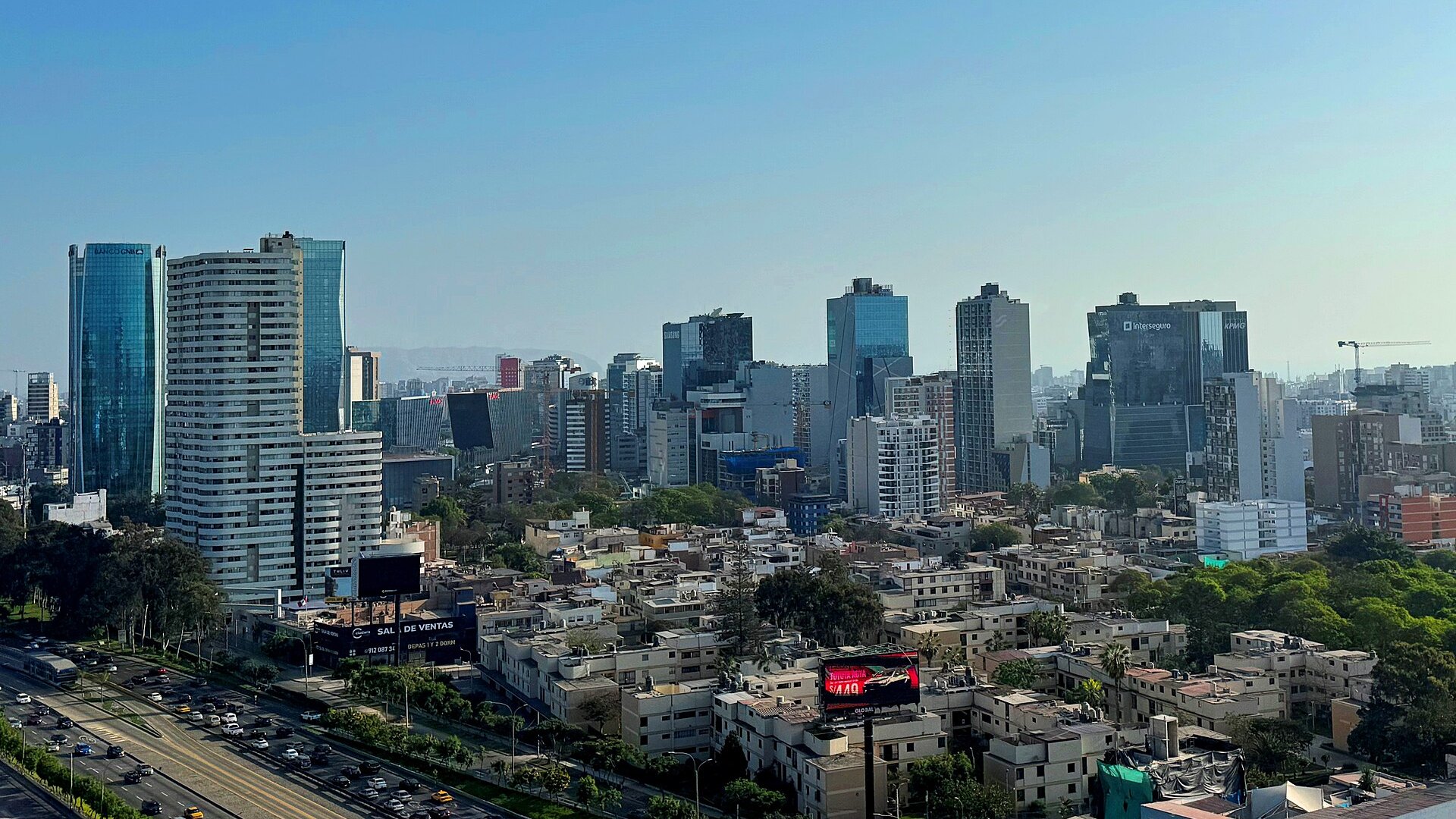
INEI estimates that Lima Metropolitana generated about 40 percent of Peru’s gross value added in 2024, the latest year published as of October 2026. Manufacturing is the largest activity at 16.7 percent of the city’s value added, followed by commerce at 14.6 percent, public administration and defense at 7.0 percent, transport and storage at 5.7 percent and construction at 5.3 percent.
Peru’s national output rose 3.23 percent in August 2026 from a year earlier, INEI said in its regional economy review, led by commerce and construction. Callao handles the country’s trade as its main port, and the Urban Transport Authority for Lima and Callao, known as ATU, says the growth of the Chancay port to the north is adding vehicle congestion in both cities.
In the July to September 2026 quarter INEI counted 6,013,300 employed people in Lima Metropolitana, 6.0 percent more than a year earlier, and 274,900 unemployed people, 20.6 percent fewer. Of those with jobs, 3,911,300 were adequately employed, which is 62.2 percent of the city’s labor force, and 2,102,000 were underemployed, most of them because of low income.
The average monthly income from a main job in Lima Metropolitana was S/2,302 (US$669) in that quarter, converted at the US Treasury reporting rate of S/3.44 per US$1 on 30 September 2026, and it was up 0.4 percent on a year earlier. Men averaged S/2,594 (US$754) and women S/1,954 (US$568), so women earned 75.3 percent of what men earned.
Peru’s monthly minimum wage rose from S/1,130 (US$328) to S/1,230 (US$358) on 1 October 2026, and President Fujimori’s decree schedules a second step to S/1,300 (US$378) after the El Niño weather episode. The government says the measure benefits about 600,000 workers and pays microbusinesses with 2 to 10 employees a bonus of S/100 (US$29) per worker.
Neighborhoods and Districts
The district of Lima, known as the Cercado, holds the historic center around the Plaza Mayor and the cathedral, yet it is home to only 265,503 residents in INEI’s 2025 projection. The biggest district is San Juan de Lurigancho with 1,282,635 residents, followed by San Martín de Porres with 802,774 and Ate with 743,517.
Miraflores sits on the cliffs above the Pacific and has 120,252 residents, while San Isidro, a district of office and apartment towers, has 71,527 and the seaside district of Barranco has 37,214. The US Embassy is in Santiago de Surco, a district of 437,028 residents, at Avenida La Encalada, block 17, according to the State Department.
The fastest growth has been on the northern edge, where Carabayllo more than doubled from 213,386 residents in 2007 to 458,341 in 2025 and Puente Piedra grew from 233,602 to 435,888. La Molina grew from 132,498 to 170,998 and San Borja from 105,076 to 135,613 over the same years, about 29 percent each.
Security and Extortion
In the survey period from February to July 2026, 26.0 percent of residents aged 15 and older in Lima Metropolitana and Callao said they had been victims of a crime in the previous 12 months, down from 27.9 percent a year earlier. The most common crime was robbery or attempted robbery of money, a wallet or a phone, which affected 15 of every 100 people.
Interior Minister César Astudillo met the head of Conet, the national association of transport companies, at a bus depot in the San Juan de Lurigancho district on 27 October 2026 and said the Comando Unificado, a joint command of police and armed forces, is intensifying intelligence work against extortion. The ministry also described police escorts on bus routes and guards at company depots to protect drivers and passengers.
The government has extended the state of emergency in Lima Metropolitana and Callao for 60 days from 28 October 2026, which keeps the National Police in charge of internal order with support from the armed forces. The order was published as Supreme Decree 142-2026-PCM on 25 October 2026 and limits the rights to inviolability of the home, free movement, assembly and personal liberty and security.
The US State Department rates Peru at Level 2, exercise increased caution, because of crime, unrest, kidnapping and terrorism, in an advisory dated 4 September 2026. Some areas carry a higher risk, and the department urges travelers to read the full advisory before they go, while a wider guide covers security and crime in Peru.
Getting Around Lima
The new terminal at Jorge Chávez International Airport began operating in June 2025, and its operator, Lima Airport, said in June 2026 that 23 airlines connect the city with 68 domestic and international destinations. The terminal is three times larger than the old one and has two runways, and new routes or more flights were added to New York, Salt Lake City, Toronto, Paris, Barcelona and Punta Cana.
Metro Line 1 runs 26 stations from Bayóvar in the north to Villa El Salvador in the south, and its operator charges S/1.50 (US$0.44) for an adult ride and S/0.75 (US$0.22) for students. The card costs S/5.00 (US$1.45).
The Metropolitano is a bus rapid transit system that ATU oversees, and ATU ran passenger trials of a new connection along the Grau expressway from 1 to 6 October 2026. Buses ran about every 15 minutes between the Central and Parinacochas stations, from 10:00 a.m. to 4:00 p.m.
ATU is also preparing a Master Plan for Public Transport, financed by a grant from the Japan International Cooperation Agency, that will cover future metro lines, monorails or trams, cable cars, bus rapid transit and bus corridors. The plan summary was last updated on 2 October 2026 and lists no completion dates.
ATU tracked trucks by GPS for 90 days and found queues of up to five kilometers every nine days and up to eight kilometers every ten days on the roads to the Callao port. It has proposed truck lanes, better intersections and a ring road around the city to separate freight from public transport.
Lima in 2026
A decree signed on 31 August 2026 declared a 60 day emergency in districts of 22 departments and in Callao over the imminent danger of heavy rain linked to El Niño in 2026 and 2027. The list includes Lima Metropolitana districts such as San Juan de Lurigancho, San Martín de Porres, Ate, Comas and Carabayllo, and related coverage of Peru’s El Niño stimulus plan is available in a separate report.
ATU said on 28 October 2026 that during the fourth procession tour of the Lord of Miracles, a venerated image known as the Cristo Moreno, three Metropolitano stations would close temporarily. Buses would be rerouted along Lampa and Emancipación avenues while the image passed along Alfonso Ugarte avenue, and the National Police would close streets progressively as it advanced.
What Prediction Markets Say
As of 9:14 a.m. ET on 30 October 2026, the Polymarket market titled “Lima Mayoral Election Winner” had US$576,615 traded and priced Rafael López Aliaga of the Renovación Popular party at 86 percent and Francis Allison of Avanza País at 3 percent. A separate Kalshi market on the same race put López Aliaga at 80 percent and Allison at 12 percent on its last trades.
Neither market has resolved, because the winner has not been formally proclaimed, and a market price is a trader’s estimate rather than an official count. The proclamation by the electoral juries is the official result.
Why we show this: prediction markets turn real-money bets into a live probability that moves within minutes of the news, which is why investors, campaigns and newsrooms in the United States now follow them closely. We show them next to polls and official results, never instead of them.
What It Means for US Readers
US citizens need no visa for tourist stays under 90 days, the State Department says, and Peru’s migration agency requires a passport that is valid for at least six months when you enter. Overstaying the authorized time brings a daily fine, so travelers should check the stay they were granted at the border.
Prices are set in soles, and a Metro ride at S/1.50 (US$0.44) next to a minimum monthly wage of S/1,230 (US$358) gives a sense of local purchasing power. These wage and fare figures are official, so they show what ordinary residents earn and pay rather than what a visitor pays in tourist areas.
For US companies and investors the draw is scale, because Lima holds more than 30 percent of Peru’s people and about 40 percent of its output, while the risks are crime, congestion and a change of city leadership. Background on how Peru and the United States deal with each other and on Peruvians living in the United States is available in separate explainers.
What Is Not Known
The winner of the Lima mayoral race is not formally proclaimed as of October 2026. The JNE expects the nationwide proclamations to finish around the second week of November, but it has not said when Lima’s will come.
The state of emergency runs for 60 days from 28 October 2026, and it is not known whether the government will renew it again after that period. It is also not known whether the rain that the El Niño decree anticipates will reach the hillside districts of the capital.
INEI’s population figure is a projection from the 2017 census, not a head count, so the true size of the city is an estimate. The master plan for public transport is still being drafted, and the plan summary published by ATU gives no completion dates for new metro, cable car or bus lines.
Frequently Asked Questions
How many people live in Lima?
INEI projects 10,432,133 residents in Lima Metropolitana on 30 June 2025, the latest official figure as of October 2026. That is up from 8,574,974 at the 2017 census.
Is Lima safe for US tourists?
The State Department rates Peru at Level 2, exercise increased caution, because of crime, unrest, kidnapping and terrorism. Lima and Callao are also under a state of emergency that runs for 60 days from 28 October 2026.
Who is the mayor of Lima?
Renzo Reggiardo is the mayor as of October 2026. The winner of the 4 October 2026 election, who will take over the municipality, had not been formally proclaimed yet.
Do US citizens need a visa for Lima?
US citizens need no visa for tourist stays under 90 days, according to the State Department. Peru’s migration agency requires a passport valid for at least six months when you enter.
How much does the Lima Metro cost?
An adult ride on Line 1 costs S/1.50 (US$0.44) and a student ride S/0.75 (US$0.22), plus S/5.00 (US$1.45) for the card. The line has 26 stations from Bayóvar to Villa El Salvador.
How big is the Lima economy?
Lima Metropolitana produced about 40 percent of Peru’s gross value added in 2024, INEI estimates. Manufacturing and commerce are its two largest activities.
Sources: INEI, Lima Metropolitana Statistical Compendium 2025; INEI, Employment Report 10, July to September 2026; INEI, citizen security statistics, February to July 2026; INEI, Peru Statistical Compendium 2025; ONPE, 9 October 2026; ONPE, 12 October 2026; JNE, 28 October 2026; Presidency of Peru, 14 August 2026; Presidency of the Council of Ministers, officials; Ministry of Labor, minimum wage decree, 28 September 2026; Interior Ministry, 27 October 2026; Supreme Decree 142-2026-PCM, official gazette, 25 October 2026; Supreme Decree 124-2026-PCM; ATU, 19 October 2026; ATU, 1 October 2026; ATU, 28 October 2026; ATU, Master Plan for Public Transport; Lima Airport, 3 June 2026; Line 1 of the Lima Metro, fares; Peru Migration Agency, tourist information; US State Department, travel advisory feed; US State Department, Peru country page; UNESCO, Historic Centre of Lima; US Treasury, exchange rates, 30 September 2026.
This article was produced by The Rio Times’ automated newsroom system. How we use AI · Report an error · Editorial responsibility: Matthias Camenzind, Editor-in-Chief
The Lima Guide
What The Rio Times publishes for foreigners in Lima, Peru.
This month
Coming up in Lima
- Reggaeton Lima Festival 7 With Anuel AA on 31 October 31 Oct
- Humbe Lima 2026: Mexican Singer Plays Costa 21, Peru, on 1 November 1 Nov
- Freen Sarocha Returns to Lima: 'Velvet Dream' Concert on November 5, 2026 — Tickets on Sale Monday 5 Nov
- Taemin in Peru: SHINee Soloist Plays Lima’s Arena Monumental on 6 November, Tickets from S/240 6 Nov
Living in Lima
- Lima Rent for Foreigners in 2026 Averages US$979 a Month
- Cost of Living in Peru 2026, Monthly Budgets Lima to Cusco
- Cost of Living Arequipa Peru 2026: Less Than Half of Lima
- Investing in Peru as a Foreigner — What the Lima Market, the Mines and the Tax Rules Allow
Understand Peru