
NICARAGUA · POPULATION
Key Facts
- What is happening Nicaragua has about 6.9 million people, mostly mestizo, with Indigenous and Afro-descendant peoples on the Caribbean coast.
- Why it matters The Caribbean coast is half the territory but under 15% of the people; about 905,000 Nicaraguans live abroad.
- The numbers Population grows about 0.9% a year, 59% of people live in cities, and women are 50.7% of residents.
- Who is who The national statistics institute counts the people, and the Miskito are the largest Indigenous people of the Caribbean coast.
- What to watch Watch for 2024 census results, not found as of 4 November 2026; 2005 is the last full count.
- What it means for you Remittances from the United States supplied 82.8% of the US$5.24 billion Nicaragua received in 2024.
Nicaragua is a small Central American country of mixed ancestry, with a Caribbean coast where other languages are spoken. This guide shows who lives there, where, and how the groups share one state.
The Nicaragua population was about 6.9 million in mid-2024, in the estimate of INIDE, the national statistics institute. This guide explains who they are, where they live and why so many have left.
Figures carry their dates, and money is in US$. The Rio Times Nicaragua page covers the country daily, and the guide to Nicaragua politics explains who holds power.
Nicaragua Population, Size and Growth
INIDE estimated 6,874,748 people on 30 June 2024, of whom 3,482,760 were women and 3,391,988 were men. Women are therefore 50.7% of residents.
The last census with published results was in 2005 and counted 5,142,098 people. INIDE’s projections put yearly growth at 0.9% for 2020 to 2025, down from 1.3% for 2005 to 2010.
The World Bank, using United Nations estimates, puts the 2024 population at 6,916,140 and the 2025 population at 7,007,502. That is 41,392 more than INIDE for 2024, a gap that comes from different base years and assumptions.

INIDE announced a national population and housing census for 2024. No published results were found on 4 November 2026, so 2005 stays the last full count.
INIDE’s projections for 2020 to 2025 show how the population is changing. They date from a 2007 revision, so they are best read as a guide, not a measurement.
- Births and deaths: 126,150 births and 32,140 deaths a year, so natural growth of about 94,000, or 1.4%.
- Emigration: net emigration of 32,000 people a year trims growth from 1.4% to 0.9%.
- Fertility: 2.23 children per woman for 2020 to 2025, down from 2.76 in 2005 to 2010.
- Life expectancy: 76.7 years at birth, 79.8 for women and 73.7 for men.
Where Nicaraguans Live
Managua department holds 1,598,989 people, or 23.3% of the country, and the city of Managua alone has 1,066,484. Next door, Tipitapa has 162,117 and Ciudad Sandino 135,846.
Most people live on the Pacific side and in the central highlands. Masaya, the smallest department by area, packs 415,170 people into 611 square kilometres, about 680 per square kilometre.
- Chinandega: 447,684 people; León: 428,723.
- Matagalpa: 619,914 people; Jinotega: 507,402.
- Granada: 220,874 people, in the colonial city on Lake Nicaragua and its department.
Urban residents numbered 4,074,171 in 2024, or 59.3%, and 2,800,577 lived in rural areas. In the 2005 census the urban share was 55.9%.
Average density is 57 people per square kilometre across 120,340 square kilometres. Río San Juan, on the Costa Rican border, has only 19.
Ethnic Groups and the Caribbean Coast
The constitution, in its 2014 text, calls the Nicaraguan people multi-ethnic. It names Spanish the official language and allows coastal languages official use where the law says so.
Most Nicaraguans are mestizo, people of mixed Indigenous and Spanish descent, and live mainly on the Pacific side and in the highlands. No current official count by group is available.
On the Caribbean coast live the Miskito, the Mayangna (also called Sumo), the Rama, the Garifuna, the English-speaking Creoles and coastal mestizos. The Miskito are the largest of the Indigenous peoples there.
INIDE’s 2005 living-standards survey asked households which group they belong to. It also listed Pacific, central and northern groups, such as the Chorotega, Nahoa, Xiu-Sutiaba and Cacaopera-Matagalpa.
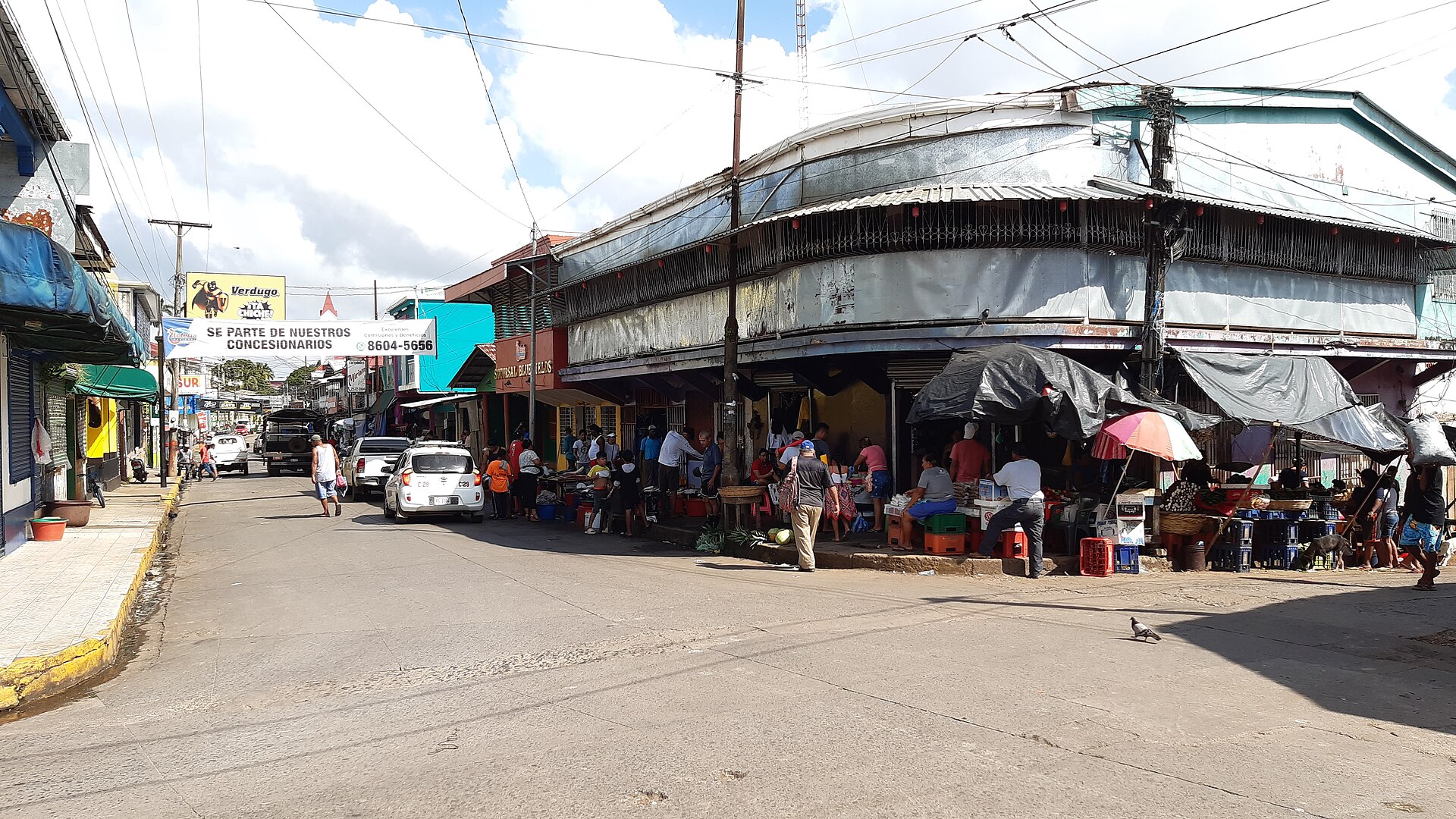
The coast is split into two autonomous regions, the North Caribbean Coast (RACCN) and the South Caribbean Coast (RACCS). INIDE estimated 574,398 people in the North and 441,231 in the South in 2024.
Together that is 1,015,629 people, or 14.8% of the country, on 60,366 square kilometres, about half of the national territory. Density is 17 people per square kilometre, against 57 for Nicaragua as a whole.
Bilwi, also called Puerto Cabezas, has 142,268 people in INIDE’s municipal table, Bluefields 58,958 and Corn Island 7,967. The towns of the coast are small beside the Pacific cities.
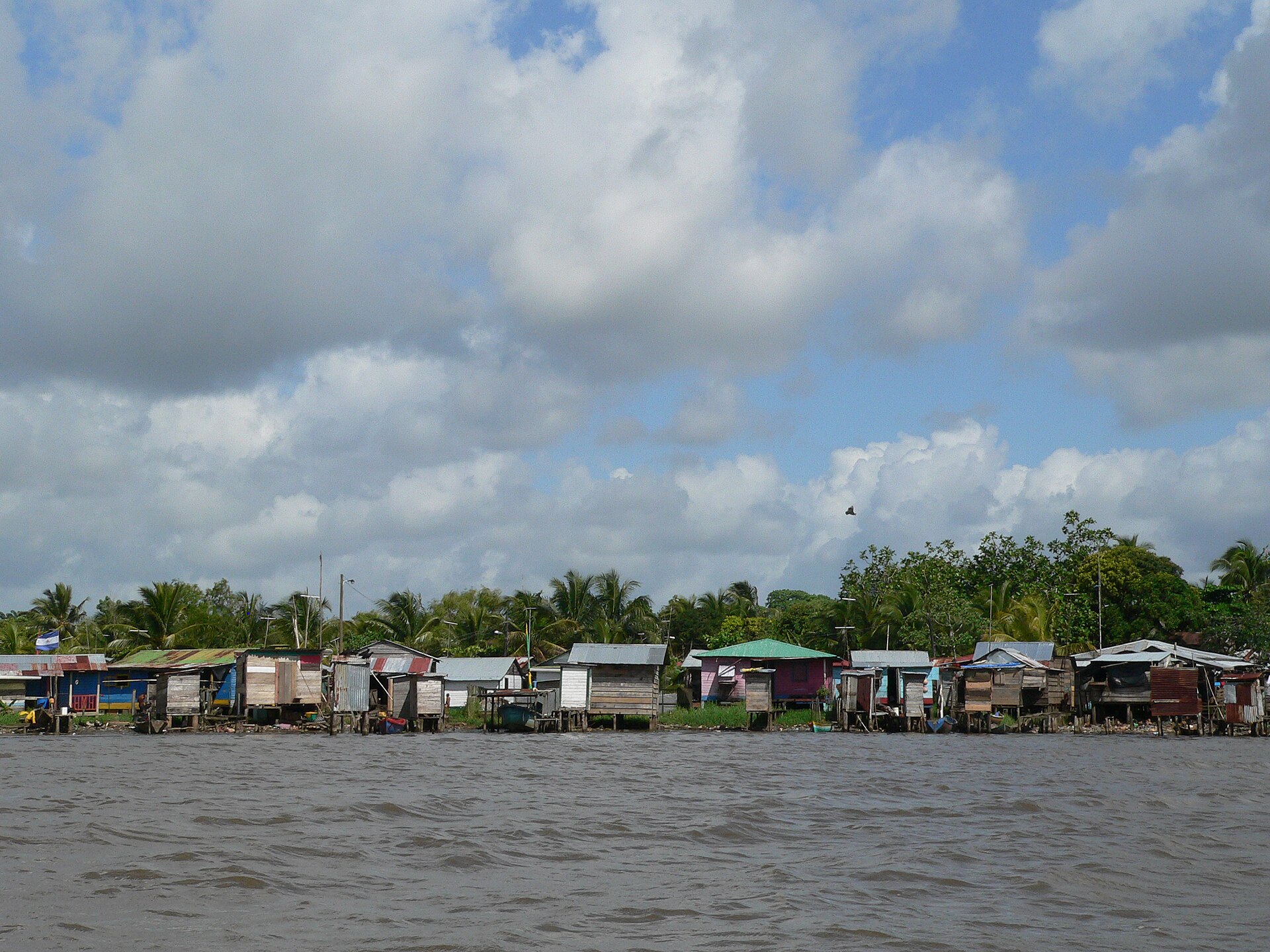
Land claims by coast communities are a long-running issue. The Awas Tingni case, decided in 2001, shows how far back they go.
On 31 August 2001 the Inter-American Court of Human Rights, a regional tribunal, judged the Mayangna community of Awas Tingni case. The case concerned the community’s claim to its communal lands.
Language, Faith and Coexistence
Spanish is the everyday language of most Nicaraguans. Miskito, Mayangna, Rama and Creole English are spoken on the coast, often alongside Spanish.
Article 14 of the constitution says the state has no official religion. Catholic, Evangelical and Moravian churches are among the main faiths.
The constitution calls the coast communities an indivisible part of the Nicaraguan people. About 85% of Nicaraguans live outside the two coastal regions, so national politics is decided mainly in the west.
President Daniel Ortega and his wife, Co-President Rosario Murillo, lead the government under a constitutional reform approved in 2025. See the guide to who runs Nicaragua’s economy for the business elite around them.
Migration, Diaspora and Remittances
The United Nations estimates about 905,000 Nicaraguan-born people lived abroad in mid-2024. That equals roughly 13% of the 6,874,748 people estimated inside the country.
Costa Rica hosts about 423,000 of them, the United States about 295,000, Spain about 98,000, Panama about 24,000 and Mexico about 18,000. Only 43,757 foreign-born people lived in Nicaragua in 2024, about 0.6% of residents.
The UN refugee agency (UNHCR) counted 35,341 Nicaraguan refugees and 269,315 asylum seekers worldwide at the end of 2025. Costa Rica held 18,473 refugees and 160,398 asylum seekers, and the United States 7,243 and 92,679.
Nicaragua’s immigration service logged 753,796 exits and 701,964 entries by Nicaraguans in 2023, a net outflow of 51,832 crossings. These are border movements, not a count of people.
Remittances, money sent home by workers abroad, reached US$5.24 billion in 2024, up 12.5%, the central bank said. The United States supplied 82.8% (US$4.34 billion), Costa Rica 7.5% (US$395.7 million) and Spain 5.8% (US$303.5 million).
Managua received 25.4% of the money, followed by Matagalpa with 10.5%. In the first quarter of 2025 remittances rose 26.3% to US$1.44 billion, with an average transfer of US$264.3.
What It Means for US Readers
About 295,000 Nicaraguan-born people lived in the United States in mid-2024, in the UN estimate. They send most of the money Nicaragua receives.
Remittances are the largest flow linking Nicaragua to the United States, with an average transfer of US$264.3 in early 2025. Senders should check current US tax and reporting rules for transfers.
UNHCR counted 92,679 Nicaraguan asylum seekers and 7,243 refugees in the United States at the end of 2025. Immigration lawyers and employers may see these cases continue.
Check the US State Department advisory for Nicaragua before any trip. The Rio Times travel guide for US visitors explains entry rules, sanctions and remittances.
For the wider region, read the guide to Nicaragua and its neighbours in Central America. The Nicaragua culture guide profiles the people who shape its identity.
What Is Not Known
No full census has been published since 2005, so current official shares by ethnic group, religion and language are not known. The 2024 census results were not found as of 4 November 2026.
Counts of Miskito, Mayangna, Rama, Creole and Garifuna people from the 2005 census were not re-opened and are left out. The exact number of Nicaraguans in the United States was not confirmed.
Remittance totals for 2025 and the first half of 2026 were not confirmed. The constitution was amended in 2025, and the articles cited here are from its 2014 text.
Frequently Asked Questions
How many people live in Nicaragua?
INIDE estimated 6,874,748 people on 30 June 2024. The World Bank puts the 2025 population at 7,007,502.
What are the main ethnic groups in Nicaragua?
Most Nicaraguans are mestizo, of mixed Indigenous and Spanish descent. Miskito, Mayangna, Rama, Garifuna, Creole and other groups live mainly on the Caribbean coast.
Where do most Nicaraguans live?
About 85% live outside the two Caribbean coast regions, mostly on the Pacific side and in the highlands. Managua department alone holds 1,598,989 people.
How many Nicaraguans live abroad?
The United Nations estimates about 905,000 Nicaraguan-born people lived abroad in mid-2024. Costa Rica hosts about 423,000 and the United States about 295,000.
What languages are spoken in Nicaragua?
Spanish is the official language and the everyday language of most people. Miskito, Mayangna, Rama and Creole English are spoken on the Caribbean coast.
How important are remittances to Nicaragua?
Remittances reached US$5.24 billion in 2024, up 12.5%. The United States supplied 82.8% of the total.
Sources: INIDE, Anuario Estadístico 2023 (population estimates 2024, projections 2020 to 2025, census 2005, immigration service data 2023); INIDE, press note on the 2024 population and housing census; INIDE, 2005 living-standards survey, ethnic self-identification categories; Constitution of Nicaragua, 2014 text, Articles 8, 11, 14, 89 to 91; World Bank, World Development Indicators for Nicaragua (population); United Nations, International Migrant Stock 2024; UNHCR, Refugee Data Finder, end of 2025; Central Bank of Nicaragua, remittances in 2024; Central Bank of Nicaragua, remittances in the first quarter of 2025; Inter-American Court of Human Rights, Awas Tingni v. Nicaragua (31 August 2001) (all accessed 4 November 2026).
This article was produced by The Rio Times’ automated newsroom system. How we use AI · Report an error · Editorial responsibility: Matthias Camenzind, Editor-in-Chief
Expat Guide to Nicaragua
What The Rio Times publishes for foreigners who live in or move to Nicaragua.
Start here
- Is Nicaragua Safe for Expats? Crime, Politics and Daily Reality
- Opening a Bank Account in Nicaragua as a Foreigner: Banks, Documents and the Limits
- Moving to Nicaragua: Visas, Costs and Daily Life Under Ortega
- Healthcare in Nicaragua for Expats: Hospitals, Insurance and the Managua Option
Understand Nicaragua