Healthcare in Nicaragua for Expats 2026: Hospitals, Insurance and the Managua Option
GUIDES · NICARAGUA
Key Facts
- —What it is Three systems side by side: a free public service run by the health ministry, a contributory scheme for formal employees, and a small private sector concentrated almost entirely in the capital.
- —Who it’s for Retirees and remote workers living in Granada, León, San Juan del Sur or Managua, and anyone weighing Nicaragua against Costa Rica or Panama on medical grounds.
- —What it costs Nobody publishes a price list. The flagship private hospital sells a discount membership at about 1,245 córdobas a month for an adult, roughly US$34, which is not insurance. Everything else circulating is expat-reported.
- —Why it matters The United States travel advisory puts it plainly: medical services for routine and emergency care are limited, and comprehensive quality healthcare is available only in Managua.
- —The catch For anything complex the answer is a flight. Costa Rica, Miami and Houston are the standard destinations, so evacuation cover is the part of the policy that actually matters.
What medical care in Nicaragua really looks like for a foreign resident: who provides it, what is missing, and which part of an insurance policy is worth paying for.
Healthcare in Nicaragua is easier to describe than to price. Care is free at the point of use in the public system and constitutionally guaranteed, the private sector is small and good, and almost all of it sits in one city. What no one publishes is what any of it costs, which makes planning harder than it should be.
How the system is built
Three subsectors operate in parallel. The health ministry, MINSA, both regulates the sector and provides free universal care through a family and community model organised into 19 territorial systems. The January 2025 constitutional reform wrote a right to free quality health care into Article 59.
The second layer is social security. The Nicaraguan Social Security Institute buys care for its members from a network of licensed medical providers, public, private or mixed, and members choose one under an annual contract. Affiliation stood at 816,275 people in 2025, out of a population of roughly 6.9 million.
The third is a small private sector of for-profit and non-profit providers, regulated as insurers by the banking and insurance commission. There is no single overarching law governing how private care is financed; it runs on fee-for-service contracts negotiated between providers and insurers.
For a foreign resident the practical consequence is straightforward. You are unlikely to be inside the social security scheme, so healthcare in Nicaragua means the public system for emergencies and the private sector for everything you choose.
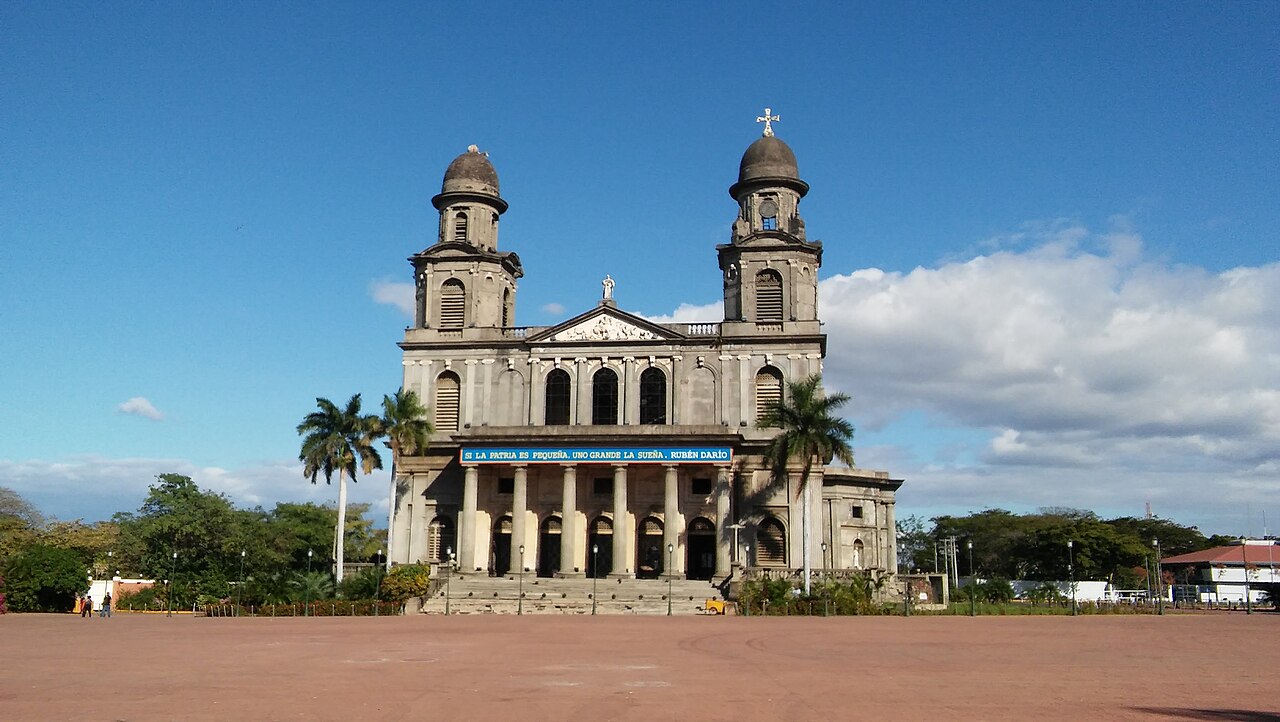
What Managua actually offers
The flagship is Hospital Metropolitano Vivian Pellas, opened in May 2004 on the Masaya highway. It runs its own ambulance fleet and a specialist paediatric burns unit, and it appears in the health ministry’s own listing of direct-payment hospitals. It accepts International SOS and other assistance insurers, which matters if your policy is written abroad.
Expat guides routinely describe it as the only hospital in the country accredited by Joint Commission International. That claim could not be verified against the accrediting body’s own directory and is not repeated here as fact.
Outside the capital the picture thins quickly. The United States advisory names health as one of four risk factors for Nicaragua and states that comprehensive quality healthcare is available only in Managua. A Spanish-language travel-health reference puts it the same way: care is acceptable in selected private centres in the capital, limited in rural areas, on the Caribbean coast and on the islands, with limited ambulance response outside Managua.
Reported gaps in equipment are consistent across expat sources but come with no official confirmation. What is certain is that referral abroad is a normal part of the system rather than an exception.
What it costs, and why nobody can tell you precisely
Start with the honest answer: nobody publishes what healthcare in Nicaragua costs privately. Hospital Vivian Pellas publishes its surgical packages but not their prices, noting only that the price is the córdoba equivalent at the official rate and excludes doctors’ fees, and directing patients to telephone.
The most useful substitute is crowd-sourced. A nomad insurer publishes anonymised prices actually paid by its users at that hospital, which cluster in the tens of dollars for consultations and simple imaging rather than the hundreds. An X-ray of a knee appears at under ten dollars.
Those are real transactions, but they are a self-selected sample from one hospital. They are a sanity check, not a tariff. Anyone budgeting for a procedure should telephone and get a written quotation.
The currency question at least is simple. The córdoba has been pegged at 36.6243 to the US dollar since the central bank set the crawl rate to zero in January 2024, and it has confirmed zero again for the whole of 2026. A price quoted in córdobas this year converts at a rate that is not moving.
Insurance, memberships and the difference between them
The most common mistake is to treat the hospital’s Club de la Salud as health insurance. It is a discount membership. It reduces the bill at that one hospital, pays nothing anywhere else, and does not travel with the member.
The published structure is tiered. An expat guide that read the hospital’s own pages in July 2026 reports about 1,245 córdobas a month for a standard adult membership, roughly US$34. That rises to about 1,795 for over-65s and considerably more for the premium tier. Discounts are capped per event and per contract year, and hospitalisation, intensive care, theatre and anaesthesia carry no discount at all in the first band.
Real insurance is a separate purchase. Domestic insurers sell health plans that include regional treatment across Nicaragua, Honduras, El Salvador, Guatemala and Costa Rica, and international policies bought abroad are widely used. No Nicaraguan source publishes expatriate premium tables, so any monthly figure you read comes from a broker or a blog.
Whether a foreign resident can join the social security scheme voluntarily, and what public care a foreigner is formally entitled to, could not be established from primary sources. Secondary sources say ministry facilities are open to foreign residents and that foreigners are not automatically eligible for social security, but neither institution says so on the record.
Evacuation, and why it is not optional
This is the part of healthcare in Nicaragua that decides outcomes. For serious illness, complex surgery or a major accident, the standard advice is international cover including repatriation and medical evacuation.
The geography helps. Costa Rica is roughly a five-hour drive from the Pacific southwest and has internationally accredited hospitals. Miami and Houston are the usual destinations for complex care from Managua. One domestic insurer’s plan explicitly covers ground ambulance, commercial aircraft in economy and air ambulance.
What could not be sourced is any price. No primary source gives the cost of an air ambulance from Managua to San José, Miami or Houston, and none gives the price of a standalone evacuation membership. The figure of about US$250 a year that circulates online traces back only to marketing copy.
The practical instruction is therefore simple. Get the named operator, the trigger conditions and the procedure in writing from your insurer before you need them, rather than discovering the limits during an emergency.
Living outside the capital
Most foreign residents do not live in Managua. Granada, León and San Juan del Sur carry the expat population, and Ometepe and the Caribbean coast carry a smaller one. All of them are one to several hours from the country’s best facilities.
That distance is the single most important planning fact in this guide. Routine and primary care is available locally and inexpensive. Anything that needs a specialist, a scanner or a theatre means travelling to the capital, and anything beyond that means leaving the country.
Budget accordingly. A policy that pays generously for consultations but thinly for transport is the wrong shape for Nicaragua. The reverse is the right one.
Connected Coverage
Nicaragua Visa and Residency 2026
Taxes in Nicaragua for Foreign Residents in 2026
Buying Property in Nicaragua as a Foreigner
Sources: System structure from the Pan American Health Organization and the health ministry’s own facility listings, social security numbers from the central bank’s statistical yearbook, the exchange rate from the Banco Central de Nicaragua, and the assessment of what is available from the United States travel advisory.
- Pan American Health Organization — Nicaragua annual country report 2025
- United States State Department — Nicaragua travel advisory
- Ministerio de Salud — network of direct-payment hospitals
- Hospital Metropolitano Vivian Pellas — surgical packages and accepted insurers
- Banco Central de Nicaragua — the exchange rate holds at zero slide for 2026
- Banco Central de Nicaragua — Nicaragua en Cifras 2025
- Fundación io — health information for travellers to Nicaragua
What Is Not Known
What private medical care costs. No hospital in Nicaragua publishes a price list, and the flagship private hospital publishes its surgical packages without prices. Every consultation and procedure figure circulating in expat guides is unsourced or crowd-sourced, including the ones cited here as a sanity check.
Whether the country’s best-known private hospital is internationally accredited. Multiple expat-facing sources state that it is, and has been recertified every three years since 2010. That could not be checked against the accrediting body’s own directory or a hospital announcement, so it is not presented as fact.
What evacuation actually costs. No primary source gives the price of an air ambulance from Managua to San José, Miami or Houston, and none gives the price of a standalone evacuation membership. The figure of roughly US$250 a year that appears repeatedly online traces only to marketing material.
What public healthcare foreign residents are entitled to. Secondary sources say health ministry facilities are legally accessible to foreign residents and that foreigners are not automatically eligible for social security. Neither the ministry nor the institute states this on the record in anything that could be found.
How many people the system actually serves. The last household survey was in 2014 and the 2024 census has published no results, so population figures diverge by roughly 300,000 between the national statistics office, the International Monetary Fund and the United Nations. Every per capita health statistic inherits that uncertainty.
Frequently Asked Questions
Is healthcare in Nicaragua free?
Public care through the health ministry is free at the point of use and the 2025 constitutional reform wrote a right to free quality health care into Article 59. In practice foreign residents use the private sector for anything they can choose, because the public system is stretched and concentrated on primary and community care.
Where is the best hospital in Nicaragua?
Hospital Metropolitano Vivian Pellas in Managua is the country’s flagship private hospital, opened in 2004, with its own ambulance fleet and a specialist paediatric burns unit. It appears in the health ministry’s own listing of direct-payment hospitals and accepts international assistance insurers.
Do I need international health insurance in Nicaragua?
For anything serious, yes, and the evacuation component is the part that matters. Complex surgery and major accidents are routinely referred to Costa Rica, Miami or Houston, and ambulance response outside Managua is limited. A policy heavy on consultations and light on transport is the wrong shape for this country.
What does a doctor’s visit cost in Nicaragua?
No hospital publishes a price list, so there is no authoritative answer. Anonymised prices actually paid by users of one nomad insurer at the main private hospital cluster in the tens of dollars for consultations and simple imaging, but that is a self-selected sample from a single institution rather than a tariff.
Is the Club de la Salud health insurance?
No. It is a discount membership at one hospital, reported at about 1,245 córdobas a month for a standard adult, roughly US$34. It pays nothing at other providers, does not travel with the member, is capped per event and per year, and gives no discount at all on hospitalisation, intensive care, theatre or anaesthesia in the entry band.
Can foreigners use the Nicaraguan social security health scheme?
Probably not automatically, but this could not be confirmed from a primary source. Secondary sources say foreign residents may use health ministry facilities and are not automatically eligible for the contributory scheme, while neither the ministry nor the institute states the position on the record.
This article was produced by The Rio Times’ automated newsroom system. How we use AI · Report an error
Read More from The Rio Times