Moving to Nicaragua 2026: Visas, Costs and Daily Life Under Ortega
GUIDES · NICARAGUA
Key Facts
- —What it is A guide to entering, staying, budgeting and living in Nicaragua as a foreigner in 2026, after the retiree residence law was repealed and the constitution rewritten.
- —Who it’s for Retirees, remote workers and small business owners weighing Granada, León or San Juan del Sur against Costa Rica and Panama.
- —What it costs A US$10 tourist card in cash on arrival. Crowd-sourced budgets put one person in Managua near US$1,058 a month all in, and a mid-tier budget in Granada at about US$1,140.
- —Why it matters Income tax reaches only Nicaraguan-source income. A foreign pension or foreign client income stays outside the net even after you become tax resident at 180 days.
- —The catch The United States has formally determined that its nationals face serious risk of wrongful detention, and there is no independent court to appeal to.
The practical guide to a move: what the repeal of the retiree law changed, what a month actually costs, and the political risks that no cost-of-living table captures.
Moving to Nicaragua is cheap, straightforward on paper and politically fraught. The law that once defined the move, a 2009 statute granting retirees permanent residence and duty-free imports, was repealed in 2024 and nothing has replaced it. What remains is an annual permit, a genuinely territorial tax system, and a country that the United Nations and Washington now describe in very blunt terms.
Getting in, and the four-country clock
No entry visa is needed for most Western nationalities. You buy a tourist card on arrival for US$10, in cash, valid for up to 90 days, and your passport must have six months of validity. Nicaraguan law puts it plainly: citizens of any country in the world need no entry visa, but they do have to buy the card.
The ninety days are not Nicaraguan days. Nicaragua belongs to the Central America-4 agreement with Guatemala, El Salvador and Honduras, and the allowance runs from first entry into the zone as a whole. A border run to Honduras or El Salvador resets nothing.
Costa Rica and Panama sit outside the zone, so a trip there does reset the clock. That is why the southern border crossing carries so much traffic. Anyone moving to Nicaragua for the long term should still treat this as a stopgap rather than a plan.
Residency, after the law that changed
This is where most online guides are out of date. Law 694 of 2009 gave qualifying retirees and people of independent means permanent residence plus duty-free import of household goods and a vehicle. Article 38 of Law 1210, the General Tourism Law approved on 30 July 2024, repealed it with effect from 2 August 2024.
What retirees get instead is temporary residence under the general migration law, Law 761, filed in Managua. Lawyers report it runs for one year and must be renewed annually. No official income threshold has replaced the repealed one; a regional firm quoted a referential minimum of US$1,200 a month in January 2026, which is guidance rather than a rule.
Two consequences follow immediately. You now pay ordinary import duty on furniture and on a car, where the old law exempted both. And your status is renewable rather than permanent, which puts you in front of the migration authority every year.
The migration law also matters in a way people miss. Article 13 bars a foreigner from holding two migratory categories at once or carrying on activities other than those expressly authorised, on pain of losing residence and being expelled. Temporary work permits under Articles 16 and 17 run for up to a year.
One further change belongs here. In May 2025 the National Assembly voted to ban dual citizenship, which matters to anyone contemplating naturalisation and to Nicaraguan citizens holding another passport.
What it costs
Costing a move to Nicaragua runs into a data problem. The country publishes only two genuinely official cost benchmarks, and neither is an expat budget. The statistics institute prices a fixed basket of 53 products for a household of six, which reached 21,475 córdobas in July 2026, about US$586. The labour ministry sets minimum wages by sector, raised 4 percent from March 2026, ranging from 6,188 córdobas a month in agriculture to 13,848 in construction and finance, roughly US$169 to US$378.
Everything else is crowd-sourced, and should be read that way. National averages from the main cost-of-living database put a one-bedroom in a city centre at about US$349 and outside the centre at about US$213, with utilities near US$101 and unlimited broadband about US$38.
By city, a derived estimate puts one person in Managua at roughly US$1,058 a month all in, with a central one-bedroom near US$403. A nomad budget for Granada comes to about US$1,140 a month including coworking. A meal in an inexpensive restaurant runs four to five dollars, and local canteens are reported at three to six against ten to eighteen in tourist restaurants.
Two warnings. Electricity is the swing cost because of air conditioning, and the government price freeze covers diesel, petrol and butane but not grid power. And the sample depth behind the Granada, León and San Juan del Sur figures is almost certainly thin, because the database does not disclose it.
The exchange rate at least is predictable. The córdoba has been fixed at 36.6243 to the US dollar since the central bank set the crawl to zero in 2024, and zero is confirmed for all of 2026.
Tax, and why it is friendlier than it looks
Nicaragua taxes on a territorial basis. Law 822 creates the income tax on Nicaraguan-source income only, for residents and non-residents alike. Worldwide income is not taxed.
You become tax resident by spending more than 180 days in the country in a calendar year, even if not continuously, or by having your centre of economic interest there. Crucially, crossing that line changes your status without widening the tax base.
So a retiree on a foreign pension, or a remote worker billing foreign clients, is on the face of the statute outside the Nicaraguan income tax net altogether. The exposures are local employment, a local business, Nicaraguan rents and capital gains, the municipal property tax at 1 percent, and consumption tax. Americans remain liable at home regardless.
Territoriality is not quite as clean as it sounds. The law treats some work performed outside Nicaragua as Nicaraguan-source employment income, and a 2014 amendment widened the centre of economic interest test to catch people who own and exploit real property there. Anyone with Nicaraguan rental property or a local business should take advice rather than assume.
Note also how low the local bands sit in dollars. The exempt band ends at 100,000 córdobas of annual net employment income, about US$2,731, and the top 30 percent rate begins at 500,000, about US$13,652.
Where foreigners live
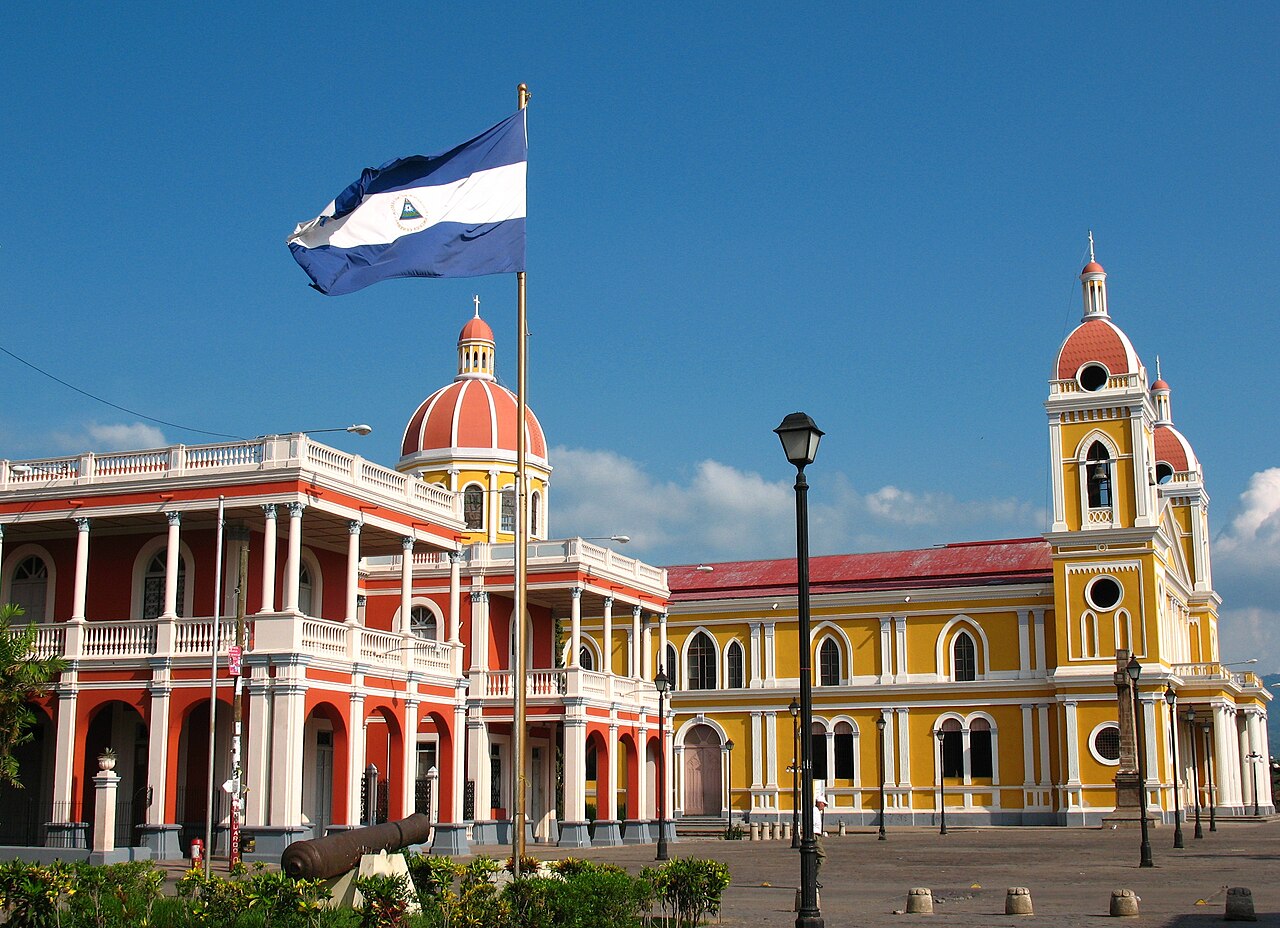
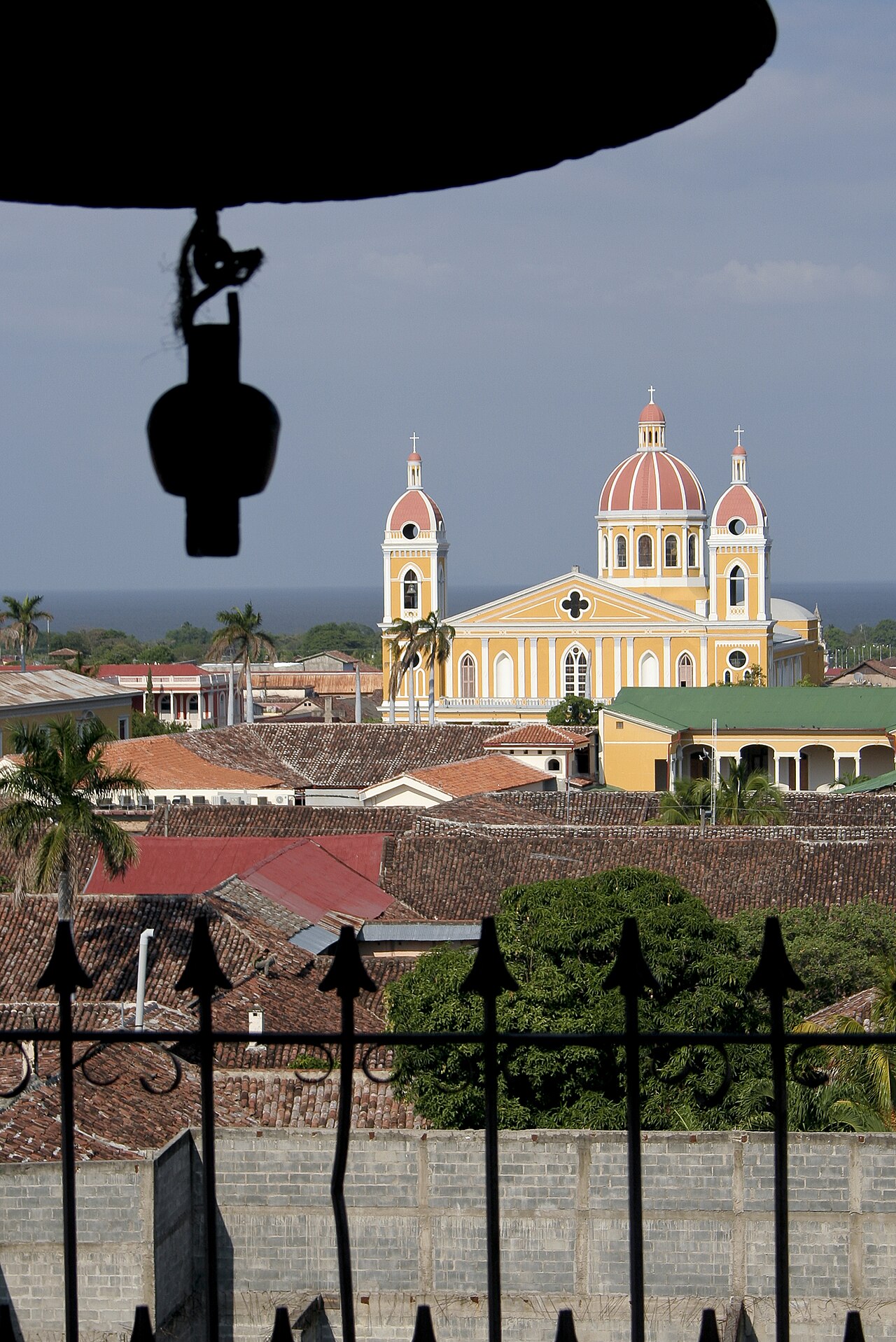
Anyone moving to Nicaragua ends up in one of four places. Granada is the centre of the foreign community: a colonial town on Lake Nicaragua with restored courtyard houses and the shortest learning curve for a newcomer. León is the university city, hotter, cheaper and less polished. San Juan del Sur is the Pacific surf town and the youngest crowd.
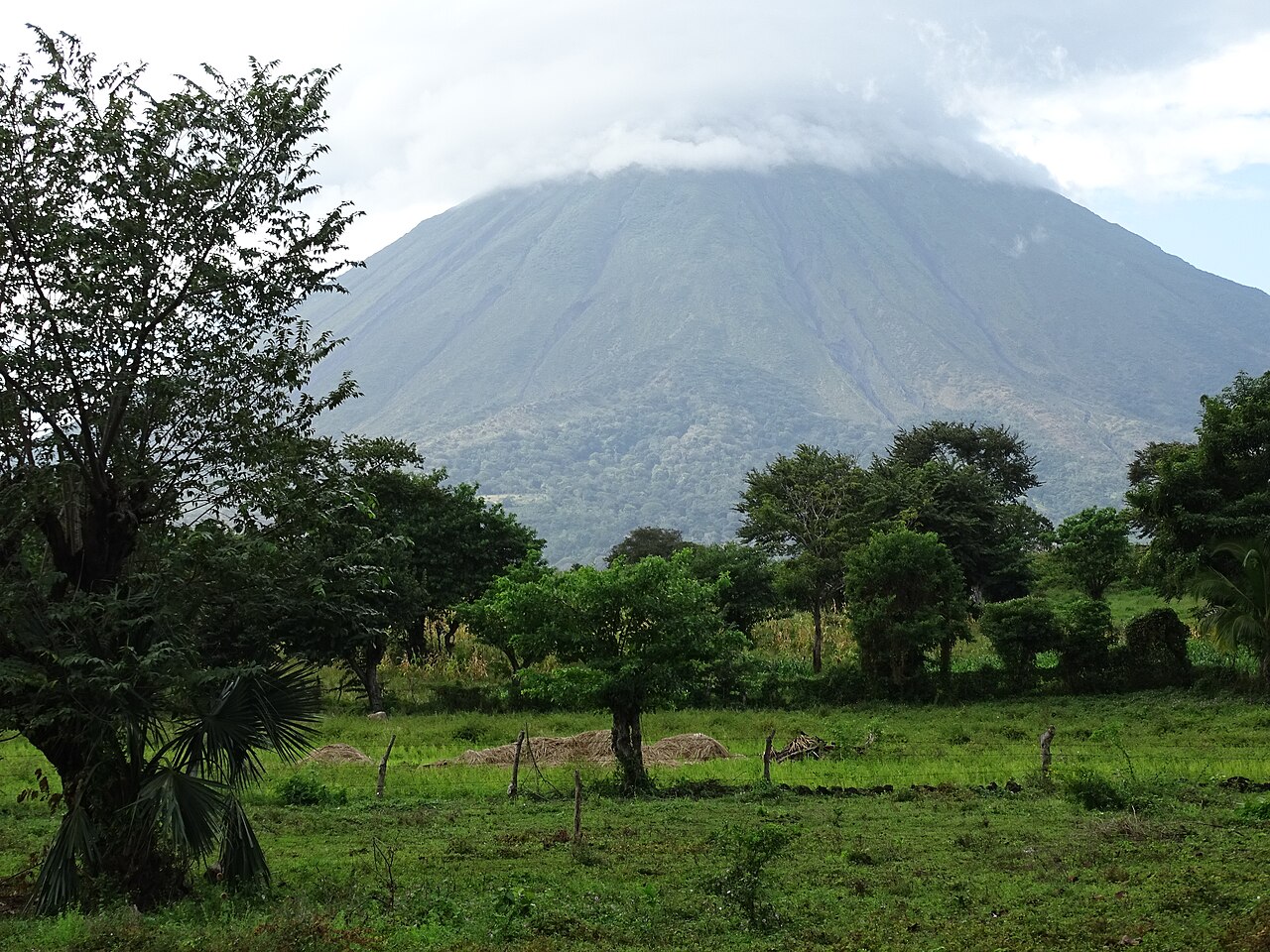
Managua is where the jobs, the embassies and the hospitals are, and where relatively few foreign residents choose to live. Ometepe, the twin-volcano island in the lake, and the Caribbean coast carry small, scattered populations.
One thing to hold in mind when reading property advertisements. The International Monetary Fund has recorded transfers of private property to the state since 2022, and the state has confiscated the property of citizens it stripped of nationality. Property here does not carry the security it does in Costa Rica or Panama, whatever the listing says.
The political conditions, plainly
Daniel Ortega and Rosario Murillo govern as co-presidents. A constitutional reform in force since 18 February 2025 amended 148 of 198 articles and created that office. It extended terms to six years and lets the surviving co-president complete a term without an election. It also gives the presidency coordination of the legislature, judiciary, electoral body and oversight institutions.
The assessments are severe and they are attributable. In September 2026 the United Nations human rights office told the Human Rights Council that political pluralism no longer exists at national or local level. Of 185 recorded votes in the National Assembly over a year, it noted, not one registered a single dissent. On 22 September 2026 the United Nations group of experts on Nicaragua found that enforced disappearances, torture and arbitrary detention of opponents amounted to crimes against humanity, verifying at least 161 disappearances since 2018.
Freedom House scores the country 14 out of 100 and rates it not free, reporting that the legal status of more than 5,670 non-governmental organisations has been rescinded since 2018. Reporters Without Borders ranks Nicaragua 168th of 180 for press freedom, the worst in Latin America for a second year.
For a foreign resident the operative risks are specific rather than atmospheric. Washington has formally determined that United States nationals face serious risk of wrongful detention. Arbitrary enforcement of local law is one of four named risk factors in its advisory. There is no independent judiciary to appeal to. And the electoral calendar is unsettled: a further reform passed a first reading in September 2026 and needs a second vote, so no next-election date should be treated as fixed.
Safety, and why nobody can measure it
The government calls Nicaragua the safest country in Central America and the police chief put the homicide rate at 6 per 100,000 in 2024, down from 11 in 2018. That may well be broadly right. It is also unverifiable.
The police have published no statistical yearbook since 2021. The main regional homicide tracker marked Nicaragua with an asterisk in March 2026, recording that the government did not respond to its data request and that no reliable homicide data existed for 2025. Crime by department stopped being published in mid-2025.
The best independent reconstruction, built from 98 weekly police bulletins, counted 4,827 high-danger crimes in 2025, two-thirds of them robberies, with 59 percent of urban cases in Managua department. It also found the rate accelerating sharply in the second half of the year after mass prisoner releases.
Day to day, most foreign residents in Granada, León and San Juan del Sur report ordinary petty-crime risk rather than violence, and that matches the official picture. The honest summary is that the street risk is probably genuinely low and the state risk is the one the advisories lead on.
Connected Coverage
Nicaragua Visa and Residency 2026
Nicaragua Repealed Its Retiree Residence Law
Taxes in Nicaragua for Foreign Residents in 2026
Sources: Entry and residency rules from Laws 761 and 1210 and the United States embassy in Managua, tax from Law 822 as amended, the exchange rate and the basic basket from the Banco Central de Nicaragua and the statistics institute, the political assessments from the United Nations human rights office and its group of experts, and the crime reconstruction from independent Nicaraguan reporting.
- Ley 761, Ley General de Migración y Extranjería
- United States Embassy in Managua — immigration rules for visitors
- United States State Department — Nicaragua travel advisory, level three
- Banco Central de Nicaragua — the exchange rate holds at zero slide for 2026
- Ministerio del Trabajo — minimum wage agreement for 2026
- Freedom House — Nicaragua, Freedom in the World 2026
- Reporters Without Borders — Nicaragua country profile
- Library of Congress — the 2025 constitutional reform and executive power
What Is Not Known
What income a retiree actually needs. Law 694 set the old thresholds and was repealed in August 2024. Nothing official has replaced it, and the US$1,200 a month that circulates is a referential figure quoted by a regional law firm in January 2026 rather than a legal minimum. Confirm the number for your own file with the migration authority before you apply.
When the next election is. The 2025 reform moved the general election from November 2026 to November 2027 and extended terms into January 2028. A further amendment passed a first reading on 1 September 2026 and would extend terms again, but accounts of what it does differ, and it is not law until a second vote announced for January 2027. No date should be stated as settled.
How much crime there is. The police have published no statistical yearbook since 2021, did not respond to the main regional homicide tracker’s request for 2025 data, and stopped publishing crime by department in mid-2025. The official rate of 6 per 100,000 may be broadly right and cannot be checked. Independent monitors counted 54 femicides in a year the state reported one.
How many people live in Nicaragua. A census was conducted in 2024 and no results have been published. Current figures are projections from the 2005 census in a country with very large post-2018 emigration, and they diverge by roughly 300,000 between the national statistics office, the International Monetary Fund and the United Nations.
Several tax specifics. The consumption tax rate, the current capital income rates, the taxable base for the municipal property tax beyond its 1 percent rate, and whether Nicaragua holds any double taxation treaty at all could not be confirmed from primary texts and are therefore not stated here.
Frequently Asked Questions
Do I need a visa to enter Nicaragua?
Most Western nationalities need no entry visa, but everyone buys a tourist card on arrival for US$10 in cash, valid up to 90 days, with six months of passport validity required. The ninety days are shared with Guatemala, El Salvador and Honduras under the Central America-4 agreement, so a trip to those countries does not reset the clock while Costa Rica or Panama does.
Can retirees still get permanent residence in Nicaragua?
No. Law 694 of 2009, which granted retirees permanent residence along with duty-free import of household goods and a vehicle, was repealed by Law 1210 with effect from 2 August 2024. Retirees now receive temporary residence under the general migration law, reported by lawyers to last one year and to require annual renewal, and they pay ordinary import duty.
Will Nicaragua tax my foreign pension?
On the face of Law 822, no. The income tax reaches only Nicaraguan-source income, for residents and non-residents alike, and becoming tax resident after 180 days in a calendar year changes your status without widening the tax base. Local employment, a local business, Nicaraguan rents and capital gains are taxable, and the rules on property ownership can pull people in, so take local advice.
What does it cost to live in Nicaragua?
Crowd-sourced estimates put one person in Managua at roughly US$1,058 a month all in and a mid-tier budget in Granada at about US$1,140 including coworking, with a central one-bedroom around US$350 to US$400. The only official benchmarks are the basic basket for a household of six, about US$586 a month, and sector minimum wages running roughly US$169 to US$378.
Is Nicaragua safe for foreigners?
Street crime risk is probably genuinely low and cannot be verified, because the police have published no annual statistics since 2021 and did not supply data for 2025. The risk the advisories actually lead on is the state: Washington has formally determined that United States nationals face serious risk of wrongful detention, and arbitrary enforcement of local law is a named risk factor.
Can foreigners own property in Nicaragua?
Yes, and the ownership rules themselves are broadly equal, which is covered in the property guide. The caution is political rather than legal: the International Monetary Fund has recorded transfers of private property to the state since 2022, the state has confiscated property of citizens it stripped of nationality, and there is no independent court to appeal to.
This article was produced by The Rio Times’ automated newsroom system. How we use AI · Report an error
Read More from The Rio Times