Opening a Bank Account in Nicaragua as a Foreigner 2026: Banks, Documents and the Limits
GUIDES · NICARAGUA
Key Facts
- —What it is A practical guide to opening and keeping a bank account in Nicaragua as a foreigner in 2026.
- —Who it’s for Residents, retirees, remote workers and property buyers who need to pay local bills or receive money from abroad.
- —What it costs BANPRO savings accounts open from 1,000 córdobas (about US$27) or US$100. Its international wires out cost at least US$40.
- —The rules Residents show a passport and residency card; non-residents need a passport plus a second photo ID. Two references are standard.
- —Why it matters Two-thirds of bank deposits are in US dollars. The córdoba has been fixed at 36.6243 per dollar since January 2024.
- —The catch Laws passed in 2024 widened state access to financial data. Deposit insurance stops at US$12,000 per person per bank.
- —What is still open Whether the córdoba stays fixed in 2027, and how far US sanctions will reach into local banking.
Opening a bank account in Nicaragua is still routine for legal residents. Sanctions, new state powers and a modest deposit guarantee shape the risks.
A bank account in Nicaragua gives a foreigner a local debit card, cheap domestic transfers and a place to hold US dollars. The paperwork is light. The political and legal setting around the banks is not.
The main banks and how big they are
Nicaragua’s banks are supervised by the Superintendency of Banks and Other Financial Institutions, known by its Spanish initials SIBOIF.
Eight banks and one finance company appear in the SIBOIF’s comparative balance sheet for 31 August 2025. Together they held assets of 376.4 billion córdobas (about US$10.3 billion).
That is less than half of Nicaragua’s annual economic output, about US$22 billion in 2025 on World Bank data.
Three banks dominate. BANPRO, part of the regional Grupo Promerica, held 29.2 percent of deposits from the public at that date. Banco LAFISE Bancentro held 27.9 percent and BAC held 25.3 percent.
Together those three held about 82 percent of deposits. Banco Ficohsa followed with 7.2 percent, BDF (Banco de Finanzas) with 6.4 percent and Banco Avanz with 3.6 percent.
Banco Atlántida held 0.3 percent. Banco Produzcamos reported no public deposits in the same SIBOIF table.
BANPRO was also the largest by assets, at 106.3 billion córdobas (about US$2.9 billion). LAFISE and BAC each held about 94 billion córdobas (about US$2.6 billion).
Every bank that takes deposits under a SIBOIF licence must belong to the deposit-guarantee system described below. That includes branches of foreign banks.
Córdoba or dollar account: the crawl that stopped
Nicaragua’s currency is the córdoba. For years the Banco Central de Nicaragua (BCN) let it weaken in small, pre-announced daily steps, a system known as the crawl.
The BCN cut the crawl to zero from 1 January 2024. On 20 October 2025 it kept it at zero for 2026. That fixed the official rate at 36.6243 córdobas per dollar for the whole year.
Market quotes track that level closely. On 25 September 2026 the open.er-api.com reference rate was 36.83 córdobas per dollar, about 0.6 percent weaker. Conversions in this guide use the official rate.
Dollars dominate the banks anyway, according to the International Monetary Fund (IMF). In September 2025, 66.6 percent of deposits and 87.4 percent of loans were in dollars.
Savers earn little. At the end of 2025, savings accounts paid about 1.0 percent in córdobas and 0.9 percent in dollars, according to BCN data.
Term deposits paid about 5.7 percent in córdobas and 4.9 percent in dollars. Inflation was 2.7 percent in 2025, according to the BCN.
For anyone whose income or savings are in US dollars, a dollar account removes córdoba risk. The IMF has said the crawl could be recalibrated in a downside scenario, which a córdoba balance would feel first.
Documents: what the banks ask foreigners for
BANPRO publishes the clearest list. Foreign residents need a valid passport and a valid cédula de residencia, the residency card issued by Nicaragua’s migration authority.
Non-residents can apply with a passport showing a valid entry visa, in the bank’s wording. They also need a second government photo ID, such as a driving licence or social security card.
Both groups fill in a client profile form, the perfil del cliente. BANPRO also asks for two references, which can be bank, commercial or, failing those, personal.
BANPRO’s published list does not mention a utility bill or other proof of address. Banco Atlántida says it may request extra documents depending on the client’s profile. Bringing a recent bill or lease avoids a second visit.
Expect questions about where your money comes from. Banks must apply customer due diligence under Law 977, the anti-money-laundering law, and a SIBOIF rule updated in December 2024.
BAC lets customers request an account online only if they already hold a BAC product. The account must then be formalised at a branch, the bank’s help page says.
BANPRO’s ordinary savings account opens with 1,000 córdobas (about US$27) or US$100. The same amounts are the minimum average monthly balance.
Below that monthly average, the bank charges 375 córdobas (about US$10) or US$15. A personal checking account requires 2,500 córdobas (about US$68) or US$500.
The residency card is usually the slower step, and it decides which list of documents applies. The residency guides linked below cover the routes and timelines.
Fees, remittances and moving money in and out
International wires are the main cost. BANPRO charges 0.5 percent to send an international SWIFT transfer, with a minimum of US$40 and a maximum of US$500.
Receiving a SWIFT transfer at BANPRO costs 0.25 percent, with a minimum of US$20 and a maximum of US$250. So US$500 arriving costs 4 percent, while US$8,000 costs the same US$20.
LAFISE charges US$15 to receive up to US$1,000, rising in bands to US$175 for the largest sums. Sending from a branch costs 0.5 percent, with a US$50 minimum.
LAFISE adds a correspondent fee of US$25 for transfers to the United States and US$40 elsewhere, its fee schedule shows. Online sends cost 0.3 percent, with a US$35 minimum.
Domestic transfers are cheap. BANPRO charges US$2 for an online transfer to another Nicaraguan bank through the ACH clearing system, or US$15 at a branch.
Fees may change. Law 1237 of February 2025 lets the SIBOIF set limits on interest rates, commissions and charges for prudential reasons.
Remittances show how much of the system runs on money from abroad. Inflows reached a record US$5.24 billion in 2024, equal to 26.6 percent of GDP.
The IMF says that is the highest ratio in the region, and that over 84 percent comes from the United States.
The Inter-American Development Bank (IDB) estimated growth of 18.2 percent in 2025, which implies about US$6.2 billion. That is roughly US$880 for every person in the country.
Growth slowed to 7.5 percent in the first quarter of 2026, according to the IDB. The BCN’s 2025 annual report did not publish a remittance total, Confidencial noted in April 2026.
US persons, including citizens, must report foreign accounts to FinCEN, a US Treasury bureau. The rule applies once their combined value tops US$10,000 at any time in a year.
The regulator, the new rules and your deposit guarantee
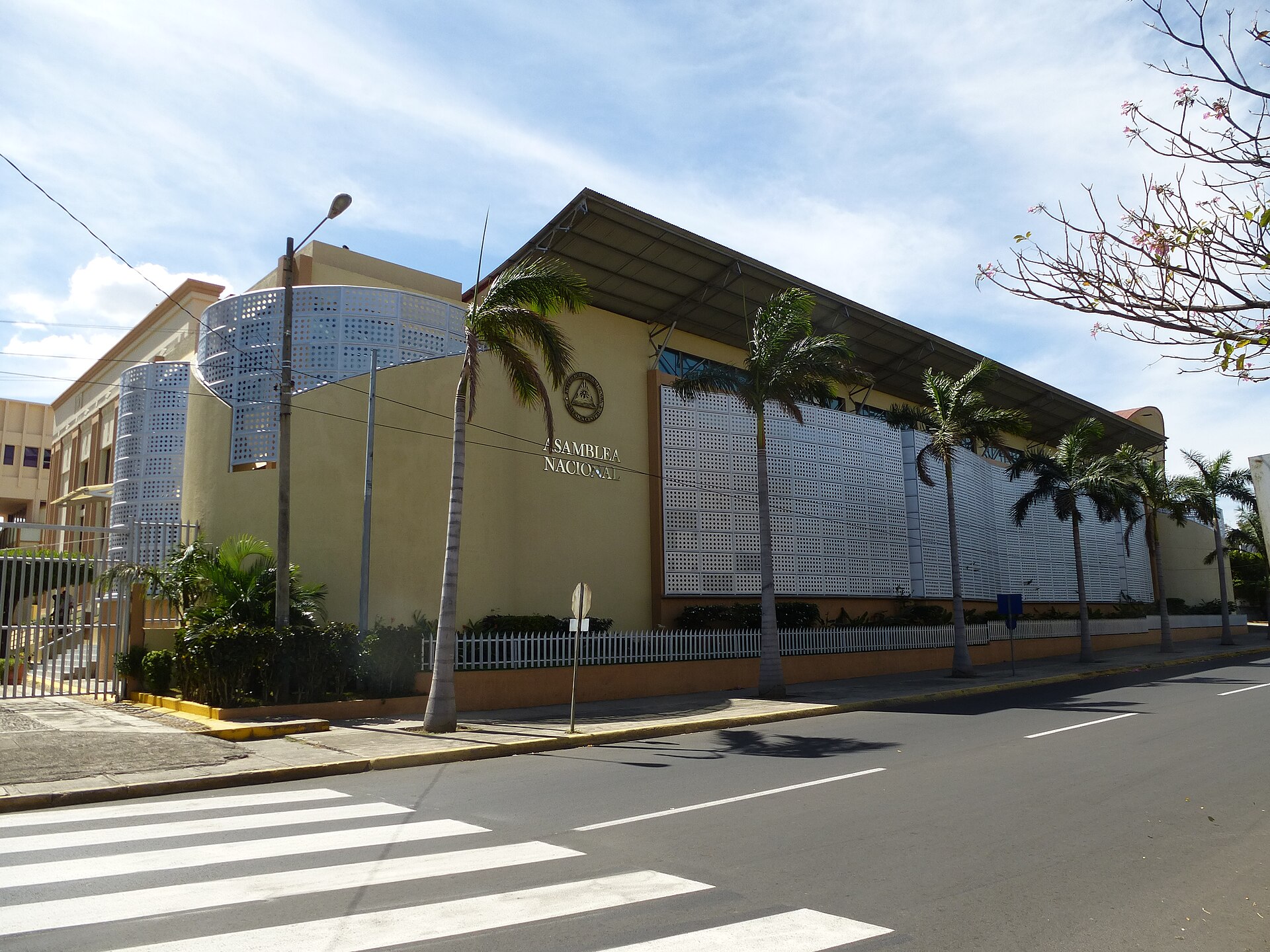
The SIBOIF licenses and inspects banks, and can intervene in or seek the liquidation of a failing one. Its head is elected by the National Assembly for six years.
Law 1232, passed unanimously in late December 2024 and published on 30 December, rewrote the system’s governance. It placed the BCN and the SIBOIF under one board.
The BCN president chairs that board and the superintendent is its vice-president, the law says. The finance minister also sits on it.
The law obliges every person resident in Nicaragua, national or foreign, to supply economic and financial information the BCN or SIBOIF requests.
Exile media such as 100% Noticias said this ends bank secrecy. The law says both institutions must keep such information protected.
The law also lets the SIBOIF void the appointment of bank directors and managers, and remove staff for serious breaches. Changes in bank ownership need its authorisation.
Deposit insurance comes from the Deposit Guarantee Fund, FOGADE. Law 1236, published on 17 February 2025, raised the cover from US$10,000 to US$12,000 per depositor per bank.
The cover includes principal and interest, and applies to savings, current and term deposits in any currency. Joint accounts share one limit, split between the holders.
Deposits of bank directors, shareholders and their close relatives are excluded, as are deposits tied to criminal convictions. A foreigner with US$50,000 in one bank is insured for less than a quarter of it.
On official data the banks look sound. Capital adequacy was 18.5 percent in December 2025 and the ratio of loans in arrears 1.1 percent, the BCN reported.
The IMF, in its 2025 review, called the financial sector “reportedly well capitalized” with adequate liquidity. It also noted that the 2018–19 crisis brought deposit flight and cut bank balance sheets by almost a third.
US sanctions, the FATF and correspondent banks
International dollar wires from Nicaraguan banks pass through correspondent banks abroad. BANPRO lists Deutsche Bank Trust Company Americas, Bank of America and Terrabank among its correspondents.
The outlet Artículo 66 counted 54 correspondent links across 15 countries in November 2024, 17 of them in the United States. Those links are why US sanctions matter to ordinary account holders.
Washington has sanctioned Nicaraguan officials under Executive Order 13851 since November 2018. In April 2019 the Treasury sanctioned Banco Corporativo (Bancorp), which it said laundered money for the Ortega government.
Bancorp asked to be dissolved five days later, and the SIBOIF declared its legal existence ended in August 2022. By December 2024 the Treasury had sanctioned 51 people and 11 entities in Nicaragua since 2018, Artículo 66 reported.
Those listed include the central bank president and the bank superintendent, both sanctioned in 2021. On 26 February 2026 the Treasury added the director and deputy director of the Financial Analysis Unit (UAF).
The UAF is the state’s anti-money-laundering agency. The Treasury said the UAF monitors money from abroad to block funding for peaceful opposition groups. It said the UAF has liquidated assets of dissidents and non-governmental organisations (NGOs) without legal basis.
On 16 April 2026 the Treasury added two sons of co-presidents Daniel Ortega and Rosario Murillo, plus gold-sector firms. US persons generally may not deal with anyone on its list of Specially Designated Nationals.
Before buying property or paying a business partner, check names against that list. It is public and searchable on the Treasury’s website.
The Financial Action Task Force (FATF), the global anti-money-laundering standard setter, removed Nicaragua from its “grey list” in October 2022. It said it was “strongly concerned” about the potential misapplication of its standards to suppress the non-profit sector.
Nicaragua was not on the list of jurisdictions under increased monitoring published on 19 June 2026. That matters because US banks are told by FinCEN to weigh FATF decisions when assessing risk.
Trade policy adds pressure. The US Trade Representative decided on a tariff for Nicaraguan goods that do not qualify under the CAFTA-DR trade agreement.
The tariff is zero in 2026, rising to 10 percent on 1 January 2027 and 15 percent on 1 January 2028.
The 2024 laws and the closure of critics’ accounts
Law 1224, the Law for the Protection of Nicaraguans against Sanctions and External Aggressions, took effect on 25 November 2024. All 91 pro-government deputies voted for it, Reuters reported.
It declares foreign sanctions that “violate international law” null in Nicaragua. It bars anyone from denying financial services on the grounds of such sanctions.
Regulators may fine or suspend institutions that apply foreign sanctions, “without prejudice” to criminal liability for treason. Wálmaro Gutiérrez, a ruling-party lawmaker, said a foreign government’s directive had no reason to apply outside its own country.
Banks faced a clash with their US correspondents. Two days later the SIBOIF told them to keep applying anti-money-laundering rules and to honour their international contracts.
A SIBOIF rule published on 2 December 2024 lets banks decide whether to keep clients listed as launderers or terrorist financiers. It also requires enhanced checks on listed clients.
A consultant who worked in Nicaraguan banking until 2021 described the outcome to Confidencial. Sanctioned officials could hold accounts, but without international cards or transfers. That account could not be independently confirmed.
For government critics, the pressure has run the other way. In May 2023 the accounts of Catholic dioceses were frozen, and police said they were investigating money laundering.
In August 2023 the accounts of the Jesuit-run Central American University were frozen, a university source told Reuters. The government confiscated the university that month.
Journalists and opponents stripped of their nationality found accounts blocked without notice in March 2023, the outlet Divergentes reported. The banks named were BAC, BANPRO and BDF.
The UN Group of Human Rights Experts on Nicaragua counted 452 people stripped of nationality since February 2023. Courts ordered their assets confiscated, the group said in September 2025, and it lists bank accounts among the seized assets.
Non-profits have been hit hardest. On 19 August 2024 the government outlawed 1,500 NGOs, saying they had failed to disclose financial information.
Authorities have shut more than 5,000 civil society groups, private universities and media outlets since 2018, Reuters reported. Interior ministry orders have cited missing financial reports and breaches of transparency rules.
Published cases centre on clergy, NGOs, journalists, opposition figures and their relatives. Foreign residents live under the same laws, and complaints go first to the bank and then to the SIBOIF.
Practical limits: how foreigners reduce the risk
Keep a working account in your home country. Wires out of Nicaragua depend on foreign correspondents, and the 2018–19 crisis showed how fast conditions can change.
Hold locally only what you need for bills and rent. Where you can, stay under the US$12,000 FOGADE cover at each bank. Spreading money across two banks doubles the insured amount.
Use a dollar account for larger balances, since any future change to the crawl would hit córdoba savings first. Keep a small córdoba account if your bills are in córdobas.
Keep your residency card valid, because BANPRO requires a valid cédula to open a resident’s account. Store copies of your passport, residency card and account contracts outside the country.
Batch incoming transfers to limit minimum fees, and compare the exchange spread as well as the fee. Treat account data as open to the BCN and SIBOIF under Law 1232.
A bank account in Nicaragua remains useful and routine for most foreign residents. The limits are political and legal, so plan for them before you move money, not after.
Connected Coverage
Moving to Nicaragua 2026: Visas, Costs and Daily Life Under Ortega
Nicaragua Visa and Residency 2026 — Routes, Costs and Realistic Timelines
Ortega and Murillo Tighten Grip as Remittances Fall 3.5% of GDP in Nicaragua
Sources: Bank data come from the SIBOIF and the Banco Central de Nicaragua. Legal texts come from La Gaceta and the National Assembly. Account terms come from BANPRO, LAFISE, BAC and Banco Atlántida. Sanctions and FATF status come from the US Treasury, USTR and FATF. Macro data come from the IMF, IDB and World Bank. Reporting comes from Reuters, Confidencial, Divergentes, Artículo 66 and the UN Group of Experts. All accessed 25 September 2026.
- bcn.gob.ni
- bcn.gob.ni
- bcn.gob.ni
- bcn.gob.ni
- superintendencia.gob.ni
- siboif.gob.ni
- legislacion.asamblea.gob.ni
- superintendencia.gob.ni
- fogade.gob.ni
- banprogrupopromerica.com.ni
- banprogrupopromerica.com.ni
- lafise.com
- imf.org
- fatf-gafi.org
- home.treasury.gov
- home.treasury.gov
- ustr.gov
- reuters.com
- ohchr.org
What Is Not Known
Whether the crawl stays at zero in 2027 is not known. The BCN announced the 2026 rate on 20 October 2025. The IMF has said the crawl could be recalibrated in a downside scenario.
How many accounts have been frozen or closed for political reasons is not known. Banks did not answer questions from the outlet Expediente Público on the subject in 2024, and no regulator publishes a count. What is known rests on testimony, press reports and UN documentation.
How the information powers in Law 1232 are used in practice is not public. No statistics on requests to account holders or banks have been published. Whether bank data is shared beyond the BCN and SIBOIF cannot be verified.
Whether any correspondent bank has cut or reduced its ties since Law 1224 is not public. Remittance growth of 18.2 percent in 2025 suggests the main payment channels kept working. Correspondent contracts are private and can change without notice.
The official 2025 remittance total is not known. The BCN’s annual report left it out, and the figure of about US$6.2 billion used here is derived from IDB growth data. Final numbers may differ.
Frequently Asked Questions
Can a foreigner open a bank account in Nicaragua without residency?
Yes, at some banks. BANPRO accepts non-residents with a passport showing a valid entry visa plus a second government photo ID, such as a driving licence. Applicants also complete a client profile and give two bank, commercial or personal references.
What documents do foreign residents need to open a bank account in Nicaragua?
BANPRO asks foreign residents for a valid passport and a valid cédula de residencia, the residency card. Applicants also fill in a client profile form and give two references. Banks must apply customer due diligence under the anti-money-laundering law, so expect questions about the source of your money.
How much of my deposit is insured in Nicaragua?
The deposit-guarantee fund FOGADE covers up to US$12,000 per depositor per bank, including interest. Law 1236 raised the limit from US$10,000 in February 2025. Joint accounts share one limit, split between the holders.
Should I open a córdoba or a US dollar account?
Dollar accounts are standard: 66.6 percent of bank deposits were in dollars in September 2025, according to the IMF. The córdoba has been fixed at 36.6243 per dollar since January 2024, and the rate is unchanged for 2026. Whether that continues in 2027 is not yet known.
Do US sanctions affect ordinary bank accounts in Nicaragua?
US sanctions target named officials and entities, not ordinary account holders. They matter because Nicaraguan banks rely on foreign correspondent banks for dollar wires. Law 1224 of November 2024 orders banks to ignore foreign sanctions, which puts them between Nicaraguan law and their correspondents’ rules.
This article was produced by The Rio Times’ automated newsroom system. How we use AI · Report an error
Read More from The Rio Times