NICARAGUA · FOREIGN POWERS
Key Facts
- —The country Nicaragua has 7.0 million people and an economy of US$22.2 billion (2025).
- —Biggest customer The United States took about half of Nicaragua’s exports in 2023: US$3.7 billion of US$7.4 billion.
- —US tariff A 12.5% US tariff has applied to most Nicaraguan goods since 24 July 2026.
- —Money from abroad Remittances from Nicaraguans abroad equal about 29.5% of the economy in 2025, the IMF estimates.
- —Gold Nicaragua’s gold exports reached US$899 million in the first quarter of 2026, the central bank reports.
- —China China supplied US$1.4 billion of Nicaragua’s imports in 2023, second only to the United States.
Nicaragua foreign powers and investors matter to Americans because Washington is both the country’s biggest customer and its sharpest critic. In October 2026 the United States, China, lenders, gold miners and Nicaraguans abroad each pull a different lever.

Nicaragua Foreign Players at a Glance
Nicaragua is a Central American country of 7.0 million people, led by co-presidents Daniel Ortega and Rosario Murillo. Its economy reached US$22.2 billion in 2025, World Bank data show.
This Nicaragua foreign players guide explains the governments, companies, lenders, donors and Nicaraguans abroad who matter in October 2026. Each actor is explained in one line, every figure carries its date, and all money is in US dollars.
For the wider picture see the Nicaragua hub, the Nicaragua geopolitics guide and the guide to who runs the Nicaraguan economy. The Nicaragua politics guide explains the government itself.
- United States: the biggest customer and the biggest critic, through tariffs, sanctions and visas.
- China: the second-largest single supplier of Nicaragua’s imports in 2023, and a diplomatic partner.
- Russia: a security partner whose military role in Nicaragua is not officially documented.
- Lenders: the IMF and the World Bank, which keep the economy financed.
- Companies: a Canadian gold miner, free-zone factories and gold traders under US sanctions.
- Nicaraguans abroad: remittances worth about three of every ten dollars the economy produces.
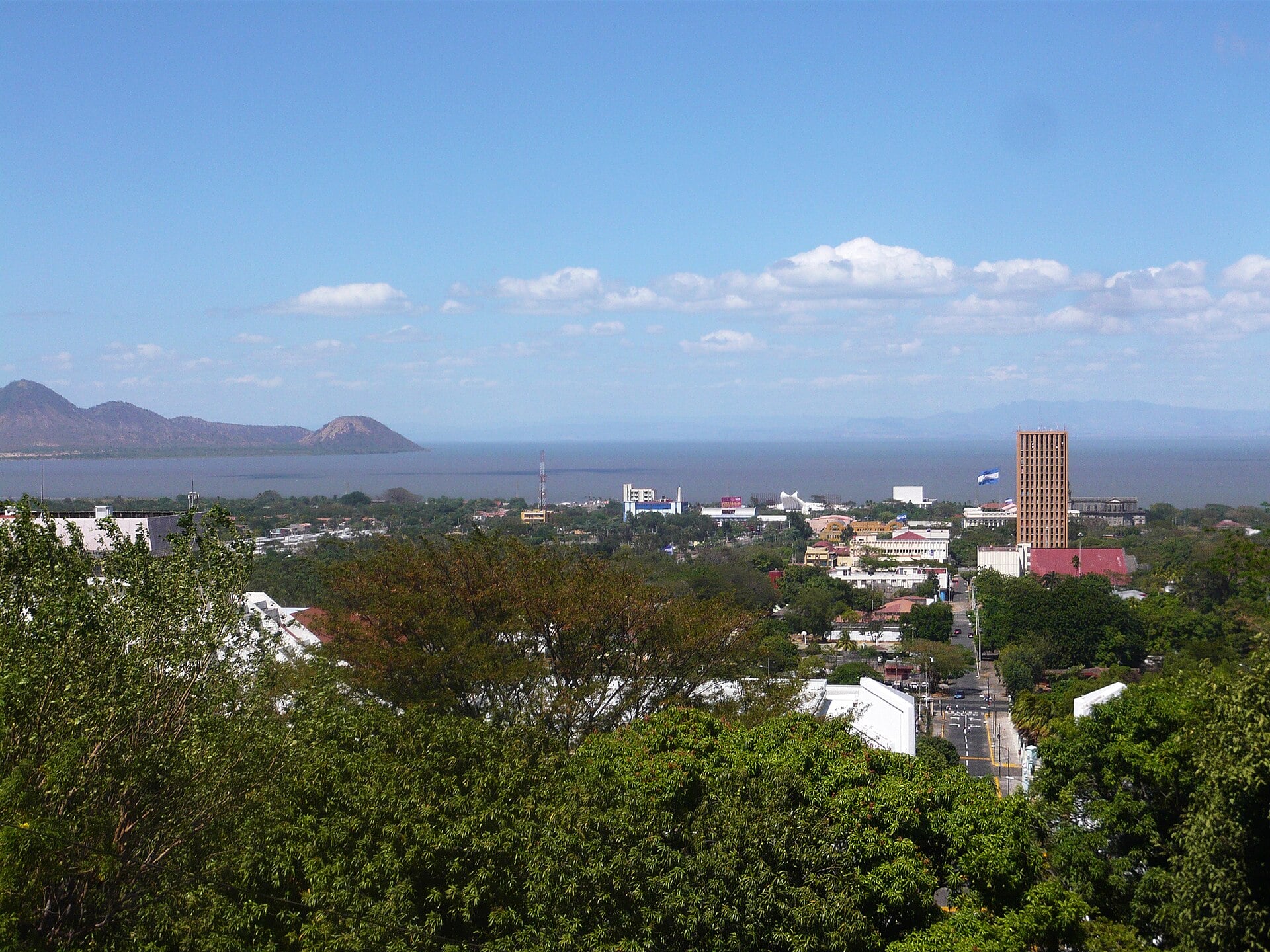
The United States, Customer and Critic
The United States is Nicaragua’s biggest customer. In 2023 it took US$3.7 billion of US$7.4 billion in exports, about half, the World Bank’s trade database shows.
It also supplied US$2.7 billion of Nicaragua’s US$10.9 billion in imports that year, about a quarter. Mexico was the next-largest single buyer, at US$1.0 billion.
Tariffs and Trade
A 12.5% US tariff has applied to most Nicaraguan goods since 24 July 2026. The US Trade Representative, the White House’s trade office, published the duty on 28 July 2026.
It covers 54 economies that, in the office’s view, do not ban forced-labor imports. Goods listed in two annexes are exempt, and our tariff explainer covers cigars, coffee and other goods.
A separate duty of December 2025 covers Nicaraguan goods outside CAFTA-DR, the free trade pact linking the United States, Central America and the Dominican Republic. It is 0% in 2026, 10% from 1 January 2027 and 15% from 1 January 2028.
Goods that qualify as Nicaraguan under CAFTA-DR are exempt from that second duty. The notice does not say how the two duties combine in 2027.
Sanctions and Visas
On 16 April 2026 the Treasury’s sanctions office, OFAC, blocked the US assets of seven gold-sector companies and a group of individuals. The list included two sons of the ruling couple and the vice minister of energy and mines.
The Treasury linked part of the action to the seizure of US-owned property. It said BHMB Mining Nicaragua, founded in 2019 with investment from a US company, had its plant occupied in 2025 without compensation.
The Treasury Secretary said the United States “will not allow the illicit confiscation of American-owned assets.” That demand sits at the center of the April sanctions.
The US Embassy in Managua lists a Level 3 travel advisory, “Reconsider Travel.” It cites crime, health risks, wrongful detention and arbitrary enforcement of local laws.
China, the Second-Largest Supplier
China sold Nicaragua US$1.4 billion of goods in 2023, about 13% of its US$10.9 billion in imports, World Bank trade data show. Only the United States supplied more.
The Chinese embassy in Managua, led by Ambassador Qu Yuhui, held a reception on 29 September 2026 for China’s 77th national anniversary. In August 2026 it also marked the opening of an emergency-response center in Managua built with Chinese companies.
On 24 October 2026 the embassy rejected US accusations that Chinese mining firms use coercive practices and link to illegal mining in Costa Rica. It said Chinese firms do not mine on the Costa Rican border.
The Treasury’s April 2026 list named two Nicaraguan-registered firms, Zhong Fu Development and Nicaragua Xinxin Linze Mineria Group. It did not state who owns them.
The Treasury said Zhong Fu took part in the 2025 occupation of the BHMB plant. It said Xinxin shipped more than US$25 million of gold to the United States in early to mid-2025.
Russia and the Security Question
Russia is widely described as Nicaragua’s main security partner. The size, terms and location of any Russian military presence are not published in official documents.
Russia is not among Nicaragua’s largest trade partners in the 2023 data, led by the United States, China and Mexico. Its weight is political and military, not commercial.
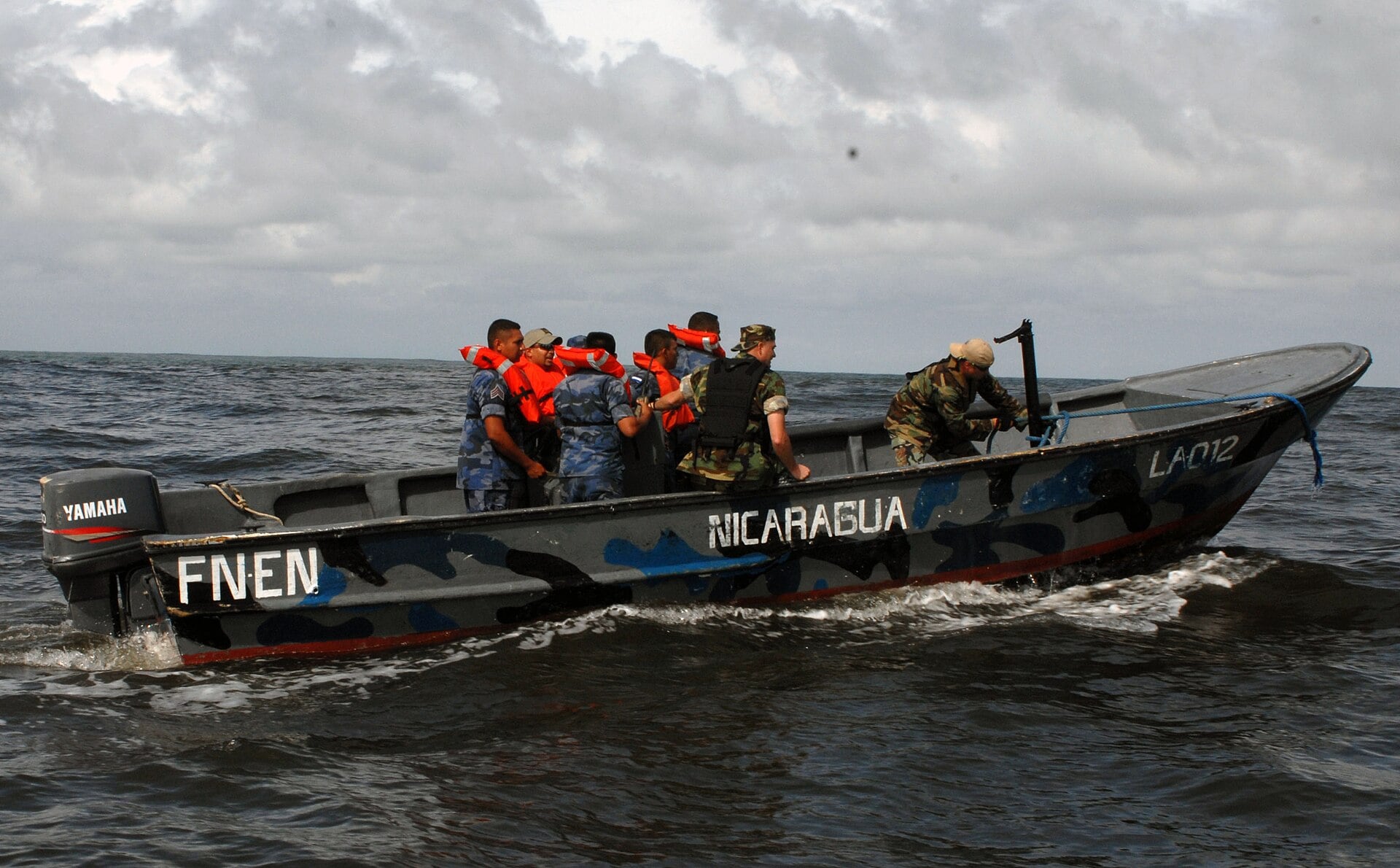
Nicaragua foreign ties include past naval training with US forces, as a 2010 exercise off the Pacific port of Corinto shows. No current joint exercise with either power is documented in official sources.
The IMF, World Bank and Other Lenders
The International Monetary Fund, the global lender of last resort, ended its yearly review on 20 January 2026 and called the economy “resilient.” It projects growth of 3.4% in 2026 and puts gross reserves at US$8.0 billion for 2025.
The Fund rates the risk of debt distress as moderate, with public debt at 43.2% of GDP in 2025. It asks the government to strengthen the rule of law, property rights and anti-corruption steps.
The World Bank said on 6 October 2026 that the economy grew 4.9% in 2025 and should grow 3.6% in 2026. Its active lending for the poorest countries is only US$50 million, including a hurricane recovery project.
The Bank’s private-sector arm, the International Finance Corporation, has US$117 million committed, mostly short-term trade finance. Nicaragua’s central bank reported reserves of US$9.4 billion at the end of March 2026, or 9.0 months of imports.
Foreign Companies and Investors
Nicaragua foreign direct investment brought US$1.5 billion into Nicaragua in 2025, up from US$1.35 billion in 2024, World Bank data show. In the first quarter of 2026 net inflows were US$565 million, and 49.4% went into energy and mining, the central bank reports.
Gold is the headline, led by Canada’s Equinox Gold, which took over the Nicaraguan mines of Calibre Mining in June 2025. Its two complexes, La Libertad and El Limón, produced 81,280 ounces in the first quarter of 2026.
Gold exports reached US$899 million in the first quarter of 2026, and goods exports rose 38% to US$2.56 billion, the central bank says. Free-zone factories, which export duty-free, sold US$573 million abroad, down from US$624 million a year earlier.
The April 2026 sanctions list shows that Washington now targets the gold sector directly. The Treasury also said the government had recently rescinded the operating licence of the BHMB plant.
Aid Donors and Outside Pressure
Foreign aid to Nicaragua, officially development assistance, was US$582 million in 2023, down from US$1.13 billion in 2022, World Bank data show. The data for 2024 and 2025 are not yet published.
The IMF’s January 2026 review lists stricter international sanctions and a geopolitical shift in official foreign inflows among the main risks. It also names state transfers of private property since 2022 as a risk.
The Fund asks Nicaragua to make property-rights procedures more transparent and to publish consolidated financial statements and audit reports. It also asks for stronger anti-money-laundering cooperation with the private sector and nonprofits.
The Diaspora and Its Money
Nicaraguans abroad send home far more money than foreign investors bring in, which equalled about 7% of GDP in 2025. The IMF puts remittances at 29.5% of GDP in 2025, up from 26.6% in 2024, and expects 26.1% in 2026.
The World Bank records US$5.2 billion of personal remittances in 2024, up from US$4.7 billion in 2023. The IMF lists tighter US immigration and trade policy among the main risks to those transfers.
US immigration rules decide who can stay abroad and keep sending money. For the regional context see our guides to Nicaragua in Latin America and Nicaragua in Central America.
What It Means for US Readers
Importers of Nicaraguan goods pay a 12.5% tariff on most items since 24 July 2026. A second duty of 10% starts on 1 January 2027 for goods outside CAFTA-DR, so check tariff codes and annexes before signing.
Anyone trading Nicaraguan gold or dealing with Nicaraguan mining firms should check every name against the Treasury’s sanctions lists. Banks outside the United States risk losing US correspondent accounts if they handle significant deals for listed parties.
Investors in Equinox Gold carry Nicaraguan sanctions risk, because its two complexes there made 81,280 ounces in the first quarter of 2026. Travellers should read the embassy advice, which asks them to reconsider travel.
Nicaraguan Americans who send money home should use licensed transfer firms and avoid recipients named on US sanctions lists. The IMF names tighter US immigration policy as a risk to those transfers.
What Is Not Known
No official page states the size of any Chinese loan, investment or military link to Nicaragua in 2026. The number of Russian personnel in the country and the terms of their presence are also not published.
How much regional development banks lend to Nicaragua in 2026 is not confirmed. The final owners of the gold firms on the April 2026 sanctions list are not disclosed.
The effect of the 12.5% tariff will show only in the 2026 trade data, which are not yet out. How the two US duties combine from 1 January 2027 is open.
Frequently Asked Questions
Who are the main foreign players in Nicaragua?
The United States is the biggest customer and critic. China, Russia, the IMF, the World Bank, Canadian gold miners and Nicaraguans abroad also matter.
Does the United States tax Nicaraguan goods?
A 12.5% US tariff has applied to most Nicaraguan goods since 24 July 2026, with annex exemptions. A separate duty of 10% starts on 1 January 2027 for goods outside CAFTA-DR.
What does China do in Nicaragua?
China sold Nicaragua about US$1.4 billion of goods in 2023, second only to the United States. Its embassy says Chinese mining firms are falsely accused of coercion.
Are there Russian soldiers in Nicaragua?
The size, terms and location of any Russian military presence are not published in official documents. Russia is not among Nicaragua’s top trading partners.
Which foreign company is biggest in Nicaraguan gold?
Canada’s Equinox Gold, which bought Calibre Mining’s Nicaraguan mines in June 2025, produced 81,280 ounces there in the first quarter of 2026. Other gold firms face US sanctions.
How important are remittances to Nicaragua?
The IMF puts remittances at 29.5% of GDP in 2025, roughly three of every ten dollars the economy produces. The World Bank records US$5.2 billion in 2024.
Sources: IMF, Nicaragua 2025 Article IV consultation, press release 26/015, 20 January 2026; World Bank, Nicaragua country overview, 6 October 2026; World Bank, World Development Indicators for Nicaragua, 8 October 2026; World Bank, WITS trade statistics for Nicaragua (2023), 31 October 2026; Central Bank of Nicaragua, balance of payments for the first quarter of 2026, July 2026; US Trade Representative, Section 301 notice on Nicaragua, Federal Register, 28 July 2026; US Trade Representative, Section 301 tariff action on Nicaragua, Federal Register, 29 December 2025; US Treasury, sanctions on Nicaraguan officials and gold firms, 16 April 2026; US Embassy in Nicaragua, travel advisory, 31 October 2026; Embassy of China in Nicaragua, news page, 24 October 2026; Equinox Gold, management discussion for the first quarter of 2026, May 2026.
This article was produced by The Rio Times’ automated newsroom system. How we use AI · Report an error · Editorial responsibility: Matthias Camenzind, Editor-in-Chief
Expat Guide to Nicaragua
What The Rio Times publishes for foreigners who live in or move to Nicaragua.
Start here
- Is Nicaragua Safe for Expats? Crime, Politics and Daily Reality
- Opening a Bank Account in Nicaragua as a Foreigner: Banks, Documents and the Limits
- Moving to Nicaragua: Visas, Costs and Daily Life Under Ortega
- Healthcare in Nicaragua for Expats: Hospitals, Insurance and the Managua Option
Understand Nicaragua
Read More from The Rio Times
Brazil runoff date: Sunday, October 25, poll closing times and when results start · Brazil runoff polls: Flávio 51%, Lula 49% · Kalshi and Polymarket odds
Rotate for Best Experience
This report is optimized for landscape viewing. Rotate your phone for the full experience.
You've reached your free article limit
Subscribe to The Rio Times for unlimited access to our news, expat and nomad guides and market intelligence on Latin America and Africa.
Keep reading for free
Your first article was on us. Register with your email address to read 6 free articles every month. You will also receive The LatAm Brief: what moved in Latin American markets, politics and expat life, every weekday morning.
Expat Guide to Nicaragua
What The Rio Times publishes for foreigners who live in or move to Nicaragua.
Start here
- Is Nicaragua Safe for Expats? Crime, Politics and Daily Reality
- Opening a Bank Account in Nicaragua as a Foreigner: Banks, Documents and the Limits
- Moving to Nicaragua: Visas, Costs and Daily Life Under Ortega
- Healthcare in Nicaragua for Expats: Hospitals, Insurance and the Managua Option
Understand Nicaragua