Is Nicaragua Safe for Expats in 2026? Crime, Politics and Daily Reality
GUIDES · NICARAGUA
Key Facts
- —What it is A standing safety guide for foreigners living in or moving to Nicaragua. The country has about 7 million people and is slightly smaller than Wisconsin.
- —Who it’s for Expats, retirees, remote workers and long-stay visitors from the US, Canada, the UK and Europe.
- —The rules Foreigners may not take part in politics. Drones are banned, and photographing government buildings or police can bring penalties.
- —Why it matters The US State Department rates Nicaragua Level 3, “reconsider travel”, and warns of wrongful detention of US nationals.
- —The catch Street crime looks moderate for Central America, but official data cannot be checked. For foreigners, the state is often the larger risk.
- —What is still open A reform passed on first reading on 1 September 2026 would lengthen terms to seven years. Its final vote is due from 18 January 2027.
Is Nicaragua safe for expats in 2026? Street crime is moderate by regional standards, but speech, photos and politics carry risks most newcomers do not expect.
For foreigners, safety in Nicaragua has two parts. Everyday crime appears moderate by Central American standards, though the data are opaque. Political risk, from phone searches to expulsions, has grown steadily since 2018.
Official crime data versus independent estimates
Nicaragua’s National Police present the country as one of the safest in the region. At their anniversary event on 25 September 2025, police chief Francisco Díaz put the homicide rate at 5 per 100,000 people.
That rate covered September 2024 to August 2025, according to 100% Noticias, an exiled news outlet. Díaz also said 97.5 percent of reported crimes were minor.
In a country of about 7 million people, a rate of 5 means roughly 350 killings a year. InSight Crime put Costa Rica at 16.8 and Honduras at 23.2 per 100,000 in 2025.
The difficulty is checking the claim. InSight Crime, a research group that tracks organised crime, said Nicaragua did not answer its request for official 2025 data. It found no reliable homicide data for the year.
Independent tallies fill part of the gap. Despacho 505, an exiled newsroom, compiled 98 weekly police bulletins from 2025 and counted 4,827 crimes that police class as “high danger”.
About two-thirds were robberies. The same bulletins listed 337 violent deaths, which, if complete, would be roughly in line with the official rate.
Despacho 505 found that reported serious crime rose about fivefold in the second half of 2025. The rise followed the release of 9,900 prisoners during the year under a “family coexistence” benefit.
Undercounting shows up elsewhere. ContraData, a monitor run by La Lupa Feminista and Despacho 505, documented 54 violent deaths of women in 2025. Authorities classed only 11 of them as femicides.
Perceptions are mixed. In Gallup’s 2025 Global Safety Report, based on 2024 interviews, 63 percent of Nicaraguans said they felt safe walking alone at night. The figure was 53 percent in Costa Rica and 71 percent in the United States.
Hagamos Democracia, an exiled civic group, runs a remote quarterly survey of 400 people. In its June 2026 round, about eight in ten said they had noticed state surveillance, and 83 percent said insecurity had risen in three months. Answers in a closely watched society need care.
What the US, UK and Canadian advisories say
The US State Department rates Nicaragua at Level 3 of 4, “reconsider travel”, in an advisory issued on 14 May 2026. It cites crime, health, wrongful detention and arbitrary enforcement of local laws.
Washington has determined that US nationals face a serious risk of wrongful detention by the Nicaraguan government. It says some US citizens have been detained for several weeks or more, and some have faced exit bans without a fair and transparent process.
The advisory lists groups the government has targeted. They include NGO workers, academics, business representatives, missionaries, journalists and current or former US government employees.
It also warns that officials may search phones, computers and social media for anti-government content. Property, including land, homes and cash, may be seized without warning or legal justification.
Canada’s advice, last updated on 29 July 2026, says “exercise a high degree of caution”, the second of its four levels. It cites the political situation, possible unrest and crime.
Ottawa tells Canadians to avoid political activity and not to discuss politics in public, online or on social media. It notes that Nicaraguan law bans political activity by foreigners.
Britain’s Foreign, Commonwealth and Development Office (FCDO) does not use numbered levels. Its guidance says foreigners can be arrested, detained or deported for joining a protest or a political meeting.
Using Nicaragua’s blue-and-white flag or colours in a protest or campaign can also lead to arrest. Britain has no embassy in Nicaragua, so help comes from its embassy in San José, Costa Rica.
How politics has reshaped safety since 2018
The turning point came in April 2018, when protests against social security reforms spread nationwide. The Inter-American Commission on Human Rights (IACHR), an Organization of American States body, counted 355 deaths by July 2019.
Since then, the government of Daniel Ortega and Rosario Murillo has jailed or exiled opponents and closed independent media. The State Department says more than 5,600 non-governmental organisations (NGOs) have been shut since 2018.
For scale, the exiled newspaper Confidencial counted 7,227 NGOs operating up to 2017. By August 2024, more than 70 percent had been closed, on its tally.
A constitutional reform, Law 1234, took effect on 18 February 2025. It made Ortega and Murillo, who are married, joint “co-presidents” and lengthened the term from five to six years.
The reform lets the presidency “coordinate” the legislature, the courts and the electoral body, the US Library of Congress noted. Elections once due in late 2026 moved to late 2027.
On 1 September 2026, the National Assembly gave first approval to further changes. They would stretch terms to seven years, move the vote to 2028 and bar so-called “traitors to the homeland” from running.
A second vote is due from 18 January 2027. Until then, the six-year terms and the 2027 election timetable formally stand. Yet in a speech on 19 July 2026, Ortega said Nicaragua would hold no more elections.
Stripping citizenship has become a signature tool. The UN Group of Human Rights Experts on Nicaragua has documented 452 people deprived of nationality by court order since February 2023.
They include 222 political prisoners expelled to the United States in February 2023 and 135 expelled to Guatemala in September 2024. The experts also documented 318 Nicaraguans refused entry to their own country between June 2018 and August 2025.
Since 16 January 2026, a further amendment ends dual nationality in most cases. Nicaraguans who acquire another citizenship now lose their Nicaraguan one.
The US Embassy says the change is not meant to be retroactive. The State Department says some people who held both US and Nicaraguan citizenship have had the Nicaraguan one revoked.
Nicaragua also left the UN Human Rights Council in February 2025, according to the US Commission on International Religious Freedom (USCIRF). It announced exits from UNESCO, the UN refugee agency and the International Organization for Migration the same year.
Risks specific to foreigners: drones, cameras, phones and church
Drones are the clearest legal trap. The FCDO says Law 1230, introduced in December 2024, bans owning and flying drones and requires owners to hand them in.
US guidance adds that customs will seize drones. Officers may also seize cameras, video equipment, binoculars and even gaming consoles, with no guarantee of return.
Bird-watching and other wildlife observation need advance approval, the State Department says. Public photography is restricted, especially of government buildings and police activity.
On 2 July 2026, a 19-year-old French student filmed a short video near El Carmen, the Ortega-Murillo compound in Managua. Police checked his phone, found the clip on Instagram and questioned him for more than 11 hours.
He was then expelled to Costa Rica, Confidencial and 100% Noticias reported. He said he was denied a lawyer and contact with the French embassy.
Social media is watched. US guidance says immigration officers review posts for political content, and critical posts can lead to investigation, expulsion or refusal of entry.
The government has also revoked foreigners’ permanent residency over actions or expressions it considers political. Independent journalists are not allowed in Nicaragua, the State Department says.
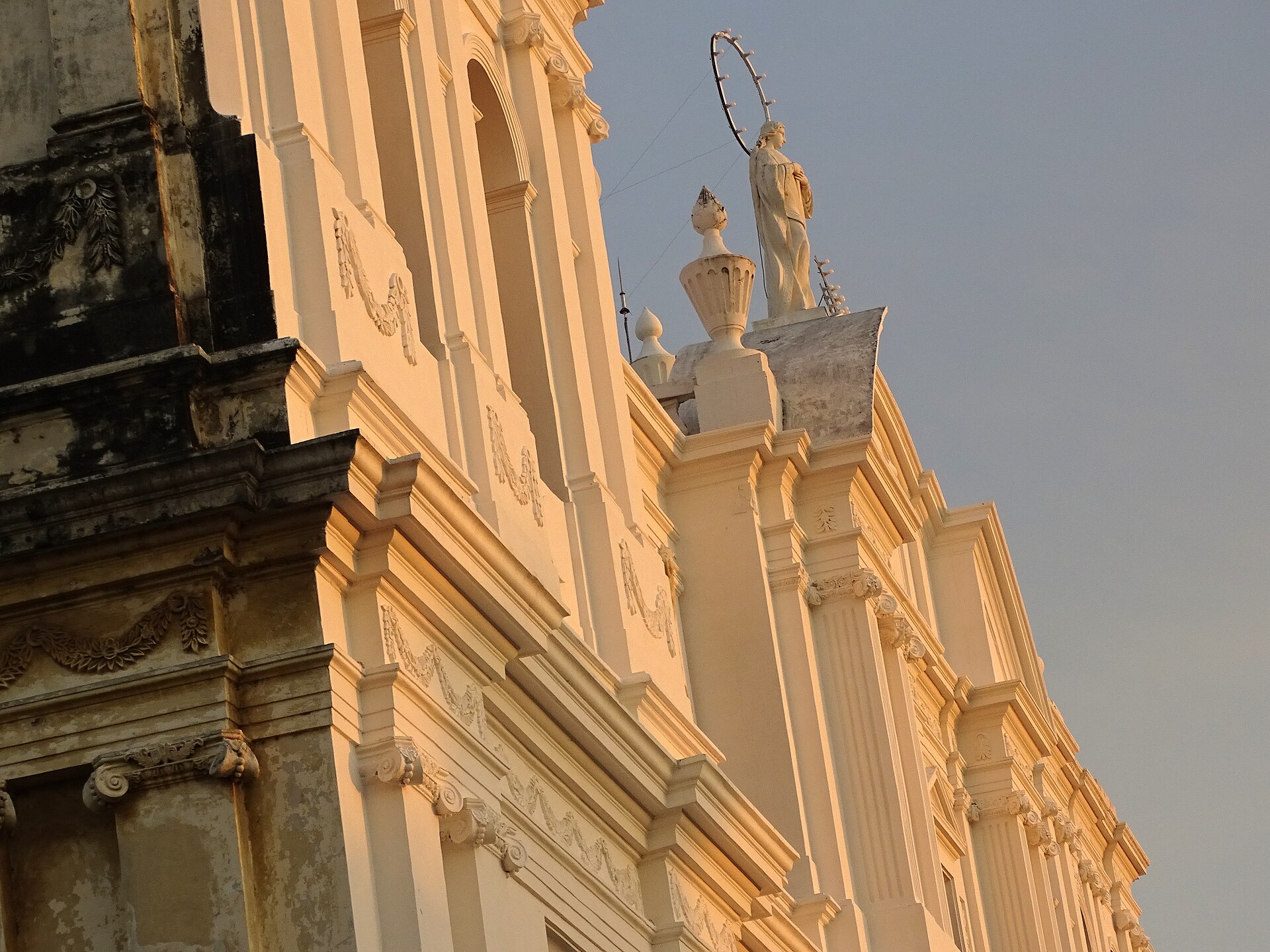
Religious activity carries its own risk. USCIRF, an independent US federal commission, says 309 religious figures had been forced out, expelled or barred by February 2026.
Researcher Martha Patricia Molina counted more than 16,500 banned processions and religious acts from 2018 to August 2025. Bishop Rolando Álvarez was sentenced to more than 26 years in 2023 and expelled to the Vatican in January 2024.
Church trips, missions and medical brigades need advance permission from Nicaragua’s foreign ministry, US guidance says. Even approved visits can be cancelled without warning.
USCIRF also noted reports in late 2025 that travellers had been barred from bringing Bibles into the country.
Health, hurricanes and volcanoes
Medical care is the risk many foreigners underestimate. The State Department says comprehensive care exists only in Managua, which has one hospital accredited by Joint Commission International, a US-based body.
Public hospitals are understaffed, and evacuation to the United States may be the only option in serious cases. Evacuations are expensive and often not covered by standard insurance.
Mosquito-borne dengue, Zika and chikungunya are common, as are typhoid and leptospirosis. Tap water is generally not safe to drink.
Hurricane season normally runs from June to November, and the rainy season from May to November brings floods. The Caribbean coast has taken the strongest recent hits.
In November 2020, Hurricanes Eta and Iota struck the northern Caribbean coast as Category 4 storms less than two weeks apart. The US National Hurricane Center put Iota’s landfall about 15 miles south of Eta’s.
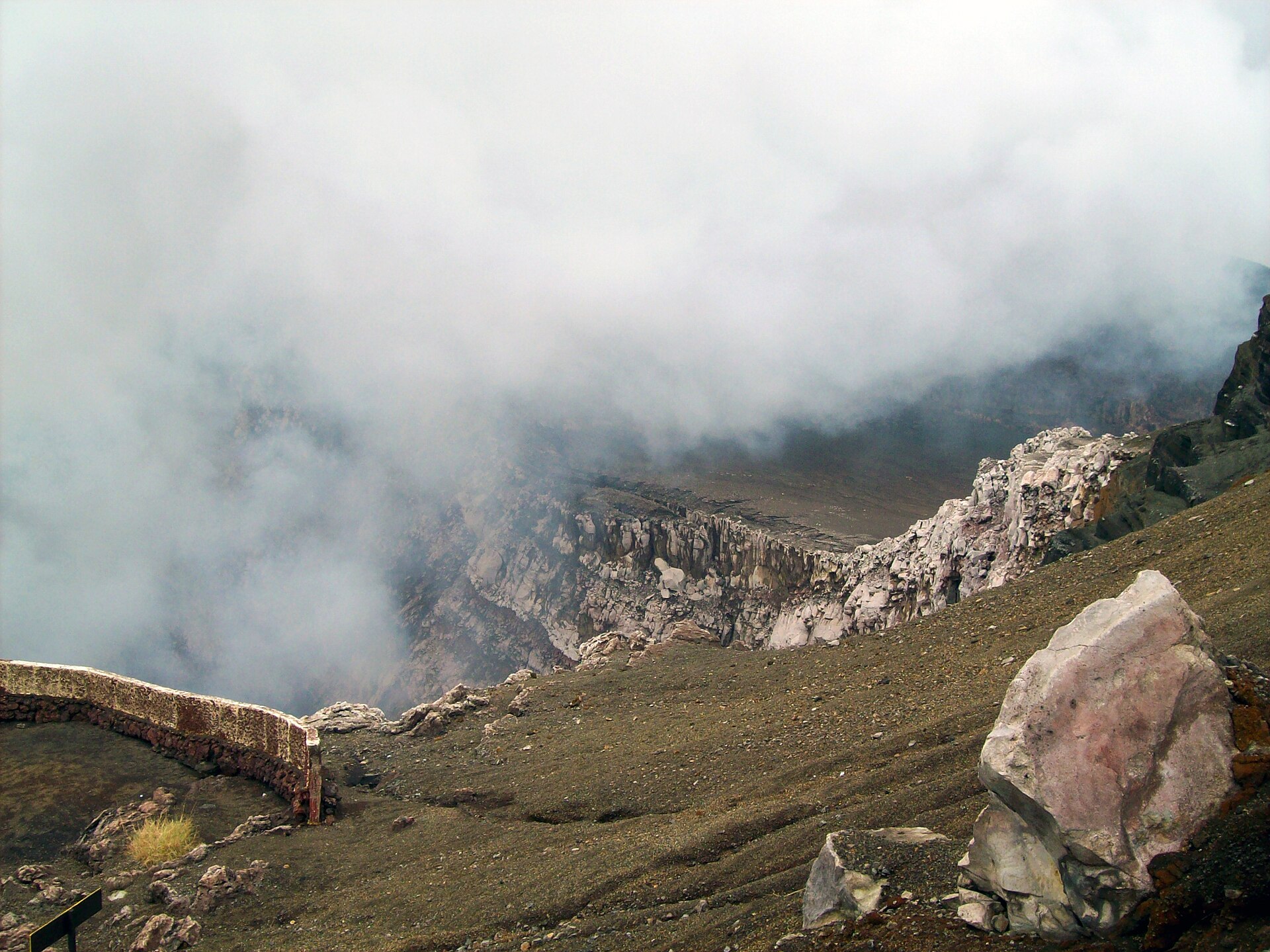
Volcanoes line the Pacific side of the country. The FCDO lists San Cristóbal, Masaya, Cerro Negro, Telica and Concepción on Ometepe Island among the active ones.
Local guides are required for most volcano hikes, including on Ometepe, US guidance says. Earthquakes are also a risk.
Pacific beaches have strong currents, few lifeguards and a record of drownings. The US warns that even experienced swimmers are at risk.
Granada, San Juan del Sur, León, Managua and the Caribbean coast
Managua, the capital, concentrates both risk and services. Canada lists Mercado Oriental, Jorge Dimitrov and Ciudad Belén among neighbourhoods with very high levels of assault and robbery.
US government staff may not visit Mercado Oriental, the national baseball stadium, casinos or strip clubs. They may not use taxis, moto-taxis or public transport, and may use only the Ray ride-hailing app.
Granada, the colonial city on Lake Nicaragua, is one of the main tourist centres. US staff may drive after dark on the Carretera Masaya between Managua and Granada, an exception to their night-driving ban.
Granada’s main risks are those US and Canadian advice flags for tourist areas. They are pickpocketing, bag snatching and theft from cars.
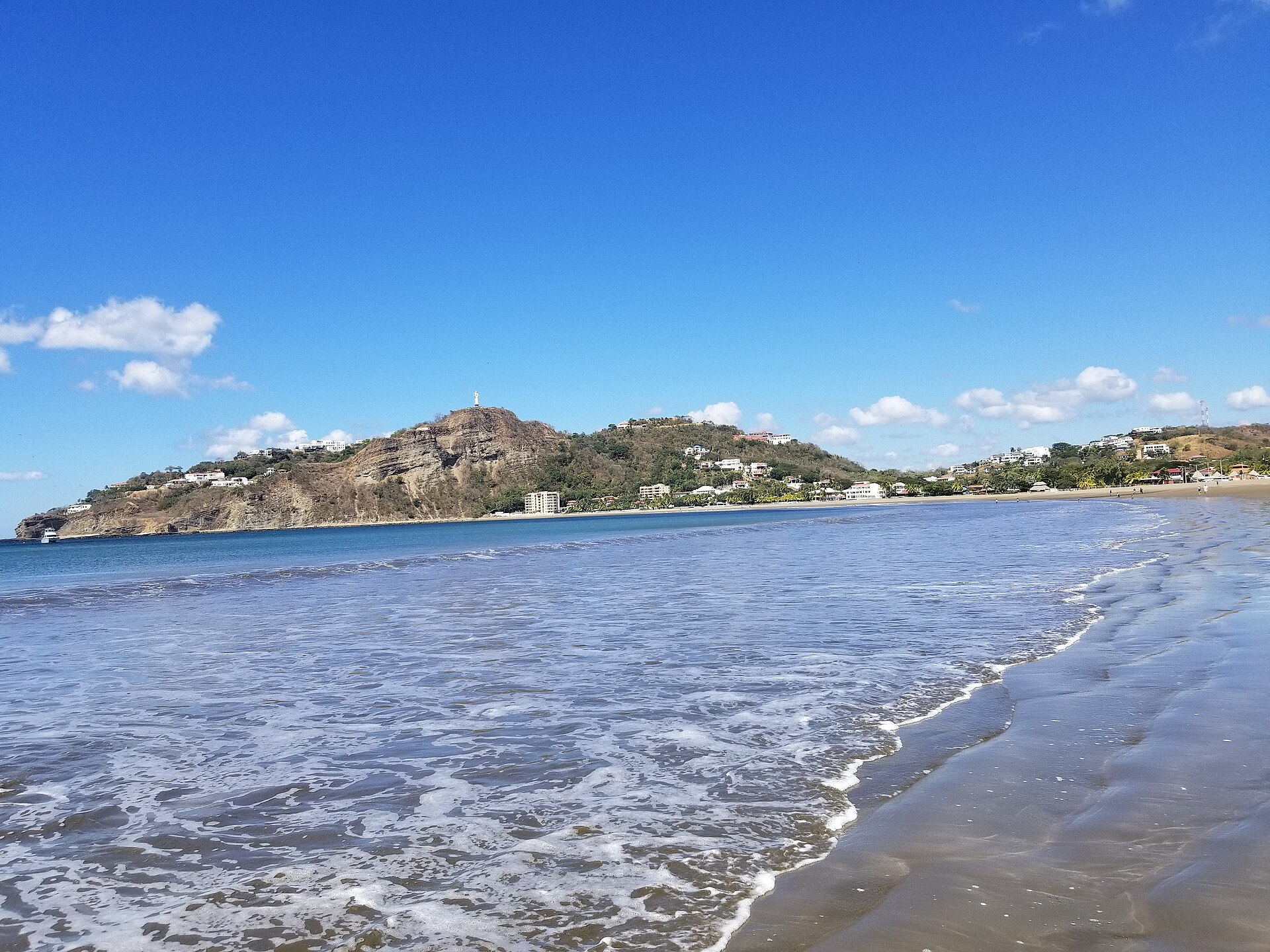
San Juan del Sur lies near the Costa Rican border. Canada flags property crime in remote Pacific beach communities, and US guidance reports sexual assaults on Americans in beach resorts.
Buyers there should check whether land lies within 15 kilometres (about 9 miles) of a border. A law passed on 5 August 2025 made that strip “border territory” subject to seizure, the State Department says.
León is a university city in the north-west. Its department recorded more than 20 deaths in the 2018 crackdown, according to the IACHR. Today Canada lists its poorer neighbourhoods among areas with frequent house and car burglaries.
The Caribbean coast is a different world. Most roads there are unpaved, and the US says the region’s isolation limits the embassy’s ability to help.
The Corn Islands have no forensic doctors, so victims of violent crime must travel to Bluefields for examinations. The nearest hyperbaric chamber for divers is in Puerto Cabezas.
Further north, the IACHR reported in October 2025 on armed settler attacks against Indigenous and Afro-descendant communities. It counted at least three large-scale attacks between 2020 and 2024.
Practical safety advice for living in Nicaragua
Clean your devices before you travel. US guidance advises deleting sensitive photos, posts and comments that could be seen as controversial.
Leave the drone at home, and think twice about long lenses and binoculars. Avoid filming police, government buildings and official events.
Stay out of politics entirely, online and offline. Avoid protests, crowds and blue-and-white political symbols, and keep a low profile.
Carry valid identity documents at all times; Nicaraguan law requires foreigners to do so, the US Embassy says. Dual nationals should carry both passports and leave on the one they entered with.
The US embassy may be denied consular access to detained dual US-Nicaraguan nationals. That makes a check-in plan with family more important.
US citizens pay US$10 in cash for a tourist entry stamp valid for up to 90 days. Passports need six months’ validity, and you need an onward or return ticket.
Use radio-dispatched or authorised taxis with red plates, as the FCDO advises, and never one called by a stranger. Express kidnappings, in which victims are forced to withdraw cash, have occurred.
Avoid driving at night outside cities. Since 17 June 2025, national speed limits are 50 km/h (31 mph) for most vehicles and 40 km/h (25 mph) for motorcycles, US guidance says. Drivers in fatal crashes are held for at least 48 hours.
The State Department describes the córdoba as fixed against the dollar. The Central Bank of Nicaragua’s official rate was 36.6243 córdobas per US dollar on 22 September 2026. The open.er-api.com service quoted 36.83 on 25 September.
ATMs can be unreliable, so keep some cash, and avoid street money changers, whom the FCDO links to muggings. US dollars are sometimes accepted.
Enrol with your embassy and buy insurance that covers medical evacuation. In an emergency, dial 118 for police and 128 for an ambulance.
So, is Nicaragua safe? Canada notes that foreigners are rarely targeted by violent crime. The larger risk is arbitrary action by the state, which no precaution fully removes.
Connected Coverage
Moving to Nicaragua 2026: Visas, Costs and Daily Life Under Ortega
Healthcare in Nicaragua for Expats 2026: Hospitals, Insurance and the Managua Option
Nicaragua Visa and Residency 2026 — Routes, Costs and Realistic Timelines
Ortega and Murillo Tighten Grip as Remittances Fall 3.5% of GDP in Nicaragua
Sources: Travel advice from the US State Department and US Embassy in Managua, the UK FCDO and the Government of Canada; laws from Nicaragua’s National Assembly and official gazette; the exchange rate from the Central Bank of Nicaragua; human rights findings from the UN Group of Human Rights Experts on Nicaragua, the IACHR and USCIRF; crime data from the National Police as reported, InSight Crime, Despacho 505, ContraData and Gallup; hurricane data from the US National Hurricane Center; population from the World Bank. All accessed 25 September 2026.
- travel.state.gov
- ni.usembassy.gov
- ni.usembassy.gov
- gov.uk
- gov.uk
- travel.gc.ca
- bcn.gob.ni
- legislacion.asamblea.gob.ni
- noticias.asamblea.gob.ni
- loc.gov
- ohchr.org
- reliefweb.int
- oas.org
- oas.org
- uscirf.gov
- insightcrime.org
- gallup.com
- nhc.noaa.gov
- api.worldbank.org
- reuters.com
- infobae.com
- canal4.com.ni
- 100noticias.tv
- despacho505.com
- contradatani.com
- confidencial.digital
- havanatimes.org
- ewtnnews.com
- open.er-api.com
- theguardian.com
- lamesaredonda.net (Hagamos Democracia, June 2026)
- confidencial.digital
What Is Not Known
The true level of crime is not known. Nicaragua publishes no transparent homicide dataset, and InSight Crime found no reliable figures for 2025. Weekly police bulletins cover only what the police choose to report.
Police announced the rate of 5 at their anniversary event in September 2025. They have not published a statistical yearbook since 2021, Confidencial reported in September 2026. Any new figure will face the same problem: it cannot be checked against disaggregated data.
How the dual-nationality ban will be enforced is not clear. The US Embassy says it is not meant to be retroactive, but the State Department says procedures remain unclear.
The seven-year reform still needs a second vote from 18 January 2027. The governing Sandinista party controls the assembly, but the outcome is not certain. How the ban on “traitors” standing for office will be applied is not known.
No public list shows who faces an entry or exit ban. The UN experts say the real number of people refused entry is likely far higher than the 318 they documented.
How a handover from Ortega, now 80, to Murillo would affect security is not known. Under the 2025 constitution, if one co-president leaves office, the other completes the term.
Frequently Asked Questions
Is Nicaragua safe for expats in 2026?
Street crime is moderate by Central American standards, though official data cannot be verified. Police put the homicide rate at 5 per 100,000 for September 2024 to August 2025. The bigger risk for foreigners is political: the US rates Nicaragua Level 3 and warns of wrongful detention, phone searches and expulsions.
What travel advisory level does the US give Nicaragua?
The US State Department rates Nicaragua Level 3, reconsider travel, in an advisory issued on 14 May 2026. It cites crime, health, wrongful detention and arbitrary enforcement of local laws. Canada says exercise a high degree of caution, and the UK warns that foreigners can be arrested or deported for political activity.
Can I bring a drone or take photos in Nicaragua?
Do not bring a drone: Law 1230, introduced in December 2024, bans owning and flying them, and customs will seize them. Photography of government buildings and police is restricted. A French student was expelled in July 2026 after filming near the Ortega-Murillo compound in Managua.
Is Nicaragua safer than Costa Rica?
On official homicide figures, yes: Nicaragua’s police claim 5 per 100,000, while InSight Crime put Costa Rica at 16.8 in 2025. But Nicaragua’s figures cannot be independently checked. In Gallup’s 2025 report, 63 percent of Nicaraguans felt safe walking alone at night, against 53 percent in Costa Rica.
Which parts of Nicaragua need extra care?
Canada lists several Managua neighbourhoods, including Mercado Oriental, for very high levels of assault and robbery. Remote Pacific beach communities see property crime and dangerous currents. The Caribbean coast is isolated, with limited embassy help, and took two Category 4 hurricanes in November 2020.
Can dual US-Nicaraguan citizens travel safely?
Since 16 January 2026, Nicaraguans who acquire another citizenship lose their Nicaraguan one in most cases. The US embassy may be denied consular access to detained dual nationals. Dual nationals should carry both passports and leave on the one they entered with.
This article was produced by The Rio Times’ automated newsroom system. How we use AI · Report an error
Read More from The Rio Times