
NICARAGUA · HISTORY
Nicaragua is a small country that empires, dictators and revolutionaries have fought over for five centuries. Its past runs from Spanish conquest in the 1520s through US occupation and a family dictatorship to a revolution in 1979.
That history matters to American readers because Washington sent Marines there, backed a rebel war and now sets tariffs on its goods. The Central Bank of Nicaragua said remittances, money sent home by workers abroad, reached US$5.24 billion in 2024, and 82.8% came from the United States.
Key Facts
- The arc Spanish colony, US occupation, family dictatorship, 1979 revolution and a US-backed rebel war.
- Latest turn Since February 2025 a reform has made President Daniel Ortega and his wife, Rosario Murillo, co-presidents.
- Cost of 2018 The UN human-rights office counted 300+ deaths in the 2018 protests and their repression.
- Money link Workers abroad sent US$5.24 billion home in 2024, 82.8% of it from the United States.
- US angle Migration, remittances, tariffs and a US State Department travel warning tie Nicaragua to Americans.
A plain-English guide to how Nicaragua went from Spanish colony to revolution and war, and why its long history still shapes migration, money and policy in the United States.
Why It Matters
Nicaragua’s past reaches Americans through three channels: migration, money and policy. For calendar year 2024 the Central Bank of Nicaragua reported US$5.24 billion in remittances, up 12.5%, with 82.8% (US$4.34 billion) coming from the United States.
Many of those senders are Nicaraguans who live abroad, and the story below explains why so many left. Our Nicaragua news page tracks the daily news, and this guide supplies the background.
In Plain English
- FSLN is the Sandinista National Liberation Front, the party that led the 1979 revolution and governs today.
- Contras were armed rebels who fought the Sandinista government in the 1980s with US support.
- National Guard was the army and police force that the Somoza family used to hold power.
- OAS is the Organization of American States, a bloc of countries in the Americas.
- Co-presidency is a 2025 constitutional change that makes Ortega and Murillo joint heads of state.
Pre-Columbian Peoples and Spanish Rule
Long before Europeans arrived, western Nicaragua was home to the Niquirano, Chorotega and Chontal peoples, a country study by the US Library of Congress says. The Niquirano were ruled by a chief named Nicarao, whose name the country carries.
On the Caribbean side, the same study says, the Miskito, an Indigenous people, emerged when a local Indigenous people, the Bawihka, intermarried with runaway slaves from British Caribbean colonies. English traders had given the Bawihka guns, which helped them dominate neighbouring groups.
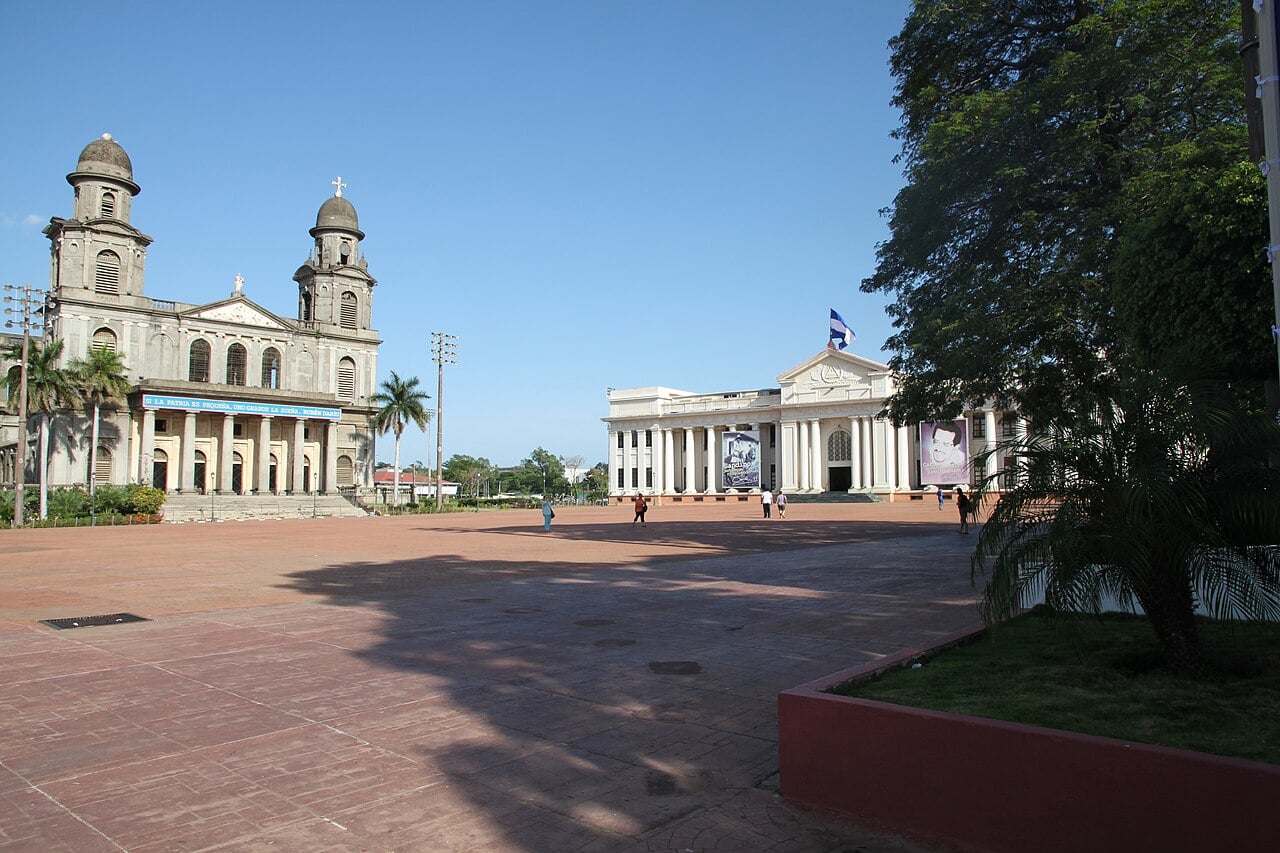
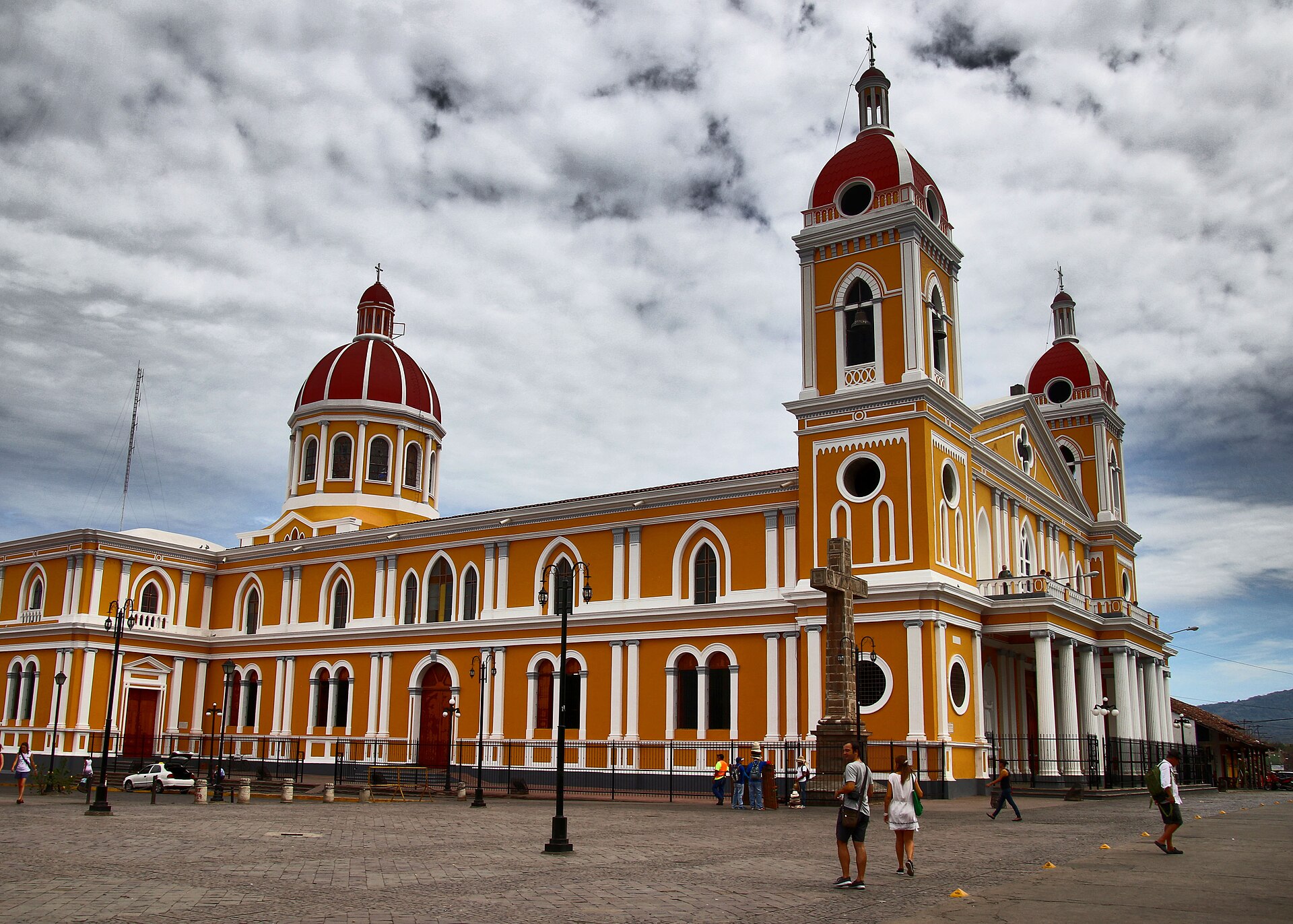
The first formal Spanish expedition, led by Gil González Dávila, a Spanish explorer, in 1522, was driven back by the army of a chief named Diriangén. Francisco Hernández de Córdoba, a Spanish captain, then founded the first permanent Spanish settlements, including León and Granada, by 1524.
León became the home of liberals who wanted free trade, and Granada the home of conservatives who defended the old protected economy. Their rivalry turned violent and lasted into the twentieth century.
Nicaragua declared independence from Spain with the rest of Spain’s Central American province on 15 September 1821, then joined the United Provinces of Central America, a short-lived federation, in 1823. The federation broke apart, and a constituent assembly declared Nicaragua independent on 30 April 1838.
In the northeast, the English governor of Jamaica placed a Miskito “king” under crown protection in 1687. British control of the Caribbean coast lasted until the end of the nineteenth century.
US Interventions
In the 1850s an American adventurer named William Walker led a private army into Nicaragua and made himself its ruler. His forces were evacuated by US Marines on 1 May 1857, the Library of Congress study says.
Walker was executed by a Honduran firing squad in 1860 after a later attempt to return to Central America. His adventures left Nicaraguans with a lasting suspicion of US designs on their country, the same study says.
In August 1912 about 2,700 US Marines landed at Corinto and Bluefields to back President Adolfo Díaz, the Library of Congress study says. US troops left in January 1933.
In 1916 the US Senate ratified the Bryan-Chamorro Treaty, which gave the United States exclusive rights to build a canal across Nicaragua. In those years the United States also helped create a National Guard, meant to be a non-partisan army and police force.
A rebel leader, Augusto César Sandino, refused to sign the 20 May 1927 peace pact and fought US and Nicaraguan government forces. On 21 February 1934 National Guard officers, on the orders of their chief Anastasio Somoza García, arrested and executed him.
Sandino later gave his name to the Sandinista movement. The movement that bears his name took power in 1979.
The Somoza Dynasty
Anastasio Somoza García won a December 1936 election and took back command of the National Guard on 1 January 1937, the Library of Congress study says. It calls the result a military dictatorship that lasted more than four decades.
On 21 September 1956 a poet shot him in León, and he died eight days later. His son Luis Somoza Debayle took over, and another son, Anastasio Somoza Debayle, won the presidency in 1967.
In December 1972 an earthquake destroyed most of Managua and killed about 10,000 people, the study says. The National Guard joined in looting, and the family’s handling of relief aid drew international criticism.
On 10 January 1978 Pedro Joaquín Chamorro Cardenal, editor of an opposition newspaper, was assassinated. In February 1978 the United States suspended military aid to the Somoza government.
The Sandinista Revolution
The FSLN was founded in 1961 by the student activists Carlos Fonseca Amador, Silvio Mayorga and Tomás Borge, the Library of Congress study says. It began among university students in Managua and took its name from Sandino.
In June 1979 a five-member provisional junta, a ruling council, formed in exile in Costa Rica. Its members included Daniel Ortega and Violeta Barrios de Chamorro, the widow of the murdered editor.
On 17 July 1979 Somoza Debayle resigned and fled to Miami, and on 19 July FSLN forces entered Managua. The study estimates that about 50,000 Nicaraguans had died by the time of the victory.
On 22 August 1979 the junta issued a Fundamental Statute that abolished the old constitution, presidency, Congress and courts. A consultative Council of State met from 4 May 1980, and the FSLN held 24 of its 47 seats.
Nicaragua Timeline
- 1522 Gil González Dávila leads the first formal Spanish expedition.
- By 1524 León and Granada are founded.
- 15 September 1821 Independence from Spain is declared in Spain’s Central American province.
- 30 April 1838 A constituent assembly declares Nicaragua independent of the federation.
- August 1912 About 2,700 US Marines land at Corinto and Bluefields.
- 21 February 1934 Sandino is executed by National Guard officers.
- December 1972 An earthquake destroys most of Managua.
- 19 July 1979 FSLN forces enter Managua after Somoza flees.
- 27 June 1986 The International Court of Justice rules against the United States.
- 25 February 1990 Violeta Chamorro defeats Ortega at the polls.
- 10 January 2007 Ortega is inaugurated after winning the 2006 election.
- 18 April 2018 Mass protests begin across the country.
- 15 February 2023 A Managua court orders 94 people stripped of nationality.
- January 2025 Lawmakers approve the reform creating two co-presidents.
- 1 September 2026 The Assembly gives first approval to a further reform extending terms to seven years.
The Contra War
Through the 1980s the Contras fought the Sandinista government with support from the United States. The US Congress cut off military aid to them under the Boland Amendment, a US law named for its sponsor, from October 1984 to October 1986, the later report of Lawrence Walsh, the special prosecutor appointed to investigate, says.
Nicaragua took the United States to the International Court of Justice, the UN’s top court, and on 27 June 1986 the court ruled for Nicaragua on key points. It found that Washington had used force against Nicaragua and broken a 1956 friendship treaty, and it ordered reparation.
Edwin Meese, then US attorney general, announced on 25 November 1986 that some proceeds of secret US arms sales to Iran had gone to the Contras. That affair became known as Iran-Contra and was investigated by Walsh.
Nicaragua voted on 25 February 1990, and Violeta Barrios de Chamorro, backed by a 14-party coalition, defeated President Ortega with 55% of the vote to his 41%, the Library of Congress study says. The FSLN handed power to her on 25 April 1990.
Ortega Returns
Ortega, who had lost in 1990, won the presidential election of 5 November 2006 with 38% of the vote against a divided opposition, the US State Department said. He was inaugurated on 10 January 2007.
In January 2014 the National Assembly repealed the constitutional ban on immediate reelection. The change paved the way for Ortega’s election wins in 2016 and 2021.
In 2016 Ortega ran with his wife, Rosario Murillo, as vice president, and won a third consecutive term. Our guide to how power works in Nicaragua explains how the couple’s circle works.
Before the 2021 vote, the UN’s Group of Human Rights Experts on Nicaragua (GHREN) says, opposition parties lost legal status and candidates were arrested. Ortega won a fourth consecutive term.
In November 2021 Nicaragua notified the OAS that it would leave, and the withdrawal took effect on 19 November 2023, the US State Department said that day. Nicaragua also withdrew from the UN Human Rights Council in 2025, the GHREN chair told the UN General Assembly on 30 October 2025.
The 2018 Crisis
Mass protests spread across Nicaragua from 18 April 2018, after the government announced social-security changes that cut pensions. The UN human-rights office, known as OHCHR, set this out in its report of 29 August 2018.
OHCHR said in its report of 29 August 2018 that at least 300 people were killed and 2,000 injured in the protests and their repression between 18 April and 18 August 2018. The report drew on monitoring by the UN human-rights office’s regional office for Central America.
What UN Experts Documented (30 October 2025)
- 2021 Main independent media closed and confiscated; opposition parties lost legal status.
- 2022 Thousands of non-profit groups and remaining independent media shut down.
- 2023 Hundreds expelled, barred from returning or stripped of nationality, property and pensions.
Lost Citizenship and the 2025 Reform
On 15 February 2023 a Managua appeals court ordered 94 people stripped of nationality. The GHREN counted at least 452 Nicaraguans stripped of nationality by court order since February 2023, in its statement of 30 October 2025.
On 9 February 2023 the government flew 222 political prisoners to the United States and stripped them of nationality. The UN experts’ statement of 30 October 2025 lists hundreds more people expelled, barred from returning or stripped of nationality.
In January 2025 the National Assembly gave final approval to a constitutional reform, and it entered into force in February 2025. It creates two co-presidents who together hold the presidency.
When lawmakers first approved it in November 2024, the reform also lengthened the presidential term from five to six years, ConstitutionNet, a constitution-research site of International IDEA, a Stockholm-based democracy institute, reported. The GHREN says Ortega and Murillo now hold the co-presidency.
The experts say the Co-Presidents have merged the State and the FSLN into a unified machine of repression. They call the large-scale loss of nationality one of the most egregious practices.
The authorities have refused to engage with the group, the GHREN says. It says it has been denied access to the country.
Nicaragua Today
INIDE, the national statistics institute, estimated 6,874,748 residents for 2024. See our Nicaragua population and ethnic groups guide for the breakdown.
The World Bank, in its Macro Poverty Outlook country forecast of October 2026, says the economy grew about 5% a year on average from 2022 to 2025, helped by remittances. It estimates remittances rose from 27% of output in 2024 to 29.4% in 2025.
- Remittances 2024: US$5.24 billion, up 12.5%, with 82.8% from the United States (Central Bank of Nicaragua).
- Poverty: estimated to have fallen below 13% in 2026 (World Bank, October 2026).
On 12 December 2025 the US Trade Representative, the White House trade office, set a tariff on Nicaraguan goods not made under CAFTA-DR, the free-trade pact linking the US, Central America and the Dominican Republic. The duty, based on the Section 301 trade law and on labour, human-rights and rule-of-law concerns, is 0% from 1 January 2026, 10% from 1 January 2027 and 15% from 1 January 2028.
A separate notice of 28 July 2026 imposed a 12.5% Section 301 duty on most Nicaraguan goods entered on or after 24 July 2026, with exemptions listed in its annexes. The notice belongs to a wider forced-labour action that investigated 60 economies.
On Tuesday 1 September 2026 the National Assembly gave first approval to a further constitutional reform, Assembly president Gustavo Porras said, by a unanimous vote. The text would extend terms from six to seven years and restrict who may stand in elections.
A constitutional change needs approval in a second legislature before it takes effect, and the date of the next general election could not be confirmed at an official source. Our guide to the key political players covers the people who run the country.
Why Nicaragua’s History Matters in the United States
The Contra years left a record in US law and politics, from the Boland Amendment fight to the Iran-Contra inquiry. Walsh’s final report is a key record of how secret funds reached the rebels.
The International Court of Justice ruling of 27 June 1986 is the other lasting record, because it judged US conduct in Nicaragua. Our Nicaragua geopolitics guide covers the present-day rivalries.
The UN refugee agency, UNHCR, counted 92,679 Nicaraguan asylum seekers in the United States at the end of 2025. That migration is the human side of the remittance flow described above.
Remittances from the United States reached US$4.34 billion in 2024, the central bank says. The tariff spares goods made under CAFTA-DR, which the US trade office said should limit harm to US companies producing in Nicaragua.
The State Department’s advisory of 14 May 2026 keeps Nicaragua at Level 3, Reconsider Travel, citing wrongful detention and other risks. It also warns of exit bans on US citizens.
Two dated checkpoints follow from the December 2025 trade notice. The tariff steps to 10% on 1 January 2027 and to 15% on 1 January 2028.
What Is Not Known
The full-year 2025 remittance total from the Central Bank of Nicaragua was not found. The date of the next general election and the final ratification of the September 2026 reform were not confirmed at an official source.
Counts of deaths in 2018 differ between bodies, so we use the UN human-rights office figure of at least 300 killed between 18 April and 18 August 2018. How the 12.5% duty of July 2026 interacts with the December 2025 schedule was not stated by the trade office.
Frequently Asked Questions
What is the history of Nicaragua?
Nicaragua was a Spanish colony from the 1520s, became independent in 1821 and had US Marines on its soil for most of the years from 1912 to 1933. It then lived under the Somoza family, the Sandinista revolution of 1979, the Contra war and Daniel Ortega’s return in 2007.
Who was Somoza?
Anastasio Somoza García took power in 1936 and founded a family dictatorship backed by the National Guard. His sons ruled after him until Anastasio Somoza Debayle fled on 17 July 1979.
What was the Contra war?
It was a 1980s conflict in which armed rebels called the Contras fought the Sandinista government with US support. The International Court of Justice ruled on 27 June 1986 that the United States had broken international law.
Why did Nicaragua protest in 2018?
Protests began on 18 April 2018 after the government announced social-security changes that cut pensions, the UN human-rights office reported. The office counted at least 300 people killed between 18 April and 18 August 2018.
Who runs Nicaragua today?
Daniel Ortega and his wife, Rosario Murillo, hold the presidency as co-presidents under a constitutional reform in force since February 2025. The UN experts say the reform concentrates power in the presidency.
Is Nicaragua a dictatorship?
The UN Group of Human Rights Experts on Nicaragua says the 2025 reform formalised virtually unlimited authority for the co-presidents. The experts say the authorities have refused to engage with them and have denied them access to the country.
Sources: Library of Congress Country Study: Nicaragua, early peoples and conquest, colonial period and independence; Library of Congress Country Study: Nicaragua, Spanish conquest; Library of Congress Country Study: Nicaragua, independence and federation; Library of Congress Country Study: Nicaragua, US intervention 1909 to 1933; Library of Congress Country Study: Nicaragua, the Somoza era; Library of Congress Country Study: Nicaragua, the FSLN and the 1979 revolution; International Court of Justice, Nicaragua v. United States, judgment of 27 June 1986; Walsh Final Report of the Independent Counsel on Iran/Contra, executive summary; UN human-rights office (OHCHR), report on the 2018 protests, 29 August 2018; UN Group of Human Rights Experts on Nicaragua, report A/HRC/58/26 (2025); Federal Register, USTR notice of action on forced-labour import bans, 28 July 2026; UN Group of Human Rights Experts on Nicaragua, statement to the General Assembly, 30 October 2025; Office of the US Trade Representative, Section 301 Notice of Action on Nicaragua (December 2025); Central Bank of Nicaragua, remittances in 2024; Central Bank of Nicaragua, remittances in the first quarter of 2025; World Bank, Nicaragua Macro Poverty Outlook (October 2026); INIDE, Anuario Estadístico 2023 (population estimate, 30 June 2024); UNHCR, Refugee Data Finder (end of 2025); ConstitutionNet, Nicaragua legislature approves constitutional reforms (25 November 2024); US State Department, Nicaragua travel advisory (14 May 2026); US State Department, Background Note: Nicaragua (2006 election) (all accessed 18 November 2026).
This article was produced by The Rio Times’ automated AI newsroom. Editorial responsibility: Matthias Camenzind, Publisher and Editor-in-Chief. The Rio Times also runs Ask Rio Times, which answers from 100,000+ of our own articles, the daily Latin America Power Map, and prediction-market odds on elections and markets.. How we use AI · Report an error
Expat Guide to Nicaragua
What The Rio Times publishes for foreigners who live in or move to Nicaragua.
Start here
- Is Nicaragua Safe for Expats? Crime, Politics and Daily Reality
- Opening a Bank Account in Nicaragua as a Foreigner: Banks, Documents and the Limits
- Moving to Nicaragua: Visas, Costs and Daily Life Under Ortega
- Healthcare in Nicaragua for Expats: Hospitals, Insurance and the Managua Option
Understand Nicaragua