NICARAGUA · BUDGET
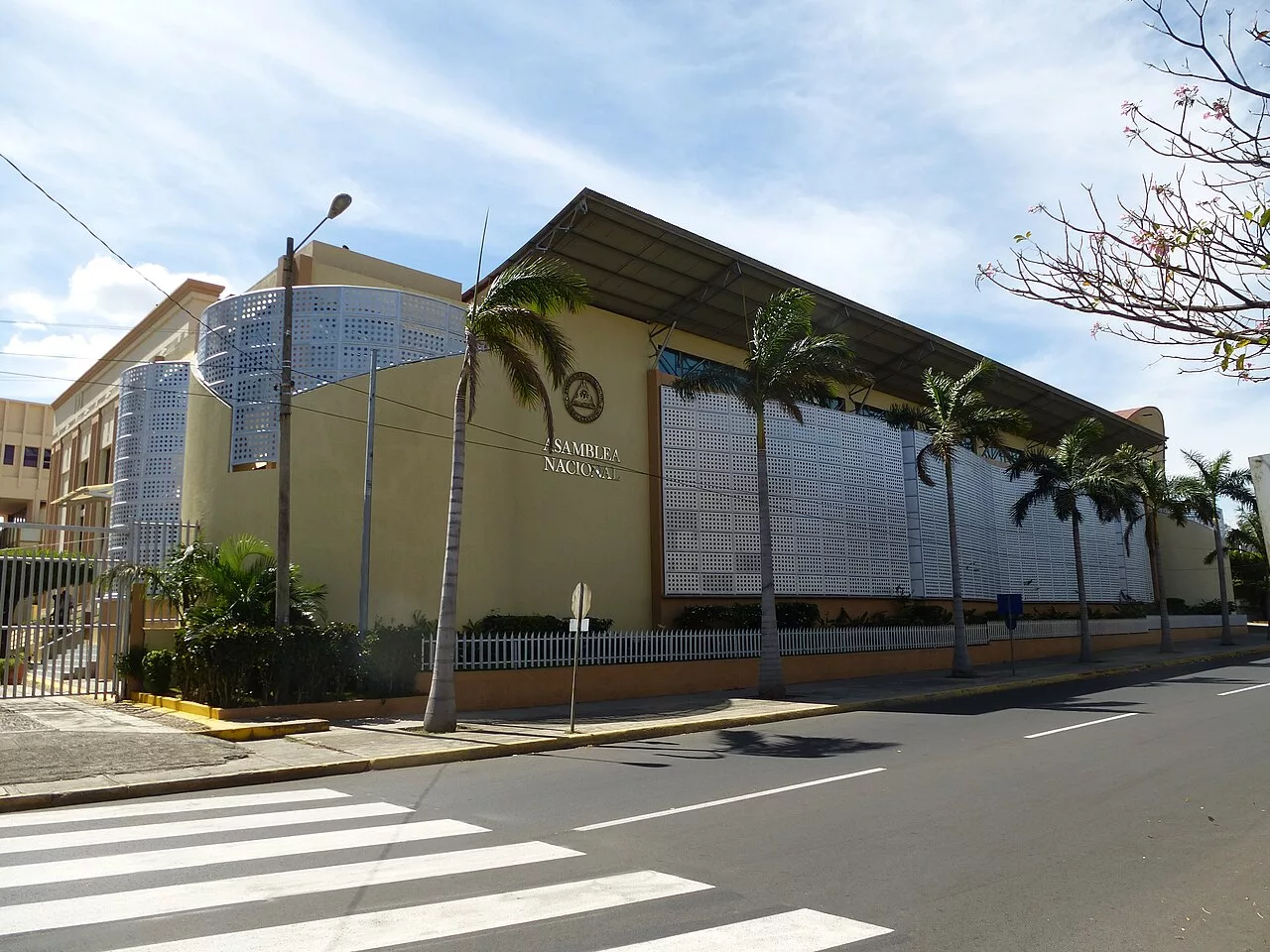
Nicaragua’s National Assembly, the country’s legislature in Managua, approved the 2027 state budget in general on Tuesday 17 November 2026, unanimously, according to the Assembly’s own news service. Deputies were due to continue with the article-by-article vote on Wednesday 18 November, Radio Nicaragua, a government-aligned station, reported.
The plan counts on revenue of C$195,137 million (about US$5.33 billion) and spending of C$168,238 million (about US$4.59 billion), a surplus of about US$734 million. We convert at C$36.62 per US$, the rate implied by the dollar figures in the Prensa Latina report, and the córdoba (C$) is Nicaragua’s currency.
For US readers, officials frame the budget as a plan to pay its own way under sanctions pressure and a tighter US migration policy. The figures matter to US investors, aid lenders and policy makers because the International Monetary Fund lists stricter international sanctions as a medium-term risk and the economy depends on money sent home by Nicaraguans abroad.
Key Facts
- Who Nicaragua’s National Assembly, the legislature, unanimously backed the 2027 state budget in general.
- What Planned 2027 revenue US$5.33 billion, spending US$4.59 billion, leaving a surplus of about US$734 million.
- When General approval came Tuesday 17 November 2026; the article-by-article vote was set for Wednesday 18 November.
- Why Officials say 94% of spending is funded at home, which they call “financial sovereignty”.
- Next Deputies vote on the budget article by article, scheduled for Wednesday 18 November.
Nicaragua’s legislature has backed a 2027 budget that plans what the central bank president calls a seventh straight surplus and leans on home-raised money, a message of independence while US sanctions weigh on the outlook.
Why Managua Talks About Financial Sovereignty
Ovidio Reyes, president of the Central Bank of Nicaragua, presented the 21-article bill to the Assembly on Wednesday 21 October 2026. He said it extends seven consecutive years of surpluses in the public accounts.
Wálmaro Gutiérrez, who chairs the Assembly’s Production, Economy and Budget Commission, told deputies on 17 November, according to Prensa Latina, a Cuban state news agency: “Se llama soberanía financiera” (“It is called financial sovereignty”). He said Nicaraguans are financing practically 94% of total spending themselves, and he contrasted that with earlier governments whose loans, in his words, kept the country on its knees.
The plan assumes 3.7% growth, 3% inflation and oil at US$97 a barrel, according to the figures Reyes presented. Our latest Nicaragua inflation report shows where prices stand now.
Revenue is planned to rise 13.6% (C$23,435 million, about US$640 million) over the 2026 budget, while spending rises by C$1,459 million (about US$40 million), roughly 0.9%, according to the central bank president’s figures. That difference is what produces the surplus.
Where the Money Goes
Programmes to reduce poverty take C$108,850 million (about US$2.97 billion), or 64.7% of total spending, and social spending takes C$96,486 million (about US$2.63 billion), or 57.4%. The Ministry of Health has the largest single allocation at C$33,023 million (about US$902 million), ahead of the Ministry of Education at C$20,248 million (about US$553 million).
Public investment is set at C$51,424 million (about US$1.40 billion), and 81% of it is to be financed domestically. Named projects include Punta Huete airport expansion near Managua and a port at Bluefields, on the Caribbean coast.
What the IMF Says About the Backdrop
The International Monetary Fund (IMF), the global lender that reviews member economies, put Nicaragua’s non-financial public-sector debt at 43.2% of gross domestic product (GDP) for 2025 and projected 42.4% for 2026 in a report released on 26 January 2026. The same IMF review projects growth of 3.4% in 2026 and puts remittances at 29.5% of GDP in 2025.
Our overview of Nicaragua’s power structure explains why the Ortega-Murillo government, led by co-presidents Daniel Ortega and Rosario Murillo, treats fiscal independence as a political message. Our look at foreign players in Nicaragua covers the lenders and partners that remain.
Gutiérrez also said S&P Global, a US credit-rating agency, had raised Nicaragua’s rating to BB- from B+. BB- is still below investment grade, the level that opens the door to most large bond funds.
In Plain English
Surplus means the state plans to collect more money than it spends in the year.
In general vs article by article are the two votes: first on the bill as a whole, then on each of its articles.
Central Bank of Nicaragua is Nicaragua’s monetary authority, which here presents the budget figures.
Remittances are money that migrants send home to their families.
What It Means for You
About 94% of planned revenue, US$5.01 billion, comes from taxes, so the surplus depends on Nicaraguans having money to spend. Remittances, which the IMF puts at 29.5% of GDP in 2025 and 26.1% in its 2026 projection, are a large part of that spending, so tighter US immigration rules would reach the budget through household income.
US travellers and businesses with Nicaragua ties can read the budget as a sign that the state expects to keep paying wages and running services, but not as a change in US sanctions. Our US visitor guide to Nicaragua covers entry rules, sanctions and remittance practicalities, and our report on gold sanctions covers the exposure of US buyers.
What to Watch
The Assembly was due to continue with the vote on individual articles on Wednesday 18 November 2026, and we have not confirmed its result. IMF staff gave a more cautious reading in January: they advised Nicaragua to “proceed cautiously with budget execution” in line with staff’s baseline scenario, and listed stricter sanctions and tighter US immigration and trade policy as medium-term risks.
The IMF projects a consolidated public-sector surplus of 1.6% of GDP for 2026, against the 2.8% planned for 2027. The measures differ in coverage, so the gap is a guide, not a like-for-like comparison.
What Is Not Known
We have not confirmed the result of the article-by-article vote on 18 November or the final text. All revenue figures here are the C$195,137 million presented by the Central Bank.
The amount of foreign borrowing planned for 2027, and any financing from the Central American Bank for Economic Integration, a regional development lender, the World Bank or the IMF, was not in the figures we reviewed. Nothing public that we found says how a fall in remittances or gold sales would change the revenue plan.
Frequently Asked Questions
How big is Nicaragua’s 2027 budget?
It plans revenue of about US$5.33 billion and spending of about US$4.59 billion, a surplus of about US$734 million, or 2.8% of GDP. Figures are converted at C$36.62 per US$.
Did the National Assembly pass the budget?
It approved the bill in general on Tuesday 17 November 2026, unanimously. Debate on its individual articles was scheduled for 18 November, and we have not confirmed that final vote.
Does Nicaragua rely on foreign loans for this budget?
Officials say about 94% of total spending is financed with domestic resources. The amount of foreign borrowing planned for 2027 was not in the figures presented.
Sources: Radio Nicaragua, report, 17 November 2026; Prensa Latina, report, 17 November 2026; Central Bank of Nicaragua president Ovidio Reyes, 2027 budget presentation of 21 October 2026 (full text as republished by the blog Tortilla con Sal); Assembly of Nicaragua, news item, 17 November 2026; IMF, Press Release 26/015, 2025 Article IV (annual) consultation, 26 January 2026. More in our Nicaragua coverage.
This article was produced by The Rio Times’ automated AI newsroom. Editorial responsibility: Matthias Camenzind, Publisher and Editor-in-Chief. The Rio Times also runs Ask Rio Times, which answers from 100,000+ of our own articles, the daily Latin America Power Map, and prediction-market odds on elections and markets.. How we use AI · Report an error